
Coues’ Senna (Senna covesii)
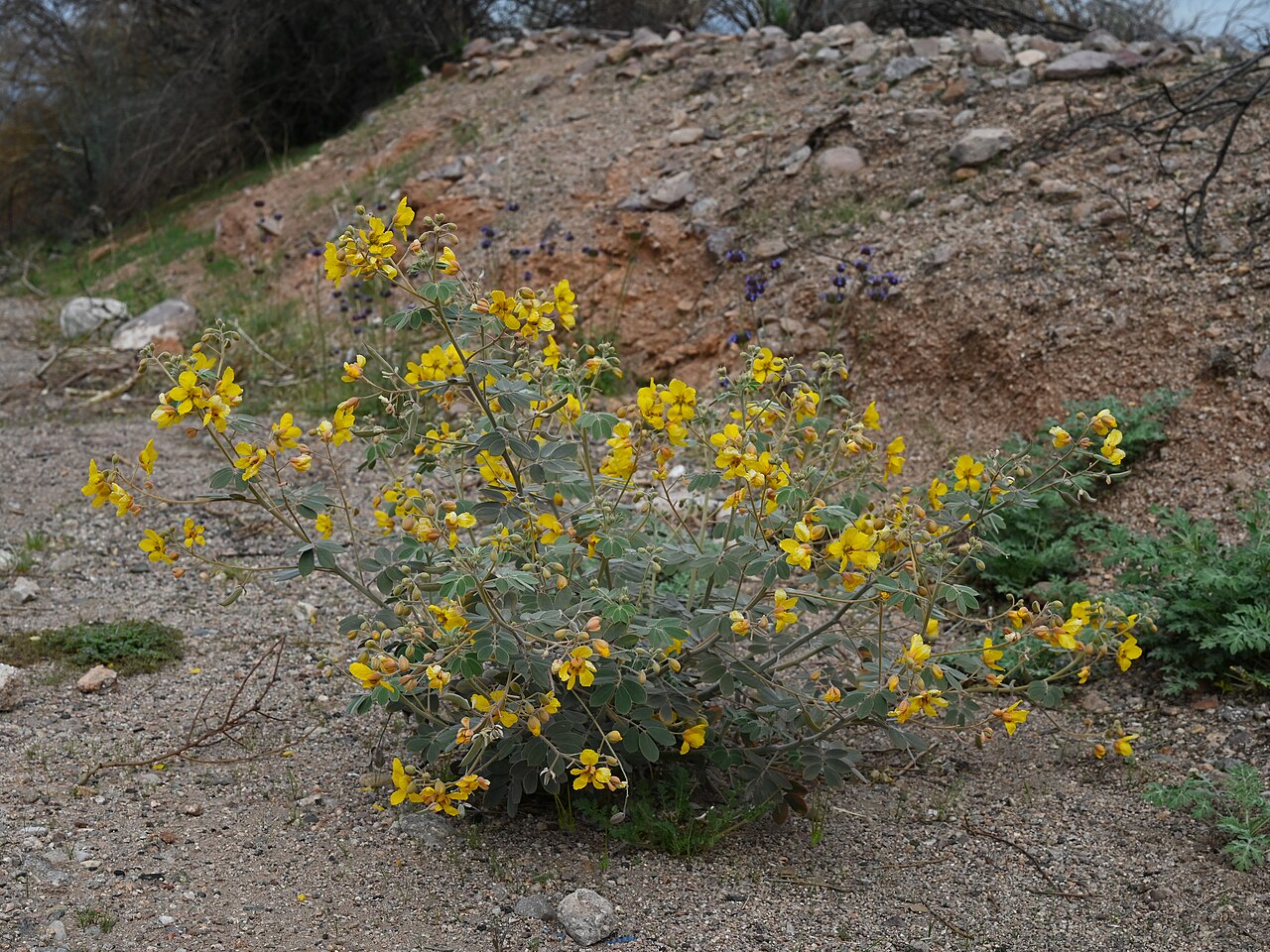
Senna covesii, known as Coues’ Senna (USDA: Coues’ cassia; also desert senna, rattleweed and rattlebox), is a small perennial subshrub in the pea family (Fabaceae) native to the Sonoran and Mojave deserts. It grows 1 to 2 feet tall from a woody base, with soft, gray-green, hairy leaves and clusters of bright yellow flowers that appear in spring and again after summer rains. It was formerly called Cassia covesii.
The plant is common along washes, on rocky slopes and on desert flats in southern Arizona, southeastern California and southern Nevada, with outlying populations in far southwestern New Mexico. It is drought-deciduous: in long dry spells it drops its leaves and looks like a clump of bare stems, then leafs out and blooms quickly when rain comes. Its upright pods dry and split to release hard seeds that rattle inside them.
In gardens Coues’ senna is a tough, low-water perennial for desert landscapes, roadside plantings and pollinator gardens. Carpenter bees and bumble bees buzz pollen from its flowers, and it is a caterpillar host for sulphur butterflies. Like other sennas, it contains natural laxative compounds, so it should not be eaten.
Identification
Coues’ senna is best identified by its combination of soft, gray-hairy compound leaves with only two or three pairs of leaflets, five-petaled yellow flowers, and upright, flat pods. It is much leafier and softer than the nearly leafless, spiny desert senna.
Growth Habit
A low, rounded subshrub 1 to 2 feet tall (rarely to about 28 inches) and about as wide, with many slender stems rising from a woody base. Stems and leaves are covered with fine, gray, matted hairs. In drought the plant sheds its leaves and dies back partly, resprouting from the base after rain.
Leaves
The leaves are alternate and pinnately compound, 1 to 3 inches long, with two or three pairs of oval to elliptic leaflets about 1/2 to 1 inch long and no leaflet at the tip. A small gland sits on the leaf stalk between the lowest pair of leaflets. The hairy surface gives the foliage a soft, silvery-green look.
Flowers
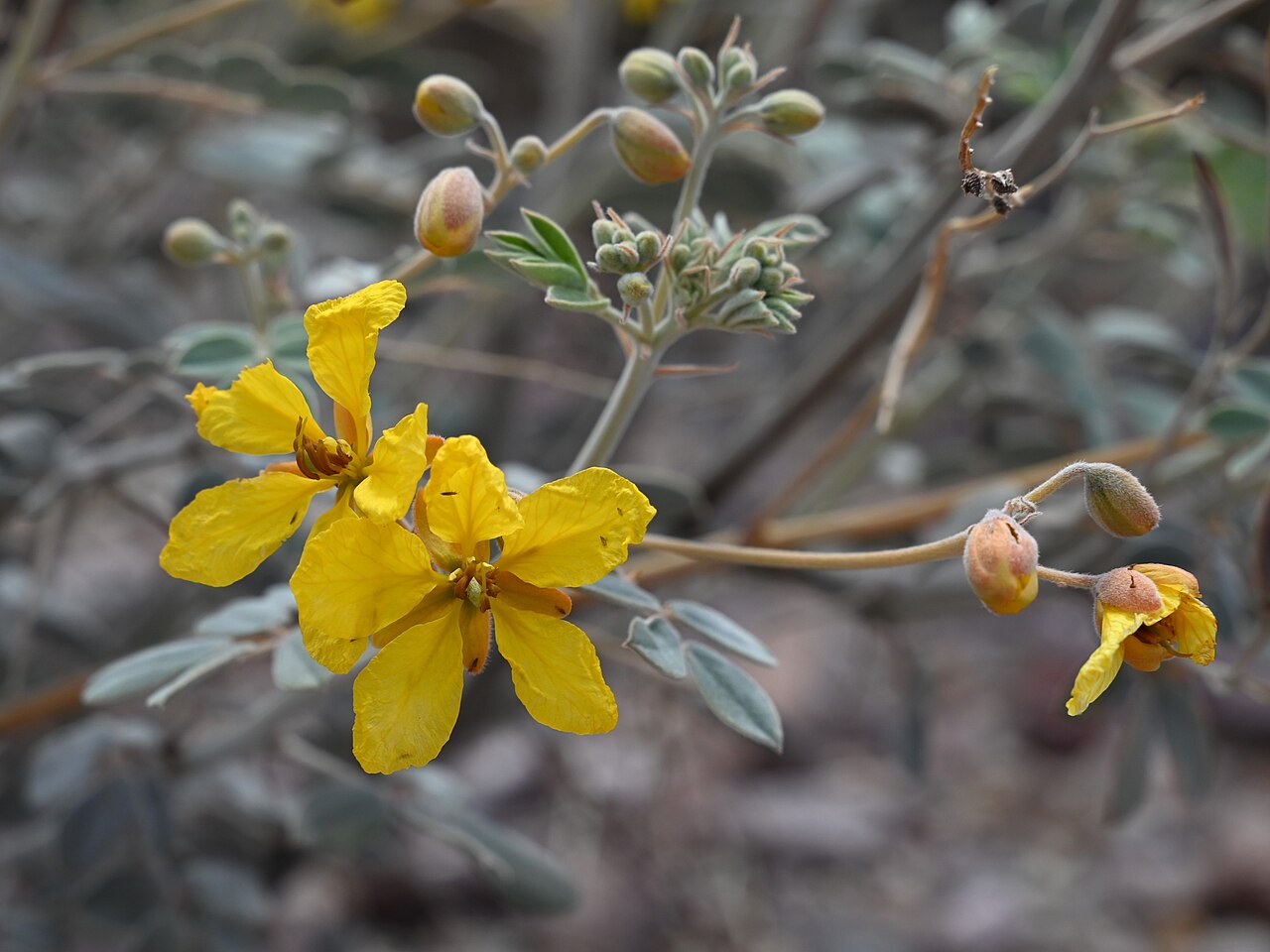
Flowers grow in short clusters from the upper leaf axils. Each is about 1 inch across, with five rounded, golden-yellow petals that are slightly unequal, and ten stamens of different lengths with brown or orange anthers. Like other sennas, the flowers have no nectar; their anthers release pollen through small pores when bees vibrate them. The main bloom is in spring, from about March to May, with more flowers after summer monsoon rains, so flowers may be seen from February to October.
Fruit & Seeds
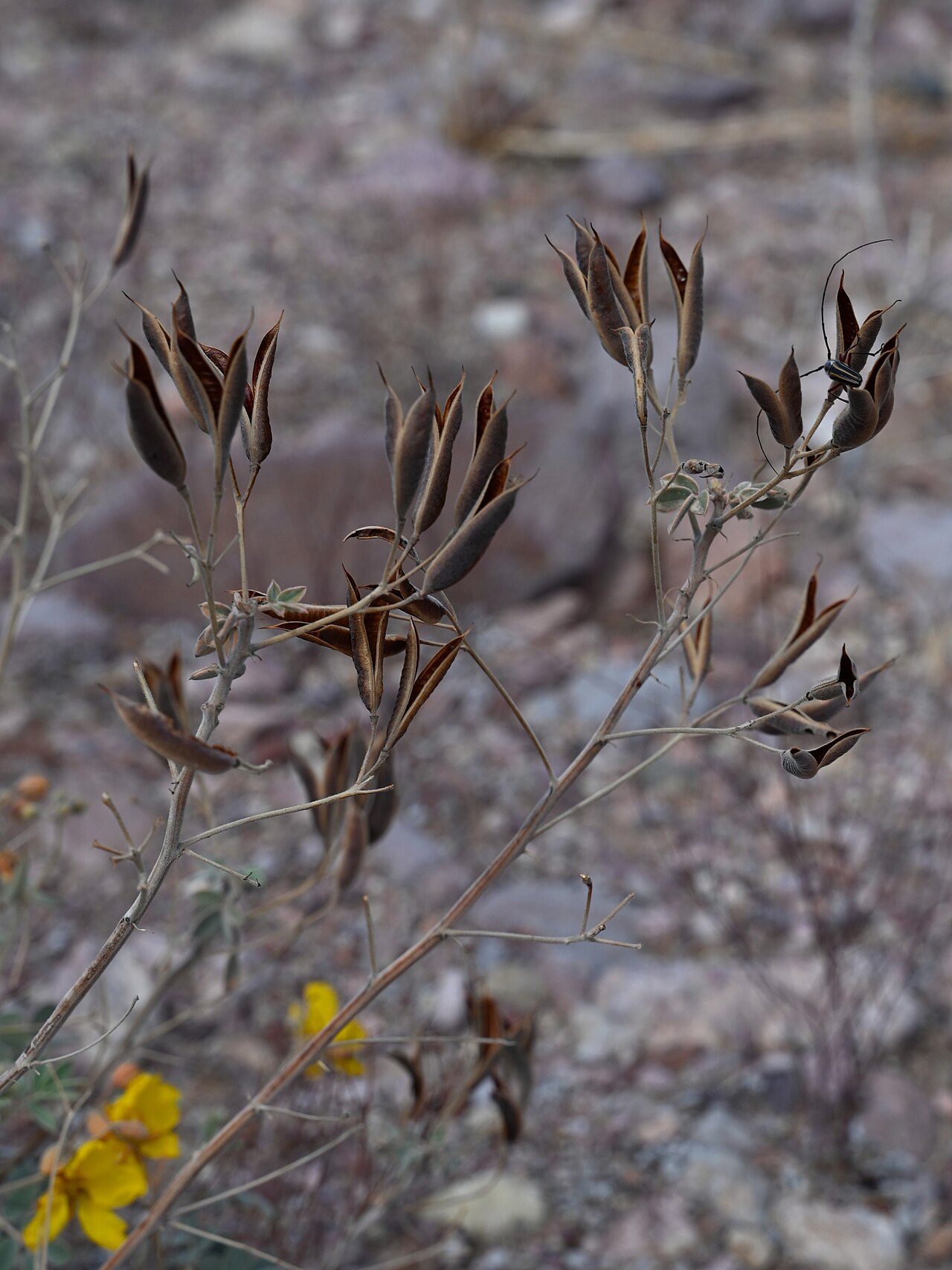
The fruit is a flat, straight or slightly curved pod 1 to 2 inches long, green and hairy at first and drying brown. Pods stand upright on the stems and split open when ripe. The hard, dark seeds rattle in the dry pods, which explains the names rattleweed and rattlebox.
Look-alikes
Desert Senna (Senna armata) of the Mojave and Colorado deserts is a larger, rounded shrub of green, nearly leafless, spine-tipped stems. Lindheimer Senna (Senna lindheimeriana) is taller, with more leaflet pairs, and grows mostly farther east. Two-leaved Senna (Senna roemeriana) has only one pair of leaflets. Note that “desert senna” is used for both Senna armata and Senna covesii, so check the scientific name when buying.
Safety
Do not eat any part of this plant. Sennas contain anthraquinone compounds that act as strong laxatives and can cause cramping, diarrhea and dehydration in people and pets if eaten in quantity. Livestock rarely browse it. Keep children and pets from chewing the pods and seeds.
Quick Facts
| Scientific Name | Senna covesii |
| Family | Fabaceae (pea or legume family) |
| Plant Type | Drought-deciduous perennial subshrub |
| Mature Height | 1–2 ft |
| Mature Spread | 1–2 ft |
| Growth Rate | Moderate to fast |
| Sun Exposure | Full sun |
| Water Needs | Very low; occasional deep water in long droughts |
| Soil Type | Sandy, gravelly or rocky, well-drained soil |
| Soil pH | Neutral to alkaline (about 7.0–8.5) |
| Bloom Time | March–May, again after summer rains (Feb–Oct) |
| Flower Color | Bright golden yellow |
| Fall Color | None; may drop leaves in drought |
| Fruit | Upright flat pod, 1–2 in, with rattling seeds |
| Deer Resistant | Yes; seldom browsed |
| USDA Hardiness Zones | 8–11 |
Native Range
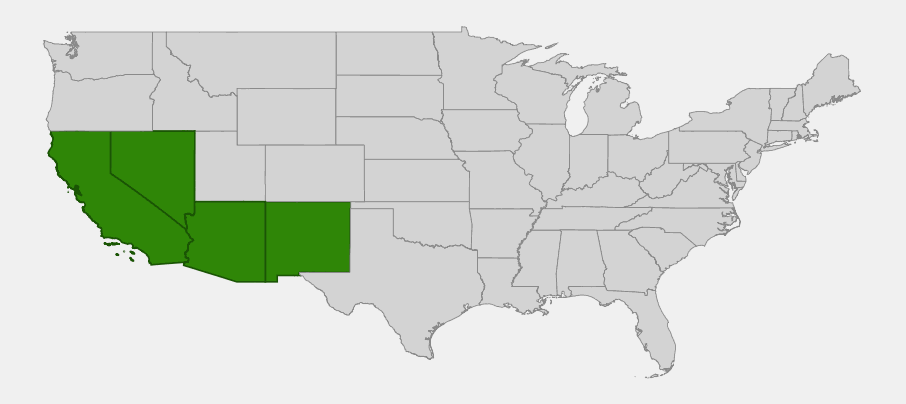
Coues’ senna is native to the Sonoran and Mojave deserts of the southwestern United States and northwestern Mexico. USDA PLANTS lists it as native in Arizona, California, Nevada and New Mexico. In Mexico it extends into Baja California and Sonora.
It is most common in southern and western Arizona, from the deserts around Phoenix and Tucson west to the Colorado River and south to the border, including Organ Pipe Cactus National Monument. In California it grows in the Colorado Desert and eastern Mojave Desert, and it is common in Joshua Tree National Park. In Nevada it reaches the far southern tip of the state, and in New Mexico it is known from outlying records in the far southwestern corner.
Typical habitats are sandy and gravelly washes, rocky hillsides, bajadas and desert flats, and disturbed ground such as roadsides, mostly at about 1,000 to 4,000 feet. It often grows among creosote bush, bursage and palo verde.
📋 Regional plant lists featuring Coues’ Senna: Arizona & New Mexico · California & Nevada
Growing & Care Guide
Coues’ senna is one of the easiest native perennials for hot desert gardens. It needs sun, sharp drainage and very little water, and it rewards gardeners with yellow flowers in spring and again after summer storms.
Light
Give it full sun. It tolerates reflected heat from walls and pavement. In shade it becomes floppy and blooms poorly.
Soil & Water
Plant it in sandy, gravelly or rocky soil with good drainage; it tolerates poor, alkaline desert soils. Water every week or two for the first summer. After that it survives on rainfall in most of its native range, though an occasional deep watering in long dry spells keeps it leafy and flowering. Overwatering and heavy, wet soil shorten its life.
Planting Tips
Plant in fall or early spring. Space plants about 2 feet apart in drifts, or use them among boulders, along dry washes, in median and roadside plantings, or at the front of desert borders with taller shrubs behind. It combines well with desert marigold, globemallows and brittlebrush.
Pruning & Maintenance
Cut stems back by about half in late winter to remove old, woody growth and encourage a compact plant with more flowers. Do not fertilize. Expect it to look sparse or leafless in extended drought; it will recover after rain. Caterpillars of sulphur butterflies may chew leaves, but the plant regrows.
Propagation
Grow it from seed. The hard seed coat germinates better after scarification (nicking or sanding the seed) or a soak in hot water. Sow in warm soil in spring or at the start of the summer rains. Plants often self-sow in gravelly, open spots.
Landscape Uses
- Desert and xeriscape gardens: compact yellow color with almost no water
- Butterfly gardens: caterpillar host for sulphur butterflies
- Roadside and revegetation plantings: tough, self-sowing cover on disturbed ground
- Rock gardens and dry washes: among boulders and gravel
- Pollinator gardens: pollen for native carpenter bees and bumble bees
Wildlife & Ecological Value
Coues’ senna is a small plant with an outsized role for desert insects, especially buzz-pollinating bees and sulphur butterflies.
For Pollinators
The flowers offer pollen but no nectar. Carpenter bees and bumble bees grab the flowers and vibrate their flight muscles to shake pollen out of the pore-tipped anthers, a process called buzz pollination. Other native bees collect pollen too.
For Birds
Quail and other ground-feeding birds may eat seeds that fall from the pods, and the low clumps provide a little cover on open desert ground.
For Mammals
Mammals rarely browse it, probably because of its laxative compounds. Desert rodents may harvest some seeds.
Ecosystem Role
Coues’ senna is a caterpillar host for sulphur butterflies, including the cloudless sulphur and the sleepy orange. As a legume it adds to the diversity of desert wash and bajada communities and quickly colonizes disturbed soil, helping to stabilize it.
Cultural & Historical Uses
The species name honors Elliott Coues (1842–1899), a U.S. Army surgeon and naturalist who collected plants and animals while stationed at Fort Whipple in Arizona Territory in the 1860s and later became one of the leading American ornithologists. Asa Gray named the plant Cassia covesii, and it was later moved to the genus Senna.
The Tohono O’odham call the plant by names meaning “rattlesnake’s teeth.” In one traditional story, the plants grew where the harmless original teeth of the rattlesnake were thrown away before it was given new teeth.
Desert sennas have also been used in traditional remedies across the Southwest, reflecting the laxative properties of the genus. These are historical uses only; the plant should not be eaten or used as a home remedy. Today Coues’ senna is widely grown in Arizona desert landscapes and roadside wildflower plantings.
Frequently Asked Questions
Is Coues’ senna the same as desert senna?
The name desert senna is used for both Senna covesii and Senna armata. Coues’ senna is a small, leafy, gray-hairy subshrub; Senna armata is a larger, nearly leafless shrub with spine-tipped stems.
Is Coues’ senna poisonous?
It is not highly toxic, but like other sennas it contains strong laxative compounds. Do not eat any part of it, and keep pets and children from chewing the pods and seeds.
How often should I water it?
Water every week or two the first summer. Once established it needs little or no supplemental water in the low desert, apart from an occasional deep soak in long droughts.
Why did my senna lose its leaves?
It is drought-deciduous and drops its leaves to save water during long dry periods. It will leaf out again after rain or a deep watering.
Which butterflies use Coues’ senna?
It is a caterpillar host plant for sulphur butterflies, including the cloudless sulphur and the sleepy orange.

Looking for a nursery that carries Coues’ Senna?
Browse our native plant nursery directory: Arizona · California · Nevada & New Mexico