
Cushion Foxtail Cactus (Escobaria alversonii)
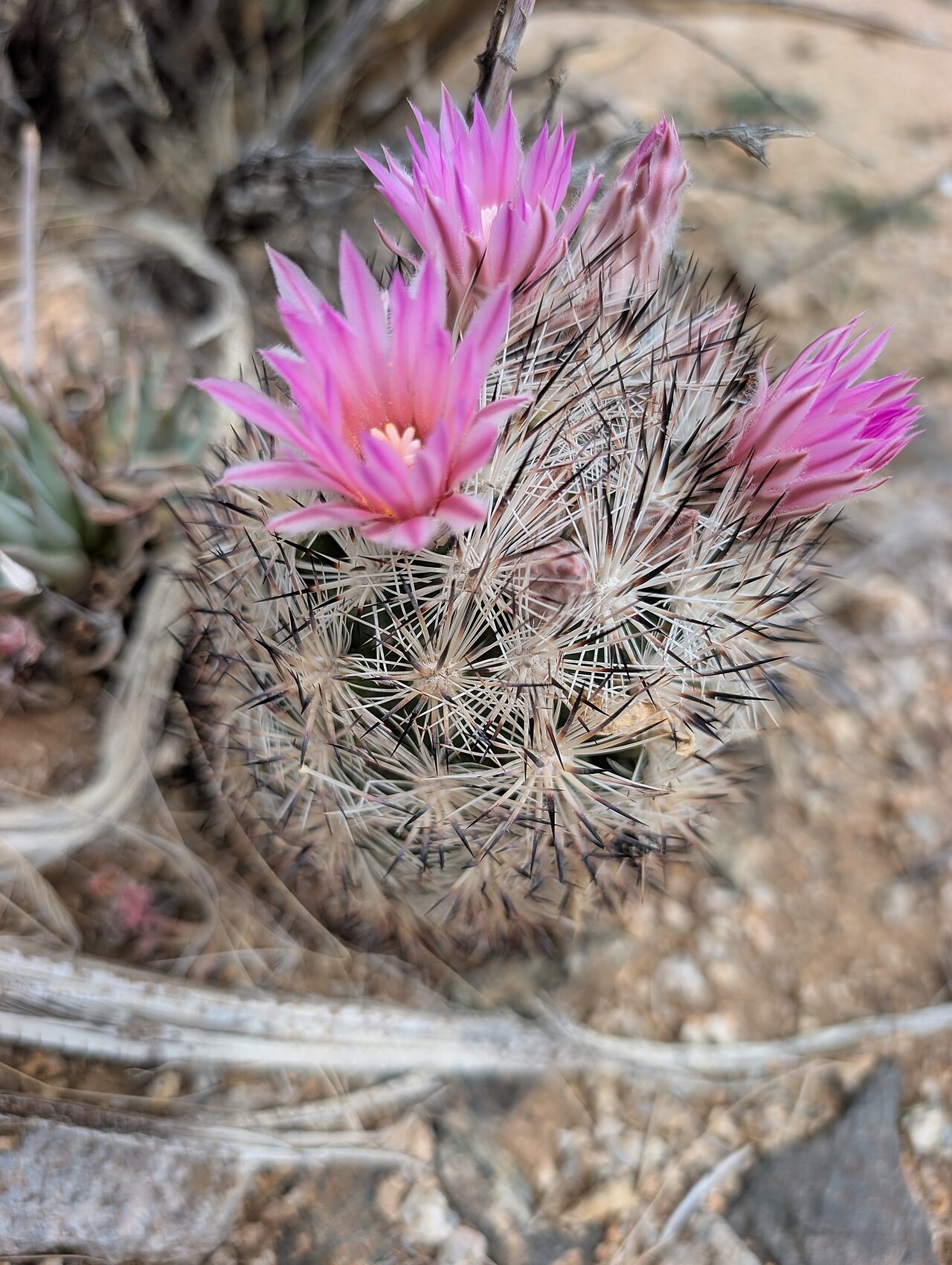
Escobaria alversonii, known as Cushion Foxtail Cactus, is a small, densely spined cactus of the Mojave and Sonoran deserts in the cactus family (Cactaceae). Its egg-shaped to cylindrical stems, usually 4 to 10 inches tall, grow alone or in small clumps and are so thickly covered with white, dark-tipped spines that they look like furry foxtails. In spring it bears bright magenta to pink flowers at the top of the stem.
It has a small range in the low deserts of southeastern California and western Arizona, mostly on rocky and gravelly slopes in creosote bush scrub. It is closely related to the widespread spinystar (Escobaria vivipara), and some botanists treat it as a variety of that species, Escobaria vivipara var. alversonii. It is also known as Coryphantha alversonii, and recent studies have placed it in the genus Pelecyphora.
Cushion foxtail cactus is uncommon and has been threatened by illegal collecting. It is legally protected from removal in both California and Arizona, and like all cacti it is regulated in international trade. Enjoy it in the wild, never dig it from the desert, and buy only nursery-propagated plants grown from seed.
Identification
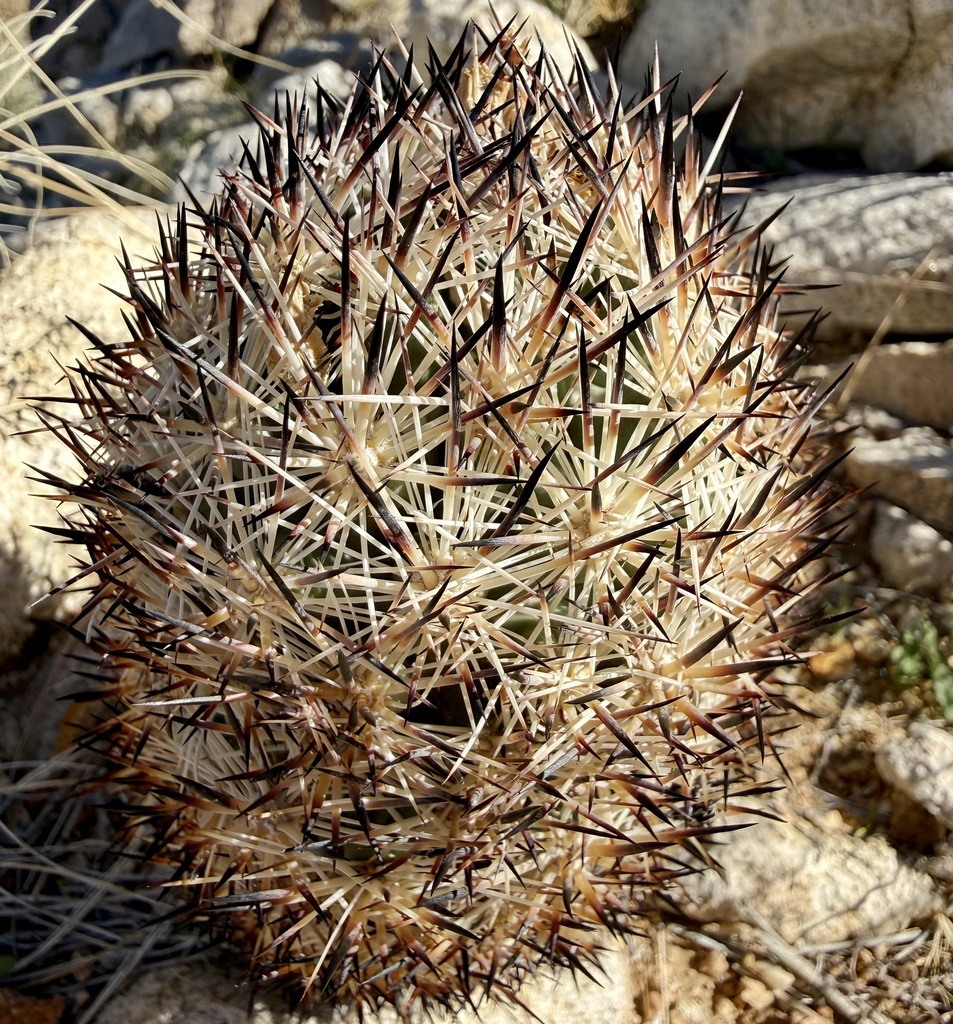
Look for a small, egg-shaped to cylindrical cactus on rocky desert slopes, so densely covered with white radial spines and dark-tipped central spines that the green stem is hidden, with magenta flowers at the top in spring.
Growth Habit
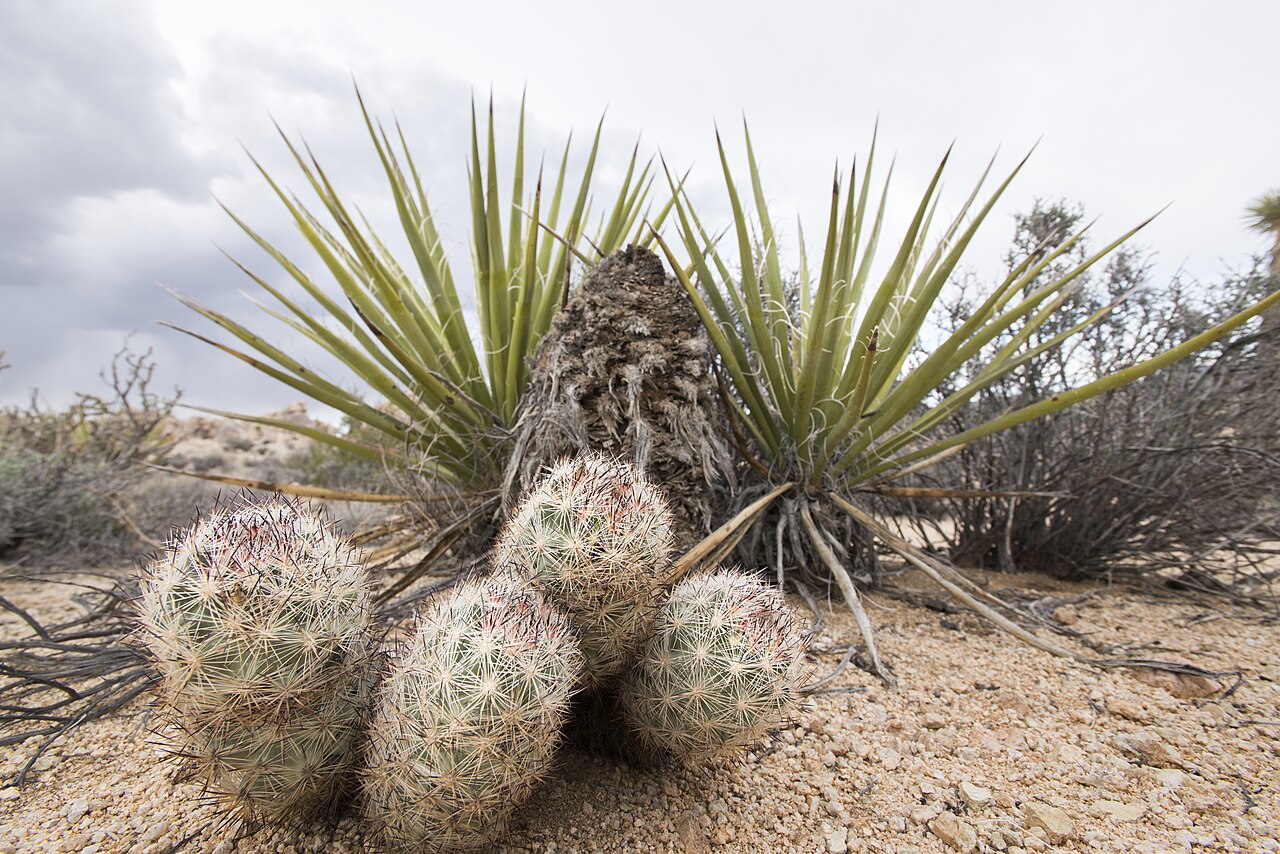
Cushion foxtail cactus grows as single stems or small clumps of up to a dozen or more. Each stem is egg-shaped to cylindrical, about 4 to 10 inches tall and 2 to 3 1/2 inches wide. The surface is made of small, nipple-like bumps (tubercles), each tipped with a cluster of spines and grooved on the upper side, as in other foxtail and pincushion cacti of this group.
Spines
Each spine cluster has about 18 to 30 slender, white radial spines and several stouter central spines that are white or gray with dark red, brown or black tips. Together they cover the stem completely, giving it a shaggy, grayish look from a distance.
Flowers
It blooms in spring, mainly from April to June. The flowers grow from the top of the stem and are about 1 to 1 1/2 inches across, with narrow, bright magenta to pink tepals, often paler at the edges, and a center of cream to yellow stamens.
Fruit
The fruit is a small, oblong, fleshy berry, green to red, about 3/4 to 1 inch long, with small dark seeds.
Look-alikes
Spinystar (Escobaria vivipara), especially its desert variety, is very similar; it usually has fewer, less dense spines and grows at higher elevations. Common fishhook cactus (Mammillaria tetrancistra) has hooked central spines and lacks grooves on the tubercles. Cottontop cactus (Echinocactus polycephalus) forms large mounds of ribbed stems with stout, reddish spines and yellow flowers.
Quick Facts
| Scientific Name | Escobaria alversonii |
| Family | Cactaceae (cactus family) |
| Plant Type | Small clustering cactus |
| Mature Height | 4–10 in |
| Mature Spread | 3 in to 1 ft (clumps) |
| Growth Rate | Slow |
| Sun Exposure | Full sun |
| Water Needs | Very low; extremely well-drained soil |
| Soil Type | Rocky, gravelly or sandy desert soil, often granitic |
| Soil pH | About 6.5–8.5 |
| Bloom Time | April–June |
| Flower Color | Magenta to pink |
| Fall Color | Evergreen (succulent stems) |
| Fruit | Small green to red fleshy berries |
| Deer Resistant | Yes |
| USDA Hardiness Zones | 9–10 |
Native Range
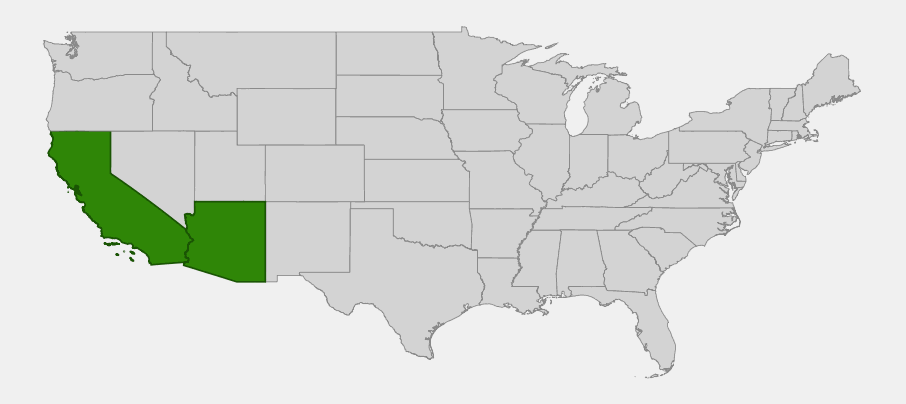
Cushion foxtail cactus is native to a small area of the southwestern United States and adjacent Mexico. USDA PLANTS lists it from two states, California and Arizona.
In California it grows in the Colorado (Sonoran) Desert and southern Mojave Desert of Riverside and San Bernardino counties, including the southern part of Joshua Tree National Park. In Arizona it is found in the low deserts of the western part of the state. It is uncommon to locally common within this range, and many populations are small.
Its habitat is creosote bush scrub on rocky and gravelly slopes, alluvial fans, desert pavements and sandy flats, often on granitic soils, at low elevations, mostly below about 3,000 feet. It often grows in the partial shelter of rocks or shrubs such as creosote bush and bursage.
📋 Regional plant lists featuring Cushion Foxtail Cactus: Arizona & New Mexico · California & Nevada
Growing & Care Guide
Cushion foxtail cactus is a choice plant for desert rock gardens and containers, but only nursery-propagated plants should ever be grown. Never collect it from the wild: it is uncommon, protected by state law in California and Arizona, and wild-dug cacti rarely survive transplanting. Buy seed-grown plants from reputable cactus nurseries.
Light
Full sun or bright light with a little afternoon shade in the hottest deserts. Indoors or in a greenhouse, give it the brightest light possible.
Soil & Water
Grow it in a very fast-draining, mineral mix such as coarse sand, decomposed granite and pumice, with little organic matter. Water sparingly in spring and fall, letting the soil dry completely between waterings, and keep it nearly dry in summer heat and winter cold. Overwatering causes rot.
Planting Tips
Plant it on a mound, slope or raised bed in a desert rock garden, or in a clay pot with a gritty mix. Set it with the base of the stem at the soil surface and top-dress with gravel to keep the stem dry. It is hardy only to about the mid-20s °F, so grow it in containers that can be protected where winters are colder or wetter.
Pruning & Maintenance
No pruning is needed. Remove fallen debris from the clump to prevent rot, and watch for mealybugs and scale on potted plants.
Propagation
Grow it from seed sown on the surface of a sterile, gritty mix kept warm and lightly moist. Seedlings grow slowly and may take several years to flower. Offsets from clustering nursery plants can also be removed and rooted after their cut bases dry.
Landscape Uses
- Desert rock gardens: a small, furry-looking cactus with magenta flowers
- Containers and cactus collections: compact and slow-growing
- Xeriscapes in the low desert: needs no water once established
- Pollinator gardens: spring flowers for desert bees
- Conservation education: an example of a rare cactus threatened by collecting
Wildlife & Ecological Value
Cushion foxtail cactus is a small but valuable part of the low desert ecosystem.
For Pollinators
Its bright flowers are pollinated mainly by native bees, including cactus bees and other solitary bees, which visit for pollen and nectar.
For Birds
Desert birds such as cactus wrens and thrashers may eat the fleshy fruit and disperse the seeds.
For Mammals
Rodents and other small mammals eat the fruit and seeds. The dense spines protect the stems from most browsing animals.
Ecosystem Role
As a long-lived perennial, it stores water in its stems and provides fruit and flowers through dry periods. It is part of the diverse cactus community of the Sonoran and Mojave deserts, and a sign of undisturbed desert scrub.
Cultural & Historical Uses
The genus Escobaria is named for the Escobar brothers, Rómulo and Numa, Mexican agronomists. The species is named for Andrew H. Alverson, a 19th-century collector from San Bernardino, California, who sent the first specimens to botanists. The name “foxtail” refers to the bushy look of the densely spined stems.
Botanists have long debated how to classify it. It has been placed in Coryphantha, Escobaria and, most recently, Pelecyphora, and it has also been treated as a variety of the widespread spinystar. Its range and appearance suggest it is closely related to the desert forms of spinystar.
Because of its attractive, furry appearance and small size, cushion foxtail cactus is sought by collectors, and illegal removal from the wild has reduced some populations. In California, cacti are protected in the desert counties under the California Desert Native Plants Act, and in Arizona under the Arizona Native Plant Law. All cacti are also listed by CITES, which regulates international trade.
Frequently Asked Questions
Is cushion foxtail cactus rare?
It has a small range in southeastern California and western Arizona and is uncommon in many places. It has been threatened by illegal collecting, so it should never be removed from the wild.
How is it related to spinystar?
It is closely related to spinystar (Escobaria vivipara), and some botanists treat it as a variety of that species. Cushion foxtail cactus usually has denser, whiter spines and grows in lower, hotter deserts.
When does cushion foxtail cactus bloom?
In spring, mainly from April to June, with bright magenta to pink flowers at the top of the stem.
Can I grow cushion foxtail cactus?
Yes, if you buy a nursery-propagated, seed-grown plant. It needs full sun, very fast-draining soil and very little water, and protection from hard frost and winter rain.
Where can I see it in the wild?
In the low deserts of southeastern California, including the southern part of Joshua Tree National Park, and in western Arizona. Look but do not touch or collect.

Looking for a nursery that carries Cushion Foxtail Cactus?
Browse our native plant nursery directory: Arizona · California

