
Scytheleaf Onion (Allium falcifolium)
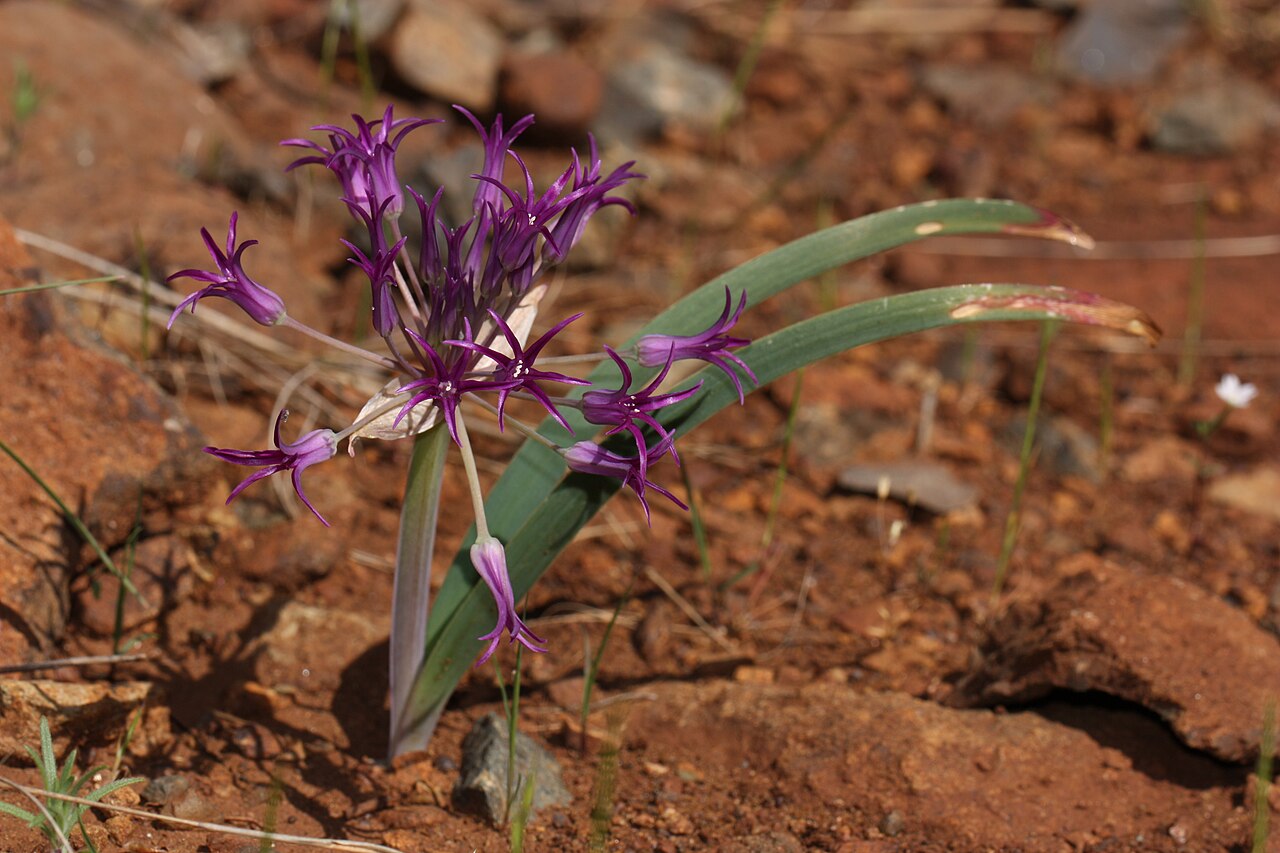
Allium falcifolium, known as Scytheleaf Onion or coast flatstem onion, is a small but striking wild onion of rocky, often serpentine, ground in southwestern Oregon and northern California. It hugs the ground, with a flowering stalk only 2 to 6 inches tall and usually just two flat, thick, curved leaves that lie on the soil like a pair of sickles. In spring it opens a tight cluster of deep rose-purple to wine-red flowers with sharply pointed petals.
The species name falcifolium means “sickle-leaved,” from the Latin falx (sickle or scythe) and folium (leaf). The leaves are usually longer than the flowering stem, and the stem itself is flattened and slightly winged, which explains the name flatstem onion. Like all wild onions it belongs to the onion family (Amaryllidaceae, formerly placed in the lily family), grows from a small bulb, and smells of onion when crushed.
Scytheleaf onion is a plant of the Klamath-Siskiyou region and the North Coast Ranges, where it grows on open serpentine barrens, rocky slopes and scree, often with other specialized serpentine wildflowers. It is a charming plant for rock gardens and troughs, and the Lady Bird Johnson Wildflower Center notes that it is easy to grow from seed in a gritty mix. This guide covers how to identify it, where it grows and how to grow it.
Identification
Scytheleaf onion is easy to recognize by its combination of very short, flattened flower stalks, two wide, curved leaves that lie on the ground, and dark purple flowers. It often grows in groups on bare, rocky soil.
Bulb
It grows from a small, egg-shaped bulb about ½ to 1 inch long, buried a few inches deep in rocky soil. The bulb is covered with brownish outer coats. New bulbs form beside the old one over time, so plants can form small clusters.
Leaves
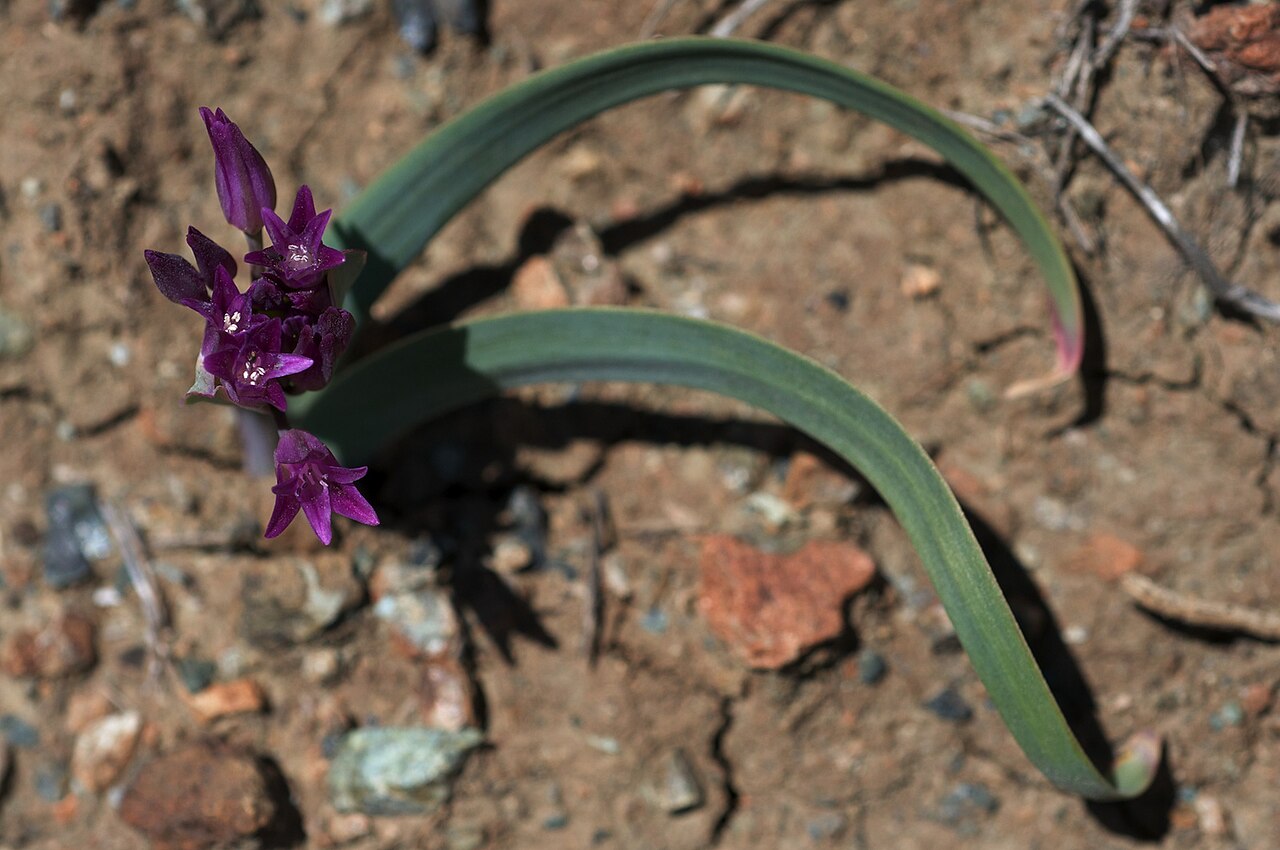
There are usually two leaves (sometimes one or three). They are flat, thick and somewhat fleshy, about ⅛ to ½ inch wide, and strongly curved like a sickle or scythe blade. They are blue-green to gray-green and usually longer than the flower stalk, often 4 to 10 inches long, so they arch out and lie on the soil around the flowers. They remain green while the plant is in flower and wither soon after.
Flowering Stem
The flower stalk (scape) is short, usually 2 to 6 inches tall, flattened and narrowly two-winged along its edges. At the top, a pair of papery bracts encloses the young flower cluster and splits as the flowers open.
Flowers
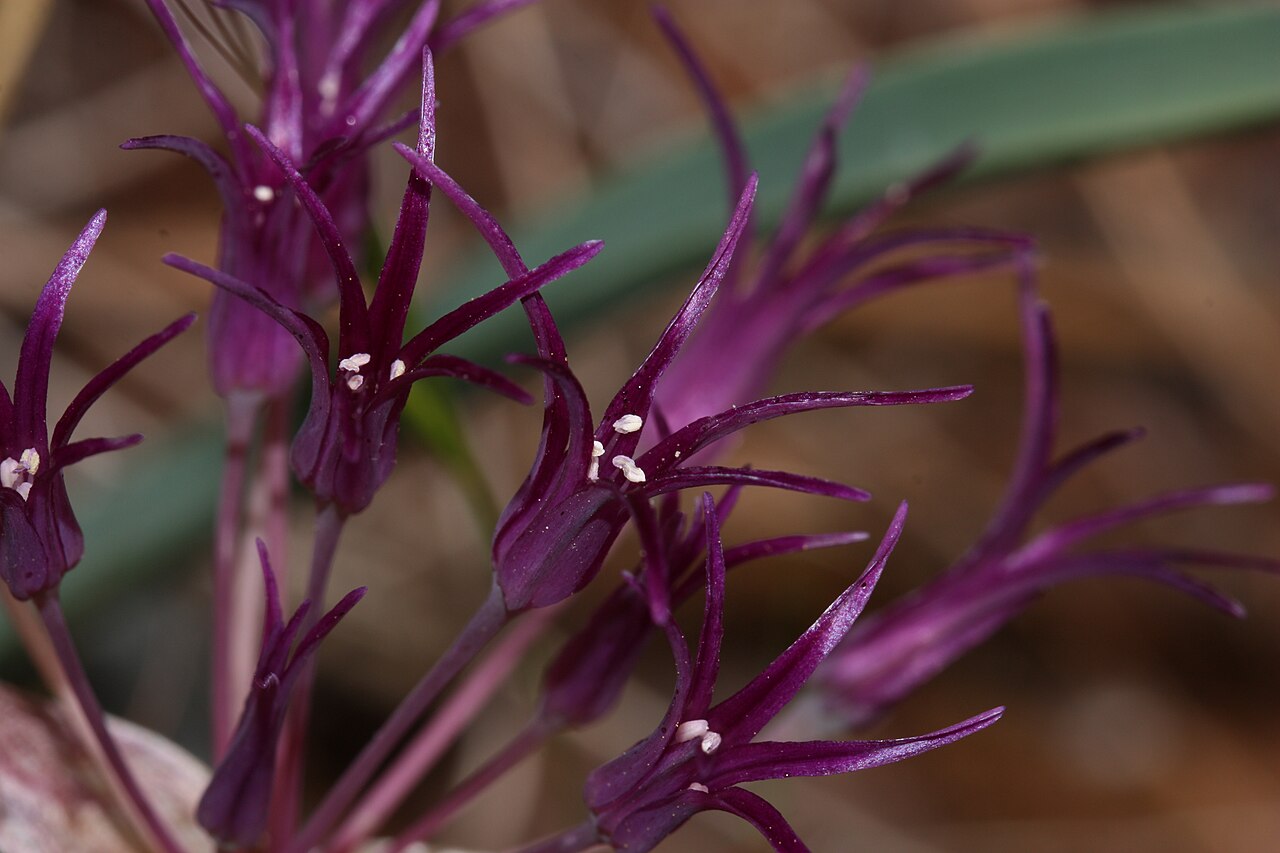
The flowers are in a dense, rounded cluster (umbel) of about 10 to 30. Each flower is about ½ inch long, with six narrow, sharply pointed tepals that are deep rose-purple to reddish-purple, sometimes paler pink and rarely whitish. The pale anthers stand out against the dark tepals. Bloom time is mainly April to June, depending on elevation.
Look-alikes
Narrowleaf Onion (Allium amplectens) has narrow leaves that usually wither by flowering time, a taller round stem and pale pink to white flowers. Always check for the onion smell; non-onion plants with similar leaves, such as death camas, have no onion odor and are poisonous.
Quick Facts
| Scientific Name | Allium falcifolium Hook. & Arn. |
| Family | Amaryllidaceae (onion family; formerly Liliaceae or Alliaceae) |
| Plant Type | Bulb-forming herbaceous perennial |
| Mature Height | 2–6 in (flowering stalk); leaves often longer and lying on the ground |
| Mature Spread | 4–10 in |
| Growth Rate | Slow |
| Sun Exposure | Full sun |
| Water Needs | Low; moist in spring, dry in summer dormancy |
| Soil Type | Rocky, gravelly or clay soils; often serpentine; excellent drainage |
| Soil pH | About 6.0–8.0 (tolerates serpentine soils) |
| Bloom Time | April–June |
| Flower Color | Deep rose-purple to reddish-purple; rarely pale pink or white |
| Fall Color | None; dormant from summer to winter |
| Fruit | Small three-lobed capsule with black seeds |
| Deer Resistant | Moderately; the onion flavor deters most browsing |
| USDA Hardiness Zones | 7–9 |
Native Range
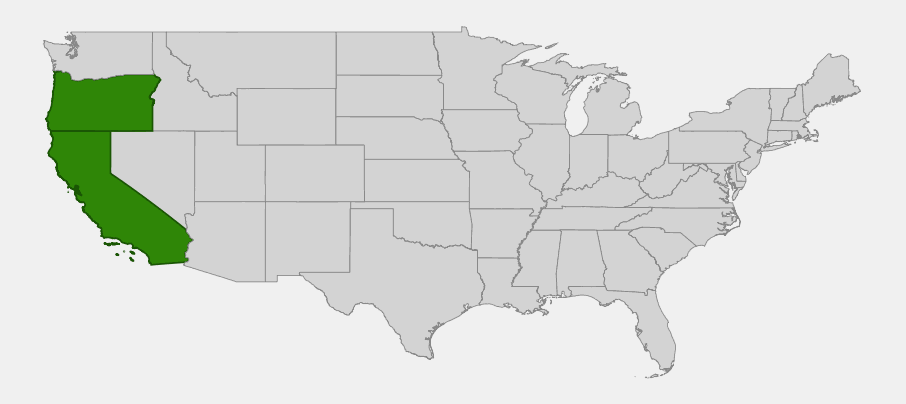
Scytheleaf onion is native to just two states. USDA PLANTS records it in Oregon and California, and the Lady Bird Johnson Wildflower Center describes its range as southwestern Oregon south to Santa Cruz County, California. In Oregon it is found in the southwestern counties, in the Siskiyou Mountains and the serpentine country of the Illinois Valley, where the T. J. Howell Botanical Drive is a well-known place to see it.
In California it grows in the Klamath Mountains and the North Coast Ranges, including the inner ranges of Lake, Colusa, Napa and Sonoma counties, and it continues south in scattered locations through the San Francisco Bay Area to the Santa Cruz Mountains.
Its typical habitat is open, rocky ground, especially serpentine outcrops and barrens, gravelly slopes, scree, and thin clay soils, where competition from grasses and shrubs is low. It is found from low foothill elevations up into the mountains, often growing with other serpentine-tolerant plants under scattered Jeffrey pine, gray pine or leather oak.
📋 Regional plant lists featuring Scytheleaf Onion: California & Nevada · Western Oregon & Western Washington
Growing & Care Guide
Scytheleaf onion is a small, tidy bulb for rock gardens, troughs and pots in Mediterranean-type climates. The keys to success are sharp drainage, full sun and a dry summer rest. Buy bulbs or seed from nurseries that propagate their own stock, and never dig bulbs from the wild.
Light
Plant it in full sun. In shade the leaves become weak and the plant flowers poorly.
Soil & Water
Use a very gritty, fast-draining mix, such as a rock-garden scree, a raised bed or a container with plenty of pumice or gravel. It does not need serpentine soil in the garden, but it will not tolerate heavy, wet soil. Water from fall through spring if rain is lacking, then let it dry out completely once the leaves begin to yellow in late spring or early summer.
Planting Tips
Plant bulbs in fall, 2 to 3 inches deep and a few inches apart, in small groups for a better show. Because it is so low, place it at the front of a rock garden or in a trough where its sickle-shaped leaves and dark flowers can be seen up close. Topdress with gravel to keep the bulbs dry in summer.
Pruning & Maintenance
Let the leaves wither naturally after bloom so the bulb can store energy. Do not water during summer dormancy. Bulbs can be lifted and divided every few years when clumps become crowded.
Propagation
Grow it from seed sown in fall in a gritty mix and left outdoors over winter. The Lady Bird Johnson Wildflower Center notes that seed germinates easily this way. Seedlings take a few years to reach flowering size. Offsets from established bulbs can also be separated and replanted in fall.
Landscape Uses
- Rock gardens and troughs: a compact bulb with bold, dark flowers
- Container gardens: thrives in gritty mixes with a dry summer rest
- Serpentine and rock-garden collections: a good representative of the Klamath-Siskiyou serpentine flora
- Pollinator gardens: spring flowers visited by native bees
- Habitat restoration: rocky and serpentine sites within its native range
Wildlife & Ecological Value
Scytheleaf onion is a small part of the remarkable serpentine plant communities of the Klamath-Siskiyou region and the North Coast Ranges.
For Pollinators
Its flowers produce nectar and pollen and are visited by native bees, including small solitary bees, as well as flies and other insects. Its spring bloom adds to the flower supply on open serpentine slopes, where flowering plants are often sparse.
For Birds
The small black seeds may be eaten by ground-feeding birds, but the plant is not a major bird food.
For Mammals
Rodents and other small mammals sometimes dig and eat wild onion bulbs. The strong onion flavor tends to discourage deer, though they may nibble the flowers.
Ecosystem Role
Serpentine soils are low in calcium and high in magnesium and heavy metals, and relatively few plants can grow on them. Scytheleaf onion is one of the many small bulbs and wildflowers adapted to these harsh soils, which make the Klamath-Siskiyou region one of the botanically richest areas in North America.
Cultural & Historical Uses
The species was described in the 1830s by William Jackson Hooker and George Arnott, in their account of the plants collected on Captain Frederick Beechey’s voyage to the Pacific, which visited California. Its name refers to its curved, sickle-shaped leaves.
Many Indigenous peoples of California and Oregon ate the bulbs of wild onions, either raw or cooked, and used them as flavoring. Scytheleaf onion is small and grows in limited habitats, so it is not a practical food plant today. Its bulbs should be left in the ground.
Safety note: All true onions smell of onion or garlic when crushed. Several poisonous plants, especially death camas (Toxicoscordion), grow in similar places and have grass-like leaves and bulbs but no onion smell. Never eat a wild “onion” unless you are certain of its identity, and remember that collecting wild bulbs harms local populations.
Frequently Asked Questions
Why is it called scytheleaf onion?
Its leaves are flat, thick and strongly curved like a sickle or scythe blade. The scientific name falcifolium means “sickle-leaved.”
Where does scytheleaf onion grow?
It grows in southwestern Oregon and northern California, south to Santa Cruz County, mainly on open serpentine outcrops, rocky slopes and scree in the Klamath-Siskiyou region and the North Coast Ranges.
When does scytheleaf onion bloom?
Mainly from April to June, depending on elevation. The plant goes dormant in summer.
Can I grow scytheleaf onion in my garden?
Yes, in full sun in a very gritty, well-drained rock garden, trough or container, with a dry summer rest. It is easy to grow from seed. Buy nursery-grown bulbs or seed rather than digging wild plants.
Is scytheleaf onion edible?
Like other wild onions it is edible, but it is small and grows in limited habitats, so it should not be harvested. Be careful of poisonous look-alikes such as death camas, which have no onion smell.

Looking for a nursery that carries Scytheleaf Onion?
Browse our native plant nursery directory: California · Oregon

