
Daggerpod (Phoenicaulis cheiranthoides)
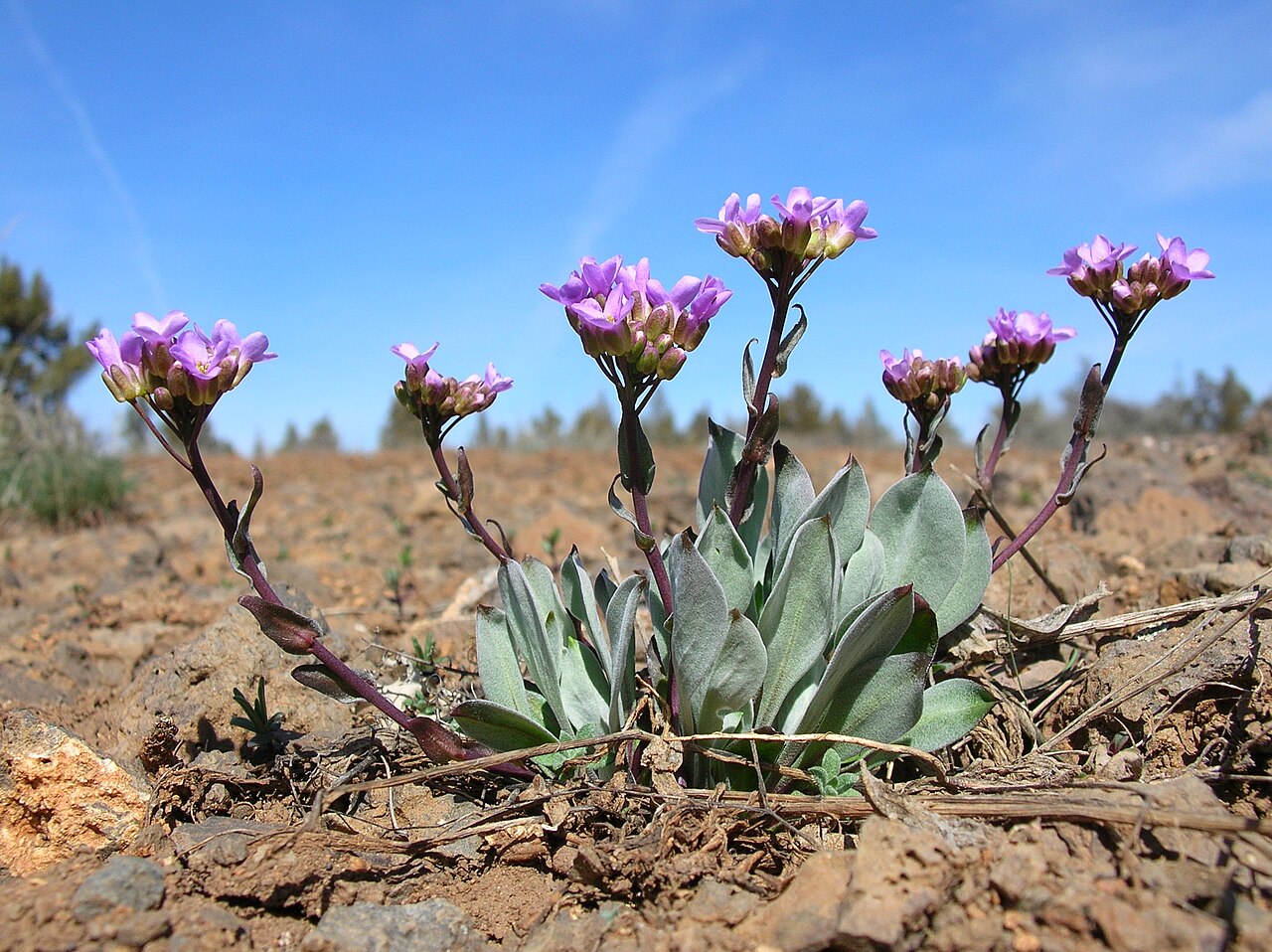
Phoenicaulis cheiranthoides, known as Daggerpod or wallflower phoenicaulis, is a low, early-blooming perennial wildflower in the mustard family (Brassicaceae). It forms a tight rosette of silvery, woolly leaves, and in spring sends up short, reddish-purple stems with dense clusters of bright pink to magenta, four-petaled flowers. These are followed by long, flat, sharply pointed seed pods that stick out sideways from the stem like small daggers, which gives the plant its common name.
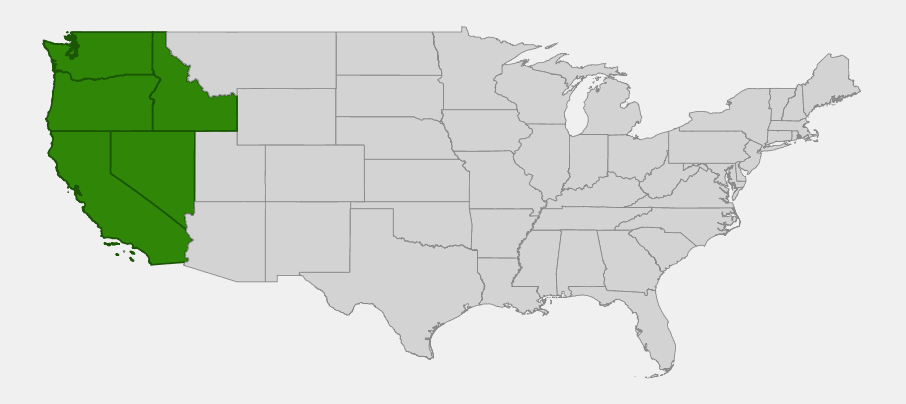
It is the only species in its genus, and it is native to the dry interior of the Pacific Northwest and the northern Great Basin: eastern Washington and Oregon, southwestern Idaho, northern Nevada and northeastern California, reaching south along the eastern Sierra Nevada. It grows in sagebrush steppe, on rocky ridges, scree, volcanic and clay slopes, and in dry mountain meadows, from the foothills up to the alpine zone.
Daggerpod is one of the first wildflowers to bloom on the sagebrush hills, often in March or April at low elevations. Its silvery foliage and vivid flowers make it a fine plant for rock gardens and crevice gardens in dry, cold-winter climates, although it is difficult to find in nurseries.
Identification
Look in early spring on rocky sagebrush slopes for a low rosette of silvery-gray, felt-like leaves with short reddish stems bearing dense heads of magenta-pink, four-petaled flowers, followed by long, flat pods that point outward.
Growth Habit
Daggerpod is a perennial that grows from a deep taproot topped by a short, branching woody base (caudex). Each crown produces a dense rosette of leaves, and older plants may have several rosettes. The flowering stems are usually 4 to 12 inches tall, rising or leaning outward from the rosette, and are often tinged reddish-purple.
Leaves
The basal leaves are narrowly lance-shaped to spoon-shaped, up to about 4 inches long, and densely covered with fine, branched hairs that make them look silvery-gray and feel like felt. The leaves on the flowering stems are smaller, fewer and often less hairy.
Flowers
The flowers open in a dense, rounded cluster at the top of each stem, and the cluster lengthens as more flowers open. Each flower has four petals, about 1/2 inch long, ranging from pink and lavender to deep magenta-purple, with a pale or yellowish center. Bloom time ranges from March at low elevations to June or July in the mountains.
Fruit & Seeds
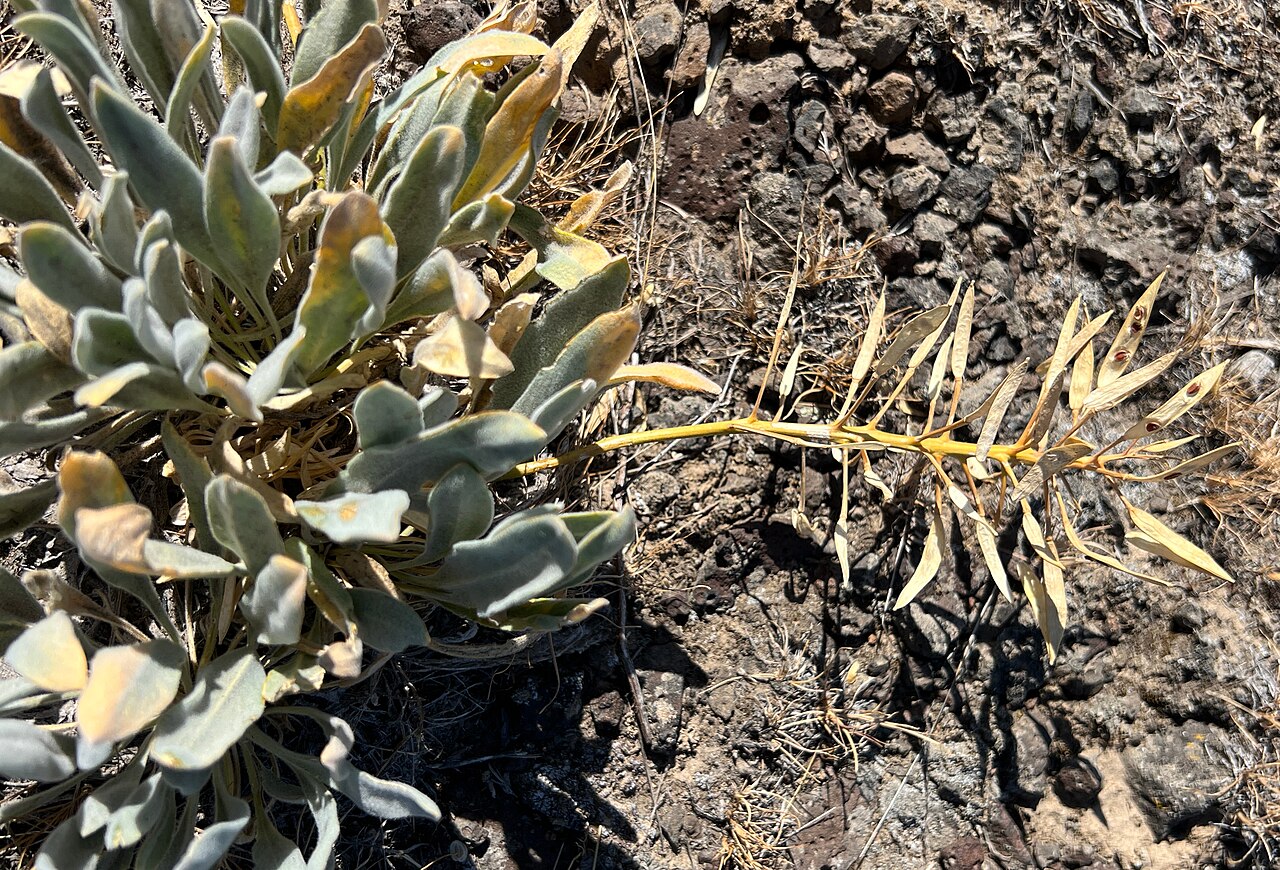
The fruits are the plant’s most distinctive feature. They are long, flat, smooth pods (siliques), up to about 3 1/2 inches long, straight and tapering to a sharp point, on short stalks that hold them out nearly horizontally, like a fan of small daggers around the stem. They turn tan as they dry and split to release flat seeds.
Look-alikes
Rockcresses (Boechera species) also have pink to purple four-petaled flowers and long pods, but their pods usually hang down or press upward against the stem, and their leaves are not as densely silvery. Spreading phlox and other cushion phloxes have five-petaled flowers and needle-like leaves. Western wallflower is a close mustard-family relative with orange or yellow flowers and four-angled pods.
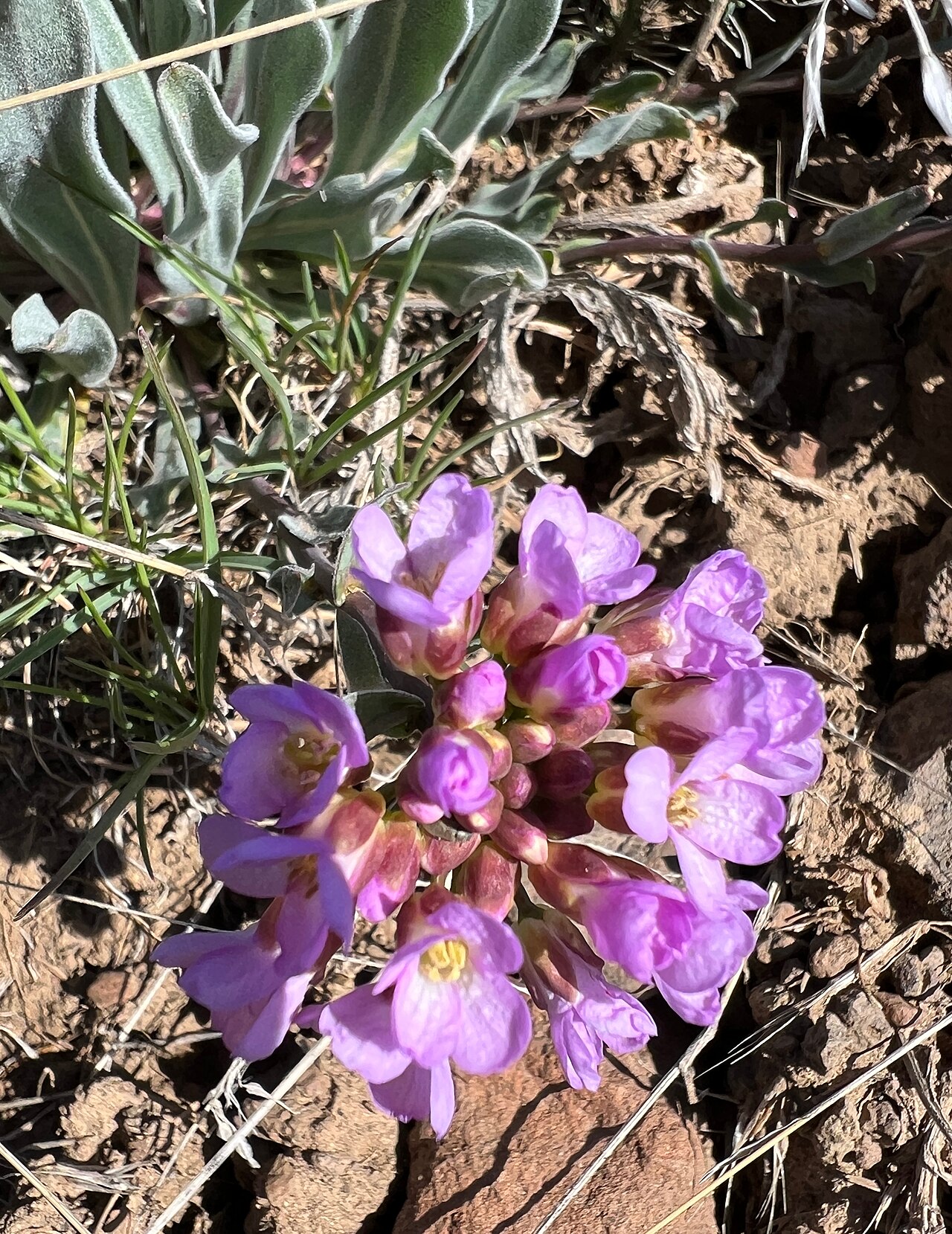
Quick Facts
| Scientific Name | Phoenicaulis cheiranthoides |
| Family | Brassicaceae (mustard family) |
| Plant Type | Low, rosette-forming herbaceous perennial |
| Mature Height | 4–12 in |
| Mature Spread | 4–10 in |
| Growth Rate | Slow |
| Sun Exposure | Full sun |
| Water Needs | Low; very drought tolerant |
| Soil Type | Rocky, gravelly, volcanic or clay, well-drained |
| Soil pH | Neutral to slightly alkaline (about 6.5–8.0) |
| Bloom Time | March–July, depending on elevation |
| Flower Color | Pink to magenta-purple |
| Fall Color | Silvery rosette persists |
| Fruit | Long, flat, dagger-shaped pods |
| Deer Resistant | Moderately |
| USDA Hardiness Zones | 4–8 |
Native Range
Daggerpod is native to the interior West. USDA PLANTS lists it from California, Idaho, Nevada, Oregon and Washington. It is not found in Canada. In Washington and Oregon it grows east of the Cascade crest, from the eastern foothills of the Cascades across the Columbia Plateau and the high desert of central and southeastern Oregon. In Idaho it is found mainly in the southwest, including the Owyhee region.
In Nevada it is most common in the north and west, including the ranges near Reno and Carson City. In California it grows in the Modoc Plateau, the northeastern mountains and along the eastern side of the Sierra Nevada, reaching high elevations in the southern Sierra. In the south of its range it grows up to about 10,500 feet, in alpine scree and on rocky ridges.
It grows in open, sunny, dry habitats: sagebrush steppe and scrub, rocky flats and ridges, talus and scree, exposed volcanic and clay slopes, rock outcrops, banks and dry meadows, often where the soil is thin and plant cover is sparse.
📋 Regional plant lists featuring Daggerpod: Idaho, Eastern Oregon & Eastern Washington · California & Nevada · Western Oregon & Western Washington
Growing & Care Guide
Daggerpod is a gem for rock gardens and crevice gardens in the dry, cold-winter West, but it is seldom available. Look for it at native plant society sales or specialty rock garden nurseries, or grow it from seed. Do not dig plants from the wild; their deep taproots rarely survive transplanting.
Light
Full sun. It grows in the open, with little shade, and becomes weak and floppy in shade.
Soil & Water
It needs excellent drainage: gravelly, rocky or sandy soil, or a crevice between rocks. It tolerates clay if the site drains well and is on a slope. Water young plants until established, then little or none; in the wild it gets rain and snowmelt in winter and spring and stays dry in summer. Wet soil in summer or winter will rot the crown.
Planting Tips
Plant small seedlings in fall or early spring in a rock garden, crevice garden, raised gravel bed or trough. Set the crown slightly above the soil and mulch with gravel to keep it dry. Avoid organic mulches and rich soil.
Pruning & Maintenance
No pruning is needed. Remove the dry flower stalks after the seeds have dropped, if you like. Keep it free of competing grasses and weeds, which crowd out its rosettes.
Propagation
Grow it from seed sown outdoors in fall or given a cold, moist period of several weeks before spring sowing. Sow in a gritty, well-drained mix and move seedlings to their final position while small, because the taproot resents disturbance.
Landscape Uses
- Rock gardens: silvery rosettes and vivid early flowers
- Crevice gardens and troughs: fits small, sharply drained spaces
- Sagebrush and xeric gardens: pairs with sagebrush, bunchgrasses and buckwheats
- Pollinator gardens: very early nectar for native bees
- Restoration: part of the native wildflower mix of sagebrush steppe
Wildlife & Ecological Value
Daggerpod blooms very early, when few other flowers are open on the dry hills, so it is an important early nectar source.
For Pollinators
The bright flowers attract native bees, bee flies, early butterflies and other insects in early spring. Many native bees of the sagebrush steppe emerge early and depend on early wildflowers like this one.
For Birds
Seed-eating birds of the sagebrush steppe, such as sparrows, may eat the seeds as the pods open.
For Mammals
Small mammals and deer may graze the plant, but its hairy leaves and low growth help it avoid heavy browsing.
Ecosystem Role
Daggerpod is part of the diverse community of wildflowers that grows between shrubs and bunchgrasses in sagebrush steppe. Its deep taproot helps it survive summer drought and holds thin, rocky soils. Like many native wildflowers of the region, it is threatened locally where cheatgrass and other invasive annual grasses crowd out native plants and fuel more frequent fires.
Cultural & Historical Uses
The genus name Phoenicaulis means “red-purple stem,” from the Greek phoinix (purple-red) and caulis (stem), referring to its reddish flower stems. The species name cheiranthoides means “like Cheiranthus,” the old genus name of the wallflowers, hence the common name wallflower phoenicaulis.
The English botanist Thomas Nuttall described the genus and species in the 1830s from plants collected during early expeditions to the Oregon country. Daggerpod has since been placed in several other genera, including Arabis and Parrya, but it is now again treated as the single species of its own genus.
The name “daggerpod” refers to the striking seed pods, which can be nearly as long as the flower stems and stand out sideways like the blades of small daggers.
Frequently Asked Questions
Why is it called daggerpod?
Its long, flat, sharply pointed seed pods stick out from the stems like small daggers.
When does daggerpod bloom?
In early spring, often from March or April at low elevations, and into June or July in the mountains.
Where does daggerpod grow?
In dry, rocky places in eastern Washington and Oregon, southwestern Idaho, northern Nevada and northeastern and eastern California.
Can I grow daggerpod in my garden?
Yes, in a sunny, sharply drained rock or crevice garden in a dry, cold-winter climate. Grow it from seed or buy nursery-grown plants; do not dig it from the wild.
Is daggerpod related to wallflowers?
Yes. Both are in the mustard family, and its species name means “like a wallflower.”

Looking for a nursery that carries Daggerpod?
Browse our native plant nursery directory: California · Idaho · Nevada · Oregon · Washington

