
Devil’s Spineflower (Chorizanthe rigida)
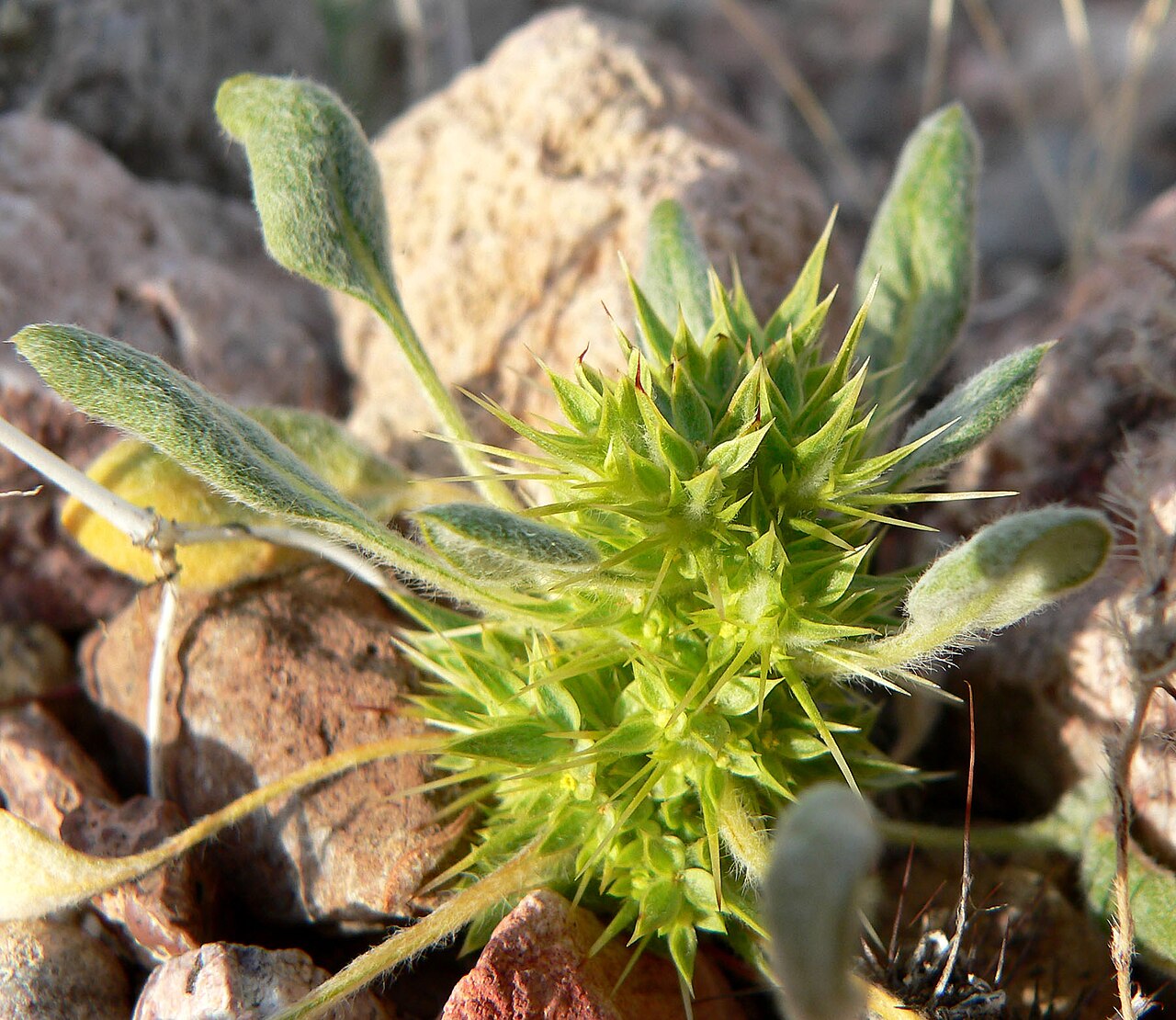
Chorizanthe rigida, known as Devil’s Spineflower or rigid spineflower, is a small, odd annual of the buckwheat family (Polygonaceae) that grows on gravelly flats, desert pavement and rocky slopes in the Mojave and Sonoran Deserts. In a wet spring it forms a little rosette of soft, long-stalked leaves and then a short, stout stem topped with dense clusters of stiff, spine-tipped bracts that hide its tiny yellow flowers. Plants are usually only 1 to 6 inches tall.
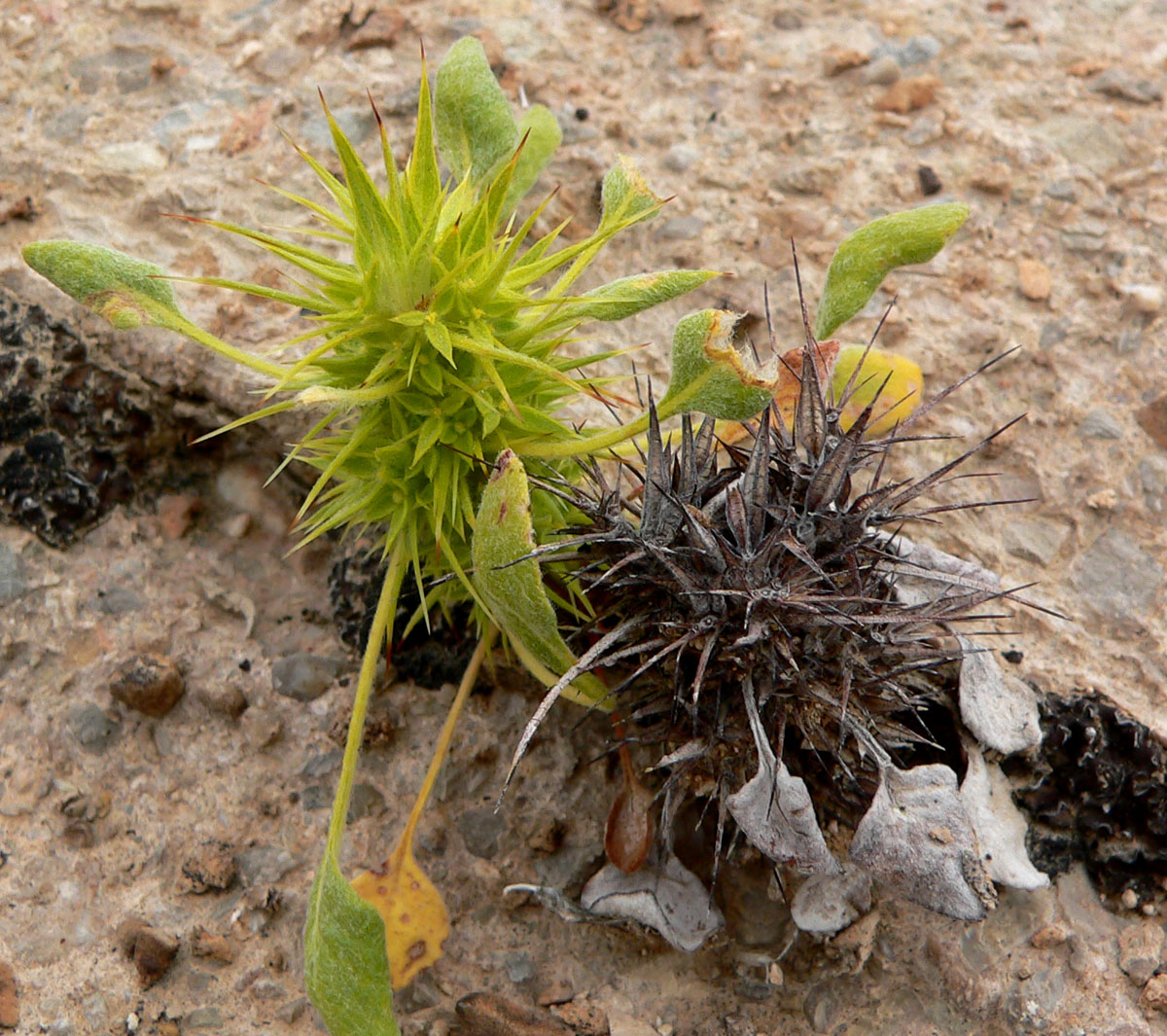
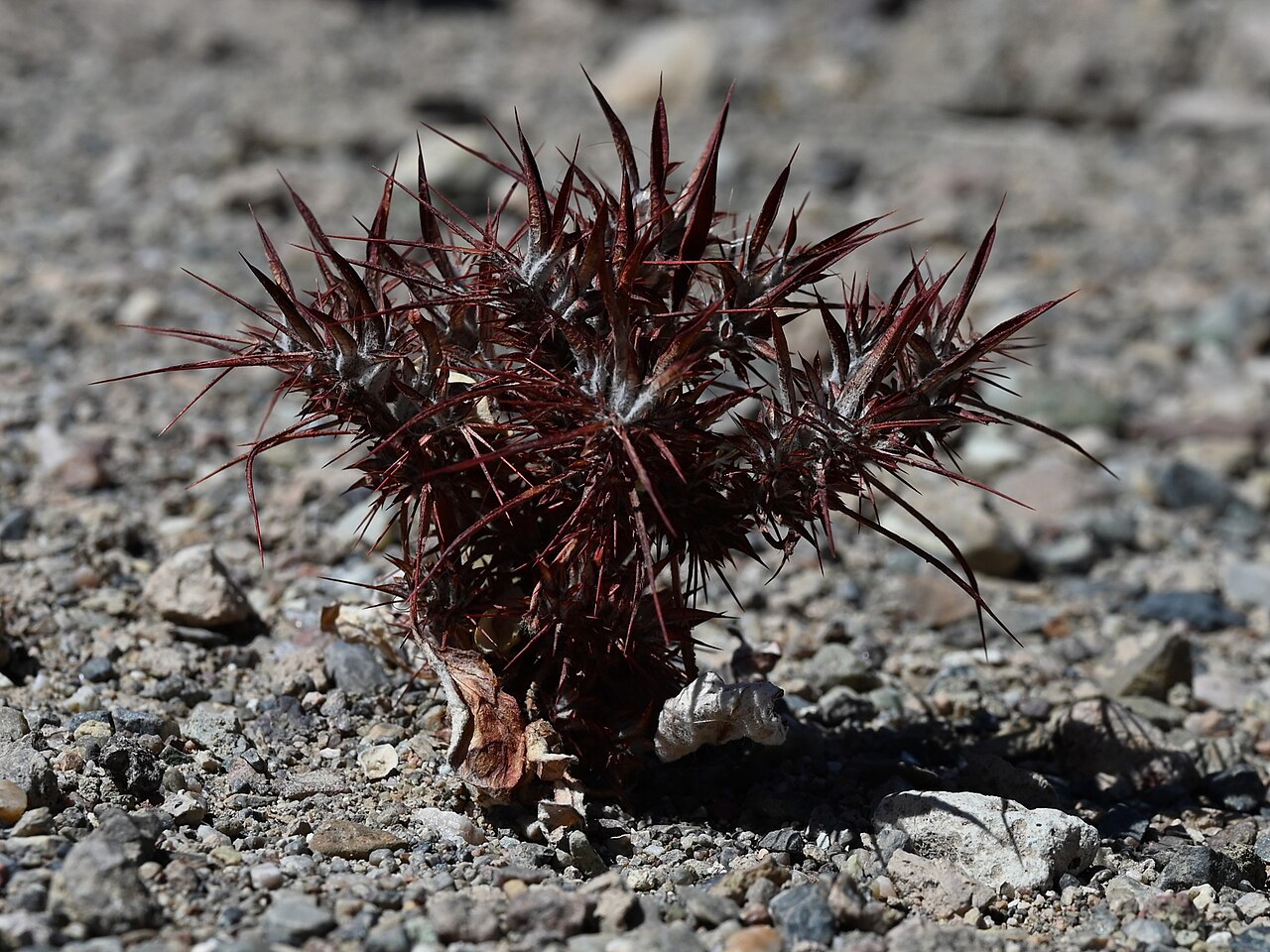
What makes it memorable is what happens after it dies. As the plant dries in late spring, it hardens into a rigid, reddish-brown to almost black skeleton bristling with sharp spines. These skeletons stay standing on the desert floor for a year or more, long after the leaves are gone, and are a familiar sight to desert hikers in Death Valley, around Las Vegas and in western Arizona.
Devil’s spineflower is rarely grown in gardens, and seed or plants are almost never sold. It is best appreciated in the wild, as one of the many small spring annuals that appear in the desert after good winter rains. Watch where you kneel or sit: the dried spines are sharp.
Identification
Look for a small, squat annual on desert gravel with a rosette of long-stalked, roundish leaves and a dense head of stiff, spiny bracts, or, more often, for its dark, spiny dead skeleton.
Growth Habit
Devil’s spineflower is a winter annual. It germinates after fall or winter rains, grows a basal rosette, and then produces a single, short, thick, upright stem, usually 1 to 6 inches tall, that branches into clusters of spiny involucres. The whole plant becomes stiff and woody as it dries in late spring.
Leaves
The leaves are all at or near the base. They have long stalks and blades that are roundish to oval or spoon-shaped, 1/4 to 1 inch long, greenish to gray-green above and densely woolly or hairy beneath. They wither as the plant matures and are usually gone by the time the skeleton forms.
Flowers
The flowers are tiny, about 1/16 inch long, yellow, and are tucked one per involucre inside a small cup of bracts (the involucre) that ends in stiff, spreading spines. Many involucres are packed together with leafy, spine-tipped bracts into dense clusters along the stem. Bloom time is March to May, depending on rainfall.
Fruit & Seeds
Each flower produces a single small, dark seed (achene) that stays inside its spiny involucre. The dried skeleton holds many of these seed-bearing involucres, which are released gradually as the skeleton breaks down.
Look-alikes
Other spineflowers (Chorizanthe) of the desert, such as brittle spineflower (C. brevicornu), are taller, more open and branched, with slender, brittle stems and fewer, smaller spines. Devil’s spineflower’s short, stout, densely spiny form is distinctive.
Quick Facts
| Scientific Name | Chorizanthe rigida |
| Family | Polygonaceae (buckwheat family) |
| Plant Type | Small winter annual |
| Mature Height | 1–6 in |
| Mature Spread | 2–6 in |
| Growth Rate | Fast in wet years |
| Sun Exposure | Full sun |
| Water Needs | Very low; winter rain only |
| Soil Type | Gravelly, rocky or sandy desert soils; desert pavement |
| Soil pH | Neutral to alkaline (about 7.0–8.5) |
| Bloom Time | March–May |
| Flower Color | Yellow (tiny, hidden among spines) |
| Fall Color | None; dead skeleton reddish-brown to black |
| Fruit | Achene held in a spiny involucre |
| Deer Resistant | Yes; spiny and seldom eaten |
| USDA Hardiness Zones | Annual; grows in zones 8–10 deserts |
Native Range
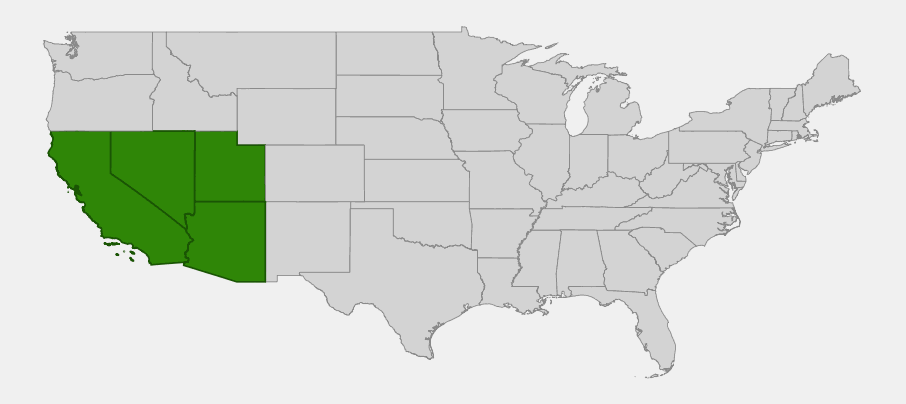
Devil’s spineflower is native to the Mojave and Sonoran Deserts of the southwestern United States and northwestern Mexico. USDA PLANTS lists it as native in Arizona, California, Nevada and Utah. It also grows in Baja California and Sonora.
In California it is common in Death Valley, the eastern Mojave Desert and the Colorado Desert, and reaches the lower slopes of the White and Inyo Mountains. In Nevada it grows across the southern part of the state, including around Las Vegas. In Arizona it is common in the western deserts, from the Lake Havasu area south through La Posa Plain and King Valley to the Yuma region. In Utah it is known only from the far southwest, at the edge of the Mojave Desert.
Its habitats are open, dry, gravelly and stony flats, desert pavement, bajadas, washes and rocky slopes, usually in creosote bush scrub. It grows from below sea level in Death Valley to about 6,000 feet.
📋 Regional plant lists featuring Devil’s Spineflower: Utah & Western Colorado · Arizona & New Mexico · California & Nevada
Growing & Care Guide
Devil’s spineflower is almost never cultivated, and neither seed nor plants are sold. It is a short-lived desert annual that depends on the right winter rains and undisturbed desert soils. If you live in the low desert and it appears on your land, the best thing to do is leave the ground undisturbed so it can reseed.
Light
Full desert sun.
Soil & Water
In the wild it grows in gravelly, rocky, very well-drained desert soils and desert pavement, with only winter rain. Garden watering and rich soil do not suit it.
Planting Tips
Do not collect seed or skeletons from parks, preserves or public lands. In a natural desert garden, avoid raking, grading or disturbing gravel surfaces where it grows; seeds held in old skeletons may germinate after a good wet winter.
Pruning & Maintenance
None. If the spiny skeletons are a problem on paths, move them gently to the edge of the path rather than throwing them away, so the seeds can still fall.
Propagation
It reproduces only by seed. Germination depends on cool-season rain of the right amount and timing, and it has not been reliably grown in cultivation.
Landscape Uses
- Natural desert landscapes: a small, interesting annual that appears on its own after wet winters
- Desert pavement and gravel areas: leave these surfaces undisturbed for annuals like this one
- Wildflower walks: look for it in spring in Death Valley, the Lake Mead area and western Arizona
- Nature study: its long-lasting skeletons are a good example of desert annual adaptations
- Desert conservation: part of the fragile annual community of desert pavement
Wildlife & Ecological Value
Devil’s spineflower is one of many small annuals that make the desert floor come alive in wet years.
For Pollinators
Its tiny flowers are visited by small insects such as tiny bees, flies and ants, but little is known about its pollination.
For Birds
Seed-eating birds and other wildlife may pick seeds from the involucres, though the spines offer protection.
For Mammals
The spines keep most grazing animals away. Desert rodents may collect seeds that fall to the ground.
Ecosystem Role
The rigid dead skeletons may help hold seeds in place on windswept desert pavement and release them slowly over time. The plant is part of the diverse community of desert annuals, which provides food for many insects and seed-eaters.
Cultural & Historical Uses
The genus name Chorizanthe comes from the Greek chorizo, “to divide,” and anthos, “flower,” referring to the divided parts of the flower. The species name rigida means “stiff” or “rigid,” for the hard, spiny dried plants.
The common name “devil’s spineflower” reflects how unpleasant its dried skeletons are to step or sit on. Its spines are rigid enough to puncture skin and catch in shoes and clothing.
Like many desert annuals, devil’s spineflower may not appear at all in dry years. Its seeds wait in the soil, or in old skeletons, until a winter with enough rain, when large numbers may come up at once.
Frequently Asked Questions
Is devil’s spineflower a cactus?
No. It is a small annual in the buckwheat family (Polygonaceae). Its spines are the stiff tips of bracts around the flowers, not cactus spines.
Why do people see it dead more often than alive?
The plant is green for only a few weeks in spring. Its rigid, spiny skeleton stays standing for a year or more after it dies, so it is visible much longer in that state.
Can I grow devil’s spineflower?
It is rarely grown and is not sold. It depends on winter rain and undisturbed desert soils. The best way to support it is to leave desert pavement and gravel areas undisturbed.
Where can I see devil’s spineflower?
In the Mojave and Sonoran Deserts, especially Death Valley, the Las Vegas area, the Lake Mead region and the deserts of western Arizona.
When does devil’s spineflower bloom?
From March to May, after enough winter rain.

Looking for a nursery that carries Devil’s Spineflower?
Browse our native plant nursery directory: Arizona · California · Nevada · Utah