
Fivespot (Nemophila maculata)
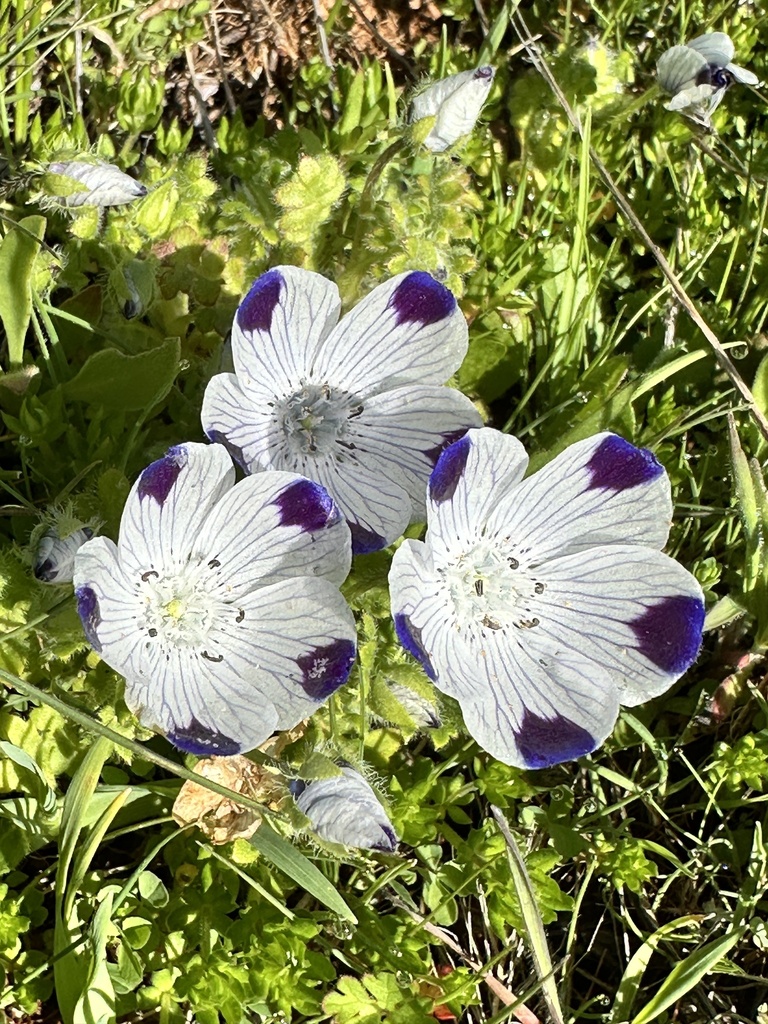
Nemophila maculata, known as Fivespot, is a cheerful spring annual wildflower found only in California. Its bowl-shaped white flowers, 1 to nearly 2 inches across, have a bold violet spot at the tip of each of their five petals, which gives the plant its name. It is a close relative of baby blue eyes and belongs to the waterleaf family (Hydrophyllaceae), which some botanists now include in the borage family (Boraginaceae).
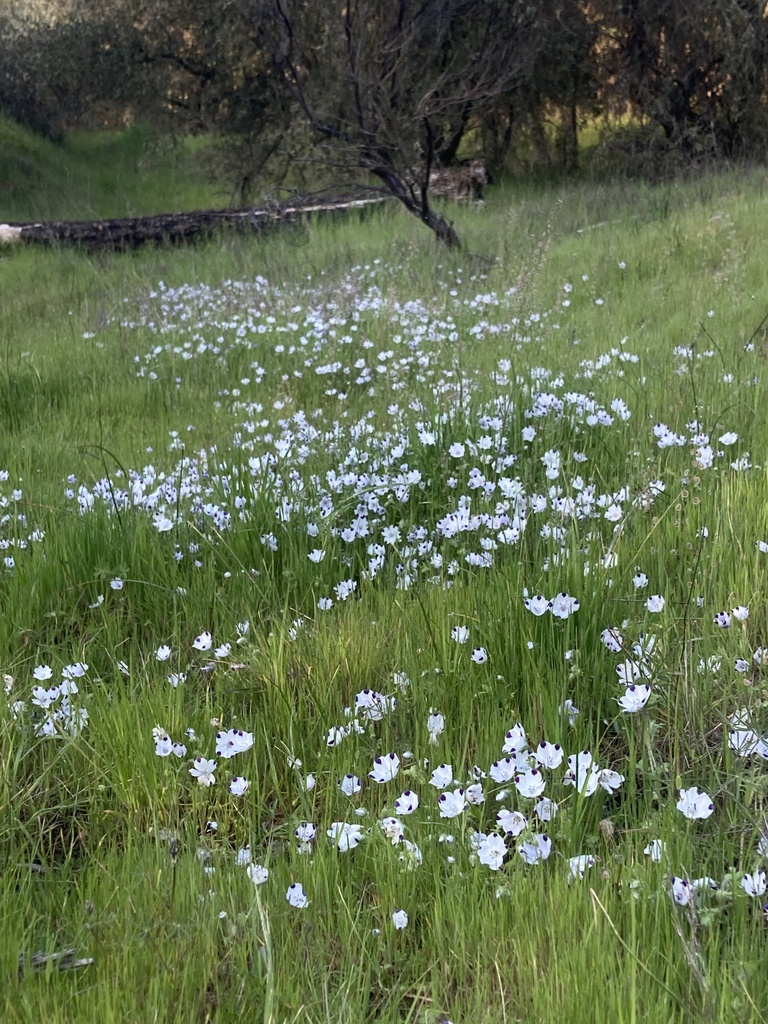
In the wild, fivespot grows mainly along the western slope of the Sierra Nevada, from the foothill grasslands and oak woodlands up into openings in the lower conifer forest. Lady Bird Johnson Wildflower Center describes its range as the western base of the Sierra Nevada from Plumas County south to Kern County. It blooms from spring into early summer, often in moist, grassy places, where it can form white carpets.
Fivespot is one of the easiest California wildflowers to grow from seed and has been a popular garden annual for well over a century, in North America and in Europe. Sow it in fall in mild-winter areas, or in early spring in colder climates, in a sunny or lightly shaded spot with moist, well-drained soil. It is lovely in containers, at the front of borders and in wildflower meadows.
Identification
Look for a low, sprawling annual in spring with lobed, soft green leaves and white, bowl-shaped flowers marked with a single violet spot at the tip of each petal.
Growth Habit
Fivespot is a low, sprawling to mounding annual, usually 4 to 12 inches tall and spreading as wide, with weak, succulent, branching stems that are smooth to sparsely hairy. It germinates with fall and winter rains, flowers in spring and dies back as the soil dries in early summer.
Leaves
The leaves are opposite, about 1/2 to 1 1/4 inches long, and divided into five to nine rounded or toothed lobes along each side. They are soft, bright green and sparsely hairy.
Flowers
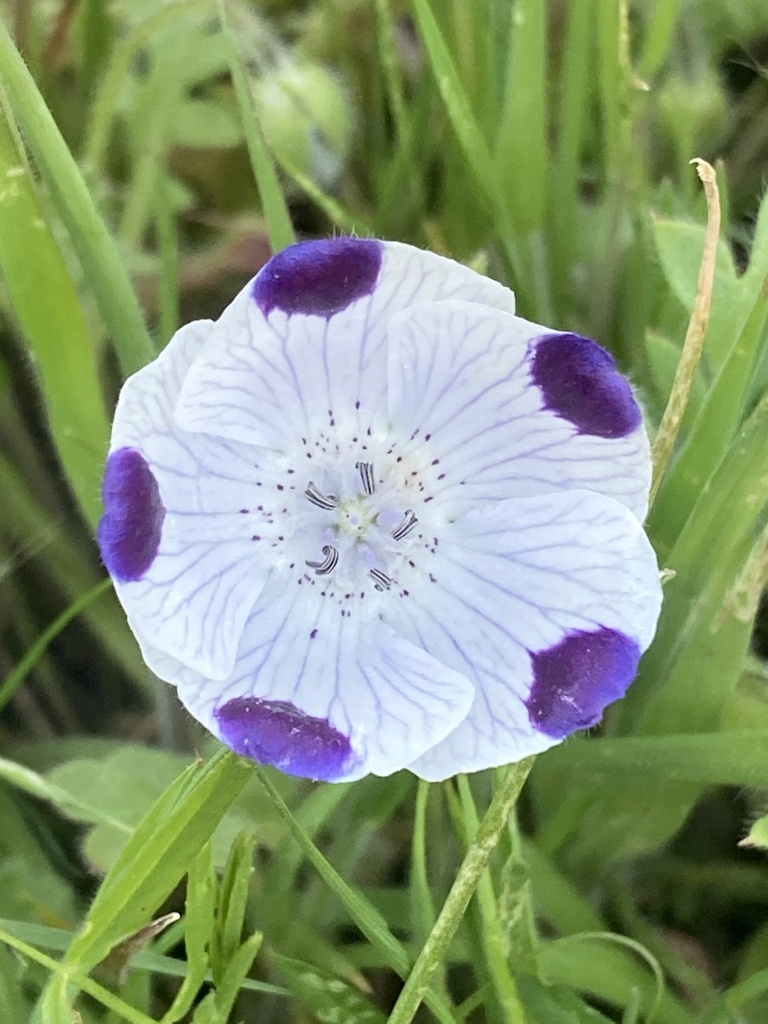
The flowers grow singly on slender stalks from the leaf axils. Each is bowl-shaped, about 1 to 1 3/4 inches across, with five broad, white petals finely lined and dotted with dark purple, and a large, deep violet to blue-purple spot at the tip of each petal. Bloom time is mainly April to July, depending on elevation.
Fruit & Seeds
The fruit is a small, round capsule that holds up to about a dozen greenish-brown, smooth or shallowly pitted seeds. Seeds ripen in late spring and early summer and fall near the parent plant.
Look-alikes
Baby blue eyes (Nemophila menziesii) has sky-blue flowers with white centers; some forms are white with dark spots, but the spots are scattered over the petals rather than concentrated in one blotch at each tip. White nemophila (N. heterophylla) has much smaller, plain white to pale blue flowers. No other California wildflower has the same single, large violet spot on each white petal.
Quick Facts
| Scientific Name | Nemophila maculata |
| Family | Hydrophyllaceae (waterleaf family) |
| Plant Type | Annual wildflower (cool-season) |
| Mature Height | 4–12 in |
| Mature Spread | 6–12 in |
| Growth Rate | Fast |
| Sun Exposure | Full sun to part shade |
| Water Needs | Moist in winter and spring; dries out in summer |
| Soil Type | Loam, sandy loam or clay loam; moist but well-drained |
| Soil pH | Slightly acidic to neutral (about 6.0–7.5) |
| Bloom Time | April–July |
| Flower Color | White with a violet spot on each petal tip |
| Fall Color | None; dies back by summer |
| Fruit | Small round capsule |
| Deer Resistant | Moderately |
| USDA Hardiness Zones | Annual; grows wild in zones 7–9 and is grown as a cool-season annual almost anywhere |
Native Range
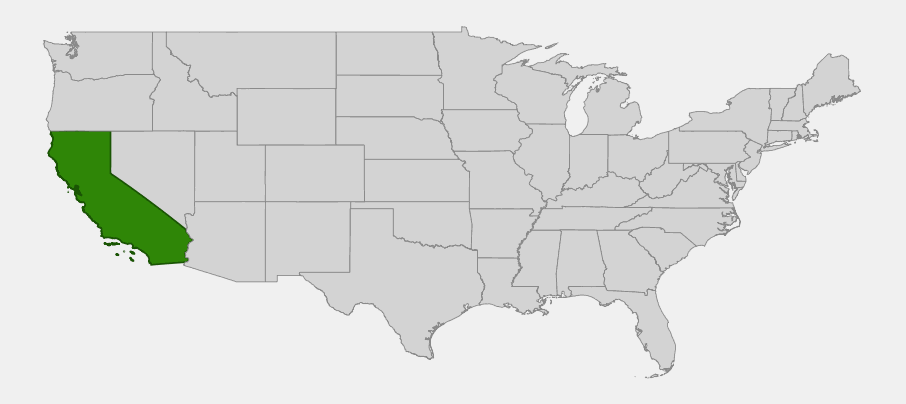
Fivespot is endemic to California, meaning it grows wild nowhere else. Calflora describes it as native to California and limited to California. Its main range is the western slope of the Sierra Nevada, from Plumas County south to Kern County, in the foothills and lower mountains, with scattered records in the Sacramento Valley and the Coast Ranges.
USDA PLANTS also lists Oregon and Utah. Records there come from towns and gardens, such as the Willamette Valley and the Wasatch Front, where fivespot is a popular garden annual that sometimes reseeds. Because Calflora treats it as a California endemic, those records are treated here as garden escapes, not part of its native range.
Its habitats are moist, grassy slopes and meadows, openings in foothill oak woodland and chaparral, streambanks and seeps, and clearings in yellow pine and mixed-conifer forest. It is often most abundant in partly shaded, moist spots under oaks and along trails and roadsides, where the soil stays damp through spring.
📋 Regional plant lists featuring Fivespot: California & Nevada
Growing & Care Guide
Fivespot is an easy, fast-growing annual for spring color. It does best where spring is cool and moist, and it often reseeds when it is happy.
Light
Full sun in cool, coastal or northern gardens; part shade, especially afternoon shade, in hot inland areas. In too much heat and sun the plants finish blooming quickly.
Soil & Water
Give it loose, moist but well-drained soil with some organic matter. Keep the soil evenly moist from germination through flowering; rain is often enough in winter-rain climates. Once seed has set in early summer, the plants can be allowed to dry out and die back.
Planting Tips
Sow seed directly where it will grow, because seedlings dislike transplanting. In mild-winter areas such as California, sow in fall with the first rains. In colder climates, sow in early spring as soon as the soil can be worked, for bloom in late spring and early summer. Cover the seed lightly, about 1/8 inch, and thin seedlings to 6 inches apart.
Pruning & Maintenance
Little care is needed. Water during dry spells in spring to extend bloom. Leave some plants to set seed if you want it to return, and pull spent plants once they turn brown.
Propagation
Grow it from seed, which is widely sold by wildflower and garden seed companies. Collect seed from the small capsules in late spring, store it dry over summer and sow it in fall.
Landscape Uses
- Spring containers: spills over the edges of pots and window boxes
- Border edging: a low, spreading front-of-border annual
- Wildflower meadows: mixes well with baby blue eyes, poppies and other California annuals
- Woodland edges: for partly shaded, moist spots under deciduous trees
- Pollinator gardens: an early nectar and pollen source for native bees
Wildlife & Ecological Value
Like other spring annuals, fivespot offers an early burst of food for pollinators in the California foothills.
For Pollinators
Its flowers are visited mainly by native solitary bees. The dark lines and spots act as guides that lead bees to the nectar at the center of the flower. Both male and female bees feed on the nectar, and females collect pollen to feed their larvae.
For Birds
Its seeds become part of the spring seed supply for ground-feeding birds such as sparrows, juncos and quail.
For Mammals
Deer and rabbits may nibble the tender plants. Their value for mammals is mostly as part of the varied spring forage of foothill grasslands and woodlands.
Ecosystem Role
As a winter-germinating annual, it helps cover soil during the rainy season and contributes to the spring wildflower displays that support many insects at the start of the year.
Cultural & Historical Uses
The genus name Nemophila comes from Greek words meaning “grove-loving,” a reference to the shaded, wooded places where many species grow. The species name maculata means “spotted,” for the violet spots on the petals.
Fivespot was introduced to European gardens in the 19th century from seed collected in California, and it has been a garden favorite ever since. It is still sold by many seed companies as a quick, easy annual for spring color.
Its graphic white-and-violet flowers make it a favorite of wildflower photographers in the Sierra Nevada foothills each spring.
Frequently Asked Questions
Is fivespot native outside California?
No. Fivespot is endemic to California. Plants found in Oregon, Utah and elsewhere come from gardens.
Is fivespot an annual?
Yes. It sprouts in fall or early spring, blooms in spring and early summer and dies back when the soil dries, often reseeding.
When should I sow fivespot seed?
In mild-winter climates, sow in fall with the first rains. In colder regions, sow in early spring for late spring and early summer flowers.
How is fivespot different from baby blue eyes?
Baby blue eyes has sky-blue flowers with white centers. Fivespot has white flowers with one bold violet spot at the tip of each petal.
Does fivespot grow in shade?
It grows well in part shade, especially afternoon shade in hot climates, but it does not flower well in deep shade.

Looking for a nursery that carries Fivespot?
Browse our native plant nursery directory: California

