Florida Yew (Taxus floridana)
Taxus floridana, the Florida Yew, is one of the rarest conifers in North America — a small, shade-loving evergreen shrub or tree found nowhere on Earth except a narrow, roughly 15-mile stretch of ravines and bluffs along the Apalachicola River in Florida’s Panhandle. It is a true botanical relict, a species that has persisted in this one sheltered corner of the Southeast since well before the last ice age reshaped the rest of the continent’s flora.
Florida Yew grows as a multi-stemmed evergreen shrub or small understory tree with flat, dark green, needle-like foliage and distinctive scaly, purplish-brown bark. Like all yews, it is dioecious, with male and female cones on separate plants, and female plants produce a soft, bright red, berry-like aril around each seed in fall. It shares its narrow range with the equally rare Florida torreya and the needle palm, together forming one of the most unusual and ancient plant communities in the eastern United States.
Because of its critically restricted range, slow growth, and ongoing recruitment failure from deer browsing and habitat pressure, Florida Yew is not a plant for casual landscaping and should never be collected from the wild. It is, however, an important species for native-plant gardeners and institutions within its historic range who can source nursery-propagated material and help support its long-term conservation through cultivation in protected, appropriate sites.
Identification
Florida Yew is an evergreen conifer that typically grows 10 to 20 feet tall as a dense, multi-stemmed shrub, occasionally reaching tree form up to about 33 feet in favorable ravine-bottom sites, with trunks to roughly 15 inches in diameter. Individuals commonly occur in clumps with multiple stems of varying ages and thicknesses rising from the base.
Bark & Stems
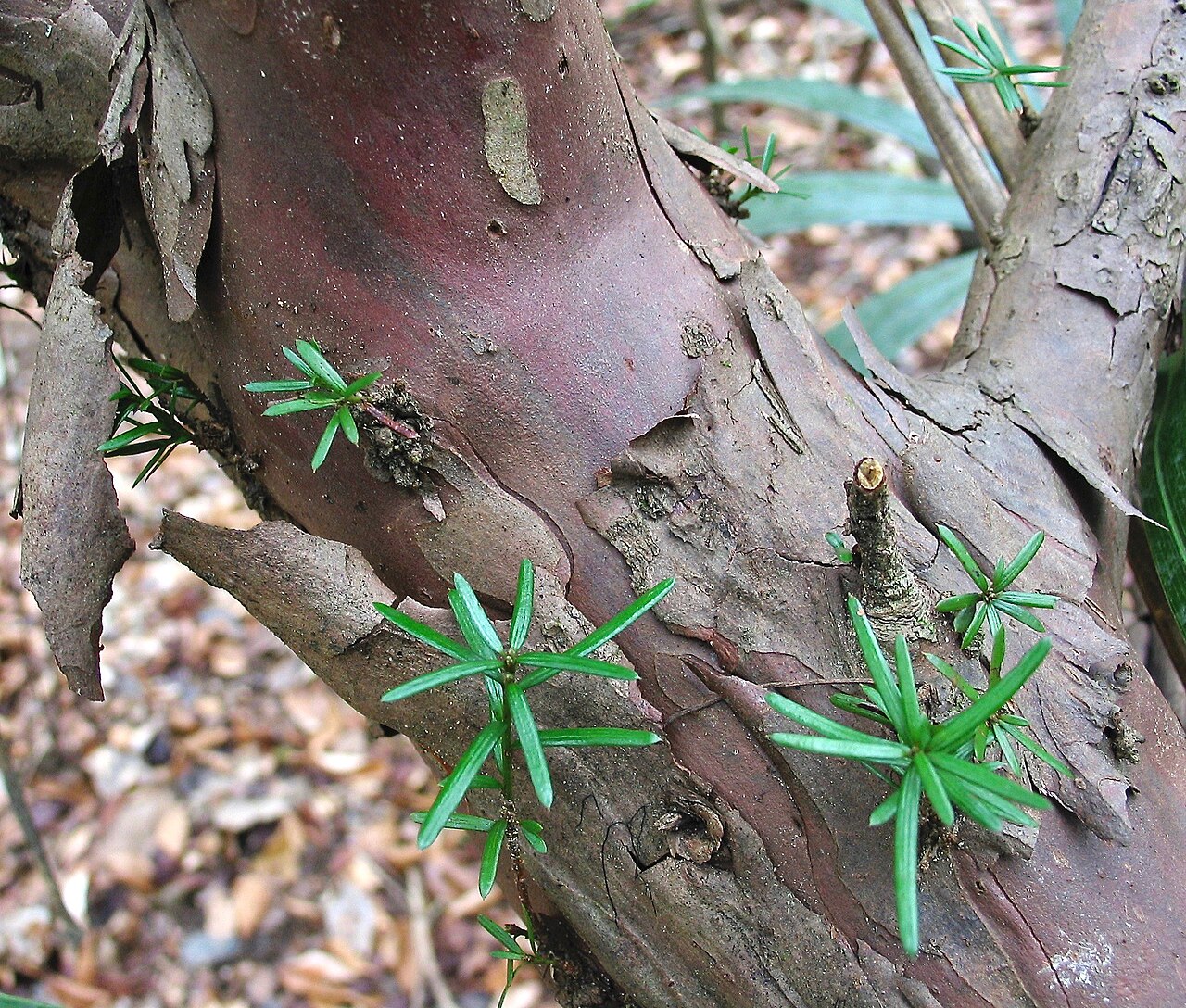
The bark is thin, scaly, and purplish-brown, often peeling in small flakes to reveal lighter inner bark. Young shoots are green, maturing to brown over three or four years. Branching is irregular rather than neatly tiered, giving older specimens a loose, somewhat shaggy structure.
Leaves
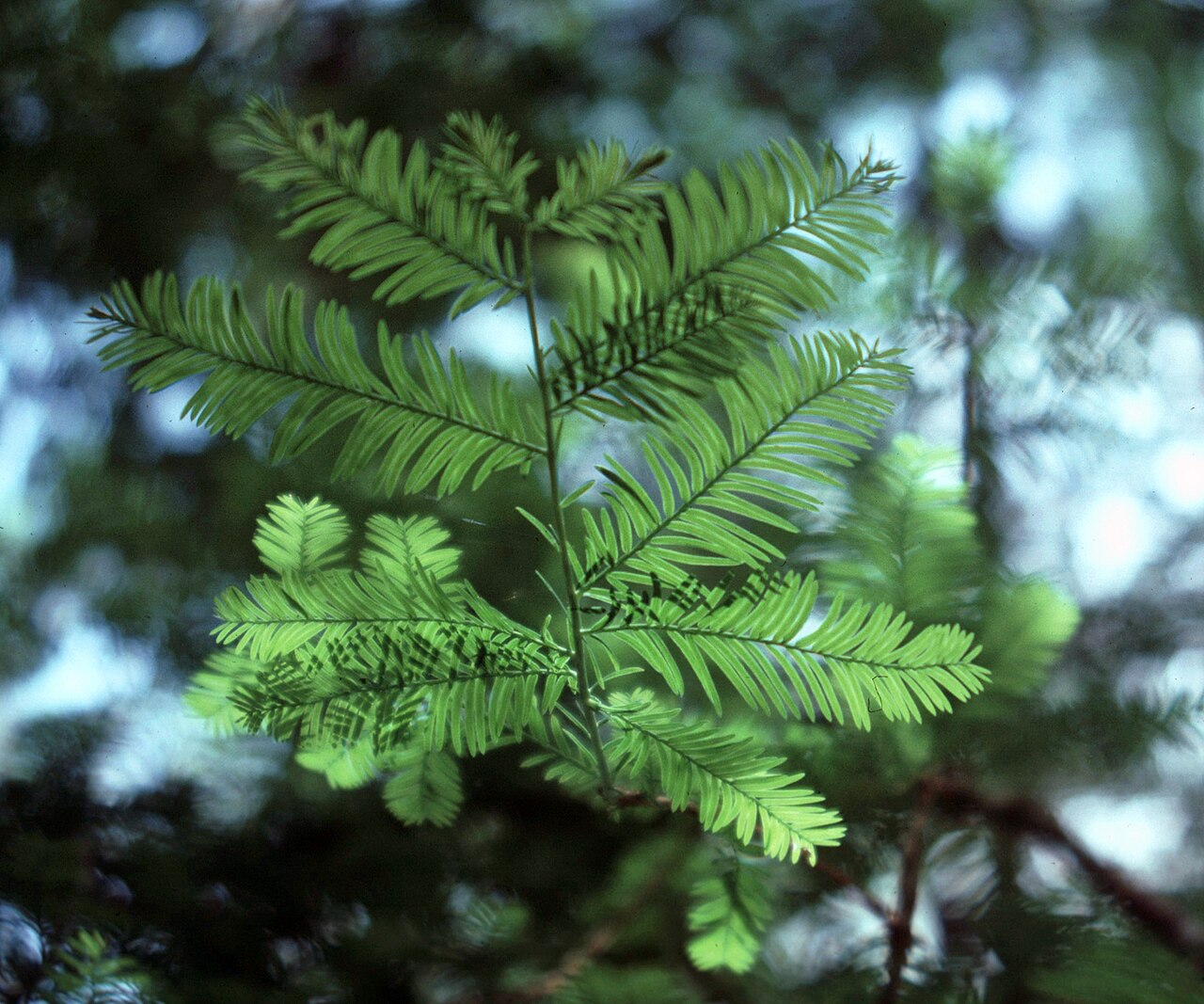
The needles are flat, thin, and slightly sickle-shaped (falcate), about ½ to 1⅛ inches long and just 1 to 2 millimeters wide, with a blunt, rounded tip rather than the sharp spine-tip of the similar and equally rare Florida torreya. Needles are arranged spirally on the twig but twist at the base to lie in two flattened horizontal ranks, giving each branch a feathery, two-dimensional look typical of yews.
Flowers & Fruit
Florida Yew is dioecious: small, globose pollen cones about ⅙ inch across appear on the undersides of male plants’ shoots in late winter and early spring, while female plants produce a highly modified, berry-like seed cone — a soft, juicy, bright red aril about ⅜ inch across, each containing a single hard, dark brown seed. Fruit ripens in fall and is an important food source for birds, which disperse the seeds after eating the fleshy aril.
Quick Facts
| Scientific Name | Taxus floridana |
| Family | Taxaceae (Yew) |
| Plant Type | Evergreen Coniferous Shrub / Small Tree |
| Mature Height | 10–20 ft (rarely to 33 ft) |
| Mature Spread | 10–15 ft, multi-stemmed clump |
| Growth Rate | Slow |
| Sun Exposure | Part Shade to Full Shade |
| Water Needs | Consistently moist; not drought tolerant |
| Soil Type | Well-drained, humus-rich bluff and ravine soils |
| Soil pH | Slightly acidic |
| Bloom Time | Late winter – early spring (pollen cones) |
| Flower Color | Inconspicuous; not ornamentally flowering |
| Fall Color | Evergreen; no fall color change |
| Fruit | Bright red fleshy aril around a single seed (female plants) |
| Deer Resistant | No — heavy deer browsing is a major threat to wild seedlings |
| USDA Hardiness Zones | 8 |
Native Range
Florida Yew has one of the smallest native ranges of any North American conifer: it is found only along a roughly 15-mile (24 km) stretch of steep ravines and bluffs on the eastern side of the Apalachicola River in Gadsden and Liberty Counties, Florida. It does not occur naturally anywhere else, making it a true Florida Panhandle endemic.
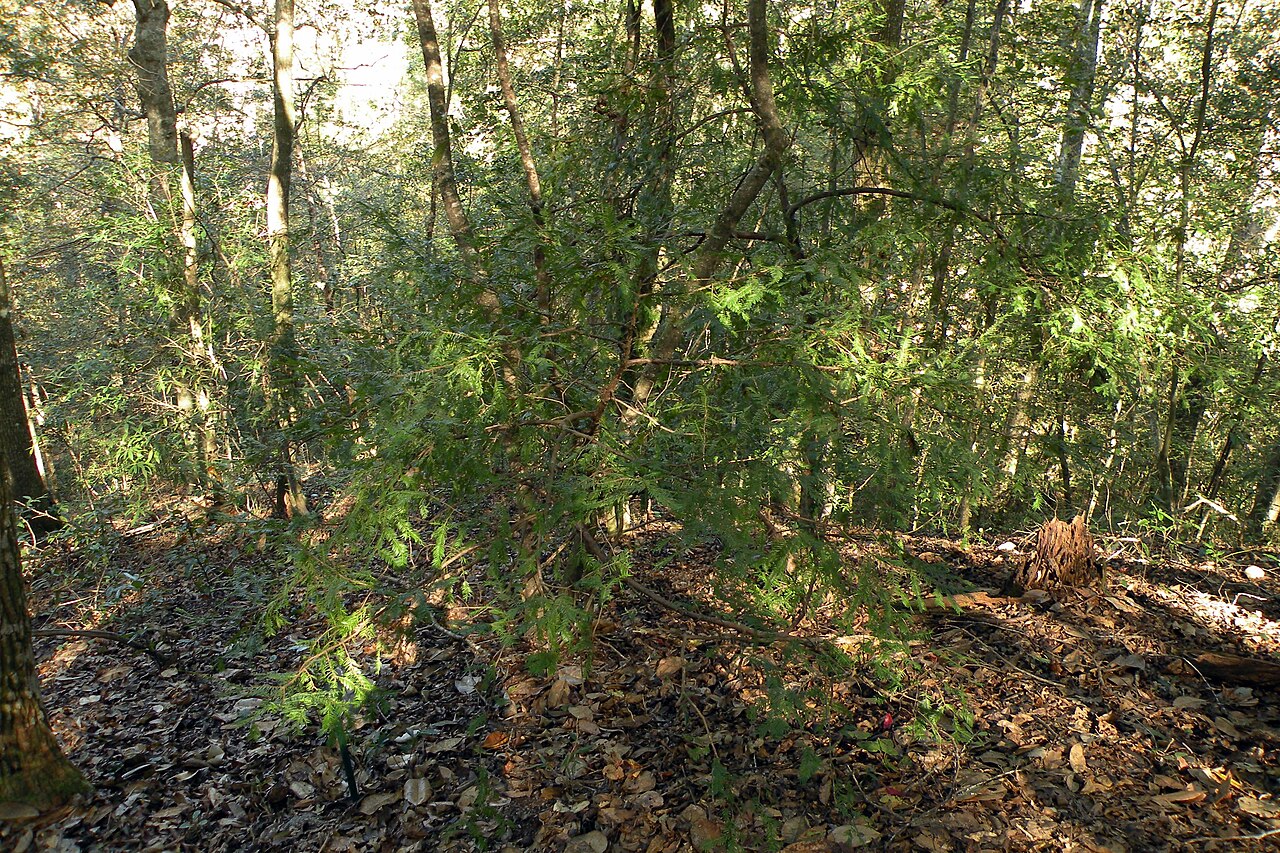
Within that narrow range, Florida Yew grows in the cool, moist, shaded microclimate of “steephead” ravines — deeply cut slopes carved by groundwater seepage that stay significantly cooler and more humid than the surrounding uplands, creating conditions more typical of forests much farther north. It typically grows at elevations of roughly 50 to 130 feet, on slopes and in ravine bottoms alongside other rare, disjunct species such as Florida torreya and needle palm.
Much of the species’ remaining native range now falls within protected conservation land, particularly Torreya State Park and The Nature Conservancy’s adjacent Apalachicola Bluffs and Ravines Preserve, though some populations persist on unprotected private land and remain vulnerable to logging and development. Florida Yew is not legally protected under current U.S. or Florida endangered species statutes, despite its extremely restricted range and ongoing population decline from deer browsing and recruitment failure.
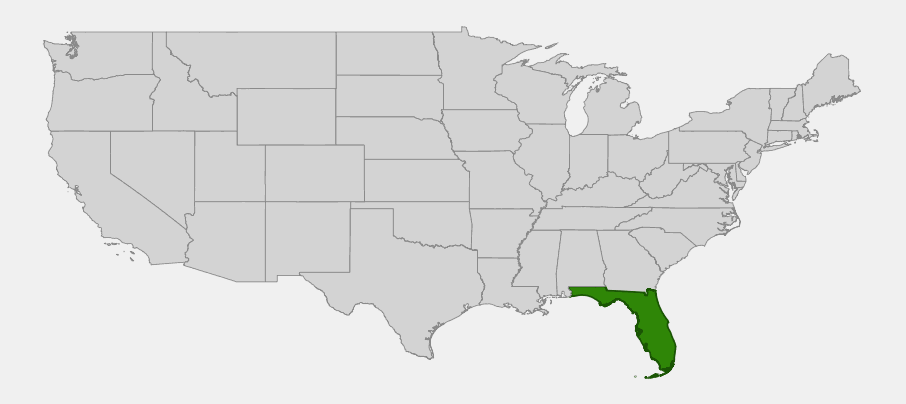
📋 Regional plant lists featuring Florida Yew: Florida Yew’s native range is too narrow — restricted to two Florida Panhandle counties — to fall within any of our regional plant lists. See the Needle Palm profile for a companion species sharing this habitat.
Growing & Care Guide
Florida Yew can be grown successfully outside its wild ravines by gardeners who replicate its core requirements: deep, cool shade, consistent moisture, and well-drained but humus-rich soil. It is slow-growing and long-lived, making it best suited to a permanent, protected position rather than a spot likely to be disturbed or replanted.
Light
Part shade to full shade is essential, mirroring the closed-canopy ravine forests where it grows wild. It is notably shade tolerant, able to persist for years in the dim light of a mature forest understory, but it is also highly sensitive to the drying effects of full sun exposure.
Soil & Water
Provide well-drained, slightly acidic, humus-rich soil that nonetheless stays consistently moist — conditions typical of a shaded ravine or north-facing slope. Florida Yew does not tolerate drought or waterlogged soil equally well; the goal is steady, even moisture rather than either extreme. Mulching with leaf litter helps replicate its natural forest-floor conditions.
Planting Tips
Plant container-grown, nursery-propagated specimens in fall or early spring in a shaded, moisture-retentive site, ideally with some topographic shelter such as a slope or ravine-like depression. Only source plants from reputable native-plant nurseries — never collect from the wild, given the species’ critically limited native range. Space multi-stemmed shrubs 10 to 15 feet apart to allow for their eventual spread.
Pruning & Maintenance
Minimal pruning is needed beyond removing dead or damaged stems. Because the species grows slowly and resents disturbance, avoid heavy shaping. In its native range, deer browsing is the single greatest threat to establishment — new plantings outside protected areas benefit significantly from fencing or tree shelters until stems grow out of browsing reach.
Landscape Uses
- Shaded woodland gardens seeking an evergreen native conifer understory plant
- Conservation and botanical garden plantings supporting ex-situ preservation of a critically range-limited species
- North-facing slopes and ravine-style plantings that replicate its native steephead habitat
- Companion plantings alongside other rare Apalachicola bluff natives such as needle palm
Wildlife & Ecological Value
Within its tiny native range, Florida Yew contributes structurally and ecologically to one of the most unusual and biologically distinctive forest communities in the eastern United States.
For Birds
Birds are the primary dispersers of Florida Yew’s seeds, eating the soft red arils and passing the hard seeds elsewhere in the ravine forest. Birds also forage the shrubby stems for insects, taking advantage of the dense, multi-stemmed structure for cover.
For Mammals
White-tailed deer are by far the most significant mammal interaction with this species — but an overwhelmingly negative one. Deer browse young stems, strip foliage within reach, and can destroy seedlings entirely, which conservationists identify as a primary driver of the species’ ongoing recruitment failure across its range. Beavers occasionally chew the tops of young stems in riverside locations.
Ecosystem Role
As a slow-growing, long-lived evergreen in the ravine understory, Florida Yew adds structural diversity and year-round cover in a forest type that supports an unusually high concentration of rare, disjunct plant species, including Florida torreya and needle palm. Its presence is itself a marker of the cool, moist, fire-sheltered microclimate that makes these Apalachicola steephead ravines botanically unique.
Cultural & Historical Uses
Florida Yew has no significant documented history of Indigenous or historical human use comparable to some other native trees, likely owing to its small population size and extremely restricted range. Its bark, like that of other yew species, contains compounds related to paclitaxel (Taxol), a mitotic inhibitor of pharmaceutical interest in cancer treatment — though researchers have found evidence that fungi associated with the tree may be responsible for producing some of these compounds, and Florida Yew’s extreme rarity precludes any commercial harvesting.
Its modern cultural significance lies chiefly in conservation botany: the species is a flagship example of the unusual glacial-relict plant community preserved in the Apalachicola bluffs, and it has drawn attention from botanists and conservation organizations including the Nature Conservancy and groups working on assisted-migration and ex-situ preservation strategies for the region’s most range-restricted native conifers.
Frequently Asked Questions
Is Florida Yew poisonous?
Yes. Like other yew species, the seeds, foliage, and bark of Florida Yew contain toxic taxine alkaloids and should never be eaten. Only the soft red flesh of the aril surrounding the seed is non-toxic and eaten by birds; the hard seed inside remains poisonous and should not be chewed or swallowed.
Is Florida Yew endangered?
It is classified as Critically Endangered by the IUCN due to its extremely limited native range, small population size, and ongoing recruitment failure, although it currently carries no formal legal protection under U.S. or Florida endangered species law. Most of its range lies within protected conservation land at Torreya State Park and the adjacent Apalachicola Bluffs and Ravines Preserve.
Can I collect Florida Yew seeds or cuttings from the wild?
No. Given its critically restricted range and declining wild population, Florida Yew should never be collected from natural sites. Gardeners interested in growing it should seek out nursery-propagated stock from reputable native-plant growers instead.
Where does Florida Yew grow naturally?
Only along a roughly 15-mile stretch of shaded ravines and bluffs beside the Apalachicola River in Gadsden and Liberty Counties, Florida — nowhere else in the world.
How is Florida Yew different from English or Japanese yew sold at garden centers?
Florida Yew is a distinct North American species adapted specifically to warm, humid, shaded ravine forests of the Florida Panhandle, unlike the commonly cultivated English Yew (Taxus baccata) or Japanese Yew (Taxus cuspidata), which are native to cooler climates and widely used in formal hedging. Florida Yew is far less common in cultivation and is primarily of interest for conservation plantings within or near its native range.

Looking for a nursery that carries Florida Yew?
Browse our native plant nursery directory: Florida