Lake Huron Tansy (Tanacetum bipinnatum)
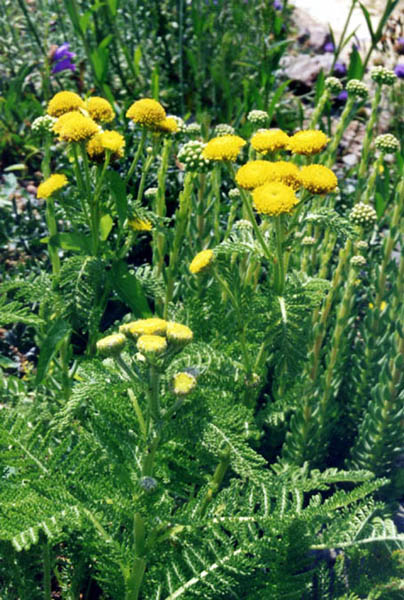
Tanacetum bipinnatum, commonly called Lake Huron Tansy (USDA PLANTS lists it under the broader species name Tanacetum bipinnatum; many regional botanists and state natural heritage programs treat the Great Lakes and Maine population as Tanacetum bipinnatum ssp. huronense), is a rare, low-growing native perennial restricted in the Lower 48 to a handful of open, sandy shorelines around the northern Great Lakes and a single cobble riverbank population in Maine. It is one of the genuinely uncommon plants a native-plant gardener in this region will encounter — not a weed, not a widespread wildflower, but a true rarity worth knowing and protecting.
Lake Huron Tansy forms low, spreading clumps of soft, lacy, aromatic, deeply divided gray-green foliage topped in summer by clusters of small, bright yellow, button-shaped flower heads. The whole plant has a resinous, herbal fragrance when crushed, similar to the related — but unrelated in conservation status — common tansy. It spreads slowly by creeping rhizomes, which allows it to anchor itself in loose, shifting sand and help stabilize the open dune habitat it depends on.
This is emphatically not a plant to collect from the wild. Lake Huron Tansy is listed as threatened in Michigan and endangered in Wisconsin, with very few documented natural occurrences anywhere in the United States. Any garden use should come from nursery-propagated stock grown from legally and ethically sourced material, and even then it is best suited to specialist native-plant gardens in the Great Lakes region that can replicate its specific open, sandy, sun-baked habitat.
Identification
Lake Huron Tansy is a low, clump-forming herbaceous perennial typically 8 to 16 inches tall, growing from one to a few stems that arise from long, creeping, cord-like rhizomes. Over time a single plant can spread into a broad, loose mat across open sand, though dense stands are uncommon even where the species persists.
Leaves
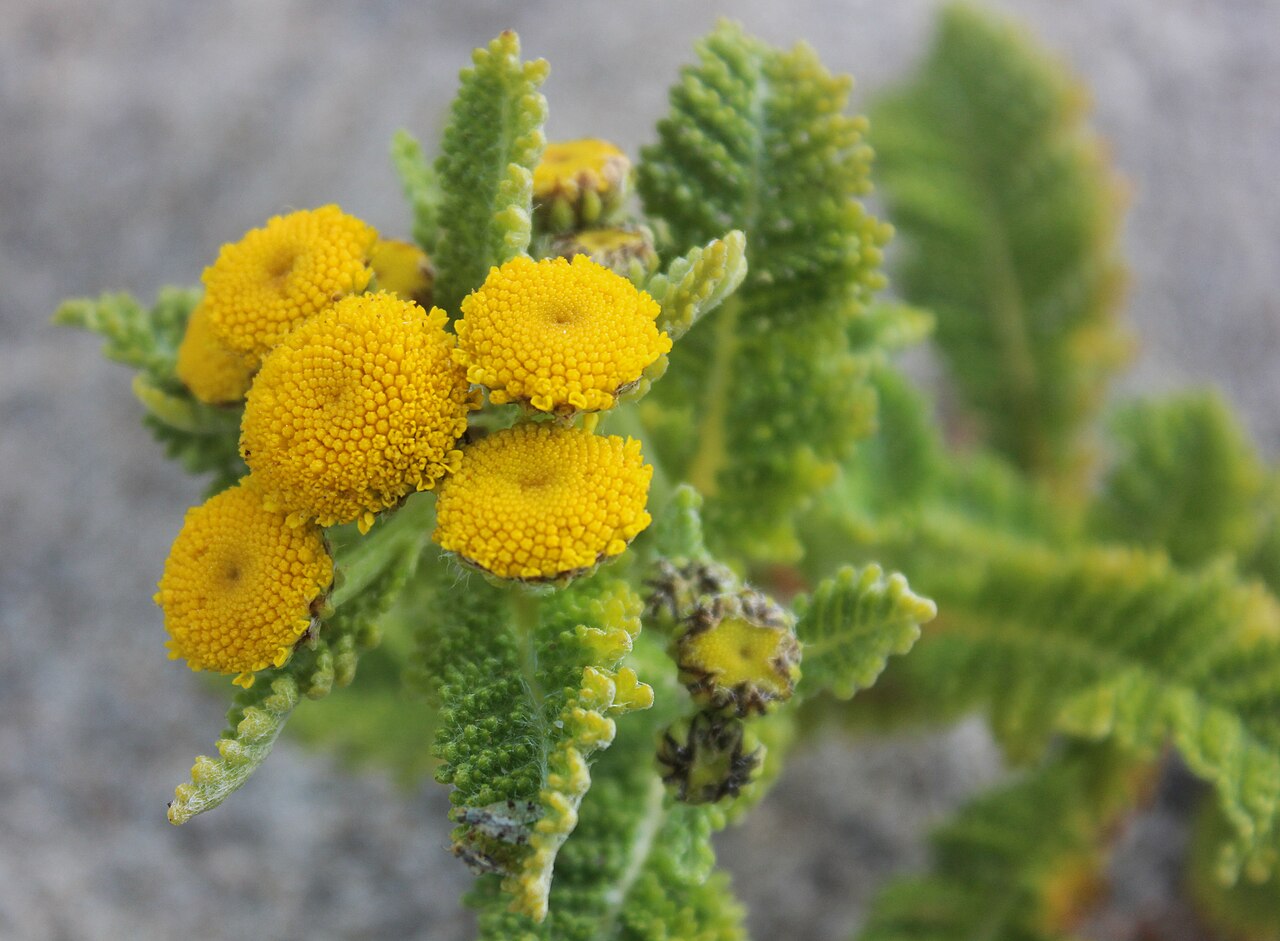
The leaves are bipinnately compound — finely divided twice over, giving them a feathery, fern-like texture — and covered in short, soft hairs that give the foliage a silvery or grayish cast compared with the coarser, more sparsely hairy leaves of the widespread, invasive Common Tansy (Tanacetum vulgare). Leaves run roughly 9 to 10 inches long and crushed foliage releases a strong, pungent, resinous aroma similar to common tansy’s.
Flowers
Flowering occurs from late June into early August. The flower heads are bright yellow and button-like, 13 to 19 millimeters across, made up of tightly packed disk flowers ringed by short ray flowers — larger individually than the flower heads of Common Tansy, but borne in smaller, looser clusters of roughly 3 to 12 heads per stem rather than the crowded flat-topped clusters of 10 to 100-plus heads typical of the common roadside weed.
Distinguishing From Common Tansy
Because the two plants share a genus, an odor, and a yellow-button flower, confusing Lake Huron Tansy with the non-native, often-weedy Common Tansy is easy at a glance — but important not to do, since one is a rare, protected native and the other is an aggressive Eurasian introduction found along roadsides and in disturbed ground throughout much of North America. Lake Huron Tansy has larger individual flower heads in smaller, looser clusters, finer and more silvery-hairy foliage, and a strict habitat preference for open sand dunes and cobble shorelines — it does not grow as a roadside or field weed the way Common Tansy does.
Quick Facts
| Scientific Name | Tanacetum bipinnatum (ssp. huronense) |
| Family | Asteraceae (Aster/Daisy) |
| Plant Type | Herbaceous Perennial Wildflower |
| Mature Height | 8–16 in |
| Mature Spread | Slowly spreading mat via rhizomes |
| Growth Rate | Slow |
| Sun Exposure | Full Sun |
| Water Needs | Low; excellent drought tolerance once established |
| Soil Type | Loose, well-drained sand or cobble; low organic matter |
| Soil pH | Neutral to mildly alkaline |
| Bloom Time | Late June – early August |
| Flower Color | Bright yellow |
| Fall Color | None notable |
| Fruit | Small dry achenes, not ornamentally significant |
| Deer Resistant | Yes — strongly aromatic, resinous foliage |
| USDA Hardiness Zones | 3–5 |
Native Range
In the Lower 48, Lake Huron Tansy is known from a narrow band of open sand dunes and beaches around the northern shores of Lake Michigan and Lake Huron and the southeastern shore of Lake Superior in Michigan and Wisconsin, plus one disjunct population on a cobbly, ice-and-flood-scoured river beach in Maine. Farther north, the species (in its broader circumboreal form) ranges across Canada and into Alaska, but this account focuses on the rare Great Lakes and Maine dune-and-shoreline populations that regional conservation programs track as Tanacetum bipinnatum ssp. huronense.
This is a habitat specialist of harsh, open, disturbance-dependent ground: active dune crests and swales, cobble beaches, and sandy or gravelly shorelines that are regularly reworked by wave action, ice shove, and wind. It needs full sun and loose, well-drained, nutrient-poor substrate, and it tolerates occasional wave inundation during high water — conditions few other garden perennials can handle.
Habitat loss from shoreline development and recreational trampling, along with competition from invasive species such as spotted knapweed and baby’s breath that colonize disturbed dune edges, are the primary threats across its small range. Because so few populations remain, every known site carries outsized conservation importance.
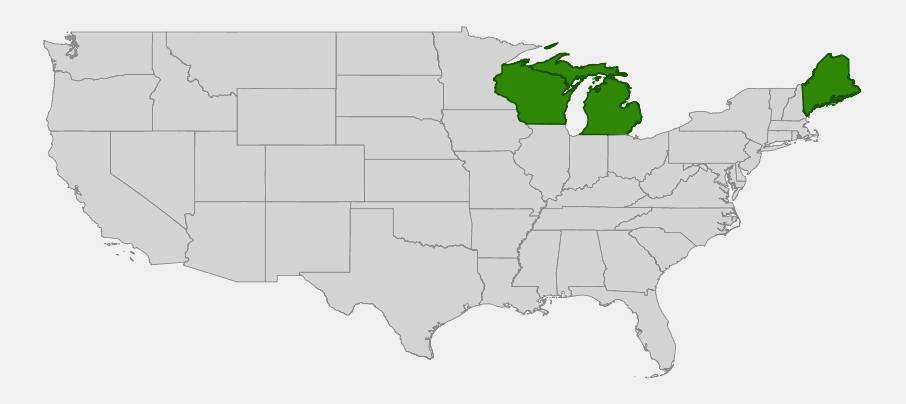
📋 Regional plant lists featuring Lake Huron Tansy: Michigan, Wisconsin & Eastern Minnesota · New Hampshire, Maine & Vermont
Growing & Care Guide
Lake Huron Tansy is a specialist plant for a specialist site. It is not a general-purpose garden perennial, but for a Great Lakes gardener with a sunny, sandy, well-drained spot — especially near a lakeshore or in a constructed dune-style planting — it can be a striking and conservation-minded addition, provided the plant material is nursery-propagated rather than wild-collected.
Light
Full sun is essential. In the wild it grows on fully exposed dunes and beaches with no canopy cover, and it will not perform well in shade or even significant part-shade.
Soil & Water
Loose, well-drained, sandy or gravelly soil that mimics beach or dune conditions is critical — this plant will struggle and often rot in heavy clay or consistently moist garden soil. Once established it is highly drought tolerant and needs supplemental water only during the first season. Avoid rich, fertile soil or heavy mulch, both of which favor more aggressive competing plants over this slow-spreading native.
Planting Tips
Plant in spring into lean, sandy, well-drained soil in full sun, ideally in a dedicated dune-garden or gravel-garden setting rather than mixed into a conventional perennial bed. Give plants room — 12 to 18 inches apart — since they spread slowly and resent crowding by faster-growing neighbors. Only use nursery-propagated stock; never collect from wild populations, which are rare and protected.
Pruning & Maintenance
Minimal care is needed. Cut back spent flower stems after bloom if a tidier appearance is desired, but otherwise this plant largely takes care of itself once sited correctly. Avoid fertilizing, which can push lush growth at the expense of the plant’s natural low, wind-firm habit.
Landscape Uses
- Dune and beachfront restoration plantings in the Great Lakes region
- Gravel gardens and sand gardens as a textural, aromatic groundcover
- Erosion-resistant plantings on loose, sandy slopes
- Specialist native-plant and conservation gardens focused on regional rarities
Wildlife & Ecological Value
As one of the few flowering plants able to establish on open, actively shifting dune sand, Lake Huron Tansy plays a disproportionately important role in stabilizing a narrow, specialized shoreline habitat shared by other rare dune specialists.
For Pollinators
The summer flower heads provide nectar and pollen for a variety of small native bees and flies that forage along open dune and shoreline habitats, where floral resources are often sparse compared with more vegetated inland sites.
Ecosystem Role
The plant’s creeping rhizomes help bind loose sand in place, contributing — alongside dune grasses and other dune specialists — to the stability of an otherwise highly dynamic, wind- and wave-driven shoreline environment. Because the habitat itself is so limited in extent, every population of Lake Huron Tansy functions as part of a larger, fragile dune plant community rather than an isolated occurrence.
Cultural & Historical Uses
Lake Huron Tansy has no significant documented history of Indigenous or settler cultivation or use, unlike its aromatic relative Common Tansy, which was widely grown in Europe and colonial North America as an herb. Its rarity and highly specific habitat have historically kept it obscure outside of botanical and conservation circles.
Today its primary significance is as a conservation priority: a narrow Great Lakes and Maine endemic tracked by state natural heritage programs as an indicator of healthy, undisturbed dune and shoreline ecosystems, and as a reminder of how specialized and limited some native plant habitats can be even within a well-studied region like the Great Lakes.
Frequently Asked Questions
Is Lake Huron Tansy the same plant as Common Tansy?
No. Lake Huron Tansy (Tanacetum bipinnatum) is a rare native restricted to Great Lakes dunes and one Maine riverbank, while Common Tansy (Tanacetum vulgare) is a non-native, often weedy Eurasian species found along roadsides throughout much of North America. They share a genus and a similar aroma but are different species with very different conservation status.
Can I buy Lake Huron Tansy for my garden?
Only from reputable native-plant nurseries selling legally propagated stock — never from wild-collected material. Because the species is threatened in Michigan and endangered in Wisconsin, wild populations should never be disturbed or harvested from.
Why is Lake Huron Tansy rare?
It is a habitat specialist restricted to a narrow band of open, sandy or cobble shoreline around the northern Great Lakes, a habitat type that has been heavily altered by shoreline development, recreational trampling, and invasive plant competition, leaving very few natural occurrences.
Will Lake Huron Tansy grow outside sandy, sunny conditions?
Not well. It is adapted to full sun and loose, well-drained, low-nutrient sand or gravel, and it generally struggles or fails in shade, heavy soil, or fertile garden beds.
Is Lake Huron Tansy aggressive like Common Tansy?
No. Unlike the weedy, fast-spreading Common Tansy, Lake Huron Tansy spreads slowly by rhizomes and does not behave as a garden thug or escape into surrounding habitat.

Looking for a nursery that carries Lake Huron Tansy?
Browse our native plant nursery directory: Wisconsin · Michigan & Maine