Fragrant Ash (Fraxinus cuspidata)
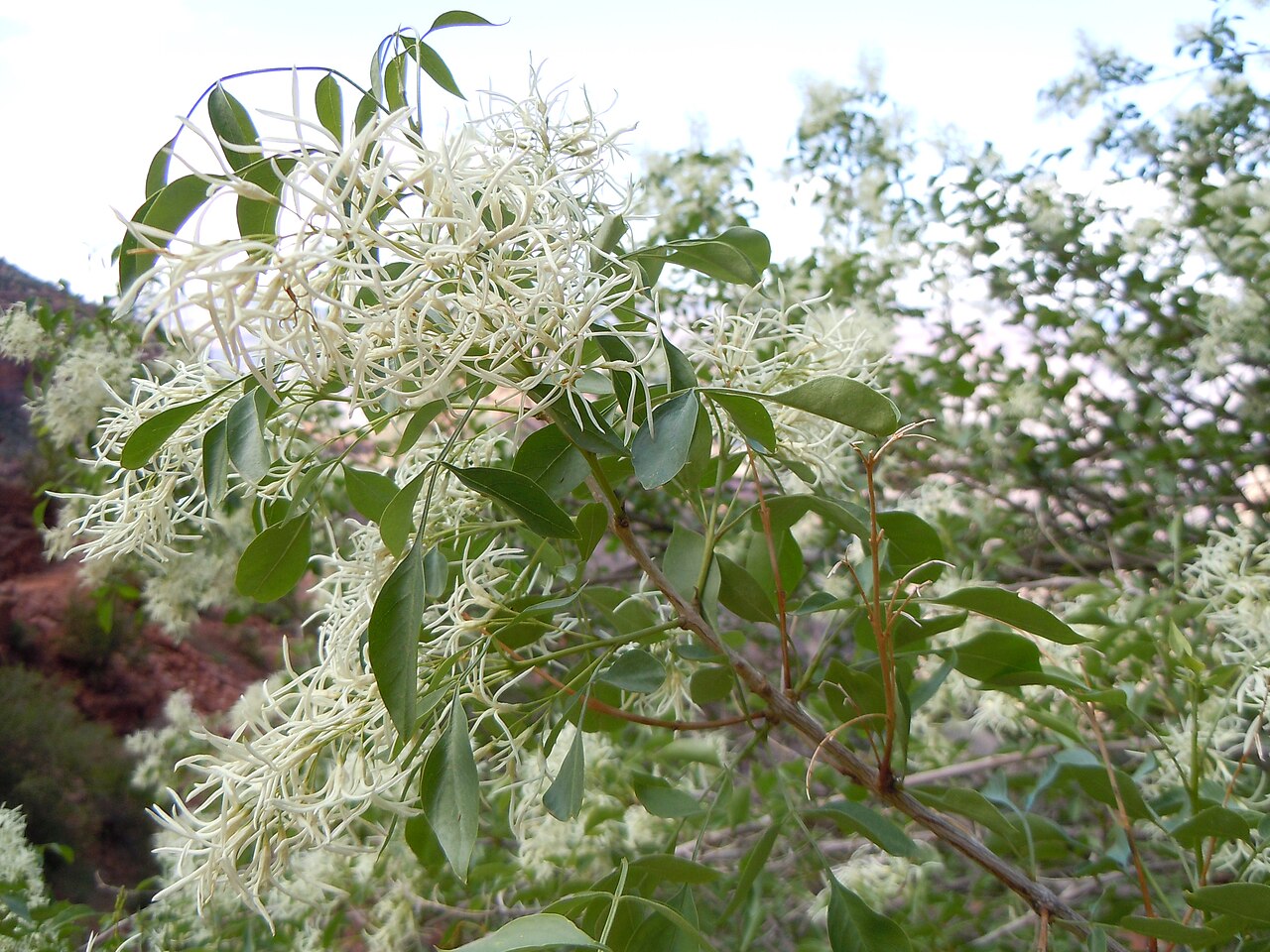
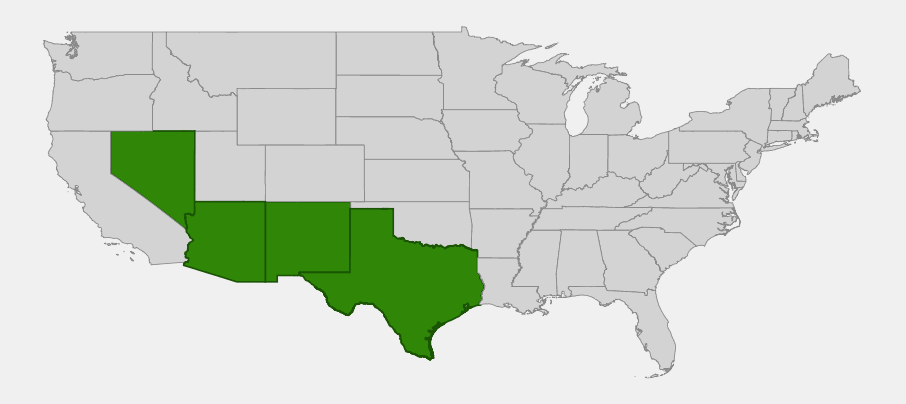
Fraxinus cuspidata, the Fragrant Ash, is a small, shrubby tree of the arid Southwest — the only North American ash with genuinely showy, fragrant flowers. Native to rocky canyons, hillsides and desert mountains of Arizona, New Mexico and West Texas (with a few rare outlying populations in Nevada), fragrant ash stands apart from its larger, wind-pollinated cousins like green and white ash by producing dense clusters of white, four-petaled, jasmine-scented blooms in spring, before or alongside the new leaves.
Growing as a many-stemmed shrub or small tree typically 10 to 20 feet tall, fragrant ash is built for the desert: thin, lightly compound leaves, a tolerance for thin rocky soils, and the ability to thrive on little rainfall once established. In spring, plants can become completely covered in frothy white blossoms, drawing in bees and other pollinators to a shrub that is otherwise easy to overlook the rest of the year.
For Southwest gardeners wanting a tough, low-water native tree with real ornamental appeal, fragrant ash offers something few other desert natives do — fragrant, conspicuous spring flowers — combined with the drought tolerance and resilience expected from a plant adapted to canyon slopes and rocky desert mountains.
Identification
Fragrant ash is usually a large, multi-stemmed shrub or small tree, typically 10 to 20 feet tall, though it can occasionally reach larger sizes in favorable canyon-bottom sites. Its compact, often rounded form and fine-textured foliage distinguish it from the much larger, single-trunked ashes of wetter regions.
Bark & Stems
Young twigs are slender, gray to grayish-brown, and four-angled in cross-section, becoming rounder with age. Bark on older stems is thin, gray, and shallowly furrowed — far less deeply ridged than the bark of larger ash species like white ash.
Leaves
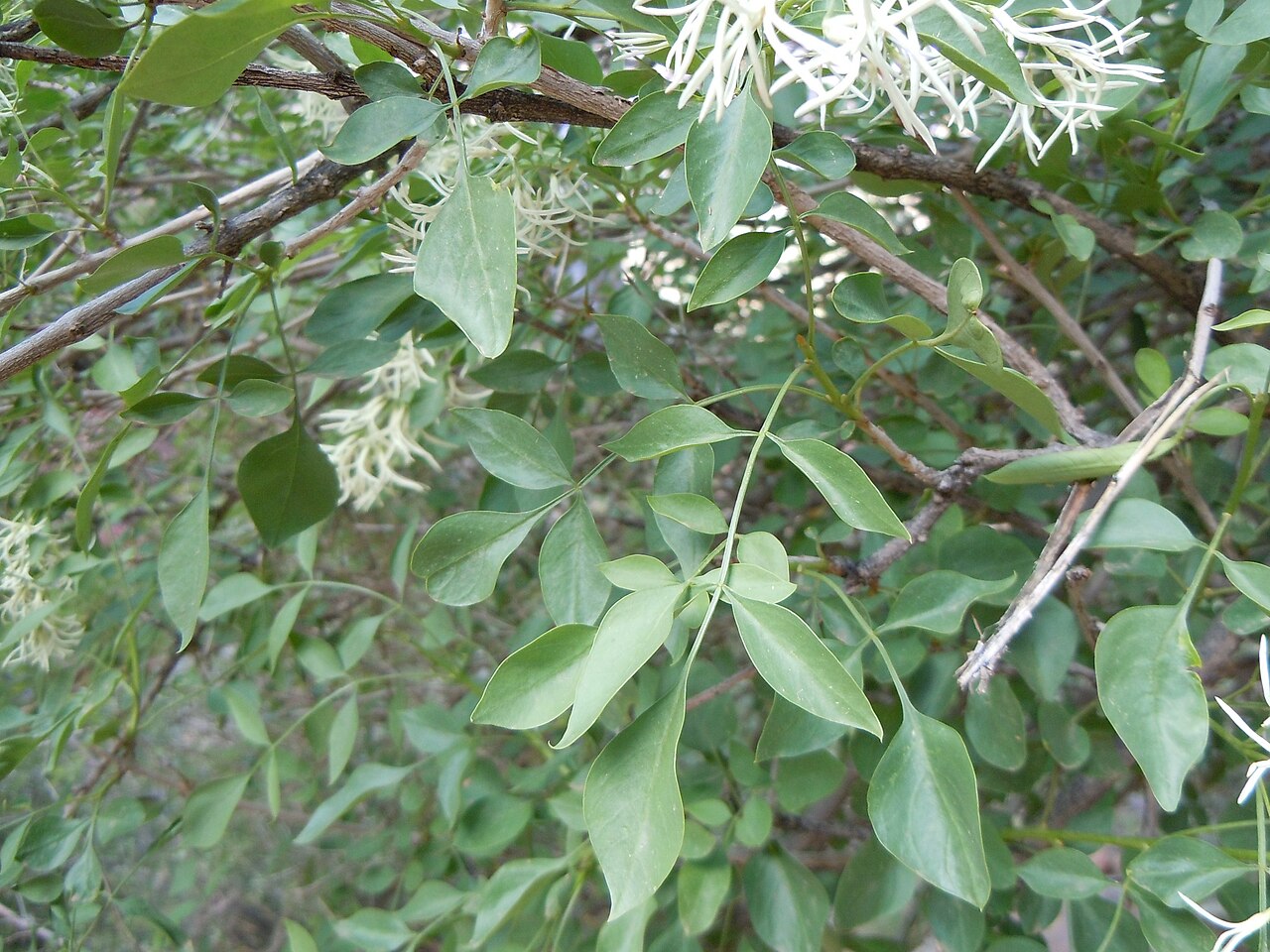
Leaves are opposite and pinnately compound, usually with five to nine small, narrow leaflets 1 to 2 inches long, each with a pointed (“cuspidate”) tip that gives the species its scientific name. The foliage is relatively sparse and fine-textured compared to other ashes, casting light, dappled shade rather than dense cover. Leaves drop in fall without significant color change, and the tree is briefly bare in winter.
Flowers & Fruit
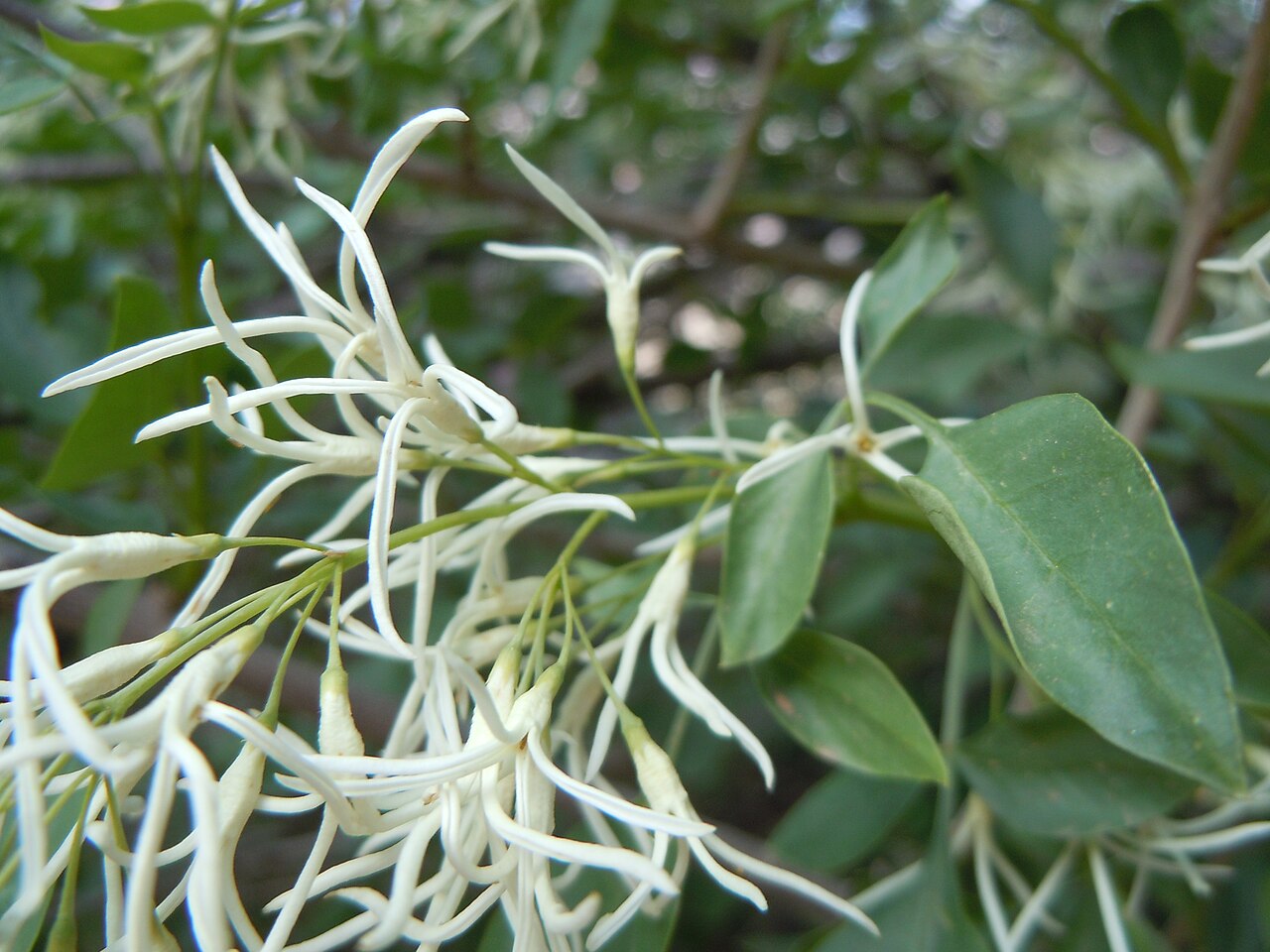
Fragrant ash is the showiest-flowering ash native to North America. In spring, dense, branched clusters of small white flowers open at the branch tips, each with four narrow, strap-like petals that together give the cluster a frilly, almost fringe-flower appearance. Unlike the inconspicuous, wind-pollinated flowers of most ashes, these blooms are genuinely fragrant and insect-pollinated, attracting bees and other pollinators. Flowering is followed by small, winged, paddle-shaped seeds (samaras) typical of the ash genus, which mature and disperse by early summer.
Quick Facts
| Scientific Name | Fraxinus cuspidata |
| Family | Oleaceae (Olive) |
| Plant Type | Deciduous shrub / small tree |
| Mature Height | 10–20 ft |
| Mature Spread | 8–15 ft, often multi-stemmed and rounded |
| Growth Rate | Slow to moderate |
| Sun Exposure | Full Sun to Part Shade |
| Water Needs | Low once established; appreciates occasional deep watering in extreme heat |
| Soil Type | Rocky, limestone or clay loam; well-drained |
| Soil pH | Neutral to alkaline (6.8–8.0) |
| Bloom Time | March–April, with or just before new leaves |
| Flower Color | White, fragrant |
| Fall Color | Minimal; leaves drop green to pale yellow |
| Fruit | Small winged samaras, maturing early summer |
| Deer Resistant | Moderate; occasionally browsed |
| USDA Hardiness Zones | 7–10 |
Native Range
Fragrant ash occurs in the United States across Arizona, New Mexico and the Trans-Pecos region of West Texas, with a handful of rare, disjunct populations also reported in southern Nevada. From there, its range extends south into the mountains of northern Mexico, including Chihuahua, Coahuila, Nuevo León and Tamaulipas, where it is more widespread.
It grows naturally on dry, rocky hillsides, in canyons, and along desert mountain slopes, generally at middle elevations — roughly 4,000 to 7,500 feet — where it can tolerate thin, rocky soils and strongly seasonal rainfall. Well-known U.S. populations include trails descending into the Grand Canyon from the South Rim, where the species is locally common along rocky, well-drained slopes, often alongside the related velvet ash and the smaller Gregg ash.
Outside its small Nevada outlier populations, fragrant ash is essentially a Chihuahuan and Sonoran Desert borderlands species, and gardeners outside Arizona, New Mexico and West Texas should treat it as a regional specialty rather than a widely adaptable landscape tree.
📋 Regional plant lists featuring Fragrant Ash: Arizona & New Mexico · South & West Texas
Growing & Care Guide
Fragrant ash is an easy, rewarding small tree for Southwest gardens that can offer it the rocky, well-drained conditions it evolved with, and it is increasingly available at nurseries specializing in Southwest native plants.
Light
Plant in full sun for the showiest bloom, though it also tolerates light afternoon shade, especially in the hottest low-desert gardens. For more guidance on companion plants that share these conditions, see our guides to drought-tolerant plants for Arizona and best plants for an Arizona backyard.
Soil & Water
Good drainage is essential — fragrant ash is adapted to thin, rocky, often limestone-derived soils and does not tolerate heavy, waterlogged clay. Once established, it needs little supplemental water, though an occasional deep soak during extended summer heat will keep it looking its best and encourage fuller bloom the following spring. Avoid frequent shallow watering, which encourages weak, shallow roots.
Planting Tips
Plant from container stock in fall or early spring to allow roots to establish before summer heat arrives. Because fragrant ash naturally grows as a multi-stemmed shrub, decide early whether you want to maintain that form or train it to a single trunk; either works, but training takes a few years of selective pruning on young plants. Give it well-drained placement — a slope, raised bed, or rocky garden area mimics its native canyon habitat.
Pruning & Maintenance
Prune lightly in late winter to remove dead or crossing branches and to shape young plants toward a single trunk if a tree form is preferred. Established plants need very little maintenance and are largely free of serious pest or disease problems in the dry climates where they are native.
Landscape Uses
Fragrant ash works well in several Southwest garden settings:
- Specimen flowering tree for xeriscape and rock gardens
- Pollinator garden addition, valued for its fragrant spring bloom
- Canyon or slope planting mimicking its native rocky habitat, paired with desert willow or agarita
- Patio or courtyard tree where its fine texture and light shade are an asset
- Native plant collection centerpiece as the only showy-flowered U.S. ash
Wildlife & Ecological Value
Fragrant ash’s unusual, insect-pollinated flowers make it ecologically distinct among North American ashes, offering a genuine nectar resource rather than relying solely on wind for pollination.
For Pollinators
The fragrant spring flowers attract honeybees, native bees and other flying insects at a season when desert bloom can still be limited, making fragrant ash a valuable addition to a Southwest pollinator garden. See our pollinator garden design basics for more on building season-long nectar availability around shrubs like this one.
For Birds
Seed-eating birds take advantage of the small winged samaras once they mature, and the dense, twiggy branching of multi-stemmed plants offers cover and nesting structure in otherwise open, rocky terrain.
Ecosystem Role
As one of the few flowering trees of its size in rocky desert canyon habitat, fragrant ash provides an outsized pollinator resource relative to its small stature, and its root system helps stabilize thin soils on the steep, erosion-prone slopes where it typically grows.
Cultural & Historical Uses
Fragrant ash has no major documented history of commercial or large-scale Indigenous use, likely owing to its small size, limited distribution and shrubby growth form compared to larger, more widespread ash species used for lumber and tool handles elsewhere in North America. Its primary historical significance has been horticultural and botanical — early Southwest botanists and plant collectors noted it as an ornamental curiosity among the generally wind-pollinated, inconspicuous-flowered ashes.
In recent decades, fragrant ash has gained a following among Southwest native-plant gardeners and nurseries specifically for its showy, fragrant bloom, a trait rare enough among ashes that it has become something of a signature plant for xeriscape and native gardens from Tucson to El Paso.
The wood itself has little recorded commercial use, given the species’ small stature and multi-stemmed habit, and it remains valued today chiefly as a garden and restoration plant rather than a utility species.
Frequently Asked Questions
Is fragrant ash really fragrant?
Yes — it is the only North American ash with genuinely showy, sweetly fragrant flowers, a trait that sets it apart from other native ashes, which are wind-pollinated and have small, inconspicuous blooms.
How big does fragrant ash get?
Most plants stay in the 10 to 20 foot range as a multi-stemmed shrub or small tree, considerably smaller than large ashes like white or green ash grown in wetter parts of the country.
Can fragrant ash grow outside Arizona, New Mexico and Texas?
It is adapted specifically to arid Southwest conditions and is not reliably hardy or well suited to humid or consistently cold climates outside its native range and a few similar desert-adapted regions.
Does fragrant ash need a lot of water?
No. Once established, it is quite drought tolerant and suited to xeriscape plantings, though occasional deep watering during extreme summer heat helps it look its best.
Is fragrant ash susceptible to emerald ash borer?
As a member of the genus Fraxinus, it is potentially at risk if the invasive emerald ash borer spreads into its arid native range, though the beetle has so far been far more damaging to eastern and midwestern ash species in moister climates; gardeners in affected regions should monitor local extension advisories.

Looking for a nursery that carries Fragrant Ash?
Browse our native plant nursery directory: Arizona · New Mexico & Nevada · Texas