Oklahoma Plum (Prunus gracilis)
Prunus gracilis, the Oklahoma Plum (also called sand plum or sour plum), is a low, thicket-forming native shrub of the south-central plains, ranging across Kansas, Oklahoma, Texas, Arkansas and Louisiana. Unlike the taller wild plum (Prunus americana) more familiar to many gardeners, Oklahoma plum is a true shrub — typically only 1½ to 6 feet tall — that spreads by root suckers to form dense, tangled colonies in sandy prairies, open woodlands and roadsides. Its velvety young growth, clustered white spring blossoms and small, tart red plums make it a distinctive, easily overlooked member of the native plum group.
Oklahoma plum blooms early, often among the first native shrubs to flower each spring, with clusters of two to four fragrant, five-petaled white flowers crowding the reddish-brown twigs before the leaves fully expand. The fruit that follows is small, round and sour — valued historically for jellies and preserves more than fresh eating — and ripens through summer, drawing wildlife looking for an early-season food source in open, sandy habitat.
For gardeners in its native range, Oklahoma plum is an easy, low-maintenance shrub for naturalizing sunny, sandy or well-drained sites, especially where a thicket-forming native is wanted for erosion control, wildlife habitat or an informal hedgerow. It asks for very little once established and tolerates the heat, drought and poor soils typical of the southern Great Plains.
Identification
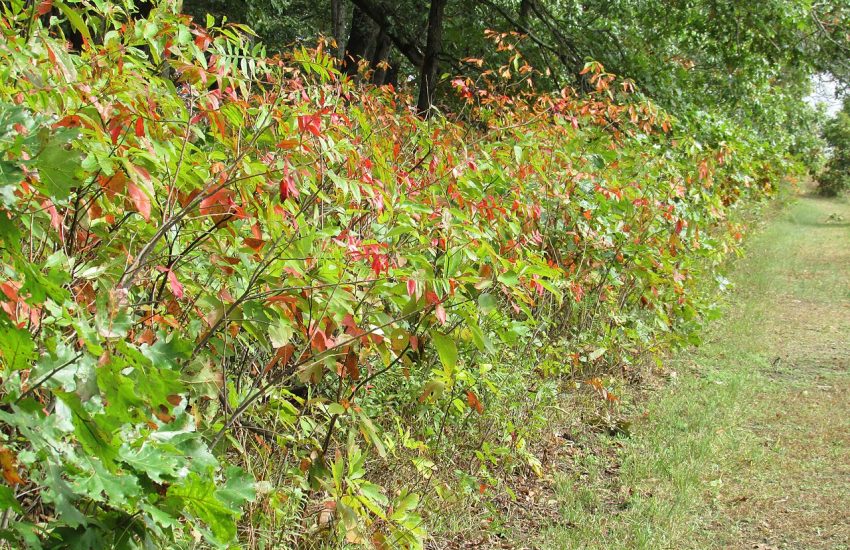
Oklahoma plum is a low, straggling, many-stemmed shrub that spreads outward by suckering roots, forming loose to dense thickets rather than a single defined crown. Individual stems are thin and often arching, usually staying under 6 feet tall, though vigorous colonies can sprawl several feet wide.
Bark & Stems
Young twigs are slender and reddish-brown, often with a fine, velvety (pubescent) texture that helps distinguish Oklahoma plum from the smoother-twigged Chickasaw plum (Prunus angustifolia) it sometimes grows alongside. With age, stems develop thin, grayish-brown bark. Older thickets can include short, stiff spur shoots that may appear thorn-like, typical of many native plums.
Leaves
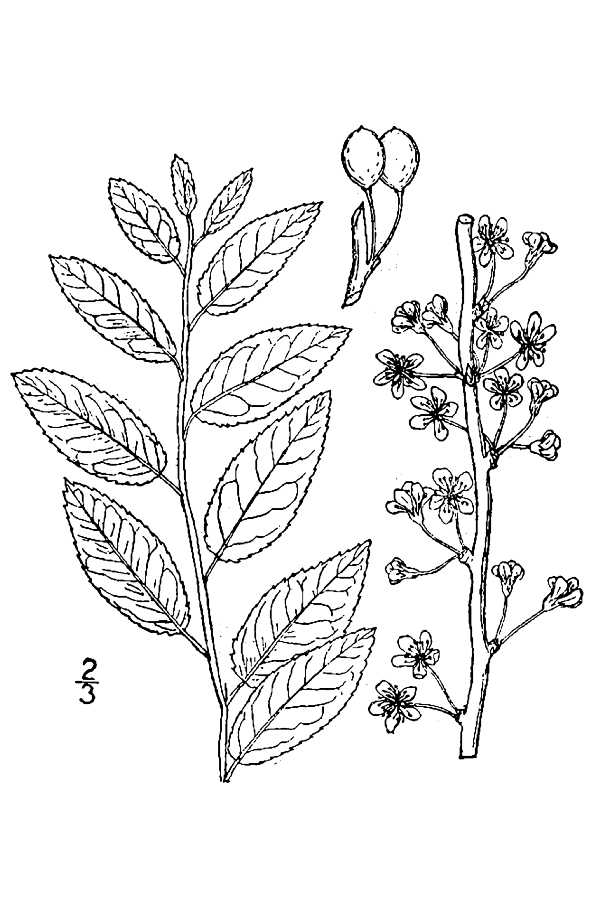
Leaves are alternate, elliptical to oblong, 1 to 3 inches long, with finely to sharply toothed margins and a somewhat velvety texture on the lower surface, especially when young — another identification clue that separates this species from its smoother-leaved relatives. They emerge after the flowers in early spring and remain a dull to medium green through summer.
Flowers & Fruit
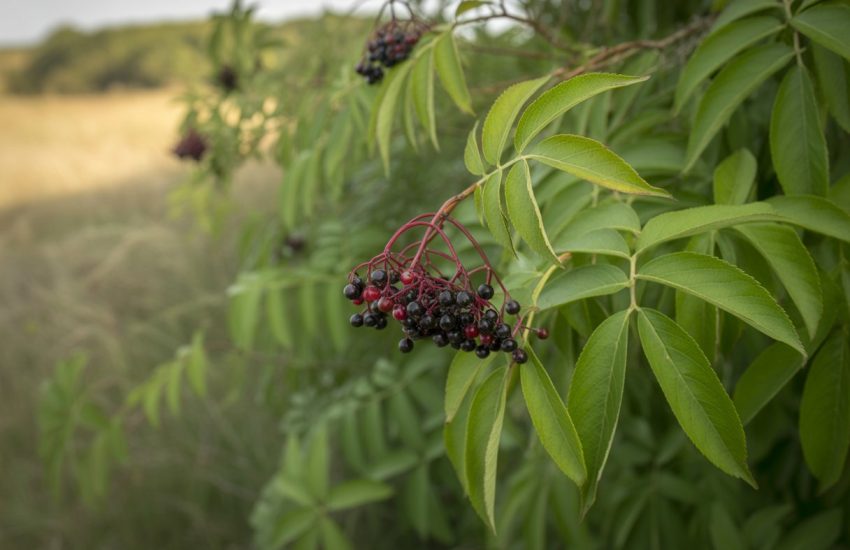
Flowers open from March into early April, before or just as the leaves emerge, in small clusters of two to four blossoms along the previous year’s twigs. Each flower is about ½ inch across with five white petals and numerous yellow-tipped stamens, giving the whole shrub a frothy white appearance for a short but showy period. The fruit is a small, round drupe, generally under ¾ inch across, ripening from green to red or purplish-red by mid-to-late summer. The flesh is notably sour and clings somewhat to the pit, and plants often grow in genetically distinct clonal colonies, so fruit set and flavor can vary noticeably from patch to patch.
Quick Facts
| Scientific Name | Prunus gracilis |
| Family | Rosaceae (Rose) |
| Plant Type | Deciduous, thicket-forming shrub |
| Mature Height | 1.5–6 ft |
| Mature Spread | Variable; spreads by root suckers into thickets several feet wide |
| Growth Rate | Moderate, spreads readily by suckering |
| Sun Exposure | Full Sun to Part Sun |
| Water Needs | Low to moderate; drought tolerant once established |
| Soil Type | Sandy, well-drained; tolerates poor, dry soils |
| Soil pH | Slightly acidic to neutral |
| Bloom Time | March–early April |
| Flower Color | White |
| Fall Color | Undistinguished yellow-green |
| Fruit | Small, round, sour red to purple-red plums, ripening mid-to-late summer |
| Deer Resistant | No; deer browse foliage and twigs |
| USDA Hardiness Zones | 6–8 |
Native Range
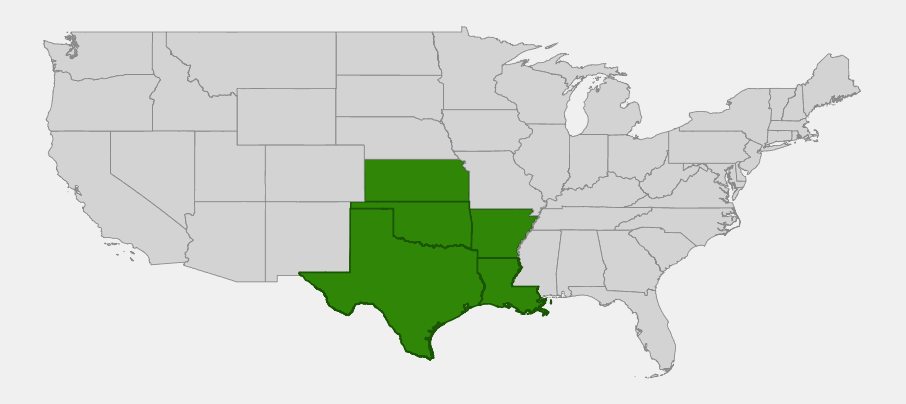
Oklahoma plum is native to the south-central United States, centered on Kansas, Oklahoma and Texas, and extending into southwestern Arkansas and northwestern Louisiana. It favors sandy soils and open habitats across this range, from the prairies of eastern Kansas and Oklahoma into the Cross Timbers and sandy post-oak savannas of central and eastern Texas.
Typical habitat includes sand barrens, dry open woodlands with sandy soil, prairie edges and roadsides, where it often forms genetically distinct clonal thickets. It is frequently found growing near other native plums, such as Mexican plum, and shrubby oaks like sandpaper oak in the same sandy-soil plant communities, and tolerates the hot summers and periodic drought typical of the southern Great Plains.
Some older sources extend the species’ range slightly further, into extreme southeastern Colorado and eastern New Mexico, but county-level distribution records confirm the core, well-documented range as Kansas, Oklahoma, Texas, Arkansas and Louisiana; gardeners outside this core range should confirm local sourcing and provenance before planting.
📋 Regional plant lists featuring Oklahoma Plum: Arkansas, Louisiana, Eastern Oklahoma & Eastern Texas · Nebraska, Kansas & Eastern Colorado · South & West Texas
Growing & Care Guide
Oklahoma plum is a forgiving, low-maintenance native shrub, well suited to naturalistic plantings on sandy or sunny sites where little supplemental care is available after establishment.
Light
Plant in full sun to light part shade for the best flowering and fruiting. Shaded plants will survive but bloom and fruit more sparsely, and tend to grow leggier as they stretch toward available light.
Soil & Water
This species is naturally adapted to sandy, well-drained, often nutrient-poor soils, and it does not need rich garden soil to thrive. Good drainage is more important than fertility. Water regularly during the first growing season to help young plants establish, then taper off — established colonies tolerate the heat and periodic drought typical of the southern plains without supplemental irrigation. For other regionally adapted woody plants that share these conditions, see our guide to native oak trees of Oklahoma, which often grow alongside sand-prairie plums.
Planting Tips
Because Oklahoma plum spreads by suckering, give it room to form a thicket rather than treating it as a tidy single-stem specimen; it is best used where spreading is welcome, such as a naturalized border, slope, or wildlife hedgerow. Space plants several feet apart if starting a colony, since it will fill in over time. Fall or early spring planting from container stock gives roots time to establish before summer heat.
Pruning & Maintenance
Little pruning is required. Remove dead or damaged wood in late winter, and thin out old, unproductive stems from the base every few years to keep a thicket vigorous and encourage new flowering wood. If the colony spreads beyond its intended footprint, cut and remove unwanted suckers at the root; mowing the perimeter is an easy way to keep thickets contained in a managed landscape.
Landscape Uses
Oklahoma plum fits a range of naturalistic garden roles:
- Wildlife hedgerow or thicket for birds and small mammals
- Erosion control on sandy slopes and open ground
- Prairie restoration and native shrub borders
- Pollinator garden component for early-spring nectar
- Informal screening where a low, spreading thicket is wanted
Wildlife & Ecological Value
Oklahoma plum provides food and shelter at a time of year — very early spring — when few other native shrubs are in bloom, making it a disproportionately valuable resource for pollinators and early-season wildlife.
For Pollinators
The early, abundant white flowers are an important nectar and pollen source for native bees and other early-season pollinators emerging from winter dormancy, when little else is in bloom on the open plains. For more on building out a season-long pollinator habitat around shrubs like this one, see our pollinator garden design basics.
For Birds
The small summer plums are eaten by a variety of birds, and the dense, thorny-textured thickets provide valuable nesting cover and protection from predators in otherwise open prairie and woodland-edge habitat. See our guide to attracting songbirds with native plants for more on how fruiting shrubs like this support breeding bird populations.
For Mammals
Small mammals and deer both make use of Oklahoma plum thickets, browsing foliage and twigs and consuming fallen fruit; the dense growth habit also offers good ground-level cover for rabbits and other small animals moving through open country.
Ecosystem Role
By spreading clonally into dense thickets, Oklahoma plum helps stabilize sandy soils prone to erosion and adds structural diversity to otherwise open prairie and savanna habitats, creating shelter belts that support a wider community of insects, birds and small mammals than open grassland alone.
Cultural & Historical Uses
Like other native wild plums of the southern plains, Oklahoma plum’s small, tart fruit has a long history of local use for jellies, preserves and sauces among both Indigenous peoples and later settlers of the region, who gathered the sour “sand plums” each summer from wild thickets — a practice still carried on today in parts of Kansas, Oklahoma and Texas, where sand plum jelly remains a regional specialty. The thickets themselves also served as natural windbreaks and boundary markers in open prairie settings.
The wood is of little commercial value given the shrub’s small stem size, and the species has never been significant in the lumber or furniture trade. Its primary historical importance has always been as a reliable, drought-tolerant source of wild fruit on the plains, where few other fruiting plants could be relied upon in dry years. For a look at how more widely cultivated plum species compare in regional fruit gardens, see our guides to best plum trees for Texas and best plum trees for Arkansas.
Today, Oklahoma plum is mainly grown and preserved for its wildlife and restoration value, though home gatherers in its native range still occasionally harvest the tart fruit for jelly-making, following the same traditions as earlier generations.
Frequently Asked Questions
Is Oklahoma plum fruit edible?
Yes. The small, sour red plums are edible and have long been used locally for jellies and preserves, though they are generally too tart to eat fresh off the shrub in quantity.
How is Oklahoma plum different from Chickasaw plum?
Oklahoma plum is shorter and more shrubby, with distinctly velvety young twigs and leaf undersides, while Chickasaw plum (Prunus angustifolia) grows taller with smoother, hairless twigs. Both form suckering thickets and often grow in similar sandy habitats across the same region.
Will Oklahoma plum take over my garden?
It spreads readily by root suckers and can form a substantial thicket over time, so it is best planted where spreading is wanted, such as a naturalized border or slope, and contained by mowing or root-pruning the edges if space is limited.
Does Oklahoma plum need a second plant to produce fruit?
Not necessarily a separate individual, but because many wild colonies are single genetic clones, a lone thicket may set fruit poorly; planting more than one distinct clone, or from seed-grown stock, improves pollination and fruit set.
How drought tolerant is Oklahoma plum?
Very, once established. It is naturally adapted to the sandy, periodically dry soils of the southern Great Plains and generally needs no supplemental irrigation beyond its first year or two in the ground.