Hedgehog Cactus (Echinocereus engelmannii)
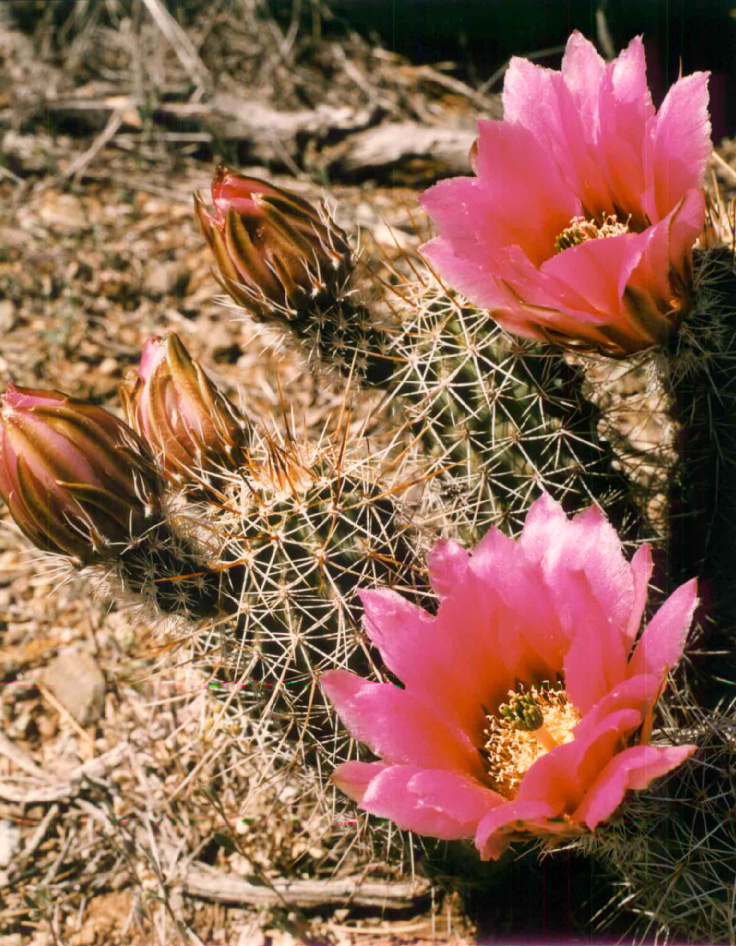
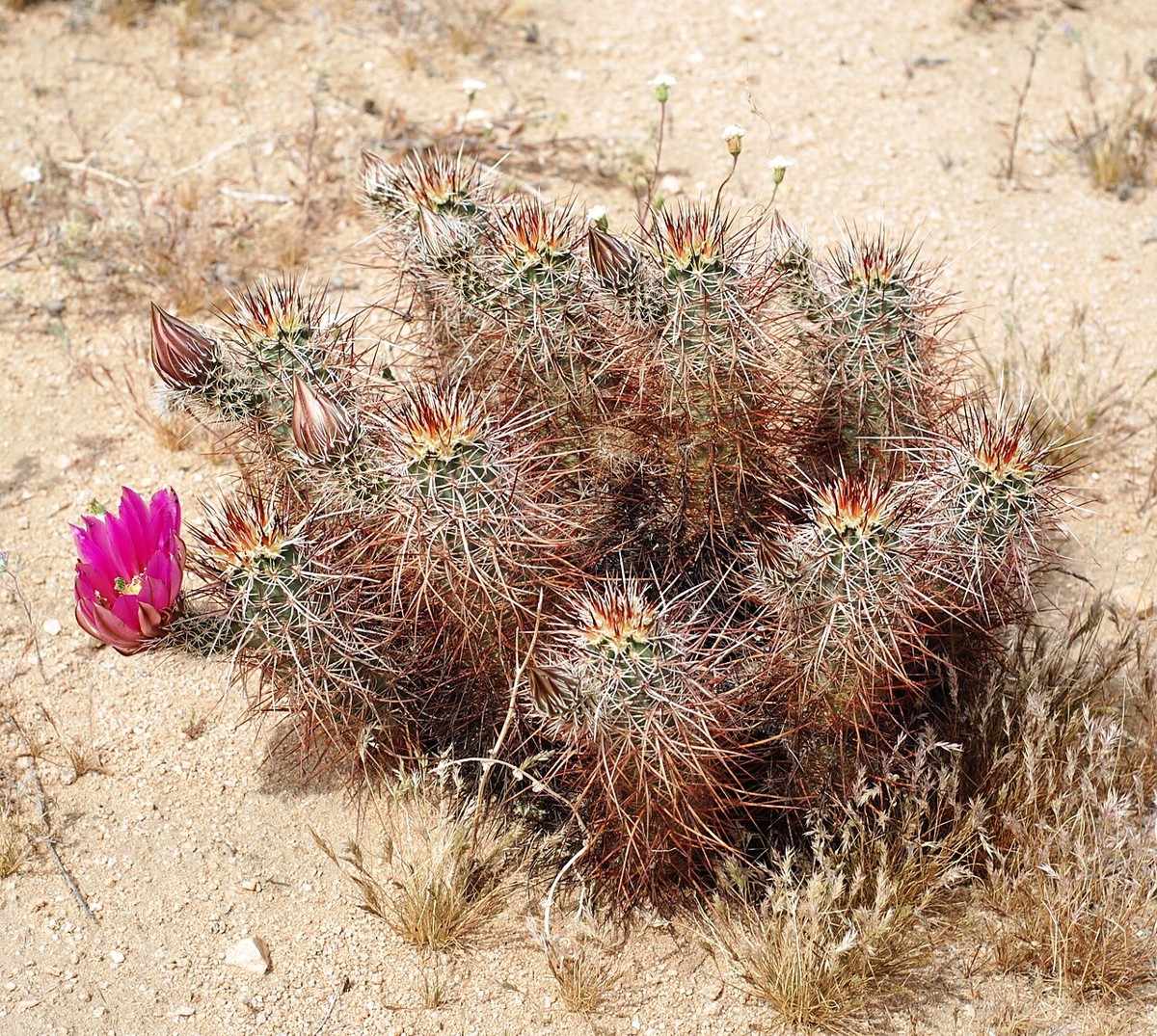
Echinocereus engelmannii, commonly known as Hedgehog Cactus, Engelmann’s Hedgehog Cactus, or Strawberry Hedgehog Cactus, is one of the most widespread and visually rewarding of the small barrel-forming cacti native to the American Southwest. It grows as a cluster of cylindrical, spine-covered stems, usually 6 to 20 of them rising together from a shared base, each one densely wrapped in a crisscrossing armor of tan, gray, pink, or straw-colored spines. In spring the plant transforms, with brilliant magenta-pink flowers up to 3 inches across opening one after another along the upper stems — among the showiest blooms of any North American cactus.
Hedgehog cactus grows across a huge swath of desert and semi-desert terrain, from the Mojave and Sonoran Deserts of California, Nevada and Arizona, east through Utah and into New Mexico, typically on rocky slopes, gravelly flats, and the margins of desert washes. Its abundance and tolerance of varied substrates — granite, limestone, sand, and volcanic rock alike — make it one of the easiest cacti for a desert gardener to find and succeed with.
For native-plant gardeners in the Southwest, hedgehog cactus offers an unbeatable combination: compact size, extreme drought tolerance, cold hardiness well beyond many showier cacti, and a two- to three-week flower display that draws native bees from considerable distances. It fits easily into small rock gardens as well as large xeriscape beds, and its clustering habit means a single plant slowly becomes a multi-stemmed specimen over the years.
Identification
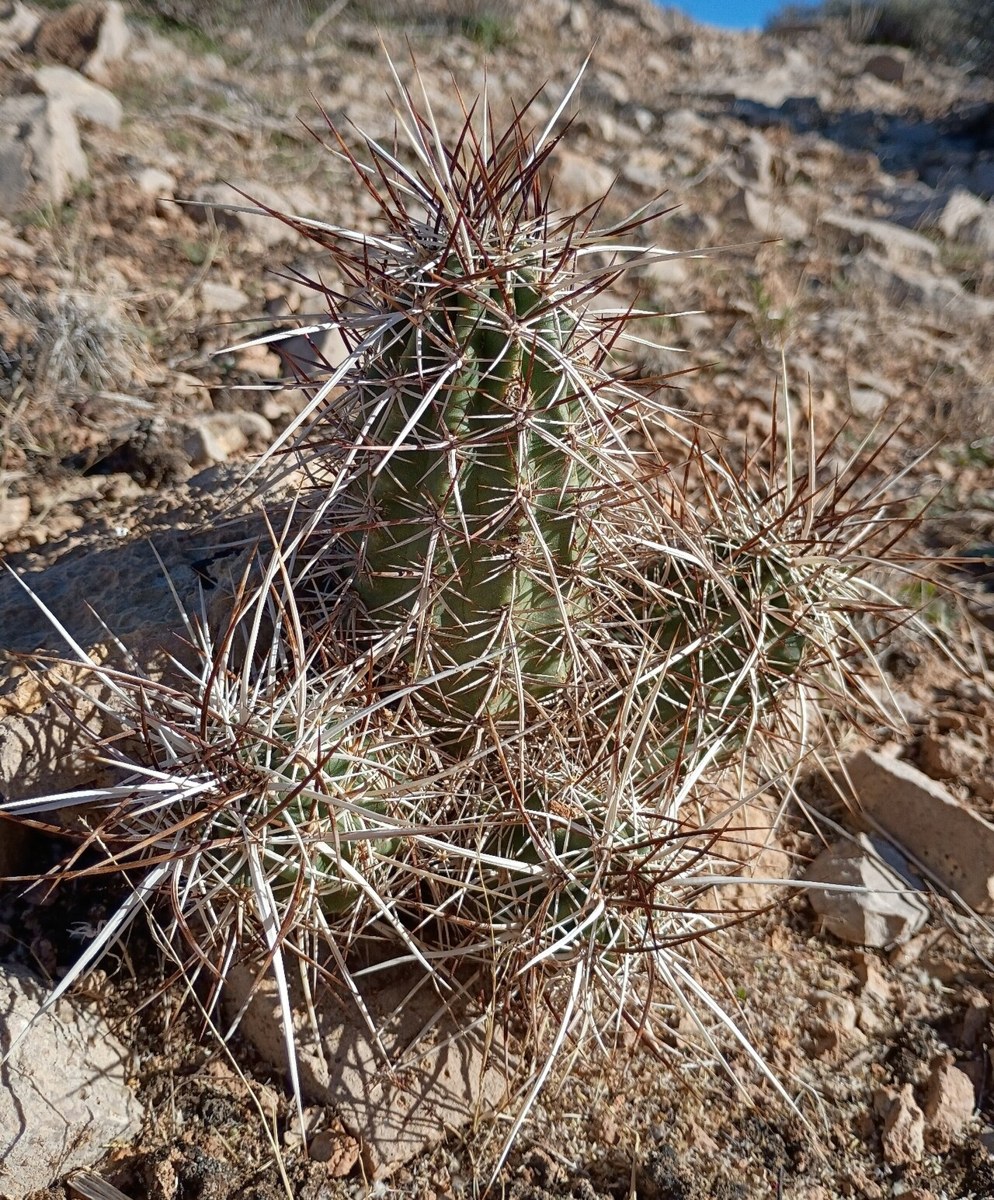
Hedgehog cactus forms clusters of upright, cylindrical stems 4 to 24 inches tall and 2 to 3.5 inches in diameter, with 10 to 13 low ribs per stem. A mature clump can have anywhere from a handful to several dozen stems radiating from a central point, giving older plants a rounded, mounded shape a foot or more across.
Spines
Each areole carries both central and radial spines, variable in color from straw-yellow and tan to pink, red or nearly black, often banded or mottled on the same plant. Central spines are stout and can reach over an inch long; radial spines are shorter and more numerous, forming an interlocking lattice that nearly obscures the green stem beneath. This spine variability across its range has led to the recognition of several regional varieties.
Flowers
Flowers are large for the plant’s size — 2 to 3 inches across — in shades of magenta-pink to deep rose-purple, with a yellow-green stigma visible at the flower’s center and numerous golden stamens. They open for several days in succession in March through June depending on elevation and latitude, each bloom lasting only a few days but new buds continuing to open along the stem for two to three weeks total.
Fruit
The fruit is a spiny, egg-shaped berry about an inch long that ripens to red or purplish-red in early summer. Unlike the dry fruit of many desert cacti, hedgehog cactus fruit is fleshy and sweet, with a flavor often compared to strawberries — the source of the “strawberry hedgehog cactus” common name. The spines on the ripe fruit loosen and can be brushed off, making the fruit edible once cleaned.
Quick Facts
| Scientific Name | Echinocereus engelmannii |
| Family | Cactaceae (Cactus) |
| Plant Type | Clump-forming barrel/column cactus |
| Mature Height | 4–24 in per stem |
| Mature Spread | 1–3 ft, widening as the clump adds stems |
| Growth Rate | Slow |
| Sun Exposure | Full Sun |
| Water Needs | Very Low; drought tolerant |
| Soil Type | Rocky, gravelly or sandy; fast-draining |
| Soil pH | Neutral to alkaline (7.0–8.5) |
| Bloom Time | March – June |
| Flower Color | Magenta-pink to rose-purple |
| Fall Color | None (evergreen succulent) |
| Fruit | Spiny red berry, about 1 in, edible and sweet |
| Deer Resistant | Yes |
| USDA Hardiness Zones | 7a–10b |
Native Range
Hedgehog cactus is native across a broad stretch of the American Southwest: southeastern California, Nevada, Utah, Arizona and New Mexico, with its range continuing south into Baja California and Sonora, Mexico. Within this range it spans the Mojave, Sonoran, and parts of the Chihuahuan desert, plus the warmer valleys of the Colorado Plateau in southern Utah.
It grows on rocky slopes, gravelly bajadas, canyon walls, and the sandy or stony flats bordering desert washes, generally from near sea level up to about 7,000 feet in elevation. It tolerates a wide range of parent rock, from granite and limestone outcrops to volcanic rubble, and is frequently found growing beneath the partial shade of larger shrubs like creosote bush and blackbrush as well as in full open sun.
The species remains common and secure through most of its range, though localized populations near expanding desert cities have been reduced by development and off-road vehicle use. Several geographic varieties are recognized by botanists, reflecting the considerable variation in spine color and density across its wide distribution, from the Mojave Desert forms to those of the Chihuahuan Desert edge in New Mexico.
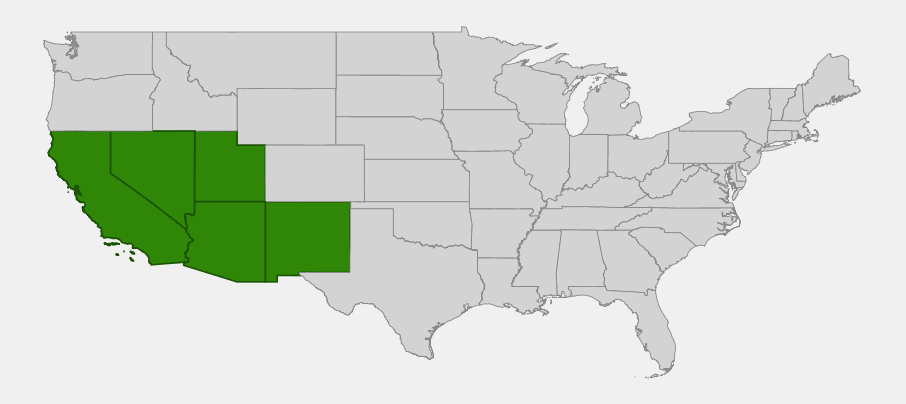
📋 Regional plant lists featuring Hedgehog Cactus: California & Nevada · Arizona & New Mexico · Utah & Western Colorado
Growing & Care Guide
Hedgehog cactus is one of the more forgiving native cacti to grow, tolerant of heat, cold, poor soil and long dry spells, provided its one essential requirement — sharp drainage — is met.
Light
Plant in full sun for the strongest spine color and the heaviest flowering. In the hottest, lowest-elevation gardens, light afternoon shade from a nearby shrub can help young plants establish, mimicking the partial shelter many wild plants get from creosote bush or blackbrush, but established plants do best with as much direct sun as the garden offers.
Soil & Water
Fast drainage is non-negotiable. Plant in a gritty mix of coarse sand, decomposed granite or crushed rock, raised slightly above grade if garden soil is heavy clay. Water deeply but infrequently during the active spring and summer growing season, then withhold water almost entirely in winter, when the plant is dormant and highly susceptible to rot if kept wet and cold at the same time.
Planting Tips
Set out nursery-grown plants in spring after the last frost so roots establish before the heat of summer. Space clumps at least 18 to 24 inches apart to allow for slow but steady widening over the years. Choose a site away from paths, since the dense spine cover can snag clothing, and avoid low spots where winter water might pool around the base.
Pruning & Maintenance
Essentially none is needed. Remove any stem that has rotted at its base, cutting back to clean tissue and allowing the cut to callus before any contact with soil. Otherwise leave the clump alone; hedgehog cactus resents disturbance to its shallow, wide-spreading root system.
Propagation
The easiest method is by division: a healthy stem can be cut from the clump, left to callus in a dry, shaded spot for one to two weeks, and then planted in gritty, barely moist soil, where it will root in a few weeks. Seed propagation is also possible from cleaned, ripe fruit, though seedlings grow slowly and may take several years to reach flowering size.
Landscape Uses
- Rock gardens and xeriscape beds as a flowering accent among boulders and gravel
- Desert habitat gardens paired with creosote bush, brittlebush and desert marigold
- Container culture in a shallow, wide pot with excellent drainage
- Pollinator gardens, where the spring bloom draws native bees reliably each year
- Slope and bank plantings on well-drained, sunny hillsides
Wildlife & Ecological Value
Hedgehog cactus is a reliable and well-used resource in the desert ecosystems where it grows, offering nectar, cover, and food across several seasons.
For Pollinators
The large, brightly colored spring flowers are a magnet for native bees, especially cactus-specialist bees in the genera Diadasia and Lithurgus, which time their emergence to coincide with the bloom. Flowers open in the morning and typically close by early afternoon, concentrating pollinator visits into a few intense hours each day during the two- to three-week bloom period.
For Birds
Cactus wrens and other desert birds sometimes forage around the base of mature clumps for insects, and the dense spine cover offers some protection for ground-nesting species in the immediate vicinity. Some birds also take advantage of the ripe fruit.
For Mammals
Kangaroo rats, ground squirrels, and other small desert mammals eat the sweet, fleshy fruit once it ripens and loses its spines, helping disperse the seeds. Larger mammals such as javelina and desert bighorn sheep will occasionally chew into stems during severe drought for the stored moisture inside.
Ecosystem Role
As one of the more common and widely distributed cacti of the Southwest, hedgehog cactus contributes structural diversity to open desert plant communities and provides an early, concentrated nectar resource that supports the broader pollinator populations desert wildflowers depend on later in the season.
Cultural & Historical Uses
Indigenous peoples throughout the hedgehog cactus’s range, including Southern Paiute, Cahuilla, and various Puebloan groups, harvested the sweet, strawberry-flavored fruit as a seasonal food, eating it fresh or drying it for later use. The fruit’s spines were removed by rolling it in sand or brushing them off before eating, a technique still used by foragers today.
The species was named for Dr. George Engelmann, the nineteenth-century St. Louis physician and botanist whose extensive studies of North American cacti, conducted partly from specimens collected on government survey expeditions across the newly explored Southwest, established much of the early taxonomic framework for the cactus family still used today.
In more recent decades, hedgehog cactus has become a popular subject for desert wildflower photography, with its brief but spectacular spring bloom drawing visitors to desert parks and preserves across its range. It is also commonly propagated and sold by native-plant and cactus nurseries throughout the Southwest.
Frequently Asked Questions
Can you eat hedgehog cactus fruit?
Yes. The ripe red fruit is fleshy and sweet, often compared in flavor to strawberries, which is where the name “strawberry hedgehog cactus” comes from. Roll the fruit in sand or brush it with a cloth to remove the fine spines before eating.
How is hedgehog cactus different from barrel cactus?
Hedgehog cactus grows in clusters of multiple narrower, cylindrical stems rather than a single large barrel-shaped one, and it produces much larger, showier pink flowers than most true barrel cacti (genus Ferocactus). Hedgehog cacti are also generally smaller overall.
How long does hedgehog cactus bloom?
Individual flowers last only two to four days, but a healthy clump produces a succession of new buds over two to three weeks in spring, so the overall bloom display lasts considerably longer than any single flower.
Is hedgehog cactus cold hardy?
Yes, more so than many desert cacti — it is hardy to around USDA zone 7a, tolerating brief freezes down to near 0°F, especially in its higher-elevation Utah and New Mexico populations, provided the soil is dry at the time of the freeze.
Why do hedgehog cactus spines vary so much in color?
Spine color (tan, gray, pink, red, or nearly black) varies both between individual plants and across the species’ geographic range, which spans several recognized varieties. This variability is normal and does not indicate a different species, though it is one reason hedgehog cactus can be tricky to tell apart from its close relatives without seeing the flowers.

Looking for a nursery that carries Hedgehog Cactus?
Browse our native plant nursery directory: California · Nevada & New Mexico · Arizona · Utah