Lace Hedgehog Cactus (Echinocereus reichenbachii)
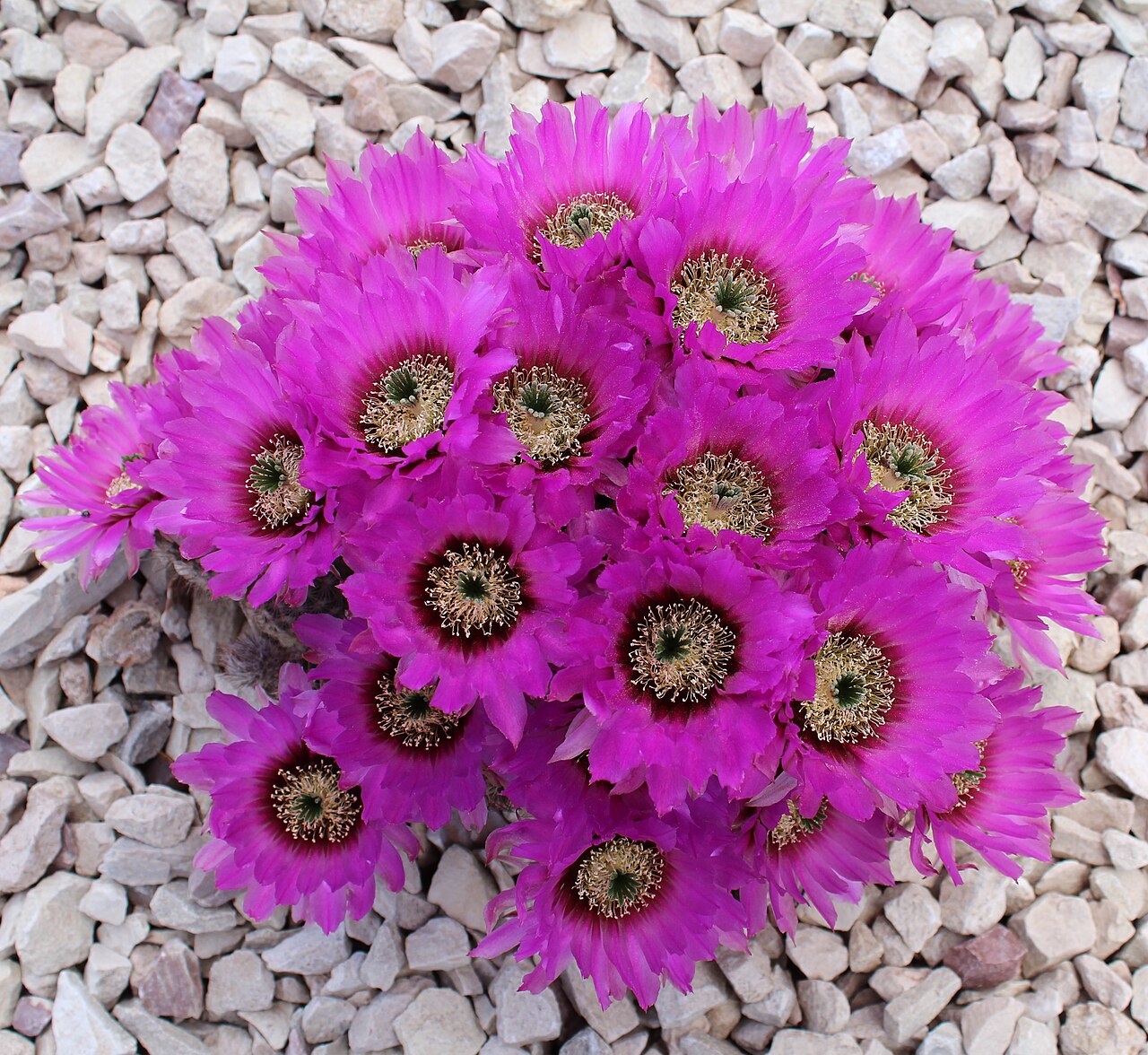
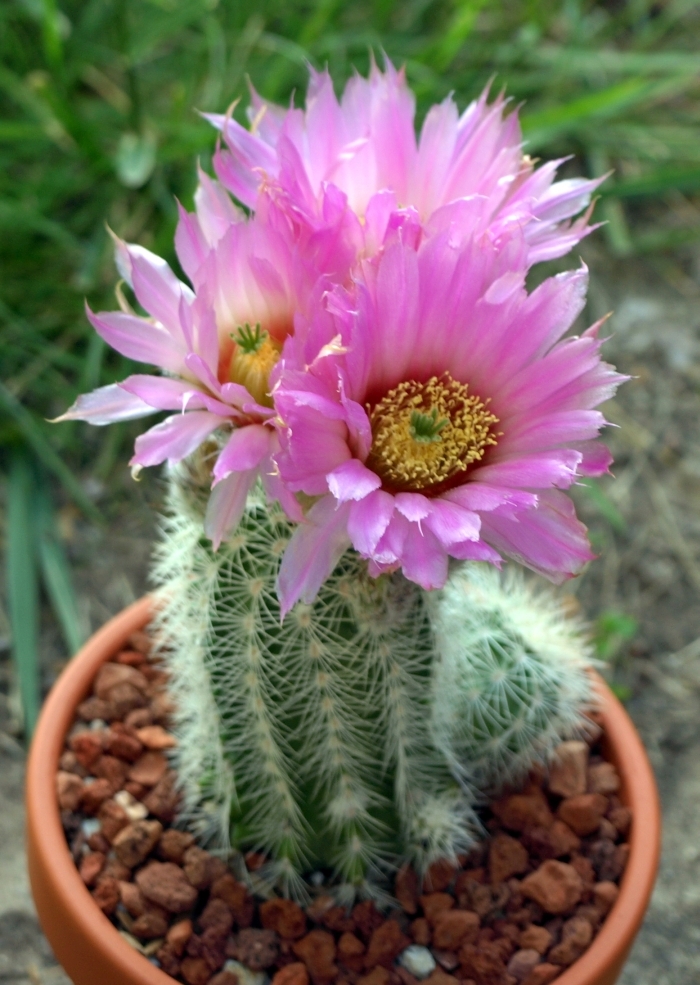
Echinocereus reichenbachii, the Lace Hedgehog Cactus (also called lace cactus), is one of the most densely and beautifully spined small cacti of the southern Great Plains and Texas Hill Country. Its common name comes from the fine, interlacing pattern its short, comb-like spines form across the stem surface, giving each cylindrical body a soft, almost woven look despite being covered edge to edge in sharp spines. In spring, that quiet texture gives way to some of the showiest flowers of any native North American cactus: large, satiny magenta-pink blooms with a dark wine-red throat, often opening by the dozen on a single well-grown clump.
Lace hedgehog cactus typically grows as a solitary cylinder when young, becoming a loose to tight clump of several to many stems with age, usually staying under a foot tall. It is widespread across the limestone hills, prairies and rocky flats of Texas, Oklahoma and New Mexico, often growing in full sun on thin, rocky soil where almost nothing else can compete.
For rock garden and xeriscape enthusiasts within its native range, lace hedgehog cactus is a rewarding, long-lived plant that asks for little beyond sharp drainage and sun, and repays that simple care with one of the most spectacular native cactus flower displays each spring.
Identification
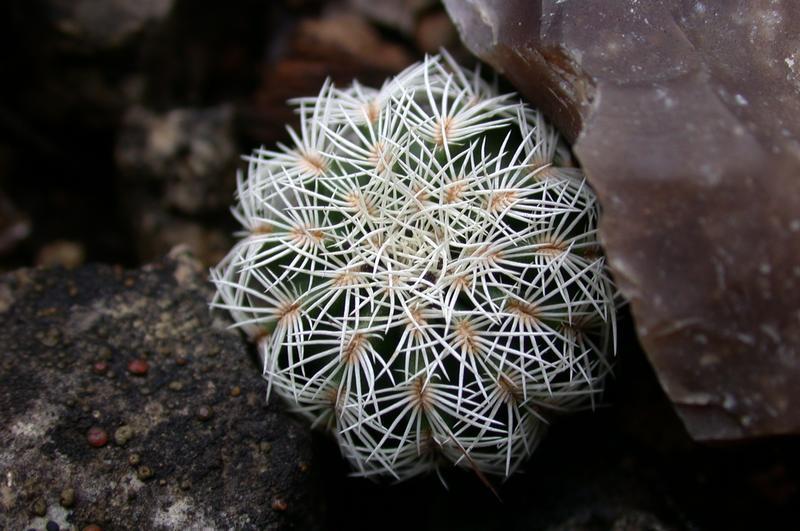
Lace hedgehog cactus is identified by its dense, uniform, lace-like spine covering and its tendency to form multi-stemmed clumps over time. Individual stems are cylindrical, 3 to 8 inches tall and 2 to 3 inches thick, usually growing upright or slightly leaning.
Stem & Spines
Each stem has 12 to 20 low, rounded ribs completely covered in tightly packed areoles, each bearing numerous short (¼ to ½ inch), stiff, interlacing radial spines, white to pale pink or tan, often with darker tips, plus a few slightly longer central spines. The overall effect is a dense, basket-like or lace-like weave that gives the species its name and largely hides the green stem beneath.
Growth Form
Young plants are usually solitary, but older individuals branch from the base to form clumps of anywhere from a few to several dozen stems, eventually forming a mounded cluster a foot or more across. Clump size and density vary noticeably by subspecies and growing conditions.
Flowers
Flowers open in mid-spring (April to May, sometimes with a smaller rebloom later) from areoles along the upper sides of the stems, not just the tip. Blooms are large for the plant’s size, 2 to 4 inches across, with glossy magenta to deep pink petals surrounding a dark red to maroon throat and a cluster of greenish stigmas; the Oklahoma subspecies baileyi tends toward brighter pink-violet tones.
Fruit & Seeds
The fruit is a small, spiny, egg-shaped, edible green to reddish berry that ripens in early summer, splitting open to reveal juicy flesh studded with tiny black seeds. It is far less showy than the fruit of many other cacti but is a genuine, if minor, wild edible.
Quick Facts
| Scientific Name | Echinocereus reichenbachii |
| Family | Cactaceae (Cactus) |
| Plant Type | Clumping hedgehog cactus |
| Mature Height | 3–8 in per stem |
| Mature Spread | 6 in – 1 ft+ as a mature clump |
| Growth Rate | Slow |
| Sun Exposure | Full Sun |
| Water Needs | Low; drought tolerant once established |
| Soil Type | Rocky, limestone or caliche soils; sharply drained |
| Soil pH | Neutral to alkaline (about 7.0–8.5) |
| Bloom Time | April – May |
| Flower Color | Magenta-pink with a dark red throat |
| Fall Color | None (evergreen) |
| Fruit | Small spiny green-red edible berry, early summer |
| Deer Resistant | Yes |
| USDA Hardiness Zones | 6–10 |
Native Range
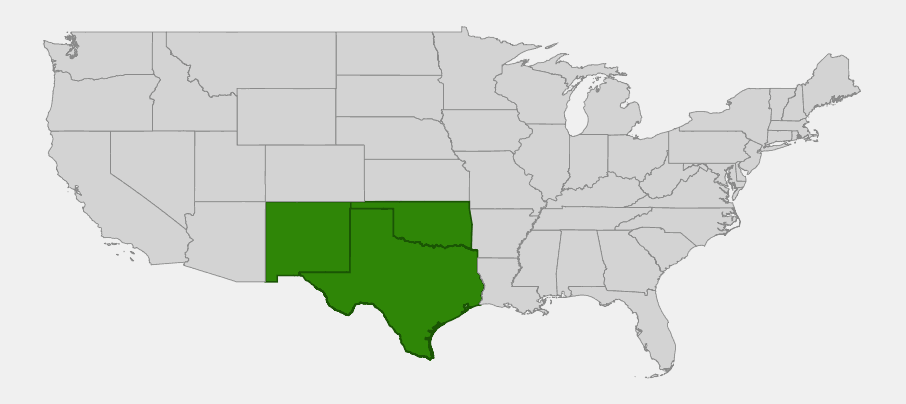
Lace hedgehog cactus ranges across central and western Texas, central and western Oklahoma, and eastern New Mexico, with its core population centered on the Texas Hill Country, the Edwards Plateau, and the mixed-grass prairies and limestone hills of south-central Oklahoma. A distinct, especially showy subspecies, baileyi, is largely restricted to south-central Oklahoma.
Within this range, the species grows in full sun on rocky limestone hillsides, caliche flats, shortgrass and mixed-grass prairie, and open juniper-oak woodland edges, typically at low to moderate elevations. It favors thin, well-drained, often calcareous soils where competing vegetation is sparse, and it is a frequent, sometimes locally abundant, component of Hill Country and southern plains rock outcrops.
Although it is sometimes cultivated outside this core range, confirmed county-level native records cluster in New Mexico, Oklahoma and Texas; plant it within these states for the most ecologically appropriate placement.
📋 Regional plant lists featuring Lace Hedgehog Cactus: Arizona & New Mexico · Texas
Growing & Care Guide
Lace hedgehog cactus is an easy, long-lived rock garden plant for anyone within its native range who can give it sun and sharp drainage.
Light
Full sun produces the tightest spine coverage, the most compact clumps, and the heaviest flowering. Some light afternoon shade is tolerated in the hottest parts of its range but is not necessary.
Soil & Water
Plant in rocky, limestone-based or caliche soil with excellent drainage; a raised bed or berm amended with coarse gravel works well where native soil is heavier. Water to establish new plants, then reduce sharply; established clumps need little to no supplemental water and are more at risk from overwatering and rot than from drought.
Planting Tips
Set out container plants in spring or fall, planting at the same depth they grew in the pot. Choose a spot with reflected heat, such as near light-colored rock or gravel mulch, which mimics the warm, well-drained microsites the species favors in the wild. Avoid mulching directly against the stem base, which can trap moisture and cause rot.
Pruning & Maintenance
No pruning is needed. The plant has few pest or disease problems when grown in appropriately sharp drainage and needs no fertilizer. Over time, individual clumps naturally thicken through basal branching; this is normal and should not be managed or thinned.
Propagation
Offsets can be carefully removed from an established clump with a clean, sharp knife, allowed to callus for several days to a week, and then potted in a gritty cactus mix to root. Seed propagation is also possible, sown in a very well-drained mix, though it is slower and best suited to patient growers.
Landscape Uses
- Rock gardens and gravel beds, where its dense, pale spine pattern and spring flowers make a striking focal point
- Texas Hill Country native plantings alongside agarita and native bunchgrasses
- Container and trough culture for collectors who want to display the clump up close
- Caliche and limestone outcrop restoration within its native range
- Pollinator gardens, where the large spring flowers draw a strong bee response
Wildlife & Ecological Value
Lace hedgehog cactus is a modest but genuine contributor to the ecology of the southern plains and Hill Country habitats where it grows.
For Pollinators
The large, brightly colored spring flowers are highly attractive to native bees, which are the primary pollinators, and the heavy bloom display can draw noticeable pollinator activity to a rock garden planting.
For Birds
Ground-foraging birds occasionally eat the small summer fruit, though it is a minor food source compared to larger-fruited native cacti.
For Mammals
Small mammals and rodents will eat the fruit when available, helping disperse seeds locally, and the dense spine coverage offers the plant itself strong protection from most browsing animals.
Ecosystem Role
As a long-lived perennial adapted to thin, rocky, calcium-rich soils, lace hedgehog cactus is a characteristic and ecologically appropriate component of Hill Country limestone outcrop and southern shortgrass prairie communities, persisting in sites too dry and rocky for most competing plants.
Cultural & Historical Uses
Lace hedgehog cactus has a smaller documented history of traditional use than larger regional cacti such as prickly pear, but its small fruit has been gathered and eaten fresh by people within its range, valued as a minor wild snack rather than a staple food. The plant’s striking, densely spined appearance has long made it a favorite subject for botanical illustration and photography in Texas and Oklahoma natural history circles.
In more recent decades, lace hedgehog cactus has become one of the most widely grown native cacti among Texas and Oklahoma rock-garden hobbyists and cactus collectors, prized for its cold hardiness, reliable spring flower show, and relatively compact, well-behaved clumping habit compared to larger or more aggressively spreading cactus species.
The species also carries ongoing botanical interest because of its several regional subspecies, including the especially bright-flowered baileyi of south-central Oklahoma, which continue to be studied and distinguished by cactus specialists and native plant botanists.
Frequently Asked Questions
How long does lace hedgehog cactus take to flower?
A young, seed-grown plant can take several years to reach flowering size, but once mature, it blooms reliably every spring, often producing many flowers at once on a well-established clump.
Is lace hedgehog cactus cold-hardy?
Yes, it is one of the more cold-tolerant hedgehog cacti, hardy to about USDA zone 6, and it survives the cold snaps that regularly occur across its Oklahoma and North Texas range as long as the soil stays dry through winter.
Why are my plant’s spines less dense than the pictures?
Spine density and color vary by individual, subspecies and growing conditions; full sun and lean, rocky soil, which mimic the plant’s natural habitat, typically produce the tightest, most lace-like spine coverage.
Can I grow this cactus outside Texas, Oklahoma and New Mexico?
It can be grown in similarly dry, well-drained, sunny gardens elsewhere, but it is only considered locally native within those three states, so it is best featured as a true regional native within that range.
Is the fruit worth eating?
It’s edible and has been eaten historically, but the fruit is small and the plant is grown mainly for its flowers and form rather than as a food crop. Treat any fruit as a minor curiosity rather than a garden harvest.

Looking for a nursery that carries Lace Hedgehog Cactus?
Browse our native plant nursery directory: Texas · New Mexico & Oklahoma