
Lambkill (Kalmia angustifolia)
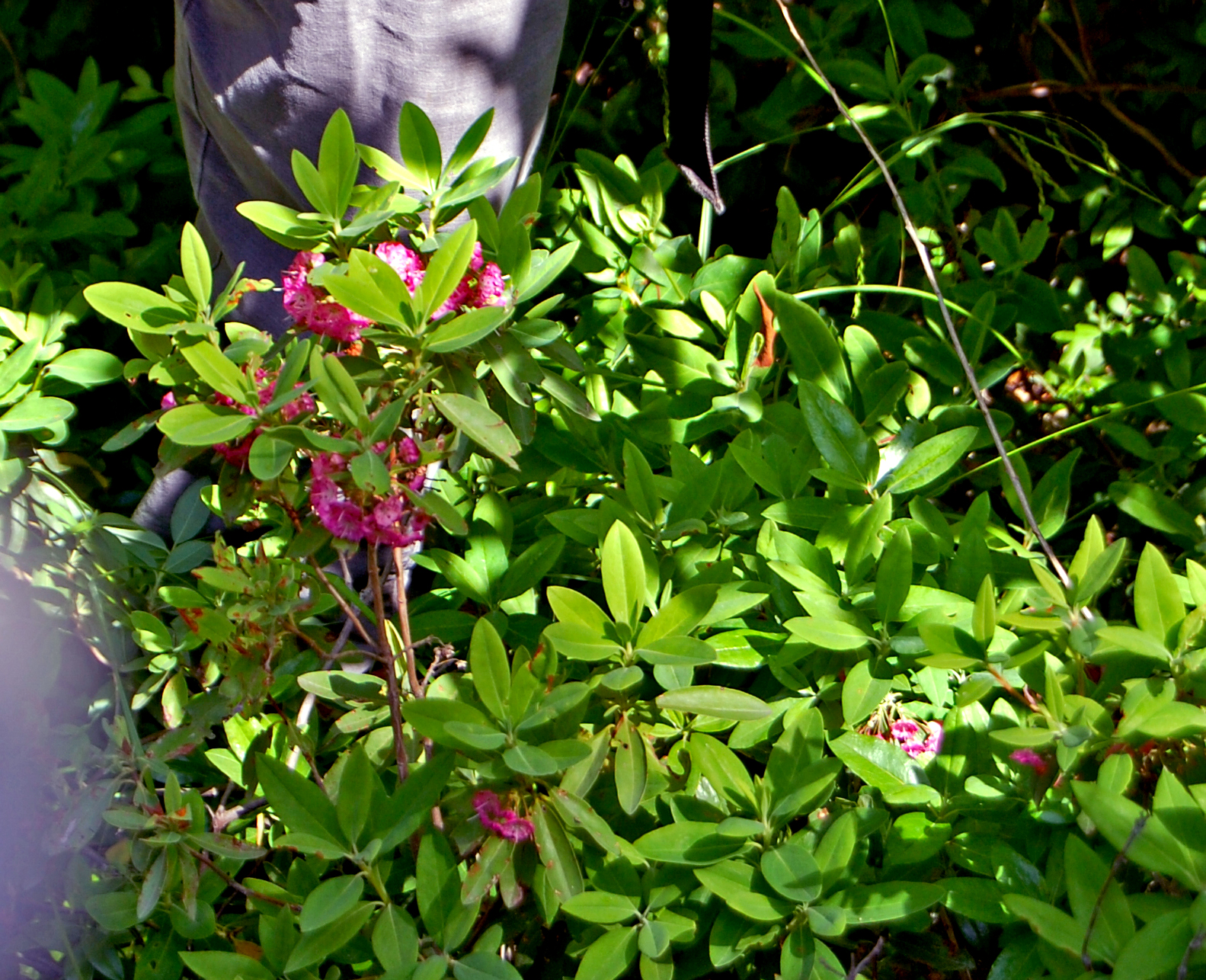
Kalmia angustifolia, commonly known as Lambkill, Sheep Laurel, or Wicky, is a small, evergreen native shrub of northeastern North America that delivers a spectacular floral display wildly disproportionate to its modest stature. Rarely exceeding 3 feet tall, this compact member of the Ericaceae (heath) family produces dense clusters of vivid pink to deep rose-red saucer-shaped flowers in May and June that rival any ornamental shrub in garden impact. Its narrow, leathery, evergreen leaves and adaptability to the poorest, most acidic soils make it a tough and beautiful plant for challenging garden sites.
The common name “Lambkill” reflects a sobering ecological reality: all parts of this attractive shrub are toxic to livestock, particularly sheep and young cattle. Grazing animals that consume significant quantities of K. angustifolia foliage can suffer from a condition known as grazing toxicosis, caused by grayanotoxins (also called andromedotoxins) present throughout the plant. Indigenous peoples were well aware of this toxicity and used the plant carefully in ceremonial and medicinal contexts. The name “Sheep Laurel” arises from the same observation, and the specific epithet angustifolia simply means “narrow-leaved” in Latin — a reference to the distinctively slender leaves that differentiate it from the broader-leafed Mountain Laurel (Kalmia latifolia), its more commonly cultivated cousin.
Despite — or perhaps because of — its toxicity, Lambkill is a supremely well-adapted native plant for difficult growing conditions. Its preference for the cool, acidic, moist yet well-drained soils of pine barrens, heath bogs, rocky outcrops, and open woods in New England makes it ideal for gardeners working with naturally acidic, lean soil where many plants struggle. Its tolerance for both sun and partial shade, combined with its evergreen foliage and stunning early summer flowers, make it a worthy addition to any native plant garden in the northeastern United States.
Identification
Lambkill is a compact, low-growing evergreen shrub typically reaching 1 to 3 feet (30–90 cm) tall, sometimes forming dense colonies through underground stolons. Unlike its larger relative Mountain Laurel, Lambkill stays consistently small and is unlikely to exceed knee height in most garden settings. The plant has a neat, mounded form and spreads slowly outward through rhizomatous growth.
Leaves
The leaves are the most immediately distinctive feature — narrowly elliptical to oblong, 1 to 2 inches (2.5–5 cm) long and only ¼ to ½ inch (6–12 mm) wide, giving the plant its “narrow-leaved” name. They are leathery in texture, with smooth margins, a glossy dark green upper surface, and a paler, somewhat glaucous (waxy) underside. The leaves are arranged in whorls of 3 (occasionally opposite or alternate), giving the stems a distinctive tiered look. They are evergreen and persist year-round, sometimes taking on purplish or bronzy tones in winter. The extremely narrow leaves immediately distinguish K. angustifolia from Mountain Laurel (K. latifolia), which has broader, more lance-shaped leaves.
Flowers
The flowers are Lambkill’s greatest ornamental asset — exquisite small saucers, ⅓ to ½ inch (8–12 mm) across, with five fused petals forming a shallow bowl with distinctive pouches that hold the stamens in tension. When an insect lands on the flower and trips the stamens, they snap forward and dust the visitor with pollen — an elegant pollination mechanism. The flowers are borne in dense lateral clusters (corymbs) arising from the middle and upper portions of the stem, rather than at the branch tips (as in Mountain Laurel). Color ranges from bright pink to deep rose-magenta, with a ring of darker spots inside the flower — consistently among the most vivid pinks of any native shrub. Blooms appear in May and June, persisting for 3 to 4 weeks. The dried flower clusters (with their distinctive seed capsules) remain on the plant into winter, providing visual interest.
Fruit
The fruit is a small, round, 5-valved dry capsule about ¼ inch (5–6 mm) in diameter, ripening in late summer to early fall. The capsules remain attached to the plant in neat clusters through winter, providing a subtle ornamental interest and gradually releasing tiny seeds. The seed capsules have a distinctive star-like appearance when split open.
Quick Facts
| Scientific Name | Kalmia angustifolia |
| Family | Ericaceae (Heath) |
| Plant Type | Evergreen Shrub |
| Mature Height | 3 ft |
| Sun Exposure | Full Sun to Part Shade |
| Water Needs | Moderate |
| Bloom Time | May – June |
| Flower Color | Bright pink to deep rose-magenta |
| Foliage | Evergreen; narrow, leathery, dark green leaves |
| Soil Preference | Acidic (pH 4.5–6.0); adaptable to many soil types |
| USDA Hardiness Zones | 2–7 |
Native Range
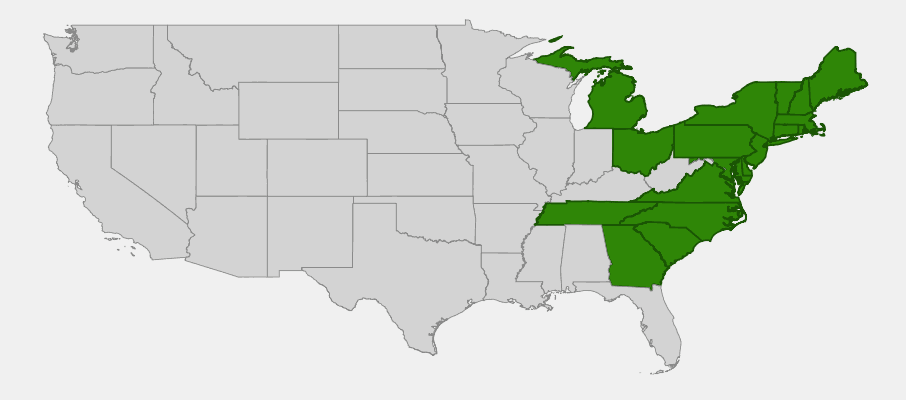
Lambkill is native to eastern North America, with a range extending from Newfoundland and Labrador south through all of New England, New York, New Jersey, Pennsylvania, and the Appalachian Mountains to Georgia and Alabama. It is common throughout the northeastern United States, reaching into Ohio and Michigan in the Midwest. This is fundamentally a plant of the eastern boreal and temperate zones, closely tied to the acidic, nutrient-poor soils of the North Atlantic coastal region and the Appalachian highland belt.
In its natural habitat, K. angustifolia is most commonly encountered in three types of communities: open, rocky woodlands with pine or oak-heath understory; sphagnum bogs and boggy meadows; and heath barrens — the open, windswept heathlands that are particularly characteristic of coastal Maine and Maritime Canada. In all of these habitats, the common thread is acidic, nutrient-poor soil where competition from more aggressive plants is reduced, allowing Lambkill to thrive. In Maine, dense stands of Lambkill (often growing alongside Leatherleaf, Bog Rosemary, and Labrador Tea) are characteristic of open, disturbed bog margins and heath communities.
The plant spreads slowly vegetatively through rhizomes and stolons, often forming dense colonial patches that can carpet the ground in its preferred habitats. It is frequently associated with other heath family plants including Lowbush Blueberry (Vaccinium angustifolium), Black Huckleberry (Gaylussacia baccata), Trailing Arbutus (Epigaea repens), and Leatherleaf (Chamaedaphne calyculata) in New England communities.
📋 Regional plant lists featuring Lambkill: New England
Growing & Care Guide
Lambkill is one of the most reliably rewarding native shrubs for acidic-soil New England gardens. It requires almost no maintenance once established in the right conditions, and will reward you with decades of spectacular spring bloom and attractive evergreen foliage year-round.
Light
Lambkill grows well in full sun to partial shade. In full sun, it produces the most abundant flowers and maintains a compact, dense form. In partial shade (2–4 hours of direct sun), it will still flower well but may become slightly more open and sprawling. Deep shade is not suitable — flowering will be minimal and the plant will decline over time. A partially shaded site with morning sun and afternoon shade works well, especially in warmer parts of the range where afternoon heat can stress the plant.
Soil & Water
Acidic soil is the single most important requirement for Lambkill. It thrives in pH 4.5 to 6.0 — the naturally acidic soils common under pine and oak canopies throughout New England. In neutral or alkaline soils, the plant will show chlorosis (yellowing between leaf veins) and will gradually decline. If your soil is not naturally acidic, amend with elemental sulfur, acidifying fertilizer, or plant in a dedicated acidic bed amended with peat moss and pine bark. Moderate, consistent moisture is ideal; the plant dislikes both drought and waterlogging. Excellent drainage is important even in wet sites — it tolerates moist conditions but not standing water.
Planting Tips
Plant Lambkill in spring or early fall from container stock. Choose a site with naturally acidic soil whenever possible — this greatly reduces maintenance. Mulch generously with pine bark, pine needles, or oak leaf mold to maintain soil acidity and moisture. Space plants 2 to 3 feet apart for a massed planting, or plant singly as an accent. Lambkill spreads slowly by rhizomes and will gradually fill in a planting over several years. Do not use limestone or wood ash near the planting.
Pruning & Maintenance
Lambkill requires minimal pruning. Deadhead spent flower clusters after bloom if desired for neatness, though this is not essential. Rejuvenation pruning — cutting the entire plant back to 6 inches in early spring — can refresh an old, leggy specimen and encourage dense new growth. Fertilize lightly with an acid-formulated fertilizer (formulated for azaleas and rhododendrons) in spring if growth seems slow. The plant is generally very pest and disease resistant when grown in appropriate acidic conditions.
Landscape Uses
- Acid soil garden ground cover — excellent mass planting under pines and oaks
- Bog and fen garden — authentic native bog companion
- Rock garden — compact size suits rocky, lean-soil settings
- Native heath planting — combine with blueberries, huckleberry, Labrador Tea
- Shaded border — evergreen foliage and spring bloom brighten shady spots
- Wildlife habitat — provides evergreen cover and nectar for pollinators
Wildlife & Ecological Value
Despite its toxicity to livestock, Lambkill provides important ecological services for wildlife adapted to the heathland and bog environments it inhabits.
For Birds
Lambkill does not produce berries and so is not a significant food source for birds. However, its dense, evergreen growth provides important thermal and escape cover in heath and bog habitats where other cover may be sparse. The plant’s dead twigs and stems provide perches and nesting substrate for various warblers and sparrows that inhabit heath communities, including Palm Warblers and Lincoln’s Sparrows.
For Mammals
Most mammals avoid Lambkill due to its toxicity — this is the origin of its common name. However, Snowshoe Hares, White-tailed Deer, and Moose may browse the foliage in limited quantities, particularly in winter when preferred forage is scarce. Deer appear to have some tolerance for grayanotoxins in small doses, though significant consumption is harmful. The dense growth provides cover for voles, shrews, and other small mammals that are not browsing the plant.
For Pollinators
The flowers are an excellent pollinator resource, visited by native bumblebees (Bombus spp.), various halictid bees, and honeybees. The unique “hair-trigger” anther mechanism — where stamens spring forward and dust visiting insects with pollen when the flower is disturbed — is particularly effective with bumblebees, which are large enough to trip the mechanism. Specialist bees in the genus Andrena are known to collect pollen almost exclusively from Kalmia species. The blooms appear in late May and June, bridging the gap between early spring flowers and summer-blooming heath plants, providing a critical nectar resource at an important seasonal transition point.
Ecosystem Role
Lambkill plays an important role in maintaining the open, heathy character of bog margins and pine barrens — habitats that are rare and ecologically significant throughout New England. By forming dense, low colonies that suppress taller vegetation, it helps maintain the open structure of these communities and provides habitat for species specifically adapted to heath and bog conditions. The plant’s toxicity to ungulates reduces browsing pressure and helps maintain habitat structure in areas with high deer densities.
Cultural & Historical Uses
Despite its dangerous toxicity, Kalmia angustifolia has a rich history of use by Indigenous peoples, who understood both its hazards and its medicinal potential. The Meskwaki people reportedly used small amounts of the plant as a form of poison for hunting applications. The Ojibwe used preparations of the bark and leaves medicinally — in very carefully controlled doses — as a treatment for skin conditions, rheumatism, and as a sedative. The powerful grayanotoxins in the plant interact with sodium ion channels in cell membranes, producing the numbing, anesthetic effect that some traditional practitioners employed therapeutically.
The genus Kalmia was named by the Swedish botanist Carl Linnaeus in honor of his student Pehr Kalm, a Finnish-Swedish naturalist who traveled extensively in North America in the 1740s and 1750s collecting plant specimens for Linnaeus. Kalm was the first botanist to thoroughly document the northeastern American flora, and his accounts of Native American use of various plants remain valuable historical records. His observations of Lambkill included the observation that livestock left standing near the plant were at significant risk — farmers in colonial New England quickly learned to keep sheep and cattle away from Lambkill-dominated pastures.
In the 19th century, Lambkill (like Mountain Laurel) briefly attracted interest as a possible commercial source of grayanotoxin-containing “mad honey” — honey produced by bees that have foraged exclusively on Kalmia or Rhododendron flowers. Mad honey, containing significant concentrations of grayanotoxins, has been produced intentionally in parts of Turkey for centuries for its intoxicating and medicinal properties. In North America, pure mad honey from Kalmia-foraging bees has caused occasional poisoning incidents when beekeepers set hives in areas with heavy Kalmia populations during bloom, though the honey is typically diluted enough in practice to be safe.
Frequently Asked Questions
Is Lambkill safe to plant if I have children or pets?
Use caution. All parts of Kalmia angustifolia are toxic if consumed — the grayanotoxins in the leaves, stems, and flowers can cause nausea, vomiting, low blood pressure, and in severe cases, serious cardiac effects. Young children should be taught not to eat any part of the plant. Dogs and cats that chew on the leaves are at risk of poisoning. If you have free-ranging livestock, keep them away from areas where Lambkill grows. As a garden plant away from livestock and closely supervised children, it is manageable.
How do I tell Lambkill from Mountain Laurel?
The most reliable feature is leaf width — Lambkill (K. angustifolia) has very narrow leaves (¼–½ inch wide), while Mountain Laurel (K. latifolia) has much broader, lance-shaped leaves (¾–1½ inches wide). Lambkill is also much shorter (to 3 ft) vs. Mountain Laurel (up to 15 ft). Both have similar saucer-shaped flowers, but Mountain Laurel flowers are more variable in color from white to pink.
Why are the flowers on the middle of the stem, not the tips?
This is a distinctive botanical characteristic of Lambkill — its flower clusters are produced laterally from the stem rather than from branch tips. The branch tip grows on past the flower cluster, producing a length of leafy stem above the flowers. This contrasts with many flowering shrubs where flowers terminate the branch. It’s a useful identification feature.
Can Lambkill grow in a regular garden soil?
Only if the soil is naturally or artificially acidified to pH 4.5–6.0. In neutral or alkaline soil, the plant will slowly decline due to micronutrient deficiencies (particularly iron) made unavailable at higher pH. If your soil is neutral, consider creating a dedicated acidic bed with sulfur amendment, or growing Lambkill in containers with acidic potting mix.
Does Lambkill spread aggressively?
No — it spreads slowly through rhizomes and is not aggressive. A colony expands gradually over many years, which is a desirable characteristic for ground cover use under trees. It does not self-seed prolifically in garden conditions.

Looking for a nursery that carries Lambkill?
Browse our native plant nursery directory: Maine · New Hampshire · Vermont · Connecticut