
Lopsided Indiangrass (Sorghastrum secundum)
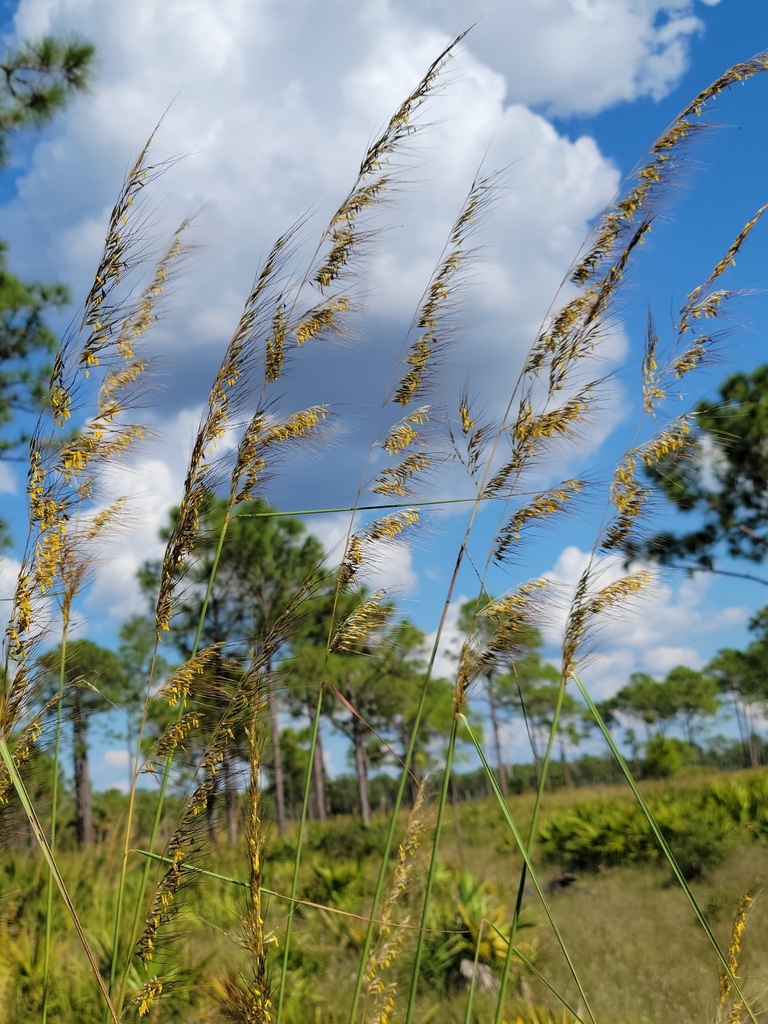
Sorghastrum secundum, the Lopsided Indiangrass, is a tall, graceful bunchgrass of the Southeast’s sandy pinelands. In fall it sends up slender stems 3 to 6 feet tall, each ending in a narrow, nodding plume of golden-brown spikelets that all hang to one side of the stem. That one-sided, or secund, arrangement gives the grass both its scientific and common names. When the bright yellow anthers dangle from the flowers in early fall, a stand of it glows in low sun. It belongs to the grass family (Poaceae).
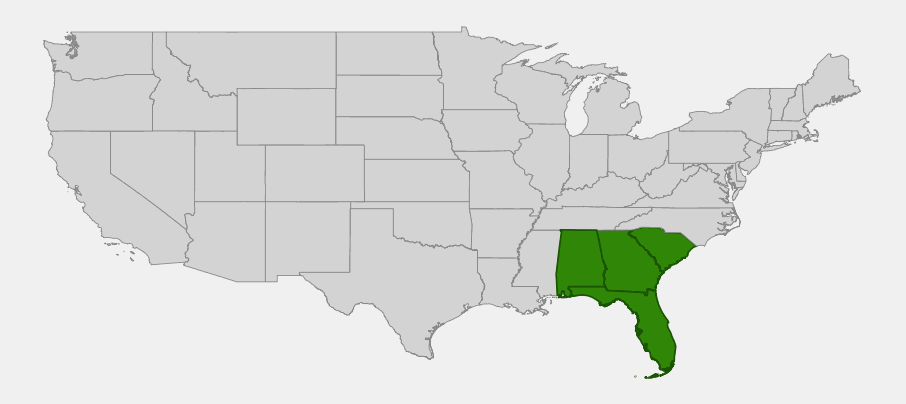
Lopsided Indiangrass is a southern relative of the familiar Indian Grass (Sorghastrum nutans) of the tallgrass prairies. It is a characteristic grass of fire-maintained longleaf pine sandhills, pine flatwoods, Florida dry prairies and pine rocklands, from southern South Carolina south through Florida and west to southern Alabama.
For gardeners in Florida and the coastal plain, it is an excellent native ornamental grass: drought tolerant, fine-textured, and showy in fall. This guide covers how to tell it from other Indiangrasses, where it grows, how to grow it, and the role it plays in pinewood wildlife habitat and fire ecology.
Identification
Out of flower, lopsided Indiangrass is a narrow-leaved clump that blends in with wiregrass and bluestems. In flower it is easy to identify by its one-sided, nodding plume and long awns.
Stems & Habit
It is a warm-season perennial bunchgrass that forms upright clumps of narrow leaves about 1 to 2 feet tall. The flowering stems are slender and wiry, 3 to 6 feet tall, and they arch slightly at the top under the weight of the plume. Clumps spread slowly from short rhizomes.
Leaves
The leaf blades are long and narrow, often less than ¼ inch wide, and frequently roll inward along their edges in dry weather. They are green to blue-green in summer and turn tan to orange-brown after frost. At the junction of blade and sheath is a small membrane (ligule) and often a pair of small, pointed extensions, a feature shared with other Sorghastrum.
Flowers
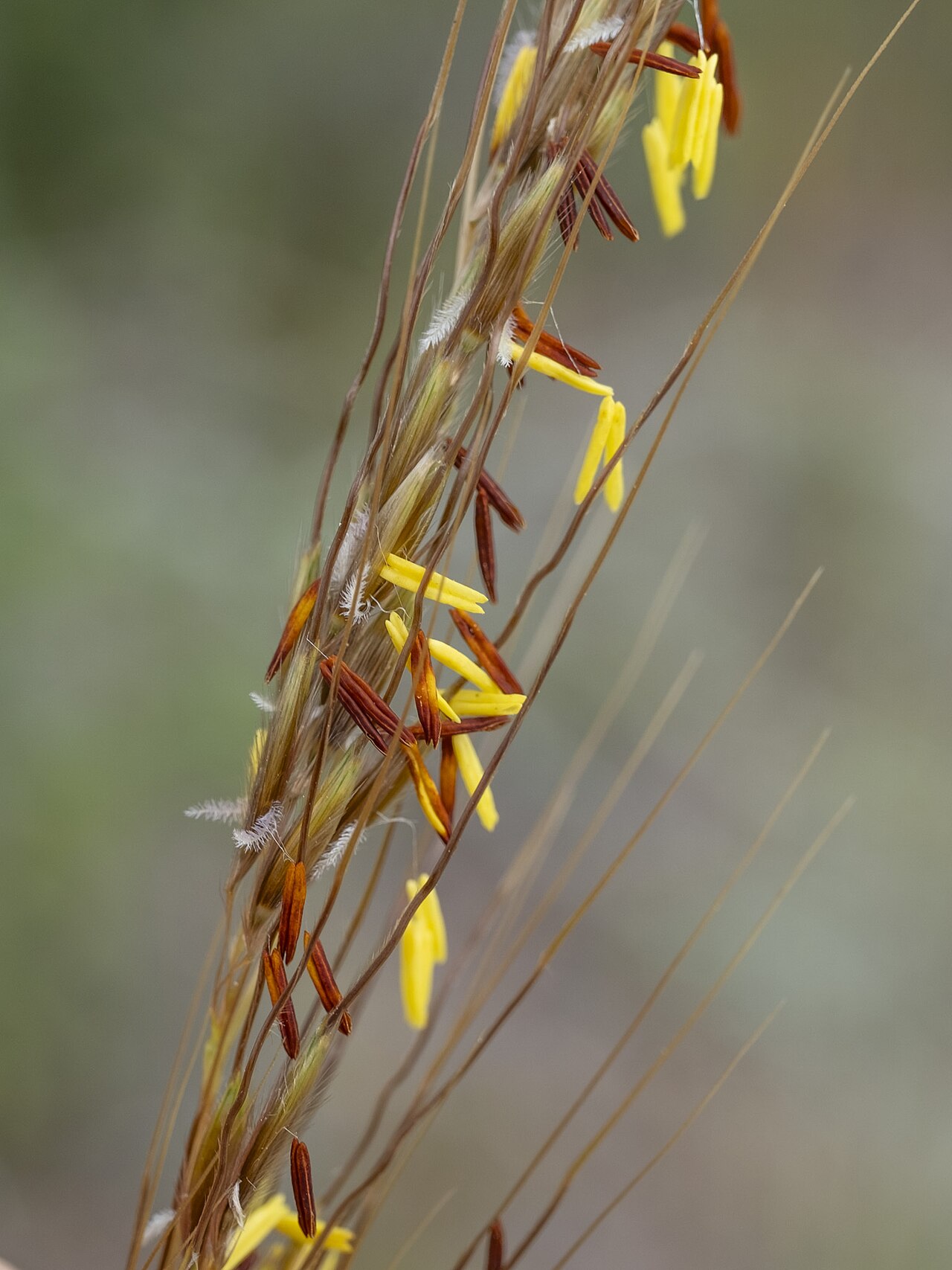
The flower head is a narrow, loose panicle about 6 to 12 inches long, with short branches that turn toward one side, so the spikelets hang like a fringe from one side of the stem. Each spikelet is about ¼ to ⅓ inch long, golden-brown to bronze and covered in short hairs, with a long, bent and twisted awn about 1 inch long or more. When flowering, the bright yellow anthers hang from the spikelets. Flowering is mainly September through November, sometimes starting in summer.
Indian grass (S. nutans) has a denser, more cylindrical plume with spikelets all around the axis and shorter awns. Slender Indiangrass (S. elliottii) has a very loose, open panicle and is more common farther north and west.
Fruit & Seeds
Each fertile spikelet produces a single grain. When ripe, the spikelets drop with their hairs and awns attached. The twisted awn coils and uncoils as humidity changes, which helps drive the seed into the soil.
Quick Facts
| Scientific Name | Sorghastrum secundum (Elliott) Nash (syn. Andropogon secundus) |
| Family | Poaceae (grass family) |
| Plant Type | Warm-season perennial bunchgrass |
| Mature Height | 3–6 ft in flower; leaves 1–2 ft |
| Mature Spread | 1–2 ft |
| Growth Rate | Moderate |
| Sun Exposure | Full sun to light shade |
| Water Needs | Low; dry to moderately moist, well-drained sand |
| Soil Type | Sand, sandy loam; also thin soils over limestone |
| Soil pH | Acidic to slightly alkaline (about 4.5–7.5) |
| Bloom Time | September–November |
| Flower Color | Golden-brown spikelets with yellow anthers |
| Fall Color | Tan to orange-brown foliage after frost |
| Fruit | Grain inside a hairy spikelet with a twisted awn |
| Deer Resistant | Moderately; mature foliage is rarely browsed |
| USDA Hardiness Zones | 8–11 |
Native Range
Lopsided Indiangrass is a coastal plain grass with a small range. The Flora of the Southeastern United States (Weakley and colleagues) describes its range as southern South Carolina south to southern Florida and west to southern Alabama, and that is the range shown on the map. USDA PLANTS and the Lady Bird Johnson Wildflower Center also list Mississippi, Louisiana, Arkansas and Kansas, which fall outside that described range and may reflect older or uncertain records.
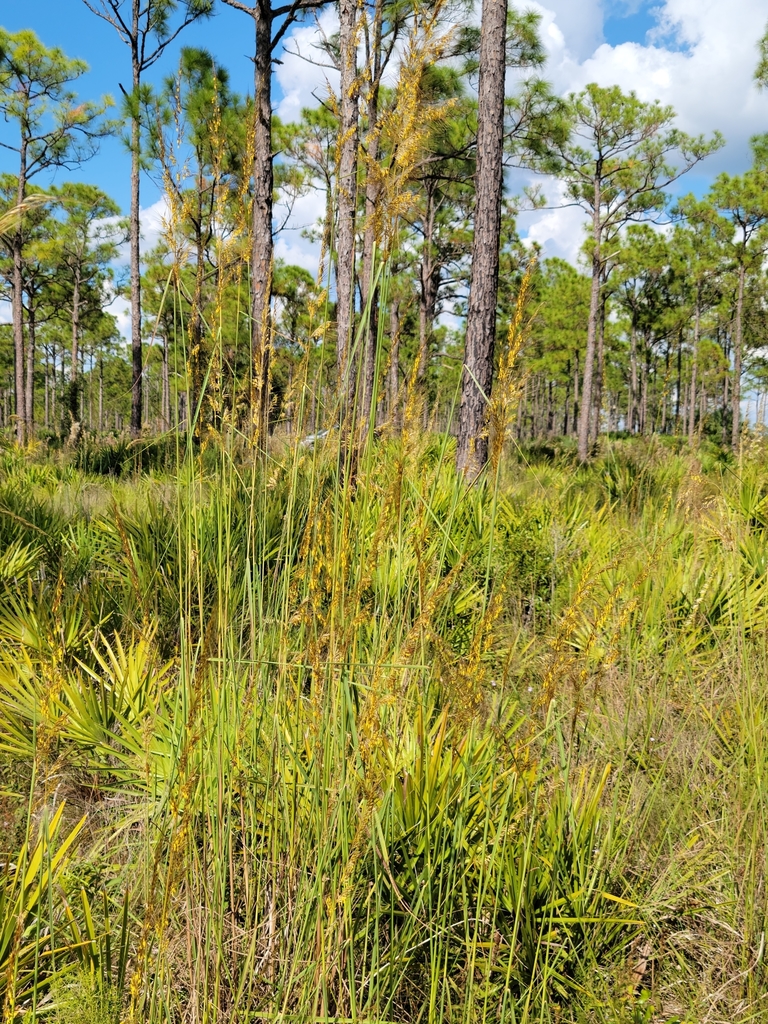
Florida is the center of its range, and it grows through most of the state, from the Panhandle to the pine rocklands of Miami-Dade County. Its typical habitats are longleaf pine sandhills, dry and mesic pine flatwoods, Florida dry prairies, scrubby flatwoods and pine rocklands, mostly on deep, well-drained sand.
Like wiregrass and other pineland grasses, it is adapted to frequent fire. It flowers most heavily in the season after a burn, especially after growing-season burns, and it declines in pinelands where fire has been excluded and shrubs and hardwoods have closed in.
📋 Regional plant lists featuring Lopsided Indiangrass: North & South Florida · Alabama, Georgia & Mississippi · North & South Carolina
Growing & Care Guide
Lopsided Indiangrass is easy to grow in sunny, sandy Southern gardens. Florida native nurseries carry it, sometimes listed simply as lopsided Indiangrass or by its scientific name, and it is a good choice wherever drought tolerance and fall color matter.
Light
Plant it in full sun for the best form and flowering. It tolerates the light, shifting shade of open pines, but in heavier shade it flops and flowers poorly.
Soil & Water
It thrives in well-drained, infertile sand and needs no fertilizer. Rich, moist soil makes it lush but floppy. Water new plantings during their first growing season; after that it is very drought tolerant and seldom needs irrigation. It does not like long periods of saturated soil.
Planting Tips
Plant container plants 18 to 24 inches apart from spring to early summer, so roots establish before the dry season. It works well in groups or drifts, in meadow plantings, and as a fine-textured accent among wildflowers such as blazing stars, goldenrods and asters.
Pruning & Maintenance
Leave the clumps standing through winter for color, seed and wildlife cover. Cut them back to a few inches in late winter, before new growth begins. In naturalized plantings, mowing or a late-winter burn every year or two keeps the clumps vigorous.
Propagation
Divide clumps in late winter or early spring. It can also be grown from seed collected when the spikelets drop easily in late fall. Sow on the surface of prepared sand in late fall or early spring and keep moist until germination. Fresh seed germination is often low, as with many pineland grasses.
Landscape Uses
- Native ornamental grass: fine-textured clumps with golden fall plumes
- Wildflower meadows: a graceful companion for fall-blooming wildflowers in sunny, sandy meadows
- Pineland and sandhill restoration: part of the native groundcover in longleaf, flatwoods and dry prairie restoration
- Drought-tolerant landscapes: for unirrigated, sandy beds and roadsides in Florida and the coastal plain
- Wildlife plantings: cover, nesting material and seed for birds
Wildlife & Ecological Value
Lopsided Indiangrass is part of the grassy groundcover that makes Southern pinelands among the most diverse plant communities in North America.
For Pollinators
It is wind-pollinated and produces no nectar, but bees sometimes collect pollen from the hanging anthers. Like other native grasses, its leaves feed grass-eating insects that in turn feed birds.
For Birds
Sparrows and other seed-eating birds eat the grains in fall and winter. The clumps provide nesting cover for ground-nesting birds such as Bachman’s sparrow and northern bobwhite in longleaf pine and dry prairie habitats.
For Mammals
Deer, rabbits and gopher tortoises may graze young, tender leaves. The clumps provide cover for small mammals.
Ecosystem Role
Its fine, dry foliage carries the frequent, low-intensity fires that keep pinelands open. After fire, it resprouts quickly from its base. Its deep, fibrous roots help hold sandy soils and add organic matter.
Cultural & Historical Uses
Stephen Elliott described this grass as Andropogon secundus in his Sketch of the Botany of South-Carolina and Georgia in the early 1800s, and George Valentine Nash moved it to Sorghastrum in the early 1900s. The genus name means “a poor imitation of Sorghum,” a reference to the resemblance of its flower heads to those of sorghum.
The common name “Indiangrass” is applied to the whole genus Sorghastrum in North America. The best-known species, S. nutans, is a major prairie grass and the state grass of Oklahoma and South Carolina. Lopsided Indiangrass is its southern pineland counterpart.
Today land managers value lopsided Indiangrass in restoration of longleaf pine and dry prairie groundcover, and native seed producers in Florida have worked to make seed available for those projects.
Frequently Asked Questions
How is lopsided Indiangrass different from Indian grass?
Lopsided Indiangrass (Sorghastrum secundum) has a narrow, nodding plume with spikelets hanging mostly from one side and longer awns. Indian grass (S. nutans) has a denser plume with spikelets all around the stem and is widespread across the prairies and eastern United States.
Is lopsided Indiangrass drought tolerant?
Yes. Once established in sandy, well-drained soil it rarely needs watering.
When does it bloom?
Mainly September through November, when its golden plumes and yellow anthers are most visible.
Does lopsided Indiangrass spread aggressively?
No. It is a clump-forming grass that spreads only slowly. It may self-seed lightly onto bare sand.
When should I cut it back?
In late winter, before new growth begins. Leave the clumps standing through fall and winter for color, seed and wildlife cover.

Looking for a nursery that carries Lopsided Indiangrass?
Browse our native plant nursery directory: Alabama · Florida & Georgia · South Carolina