
Southern Wood Fern (Dryopteris ludoviciana)
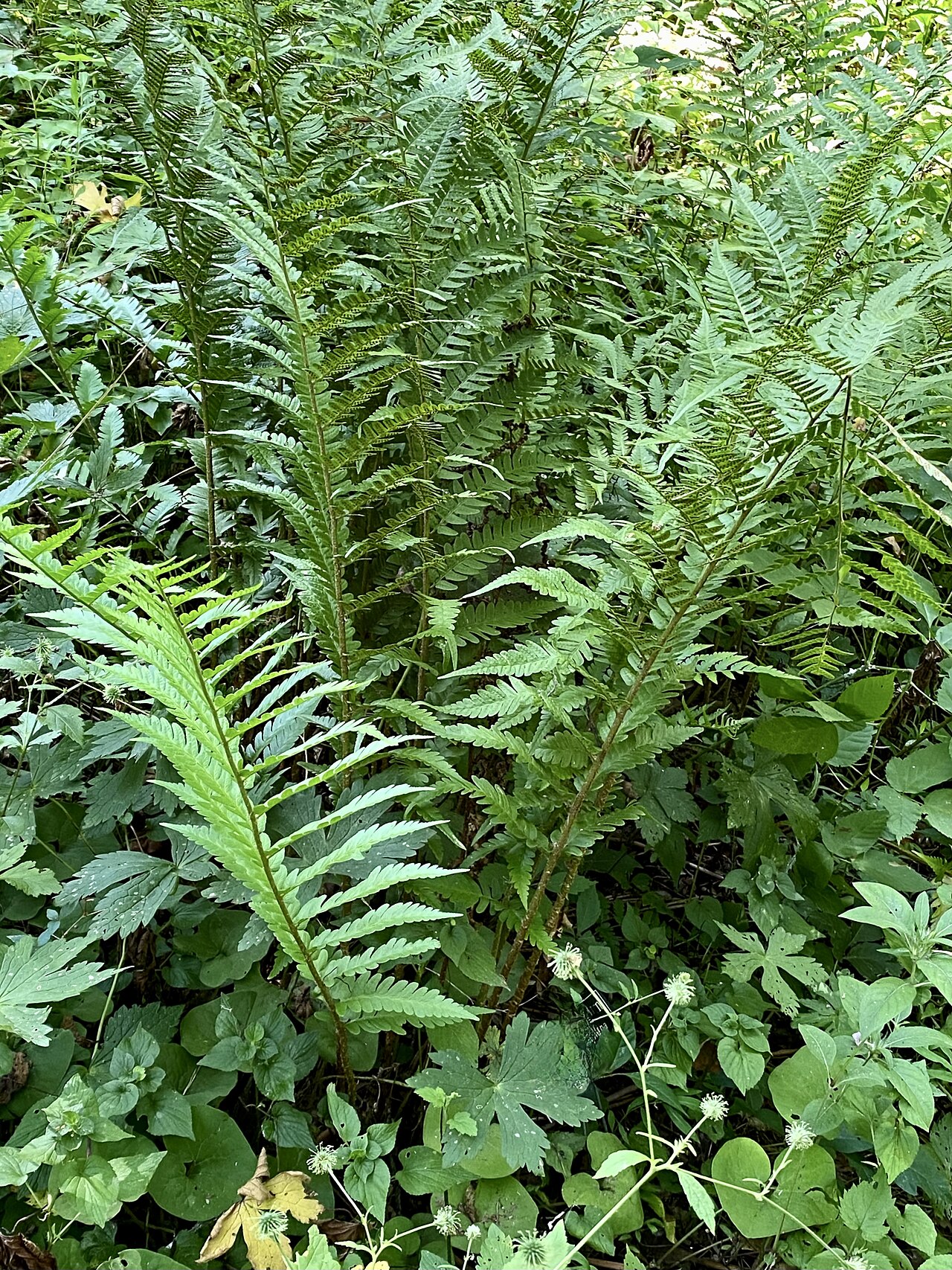
Dryopteris ludoviciana, known as Southern Wood Fern or southern shield fern, is a large, glossy, semi-evergreen fern of swamps, wet hammocks and limestone springs on the southeastern Coastal Plain. Its upright fronds can reach 3 to 4 feet tall, and in a shady, moist garden it forms bold, vase-shaped clumps that stay green through most of the winter in the Deep South. It is a member of the wood fern family (Dryopteridaceae).
Southern wood fern is one of the best large ferns for gardens in hot, humid climates. Many northern wood ferns sulk in southern summers, but this species thrives in heat and humidity as long as its soil stays moist. The Lady Bird Johnson Wildflower Center describes it as a good groundcover fern for southeastern shade gardens with oppressively hot summers and heavy, saturated soils. It is not often sold under its own name, but some southern native nurseries carry it.
The species is also famous among fern specialists as a parent of other ferns. Crossed with Goldie’s wood fern, it gave rise to the log fern (Dryopteris celsa), and its hybrid with log fern, the Dixie wood fern (Dryopteris ×australis), is a popular garden fern. This guide covers how to identify southern wood fern, where it grows, and how to use it in a southern shade garden.
Identification
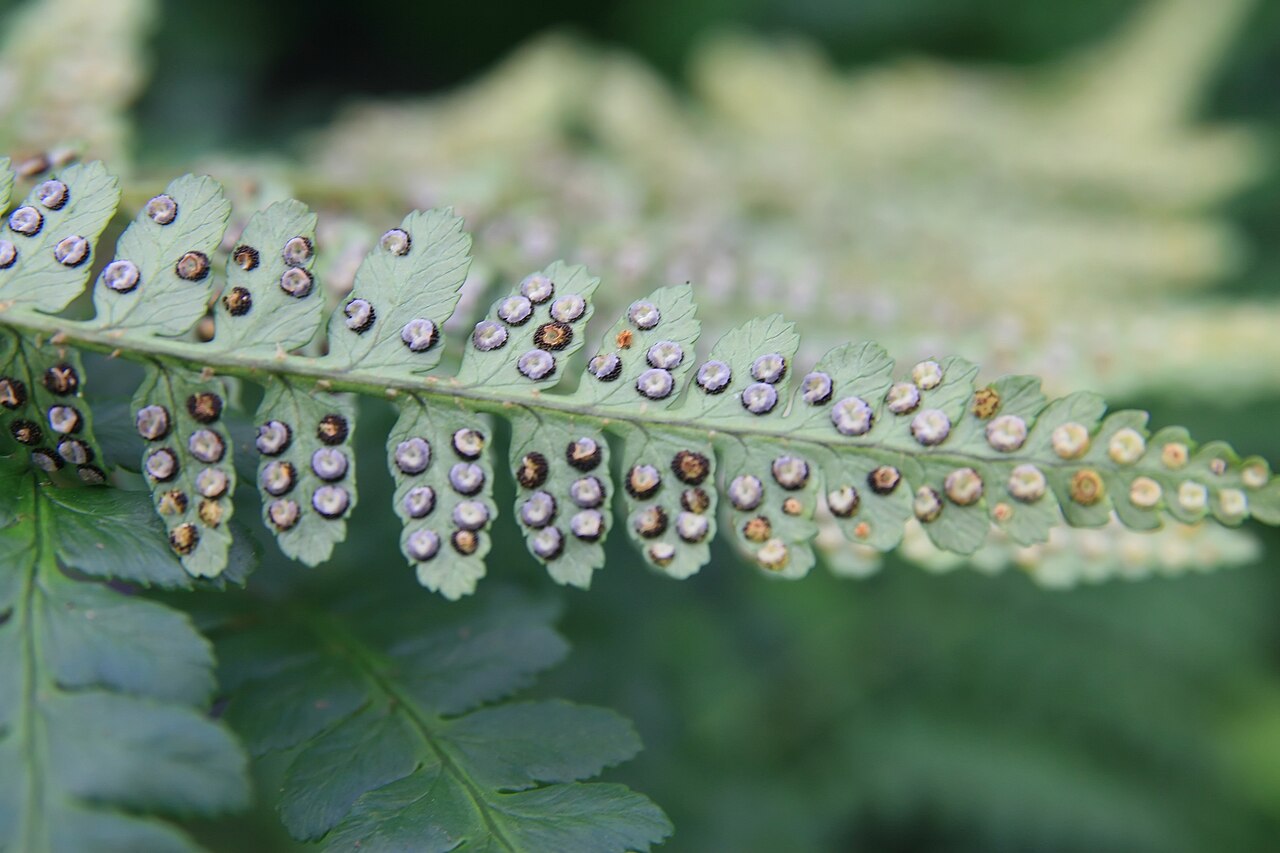
Southern wood fern is a large, coarse-textured fern with stiff, upright fronds. Its most useful identification feature is that the spore-bearing (fertile) pinnae are found only on the upper part of the frond and are noticeably narrower than the sterile pinnae below them.
Rhizome & Growth Habit
The plant grows from a stout, short-creeping rhizome that slowly branches to form a clump or a loose colony. Fronds rise in a vase-shaped cluster and are usually 2 to 4 feet tall. In the warmest parts of its range the fronds persist through winter, while in colder sites they turn brown after hard frosts and are replaced in spring.
Fronds
Each frond is once-pinnate-pinnatifid: a central stalk carries many pairs of narrow leaflets (pinnae), each lobed nearly to its midrib. The blade is lance-shaped, dark green and noticeably glossy, with a leathery texture. The leaf stalk (stipe) is shorter than the blade and has scattered brown scales, especially near the base.
Fertile Pinnae & Sori
On fertile fronds, the upper third or so of the blade carries pinnae that are narrower and more contracted than the sterile ones below. Their undersides bear round sori in a row on each side of the midveins, each covered by a kidney-shaped indusium, the typical shield of Dryopteris. Once the spores are shed, the fertile tips often wither while the lower part of the frond stays green, which gives older fronds a distinctive ragged-topped look.
Fiddleheads
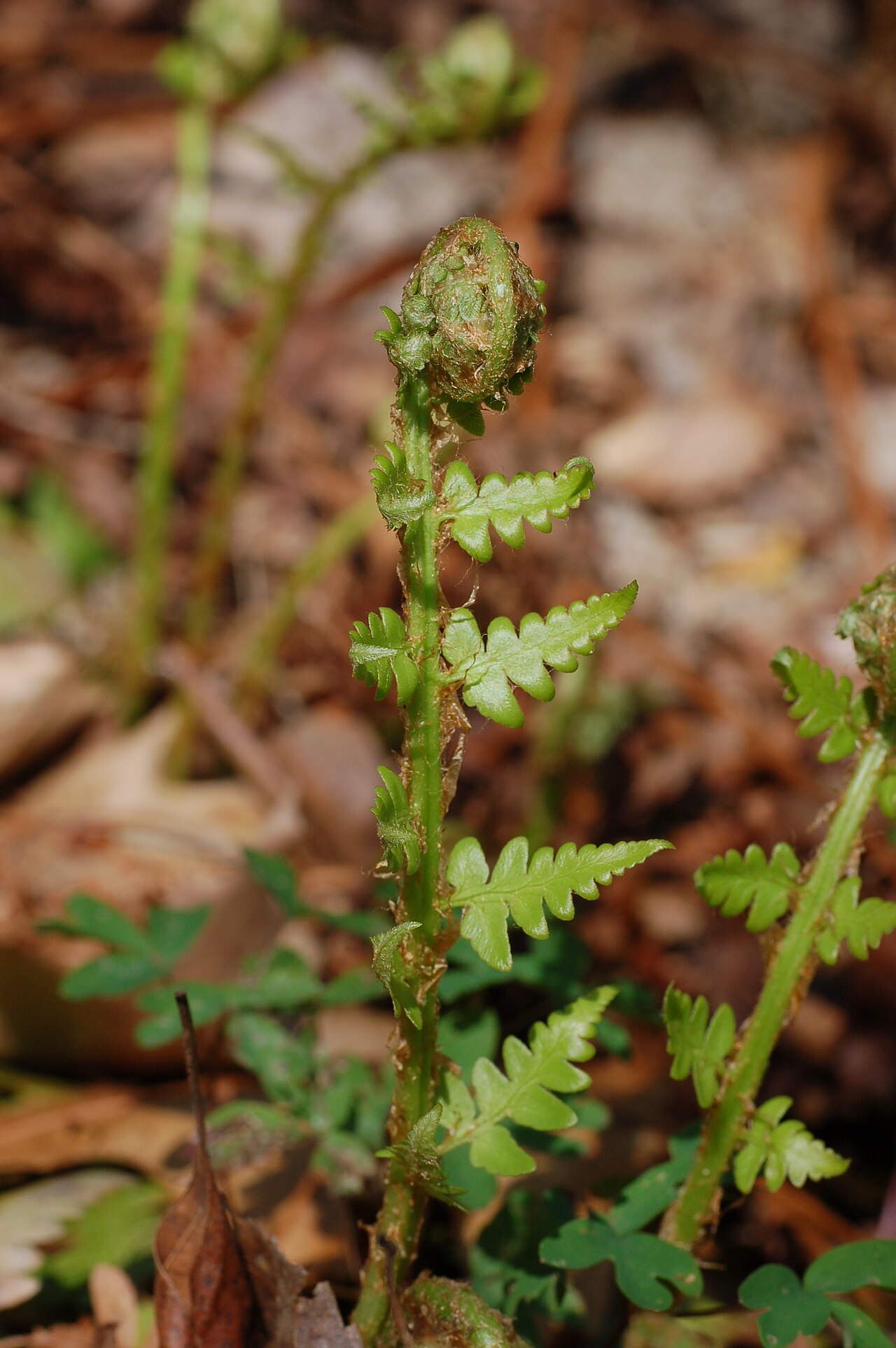
New fronds emerge in spring as tightly coiled fiddleheads covered with pale brown scales. In mild climates new fronds may appear sporadically through the growing season.
Similar Species
Log fern (D. celsa), a descendant of this species, has broader, less glossy fronds and fertile pinnae that are not contracted. Southern shield fern (Thelypteris kunthii), a different plant despite the overlapping common name, has softer, hairy, light green fronds and lacks kidney-shaped indusia. Cinnamon Fern and Royal Fern, which share its wet habitats, have entirely separate fertile fronds or fertile tips without sori on the leaf underside.
Quick Facts
| Scientific Name | Dryopteris ludoviciana (accepted by USDA PLANTS and the Atlas of Florida Plants) |
| Family | Dryopteridaceae (wood fern family) |
| Plant Type | Semi-evergreen to evergreen fern |
| Mature Height | 2–4 ft |
| Mature Spread | 2–3 ft per clump; spreads slowly by rhizome |
| Growth Rate | Moderate |
| Sun Exposure | Part shade to full shade |
| Water Needs | Medium to high; keep soil consistently moist to wet |
| Soil Type | Rich, moist organic soil, muck or loam; tolerates heavy wet soils and limestone |
| Soil pH | About 5.5–7.5 (slightly acidic to near neutral) |
| Bloom Time | None (spore-bearing; spores ripen in summer and fall) |
| Flower Color | None |
| Fall Color | Stays green through mild winters; browns after hard frost |
| Fruit | None; spores in round sori on the upper pinnae |
| Deer Resistant | Generally yes |
| USDA Hardiness Zones | 7–10 (reported hardy to Zone 6 in cultivation) |
Native Range
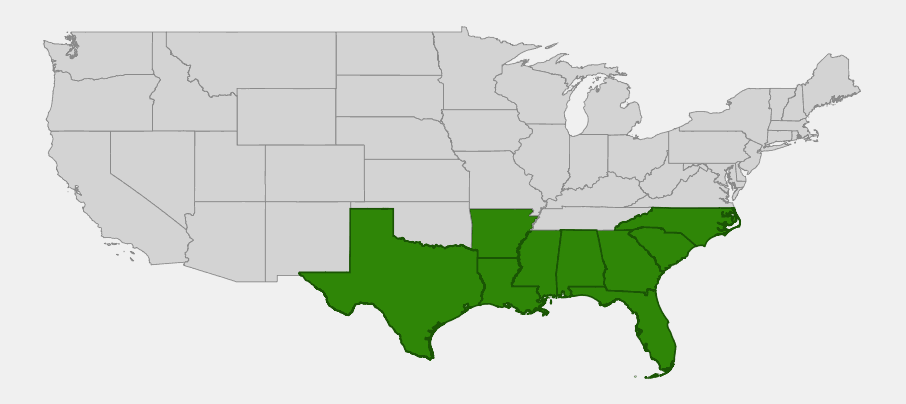
Southern wood fern is a fern of the southeastern Coastal Plain. USDA PLANTS and the Lady Bird Johnson Wildflower Center record it from nine states: North Carolina, South Carolina, Georgia, Florida, Alabama, Mississippi, Louisiana, Arkansas and Texas. In Texas it is limited to the moist forests of the eastern part of the state, and in North Carolina it reaches its northern limit in the southeastern counties.
In Florida, the Atlas of Florida Plants lists it as native from the Panhandle south through the northern and central peninsula. Records are concentrated in the limestone country of north-central Florida, including Alachua, Marion and Hernando counties, and around Tallahassee, and it reaches roughly the Tampa Bay area at its southern limit. It is often found where limestone lies close to the surface, such as in the wet margins of sinkholes, spring runs and calcareous swamps.
Its typical habitats are shaded and wet: hydric hammocks, river swamps, bayheads, seepage slopes, the moist walls and floors of limestone sinks, and the banks of springs and streams. It often grows with cinnamon fern, royal fern, netted chain fern and sedges under bald cypress, red maple, sweetbay and swamp tupelo.
📋 Regional plant lists featuring Southern Wood Fern: North & South Florida · Alabama, Georgia & Mississippi · North & South Carolina · Arkansas, Louisiana, Eastern Oklahoma & Eastern Texas
Growing & Care Guide
Southern wood fern is easy to grow if its soil never dries out completely. It is one of the most dependable large native ferns for shade gardens in the coastal South, and it does well in the heavy, wet soils that many other plants dislike. It can be hard to find in nurseries; look for it at native plant sales and specialty fern growers, and buy nursery-propagated plants rather than digging them from the wild.
Light
Plant it in part shade to full shade. Dappled light under trees or morning sun with afternoon shade is ideal. It tolerates more sun if the soil is constantly wet, but the fronds yellow and scorch in hot afternoon sun on drier soil.
Soil & Water
It prefers rich, organic, moist to wet soil and grows well in clay, muck and heavy soils as well as loamy garden beds. It is at home at the edge of a pond, in a low spot that stays damp, or along a shady stream. In ordinary beds, mulch with leaves and water during dry spells; if the soil dries out, the fronds brown and the plant may go dormant. It tolerates slightly alkaline soils over limestone.
Planting Tips
Plant divisions or container plants in spring or early fall, with the crown at soil level, 2 to 3 feet apart. It makes a strong vertical accent among lower groundcovers such as partridgeberry or violets, and it combines well with other moisture-loving ferns, Louisiana irises and sedges. Give it room: mature clumps can be 3 feet across.
Pruning & Maintenance
Remove brown or damaged fronds in late winter, before new growth begins. Otherwise it needs little care. A layer of leaf mulch helps keep the roots cool and moist. It is rarely bothered by pests or diseases.
Propagation
The easiest way to propagate it is by dividing the rhizome in early spring, making sure each piece has a growing tip and some roots. It can also be grown from spores sown on sterile, moist medium, which is slow but straightforward for fern enthusiasts.
Landscape Uses
- Shade gardens: a bold, upright accent fern that tolerates southern heat and humidity
- Wet woodland and swamp-edge plantings: thrives in heavy, wet soils along ponds and streams
- Rain garden margins in shade: handles the periodic saturation of shady rain gardens and swales
- Hydric hammock restoration: a characteristic ground-layer fern of wet forests within its native range
- Fern collections: a parent of log fern and Dixie wood fern, interesting for collectors
Wildlife & Ecological Value
Ferns offer little food for wildlife, but large clumps like those of southern wood fern create cool, moist shelter on the floor of wet forests.
For Pollinators
Southern wood fern does not flower and offers nothing directly to pollinators. Planting it among native wildflowers in a shade garden still adds structure to the habitat that pollinators use.
For Birds
Birds do not eat fern spores, but ground-foraging birds such as wrens, thrushes and towhees use dense fern cover while searching leaf litter for insects.
For Mammals
Deer and rabbits generally avoid ferns, including this one. Small mammals may shelter beneath the fronds.
Ecosystem Role
In swamps and hydric hammocks, its clumps help stabilize soil along stream banks and sinkhole margins and shade the ground, keeping it moist for frogs, salamanders and invertebrates. Its fronds decompose into the rich organic layer typical of wet forests.
Cultural & Historical Uses
The species was first described in the 19th century by the German botanist Gustav Kunze, using material from Louisiana, hence the epithet ludoviciana, “of Louisiana.” John Kunkel Small later moved it to Dryopteris, which is why the full name is written Dryopteris ludoviciana (Kunze) Small.
Southern wood fern is important in the study of fern evolution. Researchers have shown that log fern (Dryopteris celsa) originated as a fertile hybrid between Goldie’s wood fern and southern wood fern, which doubled its chromosomes to become a new species. Southern wood fern also hybridizes with log fern to form the sterile Dixie wood fern, Dryopteris ×australis, a vigorous fern now widely grown in gardens.
There is little recorded traditional use of this fern. Its value today is mainly horticultural, as one of a small number of large native ferns that thrive in Deep South gardens, and ecological, as a member of the ground flora of southern swamps and spring-fed forests.
Frequently Asked Questions
Is southern wood fern evergreen?
In much of Florida and along the Gulf Coast it keeps green fronds through winter. In colder areas the fronds brown after hard frosts and new fronds emerge in spring.
Can southern wood fern grow in wet soil?
Yes. It naturally grows in swamps, hydric hammocks and along springs, and it tolerates heavy, saturated soils as long as it has shade. It is a good choice for shady, wet spots where other plants fail.
How big does southern wood fern get?
Clumps usually reach 2 to 4 feet tall and 2 to 3 feet wide. It spreads slowly by a short-creeping rhizome and can form small colonies over time.
Is southern wood fern the same as southern shield fern?
The names overlap. Southern shield fern is sometimes used for this species, but it is more often used for Southern Shield Fern (Thelypteris kunthii), a softer, light green fern of a different family. The scientific name is the safest way to buy the right plant.
Can I grow southern wood fern outside the South?
It is native to Zone 8 and warmer, but gardeners report success in Zone 7 and sometimes Zone 6 with winter mulch and moist soil. It is grown in botanical gardens as far north as Delaware and western North Carolina.

Looking for a nursery that carries Southern Wood Fern?
Browse our native plant nursery directory: Alabama & Arkansas · Florida & Georgia · Louisiana & Mississippi · North Carolina · South Carolina & Texas