
Manchineel (Hippomane mancinella)
⚠ Safety first: Hippomane mancinella, the Manchineel, is widely regarded as one of the most toxic trees in North America. Every part of this tree — sap, bark, leaves, smoke, and fruit — is caustic or poisonous. This page is written as an identification and safety guide, not a planting guide: manchineel should never be planted near people, pets, or livestock, its fruit must never be eaten, and no part of the tree should ever be burned or handled without protection.
Manchineel is a coastal tree of beach strand and shoreline hammock habitats, found in the United States only in a handful of extremely rare sites in South Florida. It is in danger of becoming extinct in the state and is listed as an endangered species by the State of Florida. The tree’s milky latex sap is intensely caustic, causing severe blistering on contact with skin and serious injury if it reaches the eyes; even standing beneath the tree during rain can cause chemical burns, as rainwater carries diluted sap down from the leaves and bark. Its small, apple-like fruit — sometimes called a “beach apple” or, in Spanish, “manzanilla de la muerte” (“little apple of death”) — is severely toxic if eaten and must never be consumed under any circumstances.
Despite its extreme toxicity to humans, manchineel plays a legitimate ecological role on the beaches and coastal hammocks where it grows, stabilizing dunes and providing fruit eaten by certain wildlife that tolerate compounds humans cannot. This page exists to help you identify manchineel so you can recognize and safely avoid it — not to encourage planting it.
Identification
Because contact with any part of manchineel can cause injury, correct identification from a safe distance is essential, especially on Caribbean and South Florida beaches where the tree sometimes grows close to trails and shorelines.
Bark & Stems
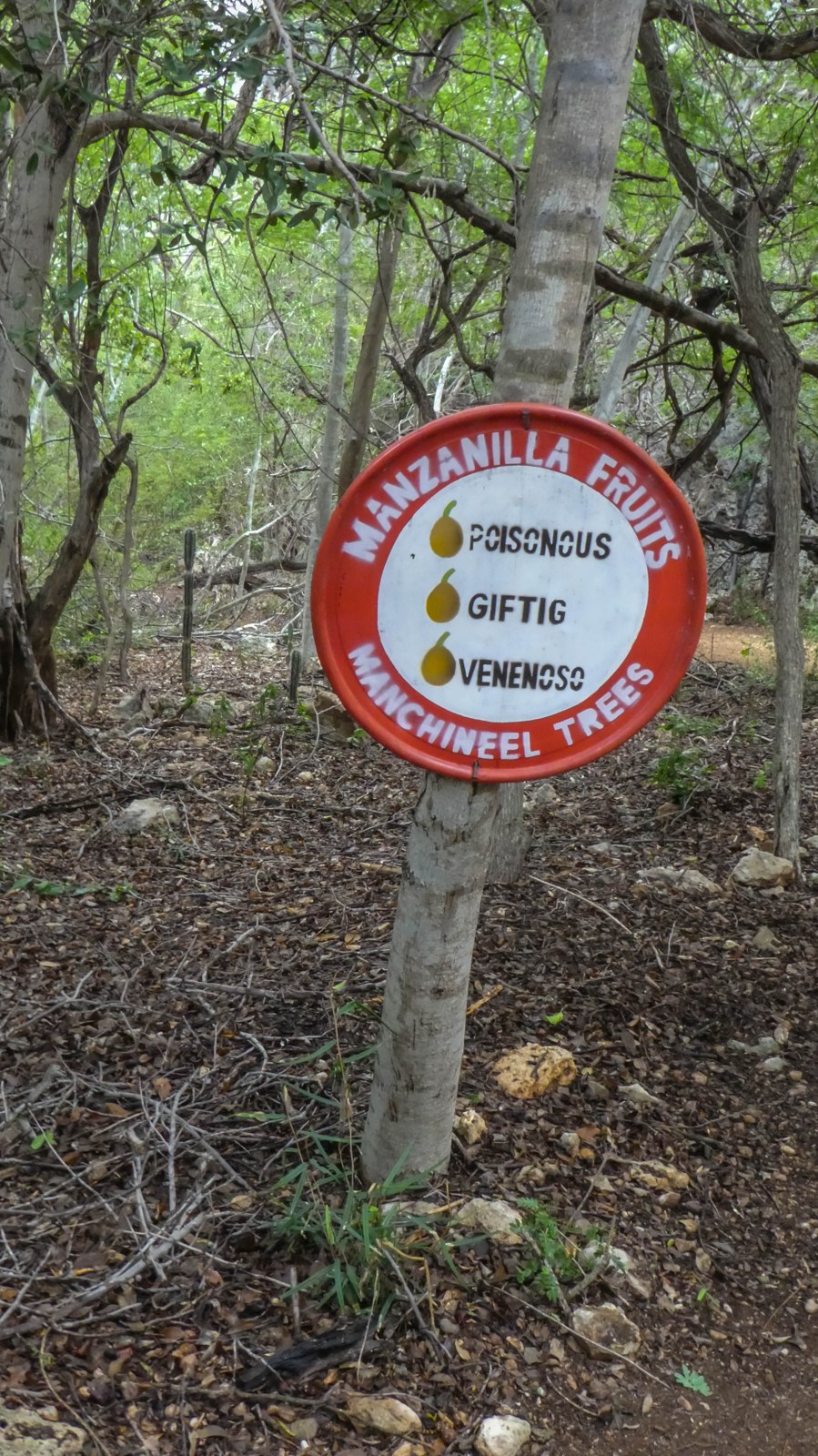
The bark is grayish-brown and relatively smooth to slightly fissured on mature trunks. In many parks and protected natural areas where manchineel grows, trunks are marked with a painted orange “X,” a red band, or a warning sign to alert visitors — look for these markers as an additional identification cue, though absence of a marker never means a tree is safe.
Leaves
Leaves are alternate, glossy, broadly ovate to elliptical, 2 to 4 inches long, with a yellowish midrib and finely toothed margins, broadly resembling apple or poplar foliage — a resemblance reflected in some of its common names. If you break a leaf or twig, a milky white latex sap oozes out; this sap, not the leaf shape alone, is the most dangerous identifying feature and should never be touched.
Flowers
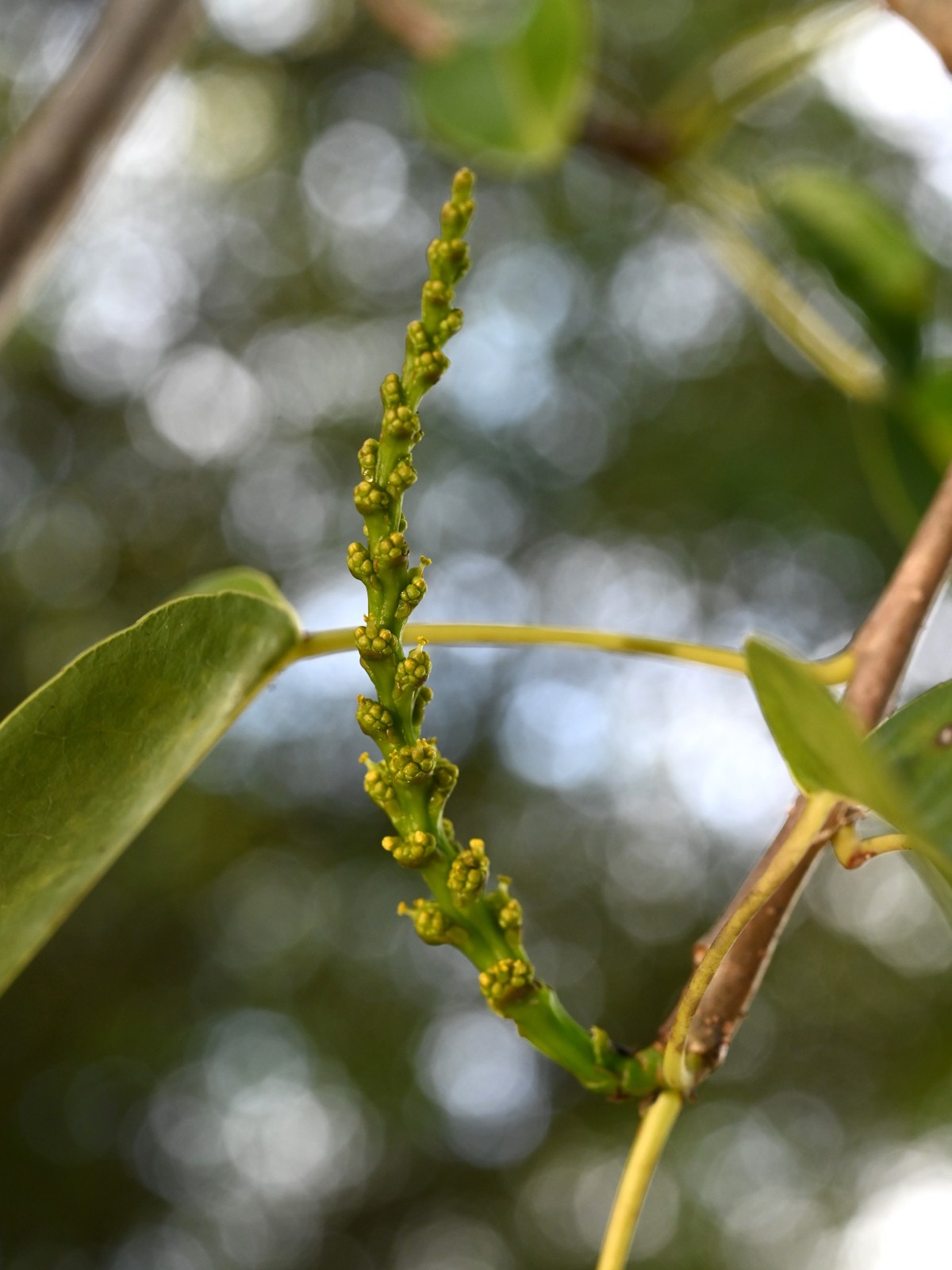
Tiny greenish-yellow flowers are borne on slender, upright, catkin-like spikes, with inconspicuous male flowers clustered along the upper portion of the spike and female flowers at the base. The flowers themselves are easy to overlook compared to the tree’s foliage and fruit.
Fruit & Seeds
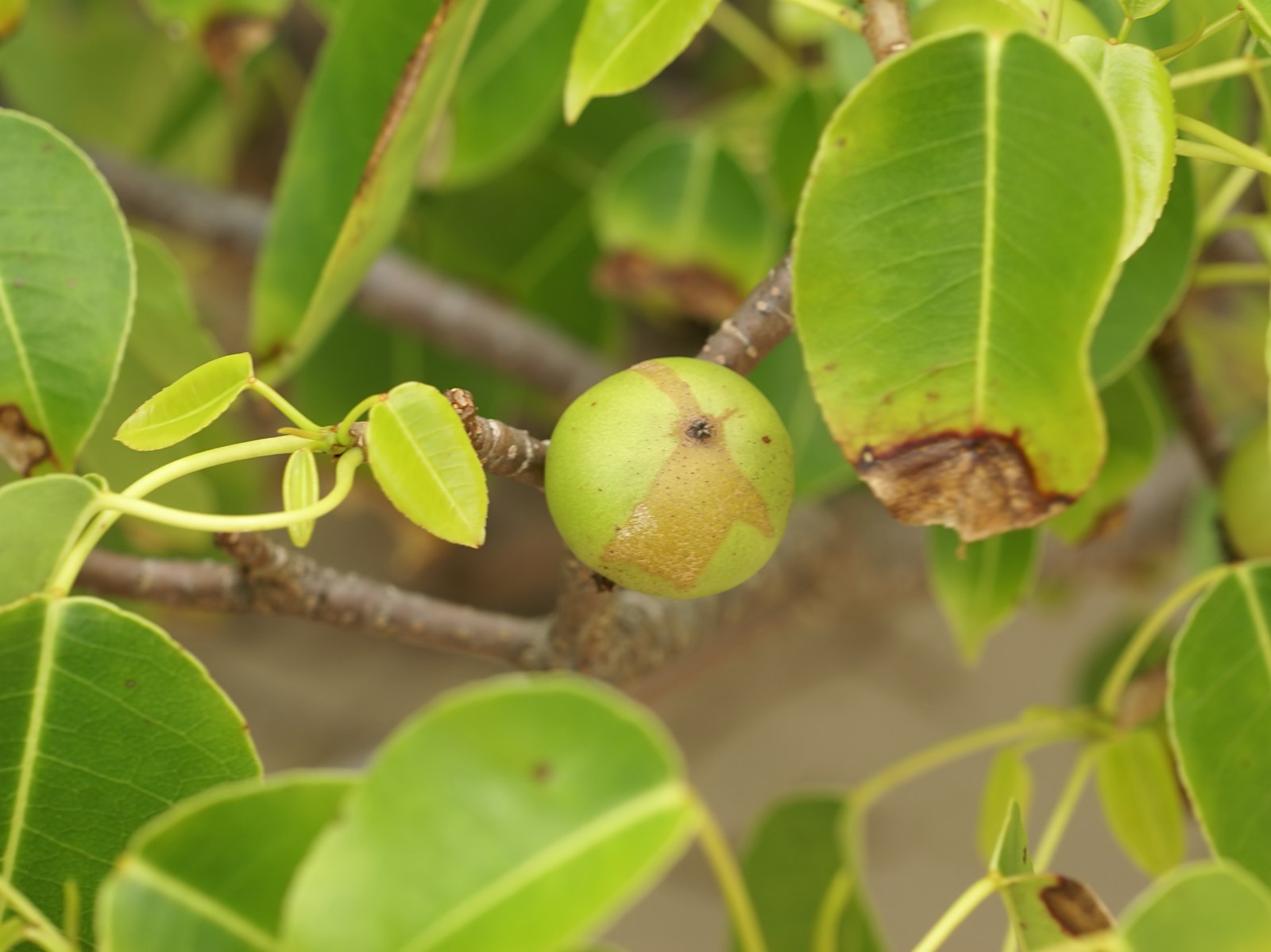
The fruit is small, round, and yellow-green, closely resembling a crabapple or small green apple, which has led to fatal poisonings among people unfamiliar with the tree who mistook the fruit for an edible one. Every part of the fruit is toxic; even a small bite can cause severe burning of the mouth and throat, followed by intense gastrointestinal distress. Never eat, bite into, or even taste manchineel fruit under any circumstances.
Quick Facts
| Scientific Name | Hippomane mancinella |
| Family | Euphorbiaceae (Spurge) |
| Plant Type | Evergreen tree — toxic, not for cultivation |
| Mature Height | 15–40 ft (taller in parts of the Caribbean) |
| Mature Spread | 15–30 ft |
| Growth Rate | Moderate |
| Sun Exposure | Full Sun |
| Water Needs | Low; beach and coastal strand adapted |
| Soil Type | Sandy coastal and dune soils |
| Soil pH | Neutral to alkaline |
| Bloom Time | Spring–summer |
| Flower Color | Greenish-yellow |
| Fall Color | Evergreen; no notable fall color |
| Fruit | Small green “beach apple” — severely toxic, never eat |
| Toxicity | Extremely high — sap, smoke, and fruit all dangerous |
| USDA Hardiness Zones | 10b – 11 |
Native Range
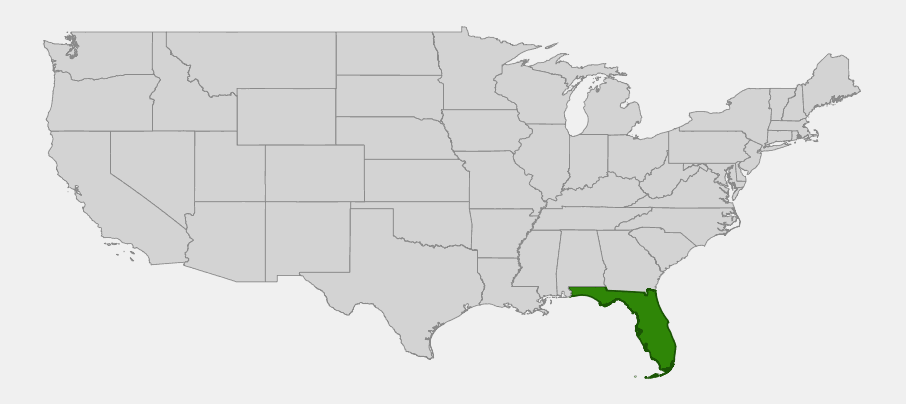
In the continental United States, manchineel is native only to Florida, where it is now exceedingly rare, surviving in only a small number of coastal sites in Miami-Dade County and the Florida Keys (Monroe County). Historical records also place it in Collier County, but populations there have declined sharply. Habitat loss from coastal development, combined with active removal of trees considered a public safety hazard, has pushed manchineel to the brink of extirpation in Florida, and it is formally listed as an endangered species by the State of Florida.
Where it does persist, manchineel grows on beach dunes, coastal strand, and the shoreline edge of maritime hammocks, typically within reach of salt spray and occasional storm surge — habitat it shares with sea grape and buttonwood. It is strictly a tropical-to-subtropical species with no meaningful frost tolerance.
Outside the United States, manchineel is far more widespread, occurring throughout the Caribbean, coastal Mexico, Central America, and northern South America, where it remains a well-known hazard on many beaches and is frequently marked with warning signs for visitors.
📋 Regional plant lists featuring Manchineel: none — manchineel is an identification/safety entry only and does not appear on any plantnative.org regional native plant list; no plantnative.org regional list currently covers coastal South Florida in any case. See our full native plant directory for South Florida species that are safe to grow.
Identification & Safety in the Field
Manchineel is not a landscape plant, and this section is deliberately written as safety guidance rather than planting instructions. If you encounter a manchineel tree while hiking, beachcombing, or boating in South Florida or the Caribbean, the safest approach is simple: do not touch any part of it, and move away.
If You See One
Do not touch the bark, leaves, sap, or fruit, and keep children and pets away from the tree entirely. Many parks and nature preserves mark known manchineel trees with a painted orange band or “X,” or with a warning sign in multiple languages — treat any unmarked tree matching this description with the same caution, since not every manchineel is marked.
Never Shelter Beneath One
Never stand under a manchineel tree during rain. Rainwater washing over the leaves and bark picks up diluted sap and can cause painful, blistering skin burns on contact — a hazard that has caught unsuspecting beachgoers seeking shade during a sudden shower.
Never Burn the Wood
Do not burn manchineel wood, debris, or brush piles that may contain it. The smoke carries caustic compounds from the sap and can cause severe eye and respiratory irritation, including temporary blindness, if inhaled or if it contacts the eyes.
If Exposed
If sap contacts skin, wash the area thoroughly with soap and fresh water as soon as possible and seek medical attention, since blistering can be severe. If sap or fruit contacts the eyes or mouth, or if any part of the plant is swallowed, seek emergency medical care immediately — this is a genuine medical emergency, not a minor irritation.
Wildlife & Ecological Value
Despite its severe toxicity to humans, manchineel is not without ecological value in the coastal ecosystems where it naturally occurs, and some wildlife tolerate compounds that are dangerous to people.
For Wildlife
In parts of its Caribbean range, land crabs and certain reptiles, including some iguana species, are known to feed on manchineel fruit without apparent harm, dispersing seeds along the beaches and dune systems where the tree grows. Research on exactly which Florida wildlife interact with the fruit in the state’s few remaining populations remains limited given how rare the tree now is.
Ecosystem Role
Where it persists, manchineel contributes to the structure of beach dune and coastal strand vegetation, helping stabilize sand against wind and wave erosion alongside other salt-tolerant pioneer species like sea grape. Because Florida’s population is now so small and fragmented, manchineel’s remaining ecological role in the state is correspondingly limited, but the species remains ecologically significant across its wider Caribbean and Central American range.
Cultural & Historical Uses
Manchineel has a long and well-documented history as one of the most dangerous trees known to Indigenous Caribbean peoples and early European explorers alike. Historical accounts describe its sap being used on arrow tips for hunting and, reportedly, in warfare, a practice reflecting the Carib and Taino peoples’ detailed knowledge of the tree’s toxic properties. Early Spanish chroniclers also recorded manchineel’s reputation as a tree to be avoided, giving rise to its Spanish name “manzanilla de la muerte.”
Today, manchineel’s primary cultural significance is as a cautionary example in field guides, park signage, and Caribbean travel advisories, which routinely warn visitors to avoid the tree entirely. No safe traditional food, medicinal, or craft use of the plant exists; its historical “uses” were limited to its toxic properties, not its edibility or any remedial purpose, and nothing about manchineel should be treated as a historical food or treatment.
Frequently Asked Questions
How can I tell a manchineel tree from a regular fruit tree?
Manchineel’s apple-like fruit and glossy, apple-or-poplar-like leaves can resemble a harmless fruit tree at a glance, which is exactly why it has caused accidental poisonings. Look for a painted orange “X,” red band, or warning sign on the trunk in parks and preserves, and when in doubt in coastal South Florida or the Caribbean, treat any unfamiliar beach tree with apple-like fruit as potentially dangerous and avoid contact.
What happens if you touch manchineel sap?
Contact with the milky sap typically causes a painful, burning skin reaction that can progress to blistering, similar to a chemical burn. Wash the area with soap and water immediately and seek medical attention if blistering develops.
Is it true you shouldn’t stand under a manchineel tree in the rain?
Yes. Rain picks up diluted sap from the leaves and bark and can cause skin burns on anyone sheltering beneath the canopy, so manchineel should never be used for shade or shelter, especially during or after rainfall.
Is manchineel fruit edible?
No — absolutely not. The fruit is severely toxic and has caused fatalities; it must never be eaten, tasted, or bitten into under any circumstances, regardless of how harmless it may look.
Is manchineel endangered in Florida?
Yes. It is listed as an endangered species by the State of Florida, where only a small number of wild trees remain in a few protected coastal sites in Miami-Dade and Monroe counties.

Looking for a nursery that carries Manchineel?
Manchineel is not a plantable landscape species and we do not recommend sourcing it; for safe, beautiful South Florida native trees, browse our native plant nursery directory instead: Florida
For a non-toxic coastal companion species that often grows near manchineel, see our guide to Florida mangroves, including Red Mangrove. To learn more about safely landscaping with Florida natives, see shade trees for South Florida.

