
Inkwood (Exothea paniculata)
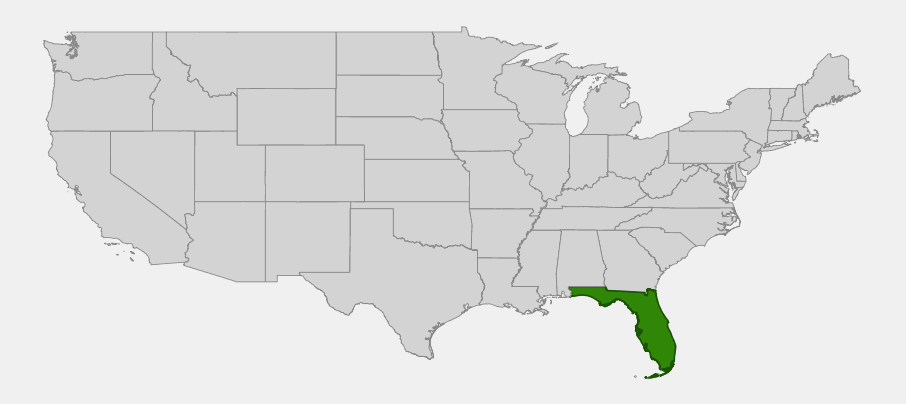
Exothea paniculata, commonly called Inkwood (and sometimes Butterbough or Ironwood), is a dense-crowned evergreen tree of Florida’s coastal and tropical hammocks. In the United States it grows wild only in peninsular Florida, from Volusia County south along the Atlantic coast through Miami-Dade and the Keys, and along the Gulf side through Collier County — a narrow coastal and hammock-interior range that reflects its frost sensitivity and preference for sheltered, well-drained hammock soils.
Inkwood typically grows 20 to 40 feet tall, occasionally larger in favorable hammock settings, with a dense, rounded crown of glossy pinnately compound leaves. Its common name comes from the dark juice of its small black fruit, historically used as a makeshift ink, while “Ironwood” references its exceptionally hard, heavy wood. Clusters of small, fragrant white flowers in branched panicles — the source of its scientific epithet paniculata — give way to fruit that is an important food source for hammock wildlife.
Identification
Inkwood is best recognized by its compound leaves with just two to four leathery, glossy leaflets, its smooth mottled bark, and its branched clusters of small white flowers followed by dark, nearly black fruit.
Bark & Stems
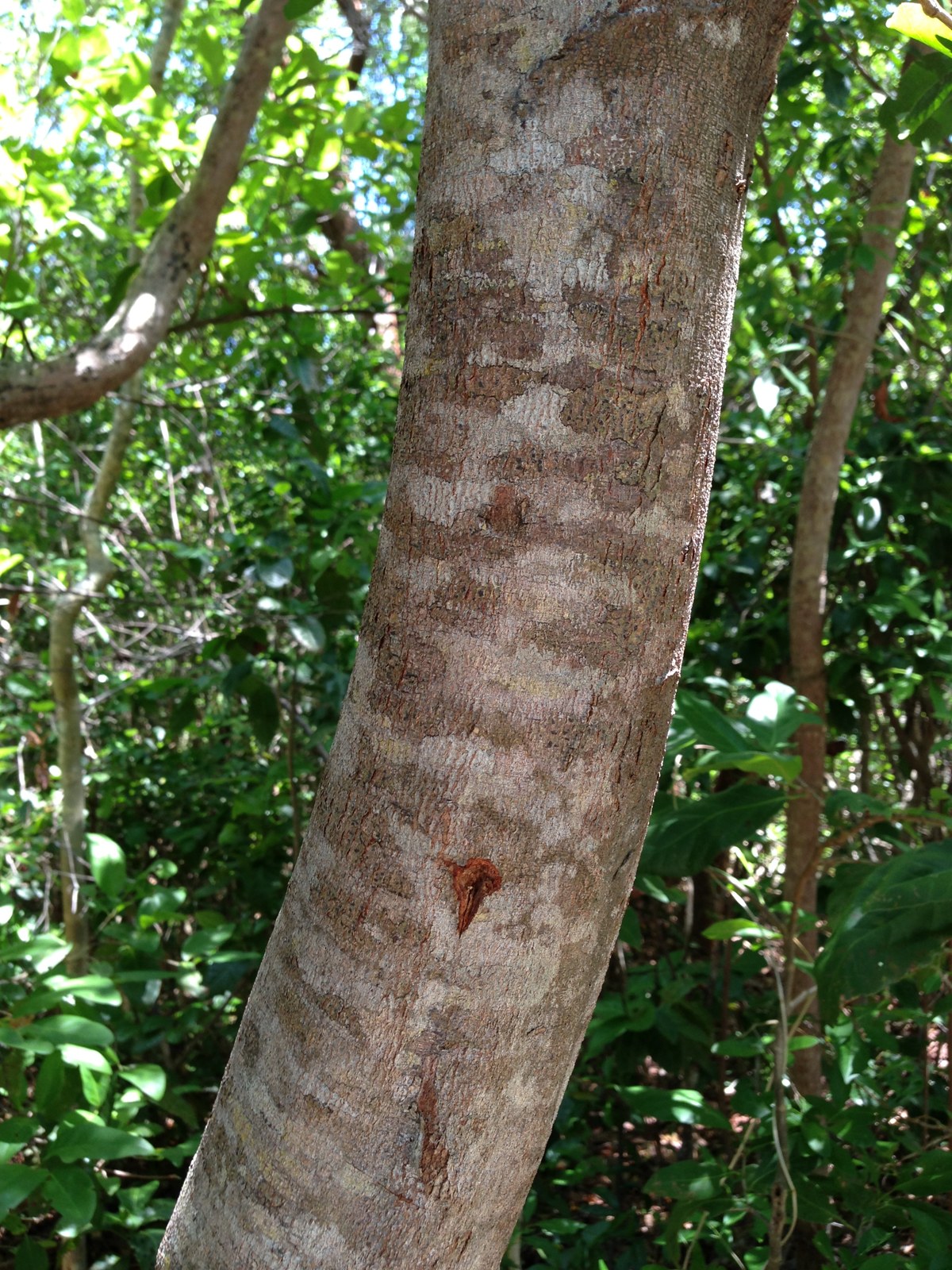
The bark is smooth and thin, mottled in shades of gray, tan and light brown, often appearing patchy or blotched on mature trunks, with occasional reddish streaks where the bark has been damaged. This smooth, patterned bark is a useful identification clue year-round, even when the tree is not in flower or fruit.
Leaves
Leaves are pinnately compound with two to four (occasionally more) opposite, leathery, glossy dark green leaflets, each 2 to 4 inches long with a blunt or slightly notched tip. The compound leaf structure, combined with so few leaflets per leaf, helps distinguish inkwood from many other South Florida hammock trees with simple leaves.
Flowers
Small, fragrant, white, five-petaled flowers are borne in branched, elongated clusters (panicles) at the branch tips, mainly in late winter through spring. Though individually small, the flowers can be abundant enough to perfume the surrounding hammock.
Fruit & Seeds
The fruit is a small, rounded drupe about 1/2 inch across that ripens from green to dark purple-black. Its juice stains dark enough that early Florida settlers reportedly used it as an emergency ink substitute, which is the likely origin of the common name. Birds readily eat the ripe fruit and disperse the seeds through the hammock.
Quick Facts
| Scientific Name | Exothea paniculata |
| Family | Sapindaceae (Soapberry) |
| Plant Type | Evergreen tree |
| Mature Height | 20–40 ft |
| Mature Spread | 15–25 ft |
| Growth Rate | Slow to moderate |
| Sun Exposure | Full Sun to Partial Shade |
| Water Needs | Low to moderate once established |
| Soil Type | Well-drained limestone or sandy hammock soils |
| Soil pH | Neutral to alkaline |
| Bloom Time | Late winter–spring |
| Flower Color | White |
| Fall Color | Evergreen; no notable fall color |
| Fruit | Small black bird-dispersed drupes |
| Deer Resistant | Generally yes |
| USDA Hardiness Zones | 10 – 11 |
Native Range
In the United States, inkwood is native only to peninsular Florida, occurring along coastal and hammock-interior sites from Volusia County south through Miami-Dade County and the Florida Keys on the Atlantic side, and from Collier County south through Monroe County on the Gulf side. Its range is tightly tied to frost-free or nearly frost-free hammock habitat; hard freezes limit how far north it can reliably persist.
Within Florida, inkwood grows in maritime hammocks, rockland hammocks, mesic hammocks, pine rocklands, coastal berms, and ancient shell mounds — a range of hammock and hammock-adjacent habitats united by well-drained soils and protection from the most extreme coastal exposure. It is typically a mid- to upper-canopy component of these hammocks rather than a pioneer species of open ground.
Outside the United States, inkwood occurs through the West Indies, including Cuba, the Bahamas, and other Caribbean islands, as well as parts of Mexico and Central America, making it a broadly Caribbean-basin species that reaches the northern edge of its range in Florida.
📋 Regional plant lists featuring Inkwood: none yet — no plantnative.org regional list currently covers peninsular Florida’s hammock species; see our full native plant directory for other Florida-native trees.
Growing & Care Guide
Inkwood is a good choice for Florida gardeners who want a dense, low-maintenance shade tree with genuine ecological value, particularly in frost-protected or coastal settings that mimic its native hammock habitat.
Light
Inkwood tolerates full sun to partial shade. Young trees often establish well in the filtered light of an existing hammock canopy, then grow into more open conditions as they mature and the crown fills in.
Soil & Water
It prefers well-drained soils, whether sandy or limestone-based, consistent with the hammock habitats it occupies in the wild. Inkwood has good drought tolerance once established, needing only occasional supplemental water during extended dry spells, and it tolerates some exposure to salt-laden coastal air.
Planting Tips
Choose a site with reliable drainage and some protection from hard freezes, since inkwood has limited cold tolerance outside the warmest parts of Florida. Its dense, rounded growth habit makes it useful as a specimen tree or background planting without requiring a particularly large footprint.
Pruning & Maintenance
Inkwood generally needs only light, infrequent pruning to remove dead or crossing branches, since it naturally forms a tidy, dense crown. Because the wood is exceptionally hard and the tree grows relatively slowly, major structural pruning is rarely necessary or advisable.
Landscape Uses
Inkwood’s dense evergreen canopy and tolerance of varied light conditions make it versatile in South and Central Florida landscapes:
- Shade tree for residential and commercial Florida landscapes
- Hedge or screen when planted in a row and allowed to fill in
- Hammock restoration plantings alongside other native hardwoods
- Wildlife garden centerpiece for attracting fruit-eating birds
For a broader list of canopy trees suited to Florida conditions, see our guide to shade trees for South Florida, and for more on why native species like inkwood matter ecologically, see planting native trees for wildlife.
Wildlife & Ecological Value
Inkwood’s reliable fruit crop and dense structure make it a valuable component of Florida hammock wildlife habitat, particularly for birds.
For Birds
The small black fruits are consumed by a variety of hammock birds, which disperse the seeds throughout the surrounding forest. The dense evergreen canopy also provides year-round cover and nesting habitat for resident songbirds.
For Pollinators
The branched clusters of small white flowers attract native bees and other pollinating insects during the late winter and spring bloom period, adding to the floral resources available in flowering hammocks at a time when fewer other plants are in bloom.
Ecosystem Role
As a structural component of Florida’s maritime and rockland hammocks, inkwood contributes to canopy density and the layered habitat structure that supports the broader hammock wildlife community, from insects and reptiles to the birds that feed on its fruit. Its extremely hard, dense wood also means standing and fallen inkwood timber decomposes slowly, providing long-lasting structural habitat within the hammock.
Cultural & Historical Uses
Inkwood’s two common names reflect two distinct historical uses: the dark juice of its ripe fruit was reportedly used by early Florida settlers as an improvised ink, giving the tree its primary common name, while its alternate name “Ironwood” reflects the exceptional hardness and density of its wood, which has historically been used for small tool handles and similar applications requiring a tough, durable timber.
Beyond these practical historical uses, inkwood has long been a recognized, if often overlooked, component of South Florida’s tropical hardwood hammocks, valued today more for its ecological role and increasing use in native landscaping than for any commercial harvest.
Frequently Asked Questions
Why is it called inkwood?
The name comes from the dark juice of its ripe black fruit, which early Florida settlers reportedly used as a makeshift ink in a pinch.
How tall does inkwood grow?
Most inkwood trees reach 20 to 40 feet tall in cultivation and in the wild, occasionally growing larger in sheltered, favorable hammock conditions.
Is inkwood cold-hardy?
Not particularly. Inkwood is best suited to USDA zones 10–11 and has limited tolerance for hard freezes, which is why its native range is confined to the warmer parts of peninsular Florida.
Does inkwood need a lot of water?
No. Once established, inkwood is fairly drought-tolerant, reflecting its adaptation to well-drained hammock soils, though young trees benefit from regular watering while they establish a root system.
Is inkwood fruit edible for people?
Inkwood fruit is primarily a food source for birds rather than people; its main historical human use was as a dark ink substitute rather than a food, and it is not grown as an edible fruit crop.

Looking for a nursery that carries Inkwood?
Browse our native plant nursery directory: Florida
For other South Florida hammock trees, see our pages on Gumbo Limbo and Florida Strangler Fig. To learn more about why native trees matter, see the benefits of planting native trees.

