
Northern Bayberry (Myrica pensylvanica)
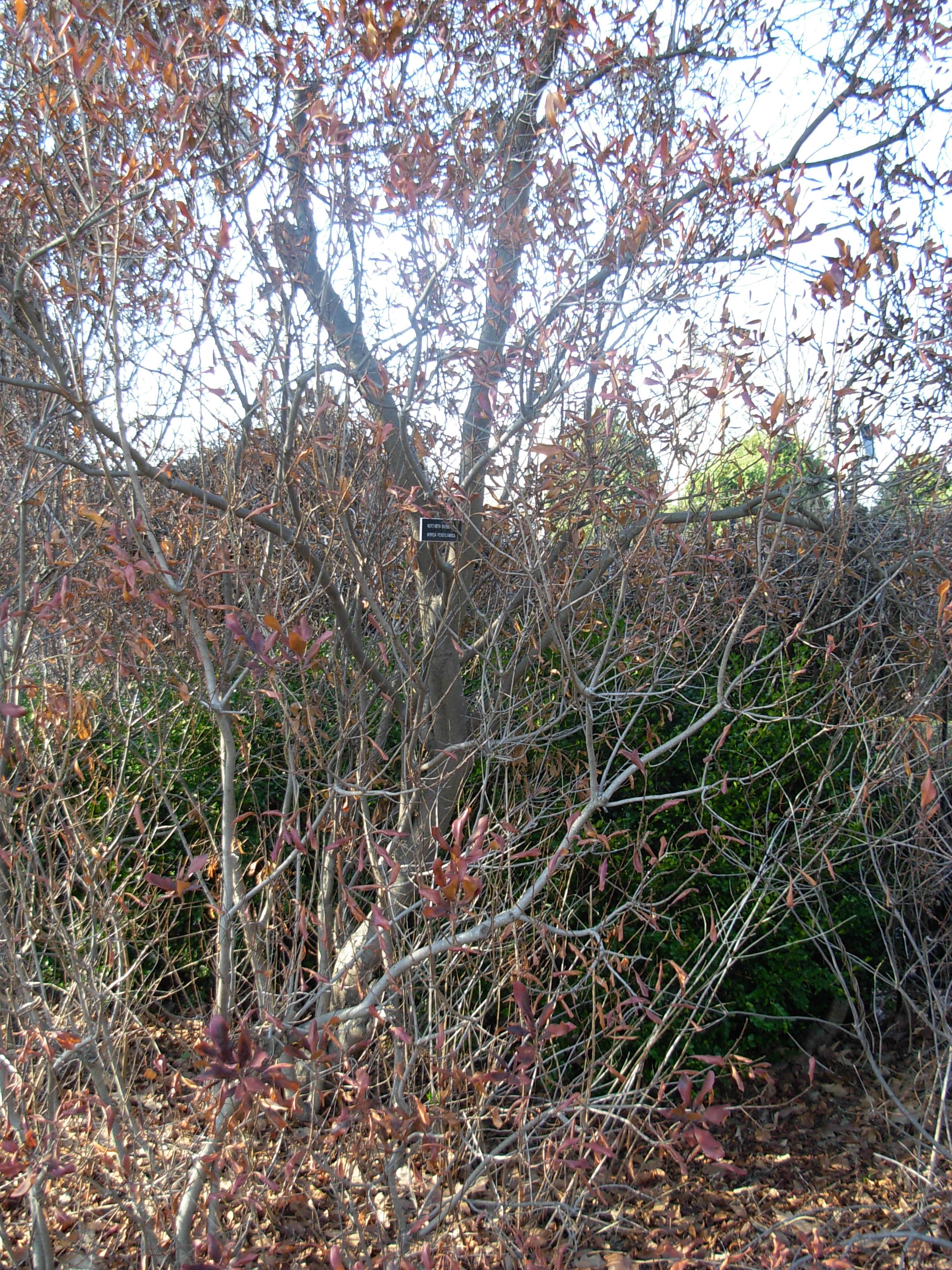
Myrica pensylvanica (sometimes treated as Morella pensylvanica), commonly known as Northern Bayberry, is one of the most ecologically and historically significant native shrubs of the northeastern United States and Atlantic Canada. This semi-evergreen to deciduous shrub is celebrated for three things above all: the waxy, fragrant berries that have been used for centuries to make bayberry candles; the extraordinary tolerance for hostile growing conditions — salt, sand, drought, and cold; and its immense value to wintering birds, particularly Yellow-rumped Warblers, whose remarkable ability to digest bayberry wax fat makes them uniquely dependent on this plant through the cold months.
Northern Bayberry is a medium shrub, typically 5 to 8 feet tall and often equally wide, with a naturally dense, rounded to irregular form and attractive, semi-evergreen, aromatic foliage. The leaves persist through mild winters and into early spring in the Northeast, providing a welcome note of green in otherwise bare winter landscapes. The most remarkable ornamental feature is the clusters of small, hard, waxy, blue-gray to white berries that cover female plants from late summer through winter — a dense, persistently-held display that is both beautiful and ecologically critical.
Tough, adaptable, and beautiful across three seasons, Northern Bayberry deserves far wider use in both residential and commercial landscapes throughout the Northeast. Its ability to fix atmospheric nitrogen through root bacteria makes it valuable for soil-building in poor sites, and its deep root system stabilizes sandy banks and coastal dunes with exceptional effectiveness. Few native shrubs offer a comparable combination of toughness, ecological value, and ornamental appeal from June through February.
Identification
Northern Bayberry is a colonial shrub — it spreads by root sprouts to form multi-stemmed thickets over time, though it can also grow as a single-stemmed specimen. Mature plants reach 5 to 8 feet (1.5–2.4 m) in height and width, with an irregular to rounded crown. Plants are strongly aromatic — crushing a leaf releases a distinctive, pleasant spicy-waxy fragrance that is one of the most reliable identification features.
Leaves
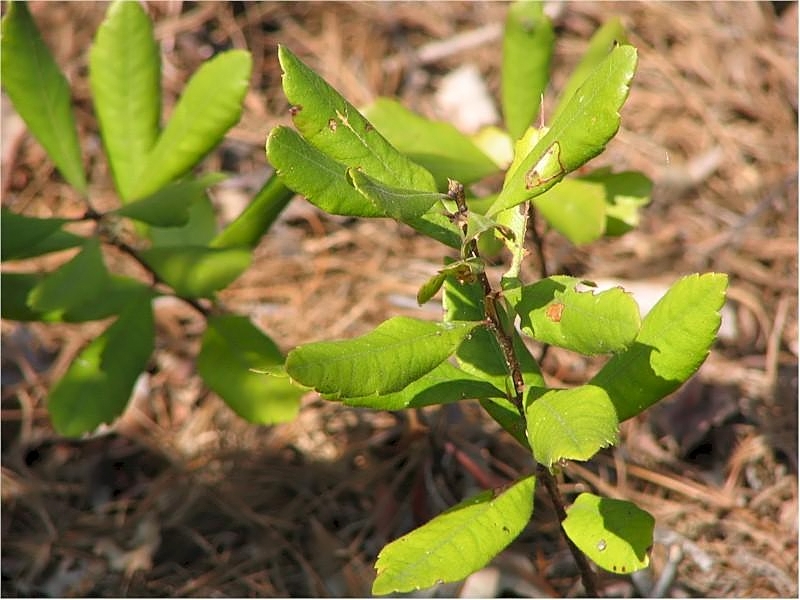
The leaves are simple, alternate, oblanceolate to obovate, 1.5 to 4 inches (4–10 cm) long, with a shiny, dark green upper surface and a paler, dotted underside with resin glands that produce the characteristic bayberry fragrance. The margins are entire to slightly toothed near the tip. Leaves are semi-evergreen — in mild winters they persist through March or April; in cold winters they drop by December. In autumn, the foliage develops attractive orange-bronze tints before dropping. The fragrant leaves are one of the most distinctive features of the plant, immediately identifiable when crushed.
Flowers
Like Groundsel Tree, Northern Bayberry is dioecious (male and female flowers on separate plants). The flowers are tiny and inconspicuous — small catkins appearing in early spring before or with the leaves. Male catkins are elongated and produce abundant pollen; female catkins are shorter and rounded. Neither is ornamentally significant. Both male and female plants are needed to produce berries; plant a ratio of 1 male to 3–4 females for best berry production.
Fruit
The fruits are the plant’s most distinctive feature: small, round, hard, waxy drupes about 3/16 inch (4–5 mm) in diameter, borne in dense clusters along the stems. The surface is covered with a blue-gray to whitish wax that gives the berries their characteristic appearance and fragrance. Berries ripen in late summer and persist through winter — often remaining on female plants through March or even April. This extended fruiting period is critical to wintering birds and is one of the most valuable features of Northern Bayberry as a wildlife plant.
Quick Facts
| Scientific Name | Myrica pensylvanica |
| Family | Myricaceae (Bayberry) |
| Plant Type | Semi-evergreen Deciduous Shrub |
| Mature Height | 5–8 ft |
| Sun Exposure | Full Sun |
| Water Needs | Low to High (extremely adaptable) |
| Bloom Time | April – May |
| Fruit Color | Waxy blue-gray to white |
| Fruit Season | Late summer – spring (persistent) |
| Salt Tolerance | Excellent |
| Nitrogen Fixing | Yes (Frankia bacteria root symbiosis) |
| USDA Hardiness Zones | 2–6 |
Native Range
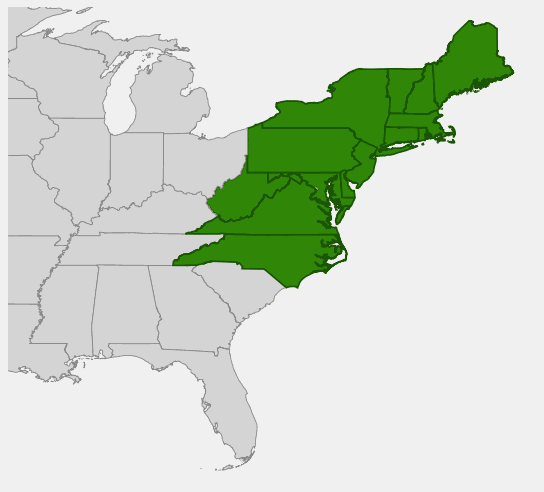
Northern Bayberry is native to the northeastern United States and adjacent Canada, from Newfoundland and Nova Scotia south through New England, New York, New Jersey, Pennsylvania, Delaware, and Maryland, with some populations extending into Virginia and West Virginia. It is most abundant and ecologically dominant along the Atlantic Coastal Plain — particularly the sandy coastal regions of Long Island, Cape Cod, the New Jersey Pine Barrens, and the barrier islands and coastal plain of the mid-Atlantic states.
Within this range, Northern Bayberry is a characteristic species of coastal and near-coastal habitats: ocean dunes, sandy pine barrens, salt marsh edges, rocky headlands, and coastal thickets. It is remarkably well-adapted to the harsh combination of salt spray, nutrient-poor sandy soils, wind exposure, and summer drought that characterizes Atlantic coastal habitats. The species extends inland along sandy soils and rocky uplands, particularly in New England and the Hudson Valley region.
Northern Bayberry fixes atmospheric nitrogen through a symbiotic relationship with the actinomycete bacterium Frankia, allowing it to colonize and thrive in soils so nutrient-poor that most other plants cannot establish. This nitrogen-fixing capability makes it a pioneer species in coastal succession — colonizing bare sand and building soil fertility over time, eventually facilitating the establishment of other species. It is a foundational species in the coastal scrub and thicket communities that develop between open dunes and inland forests.
📋 Regional plant lists featuring Northern Bayberry: New York, Pennsylvania & New Jersey
Growing & Care Guide
Northern Bayberry is one of the most versatile and low-maintenance native shrubs for the northeastern United States. It thrives in poor, dry, sandy, or salt-affected soils where other shrubs fail, and once established it requires virtually no care. Its wide moisture adaptability and nitrogen-fixing ability make it suitable for a very broad range of sites.
Light
Full sun is strongly preferred — Northern Bayberry reaches its most vigorous growth and best berry production in open, sunny sites. It tolerates light shade but becomes more open and produces fewer berries in shadier conditions. In its natural habitat, it grows in exposed, open areas with full sun: dune crests, open pine barrens, and coastal headlands. Select a sunny site for best performance.
Soil & Water
Northern Bayberry’s soil adaptability is extraordinary — one of its most valuable landscape attributes. It thrives in sandy, gravelly, or rocky soils with low fertility; tolerates acidic to neutral pH (4.5–7.0); grows in dry to wet conditions; and withstands salt spray and salt soil better than almost any other northeastern native shrub. Its nitrogen-fixing root bacteria allow it to build its own fertility even in nutrient-poor substrates. The only conditions it dislikes are heavy, poorly drained clay soils with standing water.
Planting Tips
Northern Bayberry transplants well from container stock — a noted advantage in the batch file comments. Plant in spring or fall. Space plants 4 to 5 feet apart for mass plantings; 6 feet apart for specimens. Include both male and female plants for berry production (1 male per 3–4 females). For erosion control on coastal banks and dunes, plant 3 to 4 feet apart in staggered rows. Northern Bayberry spreads by suckers and can form large colonies over time — allow space for this natural expansion, or install a root barrier if you want to limit spread.
Pruning & Maintenance
Northern Bayberry requires minimal maintenance. If the plant becomes overgrown, prune hard in late winter before new growth begins — it regenerates vigorously from old wood. Annual light shaping is optional for formal landscapes. In naturalistic plantings, no pruning is needed. Remove unwanted root suckers periodically to control spread. The plant is essentially pest- and disease-free, requiring no spraying or chemical inputs.
Landscape Uses
- Coastal and dune stabilization — exceptional salt tolerance and root system
- Wildlife habitat — critical winter food for Yellow-rumped Warblers and others
- Mass planting and ground cover on slopes and banks
- Screening and windbreak in exposed sites
- Rain garden edges — tolerates periodic flooding
- Poor soil revegetation — nitrogen-fixing pioneer on disturbed sites
- Deer-resistant hedge — generally avoided by deer
Wildlife & Ecological Value
Northern Bayberry is arguably the most important native shrub for wintering birds in the northeastern United States. Its persistent, wax-coated berries provide a unique and critical food resource during the harshest months of the year.
For Birds
The relationship between Northern Bayberry and Yellow-rumped Warblers is one of the most extraordinary bird-plant interactions in North America. Yellow-rumped Warblers are unique among warblers in possessing a specialized gut that can digest the waxy coating of bayberry fruits — a fat-rich energy source that fuels their winter survival in the northeast when insect food is unavailable. Large flocks of Yellow-rumped Warblers depend on bayberry thickets through the winter months, and the distribution of wintering Yellow-rumped Warbler flocks closely tracks the distribution of bayberry patches along the Atlantic Coast. In addition to Yellow-rumped Warblers, Tree Swallows, Eastern Bluebirds, American Robins, Hermit Thrushes, Cedar Waxwings, and various sparrows consume the berries.
For Pollinators
The small spring catkin flowers of Northern Bayberry provide pollen for native bees and other early-season pollinators. While not a showy pollinator plant, it contributes to early spring bee foraging. The aromatic foliage is used by some bee species in nest construction — particularly by specialized Myrica-associated bees in the genus Andrena.
For Mammals
White-tailed Deer generally avoid Northern Bayberry due to its aromatic foliage — a significant landscape advantage in the deer-pressured northeastern United States. The dense thicket structure provides valuable cover for small mammals, and the berries are occasionally consumed by foxes and raccoons.
Ecosystem Role
Northern Bayberry’s nitrogen-fixing ability makes it an ecological engineer — a species that improves soil conditions for other plants. By fixing atmospheric nitrogen through its root symbiosis with Frankia bacteria, it enriches nutrient-poor soils and accelerates ecological succession in coastal communities. In the New Jersey Pine Barrens, Cape Cod, and Long Island coastal habitats, bayberry thickets represent a distinct and critically important vegetation community that supports a specialized suite of plant and animal species.
Cultural & Historical Uses
Northern Bayberry holds one of the most enduring places in American colonial history of any native shrub. The fragrant wax coating of the berries was recognized by early European settlers as a valuable resource, and bayberry candles became one of the most cherished products of colonial New England. The wax is extracted by boiling the berries in water and skimming the floating wax — it takes approximately 15 pounds of berries to produce 1 pound of greenish-gray bayberry wax. Bayberry candles burn cleaner and more slowly than tallow candles, with a pleasant fragrance, making them highly prized.
A traditional saying — “A bayberry candle burned to the socket brings luck to the house and gold to the pocket” — reflects the cultural significance of bayberry candles in colonial and 19th-century American households. They were traditionally burned on Christmas Eve and New Year’s Eve for good luck, and this tradition persists in some New England families today. The bayberry scent was also used in soaps, cosmetics, and perfumery.
Indigenous peoples of the northeastern coast — including the Wampanoag, Narragansett, and various Algonquian nations — were well acquainted with Northern Bayberry. The leaves were used medicinally as a febrifuge (fever reducer) and astringent; tea made from the leaves and bark was used for fevers, and the bark was used topically for skin conditions. The berries were processed for their wax, though this use was likely adopted or expanded after contact with European settlers who recognized the wax’s commercial value.
Frequently Asked Questions
Do I need both male and female bayberry plants to get berries?
Yes — Northern Bayberry is dioecious, meaning male and female flowers are on separate plants. Only female plants produce berries, and they require pollen from nearby male plants for fertilization. Plant at least one male plant for every three to four females. Some nurseries sell sexed plants clearly labeled; others do not. If possible, buy plants in fall when you can confirm berry production on female plants.
Is Northern Bayberry the same as Southern Bayberry or Wax Myrtle?
They are closely related but distinct species. Northern Bayberry (Myrica pensylvanica) is the cold-hardy northeastern species, hardy to Zone 2–3, with berries that persist through winter. Wax Myrtle (Myrica cerifera) is a larger, more evergreen southern species, hardy only to about Zone 6–7. The two overlap in range in the mid-Atlantic and have similar wildlife value but different landscape applications based on climate and size.
How fast does Northern Bayberry grow?
Northern Bayberry is a moderate-growth shrub, typically adding 1 to 1.5 feet per year. It spreads by root suckers and can form colonies over many years. Container-grown transplants establish readily and begin producing berries within 2 to 3 years.
Why do Yellow-rumped Warblers love bayberry?
Yellow-rumped Warblers have a unique physiological adaptation: a specialized gut enzyme that allows them to digest the waxy fat coating of bayberry fruits. Other songbirds lack this ability. This adaptation allows Yellow-rumped Warblers to overwinter in the northeast by exploiting bayberry berries as a reliable, fat-rich food source when insects are unavailable. The relationship is so tight that in harsh winters, the distribution of wintering Yellow-rumped Warblers closely maps the locations of bayberry thickets along the coast.
Can Northern Bayberry grow in wet soil?
Yes — Northern Bayberry tolerates a remarkably wide range of moisture conditions, from dry sandy soils to periodically wet or flooded sites. It is noted in the batch data as having “Low to High” moisture adaptability. While it prefers well-drained conditions, it can handle periodic waterlogging better than most shrubs. For consistently wet sites, pair it with Inkberry (Ilex glabra) or Swamp Rose (Rosa palustris) for a complementary native planting.

Looking for a nursery that carries Northern Bayberry?
Browse our native plant nursery directory: New York · Pennsylvania