
Pineland Passionflower (Passiflora pallens)
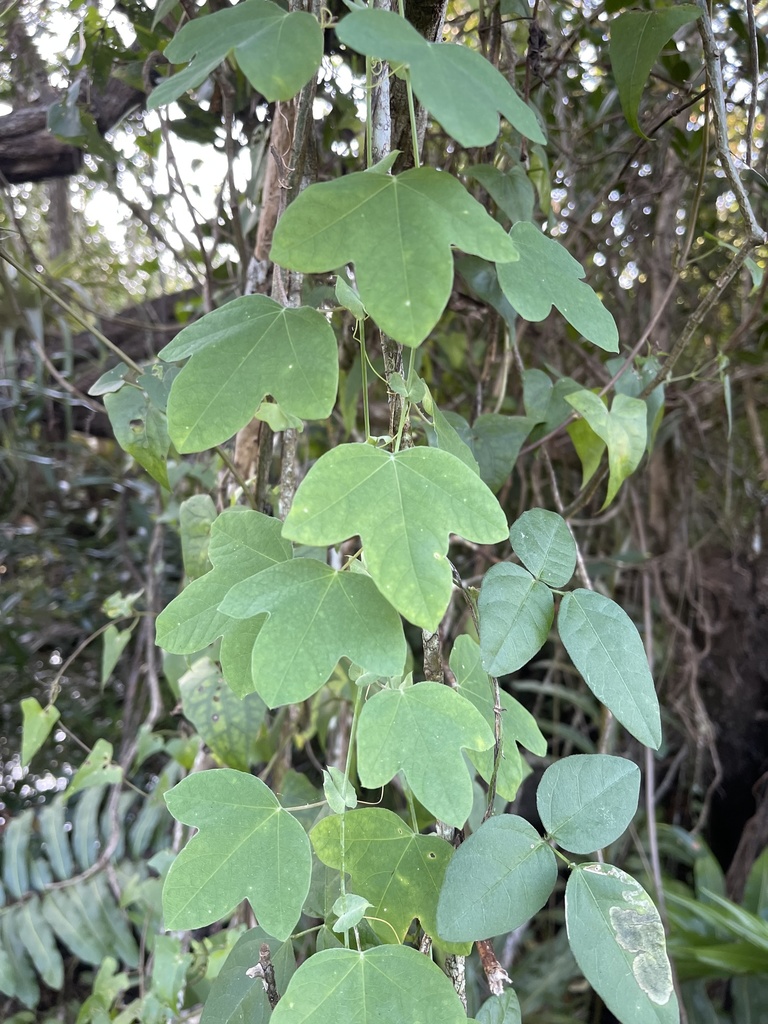
Passiflora pallens, known as Pineland Passionflower or pineland passionvine, is a rare tropical vine of south Florida. It climbs with coiled tendrils through shrubs and small trees at the edges of hammocks and in pine rocklands, producing pale green, three-lobed leaves, intricate white and greenish passionflowers, and round fruits that ripen yellow. It belongs to the passionflower family (Passifloraceae), along with the familiar purple passionflower or maypop.
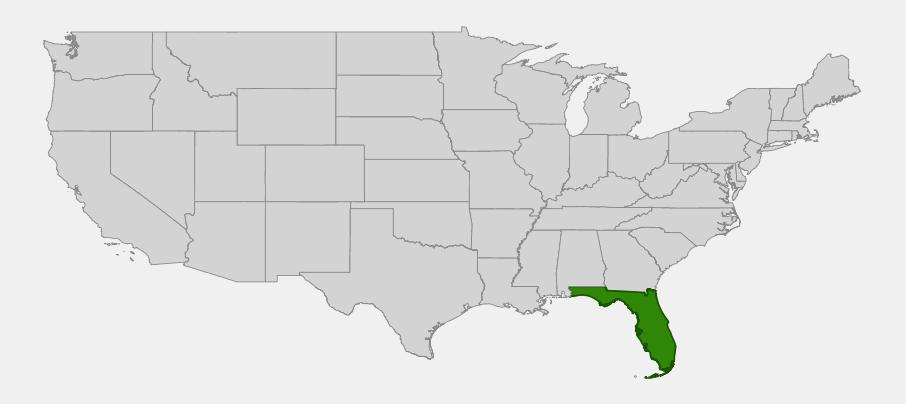
Pineland passionflower is listed as Endangered by the state of Florida (FDACS Regulated Plant Index). In the United States it is known only from a few counties in extreme south Florida, including Miami-Dade, Monroe and Collier counties. Its main range lies in the West Indies, and Florida is the northern edge. Loss of pine rockland and hammock habitat to development in the Miami area is the main reason it is rare in Florida.
For gardeners in south Florida, pineland passionflower is a beautiful and ecologically valuable vine, and a larval host for some of the state’s showiest butterflies. Because it is state-listed as endangered, buy only nursery-propagated plants from reputable native nurseries, and never dig plants or collect cuttings or seeds from the wild. This guide covers identification, range, and how to grow it responsibly.
Identification
South Florida has several native passionflowers, including the small-flowered corkystem passionflower (P. suberosa) and the larger-flowered purple passionflower in the north. Pineland passionflower is best identified by its large, leafy stipules and pale, shallowly lobed leaves.
Stems & Tendrils
Pineland passionflower is a herbaceous to slightly woody perennial vine that climbs by tendrils from the leaf axils. The Lady Bird Johnson Wildflower Center gives stem lengths of up to about 30 feet, though garden plants are usually smaller. The stems are slender, smooth, and green.
Leaves & Stipules
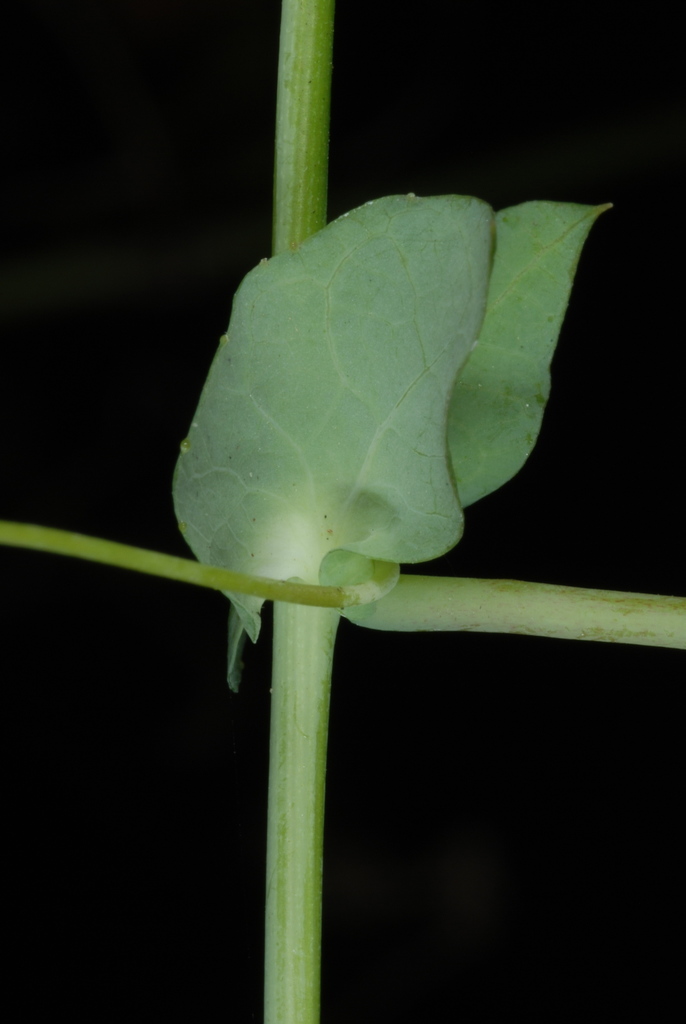
The leaves are alternate, about 2 to 4 inches long, and usually shallowly three-lobed with rounded lobes, sometimes nearly unlobed. They are smooth and pale green or bluish-green, especially beneath; the species name pallens means “pale.” The most distinctive feature is the pair of large, leafy stipules at the base of each leaf stalk. They are broad and kidney- to ear-shaped, about ½ to 1 inch long, and clasp the stem. Few other Florida passionflowers have stipules this large.
Flowers
The flowers are roughly 2 inches across, borne singly or in pairs from the leaf axils. They have five greenish-white sepals and five white petals, and a ring of thread-like corona filaments that are green at the base and white above, often with purple bands. As in all passionflowers, a central stalk carries the stamens and the three-branched style. Flowers open in the morning and last only a day. Bloom can occur from spring through early winter, mainly April to December.
Fruit & Seeds
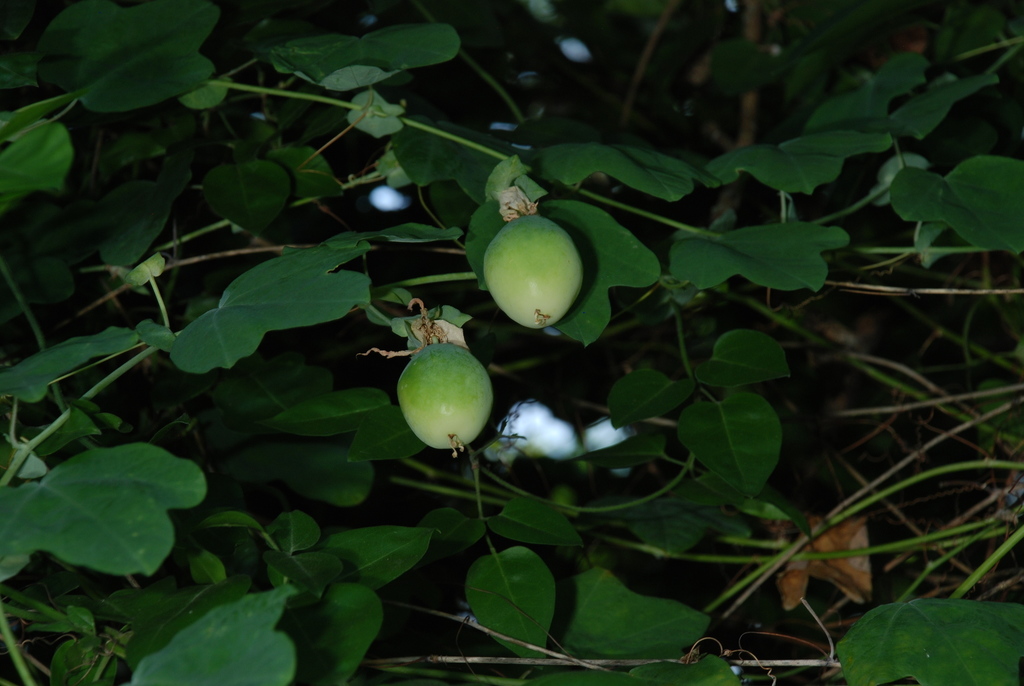
The fruit is a smooth, round to egg-shaped berry about 1 to 1½ inches across. It ripens from green to yellow or yellowish orange and contains many seeds, each wrapped in a juicy, translucent aril. The fruits are eaten by birds and mammals, which disperse the seeds.
Quick Facts
| Scientific Name | Passiflora pallens Poepp. ex Mast. |
| Family | Passifloraceae (passionflower family) |
| Plant Type | Perennial tendril-climbing vine |
| Mature Height | Climbs 6–15 ft in gardens (stems to about 30 ft in the wild) |
| Mature Spread | 3–10 ft |
| Growth Rate | Moderate to fast |
| Sun Exposure | Part shade to full sun |
| Water Needs | Moderate; tolerates short dry periods once established |
| Soil Type | Well-drained limestone, sandy or organic hammock soils |
| Soil pH | About 6.5–8.0 |
| Bloom Time | April–December |
| Flower Color | White and greenish, corona filaments green, white and purple |
| Fall Color | None; evergreen in frost-free areas |
| Fruit | Round to egg-shaped berry, yellow to yellowish orange when ripe |
| Deer Resistant | Somewhat; occasionally browsed |
| USDA Hardiness Zones | 10–11 |
Native Range
In the United States, pineland passionflower is found only in Florida. USDA PLANTS records it from Florida alone, and the Lady Bird Johnson Wildflower Center notes that it is known in North America only from Florida, where it is listed as endangered. Florida populations are in the southern tip of the peninsula, including Miami-Dade, Monroe (the Everglades and Keys) and Collier counties.
Outside Florida, pineland passionflower grows in the West Indies, including Cuba and Hispaniola. South Florida shares many of its tropical plants with the Caribbean, and these species reach their northern limits here because they cannot survive regular freezes.
In Florida it grows in the margins of and openings within tropical hardwood hammocks, in pine rocklands, and in other mesic to wet subtropical woodlands. It prefers partly shaded edges where it can climb into shrubs toward the light. Most of its pine rockland and hammock habitat in the Miami area has been cleared for development, so the remaining populations are mostly on public conservation lands.
📋 Regional plant lists featuring Pineland Passionflower: North & South Florida
Growing & Care Guide
Pineland passionflower is an excellent vine for butterfly gardens in south Florida, but it is listed as Endangered by the state of Florida (FDACS Regulated Plant Index). Buy only nursery-propagated plants from reputable native nurseries, ideally from local south Florida stock, and never dig plants or take cuttings or seeds from the wild or from public lands. It is grown by a few specialist native nurseries in Miami-Dade and the Keys, and native plant societies sometimes offer it at plant sales.
Light
Plant in light shade to part sun, similar to its natural home at the edge of a hammock. It tolerates full sun if the roots are shaded and the soil is not too dry. Deep shade reduces flowering.
Soil & Water
It grows in the thin, rocky limestone soils of the Miami Rock Ridge and in sandy or organic hammock soils, as long as drainage is good. Water regularly until established, then during long dry spells. It does not need fertilizer; a layer of leaf litter or compost mulch around the roots helps keep them moist and cool.
Planting Tips
Plant at the base of a fence, trellis, or a shrub that the vine can climb. It works well scrambling through native shrubs such as wild coffee, marlberry or stoppers at the edge of a hammock planting. Plant during the rainy season so the roots establish quickly. Outside the frost-free parts of south Florida, it will die back in freezes and may not survive.
Pruning & Maintenance
Prune lightly after flowering to keep it in bounds, but tolerate leaf damage from caterpillars, which is a sign the vine is doing its job. Do not spray insecticides. If caterpillars strip the vine, it usually regrows from the stems and roots.
Propagation
Commercial nurseries propagate it from seed and cuttings. Seeds germinate slowly and irregularly; removing the aril and sowing fresh seed helps. Stem cuttings root in a few weeks under mist. Propagate only from nursery or garden plants, never from wild populations.
Landscape Uses
- Butterfly gardens: larval host for heliconian butterflies in south Florida
- Hammock edge plantings: climbing through native shrubs at the sunny margin of a tropical hardwood planting
- Fences and trellises: a delicate, pale-leaved vine for small structures
- Conservation gardening: growing a state-endangered species from nursery-propagated stock
- Pine rockland restoration: in approved restoration projects within its native range
Wildlife & Ecological Value
Passionflowers are among the most important butterfly plants in Florida, and pineland passionflower supports the heliconian butterflies of the south Florida tropics.
For Pollinators
The flowers are visited by large bees, such as carpenter bees and bumblebees, which are the right size to brush against the stamens and stigmas as they reach for nectar. Butterflies also visit for nectar.
For Birds
Birds eat the ripe fruit and help spread the seeds. The tangle of vine growth also gives cover to small birds at hammock edges.
For Mammals
Raccoons and other small mammals eat the ripe fruits. Deer occasionally browse the vines.
Ecosystem Role
Like Florida’s other native passionflowers, it can serve as a larval host for heliconian butterflies, including the zebra longwing (Florida’s state butterfly), the Julia heliconian and the gulf fritillary. Their caterpillars eat the leaves, and the adults return to lay eggs on new growth. Passionflower foliage contains compounds that the caterpillars store, making them distasteful to predators.
Cultural & Historical Uses
The species was named from Caribbean plant material by the German botanist Eduard Poeppig, and Maxwell Masters, an English botanist who specialized in the passionflower family, published the formal description in the nineteenth century. That is why the name is credited to “Poepp. ex Mast.” The species name pallens means “pale,” referring to the leaves.
The name passionflower comes from Spanish missionaries in South America, who saw symbols of the Passion of Christ in the flower’s parts: the corona as the crown of thorns, the five stamens as wounds, and the three styles as nails. The name has been used for the whole genus ever since.
Today pineland passionflower is part of the effort to conserve the plants of south Florida’s pine rocklands and tropical hammocks, among the most endangered habitats in the United States. Botanic gardens and native nurseries in the Miami area grow it from propagated stock, and growing it in home gardens can help support local butterfly populations.
Frequently Asked Questions
Is pineland passionflower endangered?
Yes. It is listed as Endangered by the state of Florida (FDACS Regulated Plant Index). In the United States it is found only in a few south Florida counties.
Can I collect seeds or cuttings from wild plants?
No. Florida law prohibits harvesting state-listed endangered plants without the landowner’s permission, and collecting on public lands requires a permit. Buy nursery-propagated plants from a reputable native nursery.
Will it attract butterflies?
Yes. Like other native passionflowers, it can host the caterpillars of zebra longwings, Julia heliconians and gulf fritillaries, and the flowers provide nectar. Expect some chewed leaves.
Can I grow it in north or central Florida?
It is a tropical plant adapted to frost-free south Florida. Farther north it is likely to be killed by freezes. Purple passionflower and corkystem passionflower are better native choices there.
How do I tell it from other passionflowers?
Look for the large, kidney-shaped leafy stipules at each leaf base, pale three-lobed leaves, and white flowers roughly 2 inches across. Corkystem passionflower has tiny greenish flowers and small stipules; purple passionflower has deeply lobed leaves and large lavender flowers.

Looking for a nursery that carries Pineland Passionflower?
Browse our native plant nursery directory: Florida