
Sand Cordgrass (Spartina bakeri)
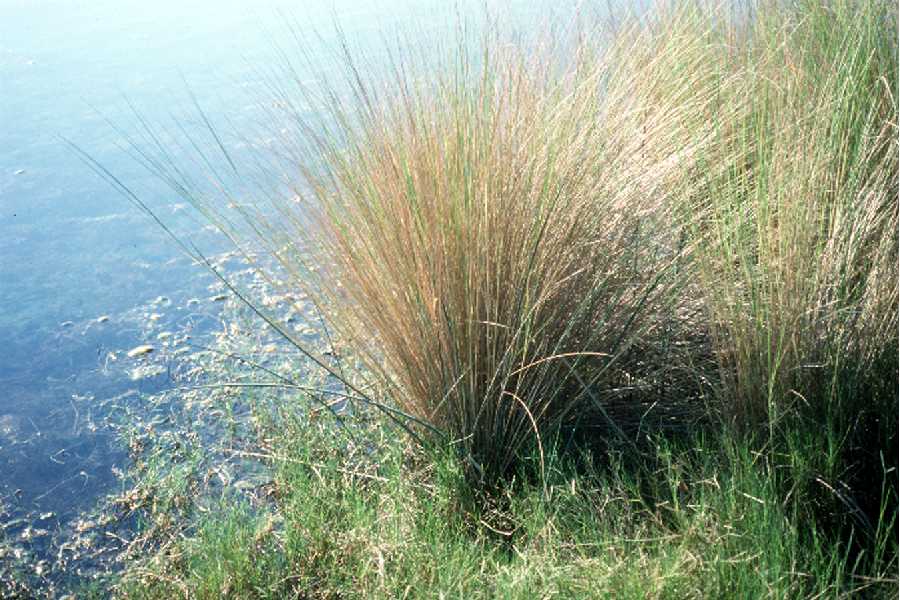
Spartina bakeri, the Sand Cordgrass, is a large, clump-forming native grass of the southeastern Coastal Plain, found mostly in Florida. It forms dense, rounded fountains of fine, wiry leaves 3 to 6 feet tall and as wide, and it holds its green color most of the year in warm climates. In 2014 grass specialists moved the cordgrasses into the genus Sporobolus, so newer references list it as Sporobolus bakeri; USDA PLANTS, the Atlas of Florida Plants and most nurseries still use Spartina bakeri.
In the wild, sand cordgrass grows in freshwater marshes, along lake and pond shores, in wet prairies and around the edges of brackish marshes, where it can form extensive stands. In landscapes it has proven unusually adaptable: once established it tolerates both periodic flooding and long dry spells, poor sandy soils, heat and some salt.
This toughness has made sand cordgrass one of the most widely planted native grasses in Florida. It is used for mass plantings, in rain gardens and stormwater ponds, as a screen and as a native alternative to non-native ornamental grasses such as pampas grass. This guide explains how to identify it, where it grows wild and how to use it in the garden.
Identification
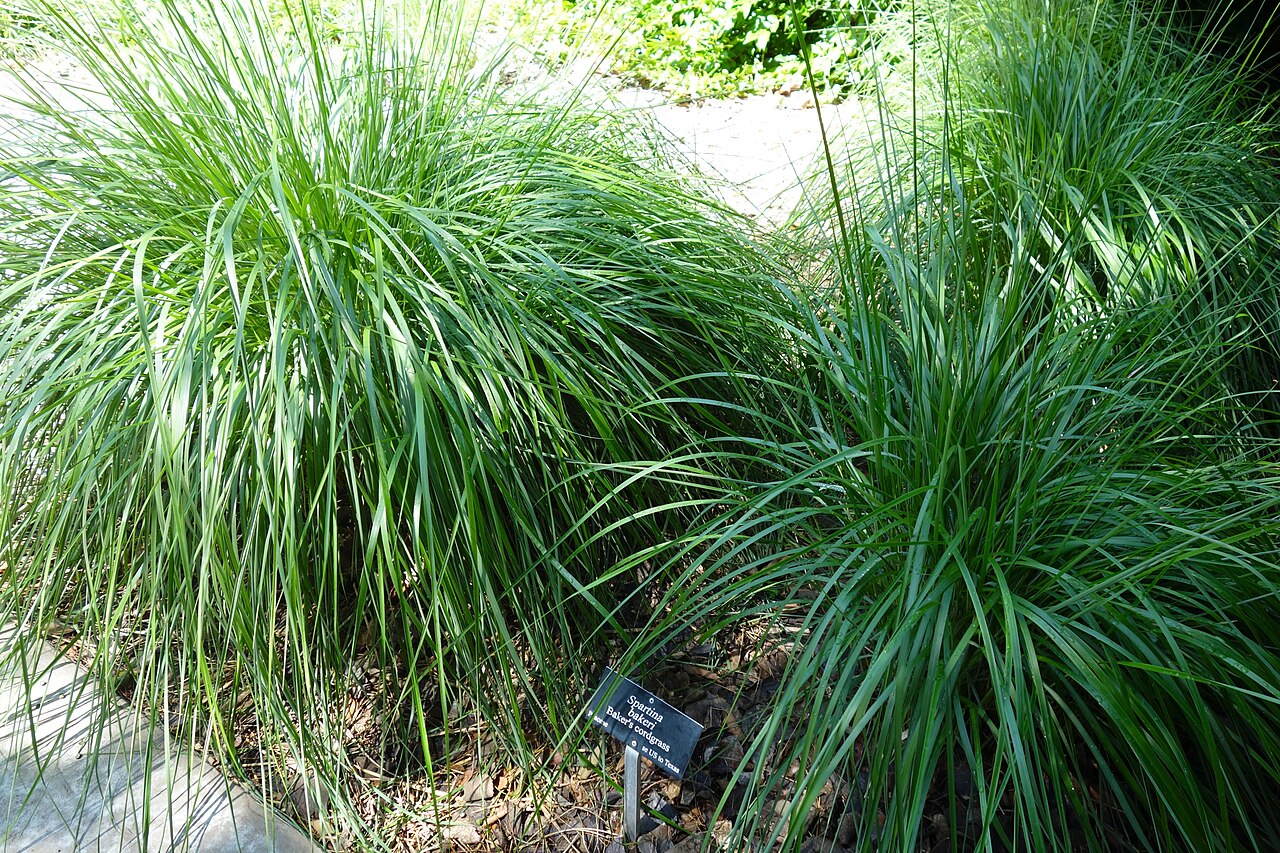
Sand cordgrass is a bunchgrass: unlike most other cordgrasses, which spread by long rhizomes into continuous stands, it grows as distinct, dense clumps. It is most easily recognized by its size, its fine, rolled leaves and its cordgrass-type flower spikes.
Habit
Plants form tight, rounded or fountain-shaped clumps, usually 3 to 6 feet tall and 3 to 6 feet wide. Old clumps can become very large and slowly widen with age from short rhizomes. In the wild, stands of many clumps can cover large areas of marsh or lakeshore.
Leaves
The leaves are long, narrow and tough, with the edges rolled inward so that they look wiry or almost cylindrical. They are green to gray-green during the growing season, often with tan or bronze tones in dry periods and winter. The leaf edges are rough, and the leaves can scratch bare skin.
Flowers
Sand cordgrass flowers in late spring and early summer, most heavily in the year after a fire or a hard cut-back. The flowering stems rise a little above the leaves and carry several narrow, one-sided spikes pressed close to the stem, each lined with flattened spikelets. The flowers are wind-pollinated and not showy; most of the plant’s ornamental value comes from its foliage.
Seeds
Seed production is often low, and many nurseries propagate the plant by division. The small seeds are shed from the spikes in summer.
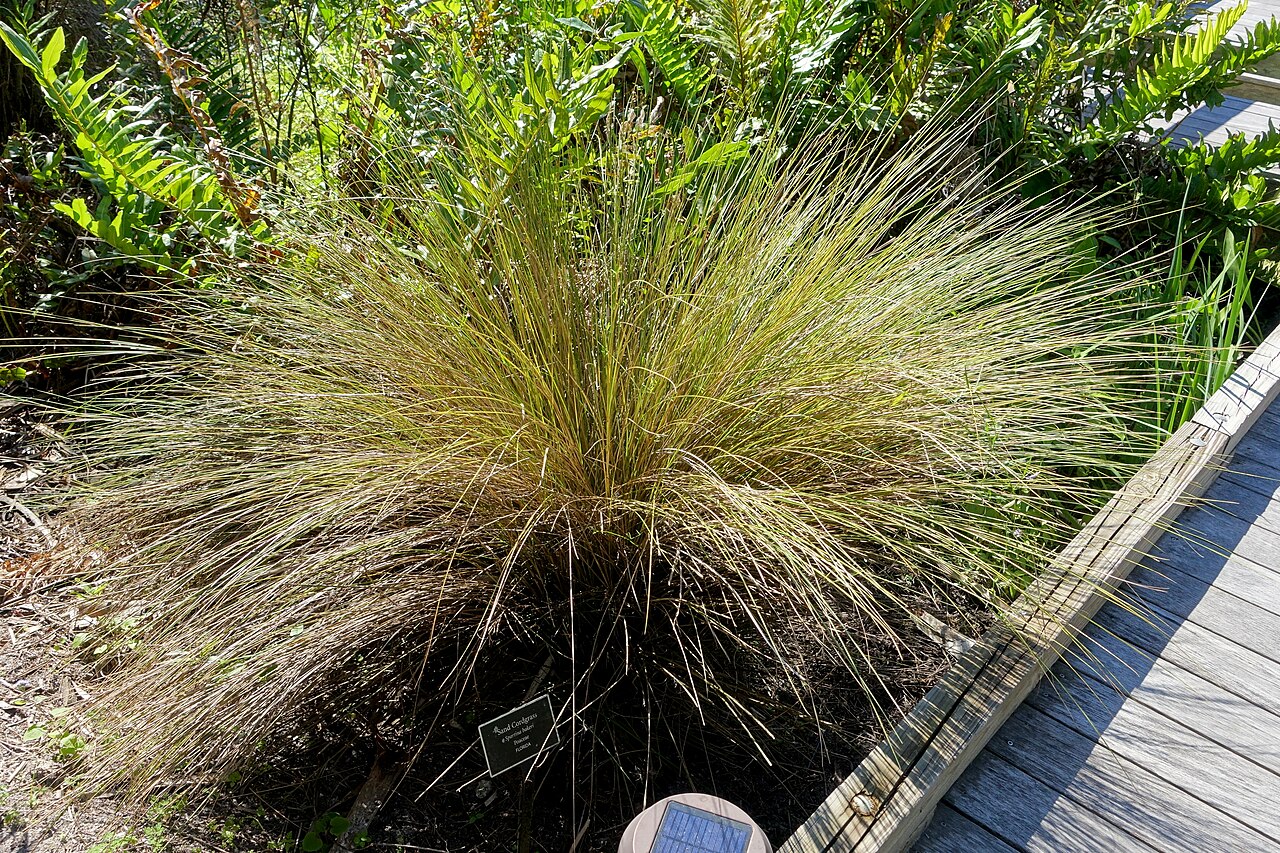
Quick Facts
| Scientific Name | Spartina bakeri (USDA symbol SPBA); syn. Sporobolus bakeri |
| Family | Poaceae (grass family) |
| Plant Type | Large, clump-forming perennial grass |
| Mature Height | 3–6 ft |
| Mature Spread | 3–6 ft |
| Growth Rate | Moderate to fast |
| Sun Exposure | Full sun to part shade |
| Water Needs | Medium; tolerates flooding and drought once established |
| Soil Type | Sand, muck or loam; wide tolerance |
| Soil pH | Acidic to alkaline (about 5.0–8.0) |
| Bloom Time | May–June (late spring to early summer) |
| Flower Color | Inconspicuous; tan to greenish spikes |
| Fall Color | Green to tan or bronze in winter |
| Fruit | Small grain shed in summer |
| Deer Resistant | Yes; tough foliage is seldom browsed |
| USDA Hardiness Zones | 8–11 |
Native Range
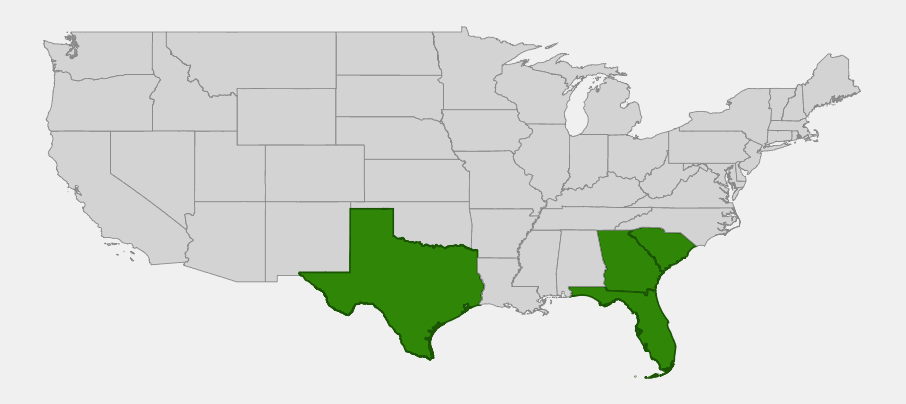
Sand cordgrass has a small native range. The Lady Bird Johnson Wildflower Center, using USDA PLANTS data, records it from Florida, Georgia, South Carolina and Texas. Florida is the center of its range; there it grows throughout the peninsula and into the Panhandle. Outside Florida it is uncommon, found mostly along the coast of Georgia and South Carolina, and the Texas record lies far to the west of its main range.
In the wild it grows in freshwater marshes, on the sandy shores of lakes and ponds, in wet prairies and flatwoods depressions, along the margins of rivers and springs, and on the landward edges of brackish and salt marshes. Many of its habitats flood in the summer rainy season and dry out in spring, and the plant is adapted to both conditions.
Like many plants of Florida marshes and prairies, sand cordgrass depends on fire. Burning removes old leaves, stimulates new growth and flowering, and keeps shrubs and trees from taking over its open habitats.
📋 Regional plant lists featuring Sand Cordgrass: North & South Florida · Alabama, Georgia & Mississippi · North & South Carolina
Growing & Care Guide
Sand cordgrass is one of the easiest native grasses to grow in Florida and the coastal Southeast. It is used in everything from highway medians to rain gardens, and it needs very little care beyond an occasional cut-back.
Light
Full sun gives the densest, most upright clumps. It tolerates part shade, where it grows more loosely.
Soil & Water
Sand cordgrass grows in almost any soil, from dry sand to wet muck, and tolerates seasonal flooding, short periods of standing water and moderate salt. Water new plants regularly for the first few months; after that, they usually need no irrigation. No fertilizer is needed.
Planting Tips
Set plants 3 to 5 feet apart for a mass planting or screen, and allow room for the clumps to reach 5 or 6 feet across. Because the leaves are rough-edged, keep it back a few feet from paths and patios. It is well suited to the banks of stormwater ponds, rain gardens, swales, and large open beds.
Pruning & Maintenance
Cut clumps back to about a foot tall every year or two in late winter, before new growth begins, to remove old dead leaves and refresh the plant. In natural areas, prescribed fire serves the same purpose and encourages flowering. Wear gloves and long sleeves when working with the rough leaves.
Propagation
Divide large clumps in spring or early summer with a sharp spade or saw; each division with roots and several shoots will grow into a new plant. Seed is produced irregularly and is less commonly used.
Landscape Uses
- Mass plantings and screens: large, uniform clumps for open landscapes
- Rain gardens and stormwater ponds: tolerates both flooding and drought
- Shoreline stabilization: dense roots help hold sandy banks
- Native alternative to exotic ornamental grasses: a substitute for pampas grass and other non-native clumping grasses
- Wildlife cover: shelter for birds, small mammals and reptiles
Wildlife & Ecological Value
In marshes, wet prairies and lakeshores, sand cordgrass provides shelter and structure for a wide range of animals.
For Pollinators
As a wind-pollinated grass, sand cordgrass offers little nectar, but its dense clumps provide overwintering shelter for insects. Cordgrasses are larval host plants for several grass-feeding skipper butterflies.
For Birds
Wrens, sparrows, rails and other marsh birds use the dense clumps for cover and nesting, and seed-eating birds eat the seeds when they are produced.
For Mammals
Marsh rabbits, cotton rats and other small mammals shelter and nest at the base of the clumps. The tough leaves are rarely browsed by deer.
Ecosystem Role
Large stands of sand cordgrass stabilize lakeshores and marsh edges, slow runoff and trap sediment. Its leaves carry fire through marshes and prairies, helping maintain these open, fire-dependent habitats.
Cultural & Historical Uses
The species was described by the American botanist Elmer D. Merrill in the early 1900s from Florida material; its epithet honors a plant collector named Baker. The genus name Spartina comes from the Greek spartine, a cord, referring to the tough leaves once used to make rope.
Molecular studies published in 2014 showed that the cordgrasses are nested within the dropseed genus Sporobolus, and many botanists now use the name Sporobolus bakeri. Garden and nursery references still overwhelmingly use Spartina bakeri, so both names are worth knowing.
Since the late twentieth century, sand cordgrass has become a staple of Florida native landscaping and highway plantings. Its popularity rose as gardeners looked for native replacements for exotic grasses such as pampas grass.
Frequently Asked Questions
Is sand cordgrass the same as Sporobolus bakeri?
Yes. Botanists moved the cordgrasses into the genus Sporobolus in 2014, so the same plant is now often listed as Sporobolus bakeri. USDA PLANTS and most nurseries still use Spartina bakeri.
Can sand cordgrass grow in standing water?
It tolerates seasonal flooding and short periods of standing water, and it is often planted around stormwater ponds. It also survives dry periods once established.
How big does sand cordgrass get?
Clumps usually reach 3 to 6 feet tall and as wide. Allow plenty of room when planting.
Does sand cordgrass spread aggressively?
No. Unlike many cordgrasses, it grows as a clump and widens only slowly, so it does not form runners across a garden.
When should I cut back sand cordgrass?
In late winter, every year or two, cut it back to about a foot tall before new growth starts. Wear gloves because the leaf edges are rough.

Looking for a nursery that carries Sand Cordgrass?
Browse our native plant nursery directory: Florida & Georgia · South Carolina & Texas