
Redroot Buckwheat (Eriogonum racemosum)
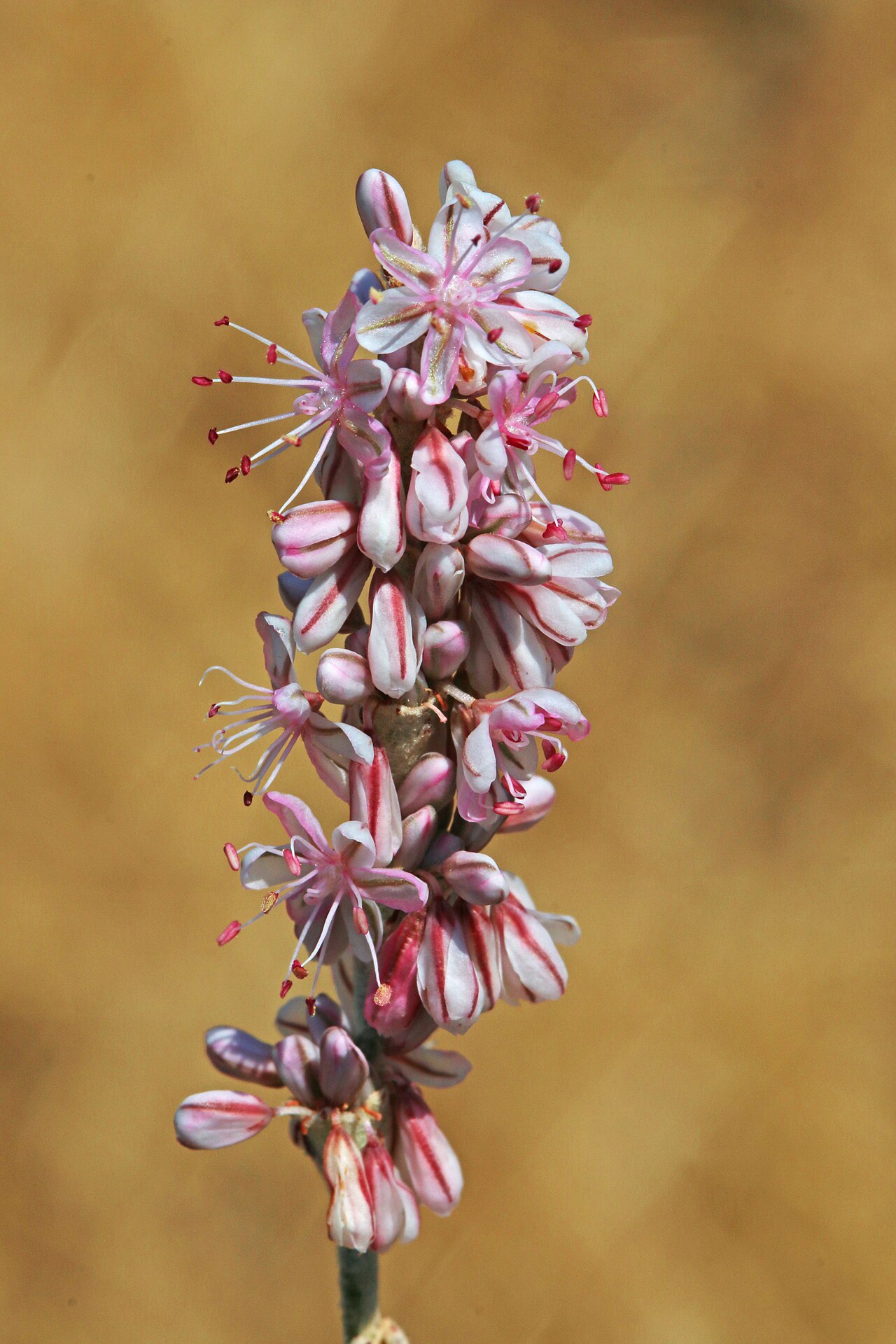
Eriogonum racemosum, known as Redroot Buckwheat or redroot wild buckwheat, is a perennial wildflower of the buckwheat family (Polygonaceae) native to the Colorado Plateau and southern Rocky Mountains, in Arizona, Colorado, Nevada, New Mexico and Utah. It forms a low rosette of oval, woolly leaves and sends up slender, leafless stalks 1 to 3 feet tall, lined with small white to pinkish flowers in late summer and fall.
It is a common plant of ponderosa pine forests, pinyon-juniper woodlands, aspen groves and mountain meadows at middle to high elevations. Unlike the flat-topped clusters of many buckwheats, its flowers are arranged along spike-like branches, which inspired the species name racemosum. Its thick taproot is reddish, giving the plant its common name.
Redroot buckwheat is a tough, drought-tolerant plant that blooms when many other wildflowers are finished. It is an excellent late-season nectar source for bees, wasps and butterflies, and a good choice for dry, sunny gardens in the mountain West.
Identification
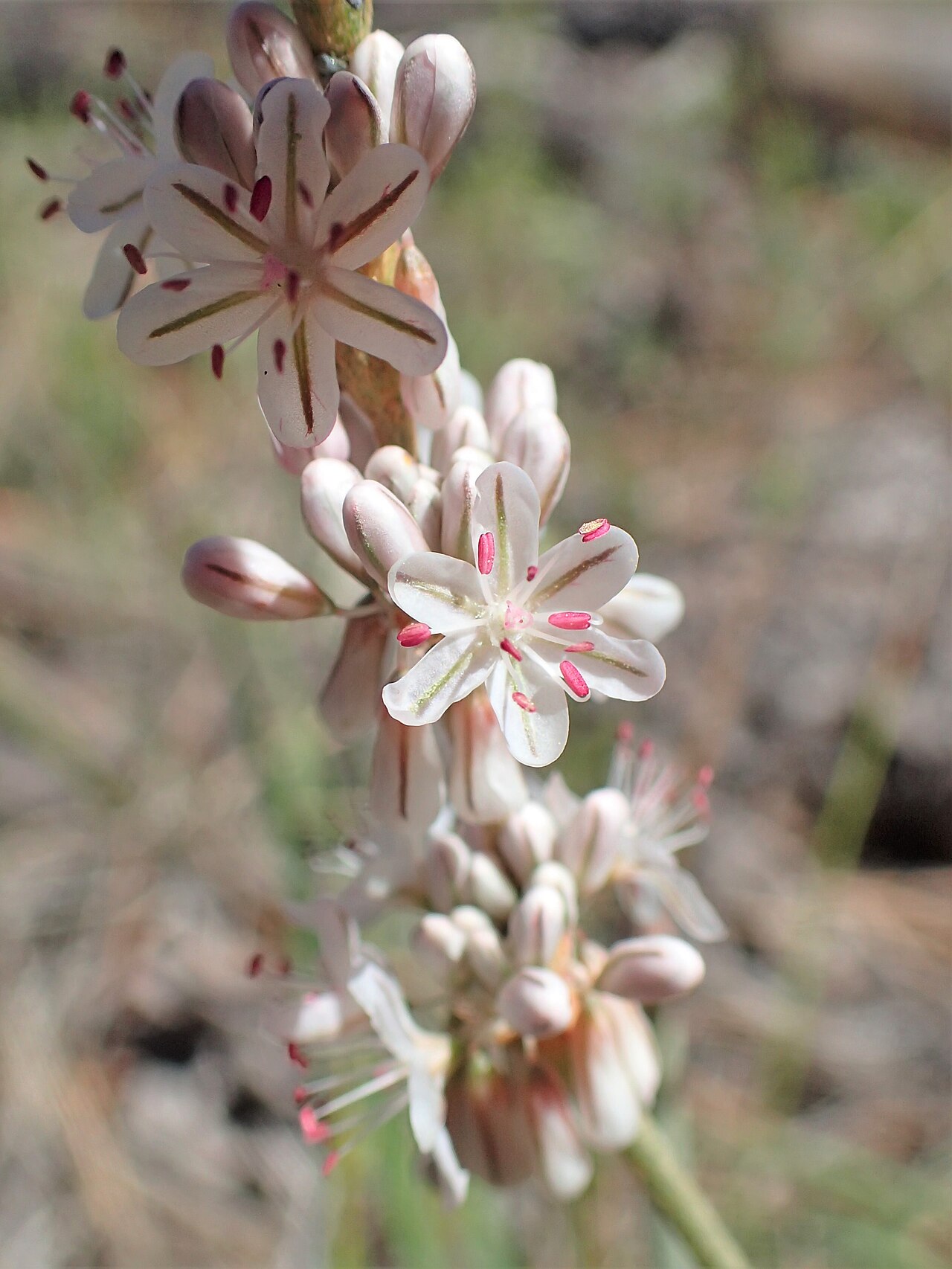
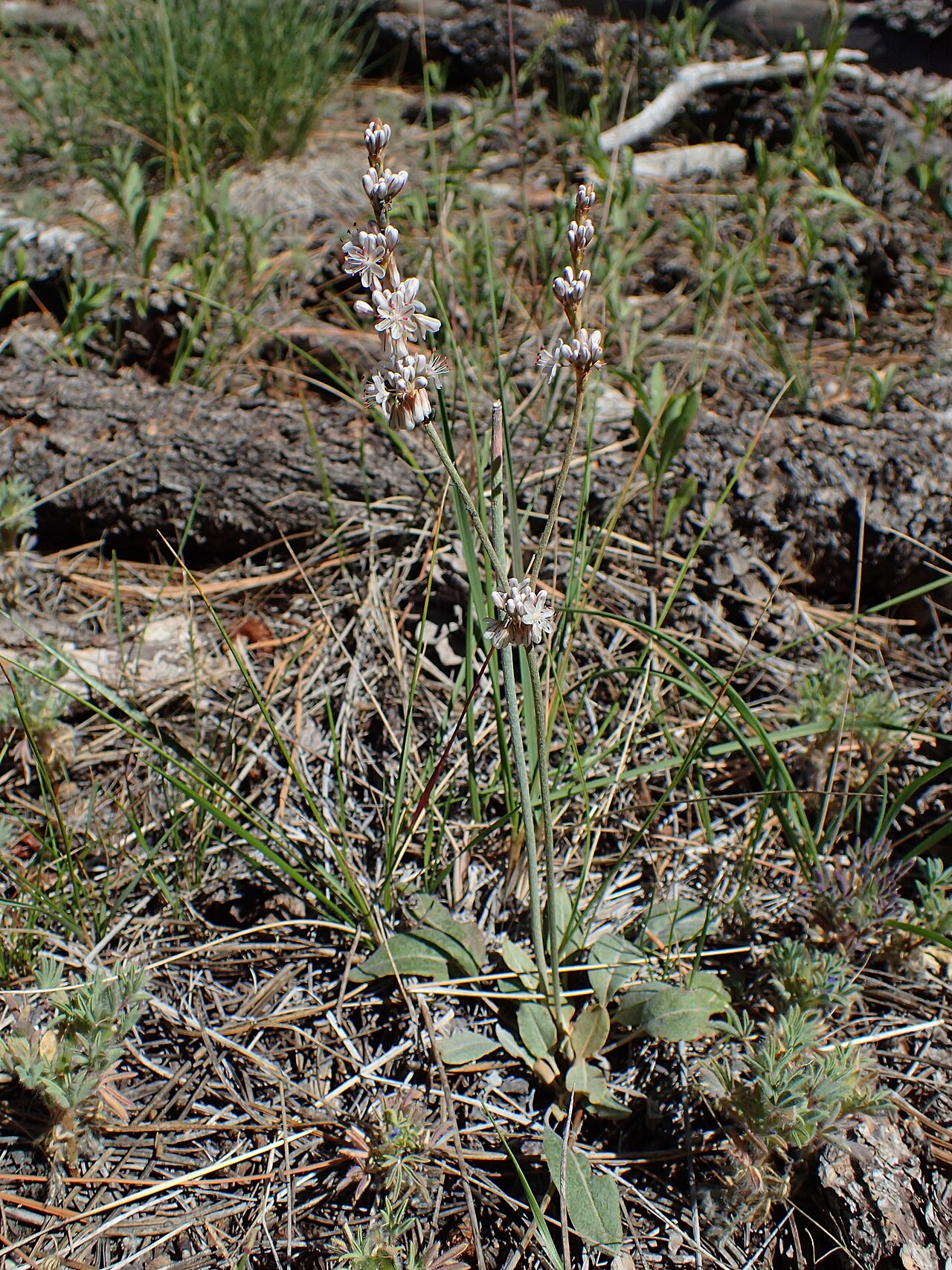
Look for a rosette of oval, gray-green leaves that are white-woolly underneath, with tall, slender, woolly stalks lined with small white and pink flowers in late summer.
Growth Habit
It is a herbaceous perennial from a stout, reddish taproot and short, woody crown. One to several erect flowering stems rise 1 to 3 feet from the basal rosette. The stems are leafless, covered with white wool, and branched only a little near the top.
Leaves
The leaves are all basal, on long stalks. Blades are elliptic to oval, about 1 to 4 inches long, gray-green and thinly woolly above and densely white-woolly beneath. Their pale undersides are an easy field mark.
Flowers
Small cup-shaped clusters of flowers (involucres) sit directly on the upper stems and branches, forming narrow, spike-like racemes. Each flower is about 1/8 inch long, with six white to pale pink tepals that have pink to reddish midribs, and red to purple anthers. Bloom time is July to October.
Fruit
The fruit is a small, three-angled, brown achene that ripens in fall within the dried flowers.
Look-alikes
Sulfur buckwheat has yellow flowers in umbrella-shaped clusters. Wright buckwheat is a low, bushy subshrub with tiny leaves along the stems. Other tall woodland buckwheats, such as James’ buckwheat (Eriogonum jamesii), have flowers in rounded or flat-topped heads rather than in spike-like rows.
Quick Facts
| Scientific Name | Eriogonum racemosum |
| Family | Polygonaceae (buckwheat family) |
| Plant Type | Herbaceous perennial wildflower |
| Mature Height | 1–3 ft (flower stalks) |
| Mature Spread | 6–12 in |
| Growth Rate | Moderate |
| Sun Exposure | Full sun to part shade |
| Water Needs | Low; drought tolerant |
| Soil Type | Sandy, gravelly or rocky; well drained |
| Soil pH | Slightly acidic to alkaline (about 6.0–8.0) |
| Bloom Time | July–October |
| Flower Color | White to pale pink with pink midribs |
| Fall Color | Dried flower stalks turn rusty brown |
| Fruit | Small three-angled achene |
| Deer Resistant | Moderate; lightly browsed |
| USDA Hardiness Zones | 4–8 |
Native Range
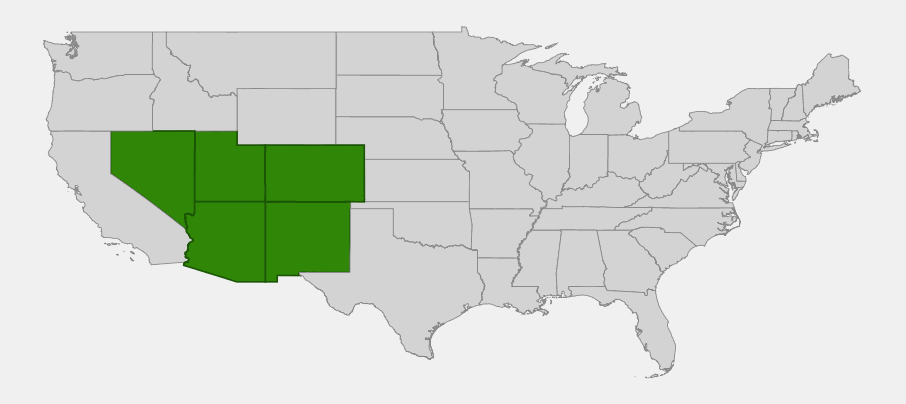
Redroot buckwheat is native to the interior Southwest. USDA PLANTS lists it as native in Arizona, Colorado, Nevada, New Mexico and Utah.
It is most common on the Colorado Plateau and in the mountains of Arizona and New Mexico, including the Mogollon Rim, the Kaibab Plateau near the Grand Canyon, the White Mountains and the Jemez and San Juan Mountains. It also grows in the high plateaus and mountains of southern and central Utah and in western and southwestern Colorado, including the Uncompahgre Plateau. Nevada records are limited to a few mountain ranges in the south.
It grows in open ponderosa pine forests, pinyon-juniper woodlands, aspen and mixed conifer stands, Gambel oak thickets and mountain meadows, usually on sandy, gravelly or rocky soils, from about 5,000 to 10,500 feet.
📋 Regional plant lists featuring Redroot Buckwheat: Arizona & New Mexico · Utah & Western Colorado · California & Nevada
Growing & Care Guide
Redroot buckwheat is an easy, low-water perennial for dry gardens in the Southwest and Intermountain West. It is long-lived once established and needs little care.
Light
Full sun to light shade. It grows naturally in the dappled shade of open pine forests but flowers best in sun.
Soil & Water
Lean, well-drained sandy, gravelly or rocky soil. Water young plants during their first summer; after that, rainfall is usually enough. Avoid rich soil, heavy clay and overwatering, which cause rot.
Planting Tips
Plant in spring or fall, 12 to 18 inches apart, in rock gardens, dry meadows or under open pines. Its tall flower stalks look best in groups among bunchgrasses.
Pruning & Maintenance
No pruning is needed. Leave the dried stalks standing over winter for seed and texture, then cut them back in spring.
Propagation
Grow from seed sown outdoors in fall or after cold, moist stratification. Because of its deep taproot, plant seedlings while they are small; older plants do not transplant well.
Landscape Uses
- Dry gardens and xeriscapes: a long-blooming, low-water perennial
- Pollinator gardens: late-summer nectar for bees, wasps and butterflies
- Meadow and forest restoration: native to ponderosa pine and pinyon-juniper country
- Rock gardens: slender spikes rising from a compact rosette
- Erosion control: its deep taproot helps hold dry, sandy slopes
Wildlife & Ecological Value
Like most wild buckwheats, redroot buckwheat is an excellent insect plant and supports wildlife through late summer and fall.
For Pollinators
The flowers attract many native bees, wasps, flies and butterflies. Wild buckwheats are larval host plants for several small butterflies in the West, including blues, hairstreaks and metalmarks, and they are among the best late-season nectar plants in dry mountain habitats.
For Birds
Finches, sparrows, juncos and other seed-eating birds eat the small seeds in fall and winter.
For Mammals
Deer and elk browse it lightly, and small rodents gather the seeds.
Ecosystem Role
As a deep-rooted perennial of open forests and meadows, it helps stabilize soils after fire and disturbance and provides a long-lasting food source for insects when few other plants are in bloom.
Cultural & Historical Uses
The genus name Eriogonum comes from Greek words meaning “woolly knees,” describing the hairy joints of the stems in many species. The species name racemosum refers to the raceme-like arrangement of its flowers along the branches, and the common name redroot refers to its reddish taproot.
Wild buckwheats are one of the largest groups of native plants in western North America, with well over 200 species. Redroot buckwheat is one of the most familiar in the forests around Flagstaff, the Grand Canyon and the high plateaus of Utah and New Mexico.
Several Southwestern peoples have long used wild buckwheats in traditional medicine. Today redroot buckwheat is valued mainly as a reliable late-season wildflower and as a native plant for restoration and water-wise gardens.
Frequently Asked Questions
Why is it called redroot buckwheat?
Its thick taproot is reddish, and it belongs to the wild buckwheat genus Eriogonum.
When does redroot buckwheat bloom?
From July to October, later than most wildflowers in its pine and pinyon-juniper habitats.
Is redroot buckwheat related to buckwheat flour?
It is in the same plant family (Polygonaceae) as the crop buckwheat, but it is a different genus and is not grown for food.
Can I grow redroot buckwheat in my garden?
Yes, in full sun to light shade with lean, very well-drained soil. It is drought tolerant once established and needs little care.
Is redroot buckwheat good for pollinators?
Yes. Its long-lasting late-season flowers feed many bees, wasps and butterflies, and wild buckwheats are host plants for several small butterflies.

Looking for a nursery that carries Redroot Buckwheat?
Browse our native plant nursery directory: Arizona · Colorado · Nevada & New Mexico · Utah

