
Western Red Columbine (Aquilegia elegantula)
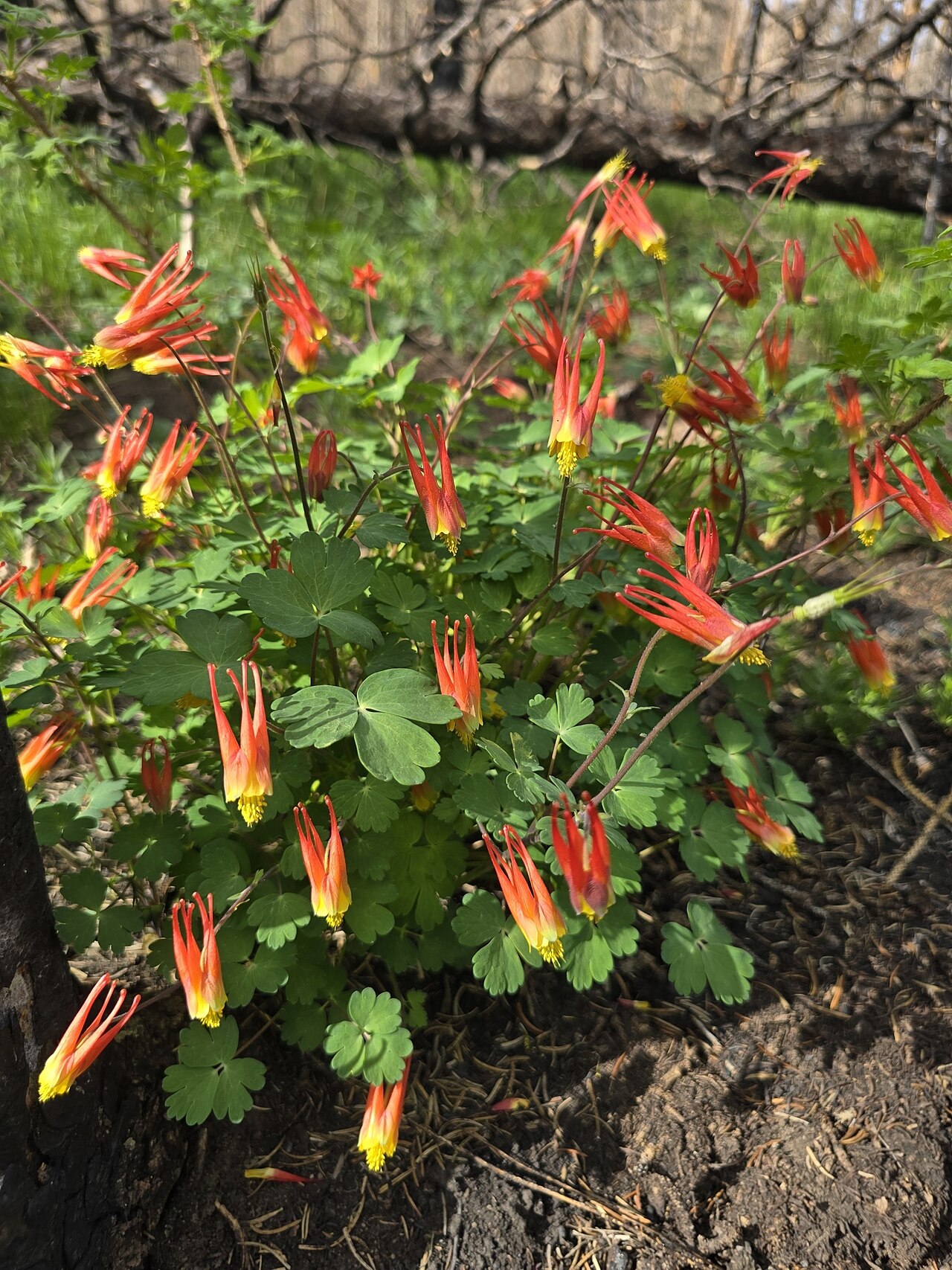
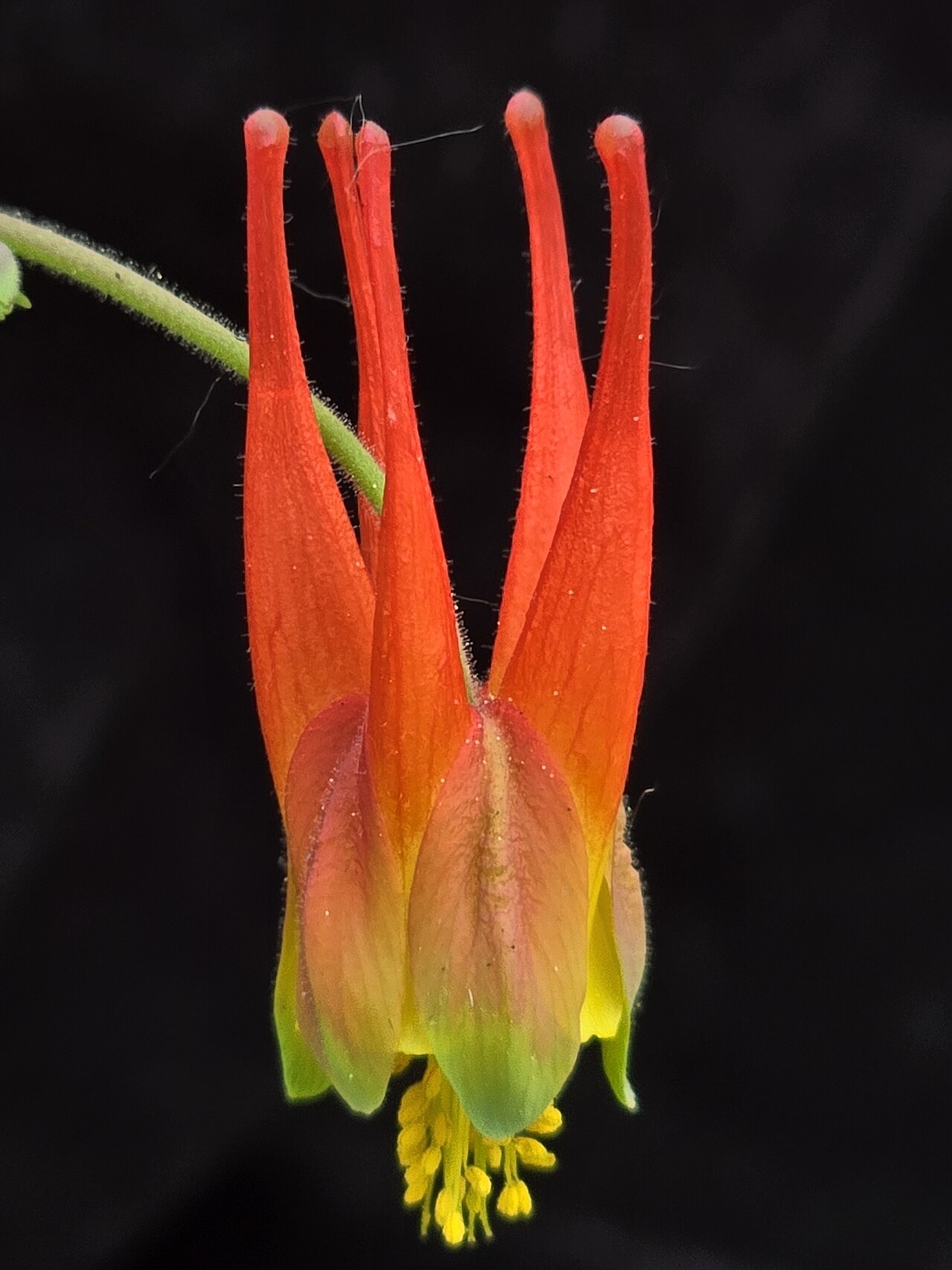
Aquilegia elegantula, known as Western Red Columbine or Rocky Mountain red columbine, is a delicate woodland columbine of the southern Rocky Mountains. In late spring and early summer it hangs slender, nodding red flowers about 1 to 1½ inches long from branching stems 8 to 24 inches tall. Unlike most columbines, its red sepals point forward along the spurs instead of spreading open, so each flower looks like a narrow red tube tipped with green and yellow, with a tassel of yellow stamens at the mouth.
It belongs to the buttercup family (Ranunculaceae) and grows in cool, moist, partly shaded places: mixed conifer and aspen forests, spruce-fir woods, streambanks, shady canyons and rocky slopes, mostly between about 6,500 and 11,000 feet. It is a classic hummingbird flower, and broad-tailed hummingbirds visit it regularly.
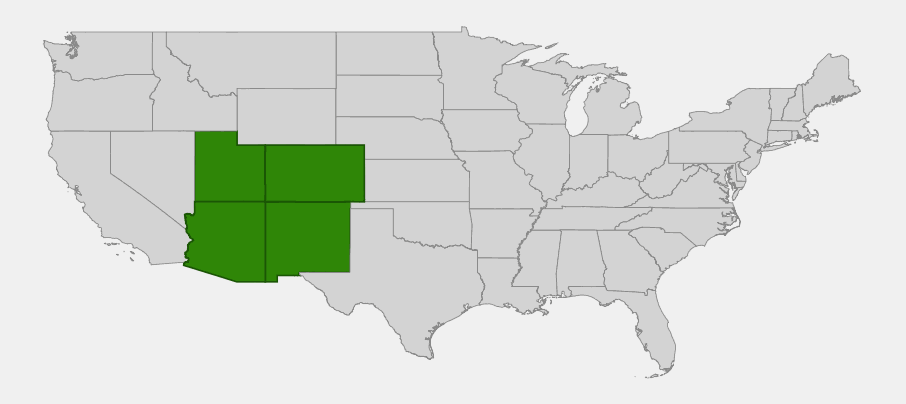
Western red columbine is native to Colorado, New Mexico, southeastern Utah and northeastern Arizona, with separate populations in the mountains of northeastern Mexico. It is a fine plant for shady, moist gardens in the Southwest and Rocky Mountains. Like other columbines it is mildly toxic and should not be eaten. This guide covers identification, range, growing tips and wildlife value.
Identification
Look for a small columbine with nodding, narrow, mostly red flowers whose sepals point forward rather than spreading, in shady mountain forests of the southern Rockies in May to July.
Stems & Roots
Plants grow from a woody taproot and crown and form loose clumps. The flowering stems are slender, branched and usually 8 to 24 inches tall, with a few small leaves.
Leaves
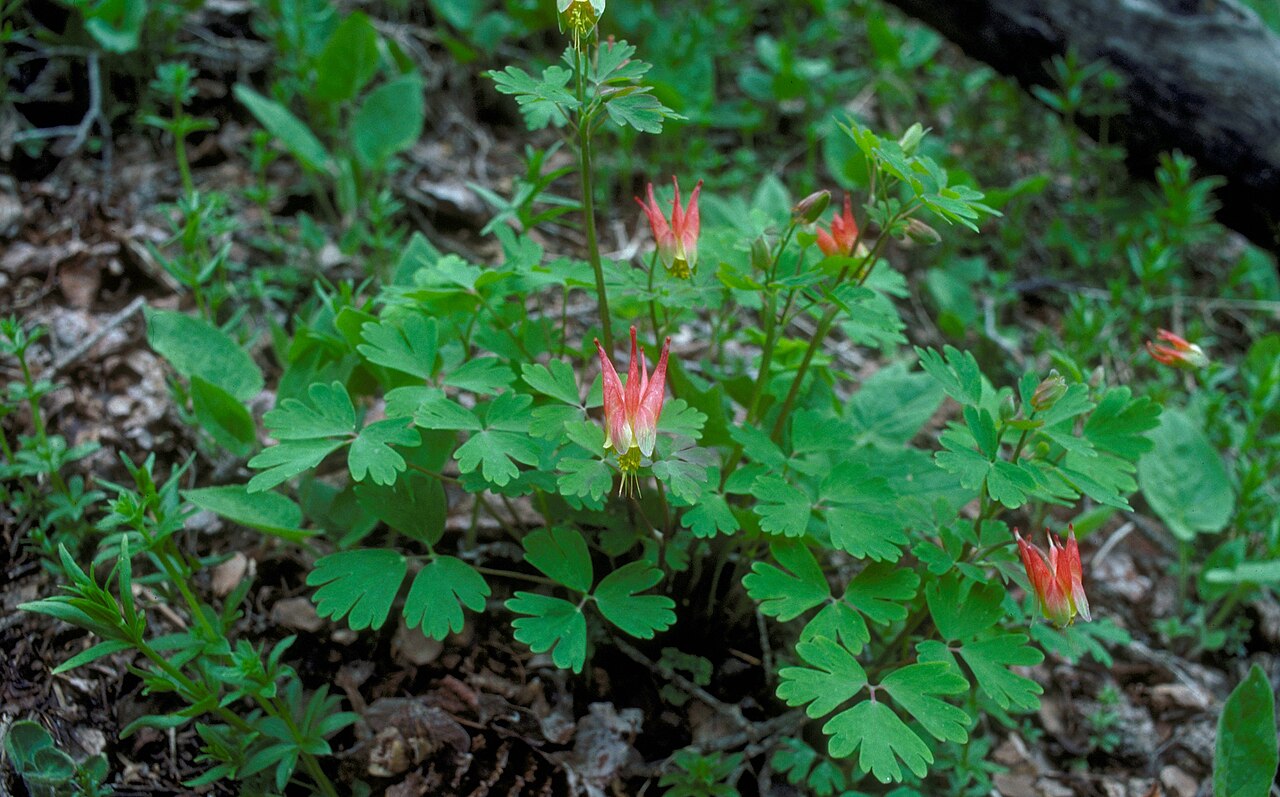
Most leaves are basal on long stalks. They are divided into three, and then often into three again (biternate), with rounded, lobed and scalloped leaflets, green above and paler below. They are smooth or nearly so.
Flowers
The flowers nod at the ends of the branches. The five sepals are red to orange-red, often green or yellowish at the tips, and point forward, more or less parallel to the spurs. The five petals have short, yellowish-green blades and long, straight red spurs about ¾ to 1 inch long, each ending in a small, rounded nectar knob. The yellow stamens and styles hang out of the mouth of the flower. Bloom time is May to July, starting in late spring at lower elevations.
Fruit & Seeds
Each flower produces a cluster of five slender, upright, beaked pods (follicles) that split open in midsummer to release small, shiny black seeds.
Look-alikes
Western columbine (Aquilegia formosa), which does not occur in most of this range, has red sepals that spread wide open and shorter spurs. Eastern red columbine (Aquilegia canadensis) is similar but has spreading sepals and grows far to the east. In the Southwest, golden columbine has yellow flowers with very long spurs, and Colorado blue columbine has large blue and white upward-facing flowers.
Quick Facts
| Scientific Name | Aquilegia elegantula Greene |
| Family | Ranunculaceae (buttercup family) |
| Plant Type | Herbaceous perennial |
| Mature Height | 8–24 in |
| Mature Spread | 8–15 in |
| Growth Rate | Moderate |
| Sun Exposure | Part shade to light shade |
| Water Needs | Moderate; evenly moist soil |
| Soil Type | Moist, humus-rich, well-drained forest soil or rocky loam |
| Soil pH | About 6.0–7.5 |
| Bloom Time | May–July |
| Flower Color | Red to orange-red with yellow-green tips; yellow stamens |
| Fall Color | None notable |
| Fruit | Cluster of five erect, beaked follicles |
| Deer Resistant | Moderately; occasionally browsed |
| USDA Hardiness Zones | 4–8 |
Native Range
Western red columbine is native to the southern Rocky Mountain region. USDA PLANTS lists it in Colorado, New Mexico, Utah and Arizona. It is most common in the mountains of Colorado and northern New Mexico, including the San Juan Mountains and the Sangre de Cristo Range, and it extends south to the Sacramento Mountains of southern New Mexico. In Utah it grows in the southeastern mountains, and in Arizona it is limited to the northeastern part of the state.
Separate populations grow far to the south in the mountains of Coahuila and Nuevo León in northeastern Mexico, where it grows on shaded limestone slopes and in canyon forests.
Throughout its range it favors cool, shaded, moist sites: mixed conifer, aspen and spruce-fir forests, the shady sides of canyons, streambanks and seeps, and rocky slopes under trees. It is usually found between about 6,500 and 11,000 feet (2,000 to 3,400 m).
📋 Regional plant lists featuring Western Red Columbine: Arizona & New Mexico · Utah & Western Colorado
Growing & Care Guide
Western red columbine is offered by some native nurseries and seed suppliers in Colorado and New Mexico. It is a good choice for shady, moist beds in the southern Rockies and higher parts of the Southwest. Safety note: like other columbines, its seeds and roots contain compounds that can be harmful if eaten. Do not eat any part of it, and keep children and pets from chewing on the plant.
Light
Plant it in part shade or dappled shade, such as under aspens or on the north side of a building. In cooler, high-elevation gardens it tolerates morning sun.
Soil & Water
It prefers moist, humus-rich but well-drained soil, like the forest floors where it grows. Water regularly during dry periods, especially in the hot, dry early summer before the monsoon rains. Avoid heavy, waterlogged soil.
Planting Tips
Plant in spring or early fall, keeping the crown at soil level. Space plants about a foot apart, and use them in small groups along shady paths, in woodland beds or among ferns and other shade plants.
Pruning & Maintenance
Remove spent flower stems after bloom, or leave a few to ripen seed. Plants are often short-lived in gardens but reseed where conditions suit them. A light mulch of leaf litter or shredded bark keeps the soil cool and moist.
Propagation
Grow it from seed. Sow outdoors in fall, or give seed a cold, moist stratification of about 3 to 4 weeks before spring sowing. Seedlings usually bloom in their second year. Keep it away from other columbines if you want seed to come true, since columbines hybridize easily.
Landscape Uses
- Shade and woodland gardens: an elegant red accent for shady beds in the southern Rockies and Southwest highlands
- Hummingbird gardens: an early-season nectar source for broad-tailed hummingbirds
- Rock gardens: for shaded, moist pockets among rocks
- Forest restoration: fits aspen and mixed conifer understory plantings within its range
- Containers: a good choice for shaded pots and patio plantings at higher elevations
Wildlife & Ecological Value
Western red columbine is a hummingbird flower in color, shape and nectar, and it is an important food source for hummingbirds in mountain forests in early summer.
For Pollinators
The red, nodding, tubular flowers with nectar at the tips of the spurs are adapted to hummingbird pollination. Bumble bees also visit for pollen, and some bite through the spurs to take nectar.
For Birds
Broad-tailed hummingbirds visit the flowers regularly, and other hummingbirds passing through the mountains in early summer may use it as well. Some seed-eating birds eat the small black seeds.
For Mammals
Deer and elk may browse it occasionally, but it is not a preferred food. Small rodents may eat the seeds.
Ecosystem Role
It is part of the diverse herb layer of shaded mountain forests in the southern Rockies, where it contributes to the variety of flowers that support pollinators through the short mountain summer.
Cultural & Historical Uses
Edward Lee Greene, a botanist and clergyman who explored the flora of the Southwest in the late nineteenth century, described Aquilegia elegantula. The species name means “elegant” or “little elegant one,” fitting for its slender, graceful flowers. The genus name Aquilegia is often linked to the Latin aquila, eagle, for the claw-like spurs, and the common name columbine to the Latin columba, dove.
Columbines were used medicinally by some Indigenous peoples of the West, but such uses require expert knowledge, and the plant should not be eaten.
Today it is a favorite of hikers and photographers in the San Juan Mountains, the Sangre de Cristo Range and other mountains of the Southwest, and of gardeners in Colorado and New Mexico who want a native red columbine for shade.
Frequently Asked Questions
How is western red columbine different from eastern red columbine?
They look similar, but eastern red columbine (Aquilegia canadensis) has sepals that spread outward and grows in the East. Western red columbine has forward-pointing sepals that make the flower look like a narrow tube, and it grows in the southern Rocky Mountains.
Does western red columbine attract hummingbirds?
Yes. Its red, nodding, tubular flowers are adapted to hummingbird pollination, and broad-tailed hummingbirds visit it regularly.
Can it grow in full sun?
In the lowland Southwest it needs shade, especially in the afternoon. At high elevations with cool summers, it can take morning sun if the soil stays moist.
Is western red columbine poisonous?
Columbines contain compounds that can be harmful if eaten, particularly in the seeds and roots. It is safe to touch, but do not eat any part of it.
Where can I see it in the wild?
Look in shaded aspen and conifer forests and canyons of Colorado and northern New Mexico, such as the San Juan Mountains and Sangre de Cristo Range, from late May to early July.

Looking for a nursery that carries Western Red Columbine?
Browse our native plant nursery directory: Arizona · Colorado · New Mexico · Utah

