
Hoary False Goldenaster (Heterotheca canescens)
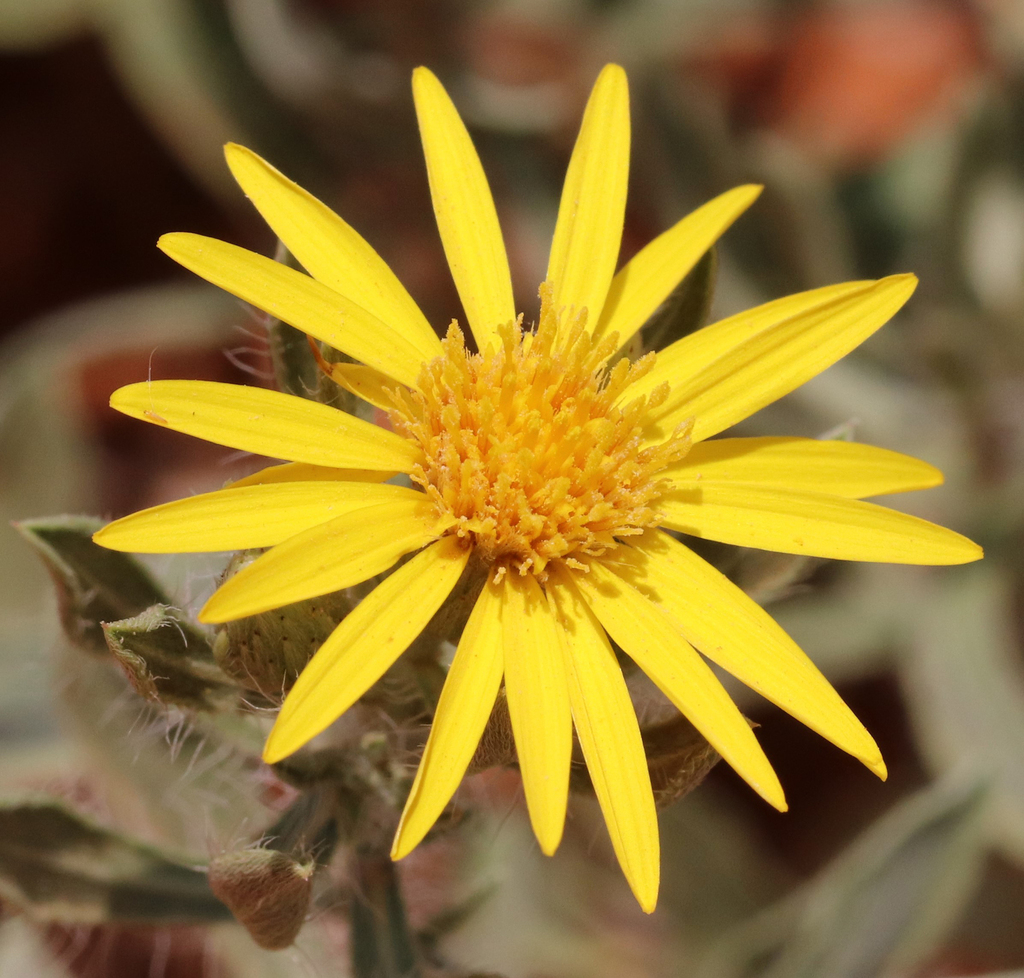
Heterotheca canescens, known as Hoary False Goldenaster or hoary goldenaster, is a low, bushy perennial wildflower of dry prairies, rocky slopes and sandy plains in the southern Great Plains. It grows 8 to 24 inches tall in a rounded clump of many stems clothed in small, silvery-gray, hairy leaves, and from summer into fall it is covered with bright yellow, daisy-like flower heads about an inch across.
The species name canescens means “becoming gray” or “hoary”, for the dense covering of fine hairs that gives the whole plant a soft, silvery look. It belongs to the aster family (Asteraceae) and was formerly placed in the genus Chrysopsis; some botanists have treated it as part of the widespread hairy false goldenaster (Heterotheca villosa).
Hoary false goldenaster is a tough, drought-tolerant plant for rock gardens, dry borders and short-grass meadows, and a good late-season nectar source for small butterflies and bees. This guide covers how to identify it, where it grows, how to grow it, and its value to wildlife.
Identification
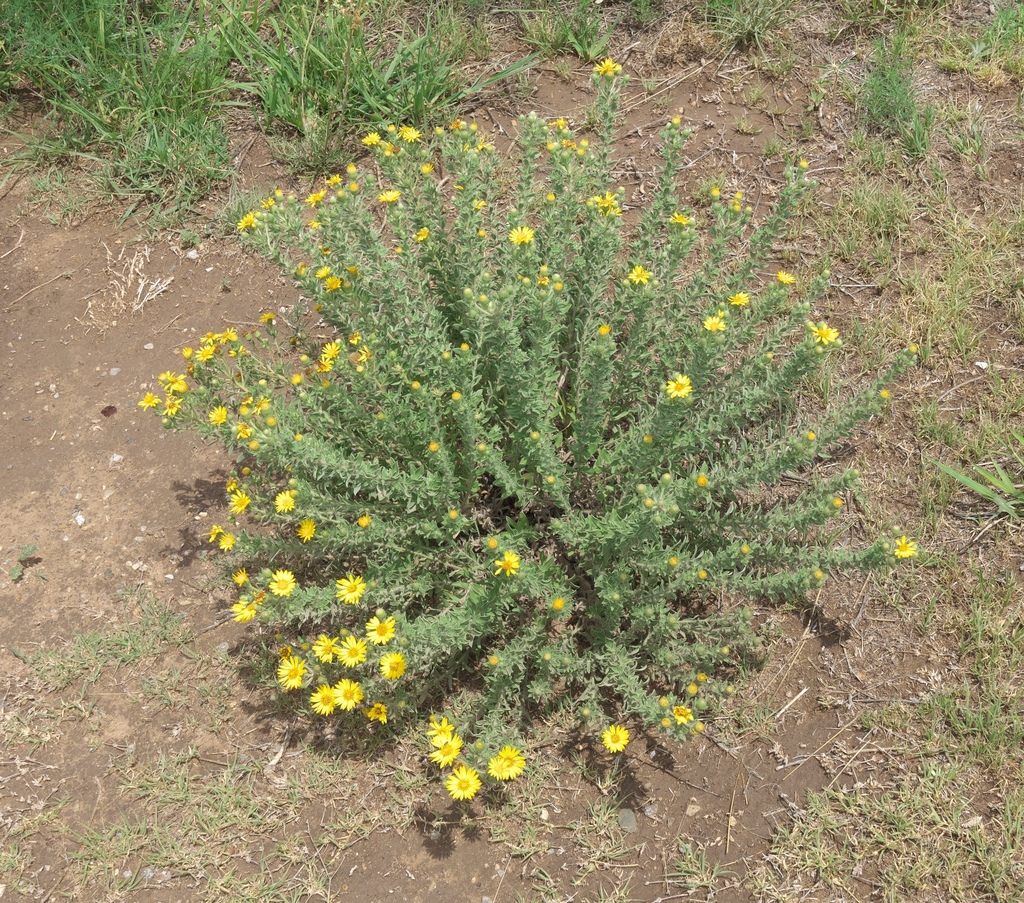
Look for hoary false goldenaster on dry, open ground in late summer: a low, rounded clump of slender stems with small, gray-green, softly hairy leaves, topped by many yellow flower heads with yellow centers.
Growth Habit
It is a clump-forming perennial from a woody root crown, usually 8 to 24 inches tall. Many stems rise from the base and spread or curve upward, forming a rounded mound. In winter, low leafy rosettes often persist at the base.
Leaves
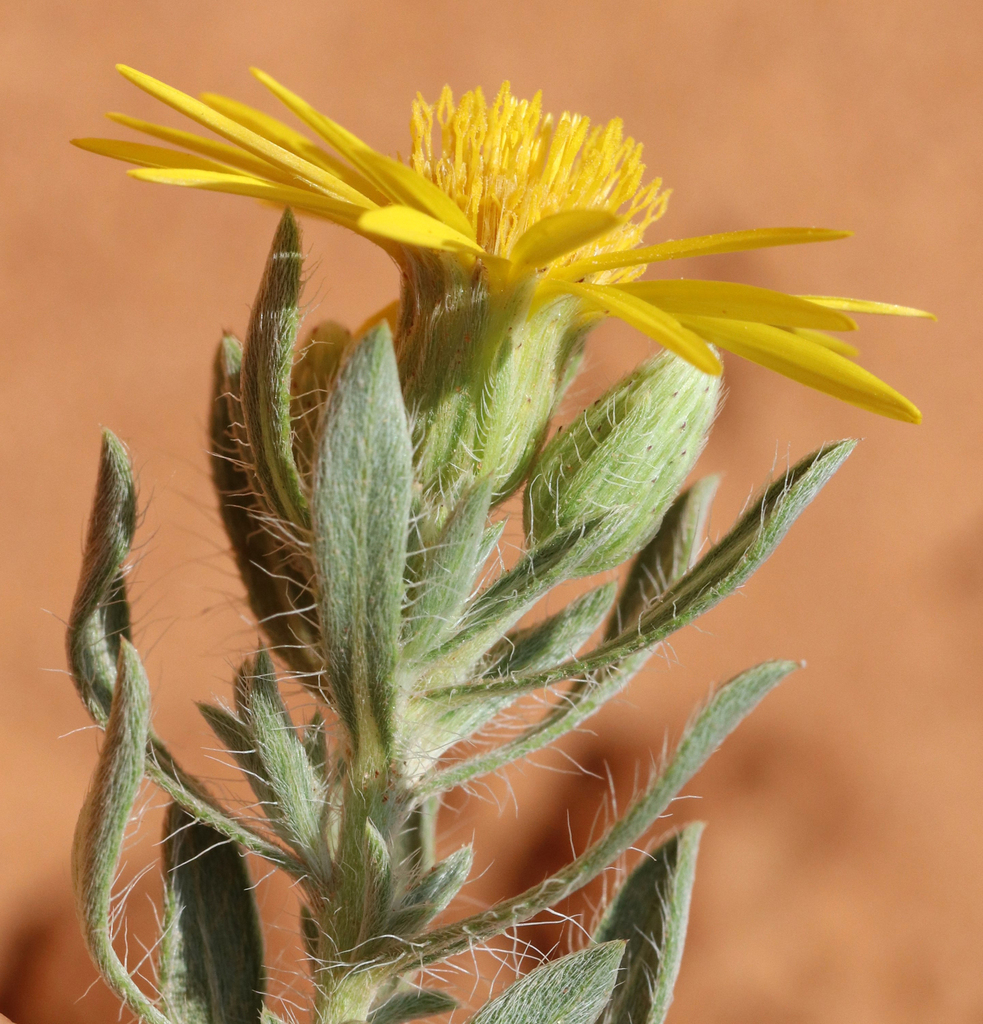
The leaves are alternate, narrowly oblong to oblanceolate, about 1/2 to 1 1/2 inches long, untoothed and stalkless or nearly so. Both surfaces are densely covered with fine, flattened, silvery hairs, giving them a gray-green color. Glandular hairs are few or absent, unlike some related goldenasters.
Flowers
The flower heads are about 3/4 to 1 1/4 inches across, borne singly or in loose clusters at the branch tips. Each has roughly 15 to 30 narrow, golden-yellow ray florets around a yellow disk. The narrow bracts under the head are hairy and overlap in several rows. Bloom runs mainly from July into October, and in Texas it can flower from late spring into late fall after rain.
Fruit & Seeds
The small, hairy seeds (cypselae) each carry a double pappus: an outer ring of short scales and an inner ring of longer, tan to reddish bristles. The fluffy seed heads are dispersed by wind in fall.
Look-alikes
Hairy false goldenaster (Heterotheca villosa) is very similar and more widespread; its leaves usually have more spreading hairs and often some glands, and it ranges farther north and west. Camphorweed is a taller annual or biennial with broader, clasping, sticky leaves and a strong camphor smell. Broom snakeweed has tiny heads with only a few rays and thread-like leaves.
Quick Facts
| Scientific Name | Heterotheca canescens (DC.) Shinners |
| Family | Asteraceae (aster family) |
| Plant Type | Low, clump-forming perennial wildflower |
| Mature Height | 8–24 in |
| Mature Spread | 1–2 ft |
| Growth Rate | Moderate |
| Sun Exposure | Full sun |
| Water Needs | Low; very drought tolerant |
| Soil Type | Dry, well-drained sandy, gravelly, rocky or limestone soils |
| Soil pH | About 6.5–8.5 |
| Bloom Time | July–October (longer in Texas) |
| Flower Color | Golden yellow |
| Fall Color | Silvery foliage; semi-evergreen basal rosettes |
| Fruit | Small hairy seeds with a double pappus, dispersed by wind |
| Deer Resistant | Usually; hairy, aromatic foliage is lightly browsed |
| USDA Hardiness Zones | 6–9 |
Native Range
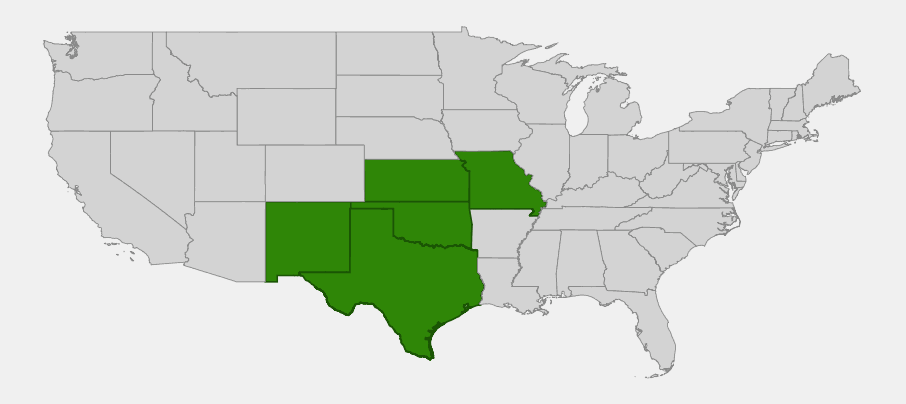
Hoary false goldenaster is native to the southern Great Plains of the United States and northern Mexico. USDA PLANTS lists it in Texas, Oklahoma, Kansas, New Mexico and Missouri. It is most common in Texas, where it occurs across much of the state from the Panhandle and Rolling Plains through North Central Texas and the Edwards Plateau to the South Texas Plains.
In Oklahoma it is widespread in the western and central parts of the state, and in Kansas it reaches the southern and central counties. In New Mexico it grows mainly in the eastern plains. The Missouri record is old: NatureServe lists it as historical in that state, meaning it has not been confirmed there in recent decades.
It grows in full sun on dry prairies and plains, rocky and gravelly slopes, limestone hills, sandy grasslands, mesquite savannas, pastures and roadsides.
📋 Regional plant lists featuring Hoary False Goldenaster: Nebraska, Kansas & Eastern Colorado · Illinois, Iowa & Missouri · South & West Texas
Growing & Care Guide
Hoary false goldenaster is an easy, long-blooming native for hot, dry, sunny sites in Texas and the southern Plains. Its silvery mound of foliage looks good all season, and its yellow flowers carry color into fall when many plants have finished. The Lady Bird Johnson Wildflower Center suggests it as a low plant for borders, containers, short meadows or massed as a groundcover.
Light
Grow it in full sun. In shade it becomes sparse and flowers poorly.
Soil & Water
It needs well-drained soil and does well in sandy, gravelly, rocky or limestone soils, including thin soils over caliche. Once established it is very drought tolerant and rarely needs water; overwatering and heavy, poorly drained clay can cause crown rot.
Planting Tips
Space plants about 12 to 18 inches apart. Use it at the front of a dry border, in a rock garden, along a sunny walk or in a short-grass meadow with blue grama and buffalograss. Its silvery foliage contrasts well with green-leaved plants and with purple-flowered fall asters and gayfeathers.
Pruning & Maintenance
In late winter, cut the old stems back to the basal rosettes to tidy the plant and encourage fresh growth. A light trim in early summer can make plants bushier and more compact.
Propagation
Grow it from seed sown in fall or spring on the surface of well-drained soil; seeds germinate readily without special treatment. Established clumps can also be divided in early spring. Buy seed or plants from native nurseries rather than digging them from the wild.
Landscape Uses
- Dry borders and rock gardens: a low, silvery mound with long-lasting yellow flowers
- Short-grass meadows: blends with blue grama and buffalograss
- Xeriscapes: very drought tolerant once established
- Pollinator gardens: late-season nectar for small butterflies and native bees
- Groundcover and containers: can be massed or grown in pots on hot, sunny patios
Wildlife & Ecological Value
Hoary false goldenaster is a valuable late-season flower in dry grasslands, feeding pollinators when many other wildflowers have stopped blooming.
For Pollinators
The flowers are a good nectar source for small butterflies, such as hairstreaks, skippers and sulphurs, and for many native bees, including sweat bees, leafcutter bees and long-horned bees. Its long bloom into fall helps migrating monarchs and other late-season insects.
For Birds
Small seed-eating birds such as sparrows and finches pick at the seeds in fall and winter, and the insects drawn to the flowers feed grassland birds.
For Mammals
The hairy foliage is only lightly grazed by deer and livestock, which helps it persist in heavily grazed pastures. Small mammals may eat the seeds.
Ecosystem Role
As a deep-rooted, long-lived perennial of dry grasslands and rocky slopes, it helps hold soil in place and adds to the diversity of late-blooming forbs that support pollinators across the southern Plains.
Cultural & Historical Uses
The genus name Heterotheca comes from Greek words meaning “different case”, referring to the different seeds of the ray and disk florets in some species. The plant was first described by the Swiss botanist Augustin Pyramus de Candolle, in a different genus, and moved to Heterotheca by the Texas botanist Lloyd Shinners in the twentieth century.
Goldenasters have long been shuffled between genera such as Chrysopsis, Heterotheca and Pityopsis, so older field guides may list this plant as Chrysopsis canescens or as a variety of hairy false goldenaster.
With its silvery foliage and late summer gold, hoary false goldenaster is a familiar roadside and pasture wildflower in Texas and Oklahoma, and it has found a place in native plant gardens as a low-water alternative to non-native ornamentals.
Frequently Asked Questions
Why is it called hoary false goldenaster?
“Hoary” refers to the dense covering of fine, silvery hairs on its stems and leaves. “False goldenaster” separates the Heterotheca goldenasters from the related genus Chrysopsis, the true goldenasters.
When does hoary false goldenaster bloom?
Mainly from July into October. In Texas it can flower from late spring into late fall, especially after rain.
Where does hoary false goldenaster grow?
On dry prairies, rocky slopes and sandy plains in Texas, Oklahoma, Kansas and eastern New Mexico, and in northern Mexico. There is an old record from Missouri.
Is hoary false goldenaster drought tolerant?
Yes. Once established it needs little or no supplemental water and thrives in hot, sunny sites with well-drained soil.
How is it different from hairy false goldenaster?
The two are very similar. Hoary false goldenaster has flatter, silkier, more silvery hairs and few or no glands, and is mostly a southern Plains plant, while hairy false goldenaster is more widespread across the West.

Looking for a nursery that carries Hoary False Goldenaster?
Browse our native plant nursery directory: Kansas · Missouri · New Mexico & Oklahoma · Texas

