Rose Turtlehead (Chelone obliqua)
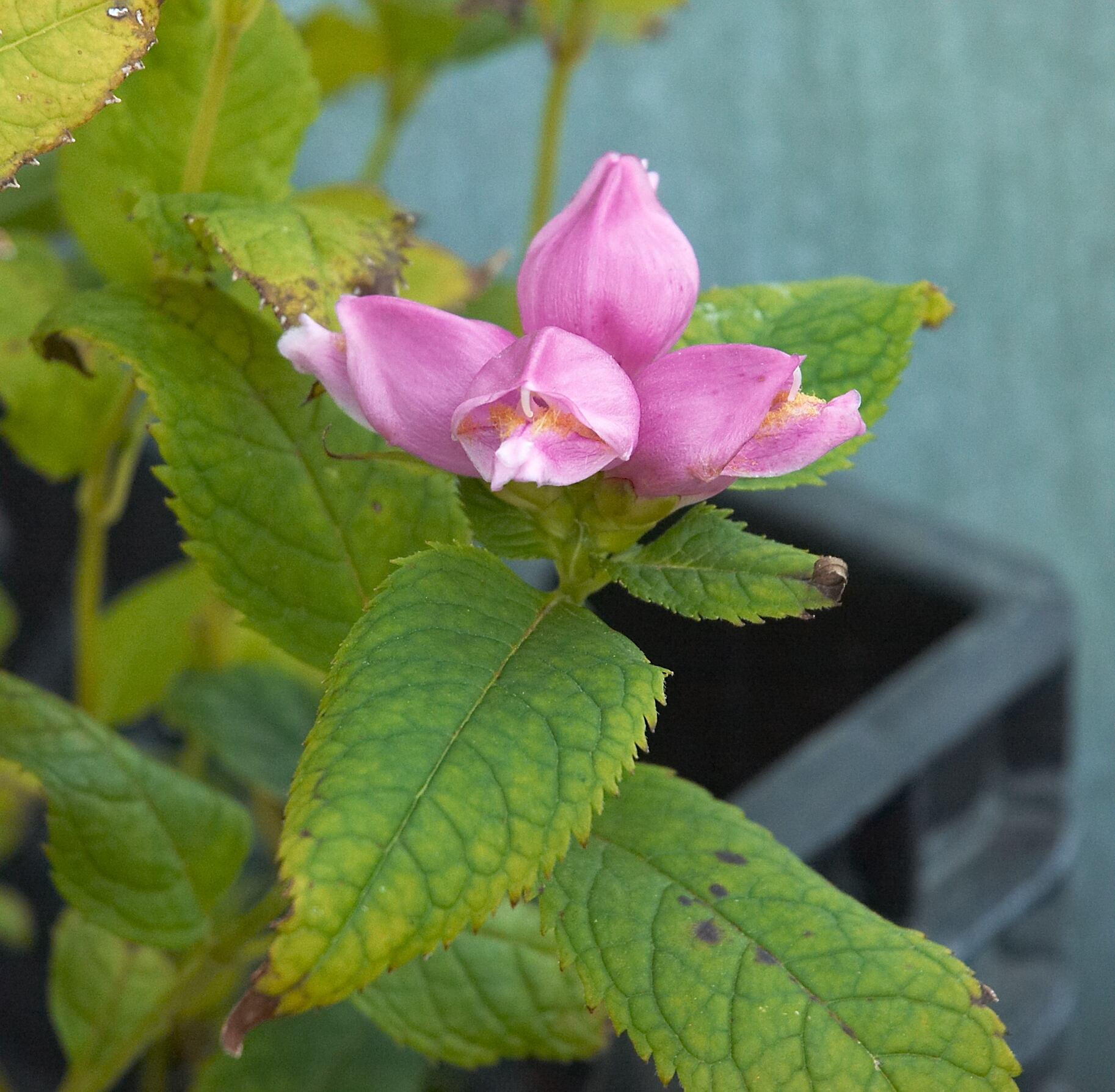
Chelone obliqua, commonly called Rose Turtlehead, Red Turtlehead, or Pink Turtlehead, is an upright, clump-forming perennial wildflower native to moist woods, swamps, and stream margins across the Midwestern and Southeastern United States. Its unusual two-lipped, hooded flowers are said to resemble a turtle’s head with its mouth slightly open, a resemblance obvious enough to have shaped both its common and scientific names — Chelone comes from the Greek word for tortoise.
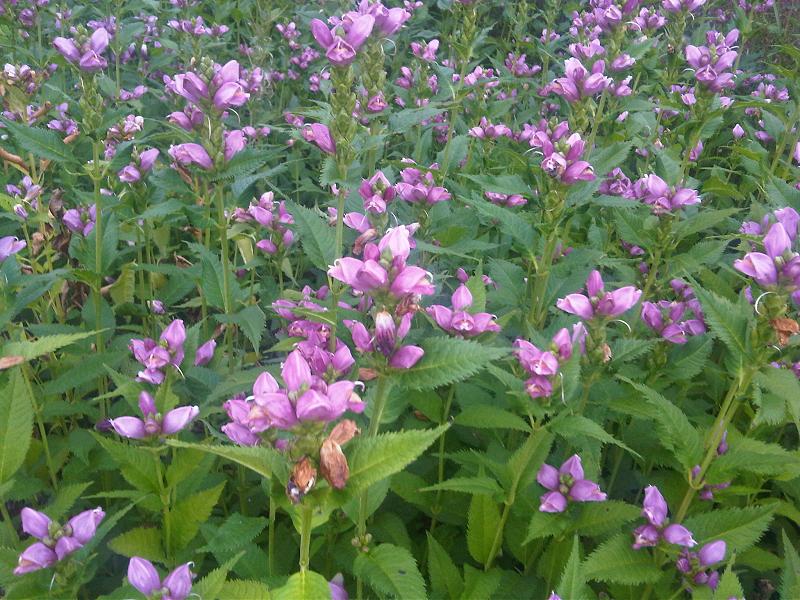
What sets Rose Turtlehead apart in the native-plant palette is its bloom time: it flowers in mid to late summer, often into early fall, well after most spring and early-summer wildflowers have finished, giving late-season color and pollinator forage when relatively few other native perennials are still blooming. The flower color ranges from deep rose-pink to purplish, occasionally fading to nearly white.
In the garden, Rose Turtlehead is valued as a dependable, long-lived perennial for consistently moist soil in sun to part shade — rain gardens, pond margins, and the damp edges of woodland gardens are all good fits. It is also increasingly rare in parts of its wild range, so planting garden-propagated stock supports a species under real conservation pressure in several states.
Identification
Rose Turtlehead is an herbaceous perennial growing 2 to 3 feet tall and spreading 1 to 2 feet, with smooth, hairless, light green, cylindrical stems that stand upright without staking in most garden conditions. It spreads slowly by rhizomes, forming an expanding clump rather than running aggressively.
Stems & Leaves
Leaves are arranged in opposite pairs along the stem on short stalks (petioles), each blade lance-shaped to broadly lance-shaped, 3 to 6 inches long, hairless, with sharply toothed (serrated) margins. The upper leaf surface is dark green while the underside is a paler, duller green; leaves toward the stem tips often droop slightly, giving mature plants a slightly tousled look even though the stems themselves are stiffly upright.
Flowers
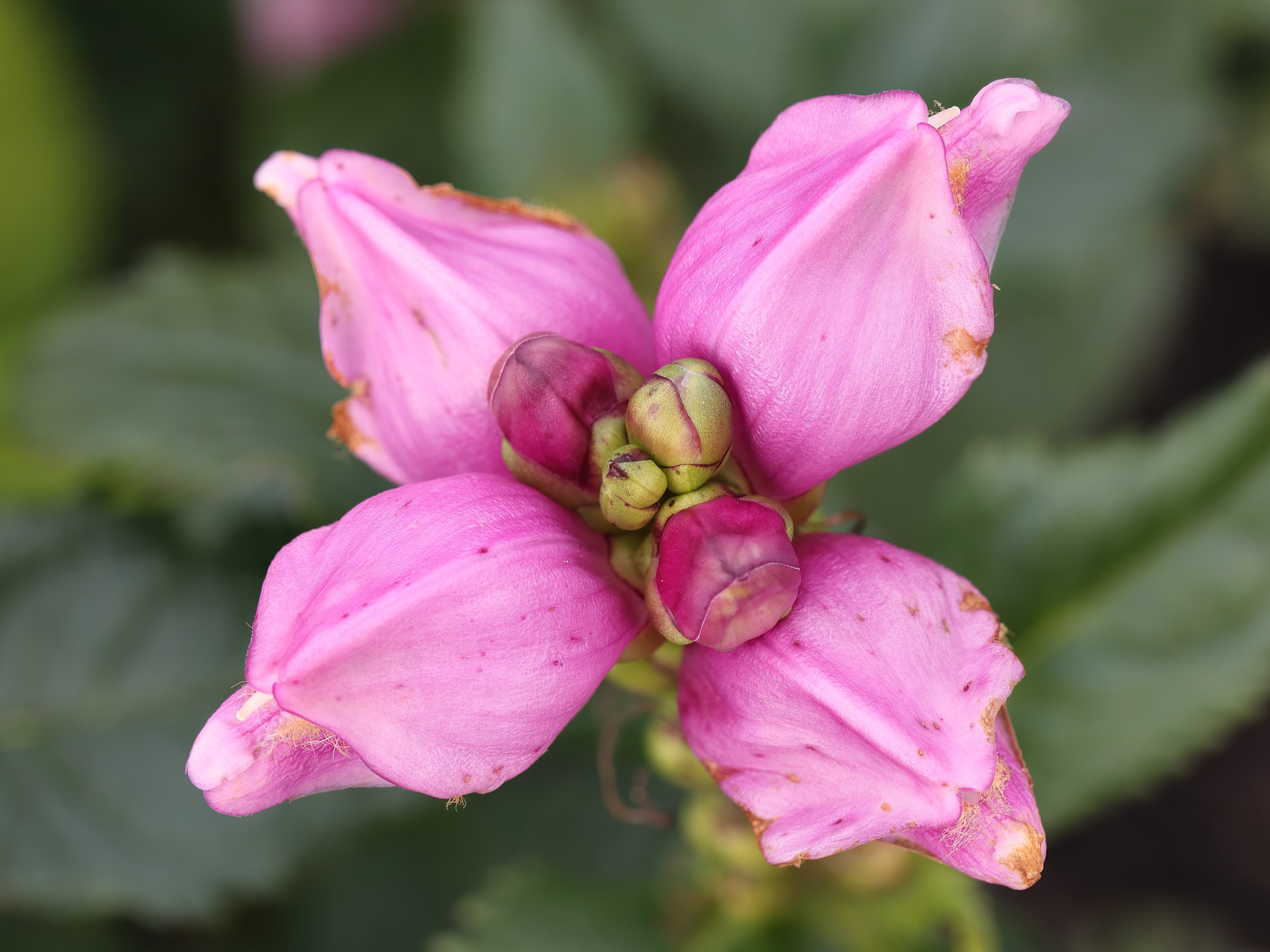
Flowers appear in dense terminal spikes atop the stems from mid to late summer into early fall. Each individual flower is tubular and strongly two-lipped, 1 to 1.5 inches long, with a small patch of yellow “beard” inside the lower lip — the detail most responsible for the turtle’s-mouth resemblance. Flower color ranges from rose-pink to deep red-purple, occasionally nearly white, and the blooms have no detectable scent; they are cross-pollinated primarily by bumblebees strong enough to force their way into the tightly closed corolla.
Fruit
After bloom, flowers give way to small, light green, ovoid seed capsules that later turn brown and split open to release fine seed. Capsules are not ornamentally significant and are usually left to overwinter for seed dispersal or removed if self-seeding isn’t wanted.
Quick Facts
| Scientific Name | Chelone obliqua |
| Family | Plantaginaceae (Plantain) |
| Plant Type | Herbaceous Perennial |
| Mature Height | 2–3 ft |
| Mature Spread | 1–2 ft |
| Growth Rate | Moderate |
| Sun Exposure | Full Sun to Part Shade |
| Water Needs | Moderate to High |
| Soil Type | Moist to wet, rich, humusy; tolerates clay |
| Soil pH | Adaptable (acidic, neutral or alkaline) |
| Bloom Time | Mid summer–early fall |
| Flower Color | Rose-pink to purplish (occasionally white) |
| Fall Color | None notable |
| Fruit | Small ovoid seed capsules |
| Deer Resistant | Mostly (occasionally browsed) |
| USDA Hardiness Zones | 5–9 |
Native Range
Rose Turtlehead is native to the Midwestern and Southeastern United States, with a range stretching from Minnesota, Michigan, Wisconsin’s eastern counties (via nearby Minnesota populations), Iowa, Illinois, Indiana, and Missouri south through Arkansas, Mississippi, Alabama, and Georgia, and east through Kentucky, Tennessee, Maryland, Virginia, and the Carolinas. It is an uncommon wildflower across most of this range and is formally considered rare — threatened, endangered, or critically imperiled — in several states, including Maryland, Missouri, North Carolina, Michigan, Iowa, Tennessee, and Alabama.
Across its native range, Rose Turtlehead grows in consistently moist to wet habitats: swampy ground, wet woods, floodplain forests, and the margins of streams and seeps, almost always on rich, humus-heavy soil that rarely dries out completely. It typically grows in part shade at woodland edges but will tolerate considerably more sun where soil moisture stays high.
The species is not native to New England; a planted, non-native population has been documented in Massachusetts, and it should be treated as a garden ornamental rather than a regional native anywhere outside the range described above, including the Pacific states, the Great Plains, and the arid Southwest.
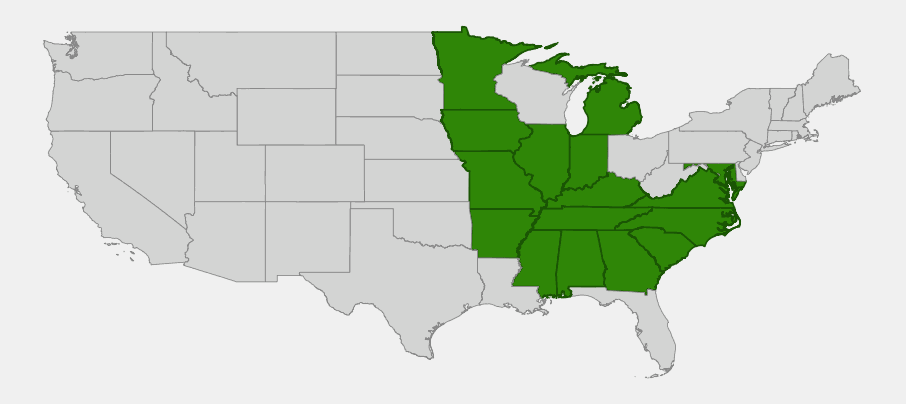
📋 Regional plant lists featuring Rose Turtlehead: Georgia, Alabama & Mississippi · Arkansas, Louisiana, Eastern Oklahoma & Eastern Texas · Illinois, Iowa & Missouri · Ohio & Indiana · Kentucky & Tennessee · Maryland, Virginia & West Virginia · Michigan, Wisconsin & Eastern Minnesota · North Carolina & South Carolina
Growing & Care Guide
Rose Turtlehead is one of the more adaptable native perennials for consistently damp garden spots, tolerating a wider range of light and soil pH than most wetland wildflowers while asking only for reliable moisture in return.
Light
Grow Rose Turtlehead in full sun to part shade. In full sun it tends to flower more heavily and stay more compact, while in shadier spots it grows a bit taller and looser; either way, consistent soil moisture matters more than light level for strong performance.
Soil & Water
This species wants moist to wet, humus-rich soil and does not tolerate extended drought — mulching helps retain moisture, especially in sunnier locations. It tolerates heavy clay soil well and is not fussy about pH, growing equally well in acidic, neutral, or alkaline conditions as long as moisture stays consistent.
Planting Tips
Plant in spring or fall in a spot that reliably stays damp, such as a rain garden low point, pond margin, or the moist edge of a woodland bed. Space plants 18 to 24 inches apart to allow for its slow rhizomatous spread. Pinching stems back by a third in early summer, before flower buds form, produces a bushier, more compact plant that is less likely to flop.
Propagation
Divide established clumps in early spring or take soft-tip cuttings in early summer to root new plants; division is the fastest way to bulk up a planting. Seed can also be collected in fall and sown in early spring after the capsules have dried and split.
Landscape Uses
- Rain gardens and consistently moist low spots
- Pond and stream margins for late-summer color
- Woodland garden edges in part shade with damp soil
- Pollinator gardens extending bloom into fall
- Mixed perennial borders with reliable irrigation
Wildlife & Ecological Value
Rose Turtlehead’s late-season bloom and specialized flower shape make it a valuable, somewhat specialist resource for pollinators at a time of year when many other wildflowers have already finished.
For Pollinators
The tightly closed, hooded flowers are built almost exclusively for bumblebees, which are strong enough to pry the lips apart and push inside to reach nectar and pollen; smaller bees and other insects generally cannot force their way in. This makes Rose Turtlehead an especially good late-summer forage plant for bumblebee colonies building up stores before fall.
For Birds & Mammals
Dense stands provide cover near water for small birds and amphibians, and the plant is a larval host for the Baltimore Checkerspot butterfly, whose caterpillars feed on turtlehead foliage — a relationship shared with its close relative, White Turtlehead (Chelone glabra).
Ecosystem Role
As a wetland-edge perennial, Rose Turtlehead’s root systems help stabilize damp soil along streams and seeps, while its rarity across much of its native range makes garden and restoration plantings genuinely meaningful for regional plant diversity rather than purely ornamental.
Cultural & Historical Uses
The genus name Chelone comes from the Greek word for tortoise, a direct reference to the flower’s resemblance to a turtle’s head with its mouth open, while obliqua is Latin for “slanting” or “oblique,” describing the asymmetrical set of the flower on its stalk. These names reflect a long tradition of plant naming based on close observation of flower form rather than any documented practical use.
Unlike many native wildflowers with recorded Indigenous medicinal or food uses, Rose Turtlehead has little documented ethnobotanical history; its closest and more common relative, White Turtlehead, has some historical record of use as a bitter tonic, but specific traditional uses of Chelone obliqua itself are not well documented, so no medicinal or edible use should be assumed or attempted.
The plant’s modern significance is largely horticultural and conservational: since becoming established in the nursery trade through growers like Missouri Botanical Garden and native plant societies in its home range, it has been promoted as a dependable late-bloomer for moist gardens, while its rarity in several states has made it a target species for native plant society conservation and seed-banking efforts.
Frequently Asked Questions
What’s the difference between Rose Turtlehead and White Turtlehead?
Rose Turtlehead (Chelone obliqua) has rose-pink to purplish flowers and a more southern and midwestern range, while White Turtlehead (Chelone glabra) has white to pale pink flowers and a more northeastern range. Both share the same hooded, turtle-head flower shape and similar moist-soil requirements.
Why won’t bees visit my turtlehead flowers?
The flowers are tightly closed and built specifically for bumblebees strong enough to pry the lips open; smaller bees and other pollinators generally cannot access the nectar, so you may see fewer visitors than on more open flowers, but bumblebee activity is usually reliable once plants are established.
Can Rose Turtlehead tolerate dry soil?
Not well. It is adapted to consistently moist to wet soil and will decline or go dormant early in prolonged dry spells. If your soil tends to dry out, plan on regular watering or choose a naturally damp planting location instead.
Is Rose Turtlehead invasive?
No. It spreads slowly by short rhizomes and self-seeds modestly at best, staying well-behaved in garden settings. In much of its native range it is actually rare or declining, not aggressive.
Can I grow Rose Turtlehead in full sun?
Yes, as long as soil moisture stays consistently high. Full sun often produces a more compact, floriferous plant than shade, but the trade-off is a greater need for watering during dry periods.

Looking for a nursery that carries Rose Turtlehead?
Browse our native plant nursery directory: Alabama & Arkansas · Georgia · Illinois, Indiana & Iowa · Kentucky, Maryland, Michigan, Minnesota, Missouri & Mississippi · North Carolina · South Carolina, Tennessee & Virginia