
Toughleaf Dogwood (Cornus asperifolia)
Cornus asperifolia, commonly called Toughleaf Dogwood (also sold or listed as roughleaf dogwood), is a deciduous shrub or small tree of the southeastern Coastal Plain, found in a band of states from the Carolinas south through Georgia, Alabama and Mississippi to Florida. It belongs to a group of shrubby, white-flowered dogwoods in the Cornaceae family whose members — including Cornus drummondii of the central and eastern U.S. and Cornus foemina of the Southeast — are notoriously hard to tell apart, sharing flat clusters of small white flowers, white or bluish fruit, and leaves roughened by tiny hairs.
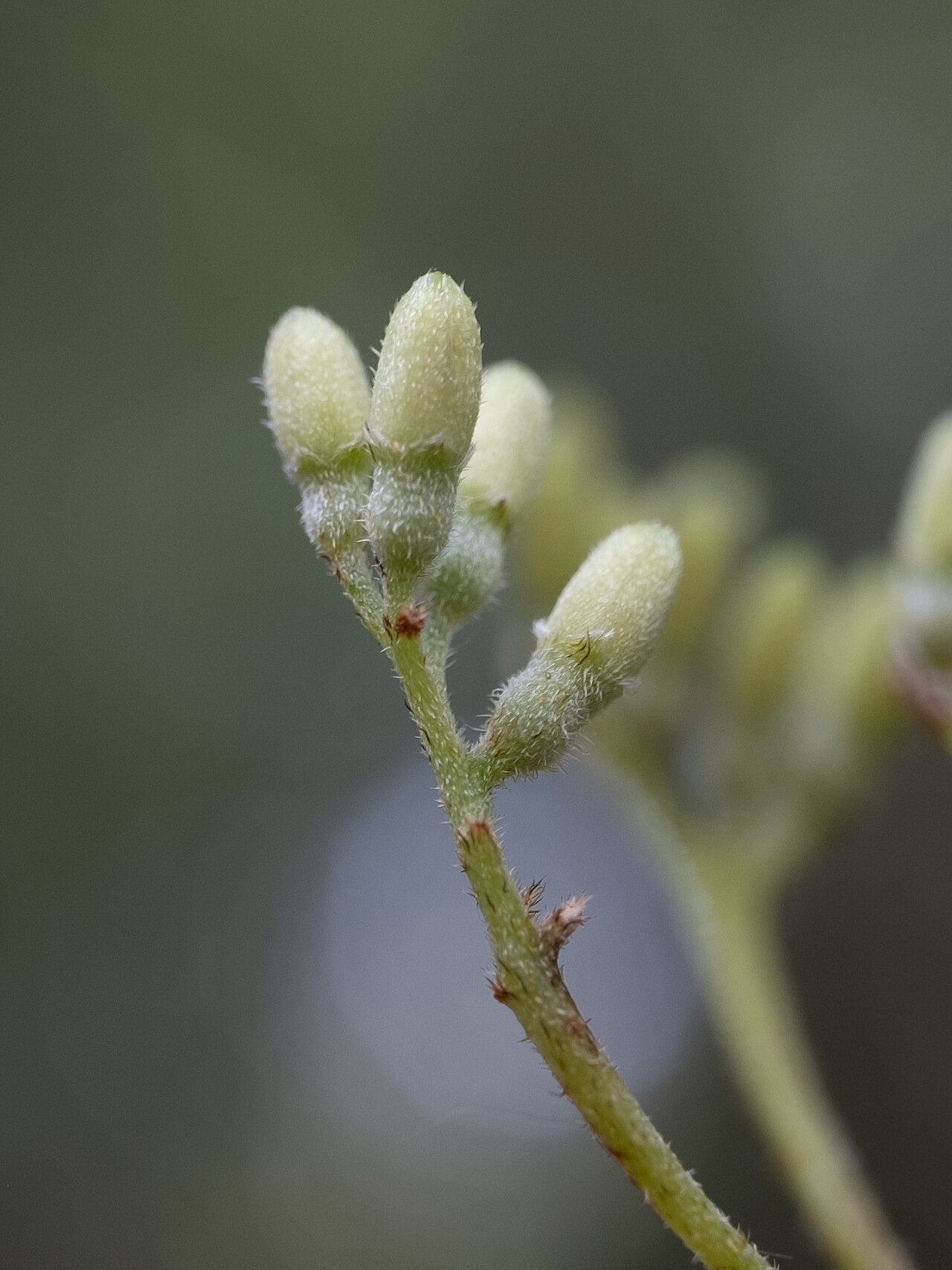
Toughleaf Dogwood gets both its common names from its distinctive leaf surface: tightly packed, stiff, upward-curling hairs give the foliage a sandpapery feel that you can identify by touch alone. This same fine pubescence covers the young twigs and flower buds, giving the plant a soft, fuzzy look in late winter before the leaves and flowers open.
Botanists have long debated exactly where this species’ boundaries lie — it has at times been treated as the same thing as Cornus drummondii, or filed under Cornus foemina — but modern treatments, including Flora of North America and Plants of the World Online, recognize it as its own distinct species, native specifically to the Coastal Plain of the Southeast rather than the more interior, Midwestern range of C. drummondii. For gardeners in the Deep South and Southeast, it is a tough, adaptable native shrub well suited to naturalistic hedgerows, wildlife plantings, and the edges of wet woods.
Identification
Toughleaf Dogwood grows as a multi-stemmed deciduous shrub, occasionally a small tree, typically reaching about 10 to 16 feet (3–5 m) tall.
Bark & Stems
The bark is gray and splits into small plates with age. Young branchlets are green to bronze or maroon and densely covered in fine hairs at first; the pith at the center of the twig is notably white — a helpful trait for winter identification, since many similar dogwoods have brown pith.
Leaves
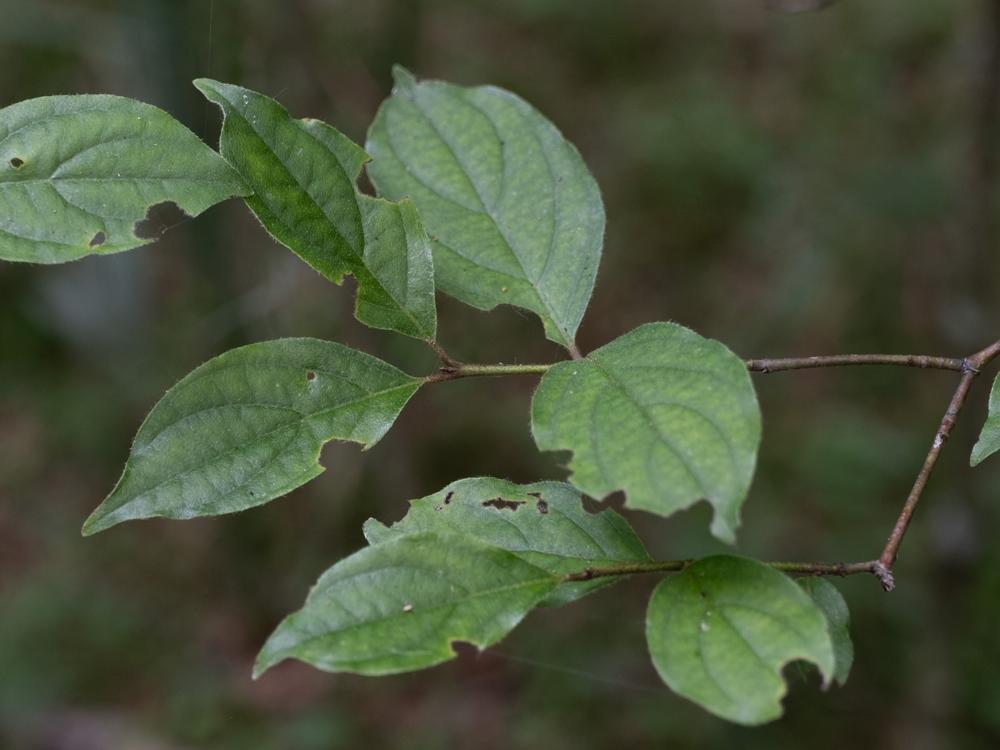
The leaves are opposite, elliptic to ovate-elliptic, roughly 1 to 3.5 inches long, with a rounded to wedge-shaped base and an acute tip. The upper surface is dark green and roughened by spreading to upright hairs, giving it the “tough” or “rough” texture of the common names; the lower surface is pale green and softly hairy as well, with three to four pairs of lateral veins curving toward the leaf margin — a classic dogwood trait.
Flowers & Fruit
Small, yellowish-white, hermaphrodite flowers are borne in flat-topped to pyramidal clusters (cymes) up to about 2 inches across, on pedicels that start out yellow-green and turn dark red as fruit develops. Blooming runs from April to June. The fruit is a small, globose drupe, about a quarter inch across, ripening from green to a distinctive blue or bluish-white in late summer and early fall.
Quick Facts
| Scientific Name | Cornus asperifolia |
| Family | Cornaceae (Dogwood) |
| Plant Type | Deciduous shrub or small tree |
| Mature Height | 10–16 ft (3–5 m) |
| Growth Rate | Moderate to fast |
| Sun Exposure | Full Sun to Part Shade |
| Water Needs | Average to moist; tolerates seasonally wet soil |
| Soil Type | Marl, limestone, or sandy soils; hammock and swamp-margin soils |
| Bloom Time | April – June |
| Flower Color | Yellowish-white |
| Fruit | Blue to bluish-white drupe, ripens August–September |
| USDA Hardiness Zones | 8–11 |
Native Range
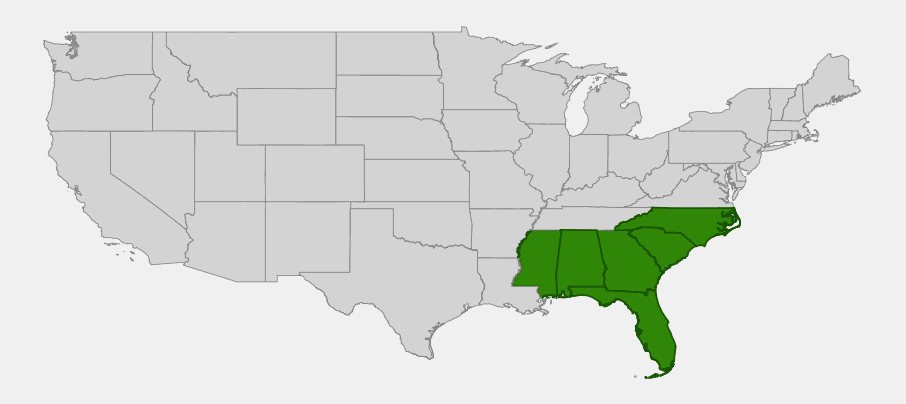
Toughleaf Dogwood is native to the southeastern Coastal Plain of the United States: Alabama, Florida, Georgia, Mississippi, North Carolina, and South Carolina. It occurs at low elevations, generally below about 330 feet, well within the warm, humid coastal plain rather than the piedmont or mountains.
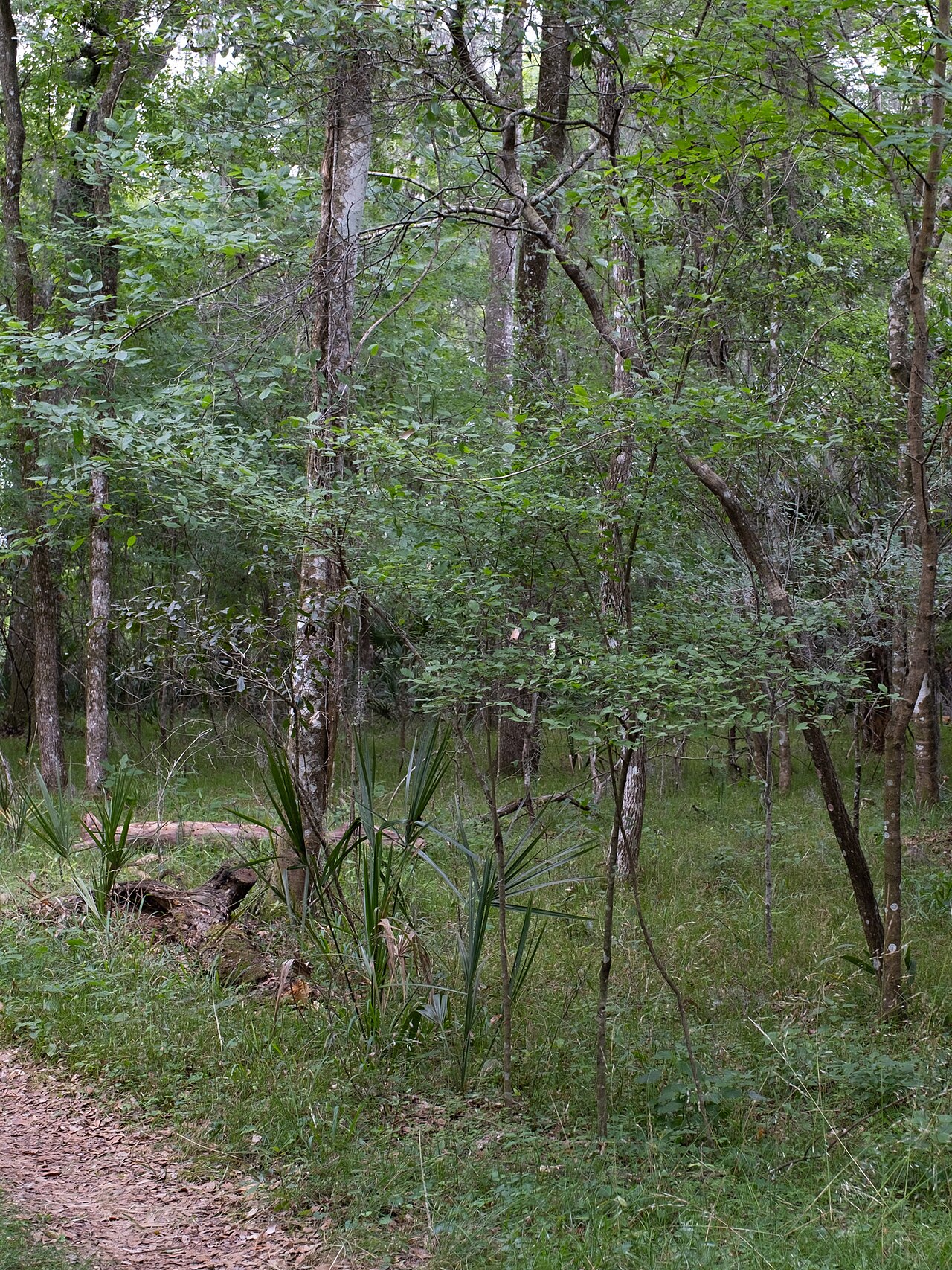
In the wild it favors marl or limestone outcrops, hammocks, and the margins of swamps — sites with rich, often calcium-influenced soils and reliable moisture, but not standing water. It is frequently found at the transition zone between drier hammock ground and wetter swamp edges, a niche that makes it valuable for stitching together these habitat types in restoration plantings.
📋 Regional plant lists featuring Toughleaf Dogwood: Georgia, Alabama & Mississippi · North & South Carolina
Growing & Care Guide
Toughleaf Dogwood is an adaptable, low-fuss native shrub for gardeners across its Coastal Plain range, equally comfortable in a sunny hedgerow or a part-shade woodland edge.
Light
Give it full sun to part shade. Flowering and fruiting are heaviest in brighter conditions, but the plant tolerates the dappled shade typical of hammock margins and open woodland edges.
Soil & Water
Toughleaf Dogwood thrives in the marl, limestone, or sandy soils of its native hammock and swamp-margin habitat. It appreciates average to consistently moist soil and tolerates seasonally wet ground, making it a good fit for rain gardens and low spots that stay damp after storms, though it does not require standing water.
Planting Tips
Plant in fall or early spring. Because it naturally forms colonies via root suckering in the wild, give it room to spread, or plan to manage suckers if a tidier single-stem form is preferred. It works well massed as an informal hedgerow or planted at the edge of a pond, ditch, or seasonal wet area.
Pruning & Maintenance
Prune out dead or crowded stems in late winter to maintain an open form and encourage new flowering wood, since like many shrubby dogwoods it blooms well on vigorous young growth. Otherwise it needs little upkeep once established.
Landscape Uses
Toughleaf Dogwood’s adaptability suits several native garden roles:
- Informal hedgerows and screens in sun to part shade
- Rain gardens and low, seasonally wet areas
- Pond and wetland-margin plantings
- Wildlife gardens, for the fruit and flower resources it offers
- Restoration plantings at the hammock-to-swamp transition zone
Wildlife & Ecological Value
As with most shrubby native dogwoods, Toughleaf Dogwood pulls real weight for wildlife in its hammock and swamp-edge habitat.
For Birds
The blue to bluish-white drupes ripen in late summer, a period when many migratory and resident songbirds are seeking high-energy fruit; dogwoods in this group are consistently among the more heavily used fruiting shrubs by birds moving through southeastern woodlands, and the fruit tends to disappear quickly once ripe.
For Pollinators
The flat clusters of small spring flowers attract a range of native bees and other insect pollinators, offering a reliable nectar and pollen source at the woodland edge during the April-to-June bloom window.
Ecosystem Role
Growing at the margin between upland hammocks and wetter swamp ground, Toughleaf Dogwood helps knit together these two habitat types, and its root-suckering habit lets it form dense thickets that stabilize soil and provide cover along stream banks, pond edges, and other transitional, periodically wet ground.
Cultural & Historical Uses
No significant documented history of food, medicinal, or craft use is recorded for this species specifically, and none should be assumed. Like other dogwoods, its primary historical value has been ecological and ornamental rather than utilitarian — a dependable, fruit-bearing component of southeastern hammock and swamp-margin plant communities.
Frequently Asked Questions
Is Toughleaf Dogwood the same plant as Roughleaf Dogwood (Cornus drummondii)?
No, though the two are closely related and share a similarly rough, hairy leaf texture. Cornus drummondii (sometimes called roughleaf dogwood) is native to the central and eastern United States, from the Great Plains to the Mid-Atlantic, while Cornus asperifolia is restricted to the southeastern Coastal Plain. The two have at times been treated as the same species by some botanists, but current major floras, including Flora of North America, recognize them as distinct.
Can I tell this dogwood from other white-flowered native dogwoods?
The combination of rough, hairy upper leaf surfaces, white pith in young twigs, and blue-to-bluish-white (rather than pure white) fruit helps distinguish it from relatives like Cornus foemina (Stiff Dogwood), though positive identification of this group can be difficult and sometimes requires close comparison of multiple features.
Does Toughleaf Dogwood need wet soil?
It tolerates seasonally wet soil and grows naturally at swamp margins, but it does not require standing water and also grows well in average garden soil with consistent moisture.
Will Toughleaf Dogwood spread in my garden?
It can form colonies through root suckering, as it does in the wild. This makes it useful for naturalized hedgerows or bank stabilization but means gardeners wanting a single, tidy specimen should be prepared to remove suckers periodically.
For companion species that share Toughleaf Dogwood’s hammock-to-swamp habitat, see our profiles of Bald Cypress, Black Gum, and Stiff Dogwood. For design help putting its wet-tolerant, bird-friendly qualities to work, see our guides to starting a rain garden, rain garden plant selection, and attracting songbirds with native plants.

Looking for a nursery that carries Toughleaf Dogwood?
Browse our native plant nursery directory: Alabama · Florida & Georgia · Mississippi · North Carolina · South Carolina

