
Roundpod St. John’s-wort (Hypericum cistifolium)
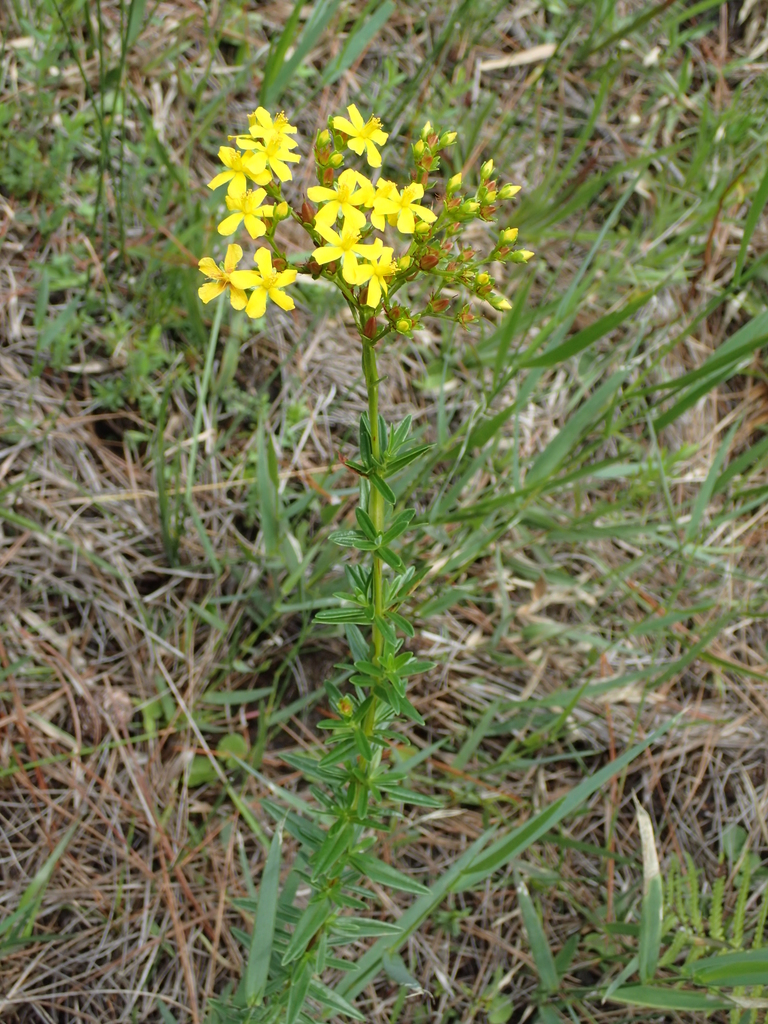
Hypericum cistifolium, Roundpod St. John’s-wort (USDA: roundpod St. Johnswort), is a small, upright shrub or subshrub of wet pine flatwoods, savannas and pond margins on the southeastern Coastal Plain. Its slender, mostly unbranched stems grow 1 to 3 feet tall, occasionally more, with narrow paired leaves, and in early summer each stem ends in a flat-topped cluster of many small, bright yellow flowers. The flowers are followed by glossy, rounded, reddish-brown capsules, the “round pods” of its name. It belongs to the St. John’s-wort family (Hypericaceae, included in Clusiaceae in some references).
The southeastern United States is a center of diversity for native Hypericum, and roundpod St. John’s-wort is one of the most common in wet flatwoods. It is easy to overlook when it is not in bloom, but the masses of red-brown capsules that follow flowering make it easy to spot from late summer into winter.
It is native from North Carolina south to Florida and west along the Gulf Coast to eastern Texas. In gardens it is an attractive, low-maintenance choice for moist, sunny sites such as rain gardens, pond edges and wet meadow plantings. This guide covers how to identify it, where it grows, and how to grow it.
Identification
Many St. John’s-worts grow together in southeastern flatwoods, and some are hard to tell apart. Roundpod St. John’s-wort is best recognized by its slender, upright, mostly unbranched stems, narrow leaves, large flat-topped clusters of small five-petaled flowers, and rounded red-brown capsules.
Stems
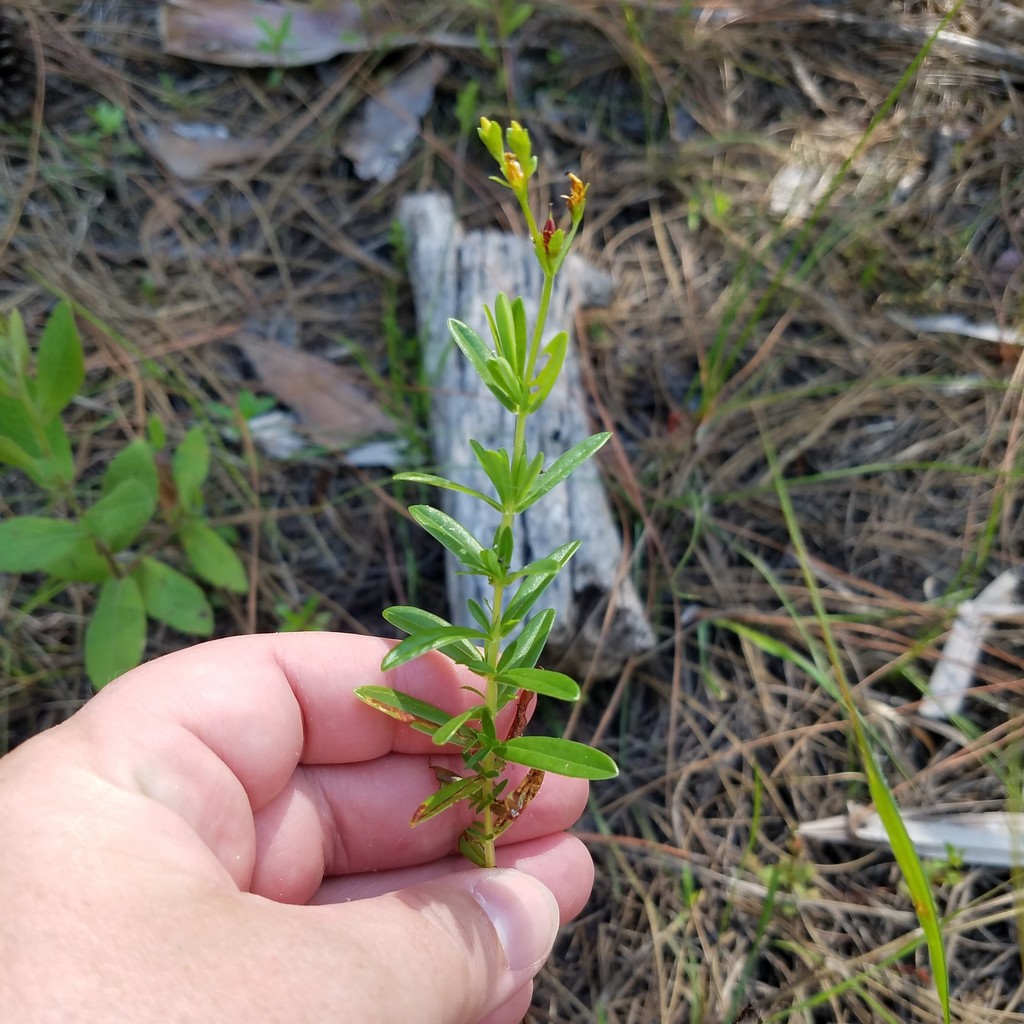
Stems are slender, upright and usually unbranched below the flower cluster, rising singly or in small groups from a woody base. They are 1 to 3 feet tall, occasionally up to about 4 feet. Older stems are woody near the base with reddish-brown, peeling bark. Plants sometimes form small colonies.
Leaves
Leaves are opposite, stalkless, narrowly oblong to linear, about ¾ to 1½ inches long, with the edges often rolled under slightly. They are pale to medium green and dotted with tiny translucent glands, as in most St. John’s-worts, visible when a leaf is held up to the light. Small leafy shoots often grow in the axils of the main leaves.
Flowers
The flowers are crowded into a broad, flat-topped or rounded branched cluster (cyme) at the top of the stem, often with dozens of flowers. Each flower is about ½ inch across with five bright yellow petals and many stamens. The Lady Bird Johnson Wildflower Center gives a bloom time of June and July. In Florida, flowering can start in spring and continue into late summer.
Fruit
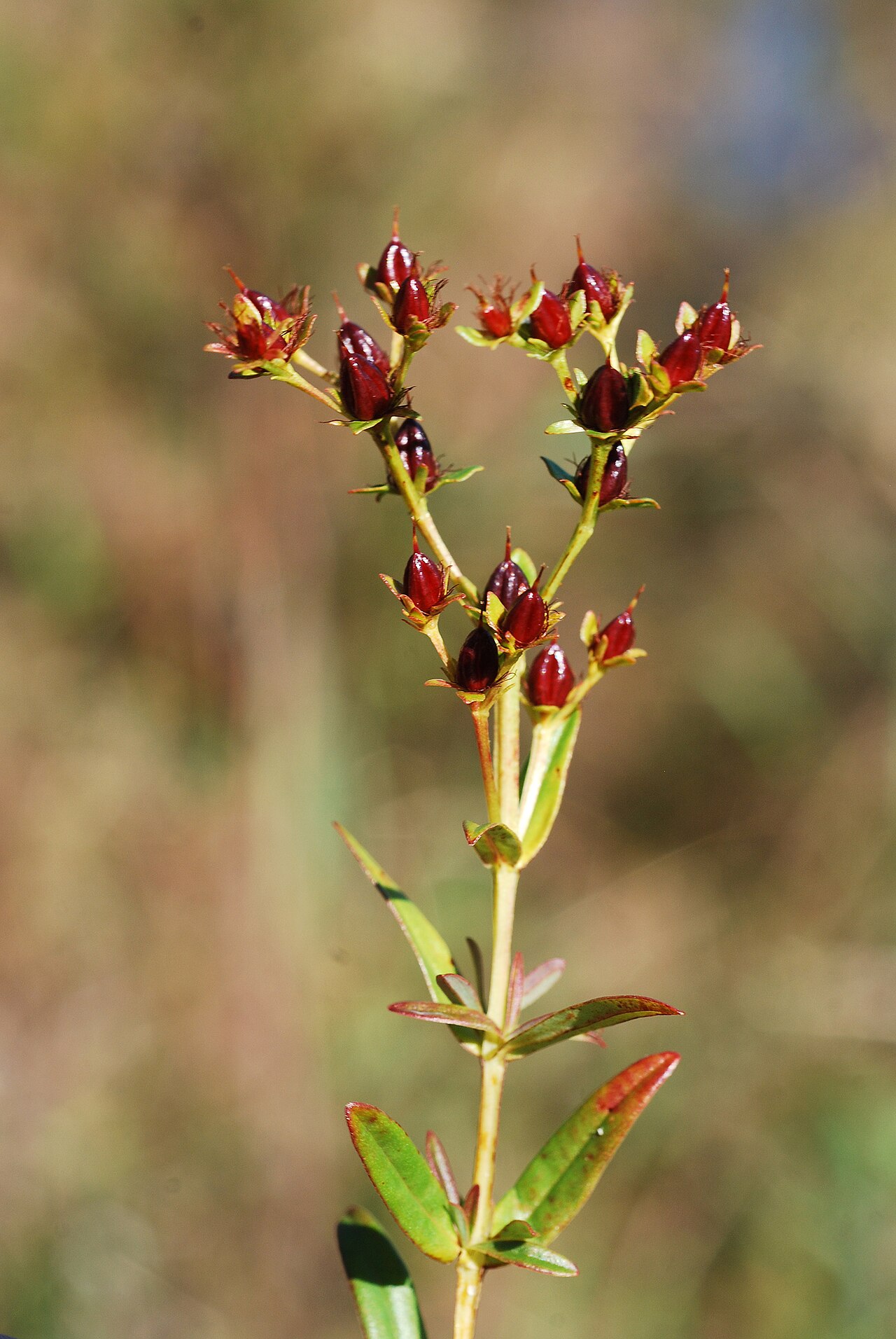
The fruit is a small, egg-shaped to nearly round capsule about ¼ inch long, tipped by a short beak. It ripens from green to a glossy red or reddish brown and persists on the plant into fall and winter, splitting to release many tiny seeds.
Quick Facts
| Scientific Name | Hypericum cistifolium (syn. H. opacum) |
| Family | Hypericaceae (St. John’s-wort family; Clusiaceae in some references) |
| Plant Type | Small deciduous to semi-evergreen shrub or subshrub |
| Mature Height | 1–3 ft (occasionally to 4 ft) |
| Mature Spread | 1–2 ft |
| Growth Rate | Moderate |
| Sun Exposure | Full sun |
| Water Needs | High; moist to wet soil |
| Soil Type | Acidic sand or peaty sand |
| Soil pH | Acidic (about 4.5–6.5) |
| Bloom Time | June–July (spring–late summer in Florida) |
| Flower Color | Bright yellow |
| Fall Color | Reddish-brown capsules; foliage may redden |
| Fruit | Rounded, beaked, red-brown capsule |
| Deer Resistant | Yes; seldom browsed |
| USDA Hardiness Zones | 7–10 |
Native Range
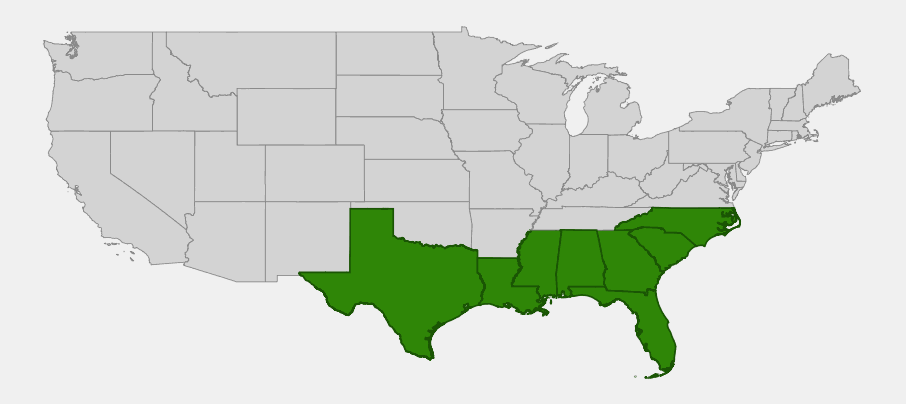
USDA PLANTS and the Lady Bird Johnson Wildflower Center record roundpod St. John’s-wort as native in eight states: Alabama, Florida, Georgia, Louisiana, Mississippi, North Carolina, South Carolina and Texas. It is a plant of the outer Atlantic and Gulf Coastal Plain, from southeastern North Carolina south through Georgia and Florida and west to eastern Texas.
In Florida, the Atlas of Florida Plants lists it as native, and it grows across much of the state. Its typical habitats are wet and mesic pine flatwoods, wet prairies and savannas, the margins of ponds, cypress domes and depression marshes, seepage areas and roadside ditches. The National Wetland Plant List rates it as a facultative wetland plant (FACW) in the Southeast.
These habitats depend on frequent fire. Roundpod St. John’s-wort resprouts from its woody base after burns, and like many flatwoods plants it flowers best in open, recently burned sites. In long-unburned flatwoods it declines as shrubs and trees close in.
📋 Regional plant lists featuring Roundpod St. John’s-wort: North & South Florida · Alabama, Georgia & Mississippi · North & South Carolina · Arkansas, Louisiana, Eastern Oklahoma & Eastern Texas
Growing & Care Guide
Roundpod St. John’s-wort is a tidy, easy plant for moist, sunny native gardens in the Southeast. Florida native nurseries offer it occasionally, and it is also grown from seed. It needs little care once established and gives two seasons of interest: yellow flowers in summer and red-brown capsules into winter.
Light
Plant it in full sun. It tolerates a few hours of light shade, but in shade it becomes thin and flowers poorly.
Soil & Water
It prefers acidic, sandy or peaty soil that stays moist to wet for much of the year, and it tolerates short periods of standing water. Once established it can handle brief dry spells, but it is not a plant for dry, well-drained beds. No fertilizer is needed.
Planting Tips
Plant it along the edges of ponds and swales, in rain gardens, or in low, damp parts of a meadow planting. Set plants about 18 inches apart in groups so the flower clusters make a show. Low grasses and wildflowers of wet flatwoods make good companions.
Pruning & Maintenance
Leave the capsules on the plant for winter interest. In late winter, cut stems back to a few inches above the ground, or burn the planting where that is safe and permitted, to mimic natural fires and encourage vigorous new shoots.
Propagation
Grow it from seed sown on the surface of moist, sandy soil in fall or spring; the tiny seeds need light to germinate. Softwood cuttings taken in late spring also root well under mist or in a humid propagation chamber.
Landscape Uses
- Rain gardens and swales: for sunny, seasonally wet spots
- Pond and water garden edges: along shallow, sandy or peaty margins
- Wet flatwoods and savanna restoration: within its native range on the Coastal Plain
- Pollinator gardens: pollen-rich summer flowers for native bees
- Winter interest: persistent red-brown capsules on upright stems
Wildlife & Ecological Value
St. John’s-worts are important pollen plants in southeastern flatwoods, and roundpod St. John’s-wort supports a variety of insects through the summer.
For Pollinators
Like other Hypericum species, its flowers produce little or no nectar but offer abundant pollen. They are visited mainly by bees, including bumblebees and small native bees, which collect pollen from the many stamens, and by hover flies and beetles.
For Birds
The tiny seeds have limited food value for birds. The plants provide some cover for ground-nesting and foraging birds in flatwoods and savannas.
For Mammals
Mammals rarely eat it. Many St. John’s-worts contain hypericin, a compound that can make grazing animals sensitive to sunlight if eaten in quantity.
Ecosystem Role
It is part of the diverse groundcover of fire-maintained pine flatwoods and wet savannas, resprouting from its woody base after fire. The caterpillars of several moths feed on St. John’s-worts.
Cultural & Historical Uses
The French naturalist Jean-Baptiste Lamarck described Hypericum cistifolium in 1797. The name means “with leaves like Cistus,” the rock-rose of the Mediterranean, referring to its narrow, slightly rolled leaves. Later botanists described it again as Hypericum opacum, now treated as a synonym.
The common name St. John’s-wort comes from the European Hypericum perforatum, which traditionally blooms around the feast of St. John the Baptist in late June; “wort” is an old English word for plant. That European species is widely used as an herbal remedy, but roundpod St. John’s-wort is not, and it should not be used as a substitute.
Botanists who study the genus regard the southeastern Coastal Plain as one of the world’s centers of Hypericum diversity, with dozens of native species, many of them shrubs found nowhere else. Roundpod St. John’s-wort is one of the most widespread of these, and a good introduction to the group.
Frequently Asked Questions
Why is it called roundpod St. John’s-wort?
The name refers to its rounded, beaked seed capsules, which turn glossy red-brown and remain on the plant into winter.
Is roundpod St. John’s-wort a shrub or a wildflower?
Both, in a sense. It has a woody base and is classed by USDA as a shrub, subshrub or forb, but its slender stems and flower clusters look much like a perennial wildflower.
Does it need wet soil?
It grows best in moist to wet, acidic, sandy soil such as wet flatwoods and pond edges. It tolerates short dry periods once established but does poorly in consistently dry beds.
Is it the same as the St. John’s-wort used in herbal medicine?
No. Herbal St. John’s-wort is the European Hypericum perforatum. Roundpod St. John’s-wort is a different, native species and is not used medicinally.
When does it bloom?
The main bloom is in early summer, from June into July, and in Florida flowering can begin in spring and continue into late summer. The red-brown capsules follow and last into winter.

Looking for a nursery that carries Roundpod St. John’s-wort?
Browse our native plant nursery directory: Alabama · Florida & Georgia · Louisiana & Mississippi · North Carolina · South Carolina & Texas