
Running Oak (Quercus pumila)
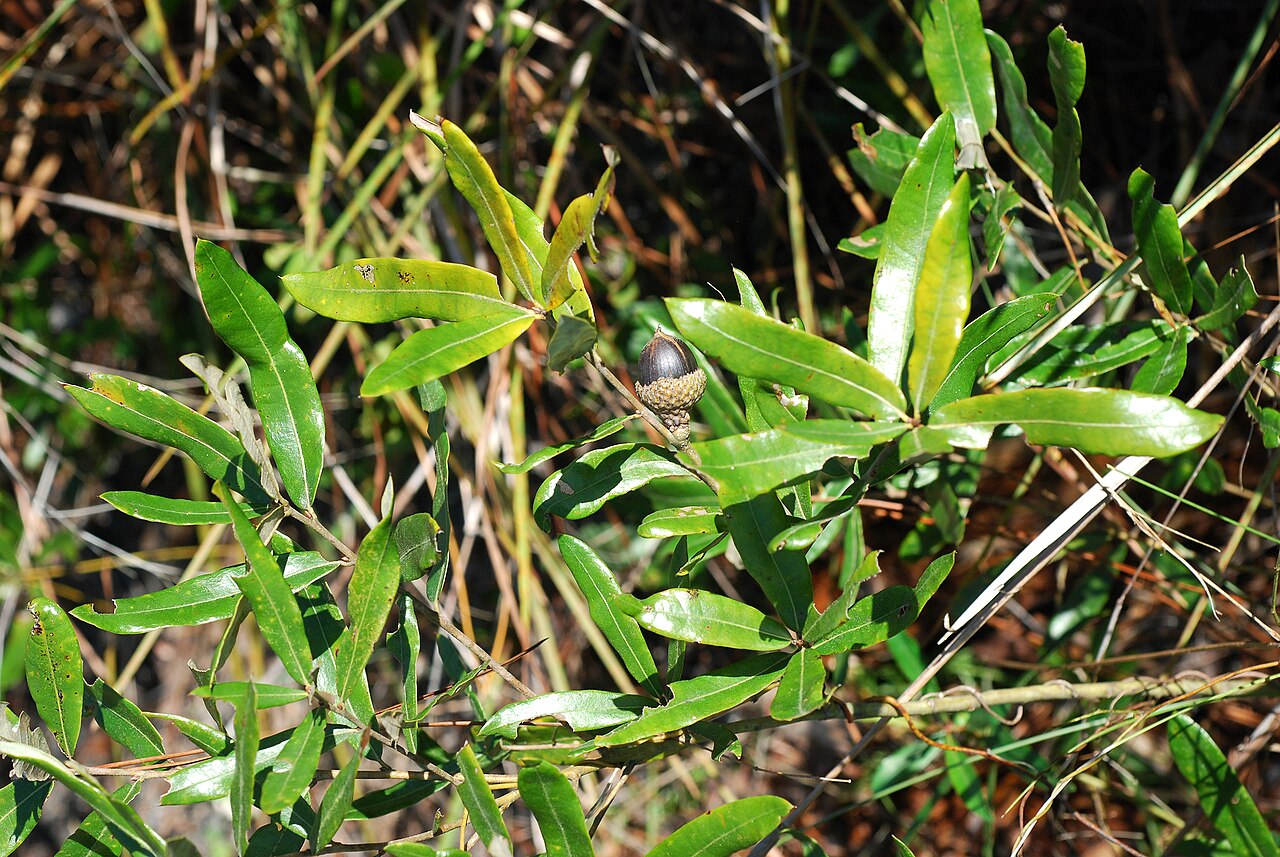
Quercus pumila, the Running Oak (also called runner oak), is one of the smallest oaks in North America. Instead of growing into a tree, it spreads by underground stems into low, dense patches usually less than 3 feet tall, carpeting the ground in the pine flatwoods, savannas and sandy pinelands of the southeastern Coastal Plain. Some references list it under the name Quercus elliottii.
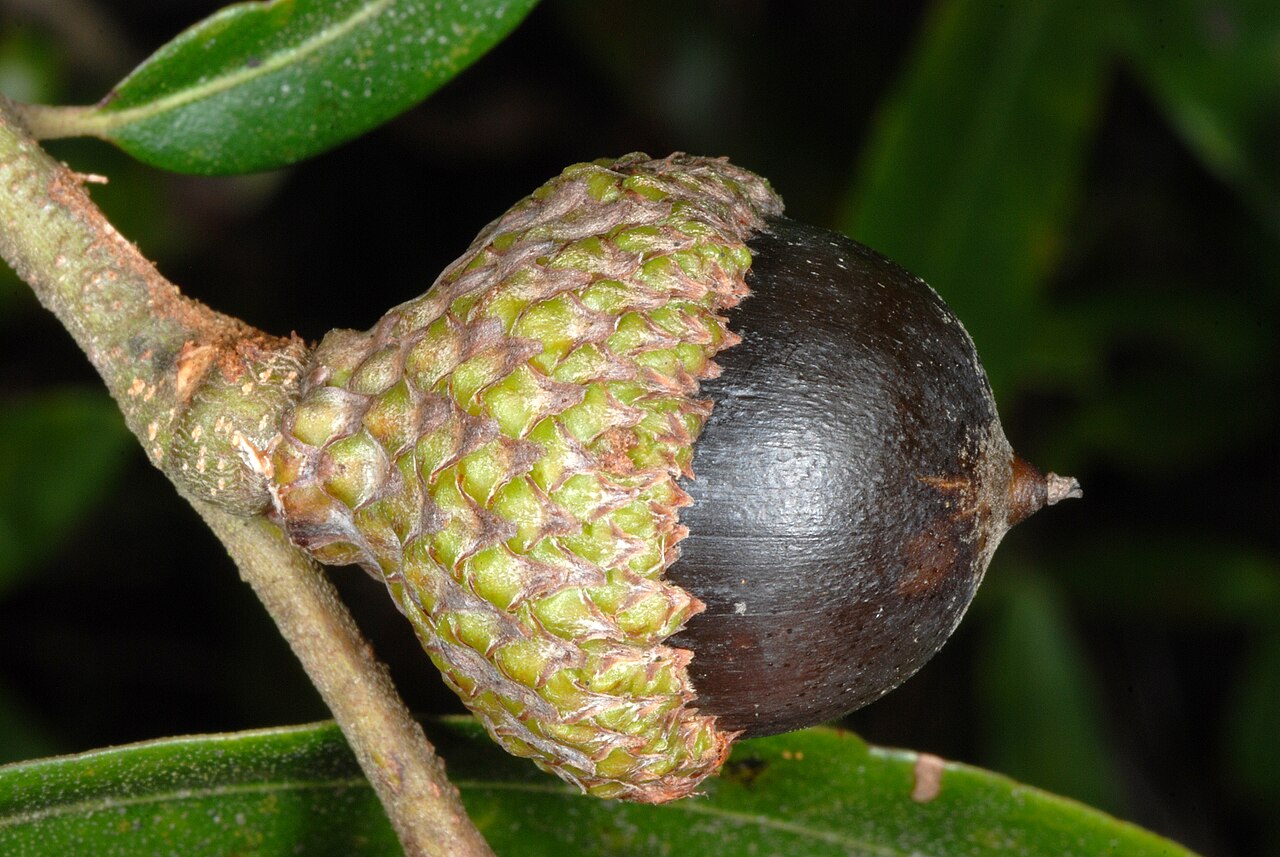
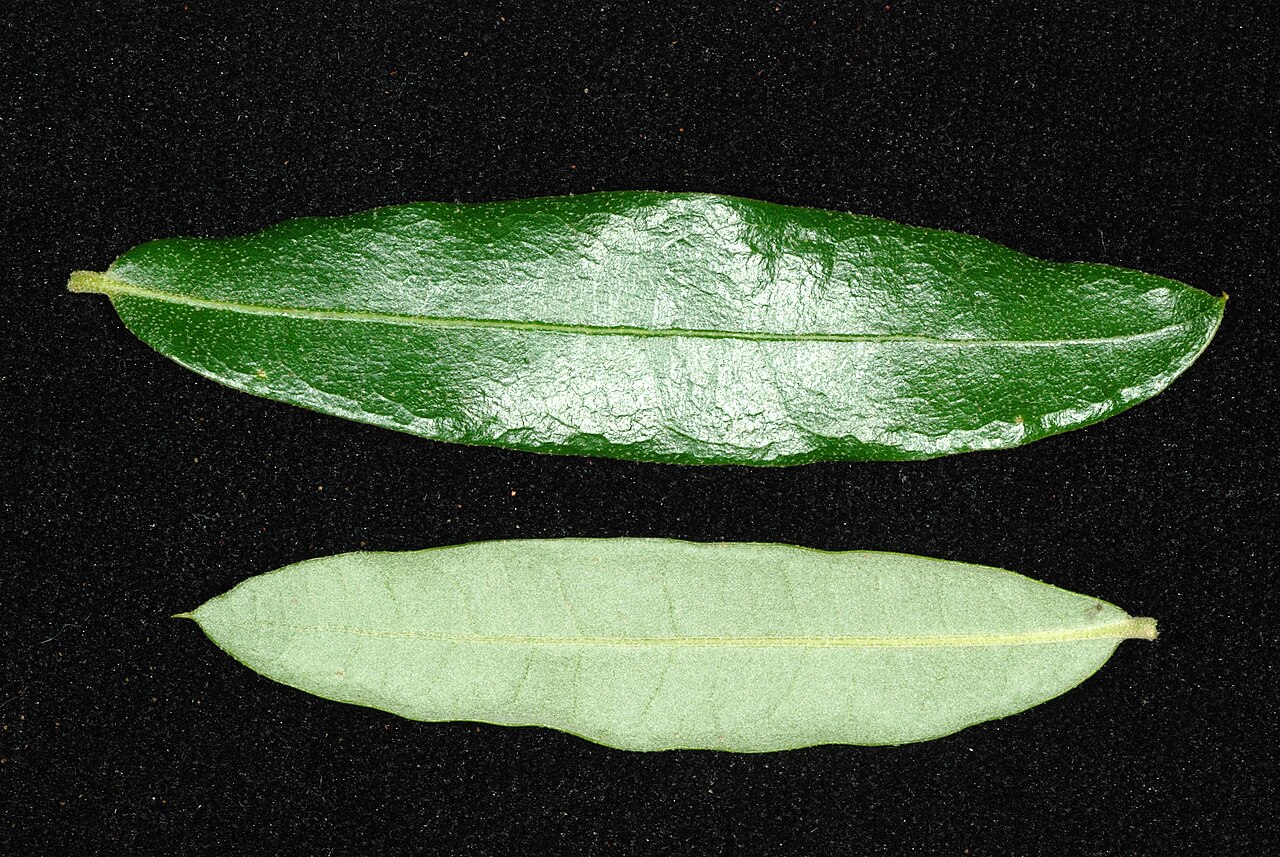
It belongs to the beech family (Fagaceae) and to the red oak group, so its acorns take two growing seasons to ripen and its narrow, willow-like leaves end in a tiny bristle tip. The leaves are glossy green above and pale and hairy underneath, and many of them hang on through winter before dropping in spring.
For gardeners in Florida and the Deep South, running oak is an unusual but useful native groundcover for sunny, sandy, acidic sites. It is tough, fire-adapted and drought-tolerant once established, it feeds wildlife with its acorns and foliage, and it stays low enough to plant under windows or in a pineland-style landscape.
Identification
Running oak is easy to overlook because it rarely rises above the grasses and saw palmetto around it. Look for knee-high colonies of slender stems with narrow, untoothed leaves that are dark and shiny above and pale below.
Growth Form
Running oak is a colonial shrub. Its stems rise from long underground rhizomes, so one plant can form a patch many feet across, made up of dozens of thin, upright, sparsely branched stems. Most stems are 1 to 3 feet tall; in long-unburned sites a few may reach 4 to 6 feet. The bark is smooth and gray to dark brown.
Leaves
The leaves are alternate, narrowly oblong to oblanceolate, mostly 1½ to 4 inches long and ½ to 1 inch wide, with smooth, slightly rolled edges and no teeth or lobes. The tip ends in a small bristle, the mark of the red oak group. The upper surface is dark green and glossy and nearly hairless; the underside is covered with a dense felt of fine pale gray to tan hairs. Leaves are tardily deciduous: many stay on the stems through winter and fall as the new leaves appear in spring.
Flowers
Like all oaks, running oak is wind-pollinated. In March and April the male flowers hang in slender yellowish catkins (aments), while the tiny female flowers sit in the leaf axils of the new growth. The flowers are not showy.
Acorns
The acorns ripen in the fall of their second year. They are small, about ½ inch long, rounded to egg-shaped and dark brown, often faintly striped, and sit in a shallow, scaly cup that covers roughly a quarter to a third of the nut. Small colonies can produce acorns when the stems are only a foot tall.
Similar Species
Dwarf live oak (Quercus minima) also forms low colonies in Florida flatwoods, but it belongs to the white oak group, has acorns that ripen in one year, and its leaves are often irregularly toothed or lobed and evergreen. Willow oak (Quercus phellos) has similar narrow leaves but is a large tree with leaves that are green, not felted, beneath.
Quick Facts
| Scientific Name | Quercus pumila (syn. Quercus elliottii) |
| Family | Fagaceae (beech family) |
| Plant Type | Low colonial deciduous shrub (red oak group) |
| Mature Height | 1–3 ft (occasionally to 6 ft) |
| Mature Spread | Spreads by rhizomes into colonies several feet or more across |
| Growth Rate | Slow to moderate |
| Sun Exposure | Full sun to light shade |
| Water Needs | Low to moderate; dry to seasonally moist sand |
| Soil Type | Acidic, sandy, well-drained to seasonally moist |
| Soil pH | About 4.5–6.0 |
| Bloom Time | March–April (catkins) |
| Flower Color | Yellowish catkins (not showy) |
| Fall Color | Little; leaves stay green-brown into winter |
| Fruit | Small dark brown acorns maturing in the second year |
| Deer Resistant | No; foliage and acorns are eaten by deer |
| USDA Hardiness Zones | 8–10 |
Native Range
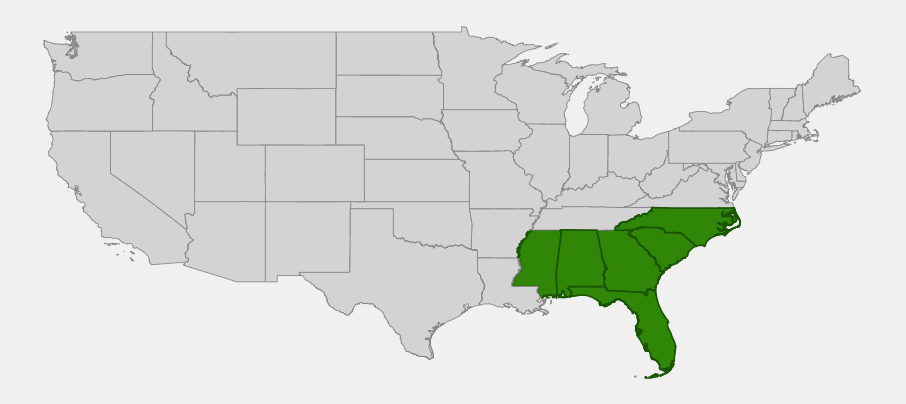
Running oak is native to the Coastal Plain of the southeastern United States. USDA PLANTS and the Lady Bird Johnson Wildflower Center record it from Florida, Georgia, Alabama, Mississippi, South Carolina and North Carolina. In Florida it is widespread in pinelands from the Panhandle south through much of the peninsula.
Its habitats are pine flatwoods, longleaf pine savannas and sandhills, scrubby flatwoods and the edges of scrub, usually on acidic sand with an open pine overstory. It can also persist along roadsides, power-line corridors and other open, disturbed ground where the original pinelands were cleared.
Running oak is adapted to frequent fire. When a fire burns through, the stems are killed back but the plant resprouts quickly from its deep rhizomes, and repeated burns keep the colonies low and vigorous. Where fire is excluded, it is gradually shaded out by taller shrubs and trees. It is considered secure across its range and is not state-listed in Florida.
📋 Regional plant lists featuring Running Oak: North & South Florida · Alabama, Georgia & Mississippi · North & South Carolina
Growing & Care Guide
Running oak is a low-maintenance shrub for sunny, sandy sites, best used as a spreading groundcover rather than a specimen. It is not common in the nursery trade, so look for it at Florida and Southeastern native plant nurseries.
Light
Plant it in full sun to light, filtered shade, such as under high pines. In deep shade it becomes thin and sparse and produces few acorns.
Soil & Water
It grows best in acidic, sandy soil. It tolerates both dry, well-drained sand and flatwoods soils that are moist or briefly wet in summer, but it does poorly in heavy clay or alkaline fill. Water regularly during the first growing season while the rhizomes establish; after that, rainfall is usually enough. Do not fertilize.
Planting Tips
Give it room to spread: set container plants 2 to 3 feet apart where you want a patch to fill in, and keep it away from small, delicate wildflowers it could crowd. It mixes well with saw palmetto, low blueberries, gallberry and native bunchgrasses in a pineland garden. Because it stays low, it works under windows, along drives and in sunny areas that are hard to mow.
Pruning & Maintenance
Little pruning is needed. To renew an old, leggy patch, cut all stems to a few inches above the ground in late winter; the plant resprouts from the rhizomes in spring, much as it does after a fire. Rake leaves off nearby small plants if needed, but leave leaf litter within the patch.
Propagation
Sow fresh acorns in fall, about ½ inch deep in a sandy mix, and protect them from squirrels; they generally germinate the following spring. Colonies can also be increased by digging and replanting rooted sections of rhizome during the dormant season, from your own or a nursery plant.
Landscape Uses
- Native groundcover: a low, spreading shrub for sunny, sandy yards
- Pineland and flatwoods restoration: a characteristic fire-adapted shrub of the longleaf pine ecosystem
- Wildlife gardens: acorns for birds and mammals and foliage for oak-feeding caterpillars
- Erosion control: its rhizomes help hold loose sand on banks and road edges
Wildlife & Ecological Value
Oaks support more wildlife than almost any other group of plants in eastern North America, and running oak brings that value down to knee height on sandy soils where few other oaks thrive.
For Pollinators
The flowers are wind-pollinated and offer little nectar, though bees may collect pollen in spring. The bigger contribution is the foliage: oaks are the most important host plants for moth and butterfly caterpillars in the eastern United States, and running oak can host oak-feeding species such as duskywings and hairstreaks.
For Birds
The small acorns are eaten by wild turkey, northern bobwhite, jays and other birds, and the dense, low thickets give cover to ground-nesting birds of the pinelands. The caterpillars that feed on the leaves are important food for nesting songbirds.
For Mammals
White-tailed deer browse the twigs and leaves, and deer, squirrels and small rodents eat the acorns. The patches provide cover for rabbits and other small animals.
Ecosystem Role
Running oak is part of the low shrub layer of longleaf pine and flatwoods communities. Its ability to resprout after fire from deep rhizomes helps it hold its place in landscapes that burn every few years, and its acorn crops add to the food supply in habitats dominated by pines and grasses.
Cultural & Historical Uses
The species name pumila is Latin for “dwarf,” and it was given by Thomas Walter in his 1788 Flora Caroliniana, one of the first floras of the American South. The common names running oak and runner oak refer to the plant’s habit of “running” underground to form colonies.
Its naming has a tangled history. Some botanists concluded that Walter’s name had been applied to the wrong plant and published the name Quercus elliottii for running oak, and several older references treat it as a variety of willow oak or bluejack oak. Most modern references, including USDA PLANTS and the Atlas of Florida Plants, use Quercus pumila.
Running oak is one of several dwarf, rhizomatous oaks of the Southeast, together with dwarf live oak and some scrub oaks. These low oaks are an adaptation to the frequent fires that historically swept across the longleaf pine landscape, letting the plants regrow from below ground after every burn.
Frequently Asked Questions
How tall does running oak get?
Most stems are 1 to 3 feet tall. In places that have not burned for many years a few stems may reach 4 to 6 feet, but it never becomes a tree.
Is running oak evergreen?
Not quite. It is tardily deciduous: many leaves stay on through winter and drop in spring as the new leaves come out, so it looks nearly evergreen in mild climates.
Does running oak spread?
Yes. It spreads by underground rhizomes into colonies that can become many feet wide over time, which makes it a good groundcover for sunny, sandy sites. Give it space away from small plants it could crowd.
Can I grow running oak in clay soil?
It is best in acidic sand. It grows poorly in heavy clay or alkaline soils; in those conditions choose another native shrub.
What eats running oak acorns?
Wild turkey, northern bobwhite, jays, deer, squirrels and small rodents all eat the acorns, which ripen in fall of their second year.

Looking for a nursery that carries Running Oak?
Browse our native plant nursery directory: Alabama · Florida & Georgia · Mississippi · North Carolina · South Carolina