
Alligatorlily (Hymenocallis palmeri)
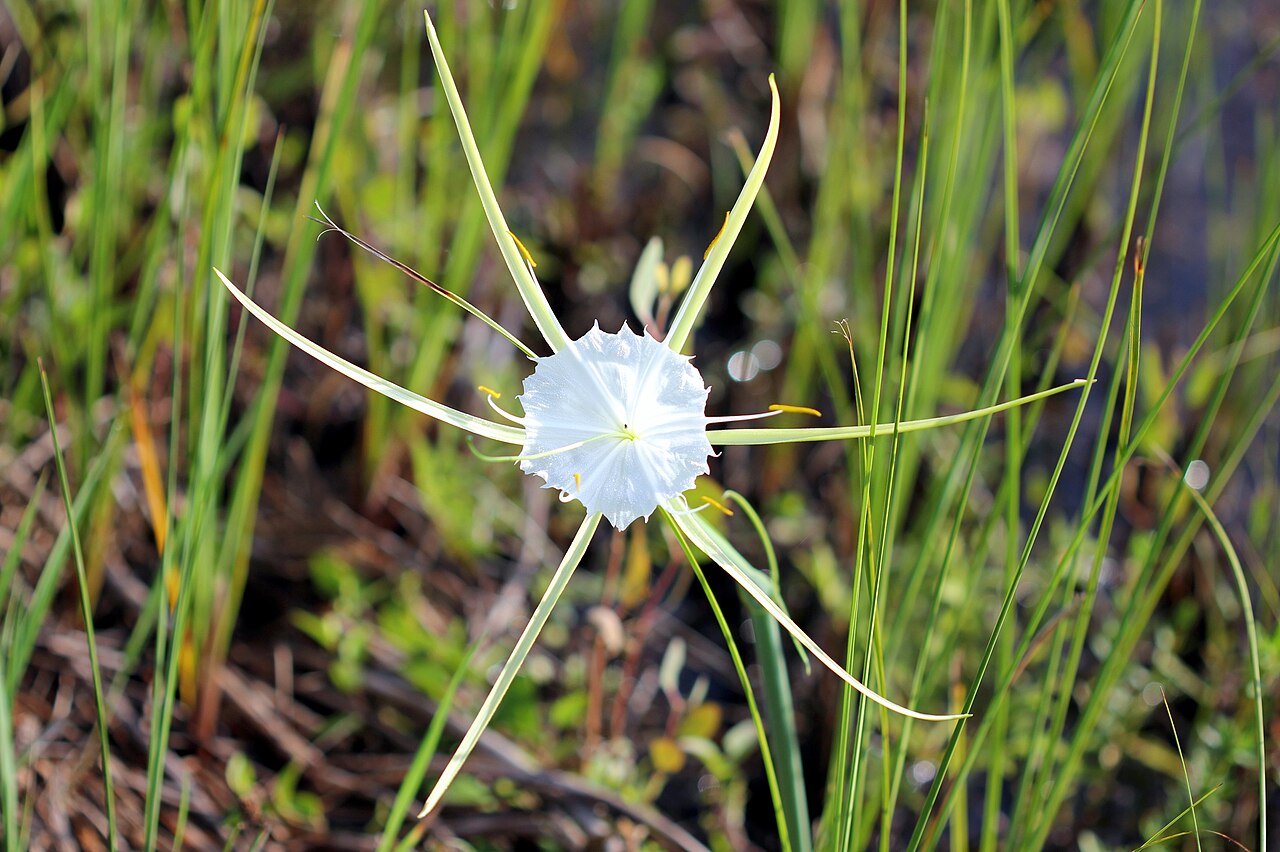
Hymenocallis palmeri, the Alligatorlily (often written alligator lily), is the smallest of Florida’s native spiderlilies. It grows from a small bulb in wet prairies, marshes, cypress swamps and wet pine flatwoods, and in summer it raises a slender stalk topped with a single large, fragrant white flower. The flower has a white, funnel-shaped cup with a green eye and six long, thread-like tepals that curve out like a spider’s legs.
It belongs to the amaryllis family (Amaryllidaceae), along with the swamp lily, the rain lilies and the larger coastal mangrove spiderlily. The species was described by Sereno Watson in 1879 and named for Edward Palmer, the plant collector who gathered it in Florida. Watson also described Hymenocallis humilis, which is now treated as the same species. The Atlas of Florida Plants and USDA PLANTS both use the name Hymenocallis palmeri and the common name alligatorlily.
Alligatorlily is mostly a plant of peninsular Florida, especially the Everglades region, and the Atlas of Florida Plants treats it as endemic to Florida. USDA PLANTS, however, also records it in Georgia, so this guide does not call it a strict Florida endemic. It is rarely sold, and like all spiderlilies its bulbs are toxic. If you want to grow it, buy nursery-propagated plants and never dig bulbs from the wild. This guide covers identification, range, care and wildlife value.
Identification
Alligatorlily is easy to separate from Florida’s other spiderlilies: it is small and grassy, its leaves are narrow and bluish green, and each stalk almost always carries only one flower (rarely two, which open one after the other). Most other native Hymenocallis carry several flowers in a cluster.
Bulb & Leaves
It grows from an egg-shaped bulb about 1 to 1½ inches (2.5–4 cm) across, with a grayish brown tunic and a neck 1 to 3 inches long. Each bulb produces two to six erect, narrow leaves, usually 6 to 16 inches long (occasionally to about 2 feet) and only about ¼ to ⅜ inch (4–10 mm) wide. They are bluish green, waxy (glaucous), slightly leathery and channeled, with thin clear margins. The leaves die back in winter, and plants are often hard to see among grasses when not in flower.
Flower Stalk
The flower stalk (scape) is 7 to 18 inches (18–45 cm) tall, rarely taller, rounded and bluish green. Two narrow bracts sit at the top below the flower. Because the stalk is about as tall as the leaves, the flower usually rises just above the surrounding grasses and sedges.
Flowers
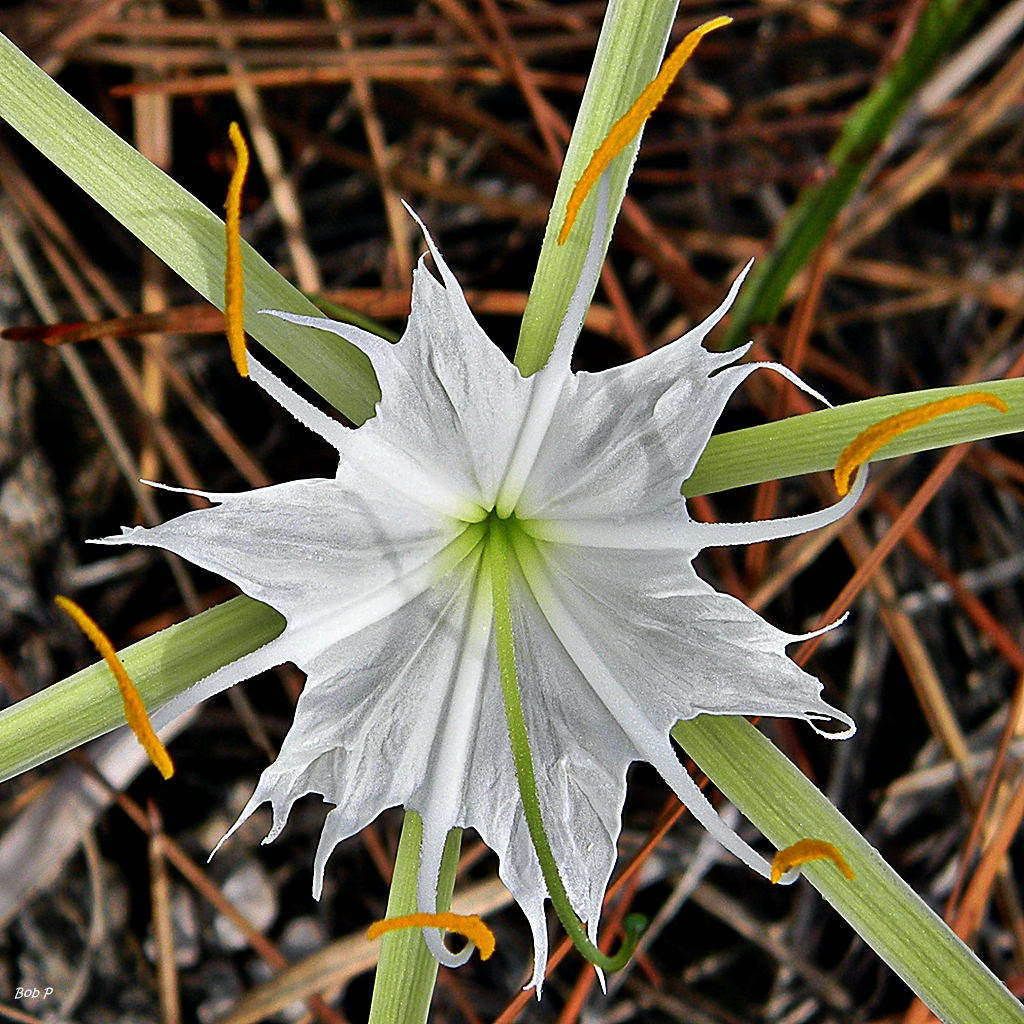
The single flower is large for the size of the plant. A slender green tube 3½ to 5 inches long leads to six narrow white tepals, each several inches long, which spread and curve. In the center is a white staminal cup (corona) that joins the bases of the six stamens; it is funnel-shaped, with a green eye at its base and small teeth along its rim. The stamens extend beyond the cup on white filaments and carry orange-yellow anthers. The flowers are fragrant and last only a day or two. Flowering is mainly in summer, roughly May to September.
Fruit & Seeds
A pollinated flower forms a green capsule holding one to a few fleshy, green, egg-shaped seeds up to about ¾ inch (2 cm) long. As in other spiderlilies, the seeds have no dormancy and begin to grow soon after they are shed.
Similar Species
Mangrove spiderlily (H. latifolia) is a much larger, evergreen coastal plant with broad, glossy leaves and clusters of 6 to 16 flowers. Woodland spiderlily (H. occidentalis) grows in upland forests farther north and carries several flowers per stalk. Florida’s other wetland spiderlilies, such as H. rotata and H. crassifolia, are larger plants of streams and marshes with two or more flowers per stalk. The non-native H. littoralis and other ornamental spiderlilies are larger still.
Quick Facts
| Scientific Name | Hymenocallis palmeri S. Watson (syn. H. humilis); same name in the Atlas of Florida Plants and USDA PLANTS |
| Family | Amaryllidaceae (amaryllis family) |
| Plant Type | Deciduous bulbous perennial |
| Mature Height | 1–2 ft in flower |
| Mature Spread | 6–12 in per clump |
| Growth Rate | Slow |
| Sun Exposure | Full sun to light shade |
| Water Needs | High; wet soil or shallow seasonal flooding |
| Soil Type | Wet sand, marl or mucky peat |
| Soil pH | Slightly acidic to alkaline, about 5.5–8.0 |
| Bloom Time | Summer, roughly May–September |
| Flower Color | White with a green eye and orange-yellow anthers |
| Fall Color | None; leaves die back in winter |
| Fruit | Green capsule with large fleshy green seeds |
| Deer Resistant | Yes; bulbs and leaves contain toxic alkaloids |
| USDA Hardiness Zones | 9a–11 |
Native Range
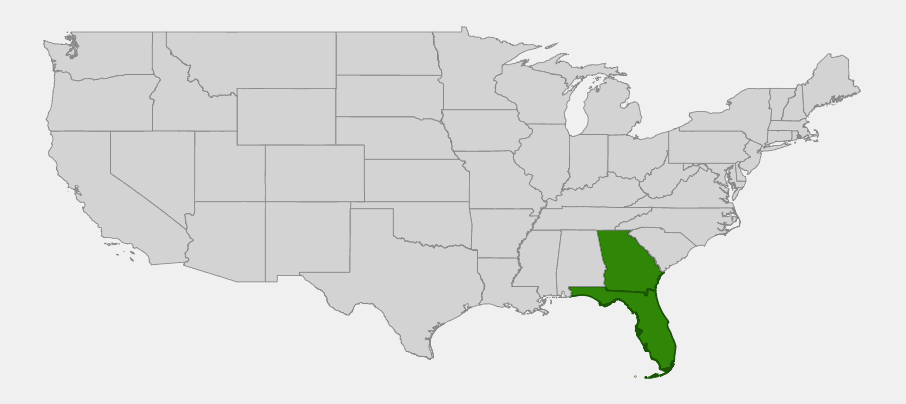
Alligatorlily is native mainly to peninsular Florida. The Atlas of Florida Plants maps it in central and especially southern Florida, including the Everglades and Big Cypress region, with scattered records farther north on the peninsula, and the Atlas treats it as endemic to Florida. USDA PLANTS lists it as native in Florida and Georgia, so the map here shades both states. Any Georgia occurrence appears to be very limited, and nearly all of the species’ range lies in Florida.
It has not been recorded outside the southeastern United States.
Its habitats are seasonally flooded, sunny wetlands: wet prairies and marl prairies, freshwater marshes, the edges of cypress domes and cypress strands, wet pine flatwoods, and wet ditches and roadsides. It typically grows in standing water a few inches deep during the summer rainy season and in moist soil during the dry season.
📋 Regional plant lists featuring Alligatorlily: North & South Florida · Alabama, Georgia & Mississippi
Growing & Care Guide
Alligatorlily is a charming small bulb for wet, sunny spots, but it is rarely available in the nursery trade and is best suited to gardeners who already grow wetland plants. When you can find it, buy it from a Florida native plant nursery that grows its own stock. Never dig bulbs from the wild; doing so harms natural populations and is illegal on public lands.
Light
Grow it in full sun or light shade. In its native wet prairies it receives full sun for most of the day, and plants in deep shade produce few flowers.
Soil & Water
It needs consistently wet soil during the growing season and tolerates several inches of standing water in summer. Sandy, marly or mucky soils all work as long as they stay moist. It tolerates a short dry spell while dormant in winter but will not thrive in an ordinary, irrigated garden bed. It is not salt tolerant.
Planting Tips
Plant bulbs with the neck at or just below the soil surface along the shallow margin of a pond, in a rain garden or bog garden, or in a wet swale. Group three to five bulbs together, about 6 inches apart, so the single flowers make more of a show. Because plants are small and grassy, place them where taller plants will not crowd them out. Grow it in central and south Florida; it is not reliably hardy farther north. Buy only nursery-propagated bulbs.
Pruning & Maintenance
Little care is needed. Cut back the dead leaves in winter if you like, and remove aggressive grasses and sedges that would shade the plants. Like other members of the amaryllis family, the leaves may be chewed by lubber grasshoppers or by the caterpillars of the spanish moth (convict caterpillar). Wear gloves when handling bulbs, since all parts are toxic if eaten.
Propagation
Plants slowly form offset bulbs that can be separated while dormant. The large fleshy seeds should be sown as soon as they ripen, pressed into the surface of wet soil; they germinate quickly but seedlings take a few years to reach flowering size.
Landscape Uses
- Pond and water-garden edges: small accent for the shallow margin
- Rain gardens and wet swales: summer flowers in seasonally flooded spots
- Wet prairie and marsh restoration: with nursery-propagated stock only
- Moth and fragrance gardens: fragrant white flowers that attract hawk moths
- Container water gardens: in a pot set in a shallow tub of water
Wildlife & Ecological Value
Alligatorlily is a small part of Florida’s wet prairie flora, but its large, fragrant flowers are an important nectar source for night-flying moths in summer.
For Pollinators
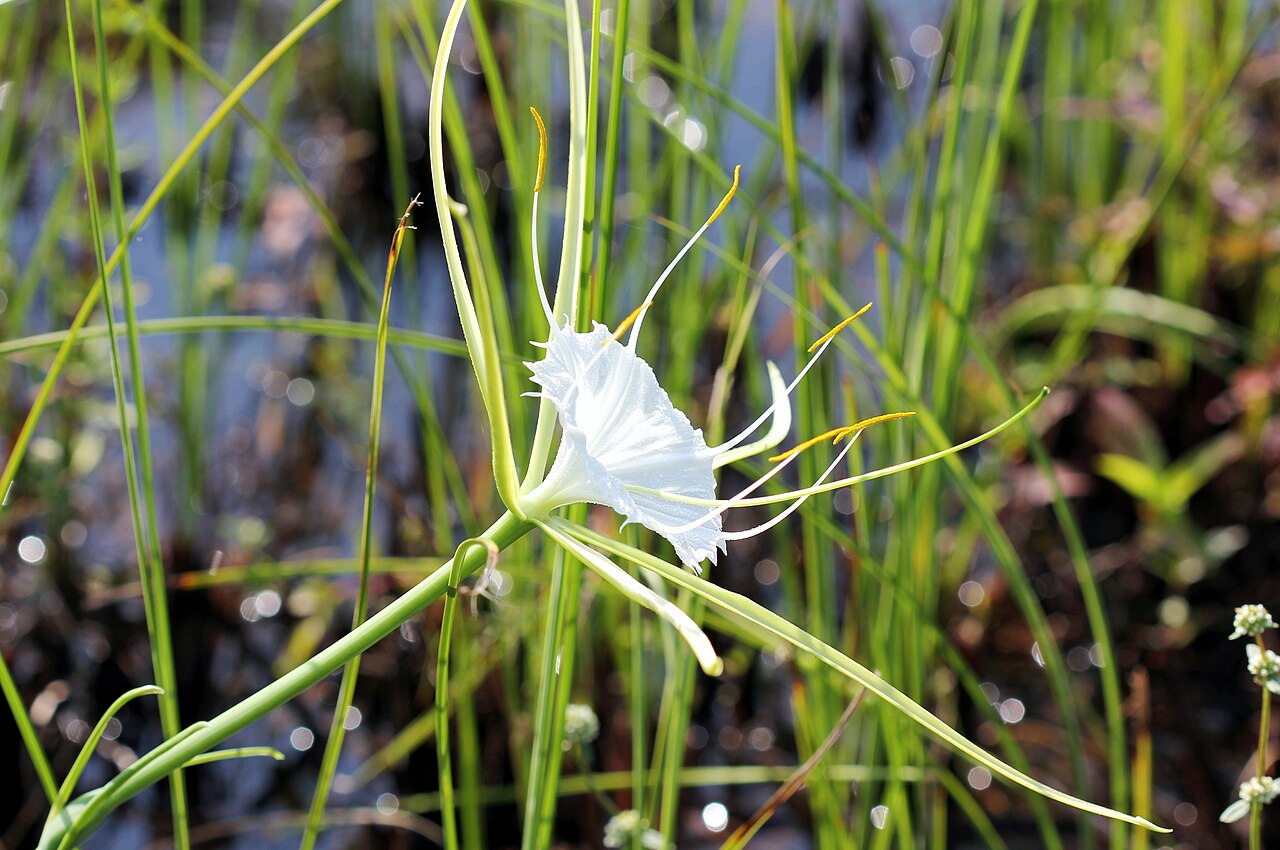
Like other spiderlilies, the long-tubed, white, fragrant flowers are adapted to pollination by sphinx moths (hawk moths), which hover at the flower and reach the nectar with their long tongues while their wings brush the long stamens. Butterflies and bees may visit for nectar or pollen during the day.
For Birds
It is not a significant food source for birds. Wading birds forage in the same wet prairies and marshes where it grows.
For Mammals
The bulbs and leaves contain toxic alkaloids typical of the amaryllis family and are rarely eaten by deer or other mammals.
Ecosystem Role
As a seasonal wetland bulb, it is part of the diverse herb layer of Everglades marl prairies and wet flatwoods. These habitats depend on natural water levels and periodic fire, which keep shrubs and trees from shading out low plants like alligatorlily.
Cultural & Historical Uses
Sereno Watson of Harvard described Hymenocallis palmeri in 1879 from specimens collected in Florida by Edward Palmer, an English-born naturalist who collected plants and artifacts across North America. Watson described Hymenocallis humilis at the same time; later botanists concluded that the two names refer to the same plant.
The common name alligatorlily reflects its home in the Everglades and other wet places that alligators share. Many visitors to Everglades National Park and Big Cypress National Preserve see it blooming in roadside ditches and wet prairies in early summer.
All spiderlilies contain alkaloids such as lycorine, which are toxic if eaten. They have never been used as food, and the plants should be kept away from children and pets.
Frequently Asked Questions
Is alligatorlily endemic to Florida?
The Atlas of Florida Plants treats it as a Florida endemic, and nearly all known populations are in peninsular Florida. USDA PLANTS also lists it as native in Georgia, so this guide describes it as mainly a Florida plant rather than a strict endemic.
Is alligatorlily poisonous?
Yes. Its bulbs and leaves contain toxic alkaloids, as in other members of the amaryllis family. Keep children and pets from eating it, and wear gloves when handling bulbs.
Where can I buy alligatorlily?
It is rarely sold. Check Florida native plant nurseries and native plant society sales, and buy only nursery-propagated bulbs. Never collect bulbs from the wild.
How is it different from mangrove spiderlily?
Alligatorlily is small and grassy, with narrow bluish leaves and usually one flower per stalk, and it grows in freshwater wetlands. Mangrove spiderlily is a large evergreen coastal plant with broad, glossy leaves and clusters of many flowers.
Can I grow alligatorlily in a regular garden bed?
Not easily. It needs soil that stays wet through the summer, so it does best at the edge of a pond, in a bog garden, in a wet swale, or in a pot kept standing in water.

Looking for a nursery that carries Alligatorlily?
Browse our native plant nursery directory: Florida & Georgia