
Santa Barbara Ceanothus (Ceanothus impressus)
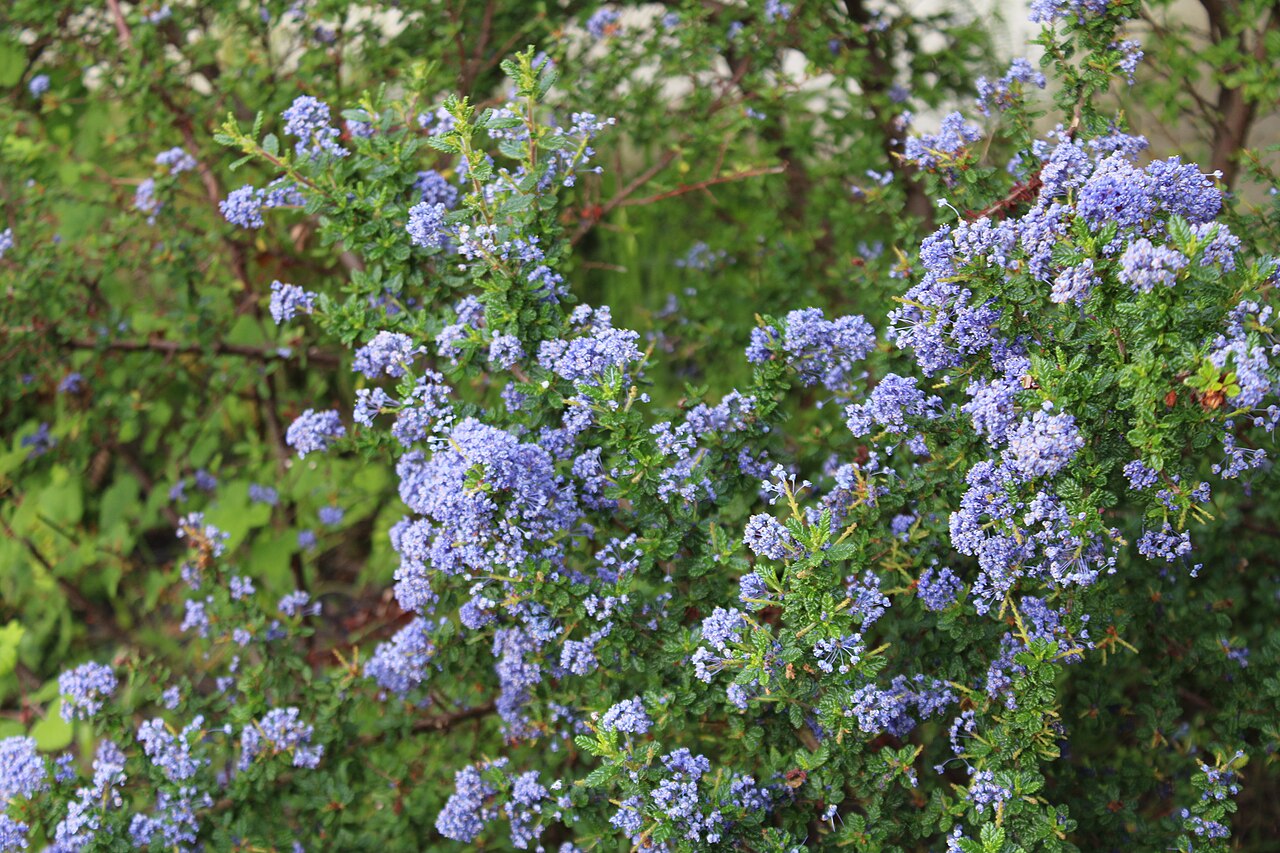
Ceanothus impressus, the Santa Barbara Ceanothus, is an evergreen California lilac from the coastal chaparral of Santa Barbara and San Luis Obispo Counties. Each spring it covers itself in clusters of small, intensely blue flowers, and its tiny, dark green leaves are so deeply furrowed that they look quilted. The species name impressus refers to those sunken, “impressed” veins.
In the wild it is a local endemic, growing on old sand dunes and sandy mesas such as Burton Mesa near Lompoc and the Nipomo Mesa. In gardens it is one of the best-known California lilacs. It is a parent of several popular hybrid ceanothus, and gardeners prize it for its dark blue flowers, fine texture and tolerance of summer drought.
This guide covers how to identify Santa Barbara ceanothus, where it grows, and how to grow it well. Like most ceanothus, it wants sun, sharp drainage and little or no summer water once established. It feeds native bees in early spring, and it fixes nitrogen through bacteria in its roots.
Identification
California has more than 40 kinds of Ceanothus, and many of them hybridize, so identification starts with the leaves. Santa Barbara ceanothus has small (about ½–¾ inch), dark green leaves that are strongly wrinkled above, with the edges rolled under. Compare the larger, flat, glossy leaves of blueblossom (C. thyrsiflorus) and the gray-green, opposite leaves of buckbrush (C. cuneatus).
Growth Form
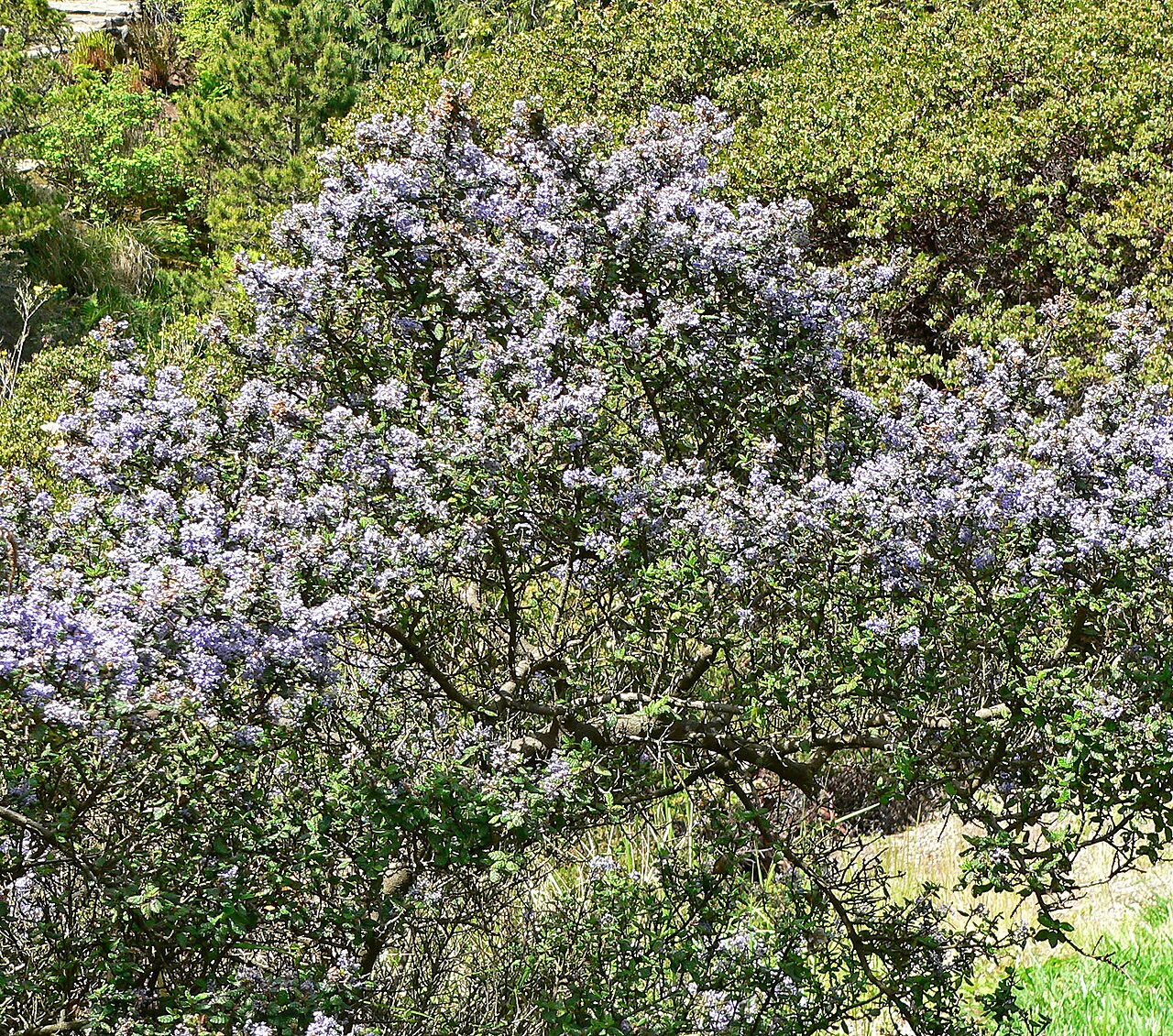
An upright, densely branched evergreen shrub, usually 4 to 10 feet tall and about as wide, occasionally taller. Young twigs are hairy and flexible. Plants of the typical variety tend to be compact, with intricate branching, while the Nipomo variety (var. nipomensis) has a more open form.
Leaves
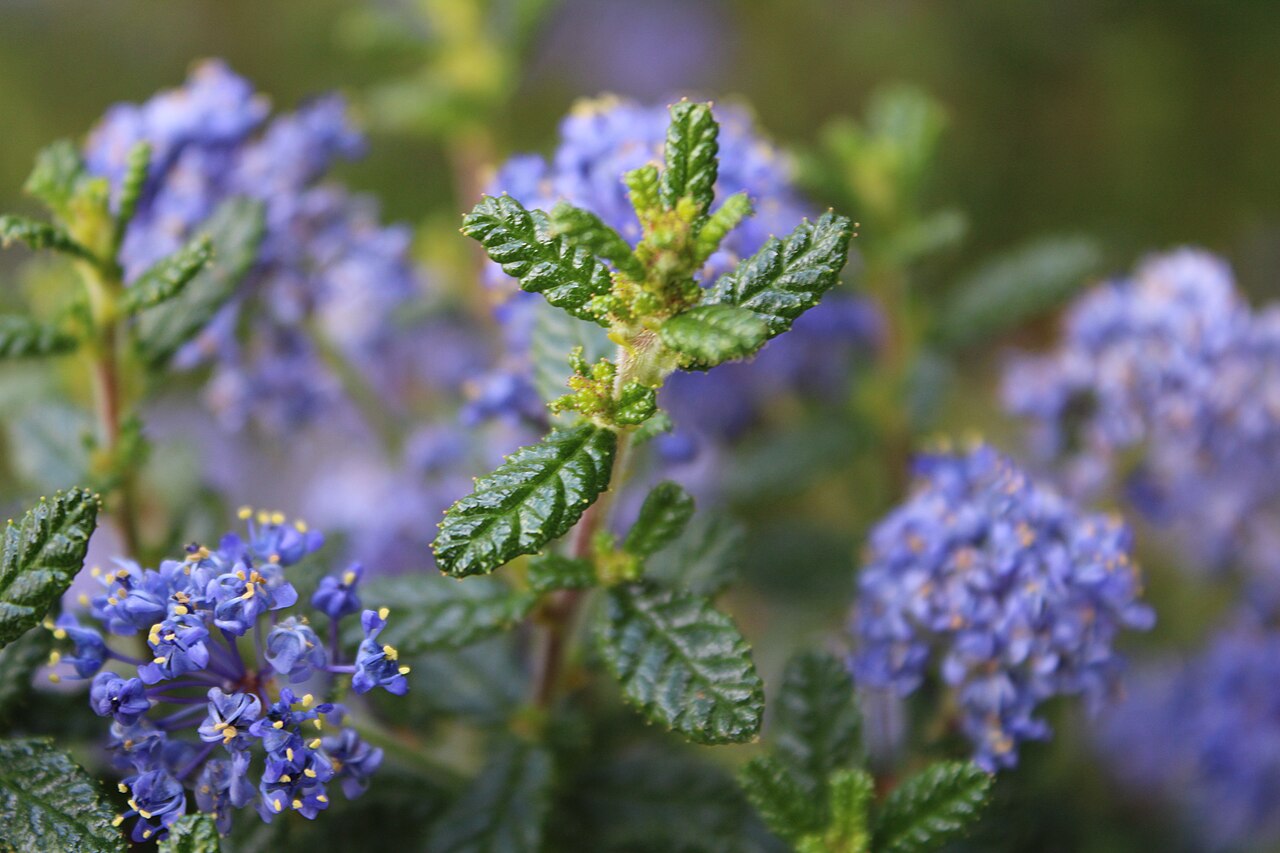
The leaves are alternate, elliptic to nearly round, about ¼ to ¾ inch long, and dark green above. The veins are sunken deeply into the upper surface, giving the leaf a puckered, corrugated look, and the margins roll under. The undersides are paler and hairy, with the veins raised. The leaves are often slightly sticky or gland-dotted.
Flowers
From late winter into spring (mainly February to April), small, deep blue to violet-blue flowers open in rounded clusters about 1 to 2 inches long at the ends of short side branches. Each flower has five hooded petals and five sepals of the same color. A well-grown plant can be so heavily covered that the foliage almost disappears.
Fruit
The fruit is a small, three-lobed capsule about ⅛ inch across, with small crests near the top. It turns from green or reddish to dark brown and dry, then splits explosively in summer, flinging the seeds away from the plant.
Quick Facts
| Scientific Name | Ceanothus impressus Trel. |
| Family | Rhamnaceae (buckthorn family) |
| Plant Type | Evergreen shrub |
| Mature Height | 4–10 ft |
| Mature Spread | 4–10 ft |
| Growth Rate | Moderate to fast |
| Sun Exposure | Full sun to light shade |
| Water Needs | Low; little or no summer water once established |
| Soil Type | Sandy or well-drained loam; dislikes heavy, wet clay |
| Soil pH | Acidic to neutral (about 5.5–7.0) |
| Bloom Time | Late winter to spring (Feb–Apr) |
| Flower Color | Deep blue to violet-blue |
| Fall Color | None; evergreen |
| Fruit | Small dry, crested capsule that splits explosively |
| Deer Resistant | Moderately; deer browse young growth |
| USDA Hardiness Zones | 8–10 |
Native Range
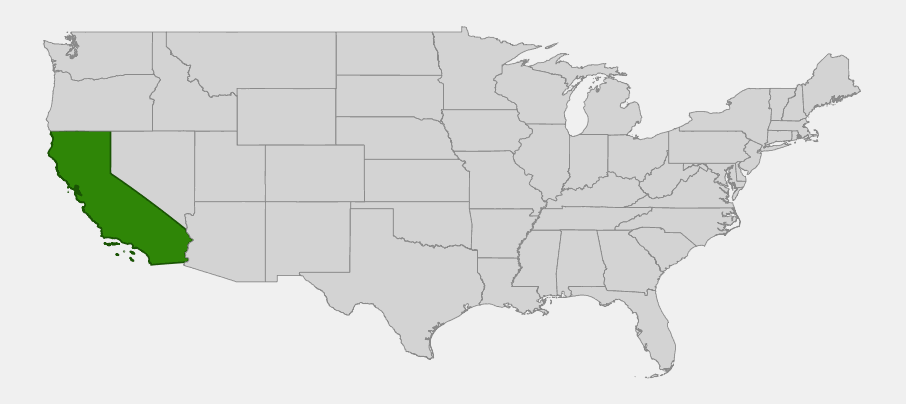
Santa Barbara ceanothus is endemic to the Central Coast of California. It grows only in western Santa Barbara County and southern San Luis Obispo County, mainly on old, stabilized sand dunes and sandy mesas within a few miles of the ocean, such as Burton Mesa near Vandenberg Village and Lompoc, and the Nipomo Mesa. The plants grow in maritime chaparral, a fog-influenced shrubland of manzanitas, ceanothus and scrub oaks.
Two varieties are recognized. The typical variety, var. impressus, grows mainly in western Santa Barbara County. The Nipomo ceanothus, var. nipomensis, is a rare variety known only from a small area of San Luis Obispo County. Maritime chaparral has been reduced by development, agriculture and the spread of invasive plants, and much of what remains is fragmented.
Because the wild populations are small and local, buy Santa Barbara ceanothus from nurseries that grow it from cuttings or seed, and never dig plants from the wild. California native plant nurseries and botanic gardens carry the species and several cultivars.
📋 Regional plant lists featuring Santa Barbara Ceanothus: California & Nevada
Growing & Care Guide
Santa Barbara ceanothus is a rewarding shrub for dry, sunny gardens in coastal and mild inland California and similar Mediterranean climates. Its main enemies are poor drainage and summer watering. Give it fast-draining soil and room to grow, and leave it alone in summer.
Light
Full sun near the coast; full sun to light afternoon shade in hotter inland gardens. In too much shade it becomes sparse and flowers poorly.
Soil & Water
Sandy, gravelly or well-drained loam is ideal, matching its native sand hills. It does poorly in heavy, poorly drained clay. Water regularly through its first dry season to establish it, then reduce to an occasional deep soak in the hottest months, or none at all near the coast. Frequent summer water in warm soil invites root rot and shortens its life.
Planting Tips
Plant in fall or early winter so winter rains can establish the roots. Set the plant slightly high, with the root crown above the surrounding soil, and keep mulch a few inches from the stem. Allow at least 6 to 8 feet for a mature plant. It is hardy to roughly the mid-teens °F, so it suits USDA zones 8 to 10.
Pruning & Maintenance
Prune lightly right after flowering, tip-pruning the flexible new growth to shape the plant. Avoid cutting back into old, leafless wood, which rarely resprouts. Like many ceanothus, plants often live roughly 10 to 25 years in gardens, so plan for eventual replacement. No fertilizer is needed: it fixes its own nitrogen.
Propagation
Softwood or semi-hardwood cuttings taken in late spring or summer root fairly readily and are the way named cultivars are propagated. Seed has a hard coat. Treat it with hot water (pour near-boiling water over the seed and let it soak overnight), then cold-moist stratify it for about 1 to 3 months before sowing. To collect seed, tie cloth or mesh bags over the ripening capsules, because they eject their seeds.
Landscape Uses
- Dry, sunny hedges and screens: dense evergreen growth for an informal screen
- Specimen shrub: a mass of blue color in late winter and spring
- Slopes and banks: deep roots help hold dry, sandy slopes
- Pollinator and habitat gardens: early nectar and pollen for native bees
- Coastal gardens: tolerates wind and salt air near the coast
Wildlife & Ecological Value
Like other California lilacs, Santa Barbara ceanothus is a hub of activity in early spring, when few other shrubs are blooming. The Xerces Society notes its special value to native bees and to beneficial insects that help control pests.
For Pollinators
The fragrant blue flowers draw native bees, including mason bees, bumble bees and small sweat bees, plus honey bees, hoverflies and other beneficial insects. Ceanothus is a larval host for butterflies such as the California tortoiseshell, the pale swallowtail and the ceanothus silk moth.
For Birds
The dense, twiggy branches give songbirds such as wrentits, California towhees and bushtits cover and nesting sites. Birds glean insects from the foliage, and quail and other birds eat the seeds that fall.
For Mammals
Deer browse ceanothus foliage and young shoots, and small mammals take cover under it and eat the seeds.
Ecosystem Role
Ceanothus roots form nodules with nitrogen-fixing Frankia bacteria, enriching the nutrient-poor sands of maritime chaparral. After fire, the hard-coated seeds in the soil germinate in large numbers, helping the shrubland regenerate.
Cultural & Historical Uses
The American botanist William Trelease described Ceanothus impressus in the 1890s. The genus name comes from a Greek word used by Theophrastus for a spiny plant, and the species name refers to the deeply impressed veins of the leaves. The Nipomo variety was described later from plants on the Nipomo Mesa.
Santa Barbara ceanothus has had a big influence on California gardens. It is a parent of several widely sold hybrid ceanothus, including ‘Dark Star’ and ‘Julia Phelps’, which carry its small, crinkled leaves and deep blue flowers. Selections such as ‘Vandenberg’ are also sold.
Like other ceanothus, it is sometimes called California lilac, although it is not related to true lilacs. Ceanothus flowers contain saponins and make a light lather when rubbed with water, which is why the plants are sometimes called soap bush. Native Californians and early settlers used ceanothus flowers this way.
Frequently Asked Questions
How do I recognize Santa Barbara ceanothus (Ceanothus impressus)?
Look at the leaves. They are small (½–¾ inch), dark green, deeply wrinkled above, with edges rolled under. In spring the shrub is covered in deep blue flower clusters. In the wild it grows only in maritime chaparral in Santa Barbara and San Luis Obispo Counties.
How big does Santa Barbara ceanothus get?
Usually 4 to 10 feet tall and as wide, depending on variety and conditions. Compact selections stay smaller. Give it room, because ceanothus does not respond well to hard pruning.
How often should I water Santa Barbara ceanothus?
Water regularly during the first dry season after planting. After that, give little or no summer water near the coast, and an occasional deep watering inland. Too much summer water in warm soil is the most common cause of sudden death in ceanothus.
Why did my ceanothus die suddenly?
Usually from root rot caused by poor drainage or summer irrigation, or simply from age; many ceanothus live 10 to 25 years. Plant in fast-draining soil, keep the root crown dry, and avoid hard pruning into old wood.
Is Santa Barbara ceanothus deer resistant?
Only moderately. Deer browse ceanothus, especially young plants and new growth. Protect new plantings with cages until they are well established.

Looking for a nursery that carries Santa Barbara Ceanothus?
Browse our native plant nursery directory: California

