
Spoonleaf Peperomia (Peperomia magnoliifolia)
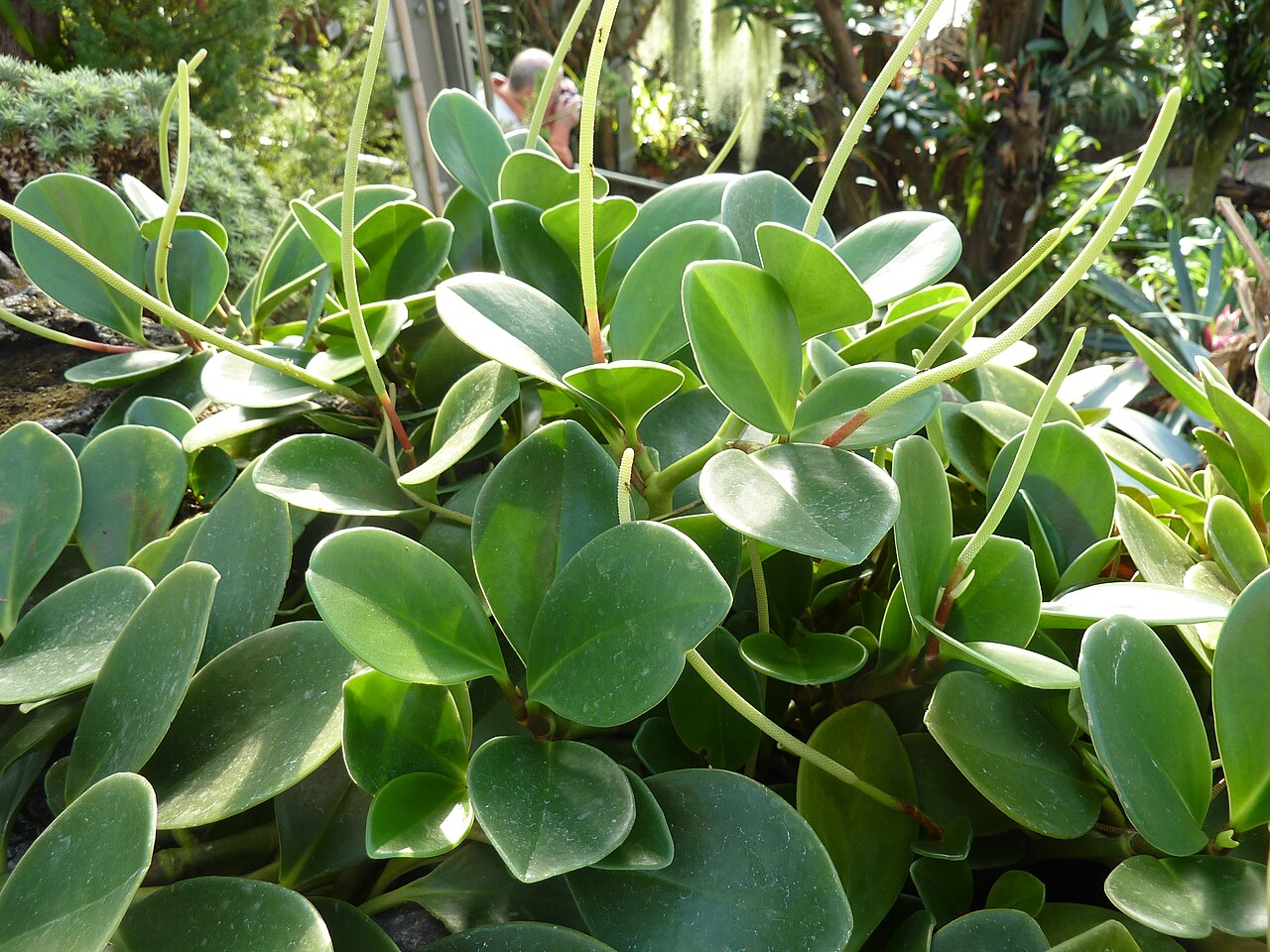
Peperomia magnoliifolia, known as Spoonleaf Peperomia, spatulate peperomia, magnolia-leaf peperomia or, in its variegated form, desert privet, is a succulent-leaved member of the pepper family (Piperaceae). It grows as a low, bushy herb about a foot tall, with thick, glossy, spoon-shaped leaves on fleshy stems and thin, upright “rat-tail” flower spikes. In the wild it grows on forest floors, rocks, logs and tree bases, and sometimes perches on trees as an epiphyte.
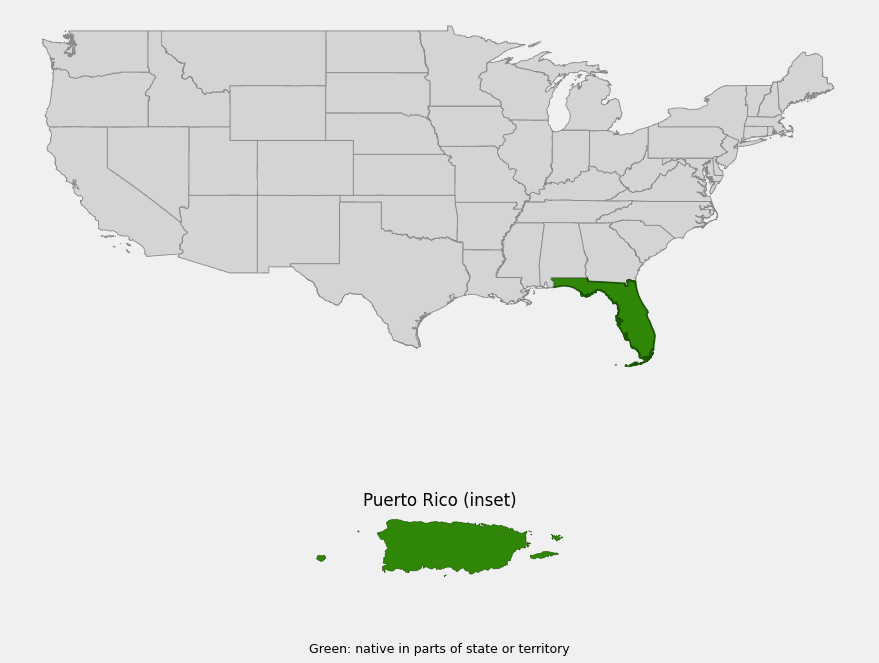
Within the United States it is native to Puerto Rico and to the U.S. Virgin Islands, and to southern Florida, where it is very rare. The Atlas of Florida Plants lists it as native and state-listed as Endangered, and herbarium specimens come mainly from tropical hardwood hammocks in Miami-Dade County, such as Royal Palm Hammock at the edge of the Everglades. Its wider range covers the Caribbean, Central America and northern South America.
It is better known as a houseplant. Green and variegated plants sold as Peperomia magnoliifolia are close kin to the baby rubber plant, Florida peperomia (P. obtusifolia), and the two are often mixed up in the trade. This guide covers how to recognize it, where it grows wild, and how to grow it indoors or outdoors in zones 10–13.
Identification
Spoonleaf peperomia belongs to a group of upright, thick-leaved peperomias that are hard to tell apart. Nurseries often sell the same plant under the names P. magnoliifolia and P. obtusifolia, and some references treat them as one species. The Atlas of Florida Plants and USDA PLANTS keep them separate. Botanists distinguish them partly by details of the flower spikes and tiny fruits, so leaf shape alone is not always reliable.
Stems & Growth Habit
A bushy, upright to sprawling perennial herb, usually 8 to 16 inches tall. The stems are thick, fleshy and smooth, green to reddish, and they lean or creep at the base and root where they touch moist ground. Older plants form loose clumps.
Leaves
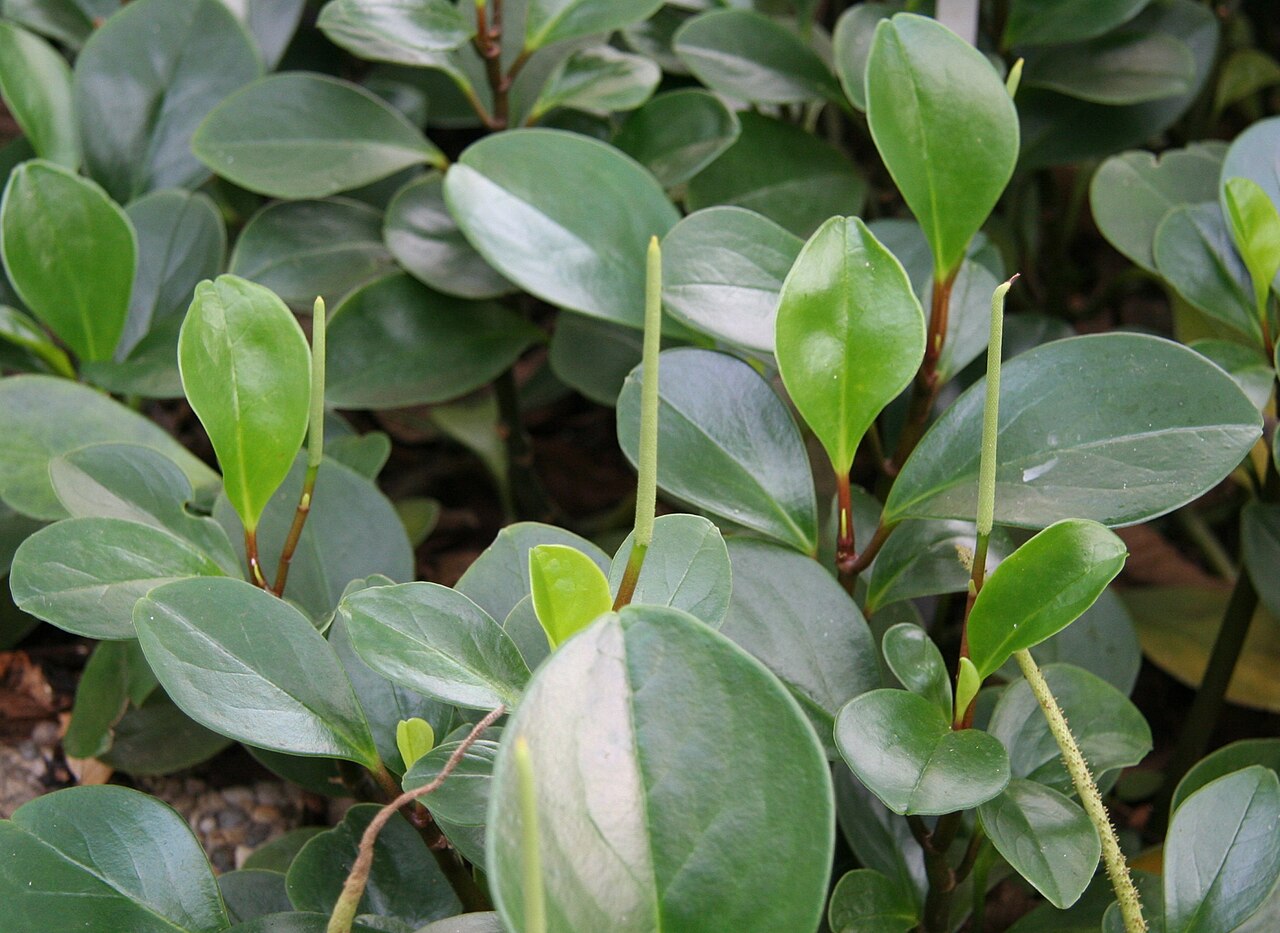
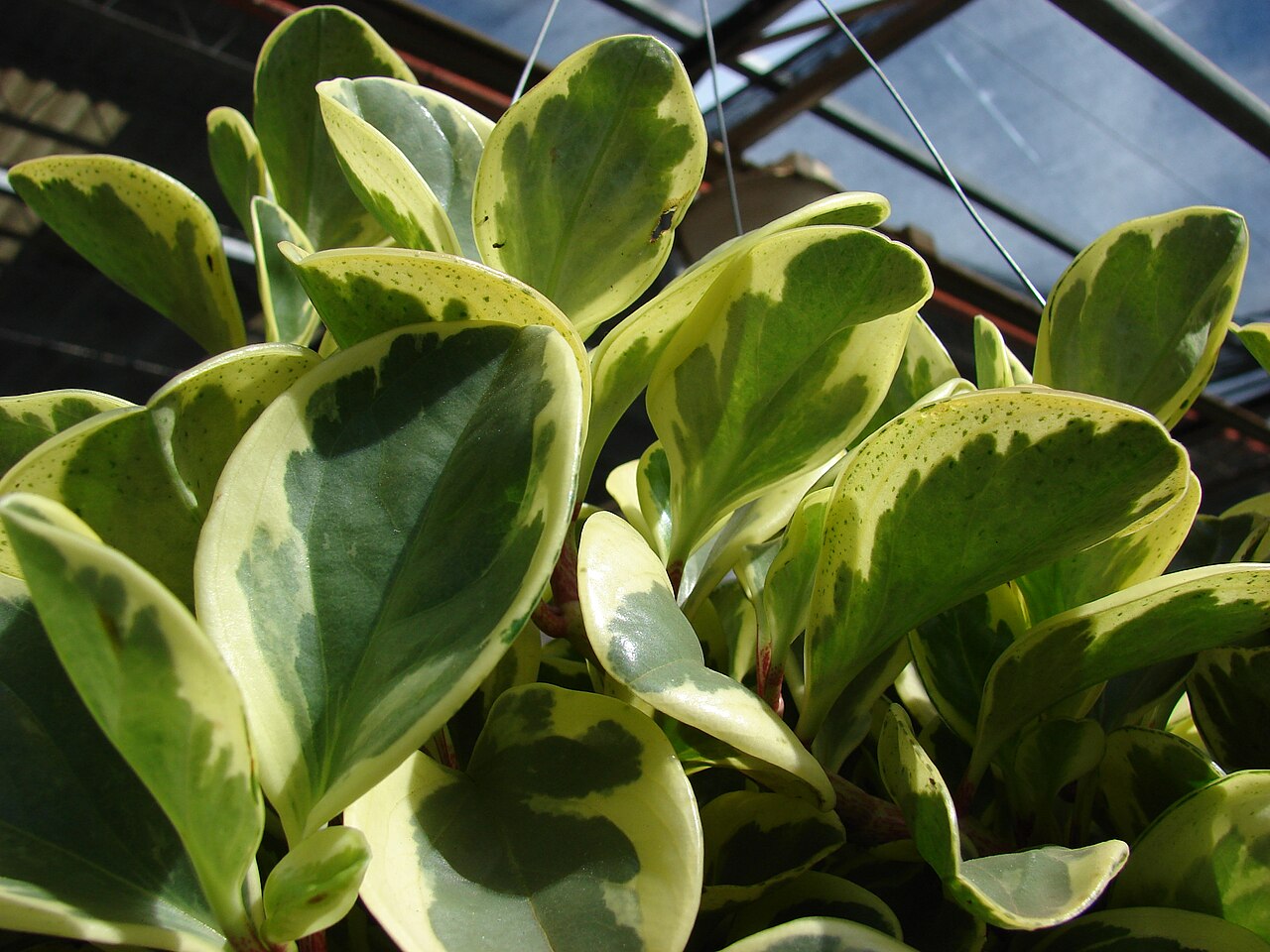
Leaves alternate along the stem. They are thick, succulent and waxy, glossy dark green above and paler below, usually 2 to 5 inches long, and broadest above the middle. They taper gradually into a short leaf stalk, which gives them their spoon or paddle shape, and the tip is rounded. Only the midrib and a few faint veins are visible. Cultivated forms may be marbled or edged with cream and yellow.
Flowers
The flowers are tiny, without petals, and packed into slender, upright spikes 2 to 6 inches long at the tips of the stems. The spikes are green to greenish-white and stand above the leaves like thin candles or rat tails. In the tropics it can bloom at almost any time of year, and healthy houseplants often bloom too.
Fruit
The fruits are minute, berry-like drupes set along the spike. They are slightly sticky, which helps them cling to animals, feathers and bark. Cultivated plants are nearly always grown from cuttings rather than seed.
Quick Facts
| Scientific Name | Peperomia magnoliifolia (Jacq.) A. Dietr. |
| Family | Piperaceae (pepper family) |
| Plant Type | Succulent-leaved evergreen perennial herb; terrestrial or epiphytic; houseplant |
| Mature Height | 8–16 in |
| Mature Spread | 1–2 ft |
| Growth Rate | Slow to moderate |
| Sun Exposure | Part shade to shade (bright, indirect light indoors) |
| Water Needs | Low to moderate; let the mix dry partly between waterings |
| Soil Type | Leaf litter, limestone and rotting logs in the wild; airy, fast-draining mix in pots |
| Soil pH | About 6.0–7.5 |
| Bloom Time | Sporadic, much of the year |
| Flower Color | Greenish-white (tiny flowers on slender spikes) |
| Fall Color | None; evergreen |
| Fruit | Tiny, slightly sticky drupes along the spike |
| Deer Resistant | Not usually an issue; mostly grown in containers |
| USDA Hardiness Zones | 10b–13 outdoors (frost-tender); houseplant everywhere |
Native Range
USDA PLANTS lists Peperomia magnoliifolia as native in Puerto Rico, the U.S. Virgin Islands and Florida. Outside the United States it ranges through the West Indies to Central America and northern South America. In Puerto Rico and the Virgin Islands it grows in shady, humid forests, where it roots in leaf litter and on rocks, logs and the bases of trees.
In Florida it is at the northern edge of its range and very rare. Most wild records come from tropical hardwood hammocks in Miami-Dade County, including the Royal Palm Hammock area of Everglades National Park, where it was collected on rotting logs in deep shade. The Atlas of Florida Plants lists it as native and state-listed as Endangered. Scattered specimens from elsewhere in Florida are from greenhouses and gardens, not wild plants.
Like other rare South Florida peperomias, it depends on shade, high humidity and intact hammock canopy, and it is vulnerable to drought, hurricanes, fire and collecting. Houseplants are always from cultivated stock. Never take plants from the wild in Florida or Puerto Rico, and do not dump houseplant cuttings in natural areas.
📋 Regional plant lists featuring Spoonleaf Peperomia: North & South Florida · Puerto Rico
Growing & Care Guide
Spoonleaf peperomia is one of the easiest houseplants to grow if you treat it like what it is in the wild: a shade plant with water-storing leaves, rooted in loose, airy litter that never stays soggy. Nearly all problems come from overwatering. Choose nursery-grown plants, which are widely sold.
Light
Give it bright, indirect light, such as an east window or a spot a few feet back from a bright south or west window. It also grows well under LED grow lights. In dim light the stems stretch and variegated forms turn greener; harsh afternoon sun can scorch the leaves. Outdoors in zones 10b–13, plant it in shade or dappled light under trees.
Soil & Water
Use a light, fast-draining mix, such as two parts potting mix to one part perlite or orchid bark. Choose a pot with drainage holes that is only slightly bigger than the root ball. Water when the top inch or two of mix is dry, and water less in winter. The thick leaves store water, so it tolerates a missed watering much better than soggy soil. Average household humidity is fine.
Planting Tips
Keep it above about 50°F (10°C); it is damaged by frost and cold drafts. Outdoors in South Florida or Puerto Rico, grow it in a shaded bed with plenty of leaf litter, in a container, or tucked among rocks or a log. Buy nursery-grown plants only.
Pruning & Maintenance
Pinch or cut back leggy stems in spring to keep the plant bushy, and root the trimmings. Feed lightly once a month in spring and summer with a diluted houseplant fertilizer. Cut out any plain green shoots on variegated plants if you want to keep the variegation. Watch for mealybugs and fungus gnats; yellow, mushy leaves or black stems usually mean root rot from overwatering.
Propagation
Stem cuttings with two or three leaves root easily in moist, airy mix or in water within a few weeks. Leaf cuttings with a short piece of stalk also root, though more slowly. Variegated forms come true from stem cuttings but often revert to green from leaf cuttings.
Landscape Uses
- Houseplant: desks, windowsills and shelves in bright, indirect light
- Pet-friendly plantings: peperomias are listed as non-toxic to cats and dogs by the ASPCA
- Shade gardens in zones 10b–13: groundcover in shady beds and containers in South Florida and Puerto Rico
- Dish gardens and large terrariums: its compact size and slow growth suit mixed containers
- Native hammock restoration: only with legally propagated stock, under guidance from land managers
Wildlife & Ecological Value
In tropical forests, spoonleaf peperomia is part of the low, shade-loving layer of herbs, ferns and epiphytes that grows among the leaf litter, logs and rocks under a closed canopy.
For Pollinators
Peperomia flowers are tiny and have no petals or nectar. They are thought to be pollinated by small insects and possibly wind, and many peperomias can also set seed on their own.
For Birds
Small birds and other animals may carry the slightly sticky fruits on their feathers or feet, helping spread the plant to new logs, rocks and tree bases.
For Mammals
It has little direct food value for mammals.
Ecosystem Role
Its fleshy stems and leaves help cover and hold the thin, rocky soils of hammocks, and the moist microhabitat under its leaves shelters snails, insects and other small invertebrates. In Florida its presence is a sign of an old, humid, undisturbed hammock.
Cultural & Historical Uses
Nikolaus von Jacquin described the plant as Piper magnoliifolium, placing it with black pepper, and Albert Dietrich moved it to Peperomia in 1831. The genus name means “resembling pepper,” and the species name means “with leaves like a magnolia,” for its thick, glossy foliage.
Upright peperomias became popular houseplants in the mid-20th century because they tolerate indoor light and occasional neglect. The variegated form of this species, often labeled desert privet or ‘Variegata’, and the closely related baby rubber plant remain among the most widely sold peperomias.
In Florida, spoonleaf peperomia is one of several tiny tropical peperomias that survive only in a few protected hammocks. Protecting those shady forests also protects the rare ferns, orchids and bromeliads that share them.
Frequently Asked Questions
Is spoonleaf peperomia toxic to cats and dogs?
Peperomias are generally considered non-toxic, and the ASPCA lists peperomias, including the closely related baby rubber plant, as non-toxic to cats and dogs. Eating a lot of any houseplant can still cause mild stomach upset, so keep it out of reach of pets that chew.
Is Peperomia magnoliifolia the same as Peperomia obtusifolia?
They are closely related and look very similar, and plants in the trade are often labeled with either name. USDA PLANTS and the Atlas of Florida Plants treat them as separate species, both native to South Florida. Botanists separate them by fine details of the flower spikes and fruits.
Is spoonleaf peperomia native to the United States?
Yes. USDA PLANTS lists it as native in Florida, Puerto Rico and the U.S. Virgin Islands. In Florida it is very rare and state-listed as Endangered, so wild plants must never be collected.
Why are my peperomia leaves dropping or turning mushy?
Usually from overwatering, poor drainage or cold. Let the mix dry partly between waterings, use a chunky mix and a pot with drainage holes, and keep it away from cold drafts. Healthy stem tips from a rotting plant can be rooted to start over.
How big does spoonleaf peperomia get?
Usually 8 to 16 inches tall and up to about 2 feet across, growing slowly. Pinching the tips keeps it compact and bushy.

Looking for a nursery that carries Spoonleaf Peperomia?
Browse our native plant nursery directory: Florida

