
Alpine Bearberry (Arctostaphylos alpina)
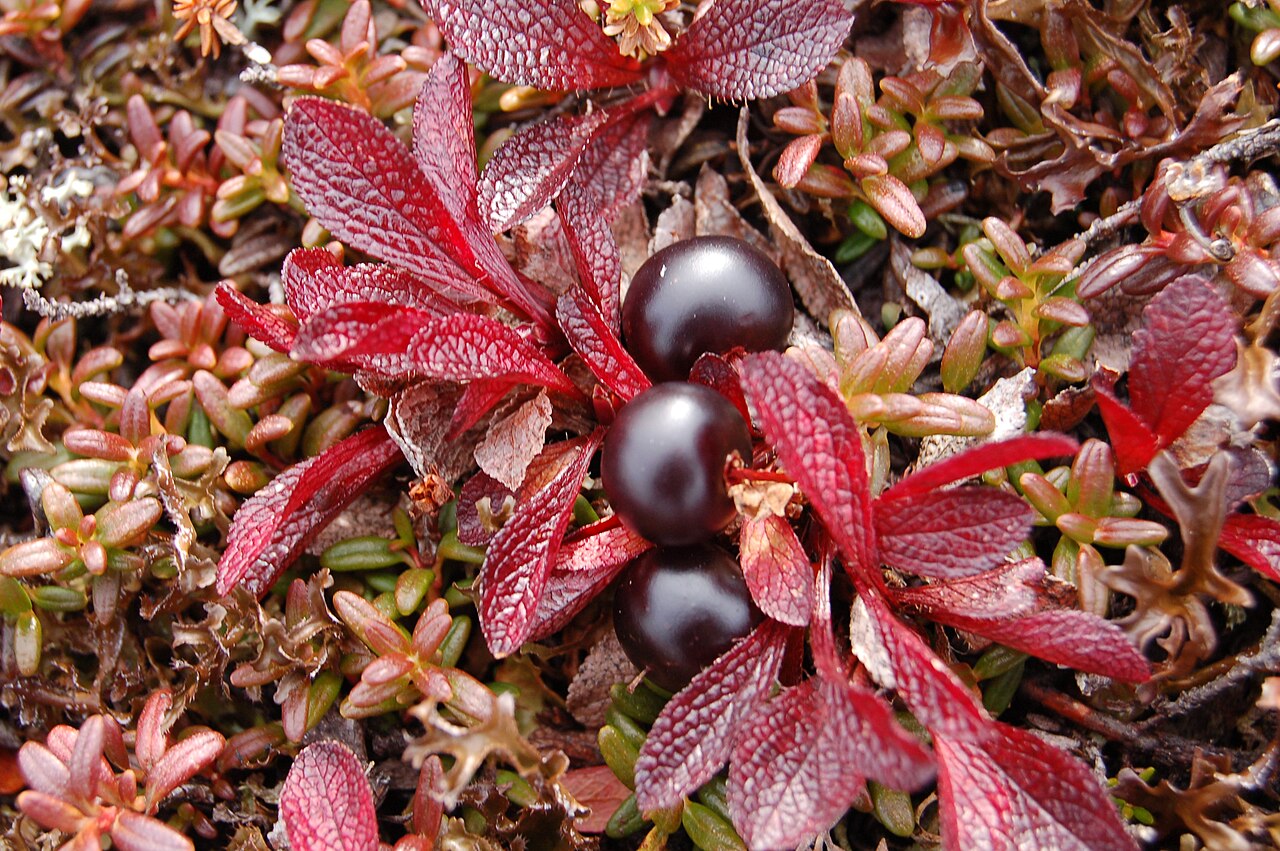
Arctostaphylos alpina, known as Alpine Bearberry, black bearberry or mountain bearberry, is a tiny, mat-forming shrub of the arctic tundra and high mountain summits. It is also widely listed under the synonym Arctous alpina. It creeps over rocks and gravel only a few inches tall, has wrinkled, toothed leaves, and bears small whitish urn-shaped flowers in late spring followed by juicy black berries. It belongs to the heath family (Ericaceae), alongside blueberries, heaths and its better-known lowland cousin, Kinnikinnik (Arctostaphylos uva-ursi).
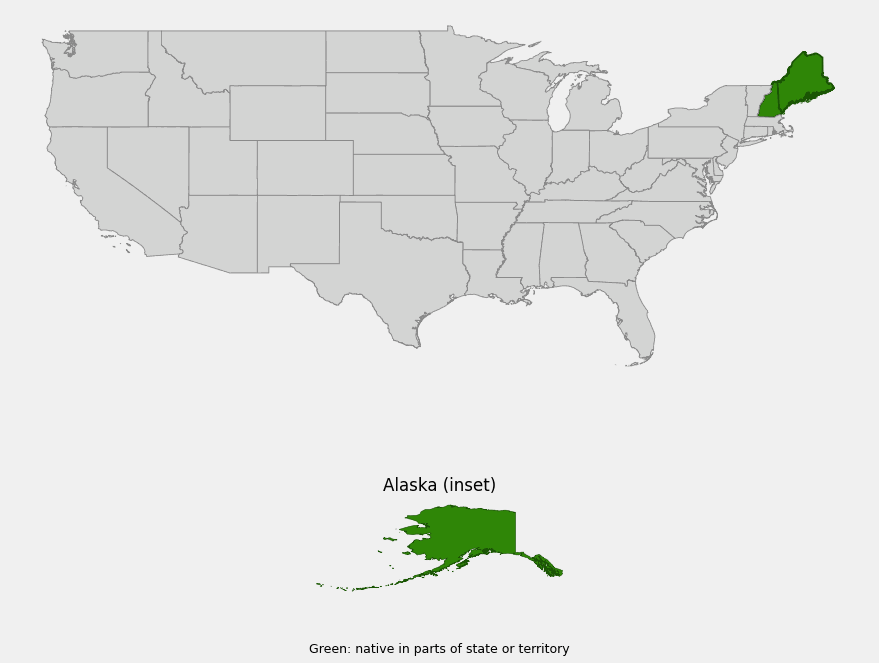
Alpine bearberry is circumpolar, growing across arctic and subarctic Europe, Asia and North America. In the United States it is common across much of Alaska, but in the lower 48 states it is known only from a handful of alpine summits in Maine and New Hampshire, where it survives as a relic of the last ice age above the treeline.
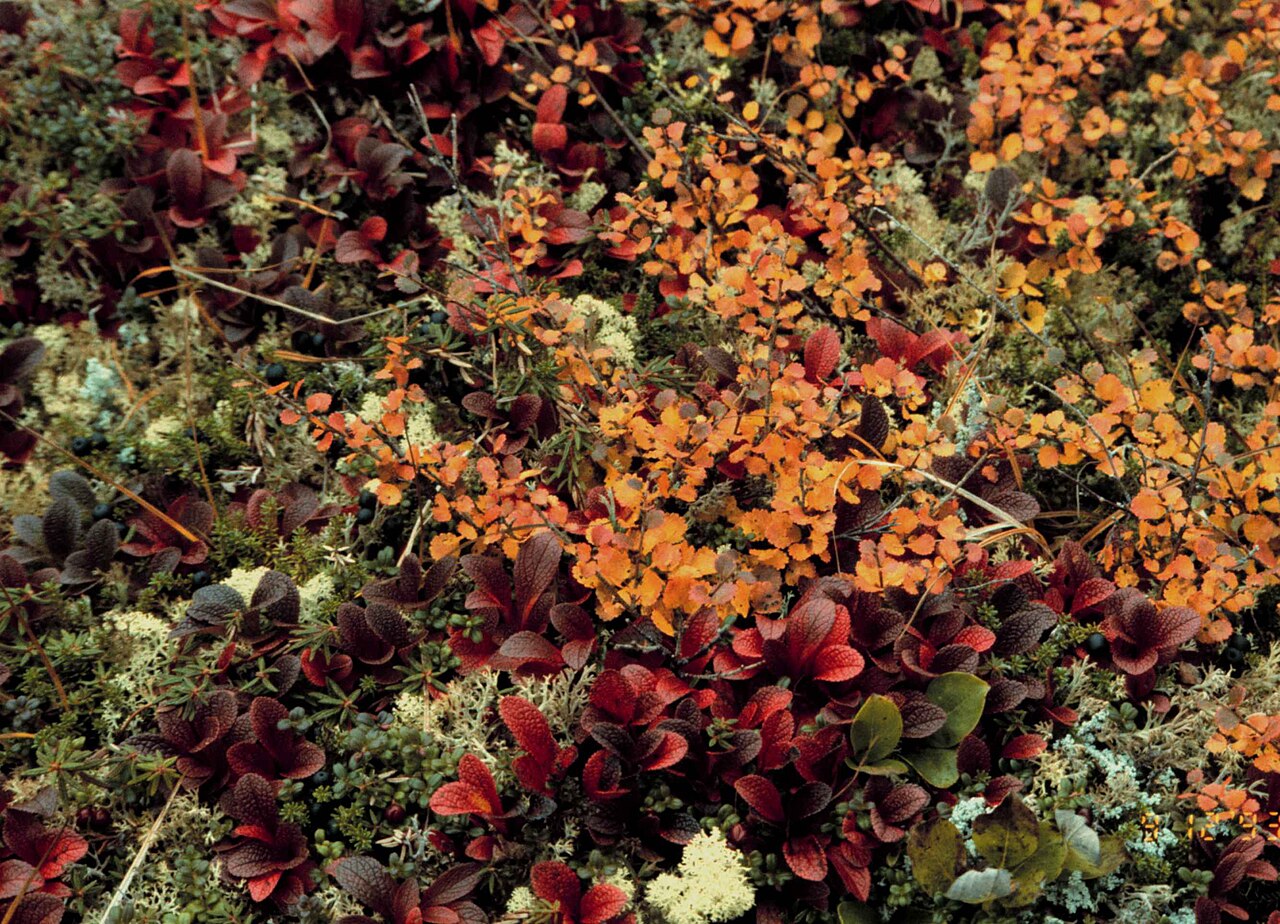
It is best known for its fall color: in late summer and autumn the leaves turn a brilliant scarlet, and large patches can paint whole hillsides red. This guide covers how to identify it, where it grows, why it is so difficult to grow in gardens, and its value to tundra wildlife.
Identification
Alpine bearberry is easiest to recognize by its prostrate habit, its strongly net-veined, toothed leaves that turn red in fall, and its black berries. Two similar plants grow in the same habitats: red bearberry and kinnikinnik.
Stems & Growth Habit
A deciduous, trailing dwarf shrub, usually 2 to 6 inches tall, with woody stems that creep over the ground and root along their length to form loose mats a few feet across. Old stems are covered with shredding bark and the dried, persistent remains of previous years’ leaves, which give the mats a shaggy look.
Leaves
The leaves are alternate and crowded toward the stem tips, obovate to spoon-shaped, about ¾ to 1½ inches long, narrowing to a short stalk. They are thin, conspicuously wrinkled by a network of sunken veins, and finely toothed, with a fringe of stiff hairs along the lower margins. They are bright green in summer and turn vivid red to purple-red in late summer and fall before dying; the dead leaves often stay on the plant through winter.
Flowers
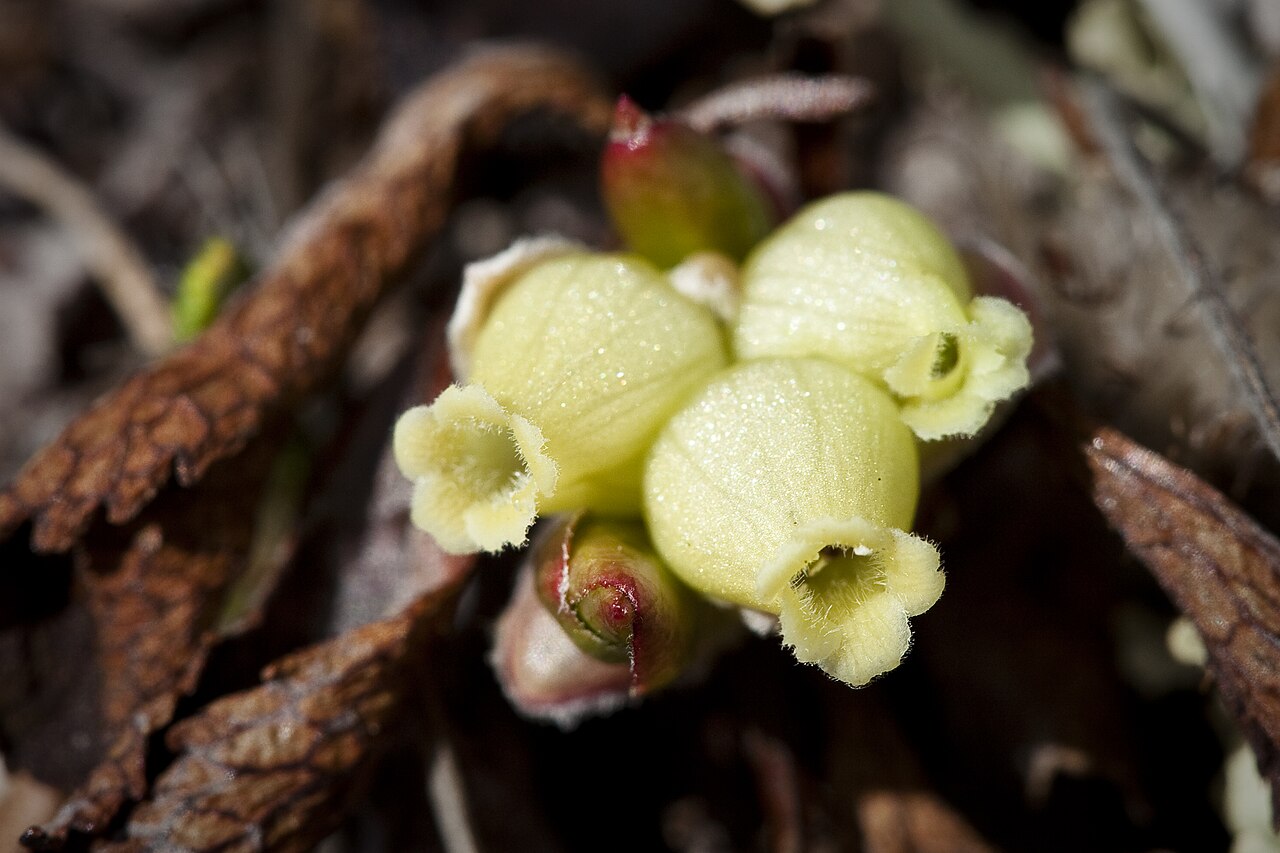
Flowers appear in May and June (June to early July in the alpine zone), often as the leaves are just emerging. They hang in small clusters of 2 to 4 at the branch tips. Each is a little urn about ¼ inch long, white to greenish-yellow, sometimes tinged pink, with five tiny lobes at the mouth, like a small blueberry flower.
Fruit
The fruit is a round, juicy drupe about ⅜ inch across with several hard seeds, green at first, sometimes passing through red, and ripening glossy purple-black in late summer. It is edible but rather bland. Red bearberry (Arctostaphylos rubra, syn. Arctous rubra), which shares much of its Alaskan range, has bright red ripe berries and leaves without hairy margins. Kinnikinnik is evergreen, with smooth, leathery, untoothed leaves and dry, mealy red berries.
Quick Facts
| Scientific Name | Arctostaphylos alpina (syn. Arctous alpina, Arbutus alpina) |
| Family | Ericaceae (heath family) |
| Plant Type | Deciduous, prostrate, mat-forming dwarf shrub |
| Mature Height | 2–6 in |
| Mature Spread | 1–3 ft (slowly spreading mats) |
| Growth Rate | Very slow |
| Sun Exposure | Full sun |
| Water Needs | Moderate; needs cool, moist roots but sharp drainage |
| Soil Type | Gravelly, rocky or peaty soil; tundra and fellfield |
| Soil pH | Acidic to slightly alkaline (about 4.5–7.5) |
| Bloom Time | May–July |
| Flower Color | White to greenish-yellow |
| Fall Color | Brilliant scarlet to purple-red |
| Fruit | Juicy purple-black drupe, ripening July–September |
| Deer Resistant | Not a concern in its habitat; grazed lightly by caribou |
| USDA Hardiness Zones | 1–4 (requires cool summers) |
Native Range
USDA PLANTS lists alpine bearberry as native in three states: Alaska, Maine and New Hampshire. In Alaska it is widespread on tundra, heath and open boreal forest from the Arctic Slope and the Brooks Range south through the Interior to the Alaska Range and parts of southcentral Alaska. In Canada it ranges across the north from Yukon, British Columbia and the Northwest Territories to Nunavut, northern Manitoba and Ontario, Quebec, Labrador and Newfoundland, and it also grows in Greenland and Saint Pierre and Miquelon.
In New England it is a rare alpine plant, restricted to exposed summits above the treeline, chiefly in the Presidential Range of New Hampshire and on Mount Katahdin and a few other high peaks in Maine. These southern outposts are remnants of tundra vegetation that covered the region at the end of the last glaciation. Because the plants grow in a tiny, fragile habitat, they should be enjoyed from the trail and never dug or collected.
Throughout its range it grows on dry, wind-swept ridges and fellfields that are blown free of snow in winter, gravelly beach ridges and eskers, lichen heaths, and open, boggy spruce woods. It often grows with other heaths, dwarf birch, crowberry and lichens.
📋 Regional plant lists featuring Alpine Bearberry: Alaska · New Hampshire, Maine & Vermont
Growing & Care Guide
Alpine bearberry is a plant for specialists. It is adapted to short, cool summers, long cold winters, wind and thin, well-drained soil, and it rarely survives long in ordinary gardens, especially where summers are warm. Nursery plants are seldom offered. Never dig plants from the wild: transplants almost always fail, and the New England populations are rare. Gardeners in milder regions who want a bearberry should grow Kinnikinnik instead.
Light
It needs full sun and open exposure. In nature it grows where nothing shades it, and in shade it becomes sparse and fails to flower or color well.
Soil & Water
Give it a lean, gritty, acidic to neutral mix of sand, gravel and some peat or leaf mold, with perfect drainage but steady moisture at the roots. It dislikes rich soil, fertilizer, and heat around the roots. A deep gravel mulch or rocks around the crown help keep the roots cool. In cold-climate gardens it can succeed in a raised rock garden, scree bed or trough.
Planting Tips
If you find nursery-propagated plants, set them out in spring in a cool, open spot in a rock garden, scree or crevice bed, and water through the first season. It is best suited to zones 1 to 4, such as interior and southcentral Alaska and the far north of the lower 48 at high elevations; in warmer zones it usually dies in its first hot summer.
Pruning & Maintenance
No pruning is needed. Keep competing plants and fallen leaves off the mat, which it cannot grow through, and avoid fertilizing. Growth is very slow, so patience is essential.
Propagation
Seeds have hard, deeply dormant pits and are slow and erratic to germinate, often needing a warm then cold stratification over a year or more. Layering of rooted stems and cuttings of half-ripe shoots taken in summer, rooted in a cool, humid propagator with acid sand and peat, are more reliable. Propagation is best left to nurseries and botanical gardens that specialize in alpine plants.
Landscape Uses
- Alpine and rock gardens: in cold, northern regions with cool summers
- Troughs and scree beds: for specialist growers of arctic and alpine plants
- Native landscaping in Alaska: as a fall-color ground cover on lean, gravelly sites
- Revegetation: of disturbed tundra and gravel pads in the Arctic, alongside other native heaths
- Nature study: one of the showiest fall-color plants of the tundra and New England summits
Wildlife & Ecological Value
On the tundra, alpine bearberry provides early flowers for insects, berries for birds and mammals, and a ground-hugging cover that helps hold thin soil in place.
For Pollinators
Its small urn-shaped flowers open early in the short arctic season and are visited mainly by bumblebee queens, which can buzz-pollinate heath flowers, and by flies and other small insects.
For Birds
Willow and rock ptarmigan, spruce grouse and other birds eat the berries and buds, and migrating thrushes and other songbirds feed on the fruit in late summer. Berries that remain on the plants into the following spring are a food for returning birds.
For Mammals
Grizzly and black bears eat the ripe berries in late summer and fall, as the common name suggests, and small mammals such as voles and ground squirrels also take the fruit. Caribou browse the plants lightly.
Ecosystem Role
Like other heaths, it forms partnerships with soil fungi (mycorrhizae) that help it take up nutrients from poor, cold soils. Its creeping, rooting stems knit together gravel and peat on exposed ridges and beach ridges, and its seeds are spread by the birds and mammals that eat the berries.
Cultural & Historical Uses
Linnaeus described the plant in 1753 as Arbutus alpina. Kurt Sprengel moved it to Arctostaphylos in 1825, and in 1889 Franz Niedenzu placed it in a separate genus, Arctous, on account of its deciduous, toothed leaves and juicy fruit; both names are in current use. Arctostaphylos means “bear grape” and Arctous “of bears,” and alpina refers to its alpine habitat.
The berries have been eaten by Indigenous peoples of Alaska and northern Canada and by northern Europeans, usually mixed with other berries or fat because they are rather bland on their own. The plant is also part of the striking autumn landscape of the tundra that draws visitors to places like Denali National Park.
In New England, alpine bearberry is one of the arctic-alpine plants that make the treeless summits of Mount Washington and Mount Katahdin botanically special. These plants are protected by staying on marked trails, which avoids trampling the slow-growing vegetation that may take decades to recover.
Frequently Asked Questions
Are alpine bearberry berries edible?
Yes. The ripe black berries are edible and juicy but fairly bland. They have traditionally been eaten mixed with other berries. Be sure of your identification before eating any wild fruit.
What is the difference between alpine bearberry and kinnikinnik?
Alpine bearberry is deciduous, with thin, wrinkled, toothed leaves that turn scarlet in fall, and juicy black berries. Kinnikinnik (Arctostaphylos uva-ursi) is evergreen, with smooth, leathery, untoothed leaves and dry red berries, and it grows in a much wider range of climates.
Is Arctous alpina the same plant?
Yes. Arctous alpina and Arctostaphylos alpina are two names for the same species. Some botanists place the deciduous, juicy-fruited bearberries in their own genus, Arctous, while USDA PLANTS keeps them in Arctostaphylos.
Where can I see alpine bearberry in the lower 48?
Only on a few alpine summits in New Hampshire and Maine, especially the Presidential Range and Mount Katahdin. Stay on the trail, since the alpine vegetation there is fragile and rare.
Can I grow alpine bearberry in my garden?
Only in cold climates with cool summers, such as much of Alaska, and even there it needs a lean, gravelly, well-drained spot in full sun. Never dig it from the wild. In warmer areas, kinnikinnik is a far easier evergreen bearberry ground cover.

Looking for a nursery that carries Alpine Bearberry?
Browse our native plant nursery directory: Alaska · Maine · New Hampshire

