Showy Mountain Ash (Sorbus decora)
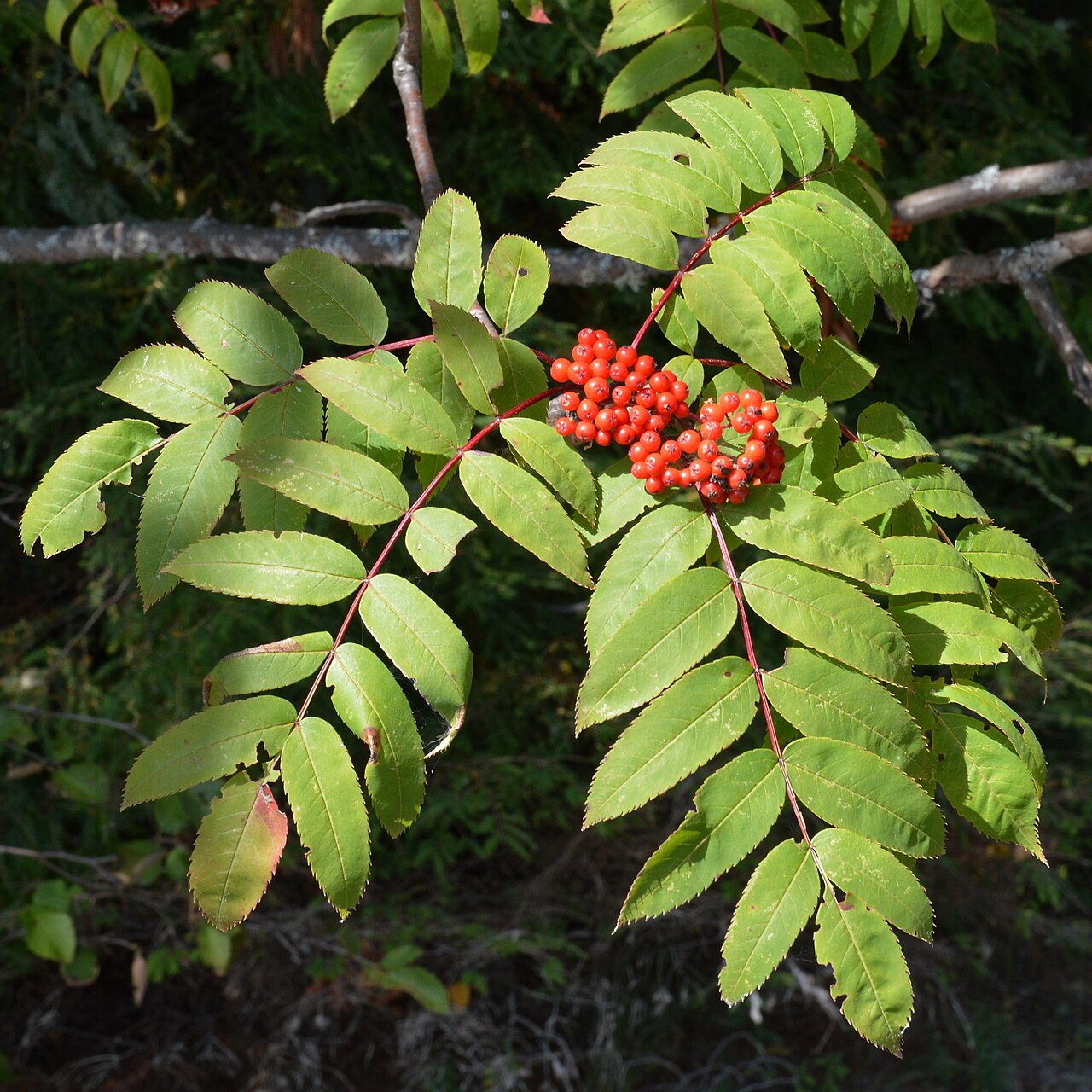
Sorbus decora, commonly called Showy Mountain Ash or Northern Mountain Ash, is a small native tree of the cold northern forests and rocky uplands of the Northeast and Great Lakes region. Despite the common name, it is not a true ash at all — it belongs to the rose family (Rosaceae) and is a close relative of apples and hawthorns, not of the ashes (Fraxinus) in the olive family. The name comes only from a superficial resemblance of its pinnately compound leaves to true ash foliage.
Showy Mountain Ash is a genuinely native North American species, and it is worth distinguishing clearly from the European Mountain Ash (Sorbus aucuparia), a widely planted ornamental tree from Europe that has escaped cultivation and now grows wild across much of the same northern range. The two are easy to confuse at a glance, but the European species is not native here — gardeners aiming to support local ecology should look specifically for Sorbus decora at native plant nurseries rather than assuming any “mountain ash” for sale is the native one.
In its native haunts, this compact tree rarely exceeds 30 feet, with an open, rounded crown, clusters of white spring flowers, and showy clusters of orange-red berries that persist into winter, giving the tree its two best seasons: a brief flush of white bloom in late spring and a long season of bright fruit color from late summer through winter, often held well after the leaves have dropped.
Identification
Showy Mountain Ash is identified by its compound leaves, white flower clusters, and persistent orange-red fruit, along with its typically small stature and smooth bark.
Bark & Stems
The bark is thin, smooth, and gray to grayish-brown, often with a slightly lustrous sheen, developing only shallow fissures with age. Young twigs are stout, reddish-brown, and hairless to only lightly hairy, with prominent, somewhat sticky, pointed buds in winter — a useful identification feature when the tree is bare.
Leaves
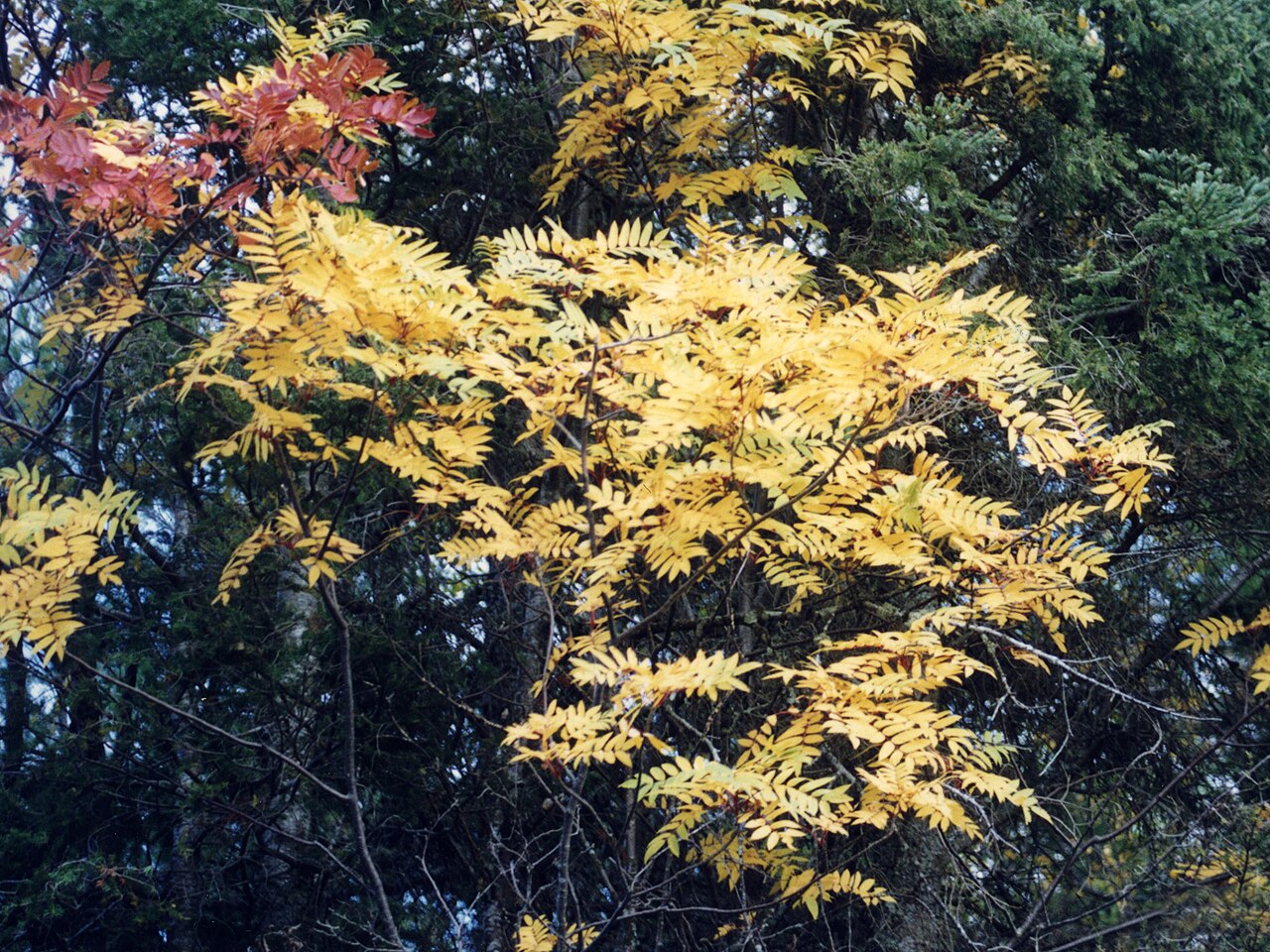
Leaves are pinnately compound, 6 to 9 inches long, made up of 11 to 17 narrow, sharply toothed leaflets that are widest near the middle and taper to a point at both ends. The leaflets are dark green above and paler, often slightly whitish, beneath. In fall the foliage turns yellow to reddish before dropping.
Flowers
Flat-topped clusters (corymbs) of small, white, five-petaled flowers, each about ⅓ inch across, bloom in late May through June. The clusters are showy as a whole even though the individual flowers are small, and they have a somewhat unpleasant, musky scent typical of the rose family’s Maloideae group, which also includes hawthorns and serviceberries.
Fruit & Seeds
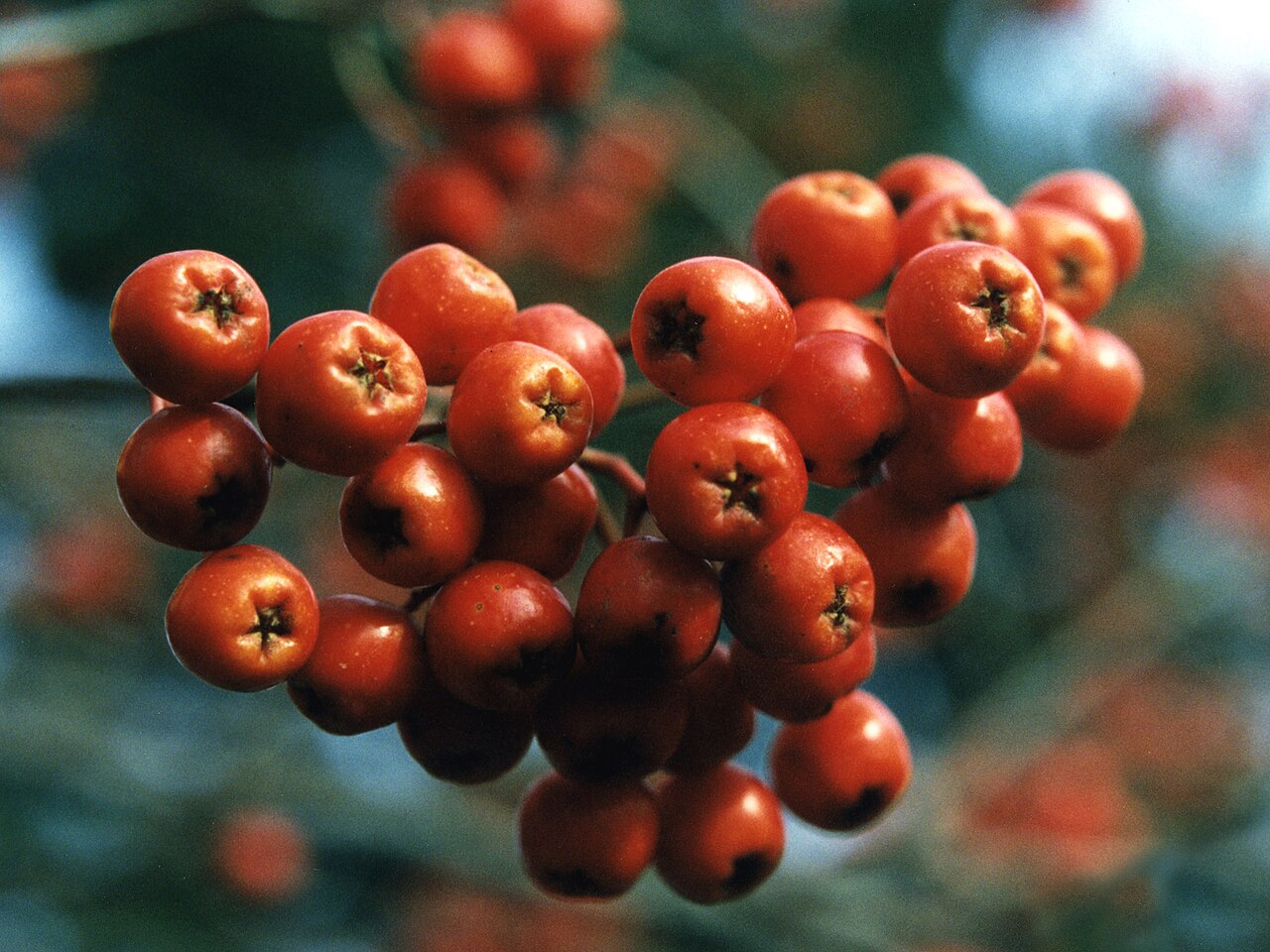
The fruit is a small, round, bright orange-red pome (botanically similar to a tiny apple) about ⅓ to ½ inch across, ripening in clusters from late summer and persisting on the tree well into winter, often until birds strip them. The berries are notably bitter and astringent to the human palate when raw — they are a wildlife food, not a garden snack, though they have a limited history of being cooked down with sugar into jelly after hard frost mellows some of the bitterness. They should not be eaten raw or treated as a casual foraged fruit.
Quick Facts
| Scientific Name | Sorbus decora |
| Family | Rosaceae (Rose) |
| Plant Type | Deciduous Small Tree / Large Shrub |
| Mature Height | 15–30 ft |
| Mature Spread | 12–20 ft |
| Growth Rate | Moderate |
| Sun Exposure | Full Sun to Part Shade |
| Water Needs | Average |
| Soil Type | Well-drained, rocky or sandy loam |
| Soil pH | 5.0–6.5 (acidic to slightly acidic) |
| Bloom Time | Late May – June |
| Flower Color | White |
| Fall Color | Yellow to reddish |
| Fruit | Bright orange-red pomes, persisting into winter; bitter, not for raw eating |
| Deer Resistant | No (browsed by deer and moose) |
| USDA Hardiness Zones | 2–6 |
Native Range
Showy Mountain Ash is native to the cold-temperate and boreal-edge forests of the northeastern United States and adjacent Canada, from the Great Lakes states of Michigan, Wisconsin, and eastern Minnesota east through New York, Pennsylvania, and New England, and north into the Maritime and central provinces of Canada. It reaches its southern limit roughly along the Pennsylvania–New York line and does not occur as a native tree farther south.
It grows naturally in cool, rocky uplands, along forest edges, lakeshores, and swamp margins, and in mixed conifer-hardwood forests where it typically remains a secondary, subcanopy tree rather than a dominant one. It tolerates thin, rocky soils that few other trees can use well, which is part of why it persists on exposed ridgelines and shorelines across its range.
Within this same northern range, the introduced European Mountain Ash (Sorbus aucuparia) has naturalized extensively after widespread ornamental planting, and in some areas it now outnumbers the native species along roadsides and forest edges. The two can be told apart by careful examination of the buds (sticky and hairless in S. decora, woolly-hairy in S. aucuparia) and leaflet shape, but gardeners who want the true native tree should buy from a nursery that specifically identifies it as Sorbus decora.
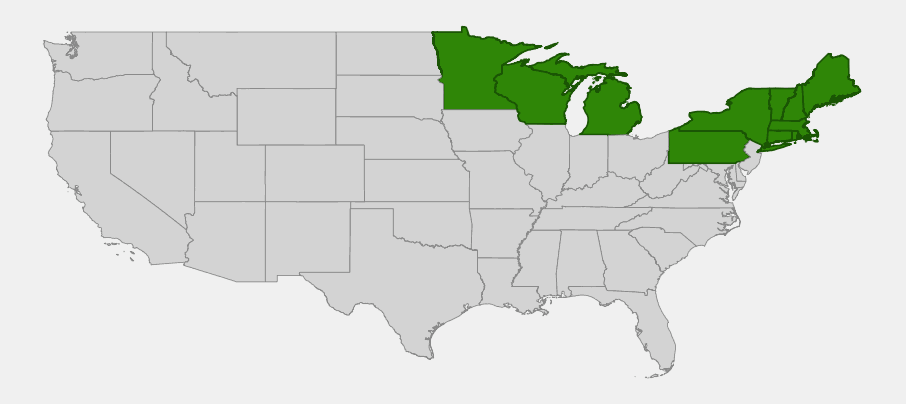
📋 Regional plant lists featuring Showy Mountain Ash: Maine, New Hampshire & Vermont · Connecticut, Massachusetts & Rhode Island · New York, Pennsylvania & Northern New Jersey · Michigan, Wisconsin & Eastern Minnesota
Growing & Care Guide
Showy Mountain Ash is a hardy, cold-climate native suited to northern gardens and rugged sites where few flowering trees thrive.
Light
It grows best in full sun to light part shade. Full sun produces the heaviest flower and fruit display, while some afternoon shade is tolerated, particularly at the warmer southern edge of its range.
Soil & Water
This species prefers well-drained, acidic to slightly acidic soils and tolerates thin, rocky, or sandy ground better than most ornamental trees, reflecting its natural habitat on exposed uplands and shorelines. It does not do well in heavy clay, poor drainage, or high-pH soils. Average moisture suits it; it is not especially drought-tolerant once mature but also will not tolerate standing water.
Planting Tips
Plant container or balled-and-burlapped stock in spring in a site with good air circulation, since the species can be prone to fire blight and borers in warm, humid, or stressed conditions. It performs best in genuinely cool climates — USDA zones 2 through 6 — and struggles in hot summer regions well south of its native range. Give it room from buildings and walkways for its mature spread and allow the berries to drop without concern for staining, as they are relatively small and dry quickly.
Pruning & Maintenance
Prune in late winter to remove dead, damaged, or crossing branches and to maintain a single leader if a tree form is wanted. Watch for borers and fire blight, especially on stressed trees in hot or droughty conditions; keeping the tree well-watered during establishment reduces susceptibility. Otherwise maintenance is minimal once established.
Landscape Uses
Its small size, spring flowers, and long-lasting winter fruit make it a strong four-season choice for northern landscapes.
- Specimen tree for small yards where a large shade tree would not fit
- Winter-interest plantings for the persistent orange-red fruit display
- Wildlife gardens to draw fruit-eating birds through the cold months
- Naturalized plantings on rocky, exposed, or lakeside sites
- Restoration plantings in cool northern hardwood or boreal-edge forest
Wildlife & Ecological Value
The persistent winter fruit makes Showy Mountain Ash an unusually valuable cold-season food source in a landscape where few other plants offer anything at all once snow falls.
For Birds
Cedar Waxwings, American Robins, Pine Grosbeaks, Bohemian Waxwings, and ruffed grouse are frequent consumers of the persistent berries, which often remain on the tree into midwinter after softer fruits have long since disappeared, making this tree an important late-season and winter food source, especially during irruption years when northern finches move south in search of fruit.
For Mammals
White-tailed deer and moose browse the twigs and foliage, sometimes heavily, and black bears will feed on the fruit where available. Small mammals also take fallen berries.
For Pollinators
The late-spring flower clusters attract a range of native bees and other insects, despite their somewhat unpleasant scent to humans — a scent that is thought to help attract fly and beetle pollinators typical of many Rosaceae tree species.
Ecosystem Role
As a relatively shade-intolerant, fast-colonizing small tree, Showy Mountain Ash often establishes in forest gaps and along disturbed edges, helping stabilize soil on rocky or exposed sites and providing an early structural layer that more shade-tolerant conifers and hardwoods later grow up through.
Cultural & Historical Uses
Several Indigenous peoples within its range, including Algonquian-speaking communities of the Great Lakes and Northeast, used mountain ash species in traditional practice, with bark and berries figuring in historical accounts of medicinal preparations; this history is recorded as ethnobotanical heritage rather than as a current recommendation, since the bitter raw fruit is not safe or palatable as a casual food.
European settlers, familiar with the unrelated but similarly fruited European Mountain Ash from home, readily adopted the native species’ common name and sometimes its folklore, including old-world traditions associating mountain ash wood and berries with protective charms — beliefs that properly belong to the European tree but were loosely carried over in North American tradition.
Historically, the wood of Showy Mountain Ash, while rarely large enough for substantial lumber, was occasionally used locally for tool handles and small turned items. Its primary modern significance is horticultural and ecological rather than economic: a native winter-interest tree increasingly favored by gardeners seeking an alternative to the non-native European Mountain Ash that has become naturalized across much of the same region.
Frequently Asked Questions
Can you eat Showy Mountain Ash berries?
Not raw — they are intensely bitter and astringent. They are primarily a wildlife food. After a hard frost, some foragers cook the berries down with substantial added sugar into a tart jelly, but this is a minor historical use, not a recommendation, and the fruit should not be eaten raw or in quantity.
Is Showy Mountain Ash the same as the mountain ash sold at most nurseries?
Often not. Many nurseries sell European Mountain Ash (Sorbus aucuparia), a naturalized, non-native species, rather than the true native Sorbus decora. If supporting local wildlife and ecology matters to you, ask specifically for Sorbus decora by scientific name.
Is Showy Mountain Ash actually related to true ash trees?
No. Despite the name, it is a member of the rose family (Rosaceae), related to apples and hawthorns. True ash trees (Fraxinus species) are in the olive family and are unrelated, aside from a superficial similarity in compound leaf shape.
How cold-hardy is Showy Mountain Ash?
Very — it is rated for USDA zones 2 through 6, making it one of the hardier small flowering trees available, but it does not perform well in hot-summer climates well south of its native range.
Why do the berries stay on the tree so long in winter?
The fruit’s bitterness and astringency make it less palatable to birds until repeated freeze-thaw cycles soften and sweeten it somewhat, which is why many birds favor it as a late-winter food source once other fruits are gone.

Looking for a nursery that carries Showy Mountain Ash?
Browse our native plant nursery directory: Northeast & Upper Midwest · Mid-Atlantic & Plains · New England & Appalachians