Smooth Carrionflower (Smilax herbacea)
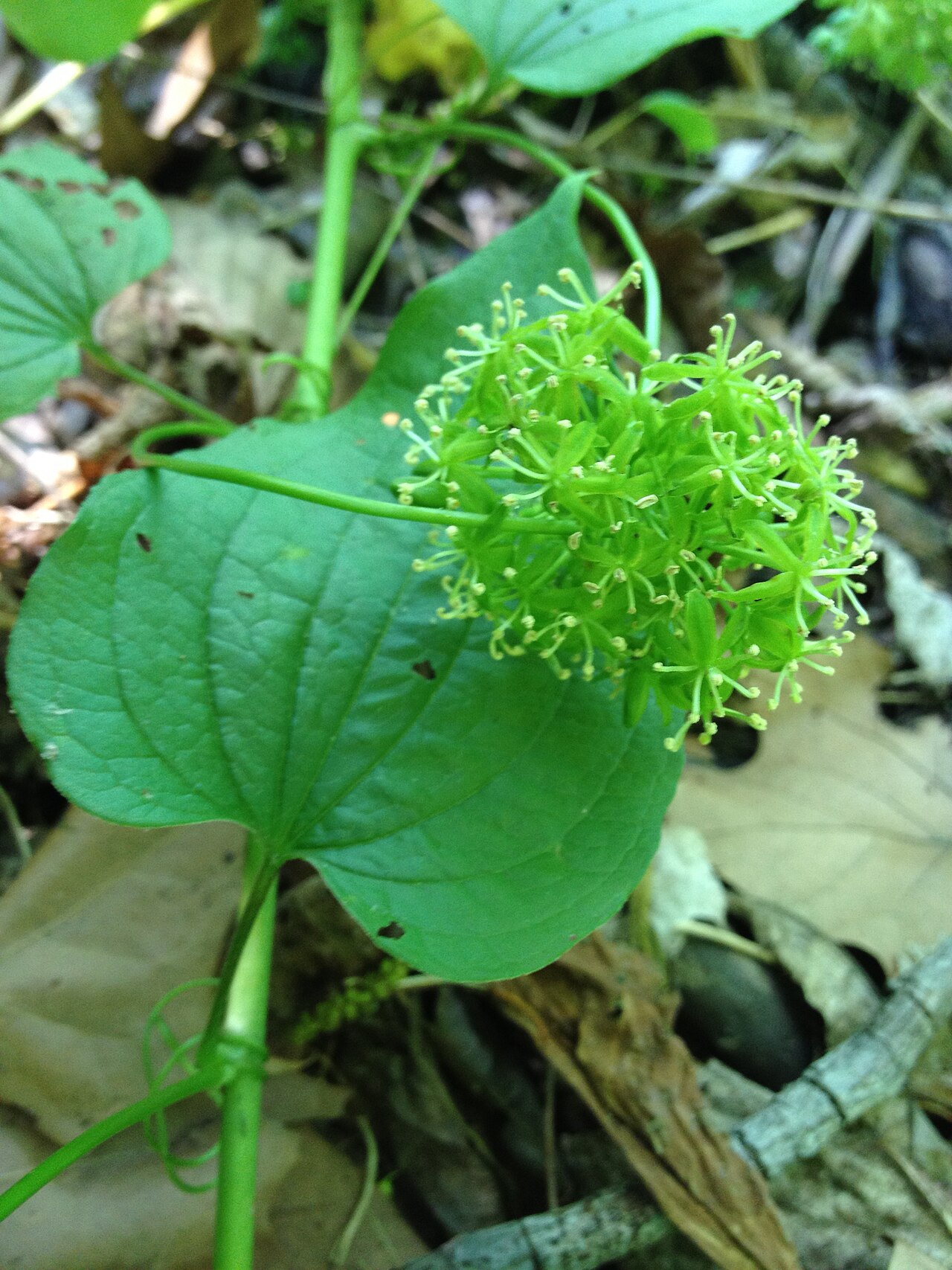
Smilax herbacea, commonly known as Smooth Carrionflower, is an unusual native vine of eastern woodlands — a non-woody, non-prickly member of the greenbrier family that dies back to the ground every winter, unlike its thorny, evergreen cousins. It is one of the easiest-to-grow and friendliest-to-handle plants in the genus Smilax, and its common name describes a trait you’ll notice before you see the flowers: they smell distinctly of carrion.
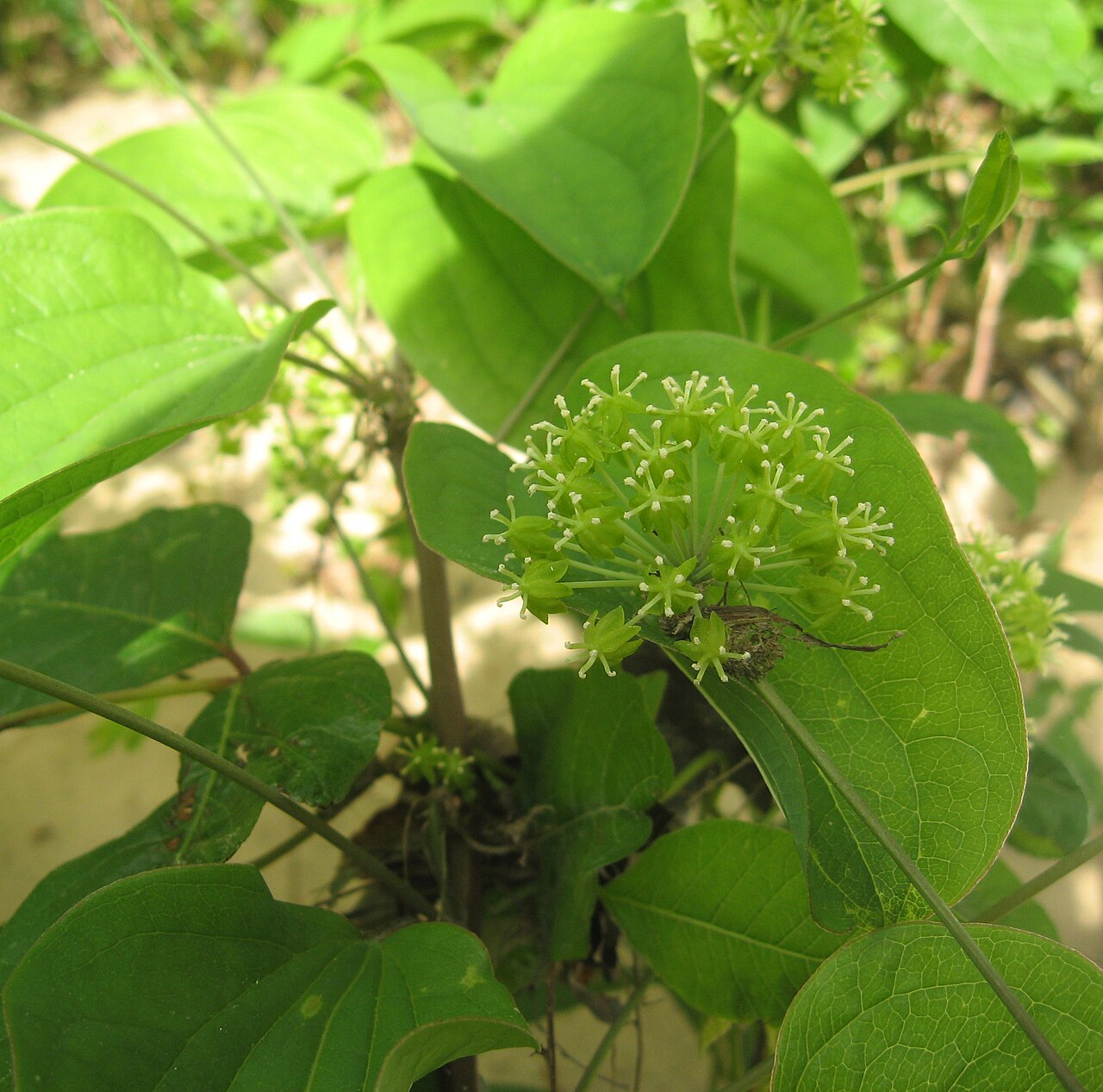
Each spring, slender green stems emerge from a woody rhizome and climb by curling tendrils, scrambling over shrubs and fence lines or sprawling across the forest floor if nothing is nearby to climb. The broad, heart-shaped leaves are glossy and attractive in their own right, but it’s the round, ball-like clusters of greenish-yellow flowers — and their unmistakable rotting-meat scent — that make this plant memorable. The smell is a deliberate pollination strategy, drawing flies and carrion beetles that normally seek out decaying material.
In the garden, smooth carrionflower is a conversation-starting addition to a woodland or naturalized planting, valued for its glossy foliage, fall berries that feed birds, and complete lack of the stout prickles that make other native Smilax species difficult to handle.
Identification
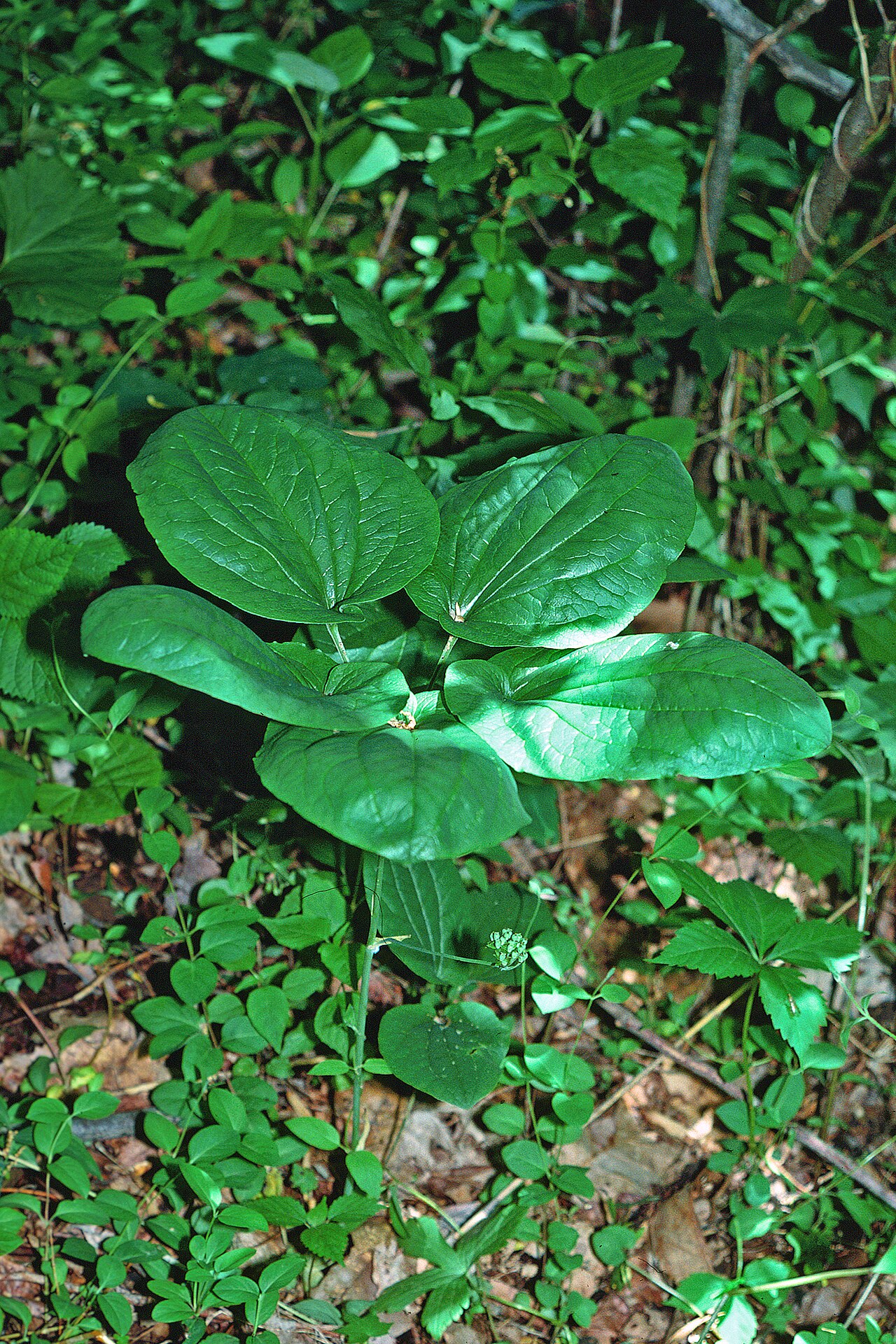
Smooth carrionflower is best distinguished from other eastern Smilax species by what it lacks: woody stems, evergreen leaves, and prickles. It is entirely herbaceous, dying back to its rhizome each winter and regrowing fresh stems every spring.
Stems
Stems are slender, green, round in cross-section, and climb by paired tendrils growing from the leaf bases — the same climbing mechanism used throughout the genus. Unlike Smilax rotundifolia (roundleaf greenbrier) or Smilax laurifolia (laurel greenbrier), the stems of smooth carrionflower are completely unarmed, with no prickles or thorns anywhere along their length.
Leaves
Leaves are alternate, broadly heart-shaped to ovate, 3 to 6 inches long, with smooth margins, a glossy dark green upper surface, and several prominent parallel veins running from the leaf base to tip — a hallmark of the genus. The foliage dies back with the first hard frosts of autumn.
Flowers & Fruit
In late spring to early summer, plants produce rounded, ball-shaped umbels of small, six-parted, greenish-yellow flowers on long stalks arising from the leaf axils. The plant is dioecious, with male and female flowers on separate plants. The flowers give off a strong odor of carrion or rotting flesh, a scent that attracts flies and carrion beetles as pollinators rather than bees or butterflies. By late summer, pollinated female plants produce clusters of blue-black berries that persist into fall.
Quick Facts
| Scientific Name | Smilax herbacea |
| Family | Smilacaceae (Greenbrier) |
| Plant Type | Herbaceous Perennial Vine |
| Mature Height | 6–15 ft (climbing) |
| Mature Spread | Spreads by rhizome |
| Growth Rate | Moderate |
| Sun Exposure | Part Sun to Full Shade |
| Water Needs | Moderate |
| Soil Type | Moist, humus-rich woodland soil |
| Soil pH | 5.5–7.0 (slightly acidic to neutral) |
| Bloom Time | May – June |
| Flower Color | Greenish-yellow (carrion-scented) |
| Fall Color | Dies back to rhizome |
| Fruit | Blue-black berries |
| Deer Resistant | Moderate |
| USDA Hardiness Zones | 4–8 |
Native Range
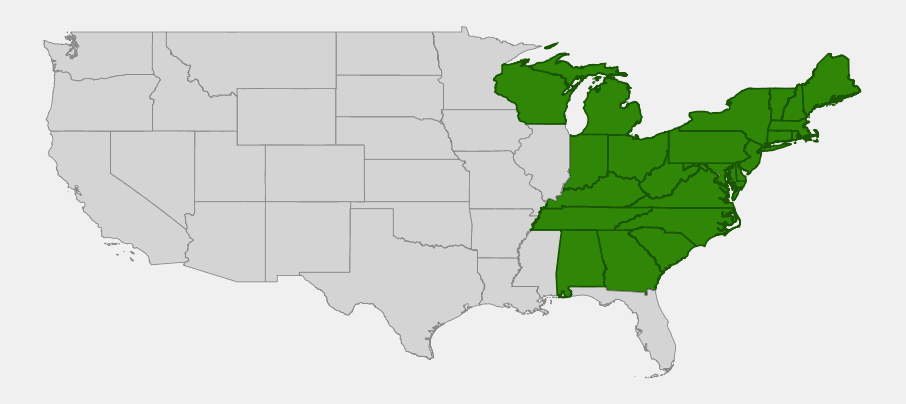
Smooth carrionflower is native to a broad swath of eastern North America, from New England and the Great Lakes region south through the Appalachians to Georgia and Alabama, and west to the edge of the Mississippi River valley. It is one of the more widespread members of its genus, found in nearly every eastern state from Maine to the Gulf Coastal states of the Southeast, though it drops out across most of the Deep South coastal plain and does not reach Florida, Louisiana, or Texas.
Within this range, the species favors rich, moist deciduous and mixed woodlands, floodplain forests, thickets, and shaded fencerows — generally anywhere with humus-rich soil and dappled to full shade. It is a common, unassuming presence in mature eastern hardwood forests, often climbing through understory shrubs rather than forming dense tangles the way its woody relatives do.
Because it dies back completely each winter, smooth carrionflower is easy to overlook outside its brief flowering and fruiting season, and it is not infrequently mistaken for a young greenbrier of a different, thornier species until a closer look at the unarmed stems settles the question.
📋 Regional plant lists featuring Smooth Carrionflower: New Hampshire, Maine & Vermont · Connecticut, Massachusetts & Rhode Island · New York, Pennsylvania & Northern New Jersey · Delaware, Southern New Jersey & Long Island · Maryland, Virginia & West Virginia · North Carolina & South Carolina · Georgia, Alabama & Mississippi · Kentucky & Tennessee · Ohio & Indiana · Michigan, Wisconsin & Eastern Minnesota
Growing & Care Guide
Smooth carrionflower is low-maintenance once sited correctly, and its lack of prickles makes it far more pleasant to weed around or train than most of its relatives.
Light
Give it part sun to full shade, mimicking its native woodland-edge and forest-floor habitat. It tolerates more sun in the cooler northern part of its range but generally performs best with some afternoon shade.
Soil & Water
Plant in moist, humus-rich soil with good organic content, similar to a typical woodland garden bed. Water regularly during the growing season, especially the first year; established plants tolerate brief dry spells but prefer consistent moisture.
Planting Tips
Because the vine climbs by tendrils, give it something to grip — a nearby shrub, small tree, or informal trellis works well. It also makes an attractive sprawling ground cover if left without support. Plant rhizome divisions or nursery starts in spring or fall.
Pruning & Maintenance
No pruning is needed during the growing season. Because the vine dies back naturally with frost, simply cut away the dead top growth in late winter before new shoots emerge in spring; the rhizome survives underground through winter.
Propagation
Propagate by dividing the rhizome in early spring, or by sowing cleaned seed in fall for cold stratification over winter; seed germination can be slow and uneven.
Landscape Uses
Smooth carrionflower fits naturally into several woodland-garden roles:
- Woodland garden vine scrambling over native shrubs
- Naturalized ground cover in shaded beds
- Wildlife garden plantings, for its fall berries
- Conversation-piece plant for gardeners interested in unusual pollination strategies
Wildlife & Ecological Value
Despite — or because of — its unusual scent, smooth carrionflower plays a real role in supporting both pollinators and birds through the growing season.
For Pollinators
The carrion-like scent is a deliberate strategy called sapromyiophily: rather than attracting bees or butterflies, the flowers lure flies and carrion beetles that normally seek out decaying organic matter, tricking them into carrying pollen between male and female plants.
For Birds
The blue-black fall berries are eaten by a variety of woodland birds, including thrushes and other fruit-eating songbirds, which help disperse the seeds to new sites.
For Mammals
White-tailed deer and rabbits will browse the tender spring growth to a modest degree, though the plant is not a preferred food source.
Ecosystem Role
As a non-woody, non-aggressive vine, smooth carrionflower adds vertical structure to the forest understory without overwhelming its neighbors the way some woody vines can, making it a relatively benign climbing companion in a diverse native plant community.
Cultural & Historical Uses
Various Indigenous peoples across the plant’s eastern range historically used the starchy rhizomes of Smilax species, including smooth carrionflower, as a food source — pounded, washed, and processed into a starch or flour. The young spring shoots of many Smilax species have also been gathered and prepared like asparagus in traditional foodways of the rural South and Appalachia.
The genus Smilax is also the namesake of true sarsaparilla, though the flavoring historically used in sarsaparilla soft drinks and root beer typically came from tropical Central American Smilax species rather than this eastern woodland plant. Smooth carrionflower itself has no significant documented history as a medicinal plant in its own right.
Today the species is of greater interest to native plant gardeners and naturalists than to foragers, valued more for its unusual natural history — the fly-pollinated, carrion-scented flowers — than for any practical use.
Frequently Asked Questions
Why does smooth carrionflower smell bad?
The flowers mimic the scent of decaying flesh to attract flies and carrion beetles as pollinators, a strategy called sapromyiophily. The smell is usually only noticeable up close, during the brief bloom period in late spring.
Does smooth carrionflower have thorns?
No. Unlike most other native Smilax species, such as roundleaf greenbrier, smooth carrionflower has completely unarmed, prickle-free stems — one of the easiest ways to tell it apart in the field.
Is it the same as common greenbrier?
No. “Greenbrier” usually refers to woody, evergreen, prickly Smilax species like Smilax rotundifolia. Smooth carrionflower is herbaceous, dies back each winter, and has no prickles at all.
How do I grow smooth carrionflower in my garden?
Plant it in moist, humus-rich soil in part sun to shade, and give it a nearby shrub or small trellis to climb. It needs little care beyond occasional watering and cutting back the dead growth each winter.
Is it native to my area?
It’s native through most of the eastern United States, from New England and the upper Midwest south to the Appalachians and Gulf states — check the range map above for your specific state.

Looking for a nursery that carries Smooth Carrionflower?
Browse our native plant nursery directory: Alabama · Connecticut, Delaware & Georgia · Indiana · Kentucky, Maine, Maryland, Massachusetts & Michigan · New Hampshire, New Jersey, New York, North Carolina & Ohio · Pennsylvania, Rhode Island, South Carolina, Tennessee, Vermont & Virginia · West Virginia & Wisconsin