Soapwort Gentian (Gentiana saponaria)
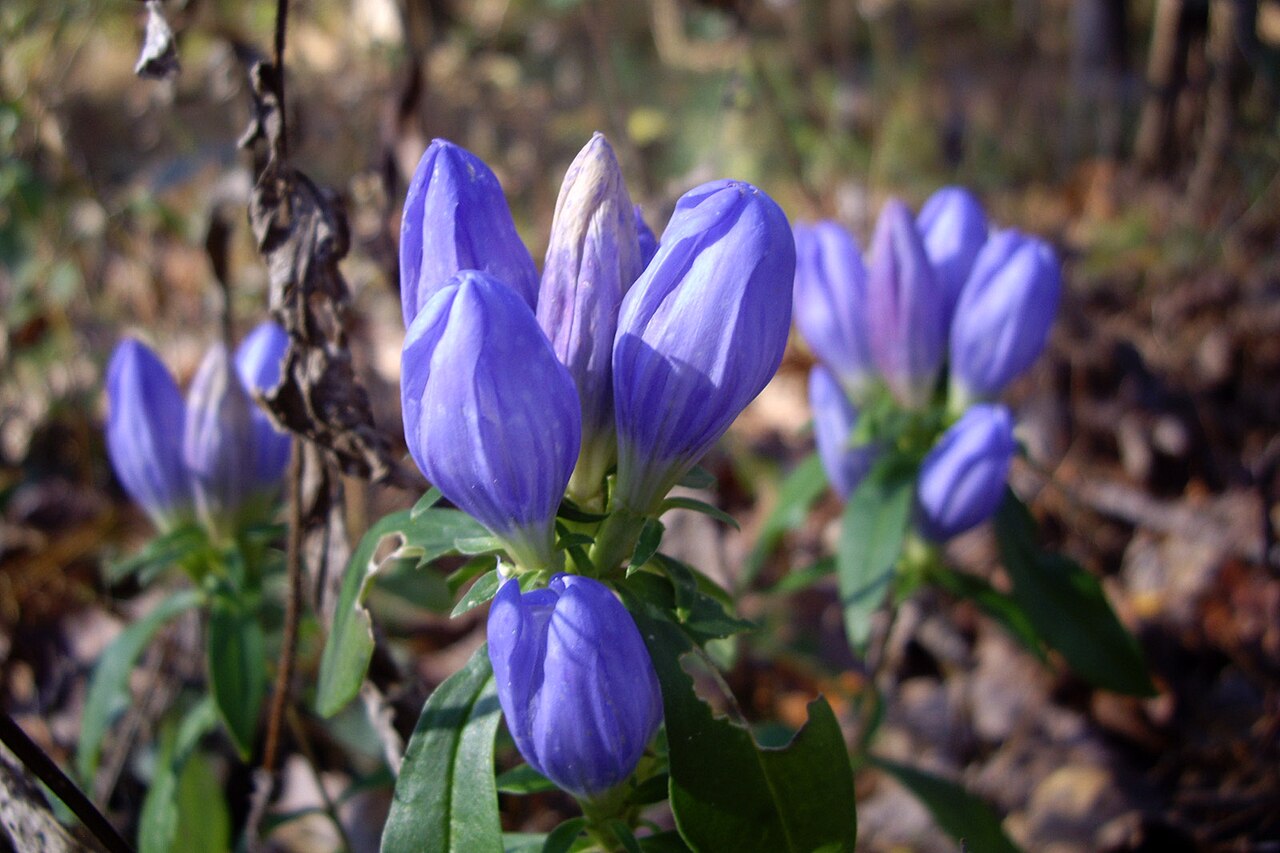
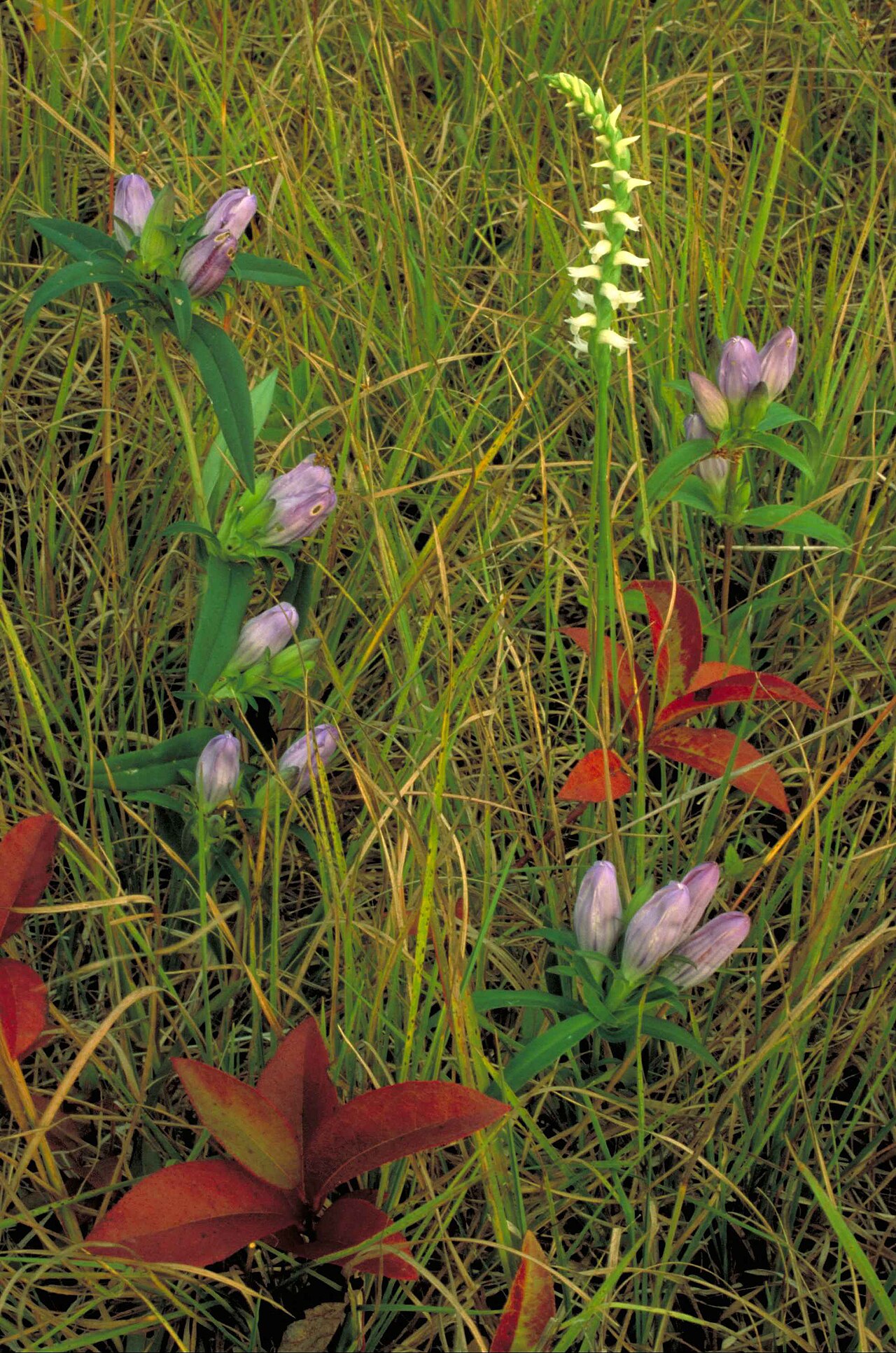
Soapwort gentian brings blue-violet color to the garden after many summer flowers have finished. Its upright, nearly closed blossoms look like small folded bells held among paired green leaves. The name harvestbells captures that late-season effect. This is a perennial for a carefully chosen moist site, not a drought-bed flower or a substitute for every other blue gentian. On the regional table it was called Closed Gentian; the scientific name Gentiana saponaria identifies the particular species treated here.
A useful way to appreciate this plant is to watch a bumblebee work a flower. A blossom that appears shut is not necessarily immature or damaged. Its structure makes access different from that of an open daisy. The slender stems and modest size—often around 8 inches to 2 feet—place the flowers where they can be lost behind larger plants, so give them a visible edge of a moist planting without exposing the root zone to repeated drying.
The common name does not mean the plant produces soap. Flora of North America explicitly explains that saponaria refers to a resemblance to soapwort, Saponaria officinalis, rather than soaplike material obtained from this gentian. Neither a “soapy sap” claim nor an edible or medicinal recommendation belongs in a garden description based only on the name. Correct identification and the right soil moisture are far more useful to a gardener.
Identification
Stems & Habit
Soapwort gentian is a relatively small herbaceous perennial with one or several stems from a persistent base. Stems are often simple or only lightly branched near the flowers. A plant can be upright or somewhat leaning among its neighbors. It is not a woody shrub, and the annual above-ground growth should not be mistaken for an evergreen framework. Mark the location before winter so that the crown is not accidentally disturbed when the next season’s bed preparation begins.
Leaves
Leaves are opposite along the stem, generally narrow-elliptic to lance-shaped, with smooth margins and little or no hair. Shape varies, and upper leaves crowd around the flowers. Do not identify it by leaf width alone: some populations are distinctly narrow-leaved. A useful field record includes several leaves and the whole flowering stem, not just the attractive top. The paired arrangement is easy to see if you follow the stem from one node to the next.
Flowers
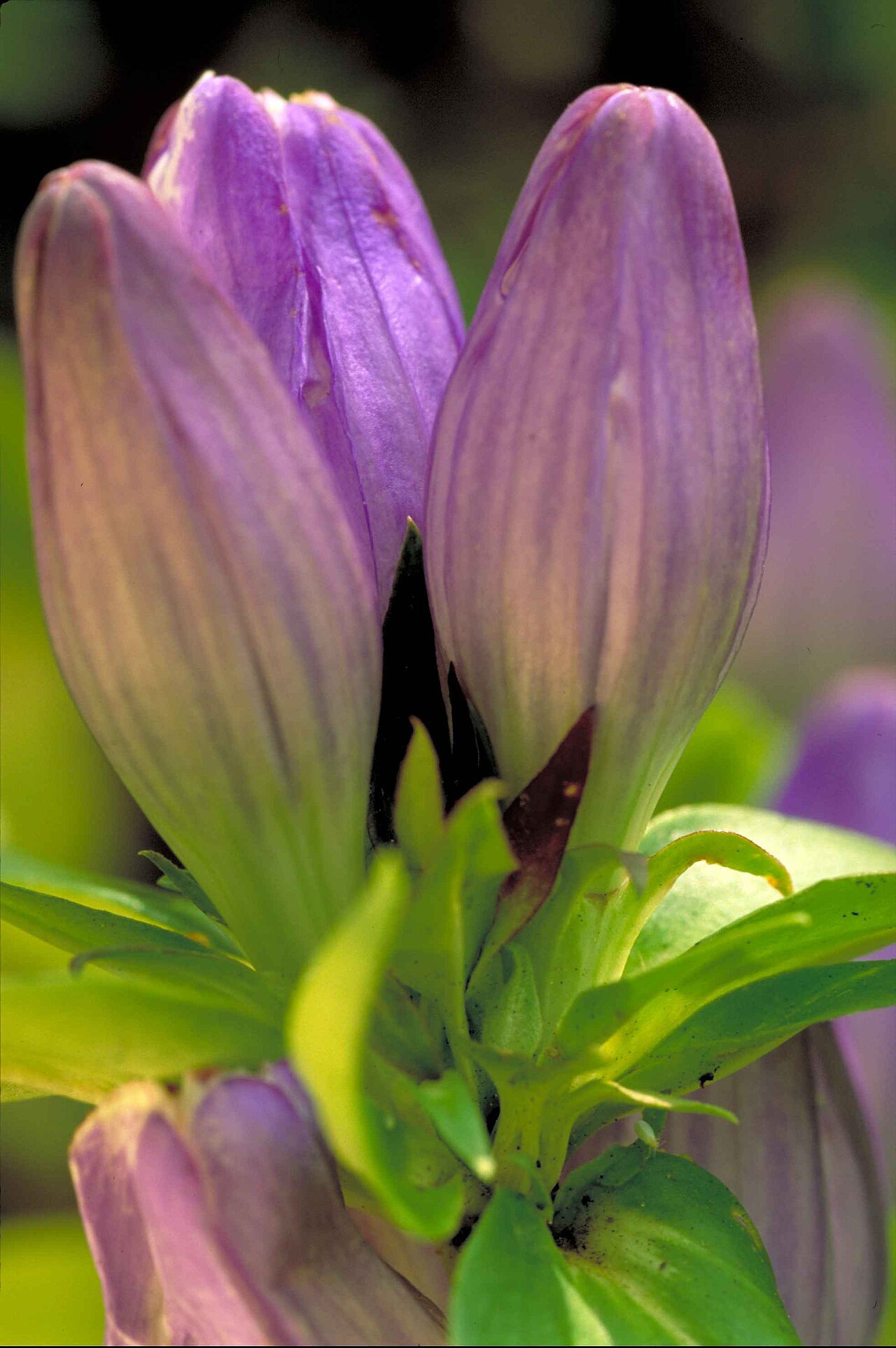
The blue to violet corolla is tubular, usually loosely closed or only partly open. Northern plants tend to appear more closed than some southern populations. The structures between the petal lobes and the calyx around the flower are important in distinguishing related gentians. Flower color alone is unreliable. If a plant’s identity matters for seed collection or restoration, use a regional key or seek expert confirmation rather than pulling the flower apart simply to compare a photograph.
Fruit & Seeds
After successful pollination, a capsule develops and releases numerous very small seeds. A ripening capsule is not a fleshy berry and should not be treated as bird fruit. Tiny seed is easily lost in handling or buried too deeply in a pot. For a home garden, obtaining a propagated plant is often simpler than raising a first generation from seed. When saving garden seed, label it carefully and remember that nearby related gentians can complicate identity through hybridization.
Quick Facts
| Scientific Name | Gentiana saponaria |
| Family | Gentianaceae (gentian family) |
| Plant Type | Herbaceous perennial |
| Mature Height | Commonly 8 in–2 ft; regional variation occurs |
| Mature Spread | A small clump; allow roughly 12–18 in in a garden planting |
| Growth Rate | Slow establishment; moderate seasonal growth once settled |
| Sun Exposure | Part sun to light shade; more sun only with adequate moisture |
| Water Needs | Consistently mesic to moist; avoid repeated drought |
| Soil Type | Moist, aerated sand or loam; suitable wetland-edge soils |
| Soil pH | Acidic generally preferred |
| Bloom Time | Late summer through fall; September–November in some southern sites |
| Flower Color | Blue to violet, sometimes pale or streaked |
| Fall Color | Foliage may turn yellow or reddish |
| Fruit | Capsules containing many tiny seeds |
| Deer Resistant | Often less palatable, but browsing can occur |
| USDA Hardiness Zones | 5–9 as a horticultural guide; check local provenance |
Native Range
Gentiana saponaria is native to central and eastern parts of the United States. The map follows the modern state distribution in Kew and Flora of North America. Its occurrence in Arkansas, Louisiana, Oklahoma and Texas makes it relevant to the regional list, but the suitable habitats within those states are scattered and not interchangeable. A moist sandy opening or lightly shaded woodland site is a more useful mental picture than an entire state uniformly covered in gentians.
Old records need particular caution. Flora of North America describes misidentifications involving other gentians and hybrids, including records outside the modern range. New England should not be added merely because an old illustration or historic checklist used the name G. saponaria. The District of Columbia is treated as extirpated in the cited accounts; the map is not intended to show that a surviving wild population is known there.
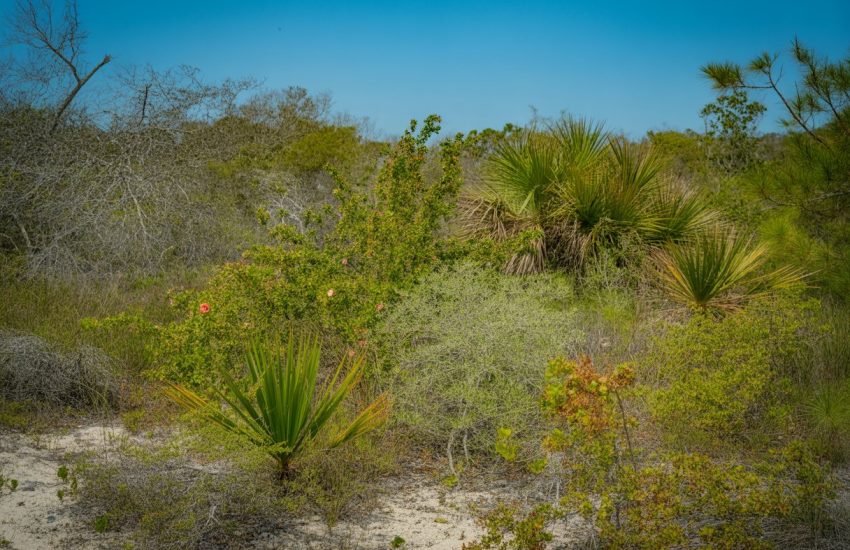
This is a plant of moist or mesic woods, savannas, swamps, fens and related openings. Local ecological conditions can differ even within one county. For a restoration project, ask about seed origin and the habitat of the source population. A cultivated plant in a shaded city garden demonstrates horticultural survival, not evidence that the city lies within the species’ historical wild distribution.
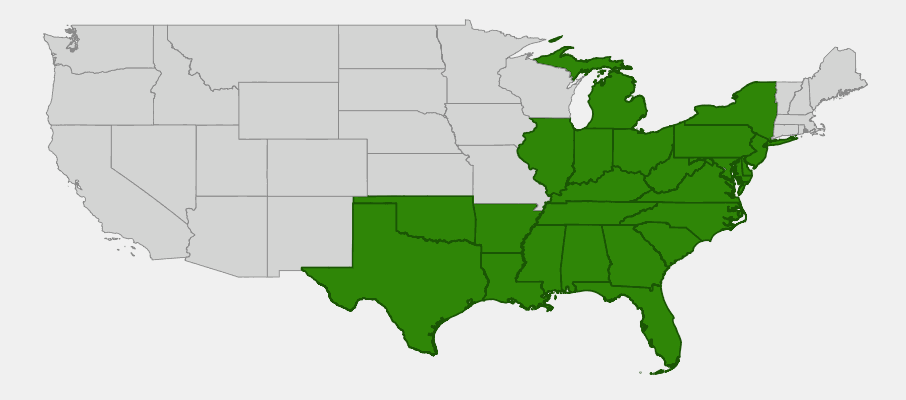
📋 Regional plant list: Arkansas, Louisiana, Eastern Oklahoma and Eastern Texas
Growing & Care Guide
Light
Begin with a bright, partly shaded site that does not bake dry in the afternoon. More direct sun can work where moisture remains suitable, but the combination of strong heat and a dry root zone is a poor experiment. Check how neighboring plants will shade the gentian by late summer. Low competition and good visibility matter as much as the number of hours of light when the plant is only a foot or two tall.
Soil & Water
The goal is reliable moisture with oxygen around the roots. Do not assume that any low, muddy corner is suitable. A sandy or loamy soil that stays moist can be better than compacted soil holding stagnant water. Water new plants when needed to keep the root ball from drying, and check beneath any mulch before adding more. If the site repeatedly becomes dry despite irrigation, moving to a better moisture regime is usually wiser than forcing the plant to endure it.
Planting Tips
Use a nursery-propagated, correctly labeled plant. Place the crown at the same depth it occupied in its container and avoid tearing a developed root system apart unnecessarily. Water thoroughly to settle the soil, then keep aggressive neighboring plants from overtaking the small crown. A discreet label is helpful: the gentian can be inconspicuous before flowering and is easy to overlook during weeding or seasonal division of other plants.
Pruning & Maintenance
This is not a plant for repeated shearing. Preserve the stems while they develop flower buds, and remove only damaged material when necessary. After seed has ripened and the top growth has died back, tidy according to the needs of the surrounding garden. Avoid deep cultivation around the crown. A light layer of appropriate organic mulch can help moderate conditions, but piling mulch against the emerging shoots can conceal them and complicate monitoring.
Propagation
Seed propagation can be slow and technically demanding. Follow a specialist nursery’s instructions for the particular seed lot, including any moist chilling treatment, instead of assuming all gentians germinate alike. Keep tiny seeds near the surface and maintain careful moisture control without washing them away. Division is mentioned in horticultural guidance, but repeated splitting of a small, established plant is not a good beginner strategy. If the purpose is simply to add a few plants, propagated plugs are the more predictable route.
Troubleshooting
A yellowing plant needs diagnosis, not an automatic fertilizer dose. Drying, excessive exposure, root damage and poorly aerated wet soil can all undermine establishment. Inspect the moisture profile and the crown before changing care. If leaves are being removed, look for browsing or feeding signs. If flowers are present but remain mostly closed, that can be normal for this species; forcing them open or treating them as diseased would damage a healthy display.
Landscape Uses
- Feature near the visible edge of a moist native border, where taller plants will not hide the late flowers.
- Use in a carefully managed open woodland garden with suitable moisture and light.
- Place with restrained companions rather than fast-spreading plants that will smother a small crown.
- Include as one element of a succession of flowers for bumblebees, with early-season resources elsewhere nearby.
Wildlife & Ecological Value
For Pollinators
Bumblebees are important visitors because they can enter the nearly closed flowers. The flower’s form is part of its ecological character, not a defect to be corrected. Watch from a short distance rather than handling flowers while bees work. Avoid insecticide exposure during bloom, and provide other locally appropriate flowers through the rest of the growing season.
For Birds
The minute seeds are not comparable to the conspicuous seed crop of a sunflower, and this page does not promote the gentian as a major bird-food plant. Its value belongs within the larger plant community. Nearby shrubs, grasses and other forbs contribute structure and food at different times, making a mixed planting more useful than expecting one species to meet every wildlife need.
For Mammals
Bitter foliage can reduce browsing, but occasional deer damage is still reported. A small gentian can lose much of a season’s display if the stem tip is eaten. Where browsing is severe, protect the planting while it establishes and evaluate actual local pressure. Do not infer safety as a human medicine or livestock feed from the fact that some animals tend to avoid it.
Ecosystem Role
Soapwort gentian adds a late-flowering component to compatible moist habitats. Protecting the soil and hydrology is at least as important as adding individual plants. In a home garden, avoid unnecessary disturbance once the plant settles in. In a natural area, preserving an existing population and its conditions is more valuable than removing specimens to decorate a yard.
Cultural & Historical Uses
The name soapwort gentian has generated an unfortunate misunderstanding. Flora of North America explains the epithet by resemblance to soapwort’s stems and leaves, not by soap obtained from the gentian. The two plants belong to different families, and a name shared in part does not establish shared chemistry or use.
Harvestbells is a useful alternative common name because it emphasizes the season and the shape of the flowers without suggesting an unsupported preparation. “Closed gentian” is less precise: several gentian species can have closed or nearly closed flowers. A scientific name and a good botanical reference are therefore important when buying a plant or updating a regional table.
Historically broad name usage also explains why an old range statement may not match a modern flora. As taxonomists separated similar plants and re-examined specimens, some earlier records changed identity. A careful garden record should preserve the label and source, while remaining open to a well-supported correction. No traditional remedy or medicinal use is recommended by this planting guide.
Frequently Asked Questions
Why do the flowers not open like ordinary bells?
Their tubular, nearly closed shape is normal. Bumblebees can work these flowers, and the degree of opening varies geographically and among plants.
Is this the same as bottle gentian, Gentiana andrewsii?
No. They are related but distinct species. Color alone is not enough to separate them; floral structures and a regional key are important.
Can it tolerate a dry sunny border?
That is not the recommended use. Soapwort gentian needs a site that remains mesic to moist, especially during establishment and summer heat.
Does “soapwort” mean the sap makes soap?
No. The cited flora explicitly attributes the name to resemblance to soapwort. It does not support a soap-making claim.
Should I collect a wild plant for my garden?
Use responsibly nursery-propagated material instead. Wild populations can be uncommon or locally protected, and moving a mature plant may fail while damaging the original site.
Sources & Further Reading
- Flora of North America — Gentiana saponaria, identification and corrected range
- Kew Plants of the World Online — native states and accepted name
- NC State Extension Plant Toolbox — harvestbells
- University of Tennessee Smart Yards — soapwort gentian
- Illinois Wildflowers — soapwort gentian field observations
Find Native Plants
Ask growers about nursery propagation and regional provenance. Browse our Arkansas native plant nurseries, Louisiana native plant nurseries, Oklahoma native plant nurseries, Texas native plant nurseries directory for suppliers.