
Soursop (Annona muricata)
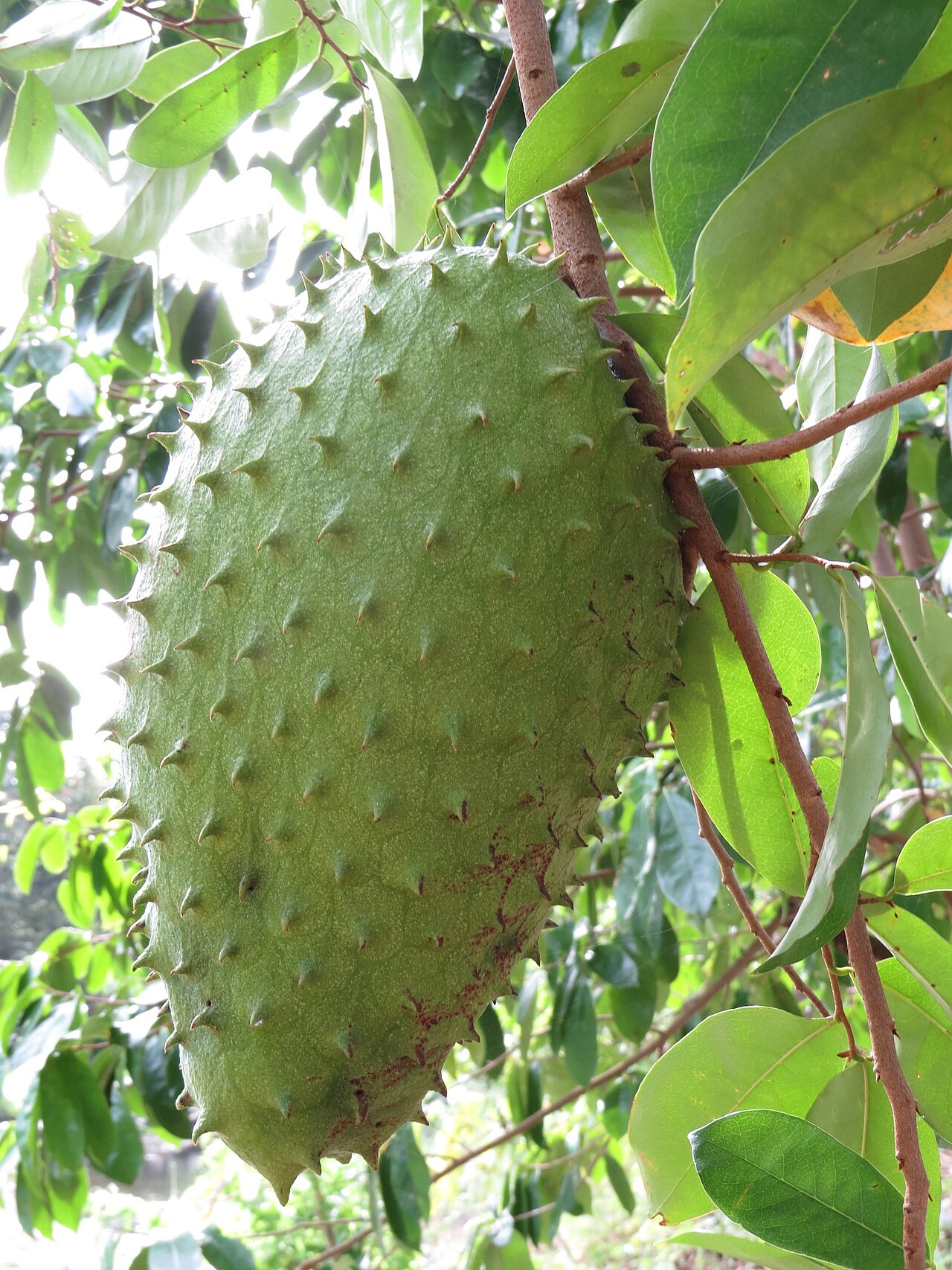
Annona muricata, known as Soursop and in Puerto Rico as guanábana, is a small evergreen tree in the custard apple family (Annonaceae). It is famous for its large, heart-shaped, spiny green fruit, which has soft, white, fibrous flesh with a flavor often described as a mix of pineapple, strawberry and citrus with a creamy, slightly sour finish. Soursop is also called graviola (Brazil), corossol (French Caribbean) and guyabano (Philippines).
USDA PLANTS lists soursop as native in Puerto Rico and the U.S. Virgin Islands, and it is not native anywhere in the continental United States. Its natural range is the Caribbean and the tropical lowlands of Central and northern South America, although people have planted it so widely for so long that the exact limits of its wild range are uncertain. Today it is grown throughout the tropics, from the Caribbean and Latin America to West Africa, India and Southeast Asia.
In Puerto Rico guanábana is a classic dooryard tree, grown for fresh fruit, juice, ice cream (helado de guanábana), batidos and the island’s popular guanábana champola. This guide covers how to recognize it, where it grows, how to grow it outdoors in the warmest parts of the U.S. or in a container, and what you need to know about the health claims and the toxic seeds.
Identification
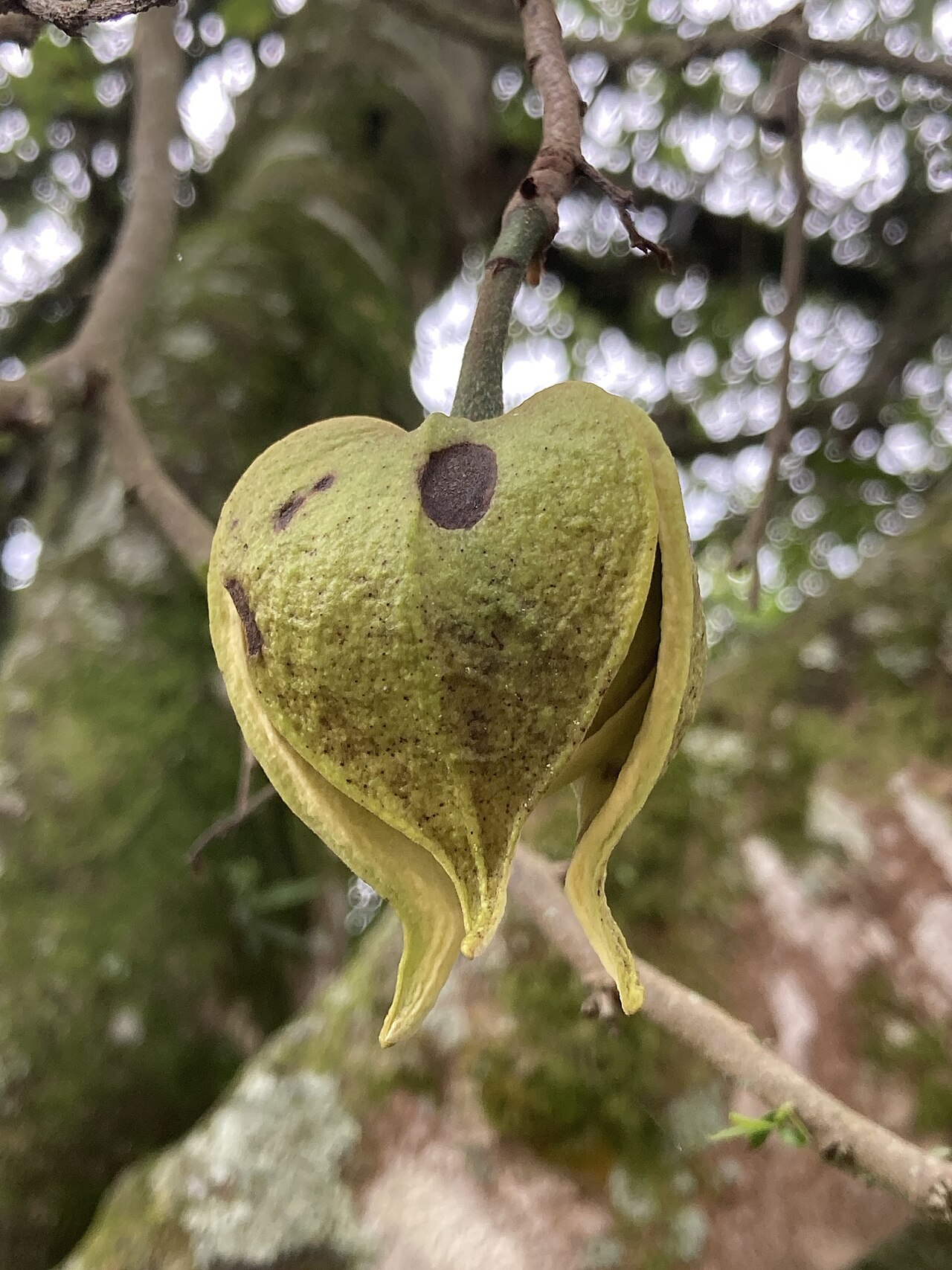
Look for a slender, small tree with glossy, dark green, aromatic leaves, thick, fleshy, greenish-yellow flowers hanging from the trunk and branches, and large green fruit covered in soft, curved spines.
Growth Habit
Soursop is a small, upright evergreen tree, usually 15 to 30 feet tall with a narrow, open crown and a trunk only a few inches to about a foot thick. Young trees are often sparsely branched. In cultivation it is commonly kept at 8 to 12 feet so the fruit can be picked from the ground. It has a fairly shallow root system.
Leaves
The leaves are alternate, oblong to obovate, 2 1/2 to 8 inches long, smooth, leathery and glossy dark green above, paler beneath, with short stalks. When crushed they give off a strong, somewhat pungent smell. The tree is largely evergreen, though it may drop many leaves in a long dry season or a cold snap.
Flowers
The flowers grow singly or in small groups on short stalks from the trunk, older branches and twigs, a habit called cauliflory. Each flower is 1 1/2 to 2 inches long, with three thick, fleshy, triangular, yellowish-green outer petals that stay partly closed and three smaller, paler inner petals. They are faintly fragrant, and in Puerto Rico they can appear in most months, with a peak in spring and early summer.
Fruit & Seeds
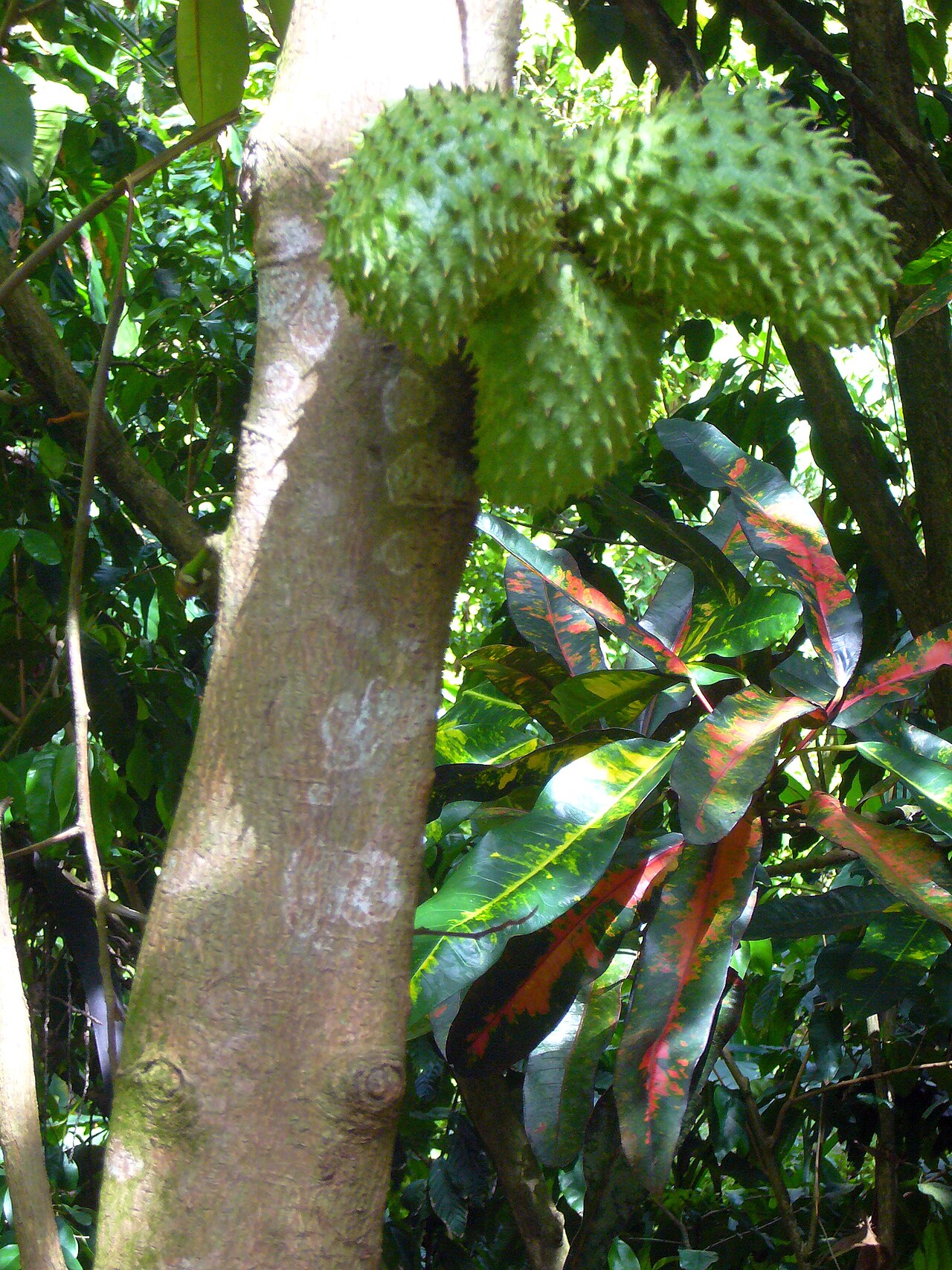
The fruit is the largest in the custard apple family: oval to heart-shaped and often lopsided, usually 6 to 12 inches long and weighing up to 10 pounds or more. The thin, dark green skin is covered in soft, fleshy, curved spines. Inside is juicy, white, cottony flesh in segments, many of which hold a shiny, black or dark brown seed about 3/4 inch long. A large fruit may contain more than 100 seeds. The fruit ripens about four to five months after flowering.
Look-alikes
Sugar apple (Annona squamosa) and custard apple (A. reticulata) have smaller fruit with knobby or smooth skin, not soft spines. Pond apple (A. glabra), native to Florida and Puerto Rico, has smooth, yellow-green fruit and grows in swamps. Mountain soursop (A. montana) is similar but has rounder, less spiny fruit and hairier leaves. Jackfruit and durian are unrelated and have much harder, pointed skins.
Quick Facts
| Scientific Name | Annona muricata |
| Family | Annonaceae (custard apple family) |
| Plant Type | Small evergreen fruit tree |
| Mature Height | 15–30 ft (often kept at 8–12 ft) |
| Mature Spread | 10–15 ft |
| Growth Rate | Fast |
| Sun Exposure | Full sun to part shade |
| Water Needs | Moderate; regular water, never waterlogged |
| Soil Type | Deep, well-drained loam or sandy soil; tolerates limestone |
| Soil pH | Slightly acidic to neutral (about 5.5–7.0) |
| Bloom Time | Most of the year; peak in spring and early summer |
| Flower Color | Yellowish green to pale yellow |
| Fall Color | None (evergreen) |
| Fruit | Large, green, soft-spined fruit with white pulp |
| Deer Resistant | Not applicable in most of its range |
| USDA Hardiness Zones | 10b–13 (frost tender) |
Native Range
USDA PLANTS lists Annona muricata as native in Puerto Rico and the U.S. Virgin Islands, and as introduced in the Pacific Basin (Guam and other islands). It is not native in Florida, Hawaii or anywhere else in the continental United States, although it is grown as a fruit tree in South Florida and Hawaii. Beyond U.S. territory, its natural range covers the West Indies and the tropical lowlands of Central America and northern South America.
Soursop has been cultivated in the Americas since well before European contact, and the Spanish carried it to Asia and Africa early in the colonial period. Because of this long history, botanists cannot say with confidence exactly where wild populations end and old plantings begin. In Puerto Rico it is common around homes, farms and roadsides at low and middle elevations, and it also persists in secondary forest and abandoned fincas.
It is a plant of the humid lowland tropics. It grows best below about 3,000 feet, in warm, frost-free places with a rainy season, and it does poorly in cool highlands and in very dry areas without irrigation.
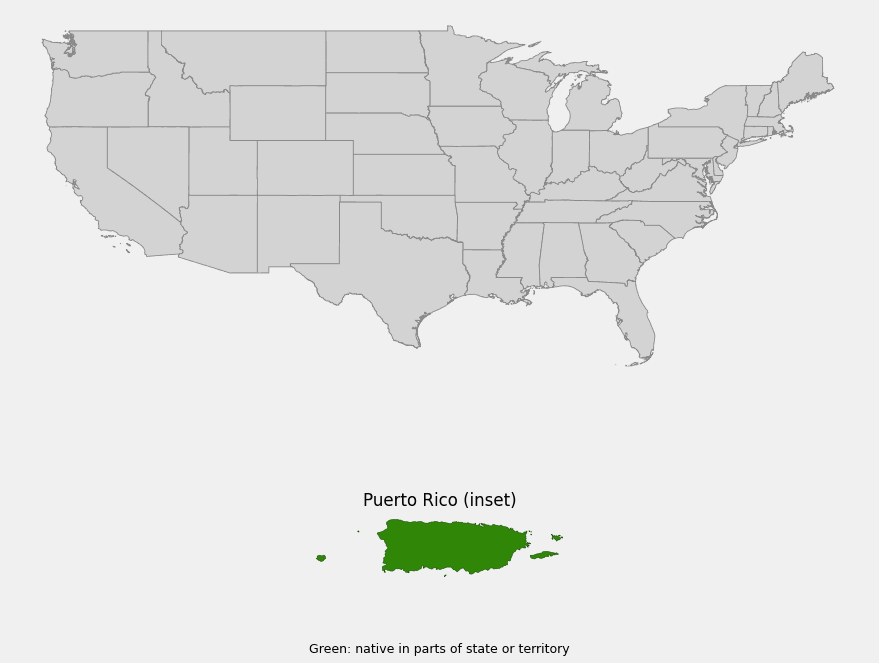
📋 Regional plant lists featuring Soursop: Puerto Rico
Growing & Care Guide
Soursop is the most tropical of the commonly grown Annona fruits. Outdoors in the United States it fruits reliably only in Puerto Rico, the U.S. Virgin Islands, Hawaii and the warmest, most protected parts of South Florida (zones 10b to 11). Elsewhere it is grown as a large container plant or houseplant, mostly for its handsome glossy foliage.
Light
Give it full sun to light shade outdoors. Young trees appreciate some afternoon shade in hot, dry places. Indoors, place it in the brightest spot you have, such as a south- or west-facing window, or under strong grow lights, and move it outdoors for the summer once nights stay above about 55°F.
Soil & Water
Plant it in deep, rich, well-drained soil. It grows in sandy soils and on limestone if mulched and fed, but it does not tolerate standing water or soggy soil, which causes root rot. Water regularly so the soil stays lightly moist, especially during flowering and fruit growth, and water less in the cool season. Container plants need a chunky, fast-draining potting mix and a pot with drainage holes; let the top inch of mix dry between waterings.
Planting Tips
Plant it in the warmest, most wind-sheltered spot in the yard, ideally near a south-facing wall. It is the most cold-sensitive Annona: leaves are damaged near 40°F and young trees are badly hurt or killed by frost. Space trees about 12 to 15 feet apart. Feed young trees lightly every two to three months during the growing season with a balanced fruit-tree fertilizer, and mulch the root zone. In a container, start with a 5-gallon pot and move up as it grows; expect a container tree to stay 6 to 10 feet tall.
Pruning & Maintenance
Prune lightly after harvest to shape the tree, remove dead wood and keep it low enough to reach the fruit. The natural pollinators are small beetles, and fruit set is often poor, so many growers hand-pollinate: collect pollen from flowers that have opened fully in the afternoon and brush it onto the stigmas of newly opening flowers the next morning. Poorly pollinated fruit grows lopsided. Watch for mealybugs, scale and fruit-boring insects such as the Annona seed borer, and pick fruit when the skin turns slightly yellowish green, dulls and the spines soften and spread. It finishes ripening on the counter in four to five days.
Propagation
Soursop is usually grown from seed, which comes fairly true to type. Sow fresh, cleaned seeds about half an inch deep in warm, moist mix; they germinate in two to four weeks. Seedlings can bear fruit in three to five years. Good selections can be grafted onto soursop or other Annona seedlings. Wear gloves when handling large quantities of seeds and keep them away from children and pets.
Landscape Uses
- Fruit trees: fresh fruit for juice, smoothies, ice cream and desserts
- Dooryard gardens: a compact tropical tree close to the house in Puerto Rico and Hawaii
- Containers & houseplants: glossy, evergreen foliage in a sunny room, conservatory or patio
- Edible landscapes: pairs with guava, papaya, banana and citrus
- Shade for small spaces: a narrow tree that suits small tropical yards
Wildlife & Ecological Value
Soursop flowers and fruit feed a range of tropical wildlife, even though most trees in Puerto Rico today are planted.
For Pollinators
The fleshy, partly closed flowers are pollinated mainly by small beetles, especially sap beetles (Nitidulidae), which crawl into the flower chamber. The flowers are female-receptive before they shed pollen, which is why self-pollination is limited and fruit set is often poor without beetles or hand pollination.
For Birds
Birds peck into ripe and fallen fruit, and some birds also feed on the beetles and other insects that visit the flowers.
For Mammals
Fruit bats and other mammals eat ripe fruit and help scatter the seeds. Fallen fruit is also eaten by rats and other ground-feeding animals.
Ecosystem Role
Like other Caribbean Annonas, soursop is a small understory or edge tree. Its fruit adds to the food supply in secondary forest and farm edges, and the leaf litter of old dooryard trees contributes to rich soil in shaded gardens.
Cultural & Historical Uses
The genus name Annona comes from the Taíno word anón, used for these fruits in the Caribbean. The species name muricata means “rough with short, hard points,” describing the spiny skin. The Spanish name guanábana is also thought to come from a Taíno word.
Soursop is one of the most popular fruits in Puerto Rico and across the Caribbean and Latin America, used for juice, batidos, sorbets and ice cream. In Puerto Rico, champola de guanábana, a creamy drink made from the pulp, is a traditional favorite. The leaves are also brewed as a folk tea in many countries.
Health claims and safety: soursop, often sold as graviola, is widely marketed online as a cancer cure. There is no reliable evidence that it treats cancer in people, and U.S. regulators have taken action against companies making such claims. The seeds, bark and, to a lesser extent, the leaves and pulp contain annonacin and related compounds that are toxic to nerve cells. Heavy long-term consumption of soursop products has been linked in studies in the French West Indies to an atypical form of Parkinson’s disease. Eat the fruit in moderation, never eat or grind the seeds, and talk with a doctor before using leaf teas or supplements.
Frequently Asked Questions
Is soursop native to the United States?
Within U.S. territory it is native only in Puerto Rico and the U.S. Virgin Islands, according to USDA PLANTS. It is grown in South Florida and Hawaii but is not native there.
Can I grow soursop in Florida or California?
It fruits outdoors only in frost-free places, such as the warmest coastal parts of South Florida (zones 10b–11) and the Florida Keys. In most of California it is too cool; grow it in a container and protect it from temperatures below about 40°F.
Can soursop be grown as a houseplant?
Yes. It makes an attractive indoor tree in a bright window or under grow lights and can live for years in a large pot. Indoor plants rarely produce fruit, and they need warm temperatures, good drainage and high light.
Are soursop seeds poisonous?
Yes. The seeds contain neurotoxic compounds and should never be eaten. Remove them when preparing the fruit and keep them away from children and pets.
Does soursop cure cancer?
No. Laboratory studies on cell cultures do not show that soursop or graviola treats cancer in people, and health agencies warn against using it as a cancer treatment.

Looking for a nursery that carries Soursop?
Our nursery directory does not yet include Puerto Rico. Browse the native plant nursery directory by state: Alabama–Arkansas · California · Colorado–Hawaii · Idaho–Kansas · Kentucky–Montana · Nebraska–Oklahoma · Oregon · Pennsylvania–Virginia · Washington · West Virginia–Wyoming

