
Tepary Bean (Phaseolus acutifolius)
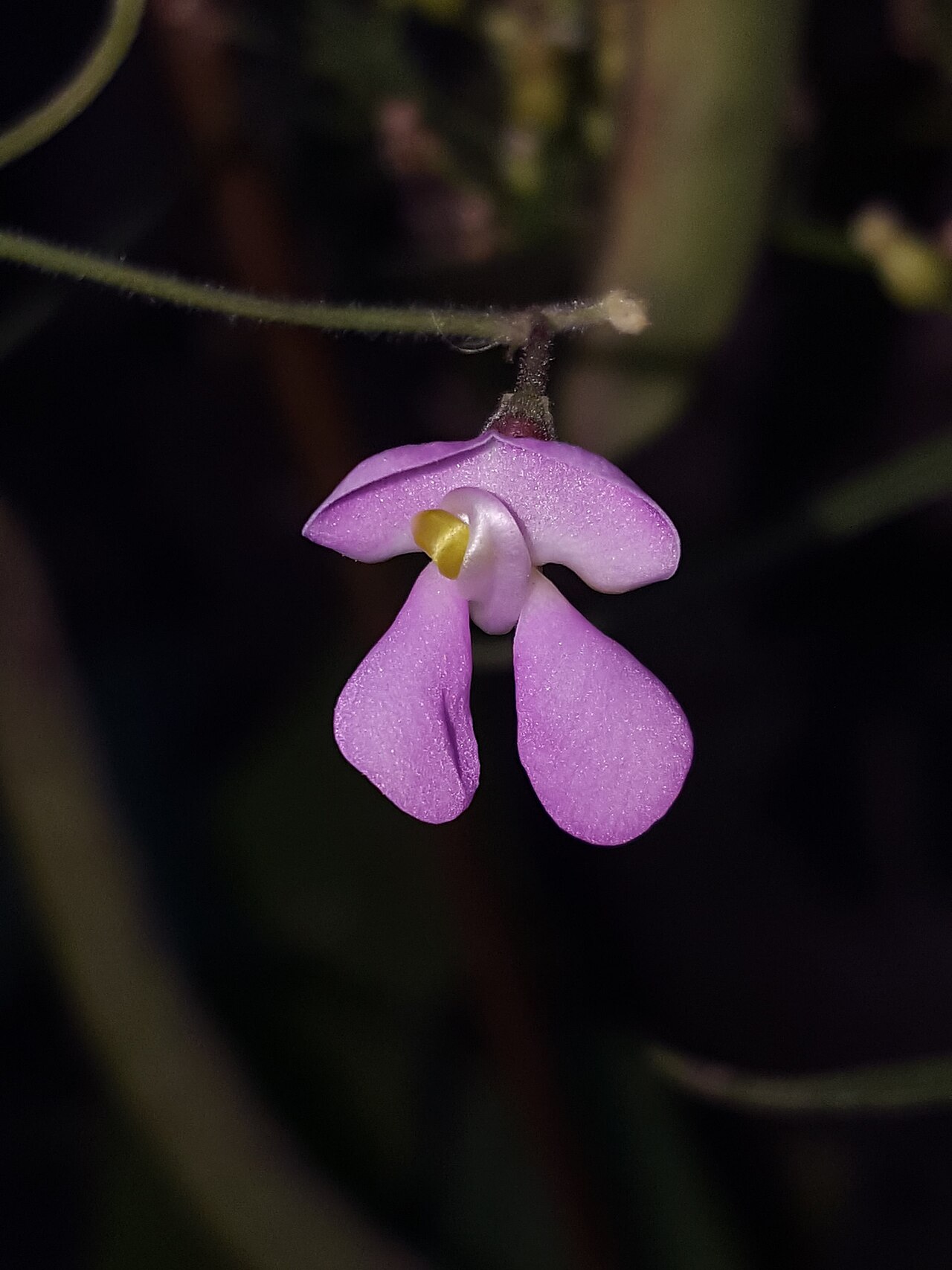
Phaseolus acutifolius, the Tepary Bean, is an annual twining bean in the legume family (Fabaceae), native to the deserts and desert mountains of the American Southwest and northern Mexico. In the wild it is a slender vine with narrow, pointed leaflets and small pink to lavender pea-like flowers that appear with the summer monsoon rains. Its pods ripen in fall and hold a few small seeds.
It is also one of the oldest crops of North America. Native peoples of the Sonoran Desert and northern Mexico domesticated the tepary bean thousands of years ago, and the Tohono O’odham and other peoples have grown it ever since in fields watered only by summer rain and floodwater. The name “tepary” is thought to come from an O’odham word for bean. Cultivated teparies are bushier and larger-seeded than the wild plant, with seeds in white, brown, gold, speckled and black.
Tepary bean is one of the most heat- and drought-tolerant beans in the world, able to produce a crop where the common bean fails. That makes the wild plant an important crop wild relative: plant breeders have crossed tepary bean with the common bean to bring in heat, drought and disease tolerance. For gardeners in the hot, dry Southwest it is a native food plant that thrives on very little water.
Identification
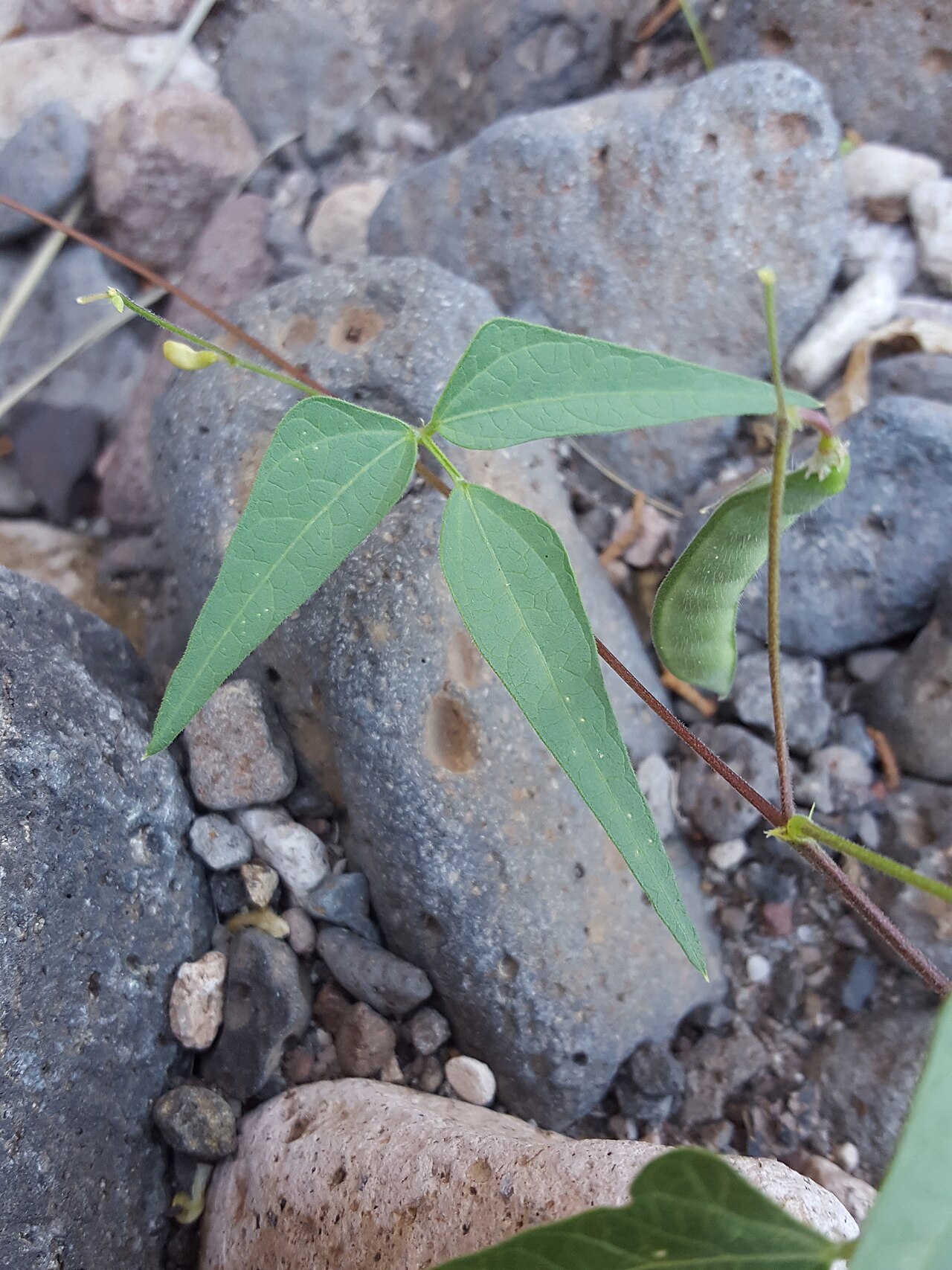
Look for a thin, twining annual vine with three narrow, pointed leaflets per leaf, small pink-lavender bean flowers in late summer, and short flat pods, climbing through shrubs in desert canyons and on rocky slopes.
Growth Habit
Tepary bean is a warm-season annual. Wild plants are slender, twining or trailing vines, usually 1 to 4 feet long, that sprawl over rocks or climb into shrubs and grasses. Seeds germinate after the first heavy summer rains, and the plants flower, set seed and die within a few months. Cultivated teparies are often bushier, semi-vining plants about 1 to 2 feet tall.
Leaves
The leaves are alternate and compound, with three leaflets like other beans. In the wild form (var. tenuifolius) the leaflets are narrow, lance-shaped to almost linear and sharply pointed, about 1 to 3 inches long. Cultivated teparies, which come from the broad-leaved form, have wider, oval-pointed leaflets. The leaves are thin and bright to grayish green.
Flowers
The flowers are typical bean flowers, about 1/2 inch across, with a broad upright banner petal, two wing petals and a curved keel. They are pink, lavender or pale purple, sometimes nearly white, and grow in small clusters on slender stalks from the leaf axils. In the wild they open mainly from late July through October, during and after the summer rains.
Fruit & Seeds
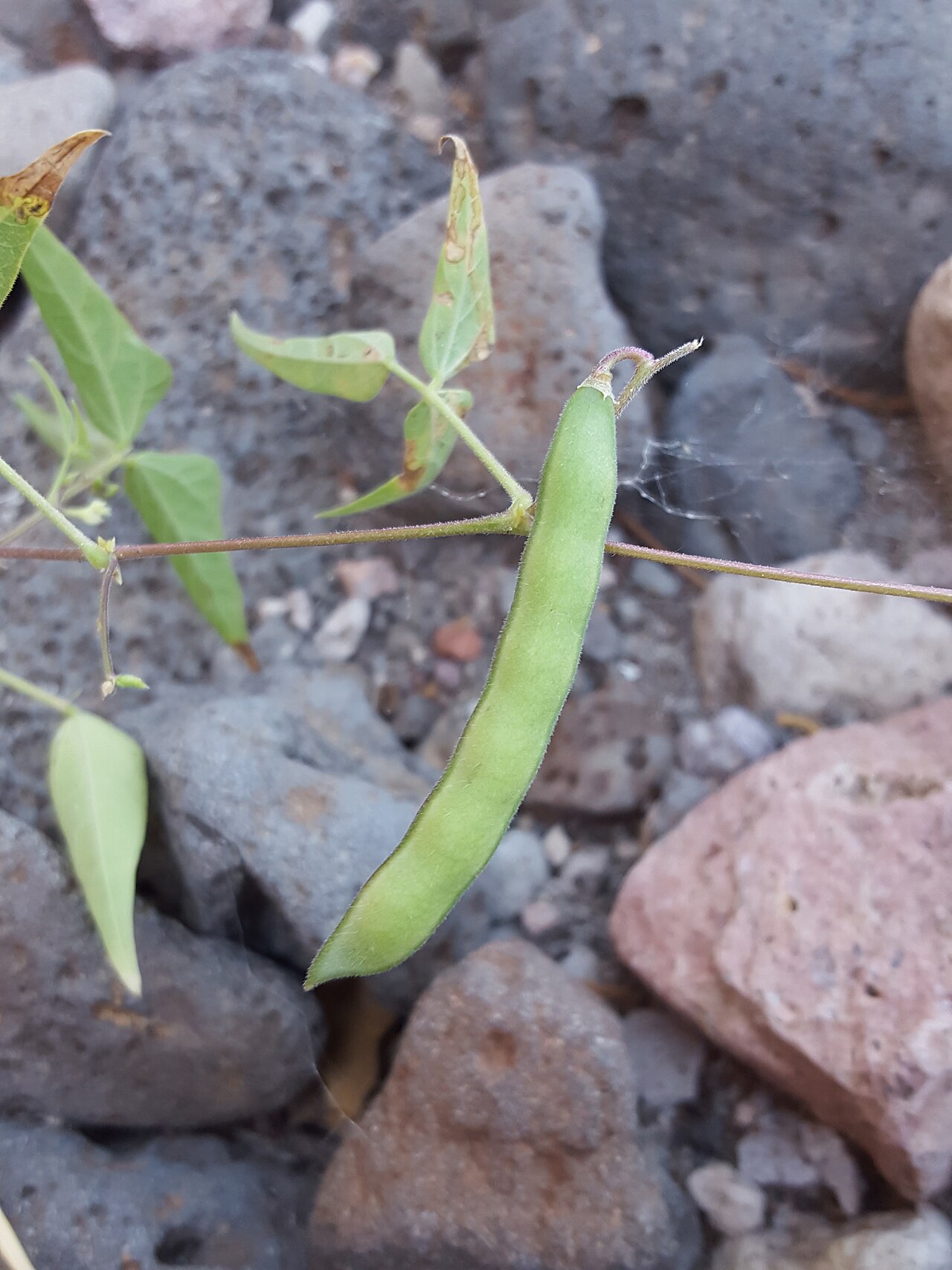
The pods are flat and straight to slightly curved, about 2 to 3 inches long, with a short pointed tip. They are green at first and dry to tan, then twist open and fling out the seeds. Wild seeds are small and mottled brown or gray. Cultivated tepary seeds are small for a bean but come in many colors.
Look-alikes
The Southwest has several other wild beans. Slimjim bean (Phaseolus filiformis) is a delicate desert annual with tiny flowers and small, often lobed leaflets. Spotted bean (Phaseolus maculatus) is a perennial with a thick, woody root and broad, rounded leaflets. Wild cowpeas and other relatives have yellow or larger flowers. The combination of an annual vine, narrow pointed leaflets and small pink-lavender flowers in late summer points to tepary bean.
Quick Facts
| Scientific Name | Phaseolus acutifolius |
| Family | Fabaceae (legume family) |
| Plant Type | Annual twining vine |
| Mature Height | 1–4 ft long (vining); cultivated forms 1–2 ft |
| Mature Spread | 1–3 ft |
| Growth Rate | Fast |
| Sun Exposure | Full sun |
| Water Needs | Very low; drought tolerant |
| Soil Type | Sandy, gravelly or rocky; well-drained |
| Soil pH | Neutral to alkaline (about 6.5–8.0) |
| Bloom Time | July–October (with summer rains) |
| Flower Color | Pink, lavender or pale purple |
| Fall Color | None notable |
| Fruit | Flat pod with small edible seeds |
| Deer Resistant | No; foliage is browsed |
| USDA Hardiness Zones | Annual; grown wherever summers are hot |
Native Range
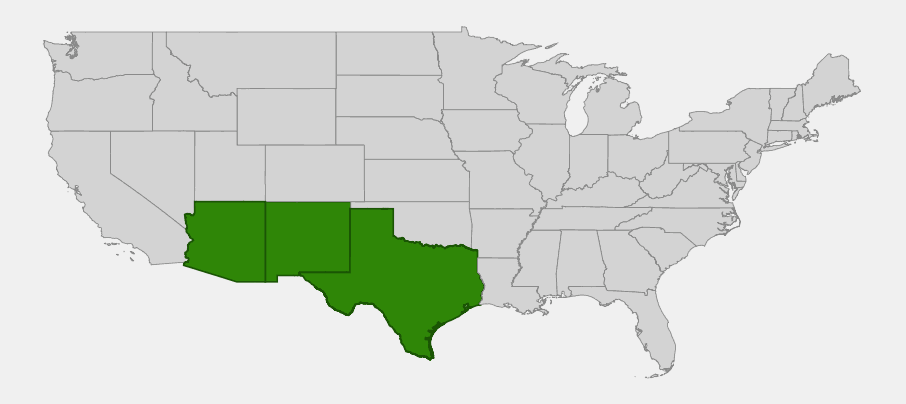
USDA PLANTS lists tepary bean as native to Arizona, New Mexico and Texas. Beyond the United States its range continues south through northern and western Mexico, and the crop is grown as far south as Central America.
In the United States the wild, narrow-leaved form grows mainly in southern and central Arizona, southwestern New Mexico and the Trans-Pecos of West Texas, including desert mountain ranges such as the Organ Mountains near Las Cruces. It is a plant of the Sonoran and Chihuahuan Deserts and the desert grasslands and oak woodlands above them.
Look for it in rocky canyons, along washes and arroyos, on rocky and volcanic slopes, and twining through shrubs and grasses in desert scrub, desert grassland and the lower edge of oak woodland. It appears only after the summer monsoon rains begin.
📋 Regional plant lists featuring Tepary Bean: South & West Texas · Arizona & New Mexico
Growing & Care Guide
Gardeners grow tepary beans as a food crop rather than the wild vine. Seed of traditional varieties is offered by Southwestern seed sellers such as Native Seeds/SEARCH. Grow them like a bush or pole bean, but with much less water.
Light
Full sun. Tepary beans love heat and keep flowering and setting pods in temperatures that make common beans drop their flowers.
Soil & Water
Plant in well-drained sandy, gravelly or loamy soil; rich soil is not needed. Water the seedbed well to start the seeds, then water sparingly. Too much water and fertilizer produce lush leaves and fewer beans. Traditional farmers grew them on summer rain and runoff alone.
Planting Tips
In the low deserts, sow seeds about 1 inch deep when the summer monsoon rains begin, usually in July, so the crop matures in the fall. In cooler areas, sow after the soil is warm in late spring or early summer. Space plants about 4 to 6 inches apart in rows or let them sprawl. Vining types can climb a short fence or corn stalks, as in traditional Three Sisters plantings with corn and squash.
Pruning & Maintenance
No pruning is needed. Harvest dry pods when they turn tan and brittle, before they split, and finish drying them indoors. Pull the plants after harvest; the roots add a little nitrogen to the soil. Like all dry beans, tepary beans must be soaked and fully cooked before eating, since raw dry beans contain lectins that can cause stomach upset.
Propagation
Grow from seed, sown directly where the plants are to grow. Seeds germinate in a few days in warm soil. Save seed from the best plants each year; tepary beans are mostly self-pollinating, so varieties stay fairly true when grown apart. Please do not collect seed from wild populations; buy seed of named varieties instead.
Landscape Uses
- Desert food gardens: a bean crop that produces on very little water
- Three Sisters plantings: grows with corn and squash in traditional Southwestern style
- Pollinator gardens: late-summer flowers for native bees
- Soil building: nitrogen-fixing legume for poor, sandy soil
- Seed saving and heritage gardens: many traditional varieties of Native American origin
Wildlife & Ecological Value
Wild tepary bean is a short-lived plant of the summer rainy season, but in that brief window it feeds insects, enriches the soil and drops seeds that wait in the ground for the next good monsoon.
For Pollinators
The pink flowers are visited by native bees, including bumble bees and other bees strong enough to open the closed keel of a bean flower. Tepary beans are largely self-pollinating, but bee visits can move pollen between plants. Bean foliage is also eaten by the caterpillars of some skippers and blues.
For Birds
Quail, doves and other seed-eating birds may pick up seeds scattered on the ground after the pods split.
For Mammals
Rabbits, deer and javelina browse bean foliage, and rodents gather the seeds. In gardens, young plants may need protection from rabbits.
Ecosystem Role
Like other legumes, tepary bean hosts nitrogen-fixing bacteria in root nodules and adds nitrogen to poor desert soils. As a crop wild relative, its wild populations hold genetic diversity that breeders use to make beans more tolerant of heat, drought and disease, so protecting them has value well beyond the desert.
Cultural & Historical Uses
Archaeologists have found cultivated tepary beans in Mexico dating back more than 2,000 years, and genetic studies suggest the crop was domesticated once, in northwestern Mexico. Tepary beans were a staple of the Tohono O’odham, Akimel O’odham and other peoples of the Sonoran Desert, grown in floodwater fields along washes after the summer rains, often with corn and squash.
Writer Gary Paul Nabhan described farmers in the Pinacate region of Sonora planting teparies on the first big rain in years and harvesting a crop about two months later, in one of the driest places in the world where rain-fed farming is practiced. Tepary beans nearly disappeared from tribal farms in the 20th century, but tribal farmers and seed groups have revived them, and they are now sold as a traditional and specialty food.
The species name acutifolius means “pointed-leaved.” The beans are small, dense and high in protein and fiber, with a sweet, nutty flavor. They take longer to cook than common beans.
Frequently Asked Questions
Are tepary beans native to the United States?
Yes. Tepary bean is native to Arizona, New Mexico and West Texas as well as Mexico. Wild plants still grow in desert canyons, and Native peoples of the Southwest have grown it as a crop for thousands of years.
Why are tepary beans so drought tolerant?
They evolved in the Sonoran and Chihuahuan Deserts. They grow quickly with the summer rains, root deeply, tolerate high heat and can produce beans with a small fraction of the water common beans need.
Can you eat tepary beans?
Yes, the seeds of cultivated teparies are a traditional food. Like all dry beans, they must be soaked and cooked thoroughly, because raw dry beans contain lectins that can cause stomach upset.
When should I plant tepary beans?
In the low desert, plant at the start of the summer monsoon, usually July. Elsewhere, sow after the soil is warm in late spring or early summer.
What is the difference between wild and cultivated tepary beans?
Wild plants are thin vines with narrow leaflets and small, mottled seeds that scatter from the pod. Cultivated teparies are bushier, with broader leaflets and larger, colorful seeds that stay in the pod at harvest.

Looking for a nursery that carries Tepary Bean?
Browse our native plant nursery directory: Arizona · New Mexico · Texas

