
Sticky Western Rosinweed (Calycadenia multiglandulosa)
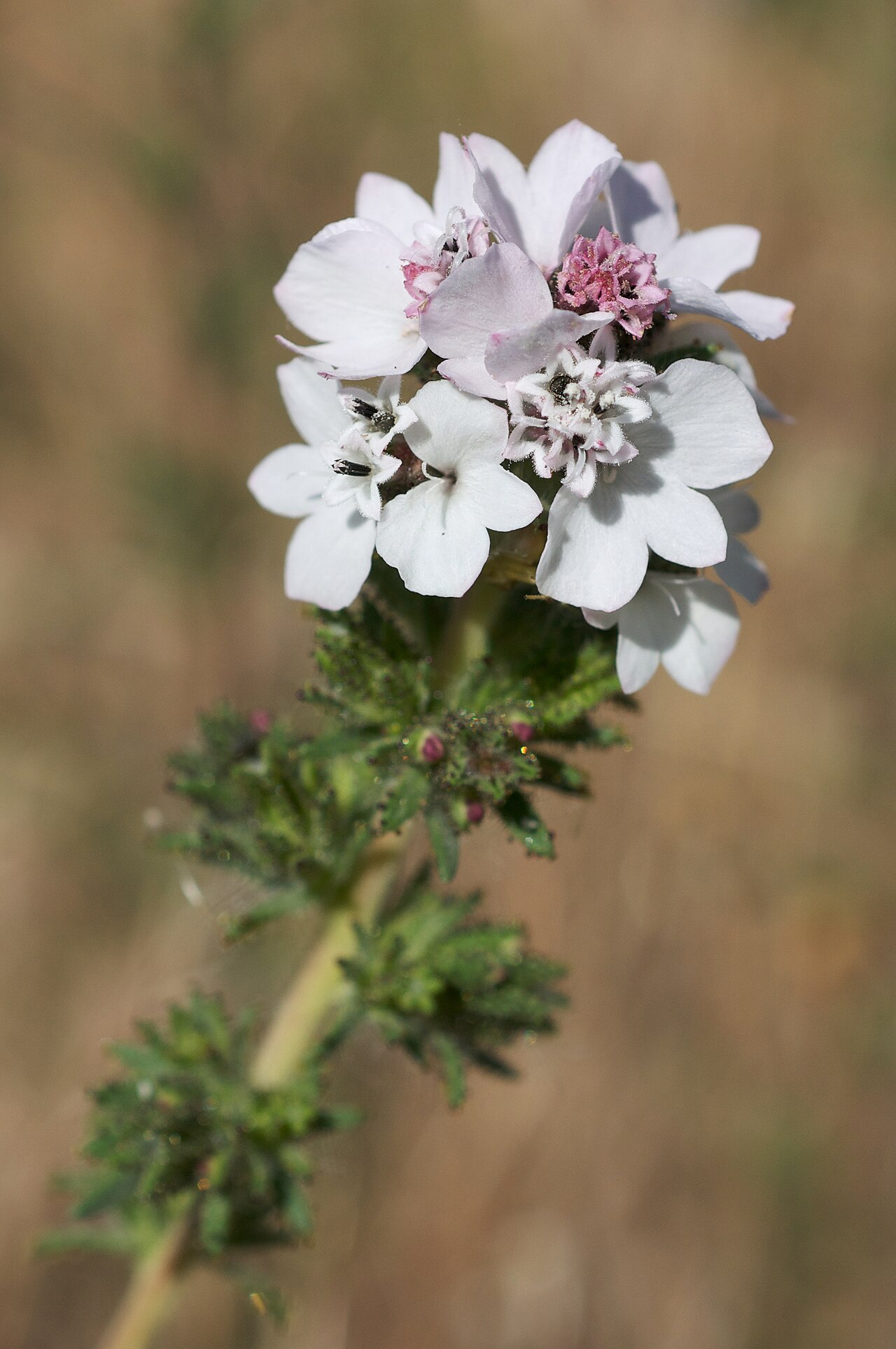
Calycadenia multiglandulosa, known as Sticky Western Rosinweed or sticky calycadenia, is a summer-blooming annual wildflower found only in California. It belongs to the tarweed tribe of the aster family (Asteraceae), the group of fragrant, sticky annuals that keep flowering in California grasslands long after the spring wildflowers have dried. From late spring into fall it holds dense clusters of small white to pink flower heads on a slender, upright stem, usually 8 to 24 inches tall.
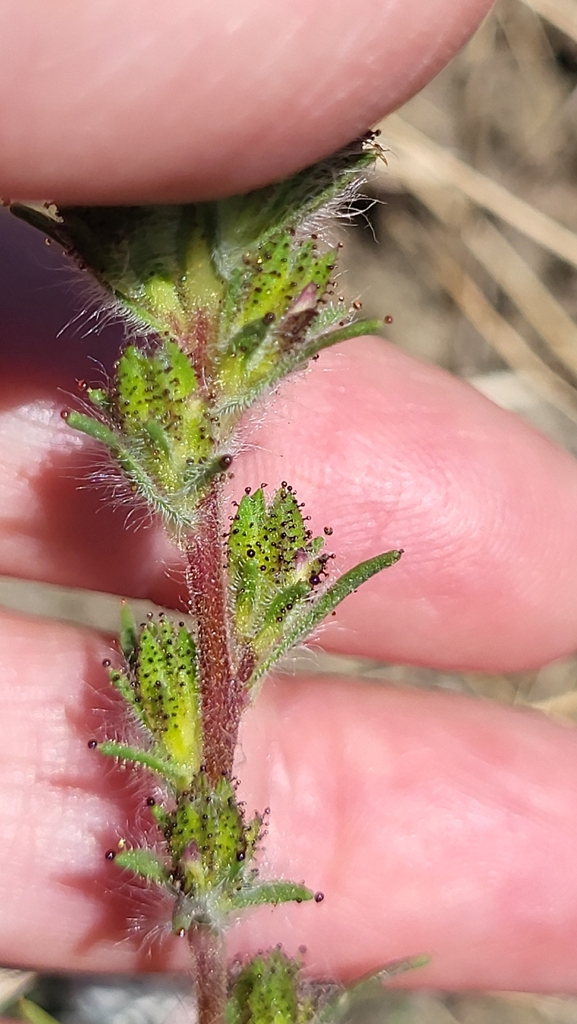
The plant gets both its names from its glands. The stems, narrow leaves and bracts around the flower heads are covered with stalked and raised glands that exude a resinous, aromatic gum, so the plant feels tacky to the touch. The species name multiglandulosa means “with many glands,” and the genus name Calycadenia combines Greek words for “cup” and “gland,” a reference to the glands on the bracts that cup each flower head.
Sticky western rosinweed grows in the Coast Ranges and the Sierra Nevada foothills from Shasta County south to Kern County, in dry, open grassland, oak woodland openings and rocky or clay slopes, often on serpentine. It is little known as a garden plant, but it is a useful native for late-season pollinators in dry California meadows. This guide covers how to identify it, where it grows, and how to add it to a native grassland planting from seed.
Identification
California has several Calycadenia species and dozens of other tarweeds. Sticky western rosinweed is recognized by its white to rose ray flowers with three nearly equal lobes, heads clustered in tight groups along the stem, and narrow bracts studded with raised glands. Plants that are not sticky, or that have yellow flowers in loose, open branches, are probably a different tarweed.
Stems & Growth Habit
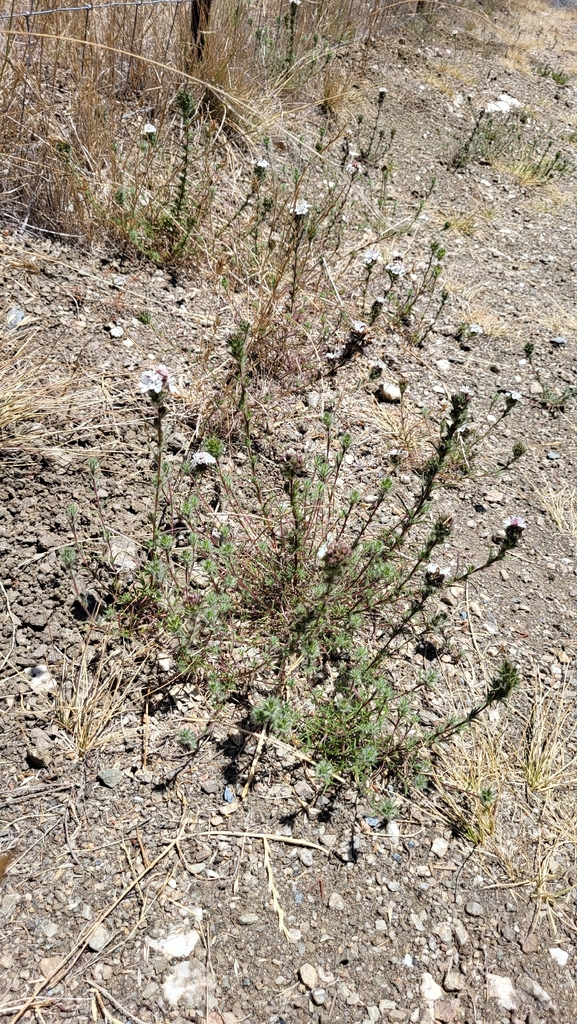
Each plant is a single upright annual stem, usually 8 to 24 inches tall and occasionally up to about 28 inches, simple or with a few stiff branches. The stem is reddish to straw-colored and covered with short, stiff hairs and glands. Plants germinate with winter rains, grow slowly through spring among annual grasses, and then shoot up and flower as the grasses dry.
Leaves
The leaves are narrow and linear, up to about 3 inches long near the base and much shorter higher on the stem. Lower leaves often wither by the time the plant blooms. Upper leaves and the bracts below the flower clusters are short, stiff and bristly-hairy, and they carry conspicuous raised glands, some shaped like tiny tacks or cups, that make the plant sticky and give it a resinous, tarweed scent.
Flowers
The flower heads sit in dense clusters (glomerules) at the stem tip and along the upper stem, each cluster cupped in glandular bracts. Each head has a few ray florets, usually 3 to 8, and a small center of disk florets. The rays are white, sometimes aging pink or rose, about ¼ to ½ inch long and cut at the tip into three lobes, with the middle lobe usually the shortest. The disk florets have dark red-purple anthers, which give the center of the cluster a pinkish or reddish look. Flowering begins in late spring and continues through summer into early fall.
Fruit & Seeds
The fruits are small, dark achenes. Ray achenes are wrinkled and lack a pappus, while disk achenes usually have a crown of small scales. The seeds fall close to the plant or are carried short distances by animals and wind, and they germinate with the next season’s rain.
Quick Facts
| Scientific Name | Calycadenia multiglandulosa |
| Family | Asteraceae (aster family; tarweed tribe Madieae) |
| Plant Type | Annual herb (summer-flowering tarweed) |
| Mature Height | 8–24 in (occasionally to about 28 in) |
| Mature Spread | 3–8 in |
| Growth Rate | Moderate |
| Sun Exposure | Full sun |
| Water Needs | Very low; summer-dry annual |
| Soil Type | Dry, rocky, gravelly or clay soils, including serpentine |
| Soil pH | About 6.0–8.0 |
| Bloom Time | May–October (peak June–August) |
| Flower Color | White, often aging pink to rose; dark red-purple anthers |
| Fall Color | None; plants dry to reddish-brown |
| Fruit | Small dark achene |
| Deer Resistant | Yes; the sticky, resinous foliage is seldom browsed |
| USDA Hardiness Zones | 8–10 (grown as an annual) |
Native Range
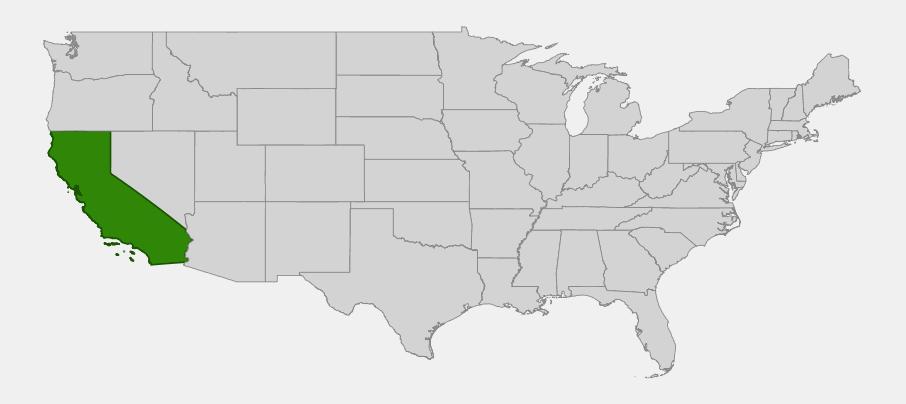
Sticky western rosinweed is endemic to California; USDA PLANTS and the Lady Bird Johnson Wildflower Center record it from no other state. It is one of the more common species in its genus, growing in the North and South Coast Ranges and the Sierra Nevada foothills from Shasta County in the north to Kern County in the south.
It is especially familiar in the San Francisco Bay Area, including Marin County, the Oakland and Berkeley hills, the Santa Cruz Mountains and the Mount Hamilton Range, and in the foothill grasslands of the inner Coast Ranges. In the Sierra Nevada foothills it grows mostly in the oak-grassland belt below the conifer forests. It is absent from the deserts, the Central Valley floor and the high mountains.
Within its range it is a plant of open, sunny, summer-dry places: valley and foothill grassland, openings in blue oak and coast live oak woodland, rocky ridges and road banks, and thin clay or gravelly soils. It is often found on serpentine and other nutrient-poor soils, where competition from introduced annual grasses is lower. Botanists recognize some variation within the species, and plants with especially crowded, head-like clusters have been treated as a separate variety.
📋 Regional plant lists featuring Sticky Western Rosinweed: California & Nevada
Growing & Care Guide
Sticky western rosinweed is not a common nursery plant, but it can be grown from seed in sunny, dry native gardens and grassland restorations within California. Its great value is timing: it blooms in the long, dry summer when most native annuals are finished, giving late-season insects something to visit.
Light
Plant it in full sun. In the wild it grows in open grassland and on exposed slopes, and it flowers poorly and flops in shade.
Soil & Water
It does best in lean, well-drained or rocky soil, and it tolerates heavy clay and serpentine. Avoid rich garden soil, compost and fertilizer, which favor weedy grasses that crowd it out. Winter and spring rain are all it needs. Do not irrigate in summer; like other tarweeds it draws on deep soil moisture and blooms through the dry season on its own.
Planting Tips
Sow seed in fall, before or just after the first rains, on bare, weeded soil. Scatter it thinly and press it into the surface or cover it very lightly. It works best as part of a native grassland mix with bunchgrasses and spring annuals, which carry the planting until the tarweeds take over in summer. Reduce competition from introduced annual grasses in the first year by hand weeding or careful mowing before the grasses set seed.
Pruning & Maintenance
No pruning is needed. Leave the dried plants standing until seed has dropped in fall, then mow or clear if you want a tidier look. The sticky resin can cling to hands and clothing, so wear gloves when cutting it back.
Propagation
Propagate only from seed. Collect seed heads as they dry in late summer and fall, and store the seed dry until sowing. Ray achenes in many tarweeds can stay dormant for more than one season, so a planting may come back unevenly from year to year. Collect seed only in small amounts and with permission, and leave most of it for the wild population.
Landscape Uses
- Native grassland and meadow plantings: adds summer and fall bloom after spring wildflowers have dried
- Restoration of serpentine and clay grasslands: suited to nutrient-poor soils within its native California range
- Late-season pollinator gardens: feeds native bees and other insects in the dry season
- Dry, unirrigated slopes: thrives without summer water in sunny, lean soil
- Educational gardens: illustrates the tarweeds, a distinctive group of California summer annuals
Wildlife & Ecological Value
California’s tarweeds are an important but often overlooked part of its grasslands. Sticky western rosinweed blooms when little else does, and its sticky glands play a role in protecting it from plant-eating insects.
For Pollinators
The flower clusters are visited by small native bees, including sweat bees and other solitary bees, along with flies, small butterflies and beetles. Because they bloom from summer into fall, tarweeds like this one provide nectar and pollen through California’s dry season, when spring-blooming flowers are long gone.
For Birds
Tarweed seeds are oily and nutritious, and finches, sparrows, juncos and quail eat them in late summer and fall. California Native peoples harvested tarweed seeds for the same reason.
For Mammals
The sticky, aromatic foliage is unpalatable to most mammals, so deer and livestock usually leave it alone. Small rodents may eat the seeds.
Ecosystem Role
The resinous glands help protect the plant from herbivorous insects, and some insects that are trapped on the sticky surfaces provide food for predatory insects and spiders. As a deep-rooted summer annual it uses soil moisture left after the grasses have dried, adding diversity and late-season flowers to grasslands dominated by spring annuals.
Cultural & Historical Uses
The species was described by the Swiss botanist Augustin Pyramus de Candolle in the 1830s, from specimens collected in California during the early botanical exploration of the region. It was one of the first species placed in the genus Calycadenia, which de Candolle named for the glands on the bracts that cup the flower heads. The name “rosinweed” refers to the plant’s resinous stickiness, which it shares with many of its tarweed relatives.
Tarweeds as a group were an important food source for California Native peoples, who gathered the oily seeds in summer, often after burning grasslands to make collection easier, and parched and ground them into meal. Ethnographic accounts usually describe tarweeds collectively, so specific uses of sticky western rosinweed are not well documented.
Today the species is common within its range and is not considered rare, but like most native annuals in California grasslands it has lost ground to introduced Mediterranean grasses. Botanists also study Calycadenia for its unusual chromosome variation, which has made the genus a classic example in the study of plant evolution and speciation.
Frequently Asked Questions
Why is sticky western rosinweed sticky?
Its stems, leaves and bracts are covered with glands that exude a resinous, aromatic gum. The sticky coating helps protect the plant from insects and other herbivores and may reduce water loss during the hot, dry summer when it blooms.
Is sticky western rosinweed related to the eastern rosinweeds?
Not closely. Eastern and prairie rosinweeds belong to the genus Silphium. Sticky western rosinweed belongs to the California tarweed group (tribe Madieae), along with Madia, Hemizonia and related genera. The shared name refers to resinous stickiness.
When does sticky western rosinweed bloom?
It flowers from about May through October, with a peak in midsummer. It is one of the few native wildflowers blooming in California grasslands during the dry season.
Can I grow sticky western rosinweed in my garden?
Yes, in California, from seed sown in fall in sunny, lean, well-drained soil with no summer water. It is best used in a native meadow or grassland mix rather than as a single specimen.
Does it grow outside California?
No. It is endemic to California, where it grows in the Coast Ranges and Sierra Nevada foothills from Shasta County to Kern County.

Looking for a nursery that carries Sticky Western Rosinweed?
Browse our native plant nursery directory: California

