
Texas Prairie Parsley (Polytaenia texana)
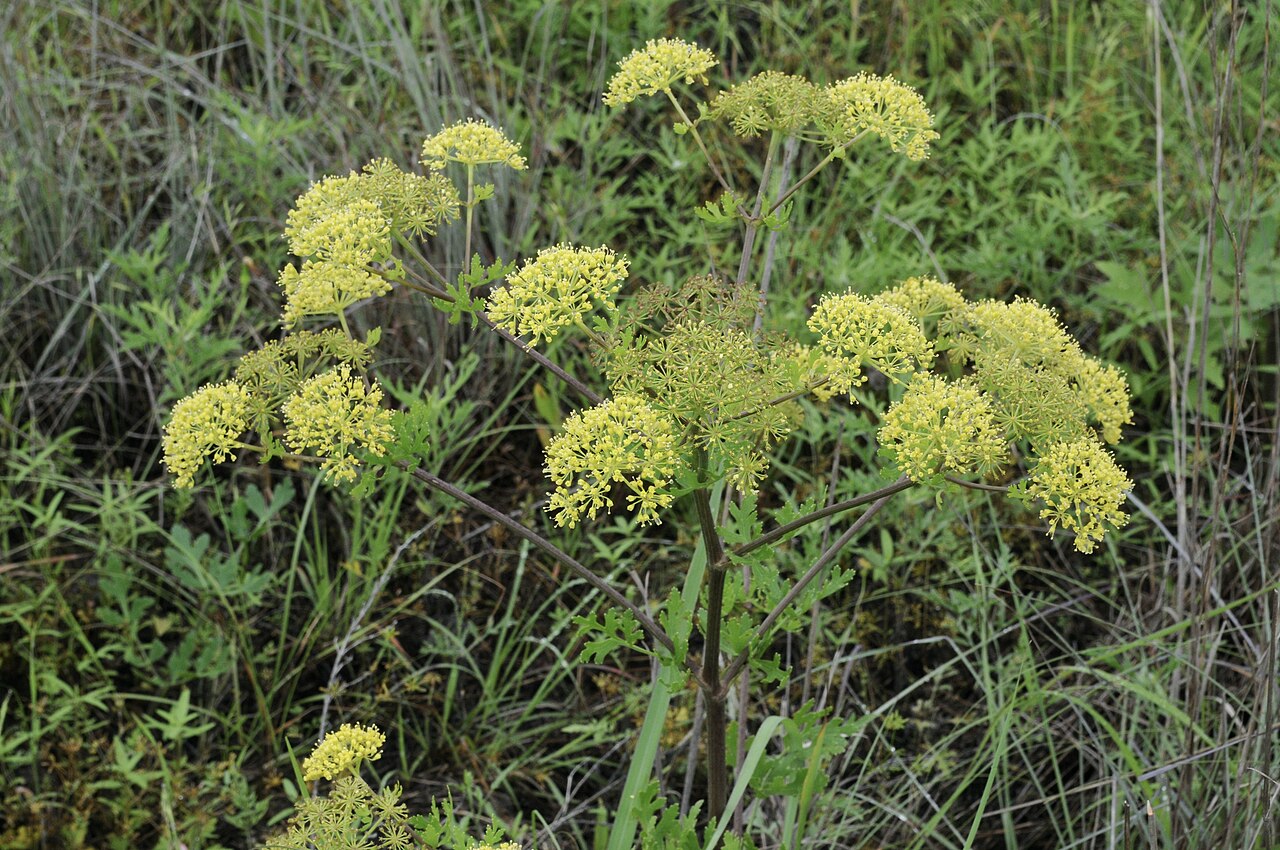
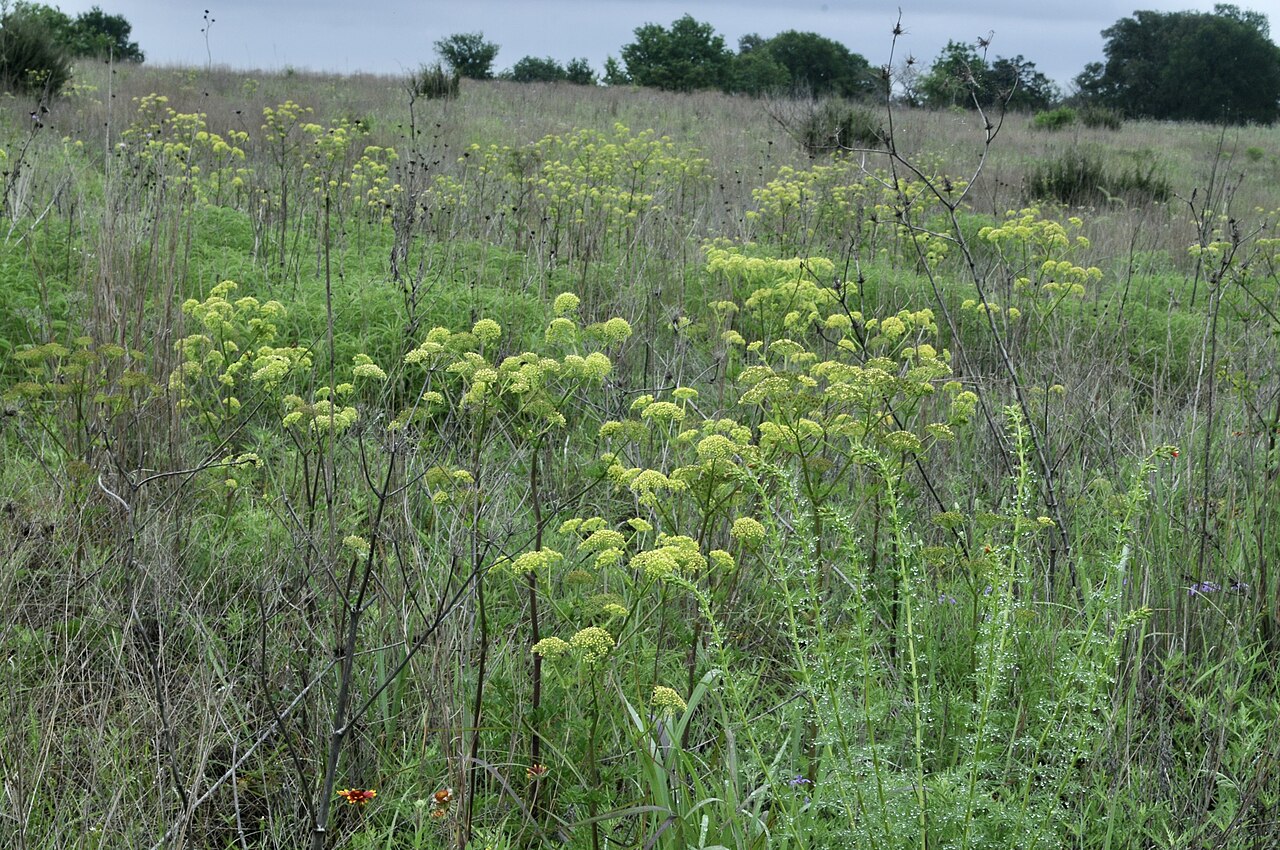
Polytaenia texana, known as Texas Prairie Parsley or Texas-parsley, is a native wildflower of the carrot family (Apiaceae) found in Texas and Oklahoma. In April and May it lifts broad, flat-topped clusters of small yellow-green flowers 2 to 3 feet above the spring prairie, often in loose colonies that give whole fields a soft chartreuse glow.
It is a biennial or short-lived perennial: the first year it forms a low rosette of parsley-like leaves, and the following spring it sends up a stout, branching flowering stem. The Lady Bird Johnson Wildflower Center describes it as an important nectar plant of the Blackland Prairie, and it is a larval host for the black swallowtail butterfly.
This guide covers how to tell Texas prairie parsley from its look-alikes, where it grows, how to add it to a prairie or meadow garden, its value for wildlife, and an important safety note that applies to every wild member of the carrot family.
Identification
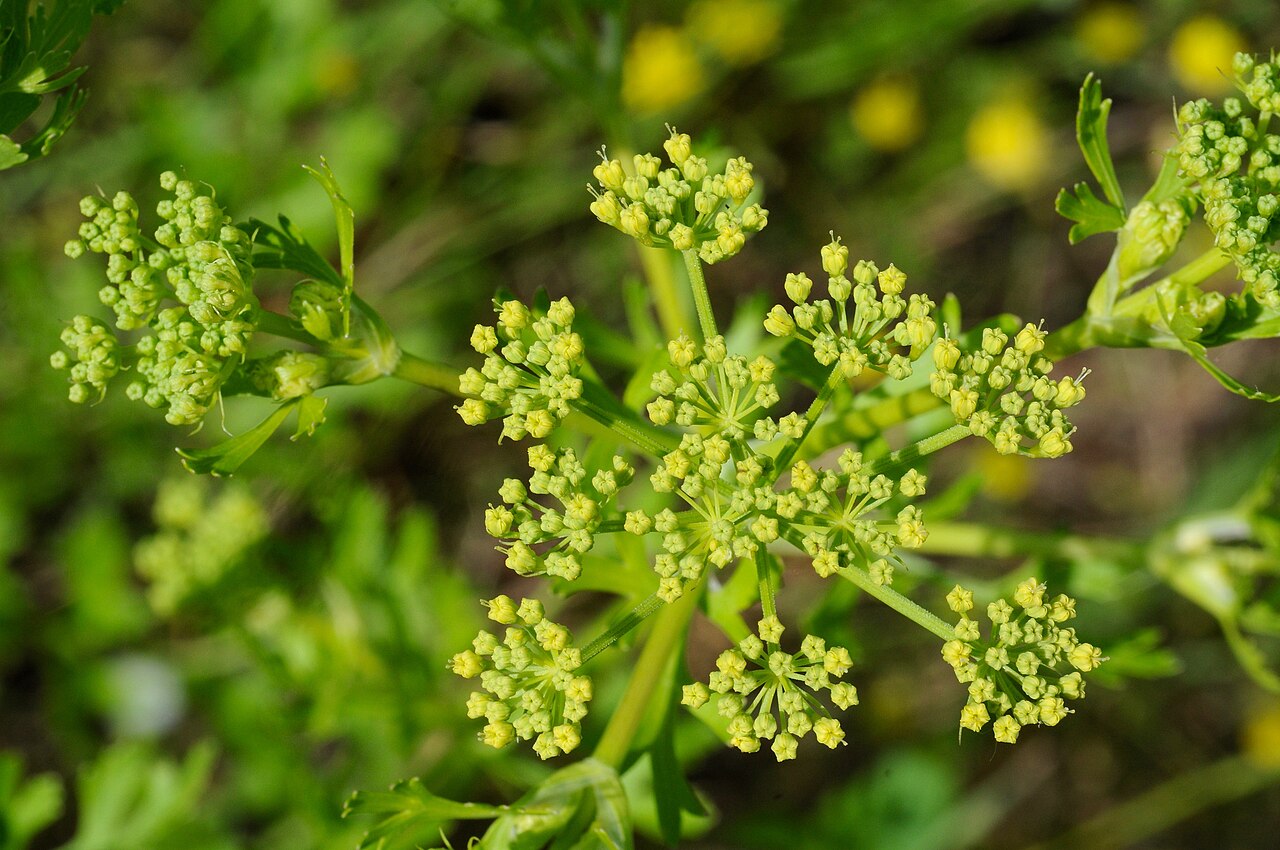
Texas prairie parsley is easiest to recognize in spring, when its yellow umbels stand above the grasses. Look for a stout, smooth, often reddish-tinged stem, deeply divided parsley-like leaves, and flat clusters of tiny yellow flowers followed by flattened, winged seeds.
Growth Form
A biennial or short-lived perennial herb from a thick taproot. In its first year it forms a basal rosette; in its flowering year it produces one or a few upright, branching stems usually 1½ to 3 feet tall. The stems are smooth, ribbed and hollow-feeling, and the base and leaf sheaths are often flushed with red or purple.
Leaves
The leaves are alternate and compound, divided into toothed or lobed segments, giving the plant a coarse, parsley-like look. Lower leaves are long-stalked with sheathing bases that clasp the stem; the upper leaves are smaller and less divided. The foliage is smooth and medium green.
Flowers
The flowers are tiny, with five yellow petals, and are packed into small umbels (umbellets) that are themselves held on 10 to 20 or more spokes in a larger, flat-topped compound umbel 2 to 5 inches across. Blooming runs from about April into June, peaking in late April and May.
Fruit & Seeds
After flowering, each flower forms a flattened, oval fruit with thick, corky marginal wings, which splits into two one-seeded halves (a schizocarp). The fruits ripen from green to tan in early summer, and the plant dies back after setting seed.
Similar Species
Prairie parsley (Polytaenia nuttallii), found mainly north and east of Texas, is very similar; botanists separate the two mainly by details of the leaves and fruit. Golden alexanders (Zizia aurea) is smaller, with once- or twice-divided leaves of distinctly toothed leaflets. Poison hemlock (Conium maculatum), an introduced weed, has white flowers, finely cut fern-like leaves and purple-spotted stems.
Quick Facts
| Scientific Name | Polytaenia texana |
| Family | Apiaceae (carrot family) |
| Plant Type | Biennial or short-lived perennial wildflower |
| Mature Height | 1½–3 ft |
| Mature Spread | 1–1½ ft |
| Growth Rate | Fast in its flowering year |
| Sun Exposure | Full sun |
| Water Needs | Low; drought tolerant |
| Soil Type | Dry, well-drained clay, loam or rocky limestone soils |
| Soil pH | About 6.5–8.5 |
| Bloom Time | April–June |
| Flower Color | Yellow to yellow-green |
| Fall Color | None; dies back after seeding |
| Fruit | Flat, corky-winged schizocarps |
| Deer Resistant | Moderately |
| USDA Hardiness Zones | 7–9 |
Native Range
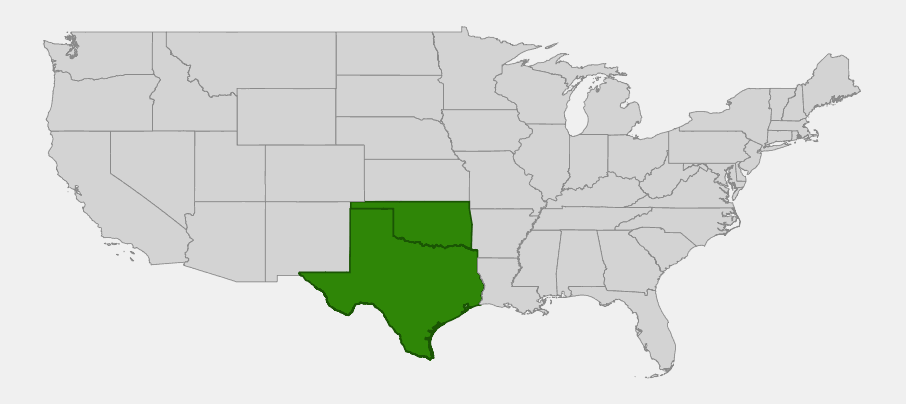
Texas prairie parsley is native to Texas and Oklahoma, the only two states where USDA PLANTS records it. Its heartland is the prairie belt of central and north-central Texas, including the Blackland Prairie, the Grand Prairie and Cross Timbers, and the eastern Edwards Plateau, and it extends east into the Post Oak Savannah and northeast Texas and north into southern Oklahoma.
It grows in dry, open places: tallgrass and mixed-grass prairies, rocky limestone hillsides, openings in oak and juniper woodlands, and roadsides and old pastures that have kept their native grasses. Where the soil has not been plowed, it often appears in loose colonies.
Its range lies in a climate of hot summers, mild winters and spring rains, and like many prairie plants it does most of its growing in the cool season, flowering in spring and going dormant after it sets seed in summer.
📋 Regional plant lists featuring Texas Prairie Parsley: Arkansas, Louisiana, Eastern Oklahoma & Eastern Texas · South & West Texas
Growing & Care Guide
Texas prairie parsley is an easy, low-care plant for prairie restorations, meadows and wildflower plantings in Texas and Oklahoma. Because it is biennial, think of it as a plant that maintains itself by reseeding rather than as a permanent perennial.
Light
Give it full sun. In shade it becomes lanky and flowers poorly.
Soil & Water
It grows in dry to moderately moist, well-drained soils, including the heavy black clays of the Blackland Prairie and thin soils over limestone. Water seedlings and young rosettes during their first summer if it is very dry; after that it needs no irrigation in its native range. Avoid soggy, poorly drained spots.
Planting Tips
Sow seed in fall, scattered onto bare or lightly raked soil, so it gets the winter cold and moisture it needs to germinate in spring. It does best mixed with native bunchgrasses and other spring wildflowers such as Texas bluebonnet and Indian blanket, where its umbels add height and a chartreuse contrast.
Pruning & Maintenance
Let the plants set seed before mowing, usually by late June, so the colony can renew itself. Mowing meadows in late summer or winter, or a periodic prescribed burn where allowed, keeps woody growth down and helps it reseed. Leave some plants standing for swallowtail caterpillars.
Propagation
Grow it from seed collected when the fruits turn tan in early summer. Sow outdoors in fall or give seeds 60 to 90 days of cold, moist stratification before a spring sowing. It forms a deep taproot early, so seed sown in place or small pots planted out young work best; established plants do not transplant well.
Landscape Uses
- Prairie and meadow plantings: spring height and color among native grasses
- Butterfly gardens: a larval host for black swallowtails and a nectar source
- Roadside and pasture restoration: a reseeding native of open, dry ground
- Pollinator plantings: flat umbels feed many small bees, flies and beetles
- Naturalistic borders: a soft chartreuse filler for spring perennials
Wildlife & Ecological Value
Like other native members of the carrot family, Texas prairie parsley is a busy plant when it blooms, and its leaves feed one of North America’s best-known butterflies.
For Pollinators
The open, flat umbels offer easy access to nectar and pollen for short-tongued insects: small native bees, wasps, flower flies, beetles and butterflies. The Lady Bird Johnson Wildflower Center notes it as an important nectar plant of the Blackland Prairie region.
For Birds
Birds benefit indirectly from the many insects that visit the flowers and from the caterpillars it supports. The plants also add spring cover to prairie and pasture habitat used by ground-nesting birds.
For Mammals
Deer browse it only moderately. Rabbits may nibble young rosettes.
Ecosystem Role
Texas prairie parsley is a larval host plant for the black swallowtail (Papilio polyxenes), whose green, black and yellow-banded caterpillars feed on the leaves and flowers of wild and garden plants of the carrot family. As a native spring-flowering forb, it adds diversity to remnant prairies that have become rare across Texas.
Cultural & Historical Uses
The genus name Polytaenia means “many bands” or “many stripes,” referring to the numerous oil tubes (vittae) in the fruit that botanists use to identify plants of this family. The species was first described as a variety of prairie parsley, Polytaenia nuttallii var. texana, and was later raised to a full species; it has also been placed in Pleiotaenia and Phanerotaenia.
Safety note: Never eat any wild plant of the carrot family unless an expert has identified it with certainty. The family includes some of the most poisonous plants in North America, poison hemlock (Conium maculatum) and water hemlock (Cicuta), which can be confused with harmless species. Keep this in mind when handling Texas prairie parsley with children, and wash your hands after handling any wild umbel, since the sap of some species can irritate skin in sunlight.
For Texas naturalists, a field washed with the yellow-green umbels of prairie parsley is one of the signs of a healthy, unplowed prairie remnant, part of the spring display that also includes bluebonnets, paintbrush and winecups.
Frequently Asked Questions
Is Texas prairie parsley edible?
It is not a culinary plant, and no part of it should be eaten. Wild members of the carrot family are easy to confuse with deadly poison hemlock and water hemlock, so it is safest never to eat any wild umbel.
Is it a perennial?
It is a biennial or short-lived perennial. It makes a leafy rosette the first year, flowers the next spring, and usually dies after setting seed. In a meadow, new seedlings keep the colony going.
Does Texas prairie parsley host butterflies?
Yes. It is a larval host for the black swallowtail, whose caterpillars eat the leaves and flowers. Plant enough that a few chewed plants are not a concern.
How is it different from poison hemlock?
Texas prairie parsley has yellow to yellow-green flowers and a smooth green or reddish stem. Poison hemlock has white flowers, very finely cut fern-like leaves and smooth stems with purple blotches, and it smells musty when crushed.
Where does Texas prairie parsley grow?
It is native only to Texas and Oklahoma, mainly in the prairies and open woodlands of central and north-central Texas. Grow it in full sun and well-drained soil within that region.
