
Texas Wild Rice (Zizania texana)
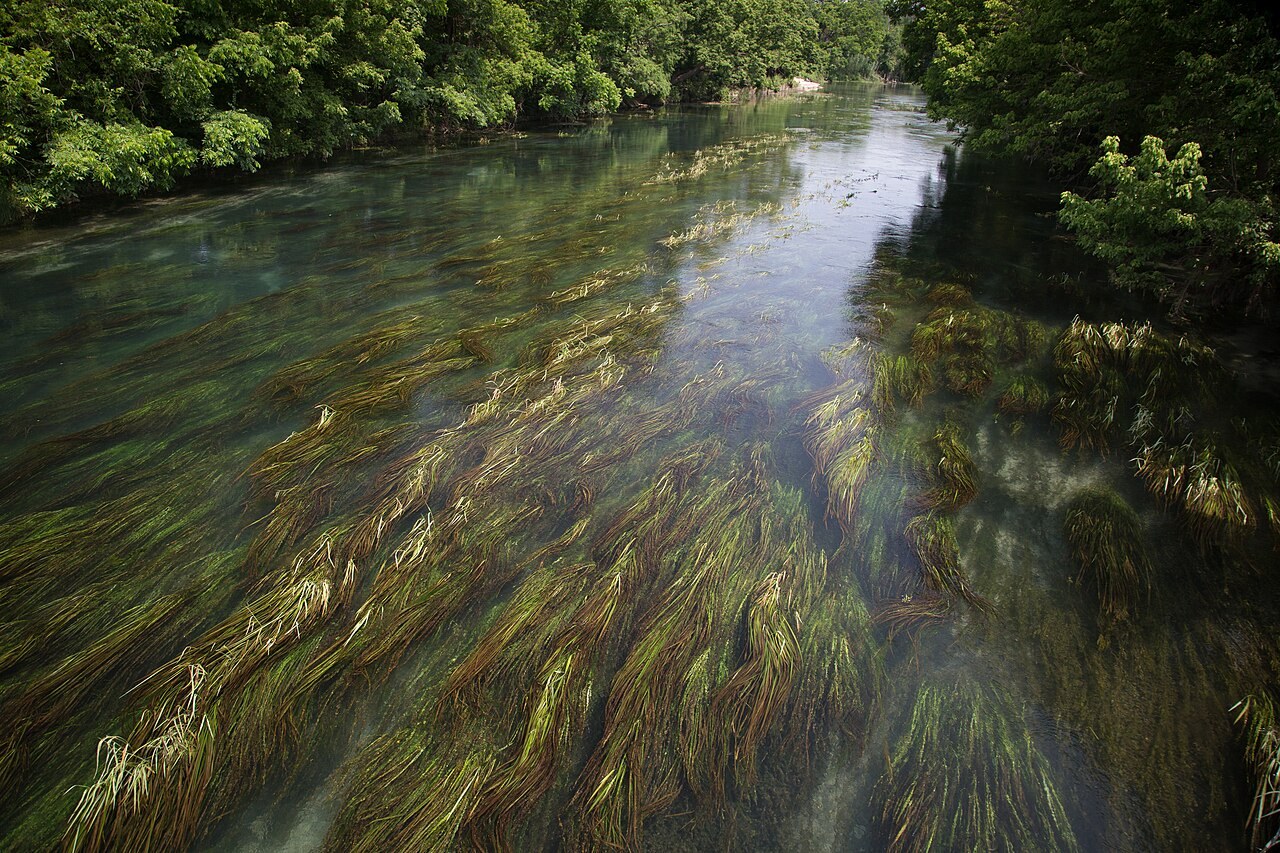
Zizania texana, Texas Wild Rice, is one of the rarest grasses in North America. It grows wild in only one place in the world: the upper few miles of the San Marcos River in Hays County, Texas, where crystal-clear water from the Edwards Aquifer pours out of San Marcos Springs at a nearly constant temperature all year. There, long ribbon-like leaves stream underwater in the current, and in season the flowering stems rise a foot or two above the surface.
Texas wild rice is a perennial relative of the annual wild rices of the Great Lakes and Atlantic Coast (see our Native Wild Rice (Zizania) guide). It was listed as federally endangered in 1978 and is also listed as endangered by the State of Texas. The San Marcos River is designated as its critical habitat. Its survival depends on steady spring flow from the Edwards Aquifer, clean water, and protection from trampling and uprooting.
Never collect, uproot or transplant Texas wild rice. It is protected by federal and state law, it is not sold by nurseries, and the only legal plantings are part of recovery programs run by the U.S. Fish and Wildlife Service, Texas State University and the Edwards Aquifer Habitat Conservation Plan. This page is an identification and appreciation guide: how to recognize it, where to see it, and why it matters.
Identification
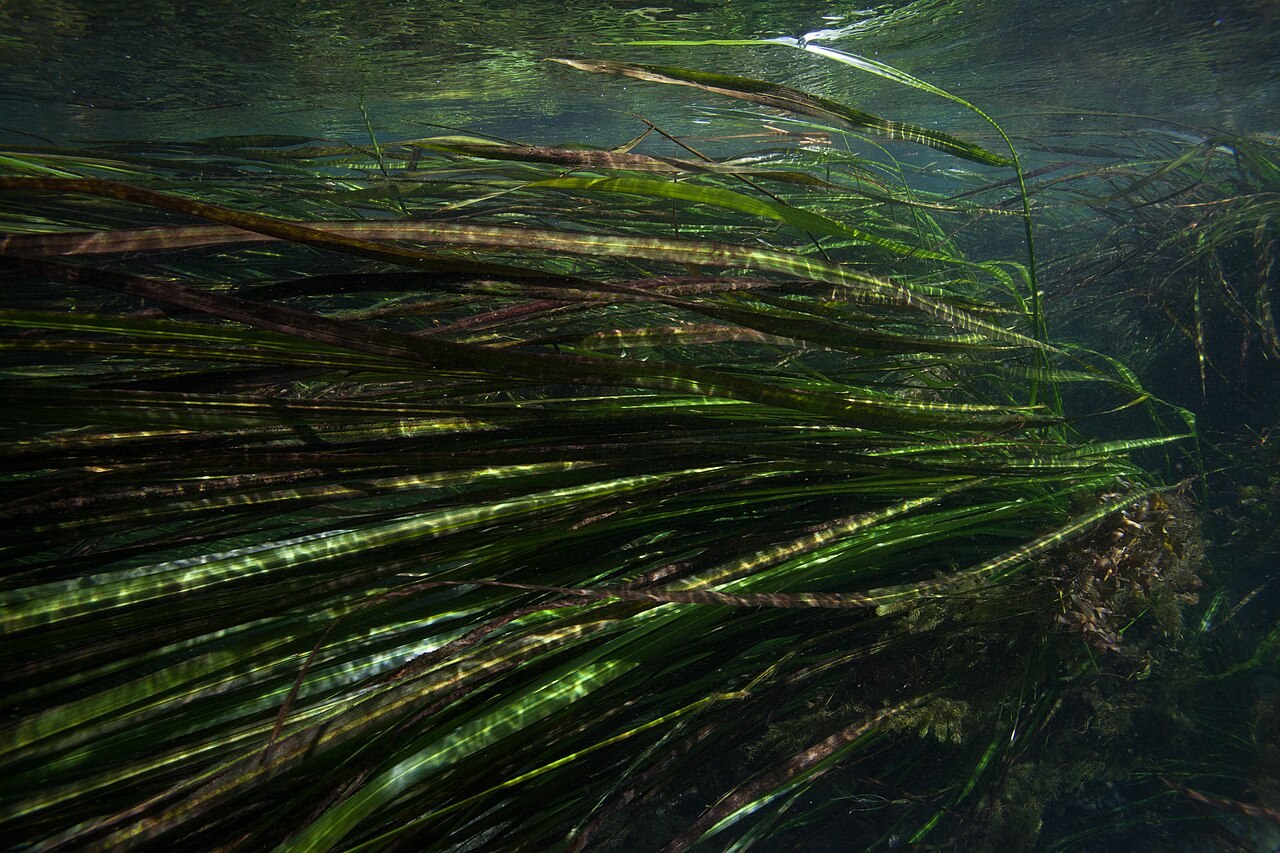
Texas wild rice is easy to recognize in its only home. Look for dense, dark green clumps of long, flat, ribbon-like leaves trailing downstream in shallow, fast, clear water over gravel or sand, often in the middle of the channel.
Growth Habit
It is a perennial that forms clumps from a mass of fibrous roots anchored in the riverbed. Stems (culms) lie along the bottom and root at the nodes, so clumps slowly spread and can break off and re-root downstream. The plant lives mostly submerged, and only the flowering stems normally rise above the water.
Leaves
The leaves are flat, ribbon-like and very long, often 3 to 6 feet or more, and up to about ½ to 1 inch wide. Nearly all of them stay underwater, where they wave in the current like eelgrass. Leaves that reach the surface may float or arch above it.
Flowers
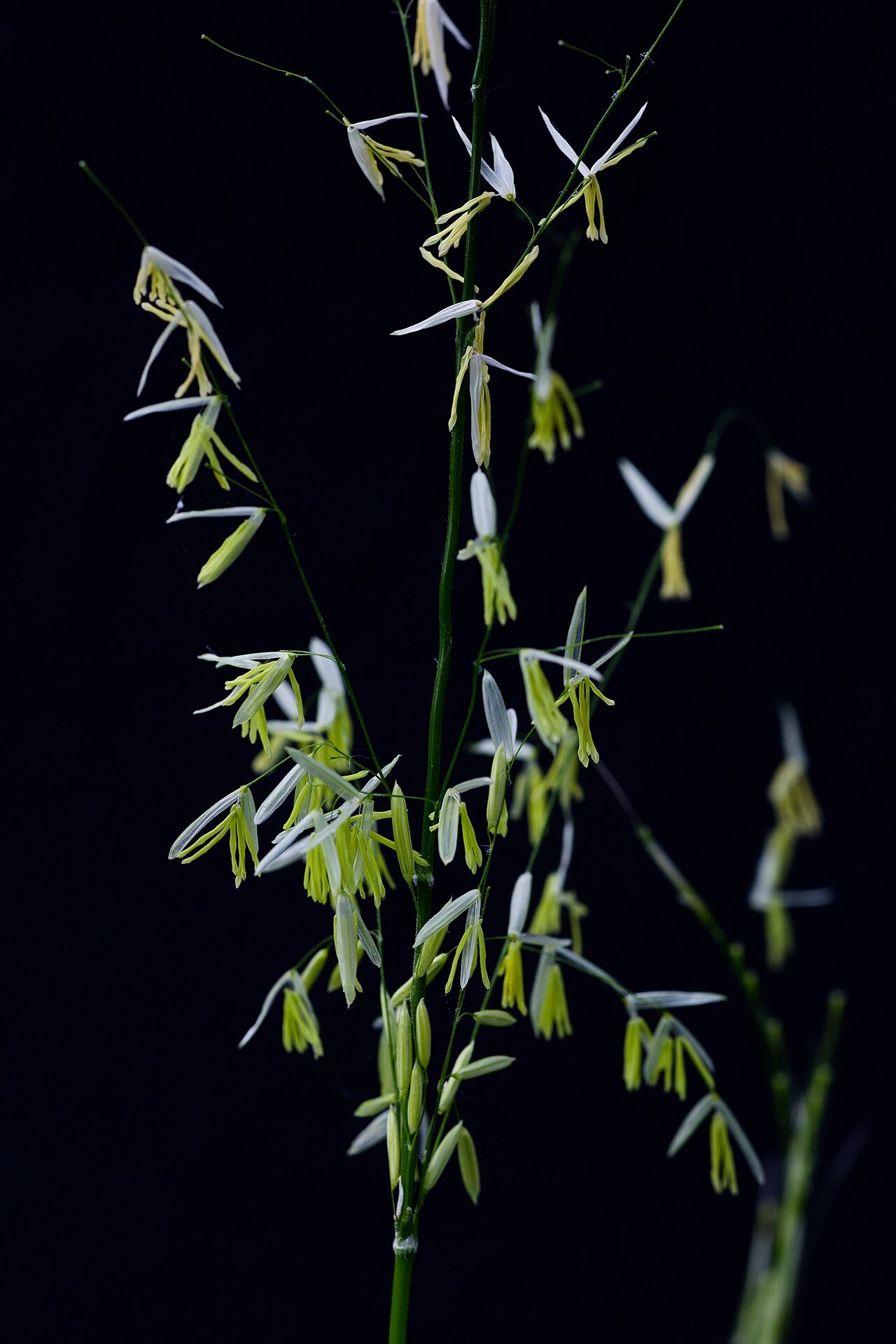
Flowering stems rise about 1 to 3 feet above the water and end in an open panicle. As in other wild rices, the flowers are unisexual. Female (pistillate) spikelets are on the upper, erect branches, and male (staminate) spikelets hang on the lower, spreading branches with dangling pale anthers. It can flower in almost any month in the constant spring-fed water, with peaks in spring and fall. Pollination is by wind, so flowers must be held above the surface to set seed.
Fruit & Seeds
Pollinated female spikelets ripen into long, slender grains like those of other wild rices. Seed set in the wild is often low, partly because flowering stems are broken off by currents and recreation, and much of the population’s spread depends on stems that break off and root downstream.
Quick Facts
| Scientific Name | Zizania texana |
| Family | Poaceae (grass family) |
| Plant Type | Perennial aquatic grass, mostly submerged |
| Mature Height | Leaves 3–6+ ft long in the current; flowering stems 1–3 ft above water |
| Mature Spread | Clumps spread slowly by rooting stems |
| Growth Rate | Moderate |
| Sun Exposure | Full sun |
| Water Needs | Aquatic; clear, flowing, spring-fed water |
| Soil Type | Gravel, sand and silt of the riverbed |
| Soil pH | Alkaline (limestone aquifer water, about 7–8) |
| Bloom Time | Can flower year-round; peaks in spring and fall |
| Flower Color | Green to straw, with pale dangling anthers |
| Fall Color | None; evergreen underwater |
| Fruit | Slender grain (wild rice) |
| Deer Resistant | Not applicable (submerged) |
| USDA Hardiness Zones | 8b–9a in the wild (San Marcos, Texas) |
Native Range
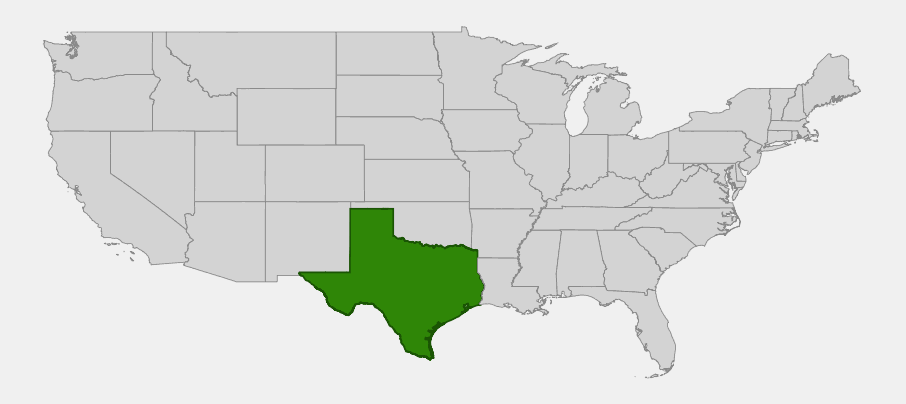
Texas wild rice is endemic to Texas. Its entire natural range is the spring-fed San Marcos River in the city of San Marcos, Hays County, from Spring Lake at the headwaters downstream for roughly the first few miles of the river. When A. S. Hitchcock described it in 1933, it was reported to be abundant in the river, in Spring Lake, and in irrigation ditches fed by the springs.
By the late 1960s it had disappeared from Spring Lake and become scarce in the river. Dams, dredging, channelization, pollution, heavy recreation, invasive aquatic plants and reduced spring flow during droughts all contributed. Recovery efforts since then, including planting propagated stock into suitable reaches, have increased the area it covers, but it remains confined to this one river and highly vulnerable.
The San Marcos River is shared with other endangered species that depend on the same spring water, including the fountain darter, the San Marcos salamander, and the Texas blind salamander of the aquifer below. Protecting spring flow from the Edwards Aquifer protects them all.
📋 Regional plant lists featuring Texas Wild Rice: South & West Texas
Can You Grow It?
No. Texas wild rice is a federally endangered species, and it is illegal to collect, uproot or possess wild plants without federal and state permits. It is not available from nurseries, and it could not survive in a garden pond: it needs clear, cool, constantly flowing, spring-fed water. Gardeners who want a native wild rice can look at other Zizania species in their own region, sourced from reputable native seed suppliers.
Light
In the wild it grows in full sun in open stretches of river. Dense shade from overhanging trees or floating mats of debris reduces flowering and growth.
Soil & Water
It needs shallow, clear, swiftly flowing water at a nearly constant temperature of about 72°F (22°C), like that issuing from San Marcos Springs, over coarse sand and gravel. Low flows, warm water, siltation and turbidity all harm it.
Planting Tips
Only authorized recovery programs plant Texas wild rice. Propagated plants from refuge populations are set into suitable reaches of the river by trained staff and monitored for years afterward.
Pruning & Maintenance
In the river, recovery workers remove invasive plants such as hydrilla and elephant ear, clear debris mats that shade or smother stands, and work with the city to limit trampling during the busy recreation season.
Propagation
The U.S. Fish and Wildlife Service maintains refuge populations at the San Marcos Aquatic Resources Center, and researchers at Texas State University have studied seed and stem propagation. These programs exist to protect the species’ genetic diversity and supply plants for restoration, not for sale.
Where to See It
- City parks in San Marcos: in clear water you can often see stands from the banks and footbridges along the upper river
- Spring Lake / Meadows Center: glass-bottom boat tours at Spring Lake explain the springs and the endangered species that depend on them
- Respectful recreation: if you tube, paddle or swim, enter and exit only at designated access points and avoid walking or standing on stands of wild rice
- Citizen science: photograph it from the bank and share observations to help track its condition
Wildlife & Ecological Value
Texas wild rice is a foundation plant of the upper San Marcos River. Its dense stands shape the flow of the river and create habitat for many other spring-dependent species.
For Pollinators
It is wind-pollinated and offers little to bees. Aquatic insects, snails and other invertebrates live among its leaves and feed on the film of algae that grows on them.
For Birds
Herons, kingfishers and other birds hunt the small fish that shelter in wild rice stands. The grains of related wild rices are important waterfowl foods, but Texas wild rice is far too rare to be a significant food source.
For Mammals
Nutria and other animals may graze it, which can damage small stands. It has no significant food value for mammals.
Ecosystem Role
Stands of Texas wild rice slow the current, trap fine sediment, and provide cover for the endangered fountain darter and many invertebrates. Because it needs clear, steady spring flow, its condition is a sensitive indicator of the health of the San Marcos River and the Edwards Aquifer that feeds it.
Cultural & Historical Uses
Texas wild rice was named in 1933 by Albert Spear Hitchcock, the U.S. Department of Agriculture’s chief grass scientist, from plants collected in the San Marcos River. At that time it was so abundant that it was reportedly considered a nuisance by people trying to keep irrigation ditches and the millrace clear. Its decline over the next few decades made it among the earliest plants protected under the Endangered Species Act.
The springs themselves have a long human history. San Marcos Springs is among the longest continuously inhabited places in North America, with archaeological evidence of people living there for many thousands of years. Today the springs and river are central to the identity of the city of San Marcos and Texas State University.
Protecting Texas wild rice has shaped water policy across south-central Texas. Lawsuits over Edwards Aquifer pumping and endangered species in the 1990s led to the creation of the Edwards Aquifer Authority, and later to the Edwards Aquifer Habitat Conservation Plan, which funds spring-flow protection and habitat restoration in the San Marcos and Comal rivers.
Frequently Asked Questions
Where does Texas wild rice grow?
Only in the upper San Marcos River in San Marcos, Hays County, Texas. It is found nowhere else in the wild.
Is Texas wild rice endangered?
Yes. It has been listed as federally endangered since 1978 and is also listed as endangered by the State of Texas. The San Marcos River is its designated critical habitat.
Can I buy or grow Texas wild rice?
No. It is not sold, and collecting or possessing it without permits is illegal. It also needs conditions that a garden pond cannot provide. Gardeners interested in wild rice should grow a species native to their own region from legally sourced seed.
Is Texas wild rice edible?
Its grains are similar to those of other wild rices, but the plant is far too rare to harvest. Harvesting it would be illegal and harmful to the species.
How can I help protect Texas wild rice?
When visiting the San Marcos River, use designated access points, avoid standing on or uprooting underwater plants, keep trash out of the river, and support water conservation that keeps the Edwards Aquifer springs flowing.

Looking for a nursery that carries Texas Wild Rice?
Browse our native plant nursery directory: Texas

