
White Prickly Poppy (Argemone albiflora)
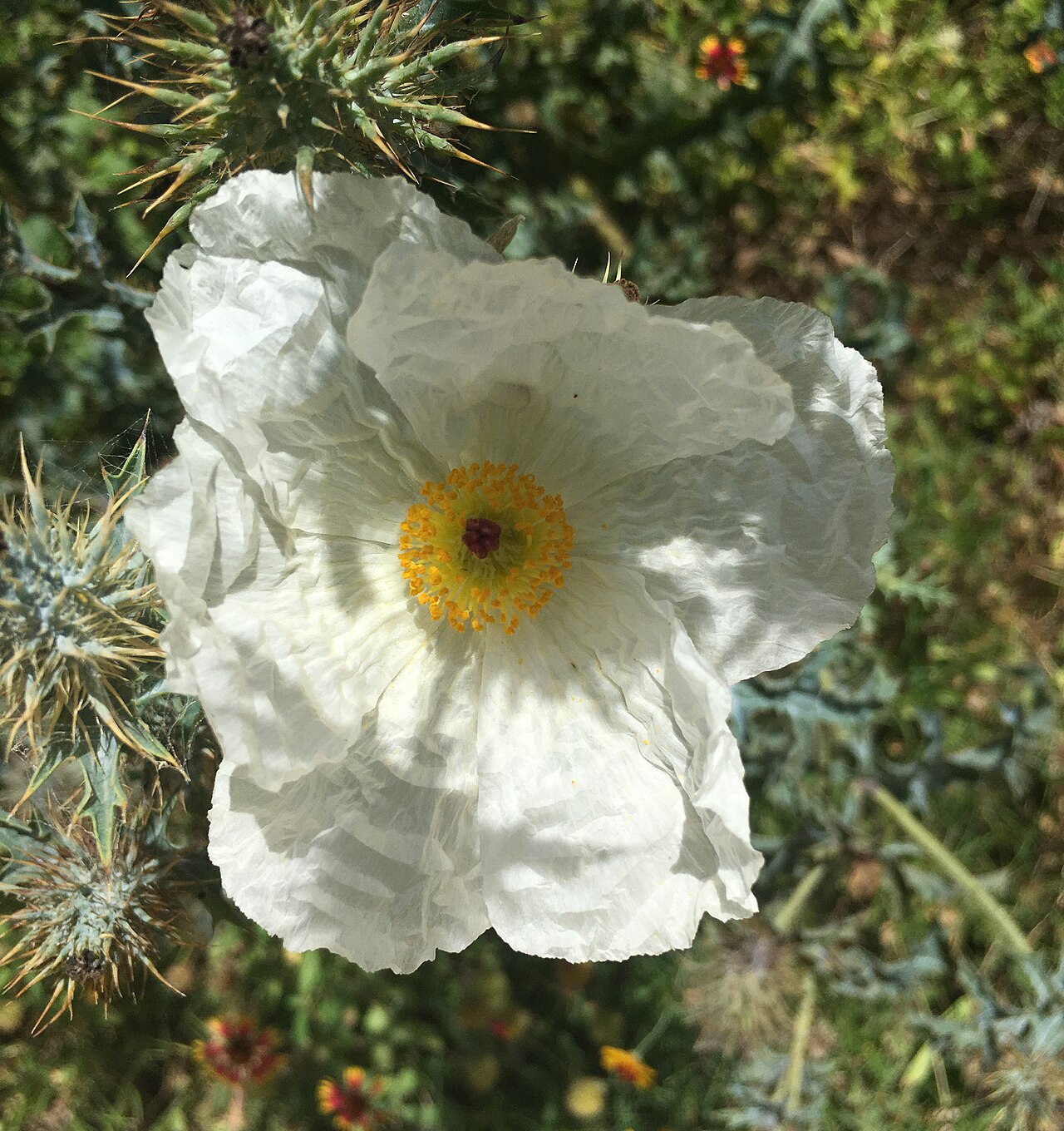
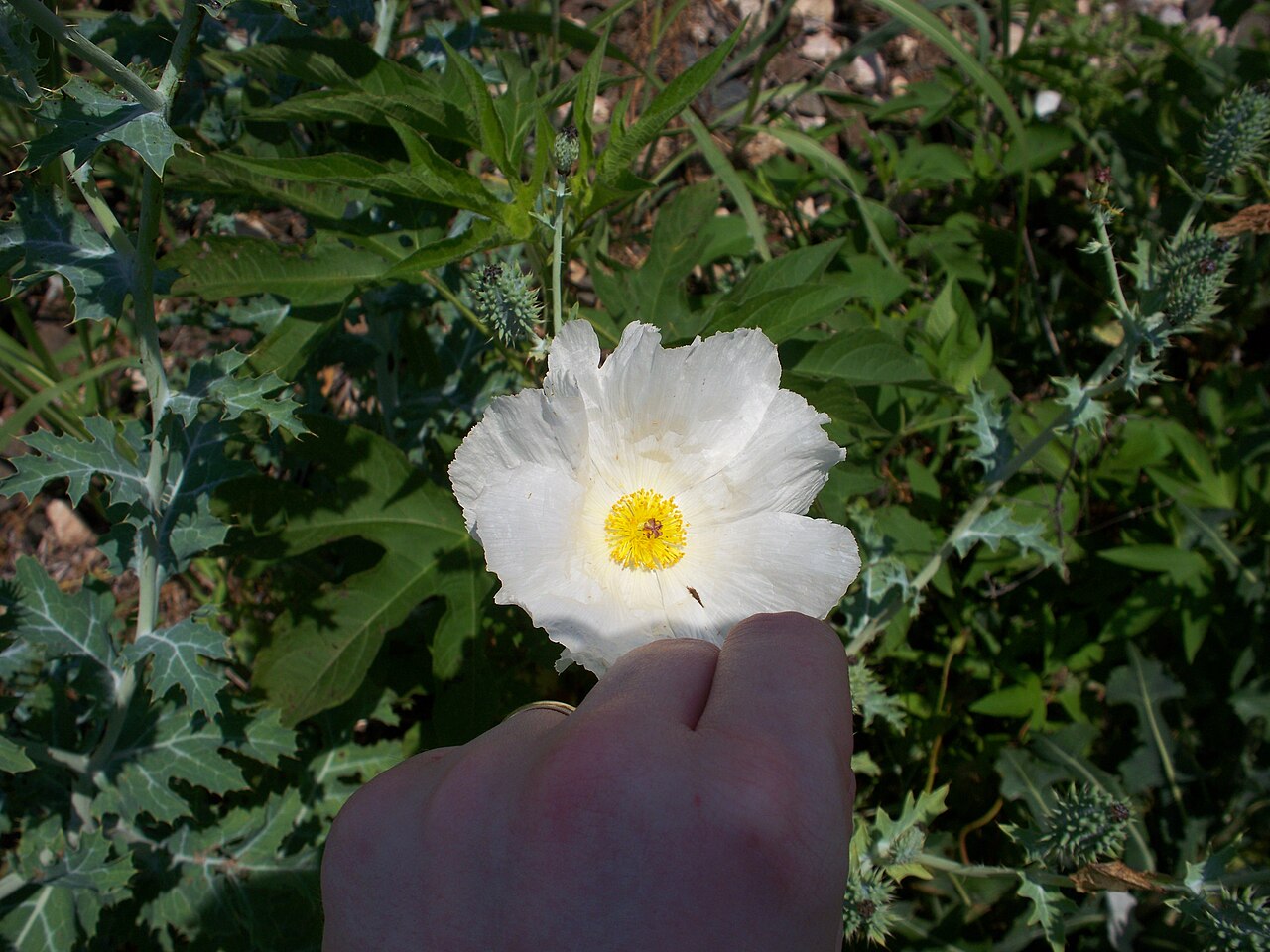
Argemone albiflora, called White Prickly Poppy, bluestem pricklypoppy (the USDA common name) or Texas prickly poppy, is a tough, spiny wildflower of sandy fields, roadsides and open ground across the southern United States. From spring into summer it carries large, papery, pure white flowers 2 to 4 inches across, each with a bright boss of yellow stamens, on bristly blue-green stems 2 to 4 feet tall. It belongs to the poppy family (Papaveraceae) and, like other poppies, bleeds a yellowish sap when cut.
The plant looks like a cross between a thistle and a poppy. Its leaves are lobed, blue-green and edged with sharp spines, and its buds and seed pods are covered with prickles. That armor, along with a bitter, toxic sap, means grazing animals leave it alone, and it is often one of the few flowers blooming in an overgrazed pasture or along a hot, dry roadside. The seeds and sap contain toxic alkaloids, so it is a plant to admire, not to eat.
For gardeners in the Southeast and Texas, white prickly poppy is a striking, almost carefree annual or short-lived perennial for dry, sunny, sandy spots, and its flowers are full of pollen for bees. This guide covers how to tell it from other prickly poppies, where it grows, how to grow it from seed, and its place in native ecosystems.
Identification
Prickly poppies (Argemone) are easy to recognize as a group: spiny, blue-green, thistle-like plants with big poppy flowers and yellow or orange sap. Telling the species apart takes a closer look at flower color, the prickles and the seed capsules.
Stems & Habit
White prickly poppy is usually an annual or biennial, sometimes a short-lived perennial, from a deep taproot. It forms a single stem or a few branching stems 2 to 4 feet tall, occasionally to 5 feet. The stems are bluish green with a waxy bloom, which gives the plant its other name, bluestem pricklypoppy. They carry scattered straight prickles, though in some plants the stems are nearly smooth.
Leaves
The leaves are alternate, clasping the stem, 2 to 10 inches long, and deeply lobed with wavy, spine-tipped margins. They are gray-green to blue-green with paler, whitish veins. The lower leaves are lobed nearly to the midrib, and the upper ones are smaller and less divided. Spines sit mainly along the margins and the main veins on the underside.
Flowers
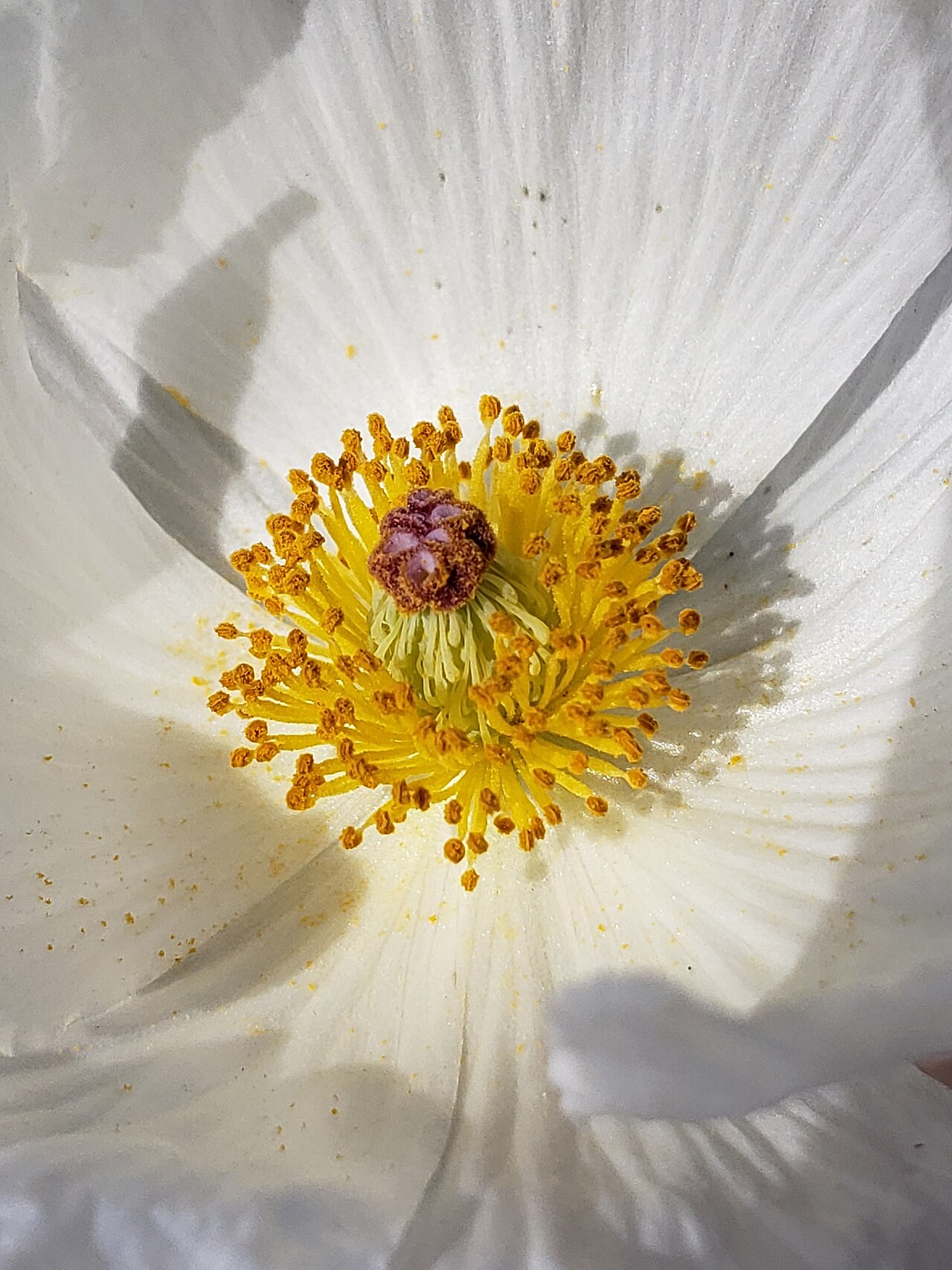
Flowers are single or in small groups at the stem tips and are 2 to 4 inches across. Each has three prickly sepals with horn-like tips that fall as the bud opens, and six broad, crinkled, white petals. In the center is a dense ring of many yellow stamens around a dark reddish-purple, lobed stigma. Flowering is mainly from March to July, with scattered flowers into fall. Each flower lasts only a day or two, but a plant opens new buds over many weeks.
Several other prickly poppies grow in the region. Mexican prickly poppy (A. mexicana), a tropical species that has naturalized in the South, has yellow flowers. Red prickly poppy (A. sanguinea) of south Texas has white, pink or lavender flowers and more densely prickly stems, and flatbud prickly poppy (A. munita) is a white-flowered western species.
Fruit & Seeds
The fruit is an oblong to elliptic capsule about 1 to 2 inches long, covered in prickles, that opens at the top through small valves. It holds many small, round, black to dark brown seeds with a fine net-like surface. The seeds are toxic and can remain viable in the soil for years, which is why prickly poppies reappear after soil disturbance.
Quick Facts
| Scientific Name | Argemone albiflora |
| Family | Papaveraceae (poppy family) |
| Plant Type | Annual or biennial wildflower, sometimes a short-lived perennial |
| Mature Height | 2–4 ft (occasionally to 5 ft) |
| Mature Spread | 1–2 ft |
| Growth Rate | Fast |
| Sun Exposure | Full sun |
| Water Needs | Low; very drought tolerant once established |
| Soil Type | Well-drained sand, gravel, sandy loam or limestone soils; tolerates clay if not wet |
| Soil pH | About 6.0–8.0 |
| Bloom Time | March–July, with scattered flowers into fall |
| Flower Color | White with yellow stamens and a reddish-purple stigma |
| Fall Color | None |
| Fruit | Prickly capsule with many small black seeds |
| Deer Resistant | Yes; spiny and toxic, rarely eaten |
| USDA Hardiness Zones | 7–10 (grown as an annual or biennial) |
Native Range
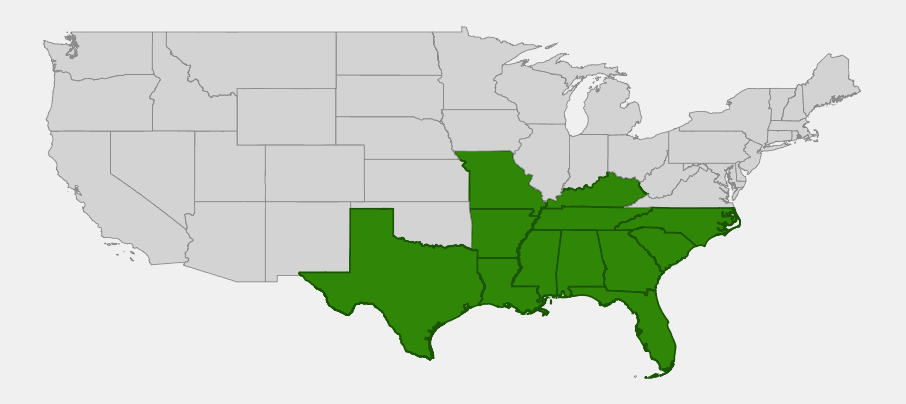
White prickly poppy is native to the southern United States. Lady Bird Johnson Wildflower Center describes its native range as Virginia south to Florida, west to Texas and north to Missouri. The map shows the states where USDA PLANTS records it in the South: Florida, Georgia, Alabama, Mississippi, Louisiana, Texas, Arkansas, Missouri, Tennessee, Kentucky, North Carolina and South Carolina. USDA also has scattered records farther north, in states such as Connecticut, Massachusetts, New York, Michigan, Wisconsin, Iowa, Illinois, Ohio and Maryland. Those northern plants are usually considered garden escapes or casual introductions, so they are not shaded on the map.
Two subspecies are commonly recognized. Subspecies albiflora is the plant of the Southeast, from the Carolinas through Florida and along the Gulf Coast. Subspecies texana is the common white prickly poppy of Texas and the south-central states. In Texas the species is one of the most widespread roadside wildflowers, and LBJ calls it common throughout the state.
Across this range it grows in open, sunny, disturbed ground: sandy and gravelly fields, coastal dunes and sandhills, pastures, roadsides, railroad embankments and vacant lots. It is a plant of early succession. It moves in after soil disturbance, fire or heavy grazing and fades as taller grasses and shrubs take over, then returns from long-lived seed the next time the ground is opened.
📋 Regional plant lists featuring White Prickly Poppy: North & South Florida · Alabama, Georgia & Mississippi · North & South Carolina · Kentucky & Tennessee · Arkansas, Louisiana, Eastern Oklahoma & Eastern Texas · Illinois, Iowa & Missouri · South & West Texas
Growing & Care Guide
White prickly poppy is about as low-maintenance as a wildflower gets, provided it has sun and dry, well-drained soil. The main decisions are where to put a plant that is spiny and toxic, and how much self-sowing you want.
Light
Plant it in full sun. It flowers best and stays sturdy with at least 6 to 8 hours of direct sun. In partial shade it becomes leggy and floppy and blooms sparsely.
Soil & Water
It thrives in poor, dry, sandy or gravelly soil, and also grows in limestone soils and well-drained clay. Rich, moist, fertile soil leads to rank growth and rot. Once seedlings are established, they rarely need watering, even in hot summers. Do not fertilize.
Planting Tips
Prickly poppies have a long taproot and resent transplanting, so sow seed directly where you want the plants. Scatter seed in fall or late winter on bare, raked soil and press it in lightly. Seed germinates best after a period of cool, moist weather, which fall sowing provides naturally. Thin seedlings to 12 to 18 inches apart. Keep the plants away from paths, play areas and places where children or pets will brush against them.
Pruning & Maintenance
Little maintenance is needed. Wear thick gloves when handling the plants, because the spines are sharp and the yellow sap can irritate skin. Deadheading prolongs bloom and limits self-sowing. Pull unwanted seedlings while they are small. After seed has ripened, pull or cut the plants. Leaving some disturbed, bare ground nearby lets a few seedlings return the next year.
Propagation
Grow it from seed only. Collect ripe capsules when they turn brown and begin to open at the top, then shake out the black seeds and store them dry. Seed can stay viable for several years. Some growers report better germination after cold, moist stratification for a few weeks, or after nicking or scarifying the seed coat.
Landscape Uses
- Dry meadows and prairie plantings: a showy white accent among native grasses and summer wildflowers
- Xeriscapes and gravel gardens: thrives on heat, sun and poor soil with no irrigation
- Roadside and disturbed-site plantings: quickly colonizes bare, sandy or gravelly ground
- Pollinator gardens: abundant pollen for bumblebees and other bees
- Barrier plantings: its spines discourage foot traffic and browsing animals
Wildlife & Ecological Value
White prickly poppy is a pioneer plant: it colonizes bare ground, feeds pollen-collecting insects, and holds soil until longer-lived plants arrive.
For Pollinators
The flowers produce little or no nectar but offer large amounts of pollen. Bumblebees, honeybees, sweat bees and other native bees work the stamens heavily, often buzzing to shake pollen loose, and pollen-feeding beetles also visit. Large, open, bowl-shaped flowers like these are easy for many kinds of insects to use.
For Birds
The seeds are toxic to many animals, but seed-eating birds such as mourning doves and quail are reported to eat prickly poppy seeds. Plants also offer some cover in open ground.
For Mammals
Deer, cattle and other grazing animals avoid white prickly poppy because of its spines and bitter, toxic sap. That is why it often stands out in heavily grazed pastures, where palatable plants have been eaten.
Ecosystem Role
As an early-successional plant with long-lived seed, white prickly poppy fills gaps after fire, flood, plowing or grazing. Its deep taproot breaks up compacted soil, and its flowers support pollinators in hot, open sites. In healthy prairies and sandhills it is usually a scattered plant that increases after disturbance, then declines as perennial grasses recover.
Cultural & Historical Uses
Danish botanist Jens Wilken Hornemann published the name Argemone albiflora in 1815, in a catalogue of plants growing in the botanical garden at Copenhagen. The genus name comes from the Greek argema, an eye ailment, because ancient writers recommended a plant called argemone for eye problems.
Native peoples of the South and Southwest used prickly poppies in traditional medicine, for example as washes for sores and in preparations for pain, and the yellow sap was applied to warts and skin problems. These uses are traditional knowledge, not recommendations. The seeds of prickly poppies contain toxic alkaloids such as sanguinarine. When seeds of Mexican prickly poppy have contaminated cooking oil, they have caused serious poisoning outbreaks in people, known as epidemic dropsy.
Today white prickly poppy is valued by native plant gardeners and wildflower enthusiasts, especially in Texas, where it is one of the familiar roadside flowers of spring. It is also a useful reminder that “weedy” native plants of disturbed ground have their own place in the landscape, feeding pollinators and healing bare soil.
Frequently Asked Questions
Is white prickly poppy poisonous?
Yes. All parts, especially the seeds and the yellow sap, contain toxic alkaloids. Do not eat any part of the plant, keep it away from children and pets, and wear gloves when handling it.
What is the difference between white prickly poppy and Mexican prickly poppy?
White prickly poppy (Argemone albiflora) is native to the southern U.S. and has white flowers. Mexican prickly poppy (A. mexicana) has yellow flowers and is a tropical American species that is naturalized in parts of the Southeast.
Will white prickly poppy spread in my garden?
It self-sows in bare, disturbed soil, and its seeds can last for years. It rarely invades established lawns or dense plantings. Deadhead or pull plants before the capsules open if you want to limit it.
Can I transplant white prickly poppy?
It is difficult. The plant has a long taproot and usually wilts or dies when moved. Sow seed where you want plants, or move very small seedlings with a deep plug of soil.
Why is it called bluestem pricklypoppy?
The stems and leaves are covered with a waxy, blue-gray bloom. USDA PLANTS uses “bluestem pricklypoppy” as the official common name. White prickly poppy and Texas prickly poppy are also widely used.

Looking for a nursery that carries White Prickly Poppy?
Browse our native plant nursery directory: Alabama & Arkansas · Florida & Georgia · Kentucky, Louisiana, Mississippi & Missouri · North Carolina · South Carolina, Tennessee & Texas