
Wild Dilly (Manilkara jaimiqui)
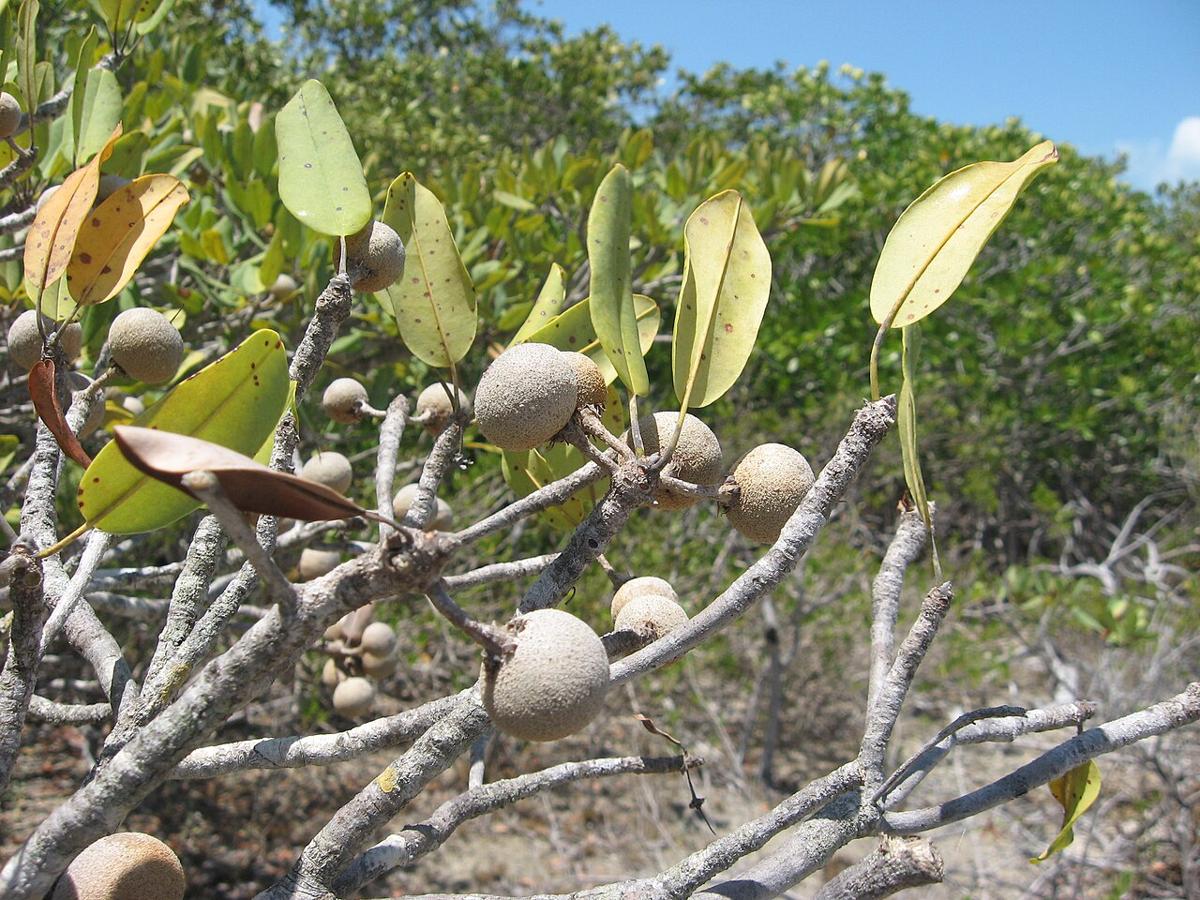
Manilkara jaimiqui subsp. emarginata, commonly called Wild Dilly, is a rare, state-listed native shrub to small tree found only in the Bahamas and the southern tip of Florida. It belongs to the Sapotaceae, the same family as the cultivated Sapodilla (Manilkara zapota) that gives “dilly” its name, and like its cultivated relative it produces thick, leathery evergreen leaves and distinctive rough-skinned fruit.
In its native rockland hammocks, pine rocklands, coastal berms, and shell mounds, Wild Dilly grows as a dense, often gnarled shrub or small tree, typically 10 to 20 feet tall, with stiff, blunt-tipped, dark green leaves clustered near the branch tips. Small, inconspicuous yellow-white flowers appear nearly year-round, followed by round, russet-brown fruit with a distinctive sandpapery, scurfy skin — one of the easiest features for identifying the species in the field.
Wild Dilly is listed as Threatened under Florida’s Preservation of Native Flora of Florida Act, reflecting how limited and fragmented its remaining habitat has become. For South Florida gardeners working with native pine rockland or coastal hammock restoration, it is a slow-growing but worthwhile addition — tough, long-lived, and a genuine conservation priority rather than just another ornamental.
Identification
Wild Dilly is best recognized by its stiff, blunt or notched leathery leaves clustered toward the branch tips and its rough-skinned, russet-brown fruit — a combination that separates it from Florida’s other hammock trees.
Bark & Stems
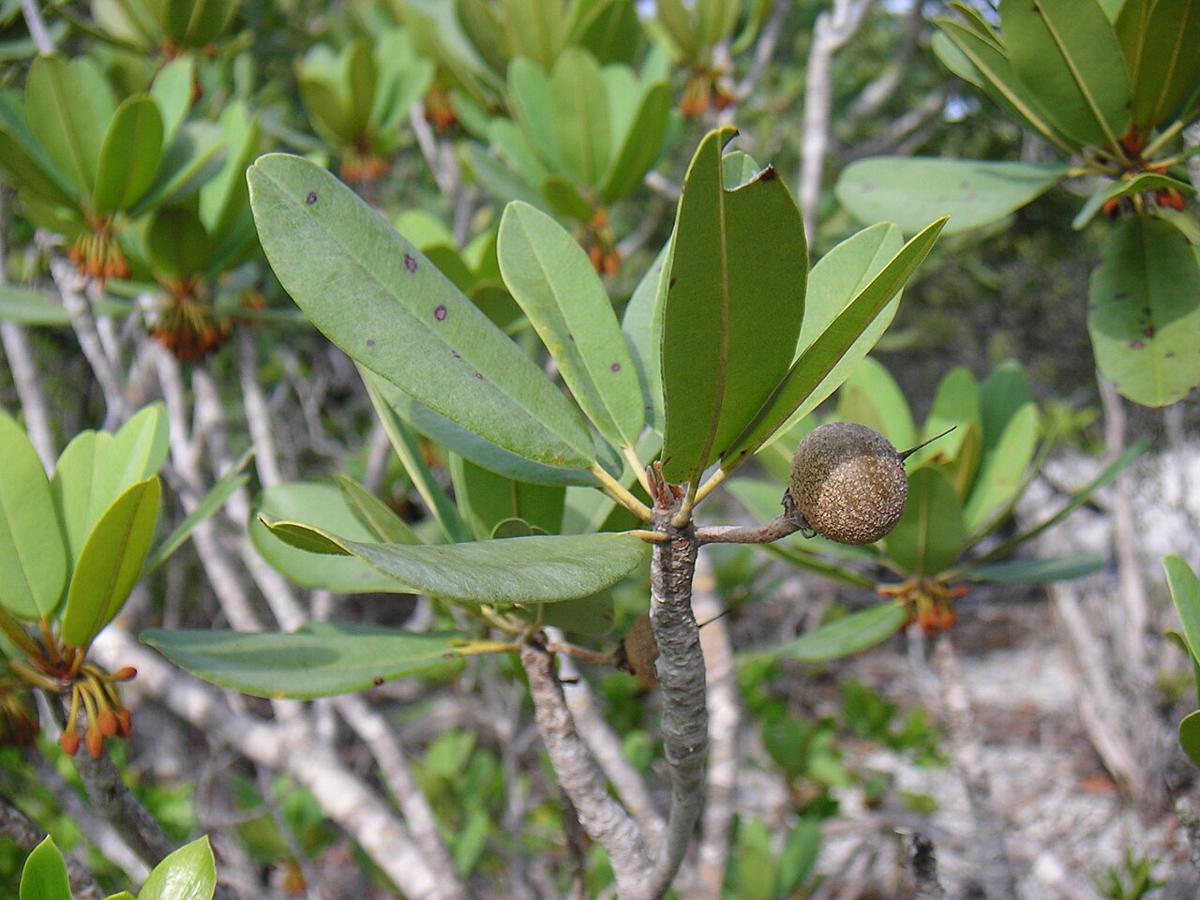
Young twigs are gray to brown and often somewhat stout and stiff, with leaves crowded near the growing tips in a rosette-like arrangement typical of many Sapotaceae. Older bark is gray-brown and relatively smooth to slightly rough. Like many of its relatives, the plant produces a white, latex-like sap when a stem or leaf is broken, a useful identification clue if confirmation is needed.
Leaves
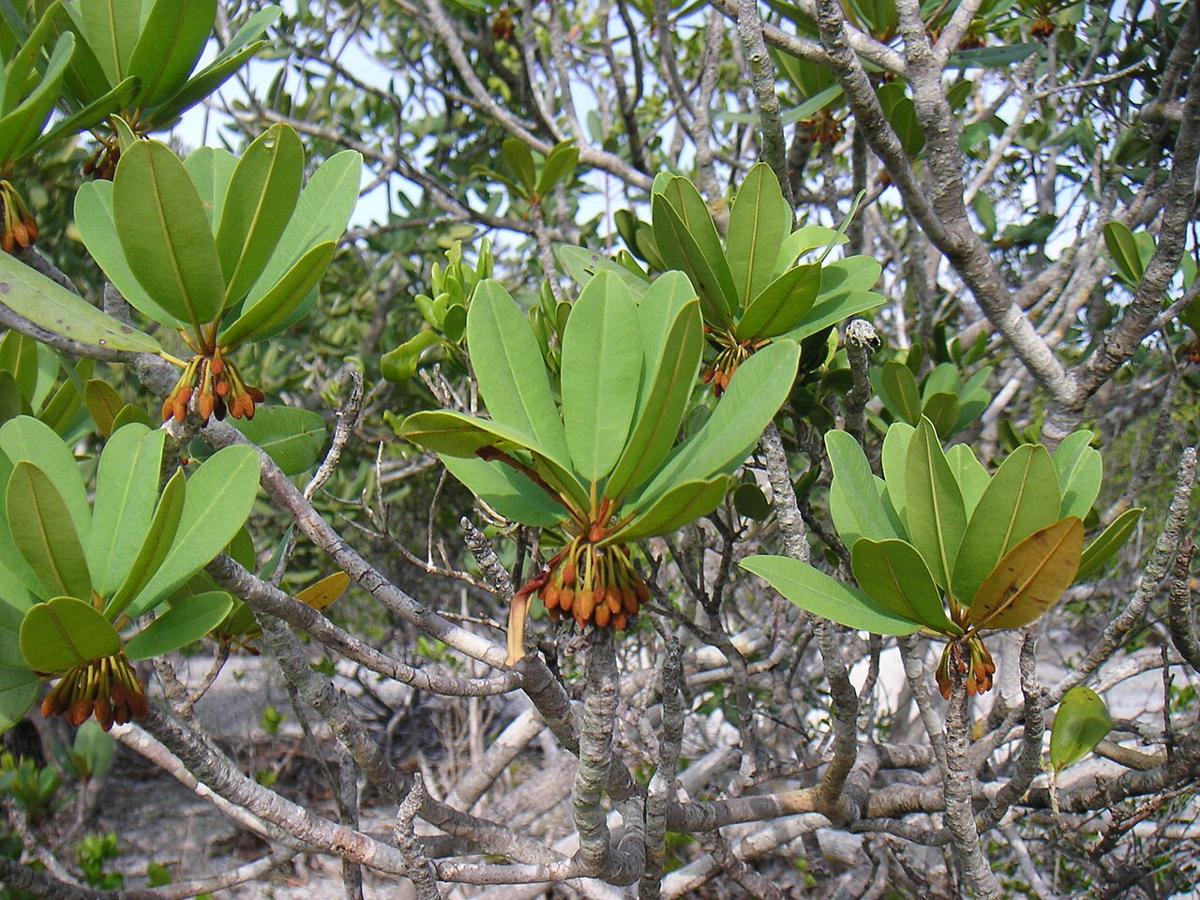
Leaves are alternate, simple, thick, and leathery, 2 to 4 inches long, oblong to obovate in shape, with a rounded or notched (emarginate) tip — the feature that gives the subspecies its name “emarginata.” The upper surface is dark glossy green, and leaves are typically clustered near the ends of branches rather than evenly spaced along the stem.
Flowers
Flowers are small, inconspicuous, and yellowish-white, borne singly or in small clusters in the leaf axils. They appear intermittently throughout the year in South Florida’s warm climate, and while not showy, they are a steady, if modest, nectar source across the seasons.
Fruit & Seeds
The fruit is a round, golf-ball-sized berry with a distinctive rough, scurfy, sandpaper-like brown skin — quite different from the glossy berries of most other Florida hammock natives. Inside is a sweetish pulp surrounding one or more hard, glossy brown seeds. Fruit is said to be edible, echoing its cultivated relative Sapodilla, though it is not well documented as a human food source and is primarily of value to wildlife.
Quick Facts
| Scientific Name | Manilkara jaimiqui subsp. emarginata |
| Family | Sapotaceae |
| Plant Type | Evergreen Shrub / Small Tree |
| Mature Height | 10–20 ft |
| Mature Spread | 8–15 ft |
| Growth Rate | Slow |
| Sun Exposure | Full Sun to Partial Shade |
| Water Needs | Low once established |
| Soil Type | Shallow limestone/oolite, sandy; very well-drained |
| Soil pH | Neutral to alkaline |
| Bloom Time | Nearly year-round, inconspicuous |
| Flower Color | Yellowish-white |
| Fall Color | None (evergreen) |
| Fruit | Round, rough-skinned brown berries |
| Deer Resistant | Moderate to High |
| USDA Hardiness Zones | 10b–11 |
Native Range
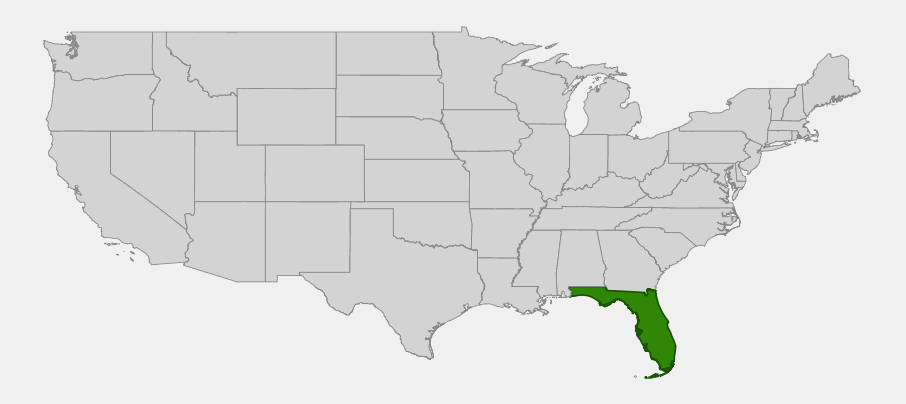
In the United States, Wild Dilly is native only to the southern tip of Florida — primarily Miami-Dade and Monroe counties, including the Florida Keys — where it grows in rockland hammocks, pine rocklands, coastal berms, and ancient shell mounds. Outside the U.S., this subspecies is also native to the Bahamas; the broader species Manilkara jaimiqui includes other subspecies restricted to Cuba, Jamaica, Haiti, and the Dominican Republic, each occupying its own island range with little overlap.
Because of South Florida’s extensive historical loss of pine rockland and coastal hammock habitat to development, Wild Dilly is now rare and fragmented across its already narrow native range, and it is listed as Threatened under Florida’s Preservation of Native Flora of Florida Act. Remaining populations are concentrated in protected natural areas and a handful of undeveloped coastal and rockland sites.
Ecologically, it occupies the drier, more exposed, rocky end of South Florida’s hammock and pineland habitats, tolerating thin, calcareous soils and periodic drought far better than the moister hammock species that share its range.
📋 Regional plant lists featuring Wild Dilly: No Florida regional plant list currently covers this species; browse all Native Plant Profiles. For a related rockland hammock associate with full list coverage, see Paradise Tree (Simarouba glauca).
Growing & Care Guide
Wild Dilly is slow-growing and best suited to patient South Florida gardeners restoring pine rockland or rockland hammock habitat, or anyone looking to grow a genuinely rare native species responsibly from nursery-propagated stock.
Light
It grows best in full sun to light partial shade, reflecting its native habitat in open pine rocklands and exposed coastal sites. Too much shade slows an already slow grower even further, so the sunniest practical spot is usually best, alongside other sun-loving natives covered in our South Florida tree guide.
Soil & Water
Wild Dilly is adapted to the thin, rocky, calcareous soils of South Florida’s pine rocklands and coastal rock outcrops, and it demands sharp drainage above all else — it will not tolerate wet feet. Once established it is quite drought-tolerant, needing supplemental water only during the driest, hottest stretches of the year.
Planting Tips
Because it is state-listed as Threatened, only acquire Wild Dilly from reputable native-plant nurseries propagating it legally and responsibly — never collect from the wild. Plant in spring through summer to take advantage of the rainy season for establishment, and be patient: this is a slow-growing species that rewards a long-term planting plan rather than a quick landscape fix.
Pruning & Maintenance
Minimal pruning is needed. Remove only dead or damaged wood; the naturally dense, twiggy growth habit needs little shaping. Wild Dilly has no significant pest or disease problems reported in cultivation and, once established, is one of the lower-maintenance plants available for rockland restoration projects.
Landscape Uses
Its rarity and toughness make Wild Dilly most valuable in a few specific roles:
- Pine rockland and rockland hammock restoration plantings
- Drought-tolerant specimen planting in rocky, well-drained sites
- Conservation gardens focused on rare and threatened Florida natives
- Coastal berm landscaping where salt tolerance and poor soil are challenges
- Wildlife plantings, paired with the ideas in our guide to attracting songbirds with native plants
Wildlife & Ecological Value
As a rare but long-lived component of pine rockland and coastal hammock habitat, Wild Dilly supports the specialized wildlife community of one of Florida’s most imperiled ecosystems.
For Birds
The fruit is consumed by a range of fruit-eating birds in South Florida’s pine rocklands and coastal hammocks, and the dense evergreen canopy offers year-round cover and nesting structure in habitats where woody vegetation can otherwise be sparse and exposed.
For Mammals
Small mammals opportunistically feed on fallen fruit, and the thick, interlocking branches provide useful ground-level shelter in open pine rockland terrain where cover options are limited.
For Pollinators
Though inconspicuous, the near-continuous production of small flowers offers a modest but steady nectar source for native bees and other insects through much of the year, in a habitat where showy wildflower bloom can be seasonal and patchy.
Ecosystem Role
Wild Dilly is one of several slow-growing, long-lived hardwood species that add structural diversity and canopy density to Florida’s rapidly diminishing pine rockland and rockland hammock ecosystems. As a state-threatened species, its continued presence is itself an indicator of habitat quality, and its conservation is tied directly to broader efforts to preserve the small, fragmented tracts of pine rockland that remain outside Everglades National Park.
Cultural & Historical Uses
Wild Dilly’s name reflects its kinship with Sapodilla (Manilkara zapota), the widely cultivated tropical fruit tree known historically as the source of chicle, the original base for chewing gum, extracted from its milky latex. Wild Dilly itself was never commercially exploited for chicle or timber in Florida, likely owing to its naturally limited, rocky habitat and smaller stature compared to its larger cultivated relative.
Early 20th-century Florida botanical surveys recorded Wild Dilly among the characteristic woody species of South Florida’s pine rocklands and coastal rock habitats, areas that have since been dramatically reduced by agricultural and urban development in Miami-Dade County. Its listing as Threatened under state law reflects this long decline in available habitat rather than any history of direct harvest or persecution.
Today, Wild Dilly’s primary significance is as a conservation and restoration species rather than a resource plant — a living reminder of South Florida’s now-rare pine rockland ecosystem and a priority for botanical gardens and native-plant nurseries working to keep it in cultivation.
Frequently Asked Questions
Is Wild Dilly related to Sapodilla?
Yes — both are in the genus Manilkara within the Sapotaceae. Sapodilla (Manilkara zapota) is the widely cultivated tropical fruit tree; Wild Dilly is a smaller, rarer native relative restricted to South Florida and the Bahamas.
Can I buy Wild Dilly at a nursery?
It is occasionally available from specialty Florida native-plant nurseries, but because it is state-listed as Threatened, always buy only legally propagated nursery stock and never collect material from wild populations.
Is Wild Dilly fruit safe to eat?
The fruit is said to be edible, following its relationship to cultivated Sapodilla, but it is not a well-documented food source and is best left for wildlife rather than treated as a reliable human food.
How fast does Wild Dilly grow?
Slowly. It is a long-lived but unhurried species, which is part of why mature wild specimens in intact pine rockland habitat are considered valuable and why cultivated plants should be viewed as a long-term landscape investment.
Why is Wild Dilly rare in Florida?
Its native pine rockland and rockland hammock habitat in Miami-Dade and Monroe counties has been extensively lost to agricultural and urban development over the past century, leaving only small, fragmented populations — most now within protected conservation areas.

Looking for a nursery that carries Wild Dilly?
Browse our native plant nursery directory: Florida

