
Coffee Colubrina (Colubrina arborescens)
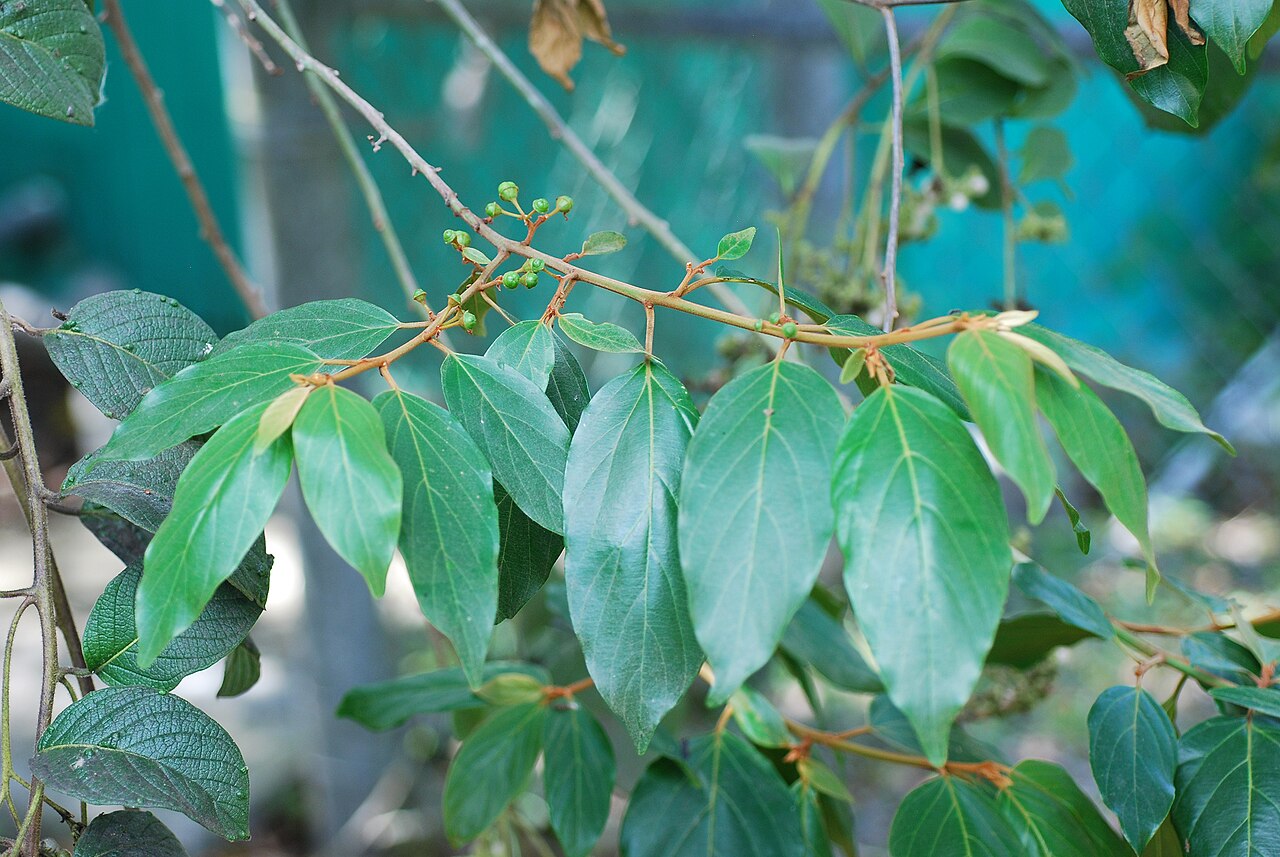
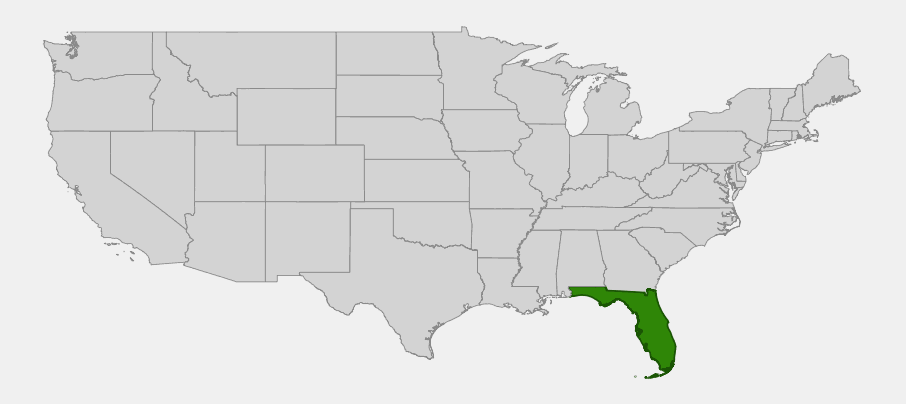
Colubrina arborescens — known as Coffee Colubrina, Greenheart, or Wild Coffee (not to be confused with Psychotria nervosa, the plant more commonly called Wildcoffee in Florida) — is a fast-growing small tree or large shrub of South Florida’s rarest rockland hammocks. In the United States it grows naturally only in a narrow strip of South Florida, native to Monroe, Miami-Dade, and Collier counties, with the Florida Keys population now rare and nearly absent from the middle Keys, where habitat loss has sharply reduced its numbers.
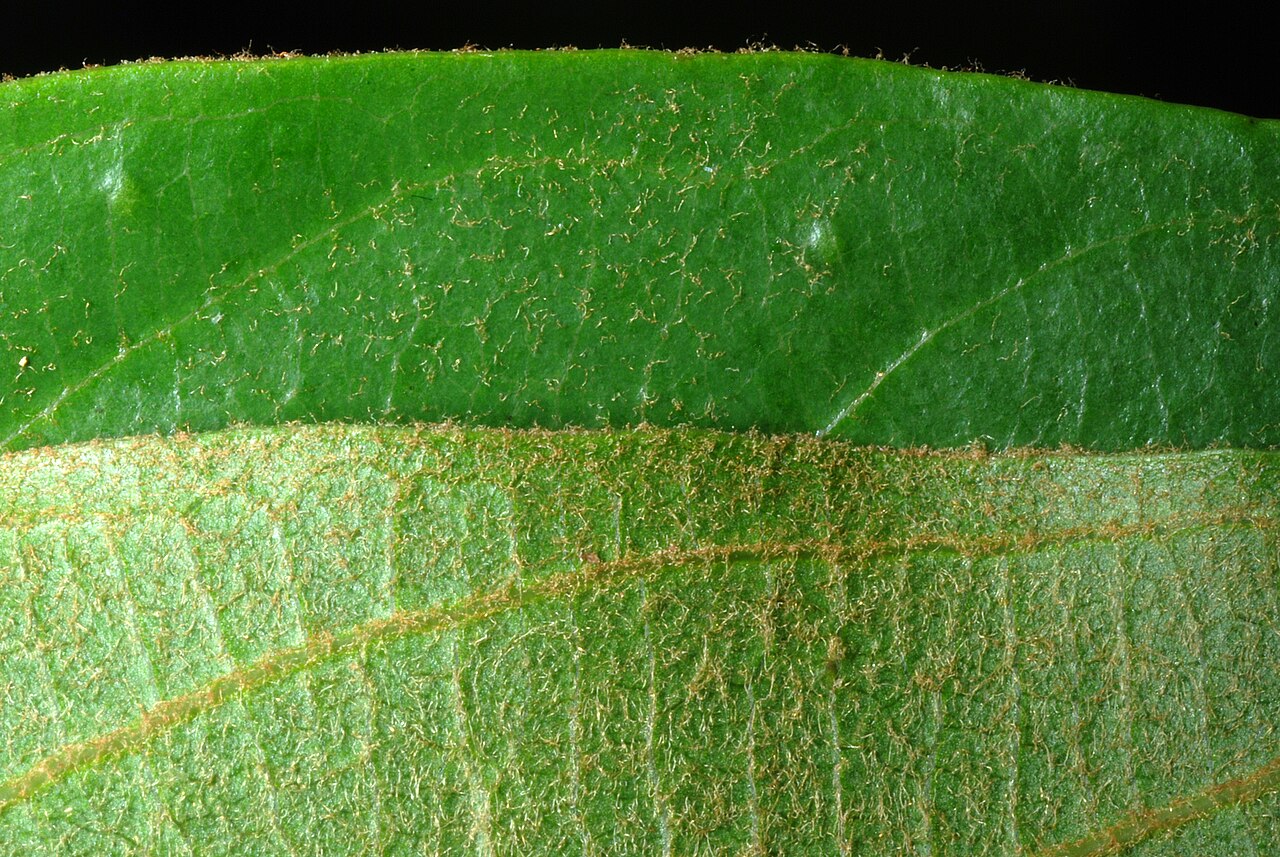
Coffee Colubrina earns its genus name — Latin for “little snake” — from the smooth, sinuous look of its twigs and branches, while its “greenheart” nickname nods to the pale greenish wood beneath the bark. A member of the buckthorn family (Rhamnaceae), it is easy to pick out in the hammock understory by the fine, rusty-orange hairs that coat its young twigs, flower stalks, and the undersides of its leaves, a distinctive contrast against the glossy dark green leaf surface.
Though inconspicuous in flower, Coffee Colubrina is a genuinely valuable restoration and wildlife plant: fast-growing, drought-tolerant, pest-resistant, and a reliable source of small black fruit that birds seek out. For South Florida gardeners working to recreate rockland hammock habitat, it is an uncommon native worth seeking out from the handful of nurseries that grow it.
Identification
Coffee Colubrina is typically a small tree or large shrub, 10 to 20 feet tall and often a bit taller than it is broad, with a single erect trunk and a broad, semi-open crown of spreading branches.
Bark & Stems
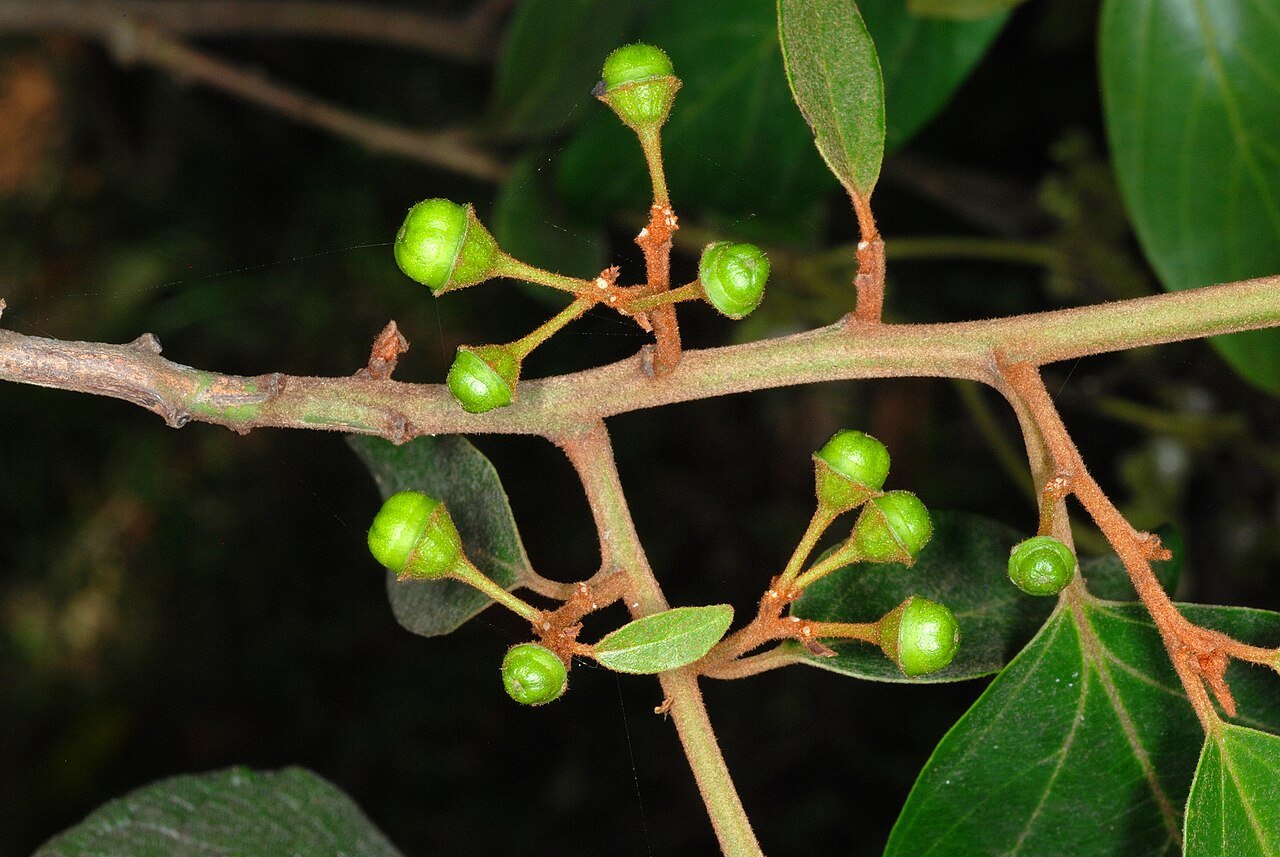
Young twigs are covered in a dense coat of fine, rusty-orange hairs, giving new growth a distinctly fuzzy, copper-colored look that fades somewhat as stems mature. This rusty pubescence, extending onto the flower stalks and leaf undersides, is one of the most reliable identification features of the species.
Leaves
Leaves are simple, oval to elliptic, light to medium green and glossy on the upper surface, with the same rusty-brown hairs covering the lower surface and the midrib. The hairs are easiest to see with a hand lens or by brushing a finger across the leaf underside.
Flowers
Flowers are small, star-shaped, and inconspicuous — greenish-white to pale yellow — borne in small clusters at the leaf axils. They are not showy, but Coffee Colubrina flowers nearly year-round, with the heaviest bloom in late summer, so the plant is rarely without at least a few open flowers.
Fruit & Seeds
The fruit is a small, round, fleshy capsule under half an inch across, ripening through green and purple to glossy black. Clusters of these small fruit stand out against the foliage once ripe and are quickly found by fruit-eating birds.
Quick Facts
| Scientific Name | Colubrina arborescens |
| Family | Rhamnaceae (Buckthorn) |
| Plant Type | Evergreen Shrub / Small Tree |
| Mature Height | 10–20 ft |
| Mature Spread | 10–15 ft |
| Growth Rate | Fast |
| Sun Exposure | Full Sun to Partial Shade |
| Water Needs | Low once established |
| Soil Type | Moist, well-drained limestone or calcareous sand |
| Soil pH | Neutral to alkaline |
| Bloom Time | Year-round, heaviest in late summer |
| Flower Color | Greenish-white to pale yellow |
| Fall Color | None (evergreen) |
| Fruit | Small round capsule, ripening green to purple to black |
| Deer Resistant | Yes |
| USDA Hardiness Zones | 10b–11 |
Native Range
Coffee Colubrina’s U.S. range is limited to three South Florida counties: Monroe (the Florida Keys, where it is now rare and nearly absent from the middle Keys), Miami-Dade, and Collier. In Miami-Dade County it is native to the Miami Rock Ridge, from Long Pine Key in Everglades National Park north and east to around Goulds. Outside Florida, it is native throughout the West Indies, Mexico, and Central and South America.
It grows in rockland hammocks and as an understory shrub in pine rockland, two of the most imperiled plant communities in the continental United States, typically rooted in moist, well-drained limestone or calcareous sandy soils with a humus-rich top layer.
📋 Regional plant lists featuring Coffee Colubrina: No Florida regional plant list currently covers this species; browse all Native Plant Profiles. For other rockland hammock natives, see our profiles of West Indian Mahogany and Lignum Vitae.
Growing & Care Guide
Coffee Colubrina is an easygoing, fast-growing native for South Florida gardeners restoring rockland hammock habitat or simply looking for an uncommon, low-maintenance accent tree with year-round interest and reliable bird appeal.
Light
Plant in full sun to partial shade. It grows naturally at hammock edges and in the dappled light of pine rockland understory, so it tolerates a range of light levels, though full sun generally produces the densest, most compact growth.
Soil & Water
Coffee Colubrina does best in moist, well-drained limestone or calcareous sandy soil with some organic content, matching its native rockland hammock habitat. It is highly drought-tolerant once established but has low tolerance for salt water, so it should not be planted where it could be flooded by brackish or salt water.
Planting Tips
Give Coffee Colubrina a well-drained spot with room for its broad, semi-open crown — it is usually taller than it is wide, so it fits well in narrower planting strips than many hammock trees. Because availability is limited to a handful of South Florida native-plant nurseries, source plants from growers specializing in rockland hammock species. Pair it with other drought-tolerant natives from our guide to drought-tolerant native plants for Florida.
Pruning & Maintenance
Little pruning is required beyond occasional shaping; the plant naturally forms a tidy, semi-open crown. It is notably pest-resistant and, once established, needs minimal ongoing care — a combination that, along with its fast growth, makes it a practical choice for restoration plantings as well as home landscapes.
Propagation
Propagate from fresh seed collected from ripe, dark fruit; as with many Rhamnaceae, germination is generally more successful with fresh rather than stored seed. Young plants grow quickly once established, consistent with the species’ fast overall growth rate.
Landscape Uses
- Accent or specimen tree in a South Florida native landscape
- Buffer and screen plantings along property edges
- Rockland hammock restoration in Miami-Dade and the Keys
- Bird-friendly wildlife gardens, for its near year-round fruit
Wildlife & Ecological Value
For Pollinators
The small, inconspicuous flowers appear nearly year-round and provide a steady, if modest, nectar source for bees and other small pollinating insects in the rockland hammock understory, especially valuable during the heaviest bloom period in late summer.
For Birds
The small black fruit are a dependable food source for hammock birds, who help disperse the seeds through the surrounding forest. Because flowering and fruiting continue through much of the year, Coffee Colubrina offers a more consistent food supply than many natives with a single, short fruiting season.
Ecosystem Role
As an understory component of two of Florida’s rarest habitats — rockland hammock and pine rockland — Coffee Colubrina contributes to a plant community that has lost the great majority of its historic extent to development, standing alongside canopy natives such as Gumbo Limbo and West Indian Mahogany. Restoration plantings of species like this one help preserve the structure and function of these critically reduced ecosystems.
Frequently Asked Questions
Is Coffee Colubrina related to real coffee?
No. Despite the common names Coffee Colubrina and Wild Coffee, it is not related to true coffee (Coffea species) or to Florida’s other native plant commonly called Wildcoffee (Psychotria nervosa). The resemblance is in common name only; Coffee Colubrina belongs to the buckthorn family, Rhamnaceae.
How can I identify Coffee Colubrina in the field?
Look for the dense, rusty-orange hairs coating young twigs, flower stalks, and the undersides of the glossy, oval leaves — a distinctive combination not shared by most of its rockland hammock neighbors.
Is Coffee Colubrina rare?
It is uncommon in Florida, restricted to a small area of Monroe, Miami-Dade, and Collier counties, and has become rare in the Keys and nearly absent from the middle Keys as coastal hammock habitat has been lost to development.
Does Coffee Colubrina need a lot of water?
No — it is highly drought-tolerant once established, needing regular water only during its first year or two in the ground. It does need protection from prolonged salt or brackish flooding, which it tolerates poorly.
How fast does it grow?
Fast, compared to many South Florida hammock trees, making it a practical choice when a quicker-establishing accent tree or restoration planting is wanted.

Looking for a nursery that carries Coffee Colubrina?
Browse our native plant nursery directory: Florida

