
Witch’s Teeth (Lotus formosissimus)
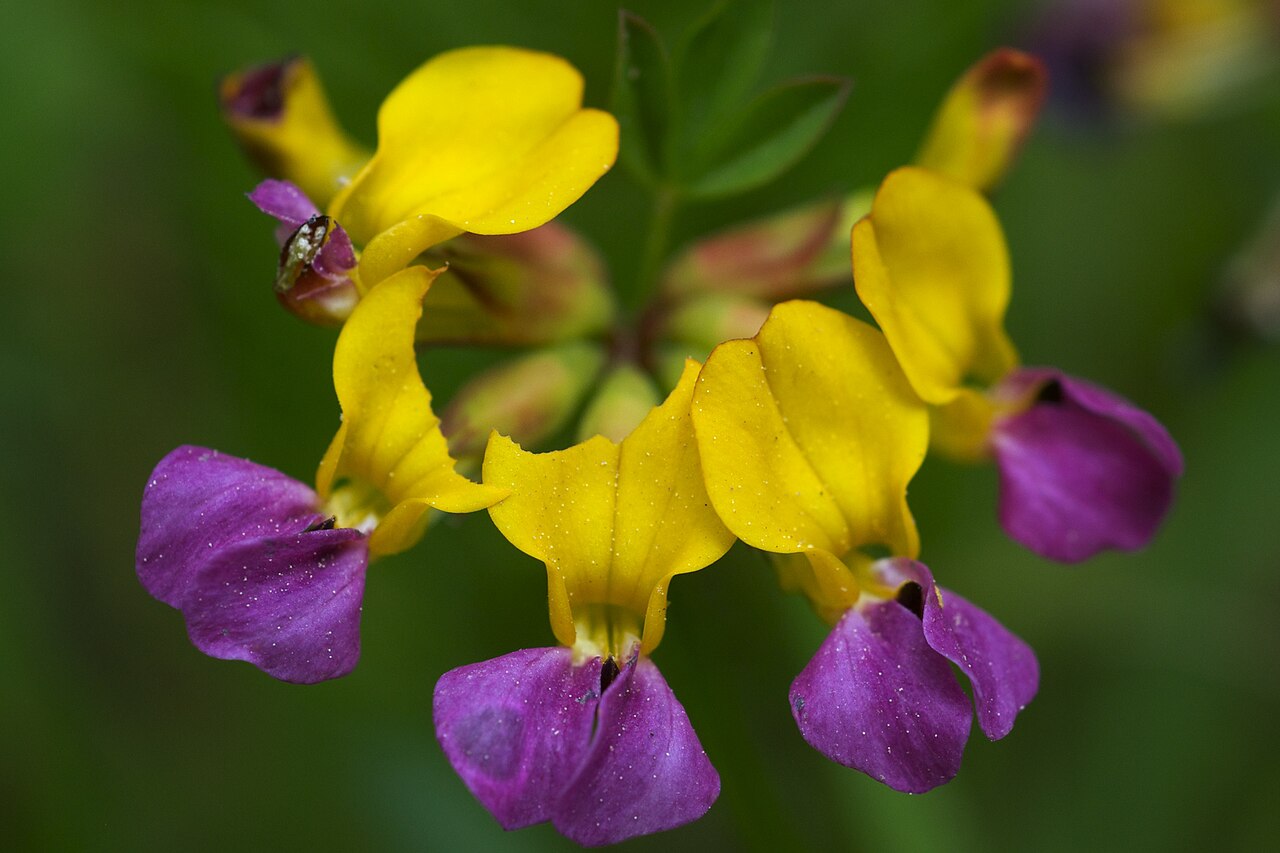
Lotus formosissimus, known as Witch’s Teeth, is a low, sprawling native legume of moist coastal meadows and seeps along the Pacific coast, from British Columbia to central California. USDA PLANTS calls it seaside bird’s-foot trefoil and keeps it in the genus Lotus; many newer floras, including the Jepson Manual, call it Hosackia gracilis. Other common names are coast lotus and harlequin lotus.
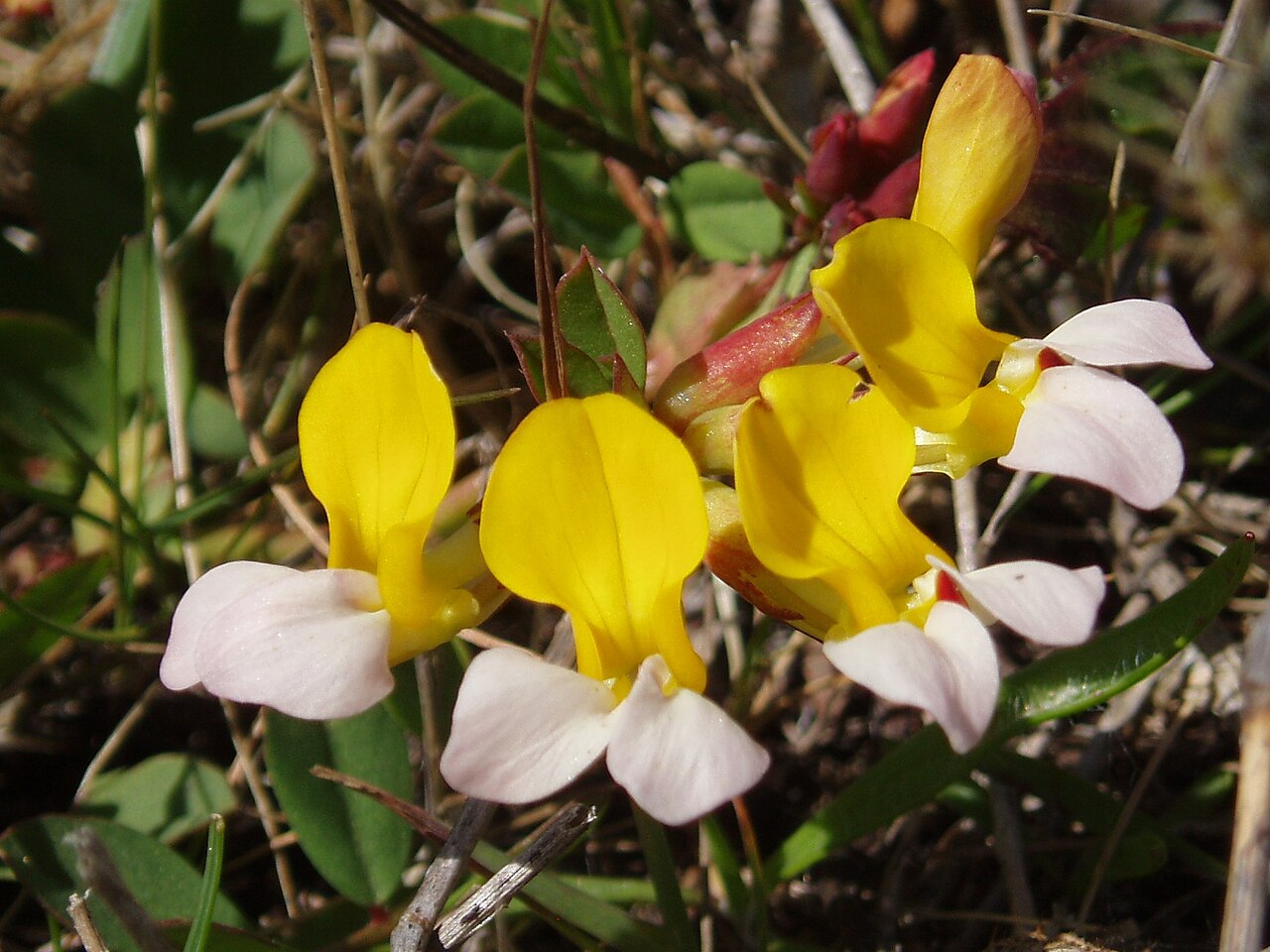
Its name formosissimus means “most beautiful,” and the flowers live up to it. Each small pea flower has a bright yellow upper petal (the banner) and white, pink or purple side petals (the wings), so each head of 3 to 12 flowers looks like a cluster of tiny two-toned teeth or jesters’ caps. It blooms mainly from April to July on hollow, fleshy stems 4 to 16 inches long with smooth, pinnate leaves of usually five leaflets.
Witch’s teeth is a charming plant for moist meadow gardens, rain gardens and wet spots in coastal gardens of the Pacific Northwest and northern California. Like other legumes, it fixes nitrogen. It is the larval host of several native butterflies and is an important plant for native bees. Buy seed or plants from a native plant nursery.
Identification
Look for low, sprawling, smooth plants in wet coastal meadows with heads of small pea flowers that have a yellow banner and white, pink or purple wings.
Growth Habit
Witch’s teeth is a smooth (hairless), herbaceous perennial from a taproot and short rhizomes or stolons. Its stems are thin, hollow and somewhat fleshy, often with a spongy base, and sprawl or lean on other plants, usually 4 to 16 inches long. It forms loose patches in moist grassland.
Leaves
The leaves are pinnately compound, about 1 1/2 to 3 inches long, with usually five (sometimes three to seven) elliptic to oval leaflets 3/8 to 3/4 inch long. At the base of each leaf are thin, papery stipules.
Flowers
Flowers are clustered in umbel-like heads of 3 to 12 on long stalks, with a small leafy bract (usually three-parted) just below the head. Each flower is about 1/2 inch long. The banner is bright yellow, the wings are white to pink or purple, and the keel is tipped with purple. Flower color varies from place to place: some populations have mostly white wings, others deep purple.
Fruit
The fruit is a slender, straight pod 1 1/4 to 2 1/4 inches long, which splits open when ripe to release several small seeds.
Look-alikes
Bird’s-foot trefoil (Lotus corniculatus) is a non-native European plant common in the same region; it has all-yellow flowers and leaves with three leaflets plus two leaflet-like stipules. Big deervetch (Hosackia crassifolia, also called Lotus crassifolius) is much larger, with greenish-white to purplish flowers. Pink-and-yellow flowers on low, hairless plants in wet coastal meadows are a good sign of witch’s teeth.
Quick Facts
| Scientific Name | Lotus formosissimus (syn. Hosackia gracilis) |
| Family | Fabaceae (pea family) |
| Plant Type | Sprawling herbaceous perennial |
| Mature Height | 4–16 in |
| Mature Spread | 1–2 ft |
| Growth Rate | Moderate |
| Sun Exposure | Full sun to part shade |
| Water Needs | Medium to high; moist to wet soil |
| Soil Type | Moist meadow soils, clay, loam, sandy soils near seeps |
| Soil pH | Slightly acidic to neutral (about 5.5–7.0) |
| Bloom Time | April–July |
| Flower Color | Yellow banner with white, pink or purple wings |
| Fall Color | None notable |
| Fruit | Slender pod, 1–2 in |
| Deer Resistant | Low; legumes are often browsed |
| USDA Hardiness Zones | 7–10 |
Native Range
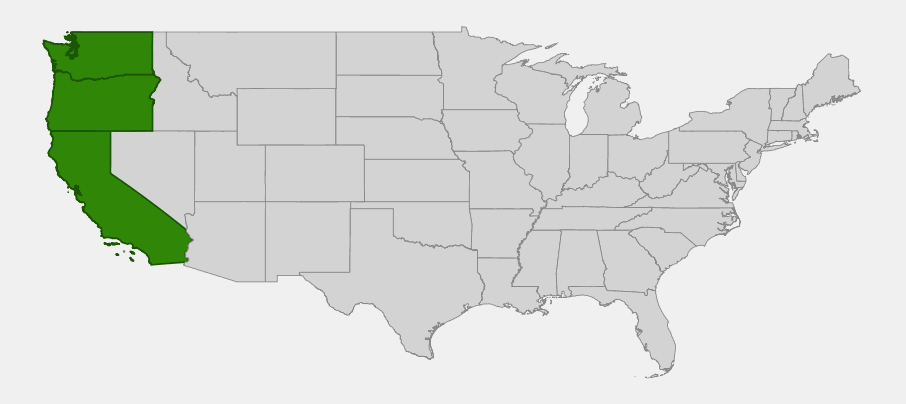
Witch’s teeth grows along the Pacific coast of North America. USDA PLANTS lists it as native in Washington, Oregon and California, and it also occurs in southwestern British Columbia, where it is rare and limited to a few sites on southeastern Vancouver Island and nearby islands.
In Washington it grows only west of the Cascade crest, mainly in coastal areas and the Puget lowlands. In Oregon it grows along the coast and in the western valleys. In California it is found in the coastal counties from the Oregon border south to about Monterey and San Luis Obispo Counties, with scattered inland sites in the North Coast Ranges.
It grows in moist to wet places at low elevations: coastal prairies and meadows, seeps on bluffs, ditch and stream edges, wet swales and the margins of coastal scrub and forest. Many of its coastal prairie and meadow habitats have been lost to development and invasive plants.
📋 Regional plant lists featuring Witch’s Teeth: Western Oregon & Western Washington · California & Nevada
Growing & Care Guide
Witch’s teeth is a small, easygoing plant for moist, sunny spots in mild coastal gardens. It is not long-lived in dry or hot conditions, but it can reseed where it is happy.
Light
Full sun to light shade. In foggy coastal areas full sun is best; inland, give it some afternoon shade.
Soil & Water
Plant in moist soil that stays damp through spring and early summer. It tolerates clay and seasonally wet soil and grows well near seeps, at pond edges and in rain gardens. Water during dry summers; it may go partly dormant if it dries out completely.
Planting Tips
Sow seed or set out plants in fall or early spring, 12 inches apart. Let it weave through low grasses and other meadow plants such as blue-eyed grass. It is best in mild, frost-light climates near the coast.
Pruning & Maintenance
No pruning is needed. Keep taller, aggressive grasses and non-native plants such as bird’s-foot trefoil from crowding it out. Mow meadow plantings in late summer after seed has dropped.
Propagation
Grow from seed. Nick or rub the hard seed coat with sandpaper (scarify) or soak in hot water overnight before sowing. Plants can also be divided in spring.
Landscape Uses
- Coastal meadow gardens: colorful two-toned flowers in spring
- Rain gardens and swales: grows in seasonally wet soil
- Butterfly gardens: larval host for native butterflies
- Nitrogen fixer: improves soil like other legumes
- Restoration: coastal prairie and wet meadow plantings
Wildlife & Ecological Value
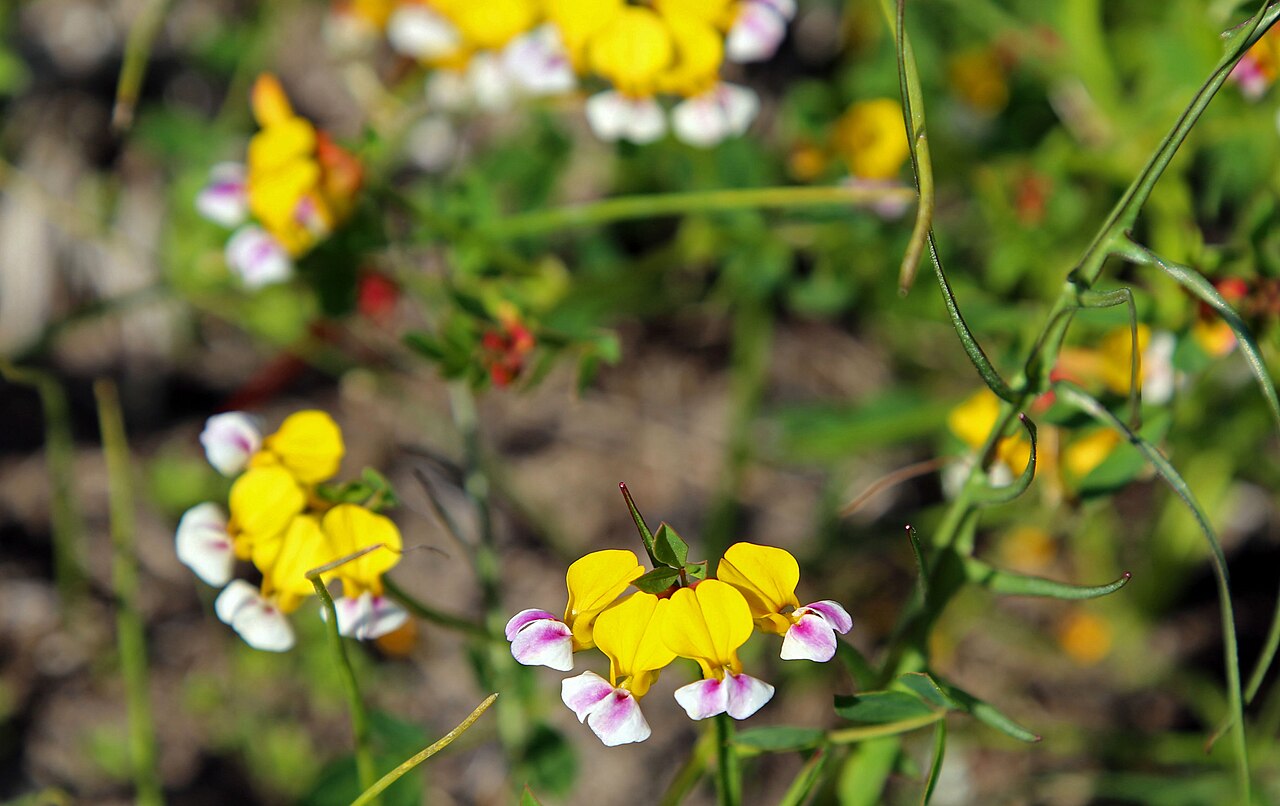
Witch’s teeth is a small plant with a large role in coastal meadows, feeding bees and caterpillars.
For Pollinators
Bumble bees and other native bees visit the flowers; heavy bees are needed to open the keel and reach the pollen. The leaves are a larval food plant for native butterflies that use Lotus and Hosackia, including some duskywings and blues.
For Birds
Seed-eating birds may take the small seeds from open pods, and the low patches provide cover for ground-nesting birds in coastal grasslands.
For Mammals
Deer, rabbits and small rodents browse legumes such as this one, and it can be grazed heavily where deer are common.
Ecosystem Role
Like other legumes, it hosts nitrogen-fixing bacteria in root nodules, adding nitrogen to meadow soils and supporting neighboring plants.
Cultural & Historical Uses
The species name formosissimus is Latin for “most beautiful.” The name Hosackia, used in newer floras, honors David Hosack (1769–1835), a New York physician and botanist who founded the Elgin Botanic Garden, now the site of Rockefeller Center.
Botanists have split the large genus Lotus in recent decades. Most native western species were moved to Acmispon or Hosackia, leaving Lotus mainly for Old World species. USDA PLANTS still uses the older name, while the Jepson Manual and other California sources use Hosackia gracilis.
The name “witch’s teeth” is thought to refer to the small, bicolored flowers clustered like a set of teeth. Its coastal prairie habitat is among the most altered plant communities in California and the Pacific Northwest.
Frequently Asked Questions
Is witch’s teeth the same as bird’s-foot trefoil?
No. The common bird’s-foot trefoil (Lotus corniculatus) is an introduced European plant with all-yellow flowers. Witch’s teeth is native, with yellow and white, pink or purple flowers.
What is the scientific name of witch’s teeth?
USDA PLANTS uses Lotus formosissimus. Many newer floras, including the Jepson Manual, call it Hosackia gracilis.
Where does witch’s teeth grow?
In moist coastal meadows, seeps and wet swales from southwestern British Columbia through western Washington and Oregon to central California.
Can I grow witch’s teeth in a rain garden?
Yes. It likes moist to wet soil in sun and is well suited to rain gardens and swales in mild coastal climates.
Does witch’s teeth support pollinators?
Yes. Bumble bees and other native bees visit the flowers, and it is a larval host for native butterflies.

Looking for a nursery that carries Witch’s Teeth?
Browse our native plant nursery directory: California · Oregon · Washington

