
Soft Goldaster (Chrysopsis pilosa)
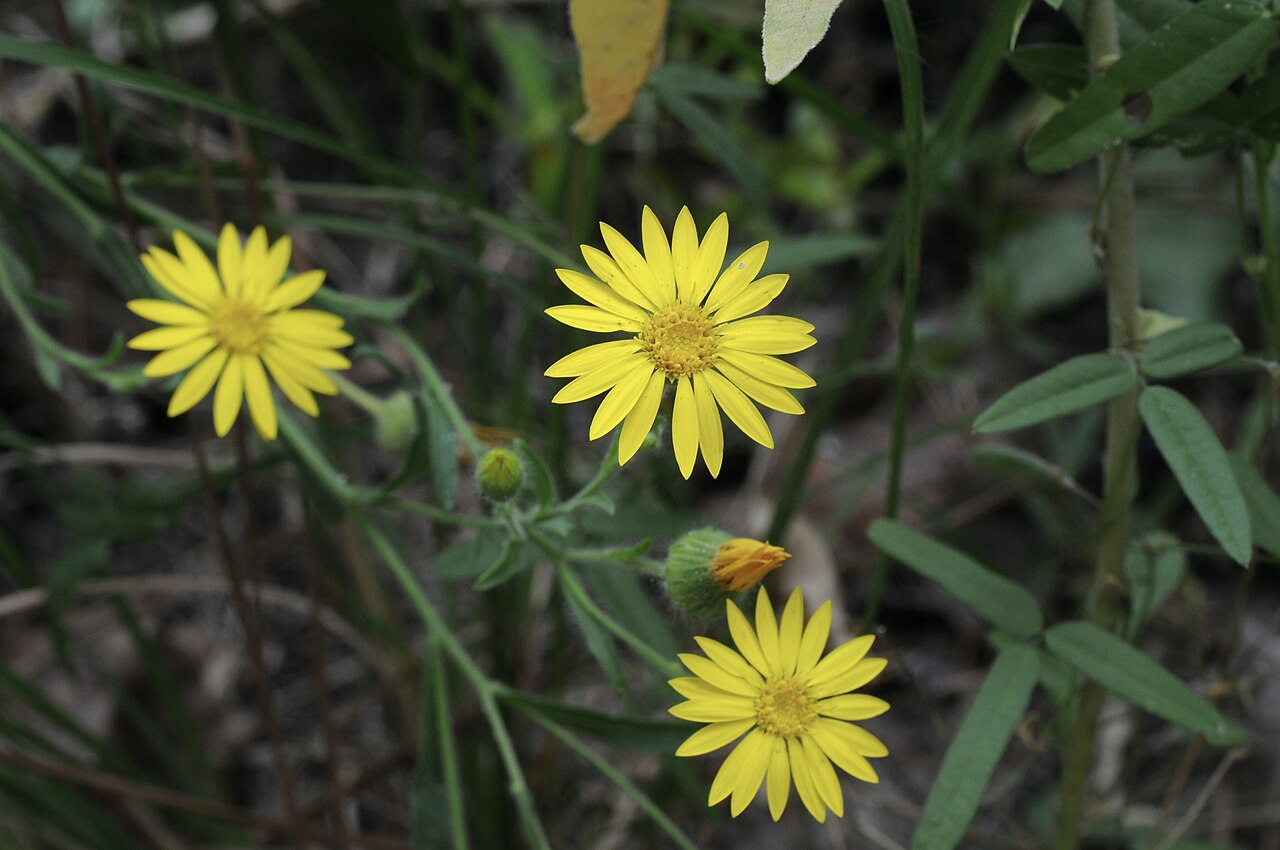
Chrysopsis pilosa, known as Soft Goldaster or soft goldenaster, is a hairy, yellow-flowered annual of the sunflower family (Asteraceae) native to the south-central and southeastern United States. It is common in the sandy and rocky soils of East Texas, Oklahoma, Arkansas, Louisiana and Missouri, and occurs more locally east to Georgia and the Carolinas. Botanists now often place it in the genus Bradburia as Bradburia pilosa, and it has also been called Heterotheca pilosa.
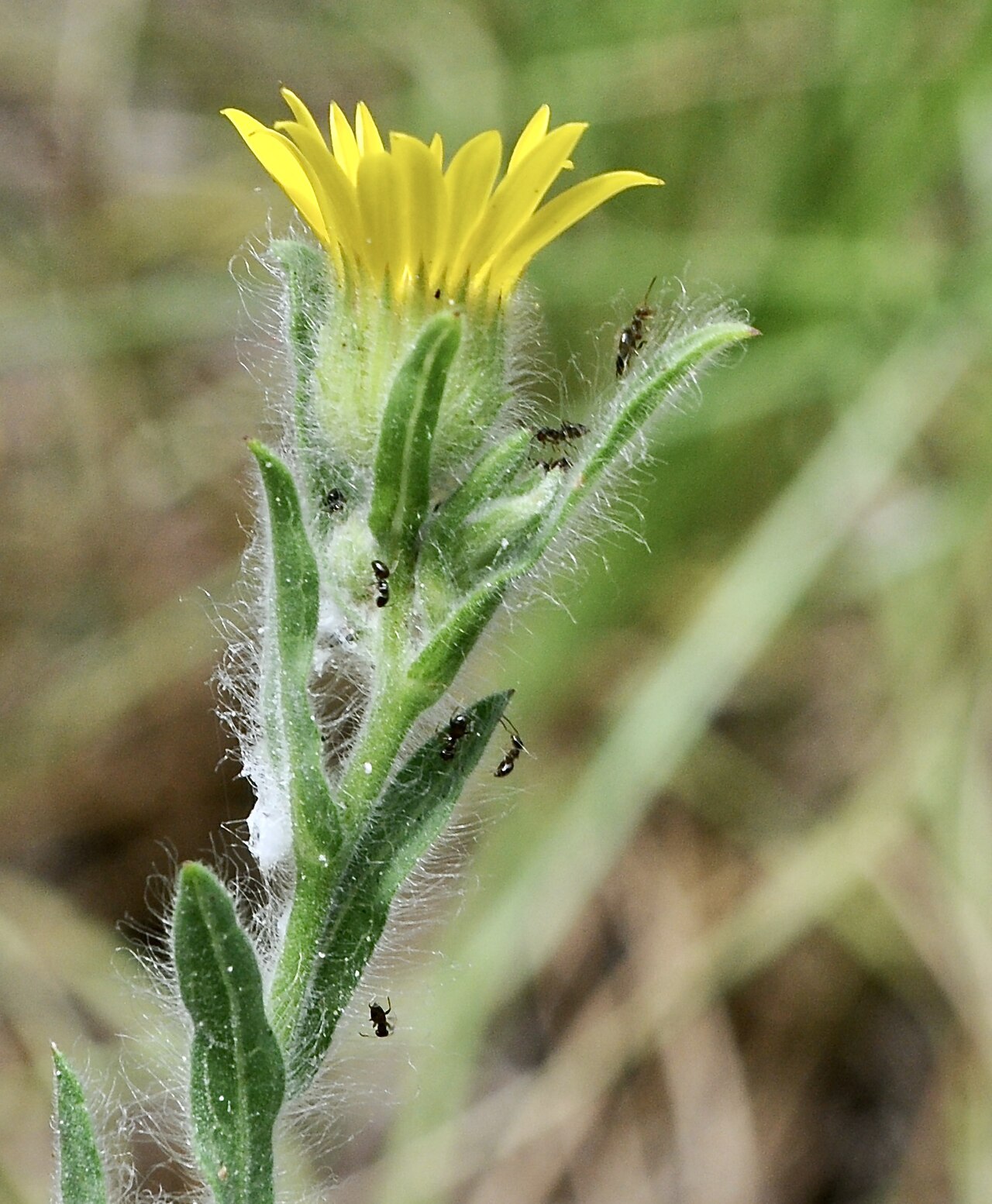
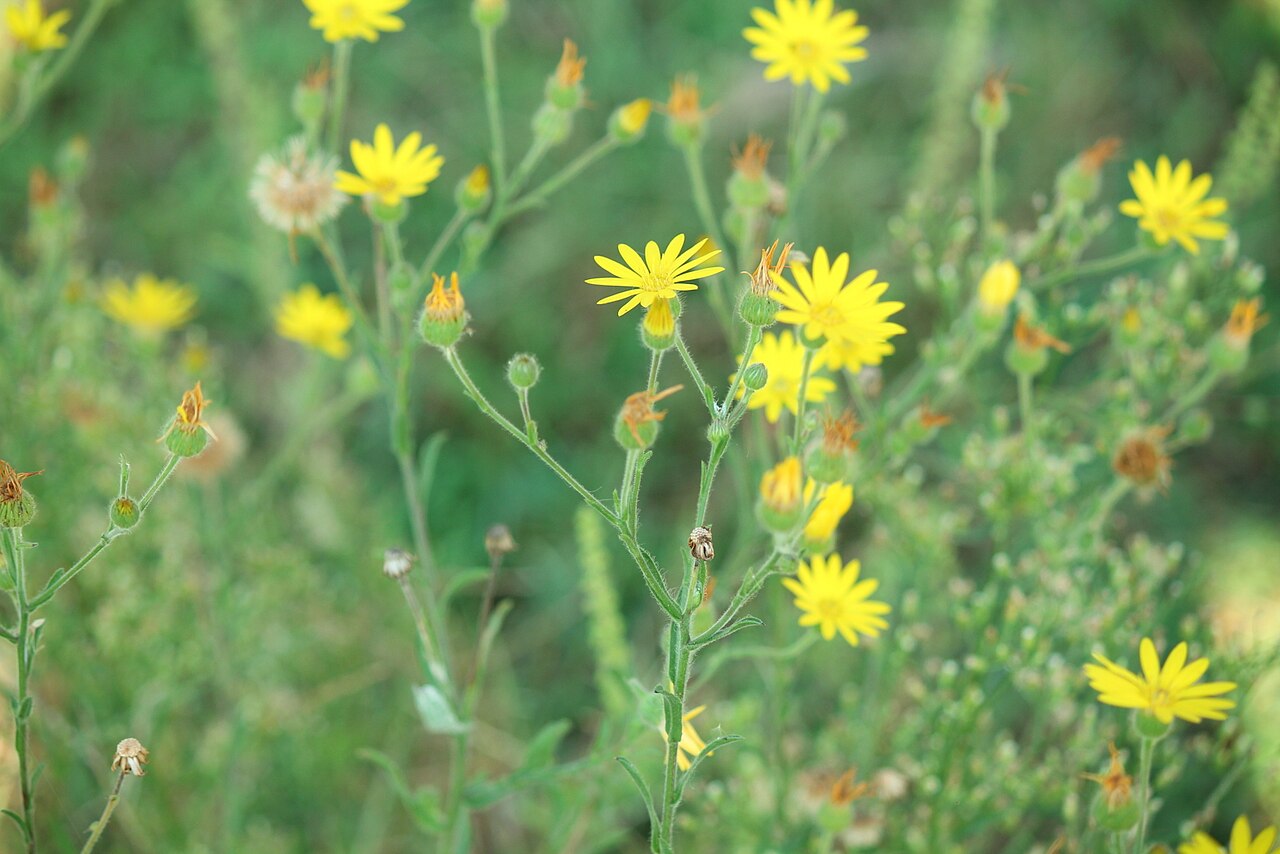
The plant is named for the long, soft, white hairs that cover its stems, leaves and flower buds (pilosa means “hairy”). From early summer through fall it bears bright yellow, daisy-like heads about an inch across, often dozens at a time on a branching plant 1 to 3 feet tall. The crushed foliage has a camphor-like scent.
Soft goldaster is a plant of open woods, sandhills, prairies, glades, old fields and roadsides. It is easy to grow from seed and reseeds itself in sunny, dry spots, where its long flowering season feeds bees and butterflies late in the year. This guide covers how to identify it, where it grows, how to grow it and its value to wildlife.
Identification
Soft goldaster is one of several yellow-flowered goldasters in the South. Its shaggy white hairs, annual habit and narrow, crowded leaves help separate it from its relatives.
Growth Habit
Soft goldaster is an annual, sometimes overwintering as a small rosette and flowering the following year. It sends up an erect stem, usually 1 to 3 feet tall, that branches in the upper part to form a loose, rounded plant. The stems are densely covered in long, soft, spreading white hairs.
Leaves
The leaves are alternate, oblong to lance-shaped, stalkless and mostly untoothed, up to about 3 inches long near the base and becoming smaller up the stem. They are softly hairy on both surfaces and give off a camphor-like smell when crushed. The basal leaves often wither by flowering time.
Flowers
The flower heads are about 3/4 to 1 1/4 inches across, each with many narrow, bright yellow ray flowers around a yellow center of disc flowers. The bracts around the head are narrow, hairy and somewhat sticky. Heads are borne singly at the tips of the branches, and a large plant may carry many at once. Bloom time is mainly June to October, sometimes from late spring into November in Texas.
Fruit & Seeds
After flowering, each head produces small, hairy achenes topped with a tuft of tan bristles that carry them on the wind, similar to other goldasters.
Look-alikes
Camphorweed (Heterotheca subaxillaris) also smells of camphor but has broader, often clasping, toothed leaves and is less shaggy. Maryland goldenaster (Chrysopsis mariana) is a perennial with silky, cobwebby hairs and glandular bud stalks. Grass-leaved goldasters such as silkgrass (Pityopsis) have long, grass-like, silvery leaves.
Quick Facts
| Scientific Name | Chrysopsis pilosa Nutt. (syn. Bradburia pilosa, Heterotheca pilosa) |
| Family | Asteraceae (sunflower family) |
| Plant Type | Annual or winter annual herb |
| Mature Height | 1–3 ft |
| Mature Spread | 1–2 ft |
| Growth Rate | Fast |
| Sun Exposure | Full sun to partial shade |
| Water Needs | Low; drought tolerant |
| Soil Type | Sandy, gravelly or rocky, well-drained soils |
| Soil pH | About 5.0–7.0 |
| Bloom Time | June–October |
| Flower Color | Bright yellow |
| Fall Color | None; plants dry after seeding |
| Fruit | Small achenes with a tuft of tan bristles |
| Deer Resistant | Generally avoided because of its hairy, aromatic foliage |
| USDA Hardiness Zones | Annual; native range roughly zones 6–9 |
Native Range
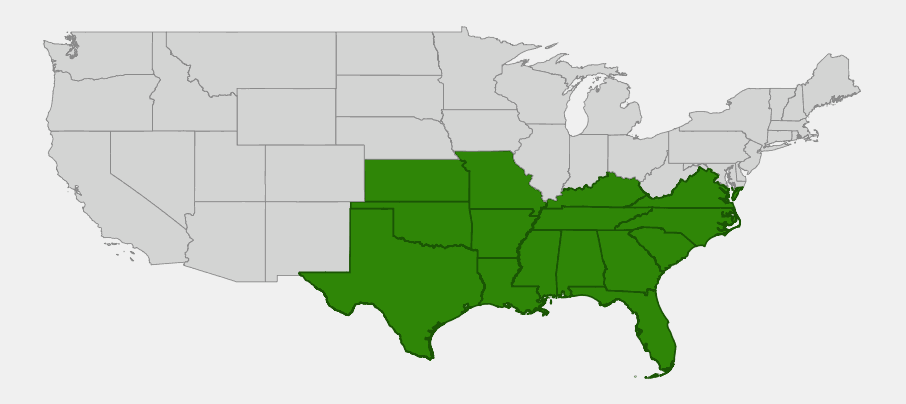
Soft goldaster is native to the south-central and southeastern United States. USDA PLANTS lists it in Alabama, Arkansas, Florida, Georgia, Kansas, Kentucky, Louisiana, Mississippi, Missouri, North Carolina, Oklahoma, South Carolina, Tennessee, Texas and Virginia.
Its heartland is the western Gulf Coastal Plain and the Ozarks and Ouachitas: East and Central Texas, eastern Oklahoma, Arkansas, Louisiana, southern Missouri and southeastern Kansas. Farther east it is more scattered, with populations in the sandhills of the Carolinas and in Georgia, Alabama, Mississippi and Tennessee. Records from Florida, Kentucky and Virginia are outlying, and some eastern populations along roads and railroads may have spread there from farther west.
Typical habitats are dry, open places with sandy or rocky soil: sandy post oak and pine woods, sandhills, prairies, glades, old fields, pastures and roadsides, mostly at low elevations.
📋 Regional plant lists featuring Soft Goldaster: Kentucky & Tennessee · Nebraska, Kansas & Eastern Colorado · Maryland, Virginia & West Virginia · Illinois, Iowa & Missouri · Alabama, Georgia & Mississippi · North & South Florida · North & South Carolina · Arkansas, Louisiana, Eastern Oklahoma & Eastern Texas · South & West Texas
Growing & Care Guide
Soft goldaster is an easy annual for sunny, dry gardens in the South and lower Midwest. It is rarely sold as a plant, but seed is sometimes available from native seed suppliers, especially in Texas. Once established, it maintains itself by reseeding.
Light
Give it full sun for the most compact plants and heaviest bloom. It tolerates partial shade at the edges of open woods, but plants become taller and sparser there.
Soil & Water
Grow it in sandy, gravelly or rocky soil with good drainage. It is very drought tolerant once growing and needs no regular watering. Rich soil and frequent watering make it tall and floppy.
Planting Tips
Sow seed on bare, lightly raked soil in fall or late winter; it needs light and little or no soil cover. Use it in a meadow, a dry prairie planting, a sandy bed or along a sunny fence line, together with little bluestem, blazing stars and other late-season wildflowers.
Pruning & Maintenance
No pruning is needed. Let at least some plants go to seed so the stand renews itself, and pull extra seedlings in spring if it spreads farther than you want. Remove the dry plants in winter if you prefer a tidier look.
Propagation
Grow it from seed. Collect the fluffy seed heads in fall and sow them outdoors soon after, or in late winter. Seed generally germinates readily without special treatment. Plants do not need dividing, since each lives only a year or two.
Landscape Uses
- Meadow and prairie plantings: a long season of yellow flowers from summer into fall
- Dry, sandy gardens: thrives in poor, well-drained soil with no irrigation
- Pollinator gardens: late-season nectar and pollen for bees and butterflies
- Naturalized areas: reseeds itself in open, sunny sites
- Roadside and old-field restoration: a native annual that colonizes bare, sandy ground
Wildlife & Ecological Value
Soft goldaster flowers late in the season, when many other wildflowers are done, and its open yellow heads are easy for a wide range of insects to use.
For Pollinators
The flowers are visited by native bees, including small sweat bees and other solitary bees, along with honey bees, butterflies, skippers, flies and beetles. Its long bloom season provides food well into fall.
For Birds
Seed-eating birds such as sparrows and finches may eat the small seeds from the dry heads in fall and winter.
For Mammals
The hairy, aromatic foliage is generally not a favorite of deer, rabbits or livestock.
Ecosystem Role
As a fast-growing annual, soft goldaster helps cover bare, sandy ground after fire, grazing or disturbance, and its late flowers and seeds add to the food supply of open woodlands and prairies.
Cultural & Historical Uses
Thomas Nuttall described this plant as Chrysopsis pilosa from his travels in the Arkansas Territory and the southern plains. The genus name means “golden appearance”, from the Greek chrysos, gold, and opsis, appearance, and pilosa refers to its long, soft hairs.
Its classification has changed several times. It was later moved to Heterotheca, and in the 1990s botanist John Semple transferred it to Bradburia, a small genus named for the Scottish naturalist John Bradbury, who explored the Missouri River country in the early 1800s. USDA PLANTS still uses Chrysopsis pilosa, while many recent floras and iNaturalist use Bradburia pilosa.
The camphor-like scent of its crushed leaves is shared with camphorweed and some other goldasters. It is a small detail, but a useful one for confirming the plant in the field.
Frequently Asked Questions
Is soft goldaster the same as Bradburia pilosa?
Yes. Bradburia pilosa is a newer name for the same plant. USDA PLANTS uses Chrysopsis pilosa, and it has also been called Heterotheca pilosa.
Is soft goldaster an annual?
Yes. It is an annual or winter annual that lives a year or so, but it reseeds readily in open, sunny ground.
When does soft goldaster bloom?
Mainly from June to October, and sometimes into November in Texas.
Where does soft goldaster grow?
In dry, sandy or rocky open woods, sandhills, prairies, glades, old fields and roadsides, mainly from East Texas, Oklahoma and Kansas east to Missouri, Arkansas and Louisiana, and more locally to Georgia and the Carolinas.
Is soft goldaster good for pollinators?
Yes. Its yellow heads attract native bees, butterflies and other insects from summer into fall.

Looking for a nursery that carries Soft Goldaster?
Browse our native plant nursery directory: Alabama & Arkansas · Florida & Georgia · Kansas · Kentucky, Louisiana, Mississippi & Missouri · North Carolina & Oklahoma · South Carolina, Tennessee, Texas & Virginia

