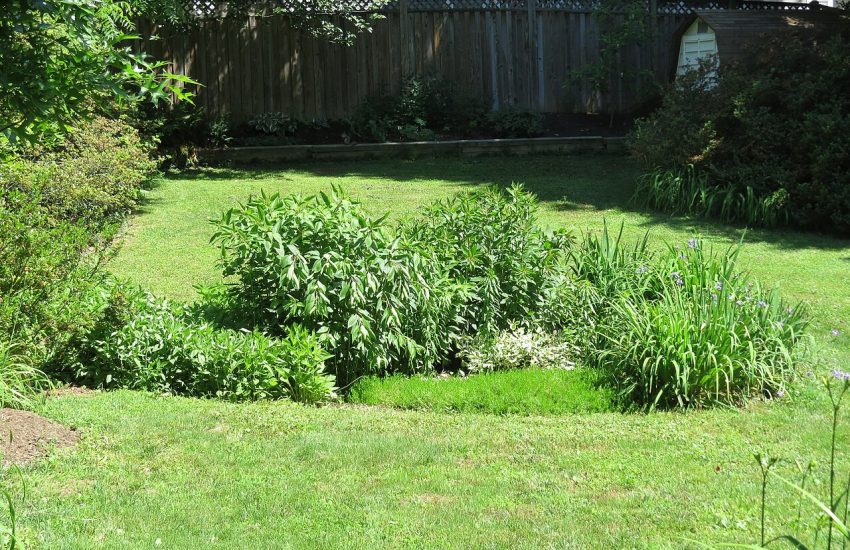
A Northern Prairie Garden for a Small Lot: Winter Structure Without Oversized Grasses
Last updated: November 7, 2026
A northern prairie garden on a small lot has a problem that big restorations don’t. The grasses that define the tallgrass prairie, such as big bluestem, switchgrass and Indiangrass, can top six feet, lean over sidewalks and swallow a 10-foot bed by August.
Gardeners in North Dakota, South Dakota and western Minnesota still want what makes prairie beautiful in January: copper clumps and seedheads above the snow.
This plan gets that winter structure from short bunchgrasses, stiff-stemmed wildflowers and one small native shrub. Every plant below is native to the northern Great Plains, and the regional notes tell you what to swap if your lot sits farther west, east or south.
Plan at a Glance
| Site | A sunny front or side yard bed, roughly 100 to 400 square feet |
| Garden size | Small lot; one or two beds rather than a full residential prairie |
| Sun | Full sun, at least six hours; east, south or west side of the house |
| Soil | Well-drained loam, sandy loam or lighter clay; no standing water |
| Maintenance | Weeding for two seasons, then one spring cutback with clippings removed |
| Best regions | North Dakota, South Dakota and western Minnesota; regional swaps below |
Why Small Lots Need a Different Prairie Plan
University of Minnesota Extension describes a residential prairie as a site of roughly a quarter acre or larger. A city lot in Fargo, Sioux Falls or Moorhead usually has a few hundred square feet to work with, which changes almost every design decision.
Height is the first problem. South Dakota State University (SDSU) Extension gives big bluestem seed stalks at 3 to 7 feet and switchgrass at 3 to 6 feet, and the Lady Bird Johnson Wildflower Center lists Indiangrass at up to about 8 feet. On a small lot those heights block windows and flop onto walks.
The fix is not to give up on grasses. It is to build the matrix from the shorter prairie grasses and let flowers with sturdy stems, not giant grasses, supply the vertical lines. Our guide to big bluestem in a small yard covers the rare cases when one tall grass still fits.
Step 1: Read Your Site Before You Pick Plants
Start with sun. UMN Extension recommends full sun with few trees, ideally on the east, west or south side of a building, because most prairie plants decline in shade.
Next, check drainage. UMN treats water that doesn’t drain from a 1-foot-deep hole within 24 hours as a sign of wet, poorly drained soil. The palette below is built for dry to medium soil, so a soggy spot needs a different plant list.
Last, look at your location within the region. UMN Extension notes that prairie shifts from tallgrass in the east to mid-grass and then shortgrass farther west as rainfall drops. That gradient matters more than the state line when you choose between, say, prairie dropseed and blue grama.
Step 2: Build the Matrix From Short Bunchgrasses
The matrix is the plant that fills the gaps and holds the design together in winter. On a small lot, use three short native grasses and repeat them through the bed.
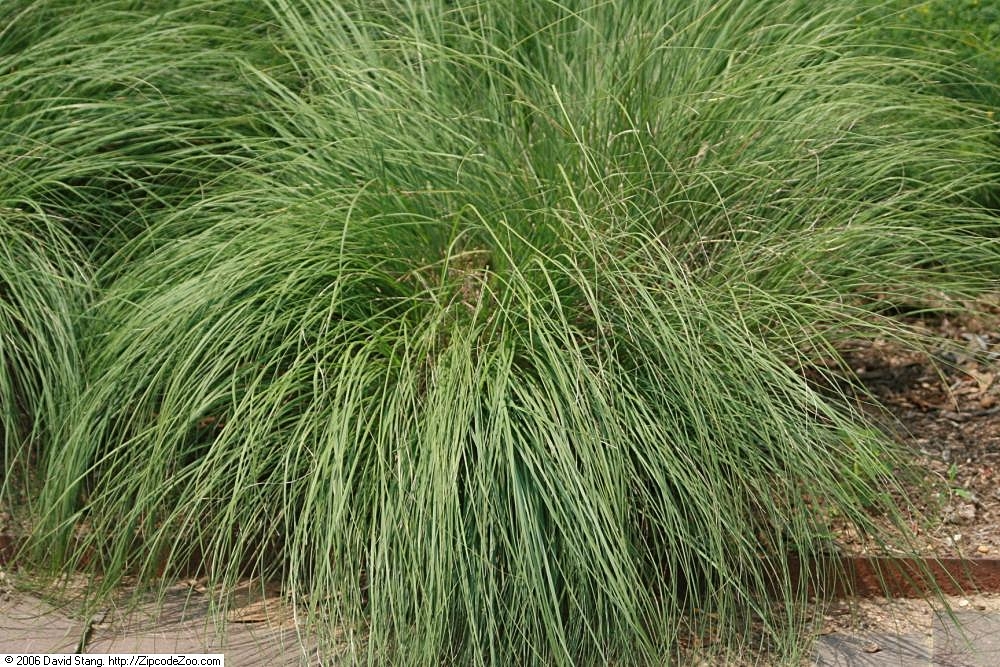
Prairie dropseed forms large, round tufts of fine leaves, with airy seedheads rising to about 3 feet in midsummer. The Wildflower Center notes that its fall color is tan-bronze and that snow does not flatten it, so it stays visible all winter.
Little bluestem forms dense mounds about 18 to 24 inches tall, with clumps up to about a foot across. Its reddish-tan color persists through winter snows, and the fuzzy white seeds feed small birds. SDSU Extension gives a height of 1 to 3 feet in South Dakota and notes that many skipper butterflies use it as a host plant.
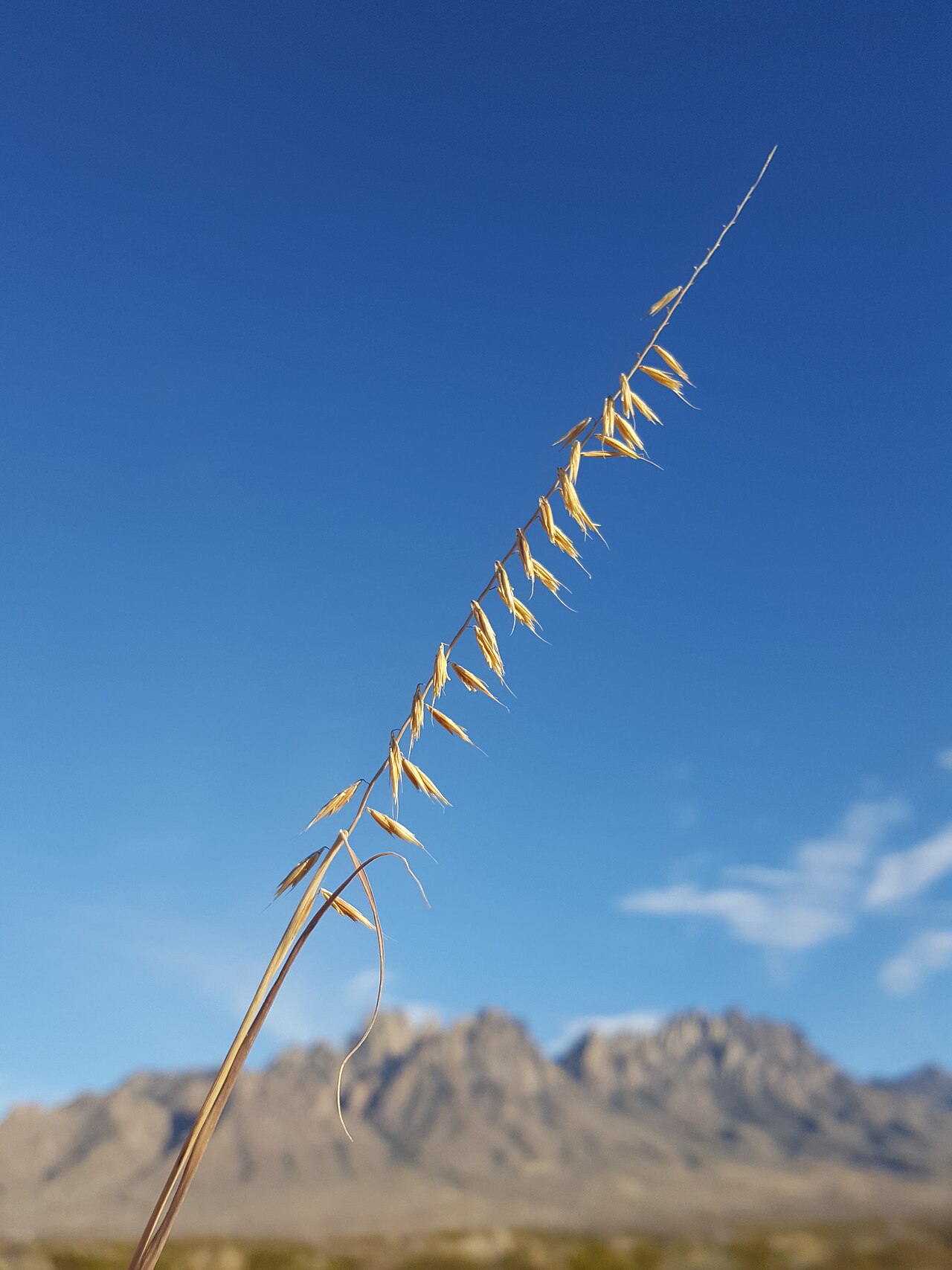
Sideoats grama is shorter still. SDSU lists it at 8 to 24 inches, with 10 to 30 one-sided spikes hanging from each stem.
Step 3: Add Stiff-Stemmed Flowers for Vertical Lines
Instead of tall grasses, let wildflowers with upright, wiry stems give the planting its height. Choose ones that stay under about 3 feet on dry, lean soil.
Purple prairie clover carries cone-like rose-purple heads on upright, wiry stems from June into September. It reaches about 3 feet at most.
Dotted blazing star grows 1 to 3 feet tall, with stems in clusters topped by slender rose-lavender wands from August into October. The Wildflower Center notes that moist, fertile soil can make it lanky, which is one more reason to skip compost and fertilizer in a prairie bed.
Narrowleaf purple coneflower is the coneflower of the northern plains. It grows 18 to about 28 inches tall, blooms May to July and has a taproot. It’s native from western Minnesota to Saskatchewan and Montana, south to Texas and New Mexico, which makes it a better regional choice than the familiar Echinacea purpurea, whose native range the Wildflower Center gives as Georgia to northeast Texas, north to North Carolina, Ohio, Illinois and Iowa.
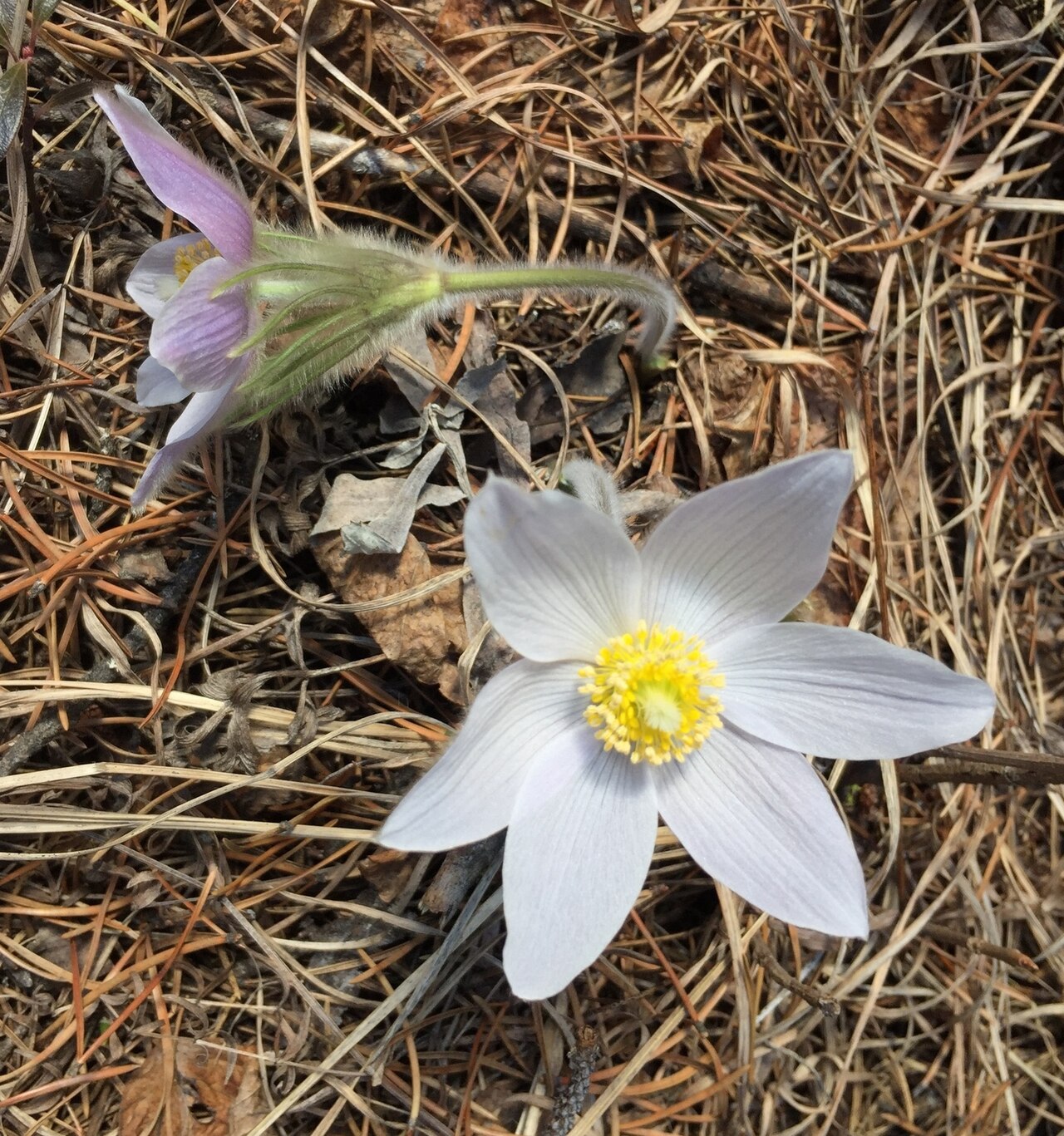
Step 4: Put Early Flowers at the Front Edge
A winter-focused garden still needs a spring payoff, and two of the earliest prairie wildflowers are short enough for the front row.
American pasqueflower has silky, finely divided leaves that rarely exceed 6 inches. According to the Wildflower Center, its leaf clusters appear soon after the snow melts, and large lavender flowers follow, then long plumes of seed.
Prairie smoke grows 6 to 18 inches tall with foot-wide basal clumps of ferny leaves. Nodding reddish-purple flowers in April and May turn into feathery pink-gray plumes that stay on the plant much of the summer. Its leaves turn deep red in fall and are sometimes evergreen, which gives the bed edge color into early winter.
Plant both in groups along a path or the front of the bed.
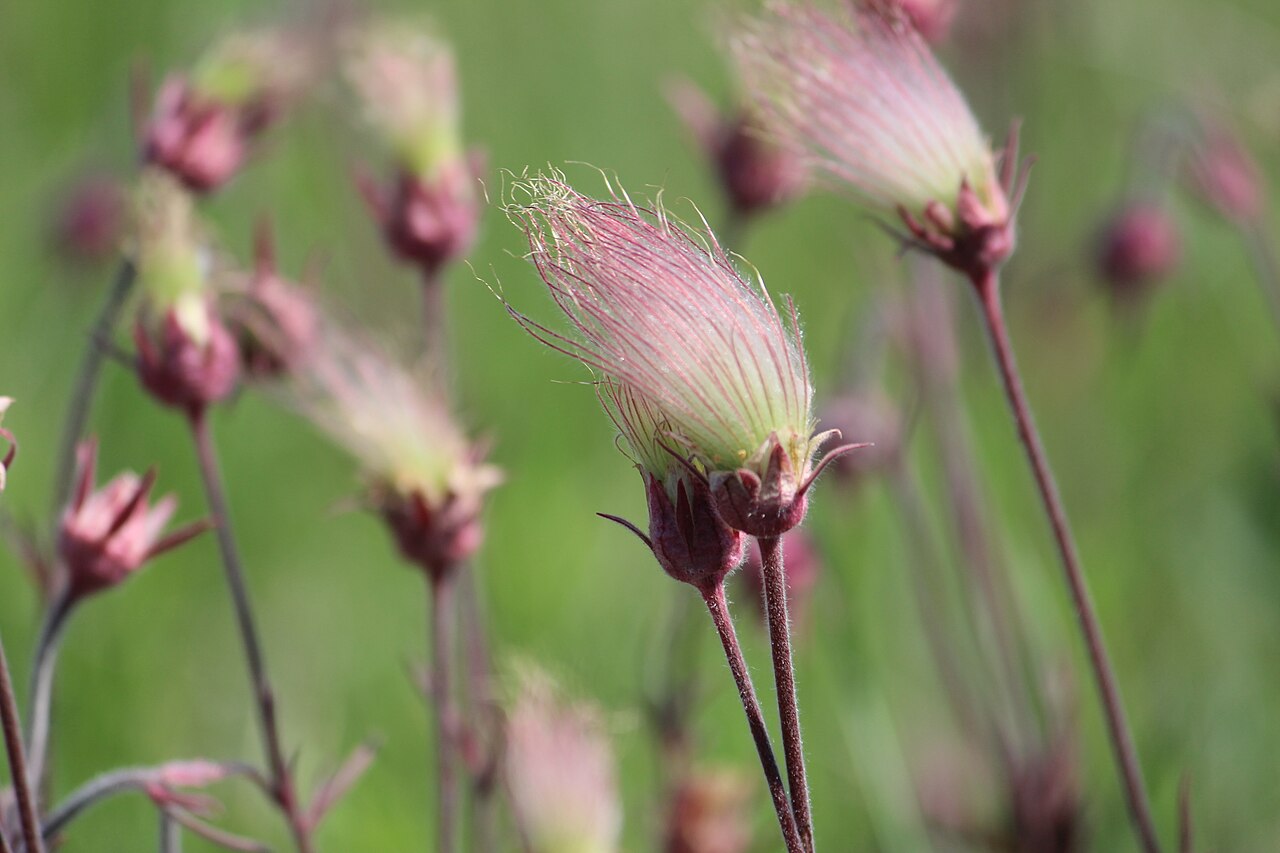
Step 5: Use One Small Shrub as a Winter Anchor
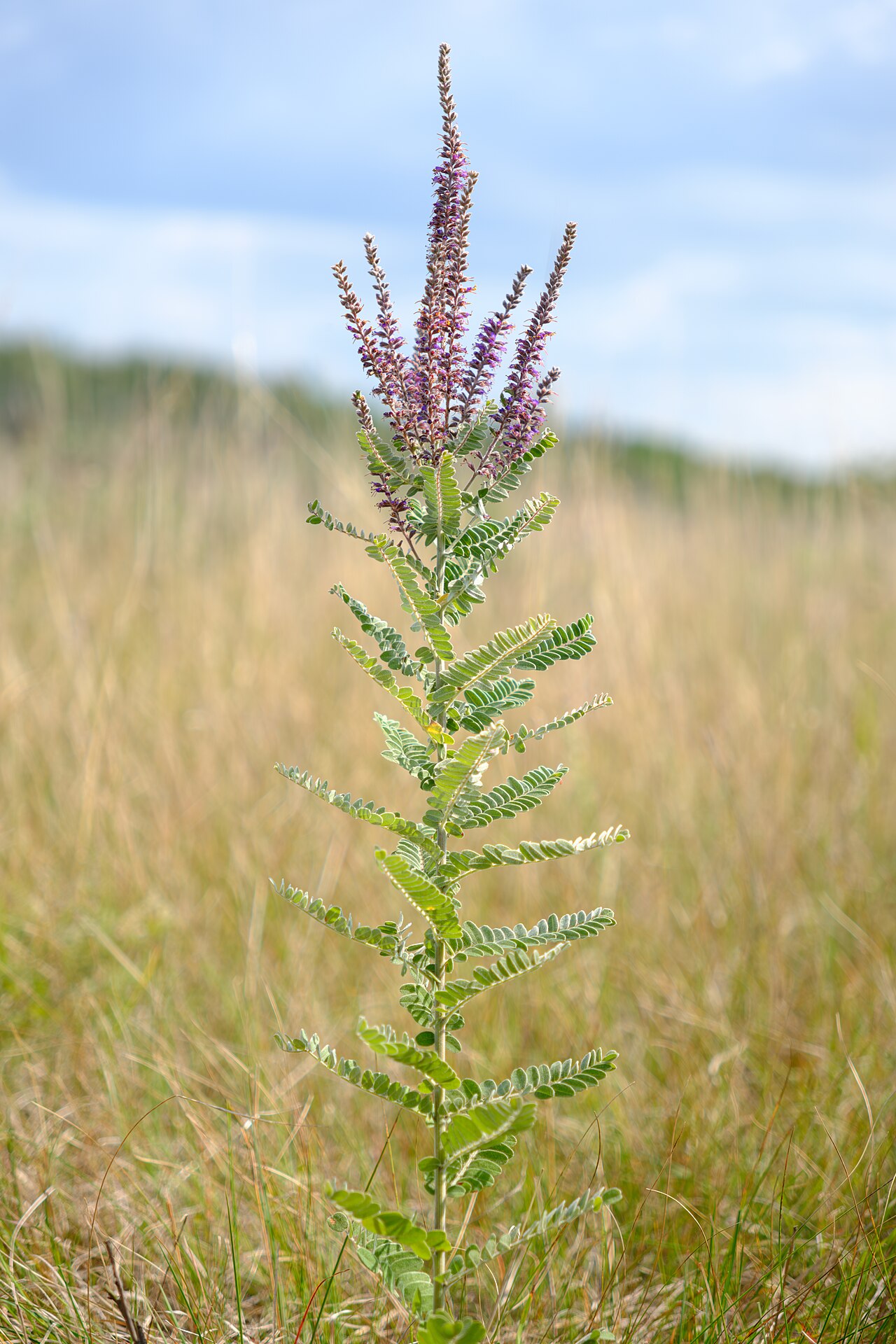
A single woody plant gives a small prairie bed a fixed point when the perennials are cut back. Leadplant is the natural choice: a deciduous shrub 1 to 3 feet tall with gray, hairy compound leaves and purple flower spikes in June and July.
The Wildflower Center calls leadplant one of the most characteristic shrubs of upland prairies and notes its roots run 4 feet deep or more. Place it where you won’t need to move it later.
Plant Palette
All plants below are recorded as native to North Dakota, South Dakota and Minnesota by the Lady Bird Johnson Wildflower Center. Heights are typical in lean, dry soil.
| Plant | Role | Height | Sun / Moisture | Native Range |
|---|---|---|---|---|
| Prairie dropseed | Matrix grass, winter form | Seedheads to 3 ft | Sun / dry | Que. to Sask., south to NC, KY, e. TX and CO |
| Little bluestem | Matrix grass, winter color | 1–3 ft (SD) | Sun / dry | Que. and ME to AB and ID, south to Mexico |
| Sideoats grama | Low matrix grass | 8–24 in (SD) | Sun / dry to moist | Southern Canada to South America |
| Purple prairie clover | Summer flowers, upright stems | Up to 3 ft | Sun / dry | IN and w. TN to TX, north to s. Canada |
| Dotted blazing star | Late-summer spikes | 1–3 ft | Sun / dry | AB to NM, east to MI, IA, w. MO, AR, TX |
| Narrowleaf coneflower | Early-summer flowers, seedheads | To about 28 in | Sun to part shade / dry | W. MN to Sask. and MT, south to TX, NM |
| American pasqueflower | First spring bloom, front edge | Leaves to 6 in | Sun to part shade / dry | AK and w. Canada, south to WI, IL, the plains and Rockies |
| Prairie smoke | Spring flowers and plumes, edging | 6–18 in | Sun to shade / dry to moist | NY and s. Ont. to AB, south to n. IL and the Dakotas |
| Leadplant | Small woody anchor | 1–3 ft | Sun to part shade / dry | N. IN and s.e. MI to s. Man. and MT, south to AR, TX, NM |
Step 6: Lay Out the Bed in Drifts, Not Dots
UMN Extension advises grouping several plants of the same species to make a showier display and improve pollination and seed set. In a small bed, that means three to seven of one plant together, repeated in two or three places, rather than one of everything.
A simple layout for a bed along a front walk:
- Front edge: alternating groups of prairie smoke and pasqueflower, with sideoats grama between them.
- Middle band: prairie dropseed repeated every few feet, with purple prairie clover and narrowleaf coneflower in the gaps.
- Back or center: little bluestem in drifts, with dotted blazing star rising through it and a small group of leadplant at one end.
Space each plant by its mature width rather than its pot size. Little bluestem clumps reach about a foot across, and prairie dropseed forms wider tufts, so leave more room around it.
UMN notes that a natural prairie is roughly 80 percent grasses and sedges. A garden bed can tilt more toward flowers, but keeping at least half the plants as short grasses is what gives you winter structure.
Spacing and Quantity Notes
- Plant small areas from plugs or potted plants. UMN Extension notes that seed is better for large areas and can take two to five years to reach full size, while transplants establish faster and may bloom the first year.
- Leave a strip of mown lawn, gravel or edging between the bed and walks. UMN suggests mowed edges, signs or low fences so neighbors can see the planting is intentional.
- Check local weed ordinances before converting lawn. UMN recommends asking your city first, since some require variances for prairie plantings.
How to Install the Garden
- Remove existing turf and weeds. UMN describes killing existing vegetation with a nonselective herbicide or smothering it under a dark tarp or plywood for at least two months. Perennial weeds such as quackgrass and Canada thistle need to be gone before you plant, because they’re very hard to remove afterward.
- Skip the amendments. Prairie plants are adapted to lean soil, and rich soil can make plants like dotted blazing star floppy.
- Plant in spring or early fall. UMN notes plants can go in anytime from spring through fall, but planting early gives roots time to establish before frost.
- Water through the first season. Water new transplants regularly until they’re rooted in, then taper off. Established prairie plants rarely need irrigation.
- Mulch lightly between plants. A thin layer of weed-free straw or shredded leaves reduces weeds while plants fill in. Keep it off plant crowns.
The First Three Years
Maintenance Calendar
- Year 1, spring–fall: Cut or carefully pull weeds before they set seed. UMN cautions that hand-pulling can disturb young prairie seedlings, so cut weeds that grow right against new plants. UMN notes that prairie grasses develop roots first and grow slowly above ground for the first few years, so expect little top growth. Water during dry spells.
- Year 1, late fall: Leave everything standing. The grass clumps and seedheads are the winter structure you planted for.
- Year 2, early spring: Cut back last year’s stems and remove the clippings so the soil warms. UMN recommends removing clippings to expose the plant crowns.
- Year 2, summer: Keep weeding. Fill any gaps with more of the same species rather than new ones, so the drifts stay readable.
- Year 3 and beyond: UMN notes that by the third year prairie plants put on more top growth. Cut back once a year in early spring, edit out self-sown seedlings where they crowd the front edge, and remove tree seedlings promptly.
Don’t burn a small-lot planting. UMN’s guidance on controlled burns is for larger prairies with permits, and on a city lot cutting back by hand does the same job safely. The same guidance recommends keeping larger prairie plantings at least 30 feet from buildings because dry stems are fuel. A small bed can’t always meet that, so keep the planting free of piled dead material against the house and never use fire for cleanup.
For more on which stems are worth leaving through winter, see our guide on native grasses for winter interest.
Regional Swaps Within the Northern Plains
The northern prairie is not one uniform place. Use these swaps to match your part of the region:
- Western Dakotas and other dry, short-grass sites: Use blue grama as the low matrix grass. The Wildflower Center notes that its foliage normally stays under about 4 inches. Lean harder on dotted blazing star and narrowleaf coneflower, both listed for the Montana and Wyoming region as well.
- Eastern North Dakota and western Minnesota: Prairie dropseed and little bluestem both do well on loam and lighter clay. Prairie smoke also appears on the Michigan, Wisconsin and eastern Minnesota list.
Mistakes to Avoid
- Planting a seed mix designed for acreage. Many mixes for larger prairies include tall grasses such as big bluestem and Indiangrass. On a small lot, choose plants one species at a time.
- Buying Echinacea purpurea as the “prairie coneflower.” It’s native farther south and east. Narrowleaf coneflower is the northern plains species.
- Cutting everything back in fall. You lose the winter structure you designed for. Wait until early spring.
- Feeding the bed. Fertilizer and compost push lanky growth and help weeds compete.
📋 For more plants native to this region, see the native plant list for North Dakota, South Dakota and western Minnesota. Confirm each plant against your own county and site before buying.
Frequently Asked Questions
Can I use any tall grass at all in a small northern prairie garden?
You can, but treat it as a single accent rather than the matrix. Plant it at the back, away from walks and windows, and expect big bluestem or switchgrass to reach 6 feet or more in good soil.
How small can a prairie garden be and still look like prairie?
Even a bed of 100 square feet can read as prairie if short grasses make up at least half the plants and wildflowers are repeated in groups.
Will prairie dropseed and little bluestem stand up to heavy snow?
The Wildflower Center notes that snow does not flatten prairie dropseed, and it describes little bluestem’s reddish-tan color persisting through winter snows.
When should I cut back a northern prairie garden?
Cut back in early spring, before new growth gets tall, and remove the clippings. UMN Extension recommends this annual cutback for small sites instead of burning.
Is purple coneflower native to the Dakotas?
The common purple coneflower, Echinacea purpurea, is not native there according to the Wildflower Center. Narrowleaf purple coneflower, Echinacea angustifolia, is the species native to western Minnesota and the Dakotas.
Sources
- University of Minnesota Extension: Planting and maintaining a prairie garden
- SDSU Extension: Warm-Season Grasses of South Dakota
- SDSU Extension: Generalist Host Plants in South Dakota
- Lady Bird Johnson Wildflower Center: Sporobolus heterolepis
- Lady Bird Johnson Wildflower Center: Schizachyrium scoparium
- Lady Bird Johnson Wildflower Center: Geum triflorum
- Lady Bird Johnson Wildflower Center: Amorpha canescens
- Lady Bird Johnson Wildflower Center: Echinacea angustifolia
- Lady Bird Johnson Wildflower Center: Liatris punctata