
Checkerberry (Gaultheria procumbens)
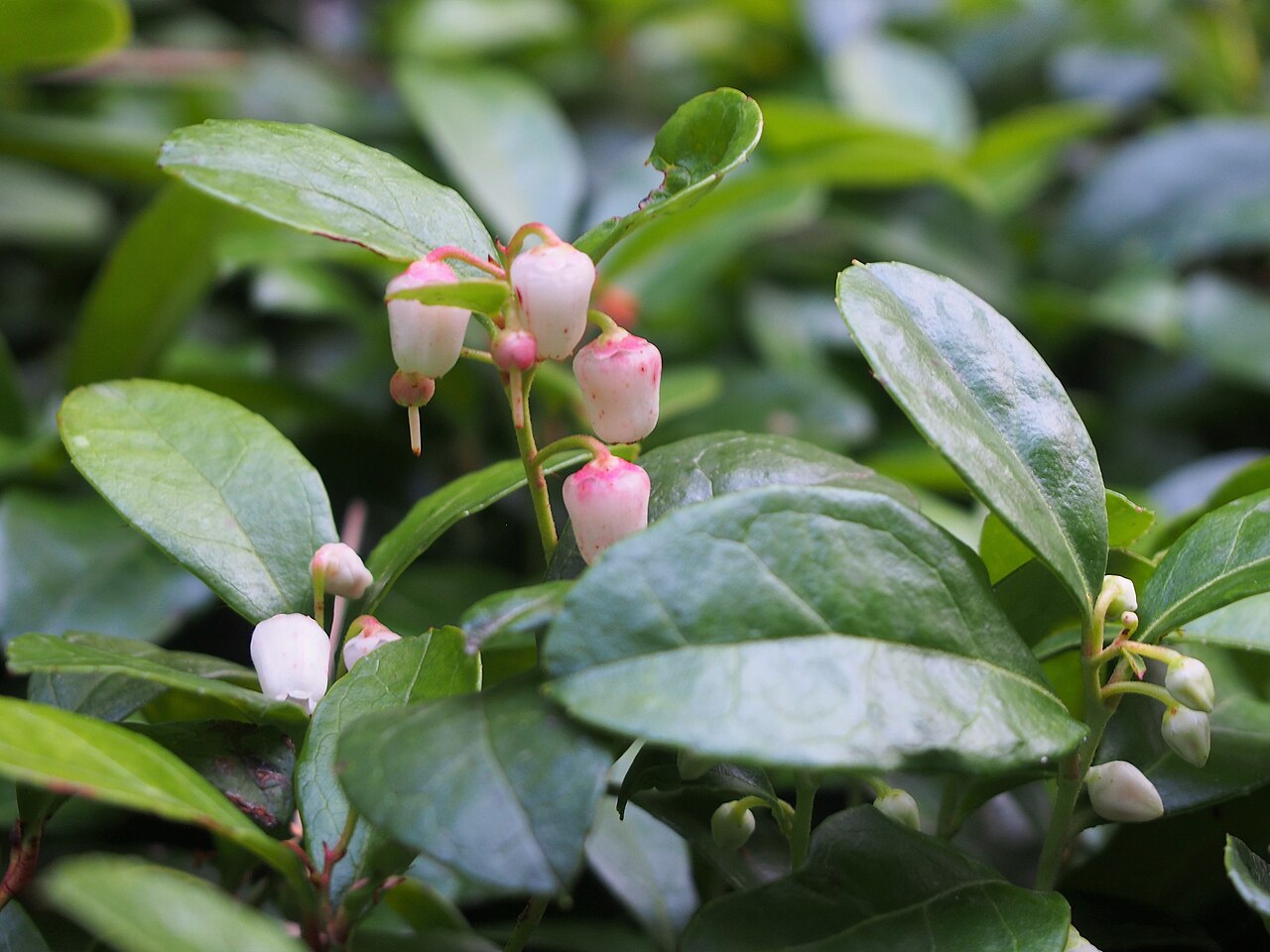
Checkerberry (Gaultheria procumbens), also called eastern teaberry or American wintergreen, brings a distinctly woodland scale to the native garden. Its upright leafy shoots usually stand only 4–8 inches high above a network of creeping rhizomes. Waxy summer flowers give way to red berry-like fruits, while the leathery leaves remain through winter and may take on burgundy or purple tones. This is a small shrub, not a turf grass or an herbaceous plant that disappears completely in autumn.
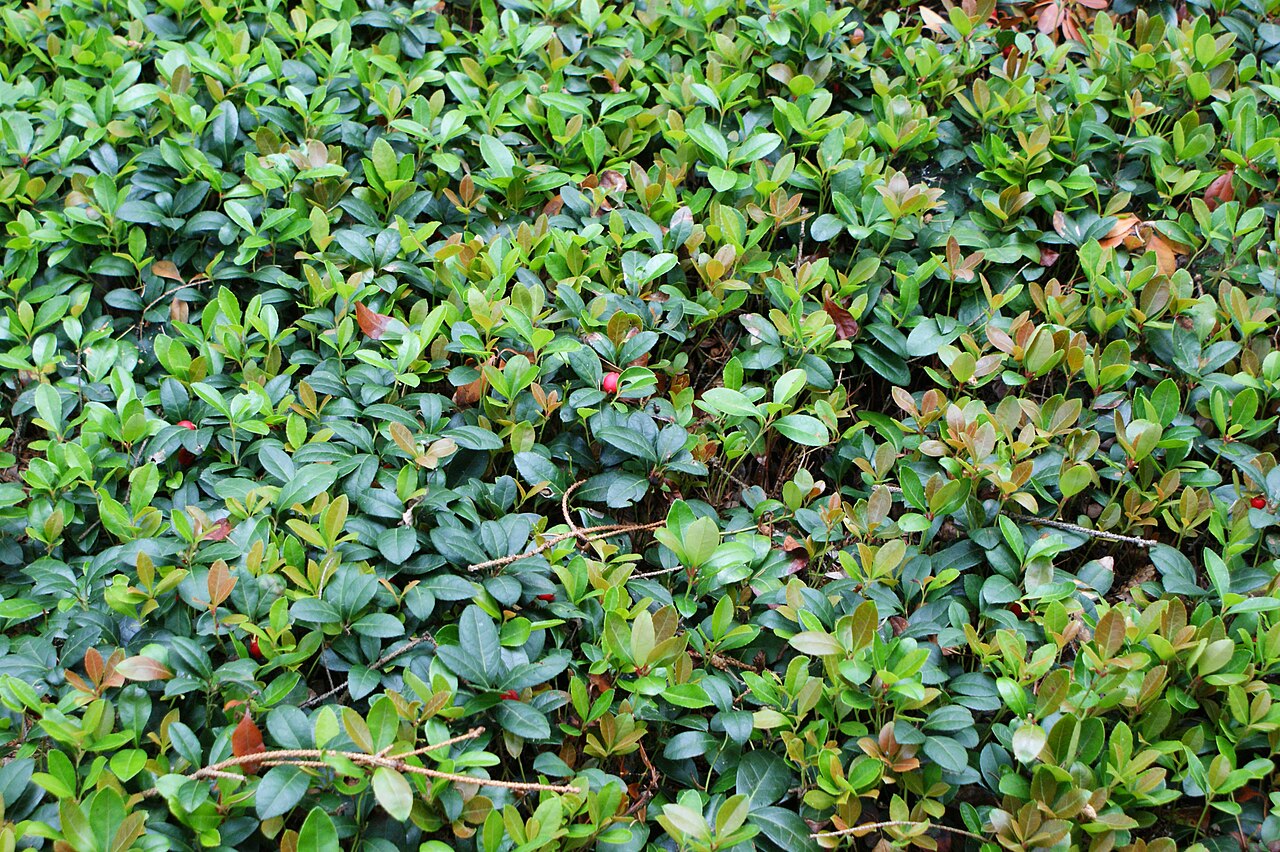
For a New England planting, think of checkerberry as an intimate groundcover beneath a lightly shaded woodland edge rather than a fast blanket for an exposed bank. A drift beside a path makes the flowers, fruit, and shiny leaves easy to see. The New England regional table lists a typical height of six inches, part shade to shade, and average soil moisture. Those shorthand values are best understood as cool, acidic, moisture-retentive soil with drainage—not a dry gravel strip simply because the foliage is evergreen.
The most useful design decision happens before planting: check that the ground is acidic and that summer irrigation can reach the shallow root zone while the plants establish. A naturally acidic pine-and-oak garden is a much better starting point than a recently limed lawn or alkaline foundation bed. Buy nursery-propagated material from a supplier who can explain its provenance. The species is native across much of northeastern North America, but the best local planting still comes from matching soil, light, and regional climate rather than treating a broad range map as a guarantee.
Identification
Bark & Stems
At ground level, checkerberry has slender woody stems connected by shallow rhizomes. The short ascending shoots carry the conspicuous leaves, while the horizontal growth gradually links them into a colony. There is no ornamental trunk or large bark surface to look for. A sparse young planting can therefore look like scattered individual seedlings even when its eventual form is a connected mat. Avoid pulling stems apart to identify the plant: the shallow connections are part of its permanent framework.
Leaves
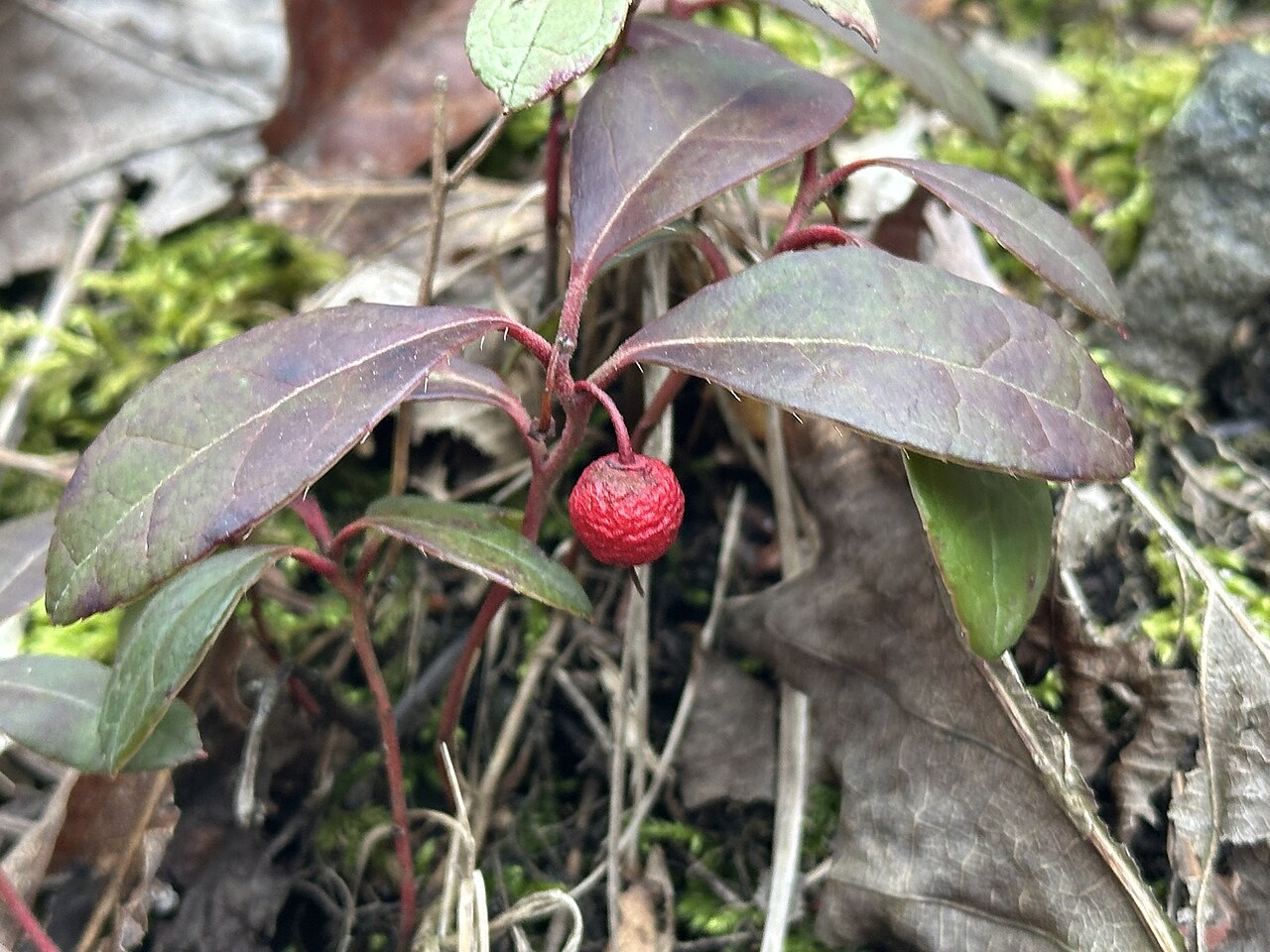
Leaves are simple, leathery, elliptic to oblong, and concentrated toward the ends of the short shoots. They are typically about 1–3 inches long, substantially larger than the tiny paired leaves of partridgeberry. New foliage may show a reddish tint; mature leaves are glossy green, and cold-season color can be purple or bronze. A gently bruised leaf has the familiar wintergreen aroma, but scent alone is not a safe identification method and does not establish that a garden plant or product is suitable to consume.
Flowers
Small waxy white to pinkish flowers hang near the leaf bases in summer. Their rounded urn shape and narrowed opening recall miniature blueberry flowers, a useful reminder that checkerberry belongs to the heath family. Depending on latitude and the local season, flowers may be present from early to late summer rather than on one fixed calendar date. Crouching beside a flowering patch is much more rewarding than viewing it from across the lawn; place the plant where those small details will be noticed.
Fruit & Seeds
The conspicuous red structure is berry-like, but botanically its fleshy outer portion is an enlarged calyx surrounding a capsule. Fruits mature toward autumn and may persist through winter into the following spring. They sit among the evergreen leaves instead of hanging in large clusters. Partridgeberry also produces red fruit at ground level, but it has opposite, smaller leaves and characteristically paired floral scars on a fruit. Use the entire combination of leaves, growth form, flowers, and fruit when separating these two woodland plants.
Quick Facts
| Scientific Name | Gaultheria procumbens L. |
| Family | Ericaceae (heath family) |
| Plant Type | Native evergreen, rhizomatous dwarf shrub |
| Mature Height | 4–8 inches; the regional table’s 6 inches is a typical value |
| Mature Spread | Individual patches roughly 6–12 inches initially; colonies widen gradually |
| Growth Rate | Slow |
| Sun Exposure | Part shade to shade; filtered light favors a useful balance of growth and fruit |
| Water Needs | Average to consistently moist, well-drained soil; water during establishment and dry spells |
| Soil Type | Acidic woodland loam, humus-rich sandy soil, or other moisture-retentive well-drained substrate |
| Soil pH | Acidic; approximately 4.5–6.0 is a practical target |
| Bloom Time | Summer; timing varies across the range |
| Flower Color | White to pale pink |
| Fall Color | Evergreen foliage often bronze, burgundy, or purple |
| Fruit | Red berry-like calyx around a capsule; often persists in winter |
| Deer Resistant | Not reliably; deer browse the evergreen foliage |
| USDA Hardiness Zones | 3–7, with local climate and soil moisture important |
Native Range
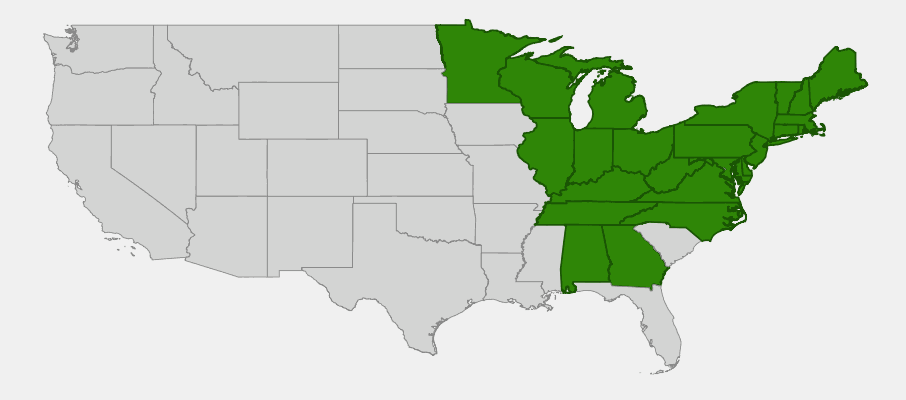
Checkerberry is an eastern North American species centered on the Northeast, Great Lakes, and Appalachian woodlands. Its range reaches from eastern Canada west toward Manitoba and south through the eastern United States into the southern Appalachian region. In New England it belongs to the native forest understory rather than to an introduced ornamental flora. The state-level map below follows the U.S. Forest Service FEIS distribution list, not a collection of garden sightings.
Within that broad outline, acidic soils are the consistent thread. Checkerberry occurs in several forest communities, including pine and oak woods, mixed northern forests, and places with a mossy or humus-rich surface. It may occupy relatively dry or wetter microsites in nature, but that adaptability should not be translated into a recommendation for waterlogged planting holes or drought-baked urban soil. The intact forest floor moderates both temperature and water loss in ways that a newly planted garden bed does not.
A shaded state on the map means that the species occurs somewhere in that state, not in every county or on every soil type. Toward the southern end of the range, cool woodland and mountain settings are especially relevant. Use the USDA link for finer distribution work and ask a local native nursery about regional seed or cutting sources. A planting under suitable New England trees is a very different proposition from a hot, open coastal or urban site at the edge of the species’ climatic tolerance.
📋 Regional plant list: New England
Growing & Care Guide
Light
Begin with filtered woodland light or part shade. The plant tolerates deeper shade, but a surviving carpet and a fruiting carpet are not necessarily the same thing: more light at a woodland opening may improve flowering and fruit production. In a hot garden, gain light through a brighter canopy edge or morning sun rather than exposing the plants abruptly to full afternoon sun. If an established tree is removed, watch the patch closely because the new heat and evaporation regime can matter more than the increase in light itself.
Soil & Water
Test soil before buying a large number of plants. Checkerberry is an acid-soil specialist, so routine liming works against its requirements. Maintain a thin, loose layer of leaf-derived organic material and keep the roots cool, but do not bury the small shoots under a heavy mulch mound. Water the actual root ball and surrounding shallow soil during establishment. Later, check beneath the surface litter during prolonged dry weather; a damp-looking layer of leaves does not prove that the roots below are moist. Persistent standing water, compacted fill, and alkaline runoff from hardscape are reasons to choose another site rather than keep replacing failed plants.
Planting Tips
Plant during a cool period when soil is workable, setting the top of the nursery root ball at the surrounding soil level. Gently inspect a tightly rooted pot and loosen only what is needed for roots to enter the adjacent soil. Spacing around 10–14 inches can start a small drift without pretending that the bed will close immediately. Water each plant thoroughly and monitor the spaces between plants, which remain open to weeds until the rhizomes spread. Establish a manageable patch first; the performance of that patch is better evidence for expansion than the appearance of a freshly mulched installation.
Pruning & Maintenance
Checkerberry does not need hedge-style pruning. Remove an occasional broken or dead shoot and hand-weed carefully around the shallow rhizomes. Keep aggressive vines, turf, and large self-sown perennials from overtopping it. Leave some natural leaf litter, but gently uncover shoots trapped beneath thick wet mats in spring. Avoid mechanical edging or repeated cultivation through the colony. If foliage becomes pale or growth stalls, check drainage, moisture, soil pH, and root disturbance before adding fertilizer. Strong feeding cannot compensate for an unsuitable root environment and may favor weeds over the slow-growing groundcover.
Propagation
Established colonies spread through rhizomes, so nursery division or rooted rhizome sections are practical ways to maintain a known plant. Work with cultivated stock and keep the divided root system moist while it re-establishes. Seed is another route, but it is a patient nursery project rather than a quick groundcover replacement. Ask a grower for the protocol appropriate to the source lot rather than assuming every seed needs the same refrigerator treatment. Keeping several genetically distinct nursery plants is preferable to making an entire restoration planting from one tiny clone, especially when flowers and fruit are part of the objective.
Troubleshooting a Sparse Patch
Look for a pattern instead of treating every brown leaf as a disease. Plants beside a limed path may face a pH problem; plants nearest large tree trunks may face intense root competition; plants at the sunny edge may simply dry first. Aphids, thrips, mildew, and leaf spots are possible, but an occasional marked leaf does not justify a broad insecticide spray. Improve the underlying growing conditions and preserve the pollinating insects that visit the flowers. Deer pressure can be real even on a plant sold as a tough evergreen groundcover, so assess browsing separately from drought injury.
Landscape Uses
- A low evergreen drift beside a shaded woodland path where flowers and winter fruit can be seen closely.
- An understory layer beneath suitable acid-loving shrubs, with enough space that falling foliage does not smother it.
- A small native groundcover patch among mossy stones and naturally acidic woodland soil.
- Winter interest in a native shade garden, combined with deciduous perennials that do not overwhelm its slow growth.
- A replacement for a small ornamental groundcover patch, but not a walkable lawn or a rapid solution for erosion on an exposed bank.
Wildlife & Ecological Value
For Pollinators
The summer flowers add a small-flowered native resource within the forest understory. Preserve insect access by avoiding broad-spectrum treatments during bloom and by retaining a diverse surrounding planting. Checkerberry should be one component of a sequence of native flowers, not the only food resource expected to support a garden’s pollinators. A fruiting patch is also a reminder that flower visitors and reproduction are connected; leaf color alone is not the whole ecological story.
For Birds
Persistent red fruits are used by birds, including gamebirds documented in the Forest Service review. The value is seasonal and complementary: this small shrub does not produce the volume of fruit supplied by a mature tree. Leave at least some fruit on the plants and keep a varied woodland edge with cover nearby. Avoid claiming that every berry will disappear immediately; persistence into winter is one of the species’ characteristic features, and wildlife use varies with local conditions and other available food.
For Mammals
Chipmunks and other mammals use checkerberry, and white-tailed deer may browse the foliage, including in winter. That makes the label “deer-proof” inappropriate. If a newly installed patch repeatedly loses its shoots, temporary protection while it establishes may be worthwhile. A plant can be useful to wildlife and still need protection in a small ornamental garden; those are management decisions rather than contradictory facts.
Ecosystem Role
The evergreen shoots and shallow rhizomes form part of the layered forest floor. Retaining its leaf litter and avoiding repeated soil disturbance protects the environment in which the colony grows. Forest Service studies show that severe fire that removes the organic surface can damage or kill the shallow rhizomes; resprouting after a light burn does not mean that fire is a suitable garden maintenance tool. In residential landscapes, the practical lesson is to preserve the soil surface rather than scrape it clean around an established patch.
Cultural & Historical Uses
The names teaberry and wintergreen reflect a long association between this plant and its aromatic foliage. Historical uses of the leaves and wintergreen oil helped make the scent familiar well beyond the plant’s native woods. Those cultural associations explain the common names but should not be mistaken for a modern recommendation to prepare concentrated extracts at home.
The plant is an especially good example of why botanical identity matters in a native garden. “Wintergreen” can describe a flavor, an evergreen habit, or more than one plant in everyday language. “Checkerberry” has also been applied to partridgeberry. Nursery labels carrying Gaultheria procumbens prevent an attractive but unrelated plant from being substituted merely because its common name sounds familiar.
Today, its most dependable role is as a living piece of the native woodland understory: a low plant that rewards patient observation through several seasons. Choose propagated plants rather than digging a patch out of the forest, retain documentation of the source when possible, and let the colony mature before expecting a dense carpet. The difference between this approach and instant-cover landscaping is time, but the result is a planting that fits its ecological setting.
Frequently Asked Questions
Is checkerberry the same as partridgeberry?
No. Checkerberry here means Gaultheria procumbens in the heath family. Partridgeberry is Mitchella repens in the madder family. Both are low evergreen woodland plants with red fruit, so compare leaf arrangement, leaf size, and flowers rather than relying on a common name.
Why is my checkerberry not spreading quickly?
It is naturally slow-growing. First check acidic soil, a cool root zone, adequate moisture, and freedom from aggressive neighboring plants. A six-inch-tall shoot is not evidence that the underground colony is mature. Resist the temptation to force rapid growth with heavy fertilizer.
Can I plant it in full sun?
Part shade or filtered woodland light is the safer starting point, especially in warm conditions. More light can favor fruiting, but full afternoon exposure may dry and heat a newly planted bed. Evaluate the local combination of sun, soil moisture, and temperature instead of treating light as an isolated factor.
Are the purple winter leaves a sign the plant is dying?
Bronze or purple cold-season color can be normal on evergreen checkerberry. Compare it with the firmness of the leaves, condition of the stems, and spring growth. Crispy foliage or dead shoots calls for a separate check of drought, root damage, or exposure rather than being explained away as seasonal color.
Will deer leave it alone?
Not reliably. Deer browsing is documented, including winter use of the evergreen foliage. Protect a small new planting if local deer pressure is high, and avoid purchasing it on the assumption that a low evergreen native is automatically resistant.
Sources & Further Reading
- NC State Extension: Gaultheria procumbens
- US Forest Service FEIS: eastern teaberry, distribution and ecology
- USDA PLANTS: Gaultheria procumbens
Find Native Plants
Ask growers about nursery propagation and regional provenance. Browse our Maine native plant nurseries, New Hampshire native plant nurseries, Vermont native plant nurseries, Connecticut native plant nurseries directory for suppliers.