
Standing Cypress (Ipomopsis rubra)
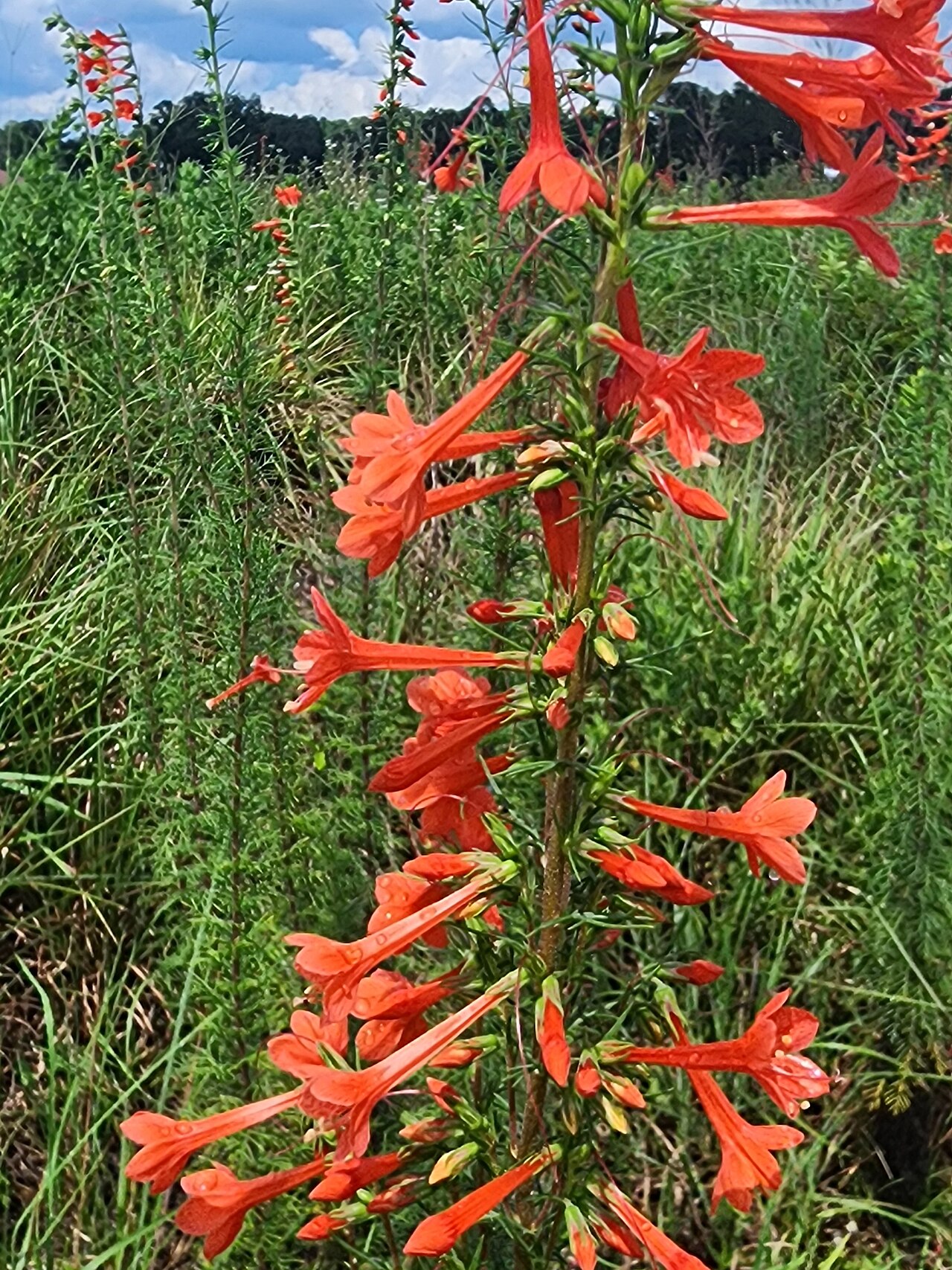
Standing cypress brings a very particular kind of drama to a sunny native garden: a narrow stalk of scarlet trumpets rising above fine, almost fernlike foliage. Ipomopsis rubra is a flowering herb in the phlox family, not a conifer. The name describes its feathery silhouette, while the flowers explain why gardeners also call it Texas plume or scarlet gilia. In a planting of mostly rounded clumps, its vertical outline is immediately noticeable.
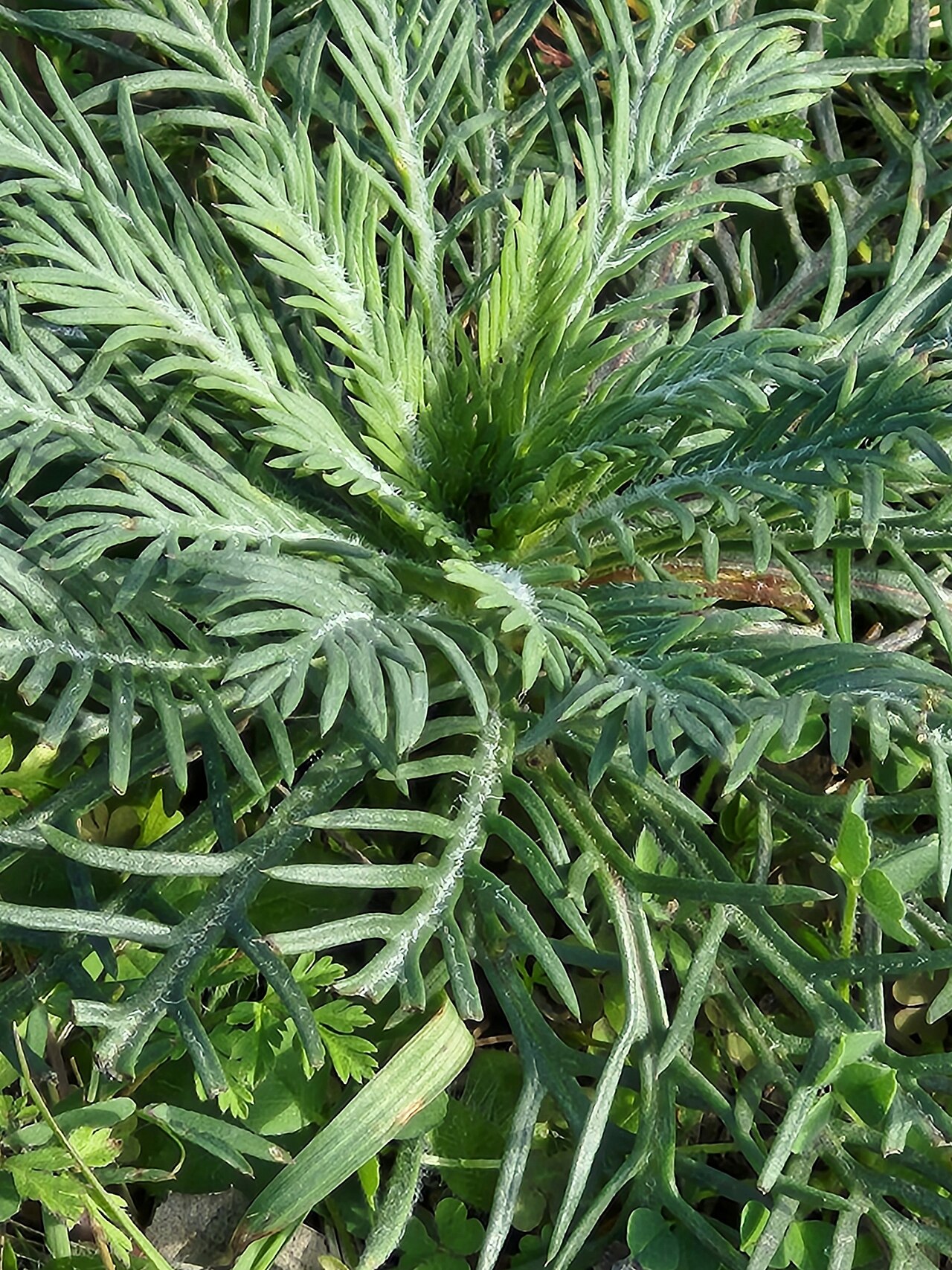
The most important thing to understand before buying it is its short life cycle. A plant commonly spends its first growing season as a leafy rosette, flowers during the next, and then dies after setting seed. A lasting display therefore comes from overlapping generations, not from one crown returning indefinitely. Some plants behave as annuals or short-lived perennials under different conditions; the dependable gardening strategy is to provide opportunities for seedlings rather than promise a permanent perennial.
For Arkansas, Louisiana, eastern Oklahoma and eastern Texas, it is a particularly appealing candidate for sunny, well-drained openings. Red flowers offer a visible nectar station for hummingbirds, and the foliage is attractive well before flowering. It is less suitable for a permanently damp bed, a heavily shaded border, or a tightly mulched landscape where every volunteer seedling is removed. Choose nursery-grown seed of an appropriate regional origin and make room for the plant’s entire life cycle.
Identification
Stems and overall form
A flowering plant generally stands about 2–6 feet tall, with a relatively narrow spread of about 1–2 feet. The upright stem carries finely divided leaves and a showy terminal flowering region. Its silhouette is quite different from a sprawling vine: despite the similar-looking name Ipomoea in some old classifications, standing cypress does not climb a fence. A first-year rosette stays close to the ground and can be overlooked among other young meadow plants.
Leaves
The leaf blades divide into many very narrow segments, giving both the basal rosette and stem foliage a soft, threadlike appearance. Look at the actual divisions rather than simply calling the plant a fern: these are leaves of a seed-bearing flowering plant. Photograph or label the rosettes in autumn so that routine spring weeding does not remove the next generation. Their form is also useful for distinguishing this plant from broad-leaved red-flowered species.
Flowers
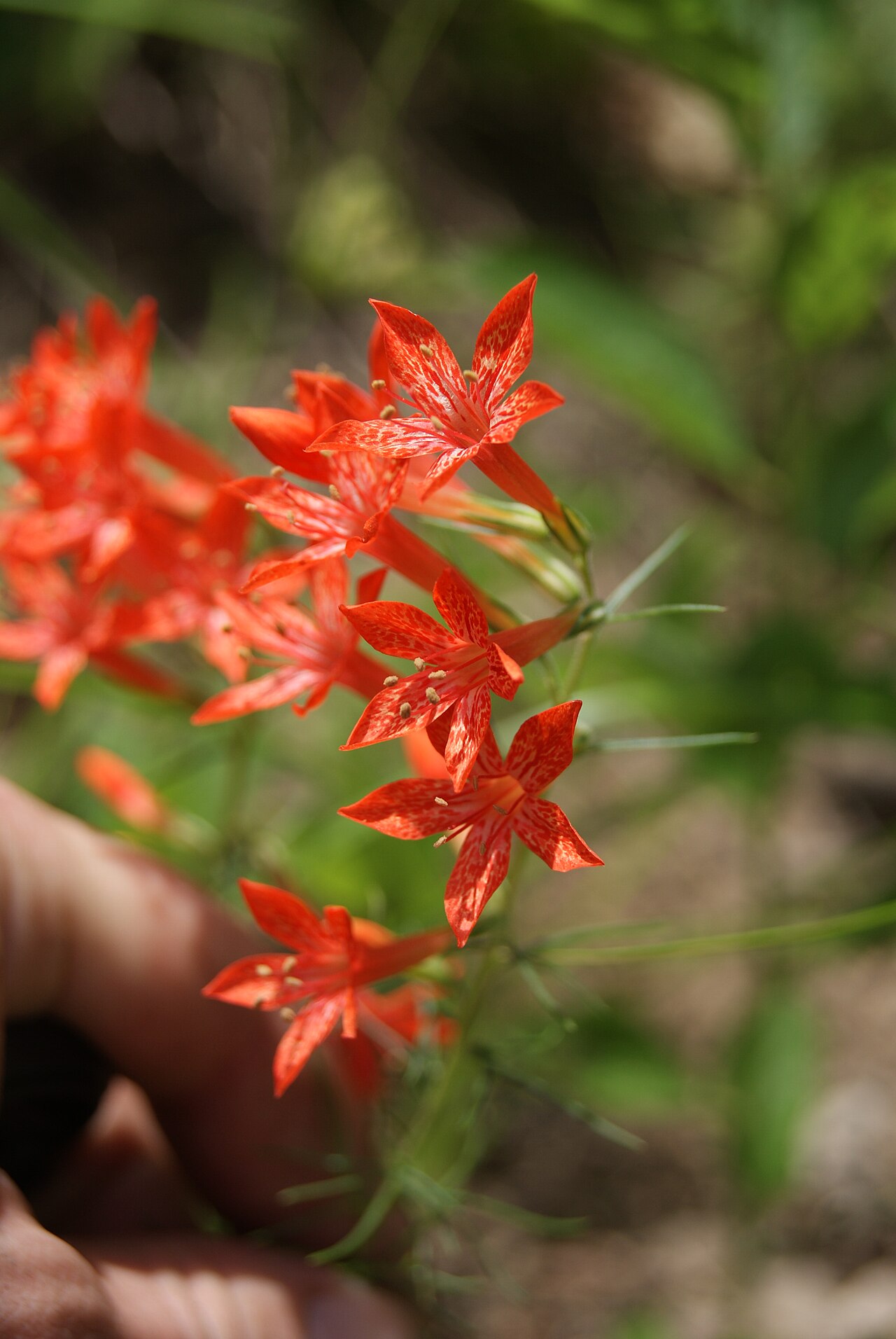
Scarlet to reddish-orange tubular flowers flare into five lobes and are carried above the foliage. The throat can show yellowish areas and darker spotting. Flowering is principally a summer event, but its exact timing depends on climate and sowing history. The long tube suits hummingbird visits; observing flowers from a little distance often reveals birds returning to the same stems. Do not use color alone to distinguish it from western Ipomopsis species.
Fruit and seed
Spent flowers develop into dry capsules rather than fleshy berries. Leave selected stems in place while the capsules ripen if you want natural recruitment. A capsule that is still green has not finished the same process as one that is dry and beginning to open. Label any saved seed with the scientific name and source garden so that future sowings do not lose their provenance; avoid harvesting seed from wild populations without permission.
Quick Facts
| Scientific Name | Ipomopsis rubra; older synonym Gilia rubra |
| Family | Polemoniaceae (phlox family) |
| Plant Type | Biennial or short-lived herbaceous plant |
| Mature Height | 2–6 feet in flower |
| Mature Spread | About 1–2 feet |
| Growth Rate | Rosette establishment followed by rapid flowering-stem growth |
| Sun Exposure | Full sun; tolerates light shade |
| Water Needs | Dry to average; well-drained, never persistently saturated |
| Soil Type | Sandy or rocky loam; drainage more important than richness |
| Soil pH | Use locally suitable soil; no narrow pH target required |
| Bloom Time | Mainly summer; varies with location and generation |
| Flower Color | Scarlet to reddish orange |
| Fall Color | Not a principal ornamental feature |
| Fruit | Dry seed capsules |
| Deer Resistant | Often reported resistant; browsing is still possible |
| USDA Hardiness Zones | Commonly grown in zones 6–9; seed provenance and drainage matter |
Native Range
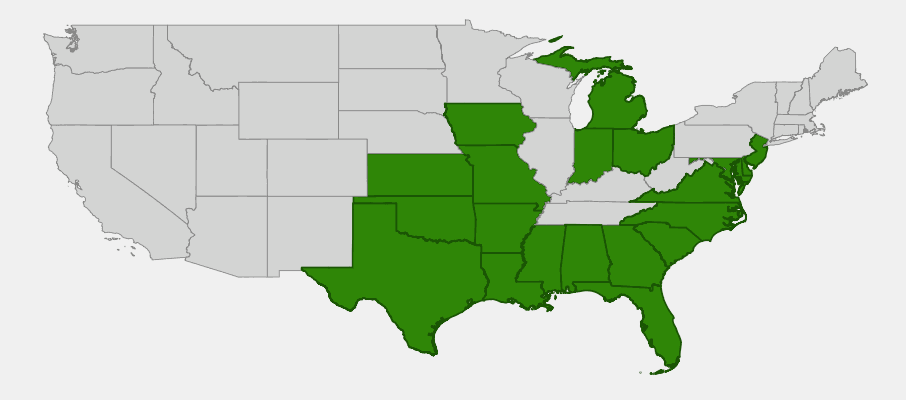
This is a central and eastern United States plant with a strong southeastern presence. The state map is a broad native-range guide based on Kew’s Plants of the World Online, with Massachusetts excluded here because Native Plant Trust treats New England plants as garden escapes. That disagreement is worth stating: an occurrence record, even one on a respected map, is not automatically evidence of indigenous status in every part of a state.
All four states represented in the Arkansas–Louisiana–eastern Oklahoma–eastern Texas regional list are included in the core range used here. Within those states, seek dry, open habitats rather than assuming every woodland or floodplain is suitable. Sandy fields, rocky openings, open woods and sandhill communities give a better clue to garden placement than a state boundary does. Local floras and county records can narrow the choice further.
Kew lists introductions in Illinois, Kentucky, New York, Ontario and Wisconsin; those places are not shaded as native on this page. The USDA link below provides a route to finer distribution information, but interpret occurrence and nativity separately. Use seed from a nearby ecological setting where possible, particularly for restoration projects. A garden plant flowering outside the historical range may be attractive without being a local native.
📋 Regional plant list: Arkansas, Louisiana, Eastern Oklahoma and Eastern Texas
Growing & Care Guide
Light
Give the flowering stalk enough sun to grow upright and bloom freely. A site with open sky for most of the day is a better starting point than one tucked behind dense shrubs. Light shade may be tolerated, but it should not be confused with a dark woodland understory. In a border, put standing cypress where taller summer foliage will not close over its rosette before it is ready to bolt.
Soil and water
Think drainage first. Sandy or rocky loam is a natural fit, while a low spot that holds water after every storm is not. During establishment, check the actual root zone and water when it is drying, rather than following a fixed daily schedule. Once rooted, the plant is adapted to relatively dry settings. Adding rich compost and frequent irrigation to force luxuriant growth can undermine the lean-site character that makes it useful.
Planting and seed sowing
Direct sowing is a sensible option for this seed-renewing plant. Use clean, labeled seed and the supplier’s instructions for its provenance; sowing seasons appropriate to the Gulf South need not be identical to those in cooler inland gardens. Prepare small weed-free patches with seed-to-soil contact instead of broadcasting into dense turf. Mark the patches, protect young seedlings from being trampled, and keep their early root zones from drying completely. If transplanting, move young plants carefully and avoid damaging the developing root system.
Pruning and maintenance
This is not a shrub to shear into shape. Let the flowering stalk develop, and decide deliberately which stems will be allowed to ripen seed. Removing every spent flower can prevent the very reseeding that keeps a patch going. After seed dispersal, remove collapsed stalks where necessary for tidiness, leaving established rosettes undisturbed. Thin crowded volunteers early and retain plants in more than one stage of development so that one season’s flowering does not exhaust the entire planting.
Propagation
Seed is the practical way to maintain a population. Collect only from garden plants you are entitled to harvest, let mature capsules dry in a breathable container, and label the seed. Do not assume seedlings will appear exactly beneath the parent or on the same schedule each year. Keep a small reserve for gaps. A useful management record is simply the sowing date, the date rosettes appeared, and the first bloom date; those observations will improve the next season’s timing more than a universal calendar promise.
Seasonal troubleshooting
A rosette without flowers is not necessarily failing: it may be in its normal first-year stage. A plant dying after seed set may likewise have completed its life cycle. By contrast, persistently soft or decaying growth in wet soil calls for a drainage reassessment. Sparse flowering under taller neighbors calls for a light reassessment. Before buying replacements, distinguish normal biennial turnover from a site problem. This saves both money and the mistaken use of fertilizer on a plant that does not need it.
Landscape Uses
- Narrow vertical accents among low native grasses in a sunny border.
- Seed-renewing hummingbird patches with room for first-year rosettes.
- Dry meadow edges where mowing can wait until seed has matured.
- Cottage gardens that can accommodate a changing pattern of volunteers.
Wildlife & Ecological Value
Pollinators
Hummingbirds are a major attraction, and long-tongued insects also visit the tubular flowers. Plant a group large enough to be noticed, but combine it with other species that flower before and after its peak. A garden relying on one biennial for all of its nectar can have a gap when too few rosettes mature. Avoid broad-spectrum insecticides on flowering plants, and judge success by actual visitors rather than flower color alone.
Birds
The best-supported bird relationship here is nectar feeding, especially by ruby-throated hummingbirds in the eastern range. Do not describe the dry capsules as a major fleshy-fruit resource. Standing stalks and a varied planting provide structure, but a complete bird garden also needs shrubs, shelter and clean water suited to the site.
Mammals
Deer resistance is a tendency, not a guarantee. A hungry animal can sample plants that a catalogue calls resistant, and seedlings may be more vulnerable than mature stems. Where browsing pressure is intense, protect a small trial group first. No special mammal food claim is needed to justify growing this plant; its strongest garden role is in the flower–pollinator interaction.
Ecosystem role
A short-lived species uses openings in vegetation rather than behaving like a permanent woody anchor. In a garden, leaving a few modest seedbeds can mimic that opportunity without disturbing a whole plot. Keep those openings free of invasive weeds, and do not import soil or seed of unknown origin. The balance is a managed, self-renewing patch rather than an attempt to freeze every plant in place.
Cultural & Historical Uses
Older literature and seed catalogues may list this species as Gilia rubra. Recording that synonym helps gardeners find relevant information without confusing it with unrelated red flowers. The current name used here is Ipomopsis rubra, consistent with the botanical sources and USDA profile linked below. Its common name is descriptive rather than a statement that the plant is related to bald cypress or other trees.
The plant’s place in gardens is closely tied to its conspicuous red flowers and airy foliage. Those features make it useful as a teaching example of how a biennial differs from a perennial clump: one can follow a labeled rosette, flowering stem and seed capsule through successive seasons. That observation is more informative than treating a disappeared parent plant as a gardening failure.
No edible or medicinal use is recommended here. This guide focuses on documented botany, horticulture and wildlife use rather than repeating unsourced historical remedies. For a regional planting, the most valuable history to obtain from a supplier is where the seed originated and whether it was nursery propagated. That information connects a beautiful garden flower with an appropriate local conservation choice.
Frequently Asked Questions
Is standing cypress a tree?
No. It is a flowering herb in the phlox family. Its divided foliage suggests a cypress-like texture, but it has neither a woody trunk nor cones.
Why did my plant make leaves but no flowers?
A first-year rosette is normal. Many plants flower in their second season. Check light and drainage, but do not assume a healthy rosette needs fertilizer to force immediate flowering.
Will the same plant return every year?
Often not. It commonly dies after flowering and seeding. A persistent patch relies on seedlings and may include more than one age group.
Can I plant it in a rain garden?
Not in a basin that remains wet. Choose a sunny, freely draining site; a raised, dry edge is different from the saturated bottom of a rain garden.
How can I keep a display going?
Allow some seed to mature, recognize and protect rosettes, keep a few open seedbeds, and reserve labeled seed for gaps. Avoid removing every volunteer during spring cleanup.
Sources & Further Reading
- NC State Extension: standing cypress
- Kew Plants of the World Online: taxonomy and distribution
- Native Plant Trust: New England status
- USDA PLANTS: Ipomopsis rubra
- Florida Native Plant Society: standing cypress
Find Native Plants
Ask growers about nursery propagation and regional provenance. Browse our AR native plant nurseries, LA native plant nurseries, OK native plant nurseries, TX native plant nurseries directory for suppliers. Explore the native nursery finder.