
Nevada Jointfir (Ephedra nevadensis)
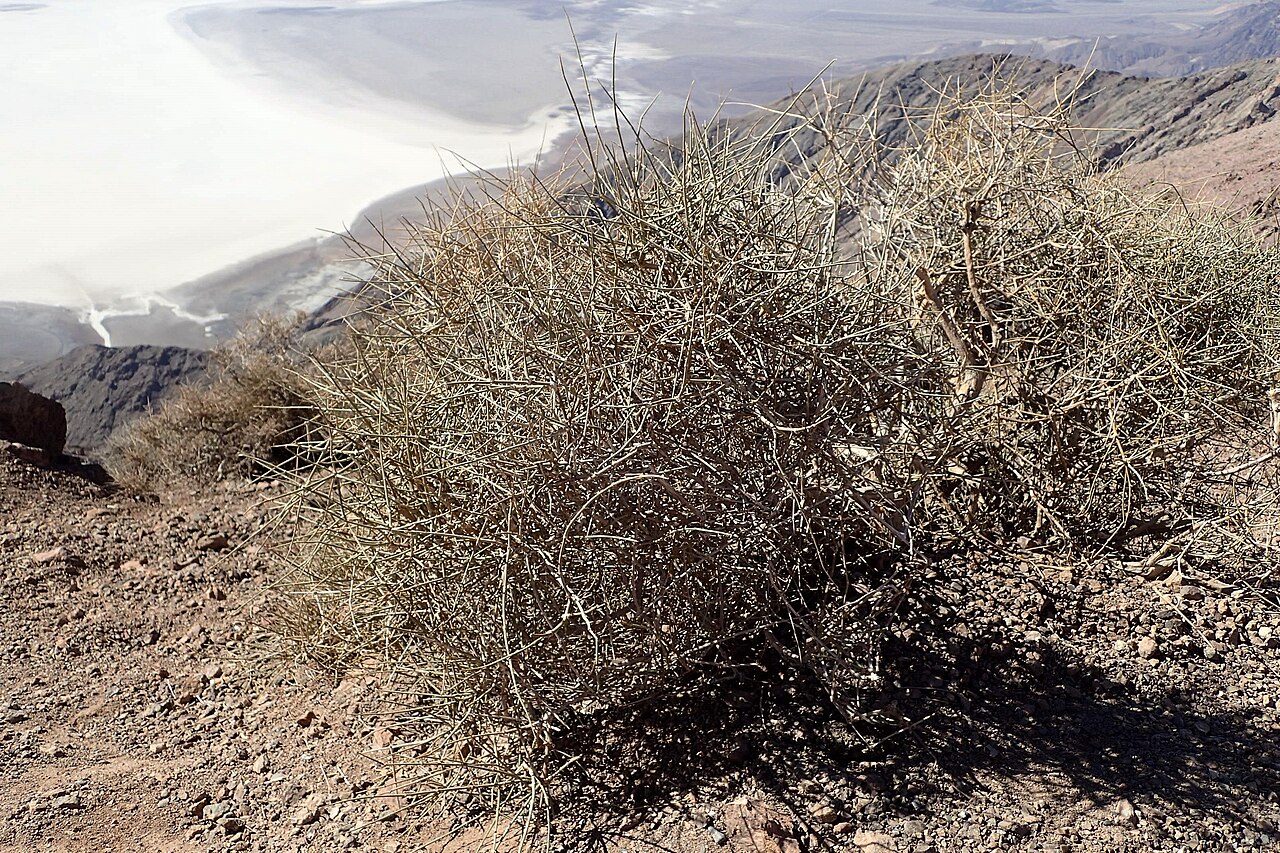
Nevada jointfir (Ephedra nevadensis), also called gray ephedra or Mormon tea, is a native desert shrub whose pale, jointed stems do most of the visual work normally done by leaves. A mature plant looks like a loose bundle of slender gray-green rods rising from an increasingly woody base. It has no showy petals, broad summer foliage, or conventional berry crop. Its value lies in durable structure, adaptation to dry western landscapes, and the way its fine stems contrast with rocks and coarse-leaved desert plants.
This species belongs to Ephedraceae, a gymnosperm family. Its reproductive structures are cones rather than flowers, a distinction worth keeping clear when reading older landscape tables that call them yellow flowers. Plants are usually described as shrubs roughly 1–5 feet tall, though local growth can be lower or broader. Established plants are well suited to open, dry, mineral soils; that does not mean a newly transplanted shrub can be left without establishment care.
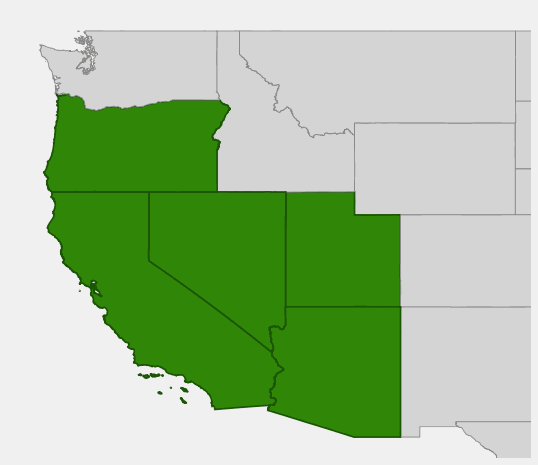
Nevada jointfir is not the same species as green ephedra, Ephedra viridis. Both have been called Mormon tea, and that shared common name previously caused misleading links in regional plant lists. The native range of E. nevadensis includes Arizona, California, Nevada, Oregon, and Utah, with an extension into Baja California. Being listed on the combined Utah & Western Colorado page does not establish that it is native to Colorado. Use the scientific name and local provenance when choosing a plant.
Identification
Stems & Bark
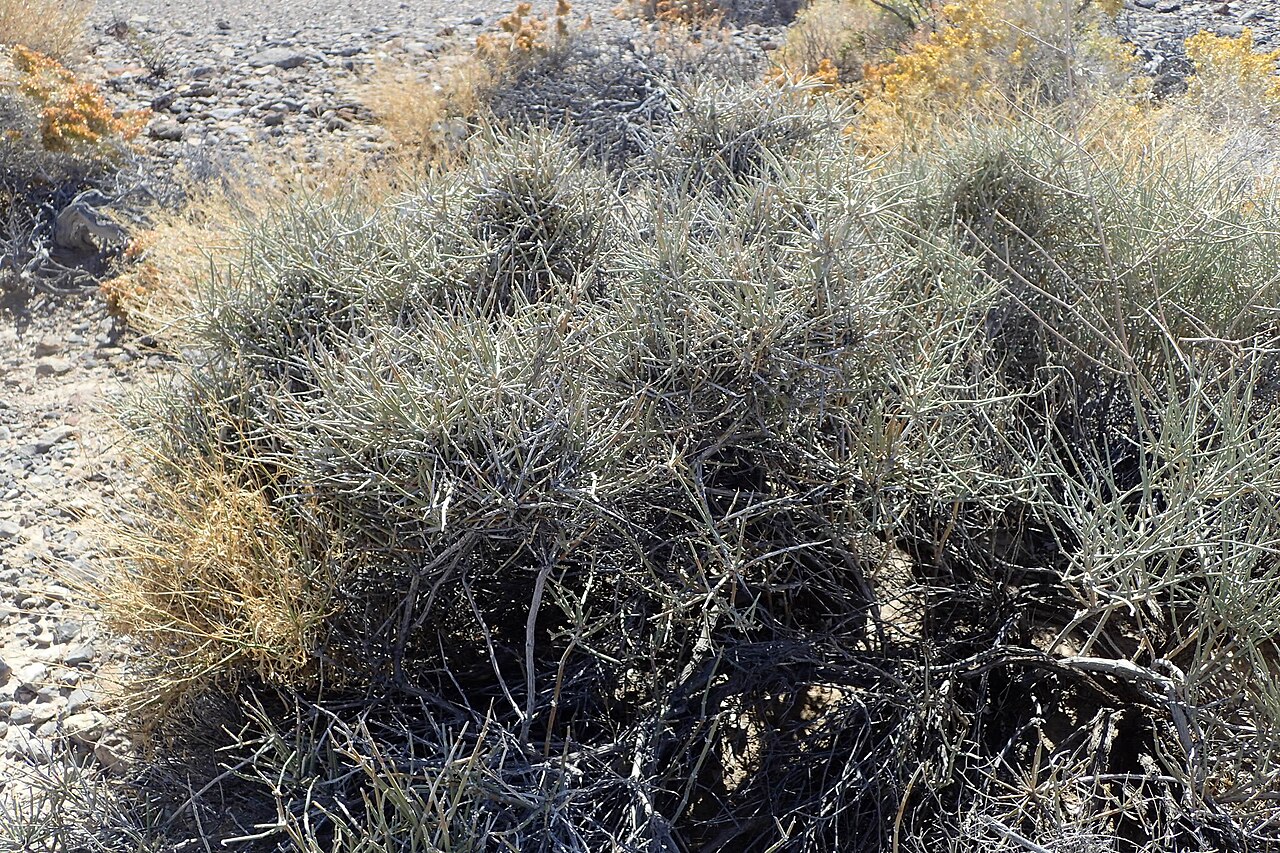
Slender branchlets are jointed, longitudinally grooved, and usually pale green to gray-green. These photosynthetic stems remain conspicuous because the leaves are reduced to small scales. Older branches develop gray, fissured bark and a more substantial woody framework. A mature shrub can contain both live greenish shoots and dead brown wood, especially after drought or damage; inspect living tips before concluding that the entire plant has died.
Leaves
The leaves are tiny scales at the nodes rather than ordinary flat blades. Their arrangement and persistence are useful characters in Ephedra identification, but they require close inspection. A distant photograph of a leafless shrub cannot reliably separate all western jointfirs. The gray cast is helpful, yet lighting, shoot age, and drought can alter color. Compare the nodes, branching, and reproductive structures with a regional botanical key.
Cones
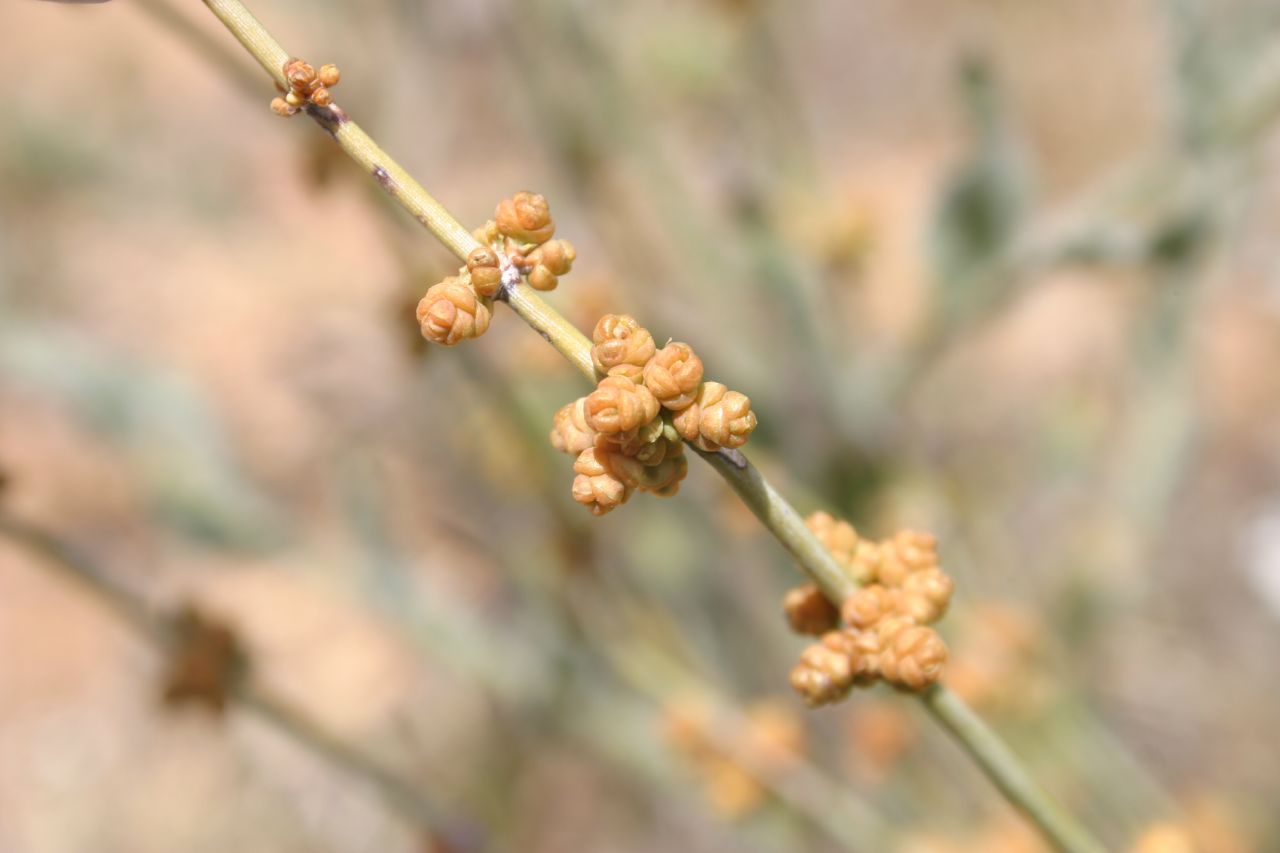
Small cones occur at the stem nodes. Male and female reproductive structures are generally borne on separate plants, so a single nursery specimen should not be expected to produce seed by itself. The yellowish or brownish cone structures are unobtrusive compared with the flowers of most garden shrubs. The close-up photograph here shows reproductive structures attached directly along jointed stems, not a cluster of petaled flowers.
Seeds
Seeds develop within the female cones. Their production depends on a suitable reproductive neighborhood and seasonal conditions, not just the size of one shrub. Leave seed in wild populations and collect only with permission. Seed characteristics are valuable for identification, but do not use a casual seed comparison to justify eating material from an unknown Ephedra.
Distinguishing Green Ephedra
Ephedra viridis often appears greener, but stem color alone is insufficient. Several Ephedra species can occur in overlapping dry landscapes, and older references sometimes treated taxa differently. A verified nursery label or flora-based determination is preferable to assuming that every shrub called Mormon tea is E. nevadensis. This page follows the Nevada jointfir concept used in the Forest Service species review and excludes other jointfirs from its map.
Quick Facts
| Scientific Name | Ephedra nevadensis |
| Family | Ephedraceae |
| Plant Type | Native gymnosperm shrub |
| Mature Height | About 1–5 feet; commonly 2–4 feet in landscape descriptions |
| Mature Spread | Variable, often a broad open shrub |
| Growth Rate | Generally slow |
| Sun Exposure | Full sun |
| Water Needs | Low once established; excellent drought tolerance on suitable sites |
| Soil Type | Dry, well-drained sandy, gravelly, or rocky mineral soil |
| Soil pH | Neutral to alkaline conditions; poorly suited to strongly acidic soil |
| Bloom Time | Spring cone production; not a flowering plant |
| Flower Color | No petals; small yellowish to brown cones |
| Fall Color | Persistent gray-green stems rather than autumn leaf color |
| Fruit | Seeds in cones, not berries |
| Deer Resistant | Browse can occur; not reliably deer-proof |
| USDA Hardiness Zones | Use a locally adapted western seed source; exposure matters as well as minimum temperature |
Native Range
The Forest Service places Nevada jointfir from southeastern Oregon south through the interior West to Baja California Norte, and east to Utah and Arizona. The five U.S. states represented on this map are Arizona, California, Nevada, Oregon, and Utah. The map is deliberately conservative at the species level and does not absorb records of other jointfirs merely because they share the common name Mormon tea.
Its range encompasses parts of the Great Basin and Mojave Desert and adjacent dry country. It occupies dry slopes, ridges, and some floodplain settings where the substrate remains well drained. Forest Service descriptions emphasize shallow rocky soils, often derived from limestone, as well as tolerance of saline conditions. Salt tolerance does not make the plant suitable for a permanently waterlogged depression.
Reported elevations vary among regions, broadly from about 2,000 to 7,000 feet in the Forest Service synthesis, with many occurrences below roughly 4,430 feet. That broad range should not be read as an invitation to move a low-desert seed source to a much colder exposed mountain site. Match the climate and substrate of the source population when possible. The Utah & Western Colorado regional-list link is a navigation aid; Colorado is not included in this species-level native-state map.
📋 Regional plant list: Arizona
Growing & Care Guide
Light
Plant in full sun with room around the crown for air movement and its natural branching pattern. Deep shade under a tree changes both water use and growth form and is not a good way to imitate desert habitat. Where buildings reflect extreme afternoon heat, use a locally proven source and monitor the root zone during establishment. A plant adapted to dry country can still be stressed by a small, overheated nursery root ball.
Soil & Water
Provide mineral soil that drains freely. Avoid placing a pocket of rich compost inside dense clay, where irrigation water can collect around the roots. If the site is inherently wet, choose a different plant or a genuinely well-drained raised landform rather than relying on gravel at the bottom of a planting hole. The species tolerates drought well after establishment, but repeated saturation is not a useful test of its resilience.
Establishment Irrigation
Water the nursery root ball thoroughly at planting and check moisture below the surface during the first growing season. Space irrigation according to actual drying, weather, and soil texture; there is no universal weekly schedule for all desert gardens. As roots explore surrounding ground, gradually reduce dependence on frequent water. Keep lawn sprinklers from repeatedly wetting a mature desert shrub that no longer needs them.
Planting Tips
Choose a healthy nursery-propagated plant with an intact root system and a verified scientific name. Set the root crown at the original soil level, not beneath a mound of wet mulch. Backfill with appropriate site soil and firm gently to remove large air pockets. Protect a new planting from trampling and irrigation runoff. A modest plant that establishes without root damage is preferable to a large wild-dug specimen.
Pruning & Maintenance
Allow an open, irregular habit rather than shearing it into a dense hedge. Remove clearly dead or damaged branches only when necessary and avoid cutting the entire shrub back on the assumption that it will respond like an ornamental grass. Mature woody stems and green branchlets serve different roles. Routine fertilizer is rarely justified on an appropriate site; lush forced growth is not the goal of a desert planting.
Propagation
Seed propagation is used in restoration and native-plant production. Follow a documented protocol appropriate to the seed lot rather than assuming the same treatment works for every Ephedra. Keep species and collection locality on the label through sowing and potting. If seed production is an objective, plan for more than one genetically distinct plant and the presence of both reproductive sexes. Purchase propagated material instead of removing established wild shrubs.
Troubleshooting
Brown stems can reflect old wood, localized dieback, root damage, or excessive moisture. Assess the pattern and soil conditions before adding more water. If a plant fails beside irrigated turf, the surrounding irrigation regime may be the problem rather than a shortage of fertilizer. Conversely, a newly installed shrub with a dry root ball is not yet capable of the drought resistance of an established wild plant. Diagnose the stage of establishment first.
Landscape Uses
- A fine-textured structural shrub in an appropriately dry native garden.
- An informal accent against boulders or a mineral-soil slope.
- A component of locally designed desert restoration using verified regional seed.
- A contrasting form among native grasses and broad-leaved or succulent plants with compatible water requirements.
Wildlife & Ecological Value
Pollination
As a cone-bearing plant, jointfir should not be advertised as a showy nectar flower for butterflies. Its ecological contribution differs from that of flowering shrubs. Include appropriate native flowering plants elsewhere in the design to provide seasonal nectar and pollen resources. Diversity of plant structures and reproductive strategies is more useful than forcing every species into the same pollinator-garden description.
Birds & Small Animals
The open branches contribute low cover, and seeds can enter desert food webs. The existing Utah list notes quail interest in seed; the larger value of a planting depends on surrounding vegetation, water, and disturbance. Do not promise that a single isolated shrub will attract a particular bird. Retain a mosaic of locally native vegetation rather than replacing it all with one drought-tolerant species.
Browse
Wild ungulates and livestock can use jointfir as browse, with use varying by location and season. It should not be labeled completely deer-proof. Protect young plants if browsing prevents establishment, then reassess rather than keeping unnecessary barriers indefinitely. Ornamental resistance to browsing and suitability as livestock feed are separate questions; this guide does not prescribe it as forage.
Dryland Function
Persistent woody cover and roots help give structure to sparsely vegetated sites. The Forest Service review discusses its role in arid plant communities and response to disturbance, including fire. Gardeners should not translate fire-ecology observations into a recommendation to burn a planting. In dry country, protect intact soil surfaces and existing native vegetation, and use restoration methods designed for the particular site.
Cultural & Historical Uses
The common name Mormon tea reflects a history of beverages made from some western Ephedra species. A common name, however, is not a chemical analysis or a safety assurance. This is an identification and gardening page, not a preparation guide. Do not infer that a plant is safe to consume from the fact that a traditional beverage name appears on a nursery label.
Nevada jointfir illustrates why scientific naming matters in regional directories. E. viridis and E. nevadensis can both appear under Mormon tea, while older publications may apply broader concepts to other jointfirs. This article and its corrected table links keep the Nevada species distinct, preserving the value of each local record rather than consolidating unrelated plants under a familiar name.
The Forest Service and USDA have documented this shrub in restoration, range, and ecological contexts. That evidence is most useful here for understanding native range, soil adaptation, and habitat relationships. It does not support invented ceremonial claims, medicinal dosing, or universal performance promises. A locally sourced plant, correctly identified and well placed, is the practical goal.
Frequently Asked Questions
Is Nevada jointfir the same as green ephedra?
No. E. nevadensis and E. viridis are separate species, even though both may be called Mormon tea.
Does it flower?
It produces cones rather than petaled flowers. Small reproductive structures appear at nodes along the jointed stems.
Is it native to Colorado?
The Forest Service range used here includes AZ, CA, NV, OR, and UT, not Colorado. A combined regional list is not proof of nativity in every state it covers.
Can I stop watering immediately after planting?
No. Establish the nursery root system first, then reduce irrigation according to soil moisture and growth. Mature drought tolerance is not immediate transplant tolerance.
Can I make tea from my plant?
This guide does not recommend consumption. Common names and historical use do not establish safe identity, chemistry, or suitability for an individual.
📋 Also listed: Utah & Western Colorado
Sources & Further Reading
- USDA Forest Service — Nevada jointfir species review
- USDA NRCS — Gray Ephedra plant guide
- USDA PLANTS — Ephedra nevadensis
Find Native Plants
Ask growers about nursery propagation and regional provenance. Browse our AZ native plant nurseries, UT native plant nurseries directory for suppliers. Explore the native nursery finder.