
American Chestnut (Castanea dentata)
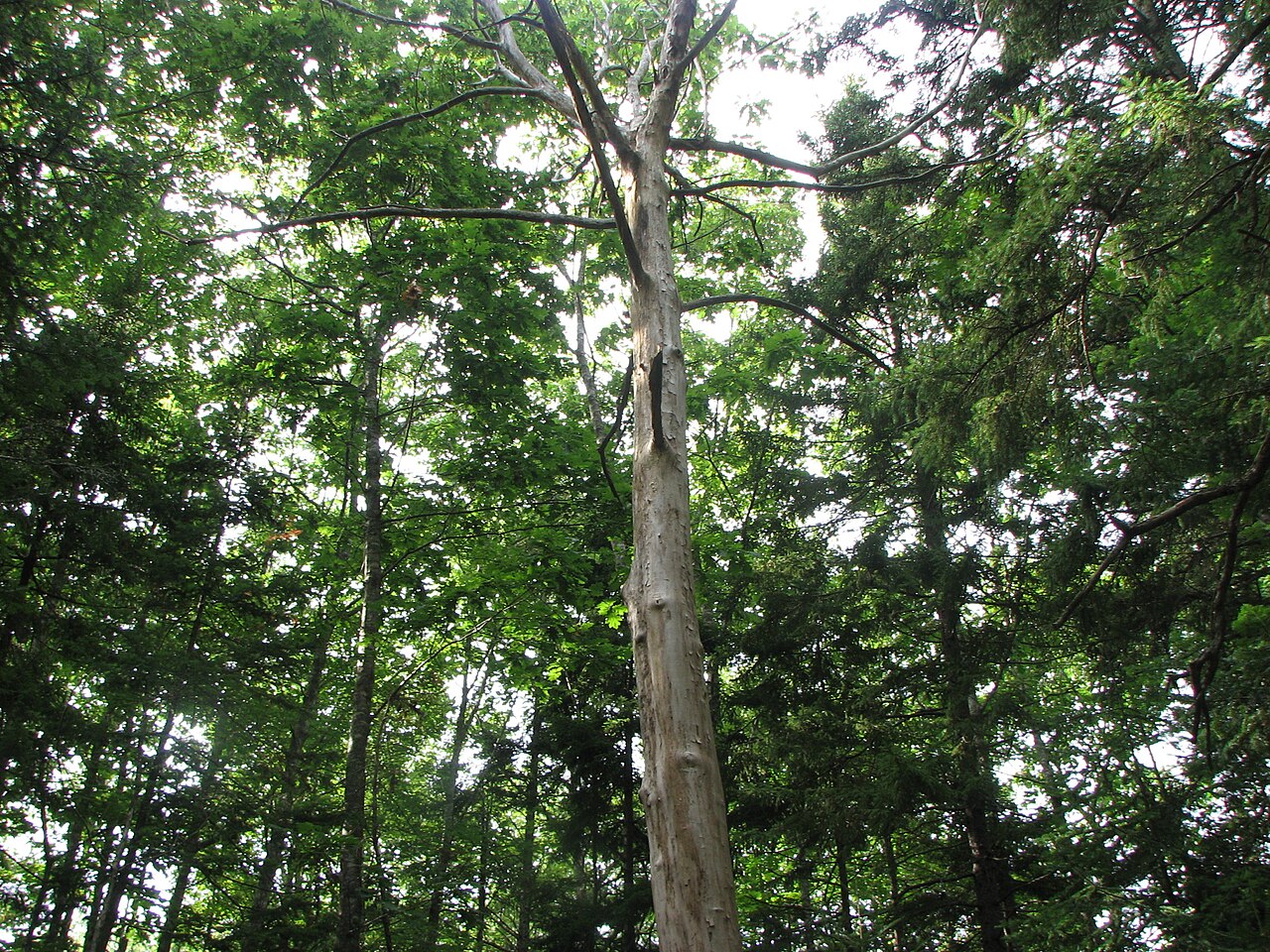
Castanea dentata, the American chestnut, is a large deciduous tree of the beech family (Fagaceae) that once dominated the eastern hardwood forest from Maine to Mississippi. Before the chestnut blight arrived from imported Asian nursery stock in 1904, mature chestnuts commonly grew 60 to 100 feet tall with trunks several feet across, and the species made up an estimated one in four trees across much of the southern Appalachians. Its saw-toothed leaves, creamy summer catkins, and spiny burs full of sweet, edible nuts were a defining feature of the eastern woods — and a critical food source for wildlife, livestock, and rural families alike.
The blight fungus, Cryphonectria parasitica, killed an estimated three to four billion trees within about 40 years, and it is considered one of the worst ecological disasters in North American history. Today the species survives almost entirely as root-sprouted stems: the underground root systems of long-dead trees are often still alive and continue to send up shoots, but the blight nearly always girdles and kills these sprouts before they reach reproductive maturity. A small number of blight-resistant or blight-escaped mature trees persist, both within and outside the historic range, and they are the foundation of ongoing breeding and biotechnology programs working toward restoration.
For home gardeners and land managers, American chestnut remains a plant of hope rather than a routine landscape choice. Straight species seedlings are available from restoration-focused nurseries and chestnut cooperators’ groups, and many growers plant them anyway — for the ecological value, the nostalgia, and the chance that an individual tree will show useful resistance. It is not a plant for someone wanting a guaranteed long-lived shade tree, but for those interested in native tree conservation, it is one of the most meaningful species to grow.
Identification
American chestnut is a fast-growing deciduous tree that, where blight-free, develops a broad, rounded crown atop a straight trunk. Young trees and root sprouts grow vigorously, often 2 to 3 feet per year, but rarely survive long enough to reach the massive proportions of pre-blight giants.
Bark & Stems
Bark on young trees and sprouts is smooth and gray-brown; on older trunks it becomes dark gray and develops broad, flat-topped ridges separated by shallow fissures, a pattern often described as resembling the surface of a chestnut itself. Twigs are stout, olive-brown to chestnut-brown, hairless, and lack a terminal bud — a useful field mark that separates chestnut from most oaks and beeches, which do have true terminal buds.
Leaves
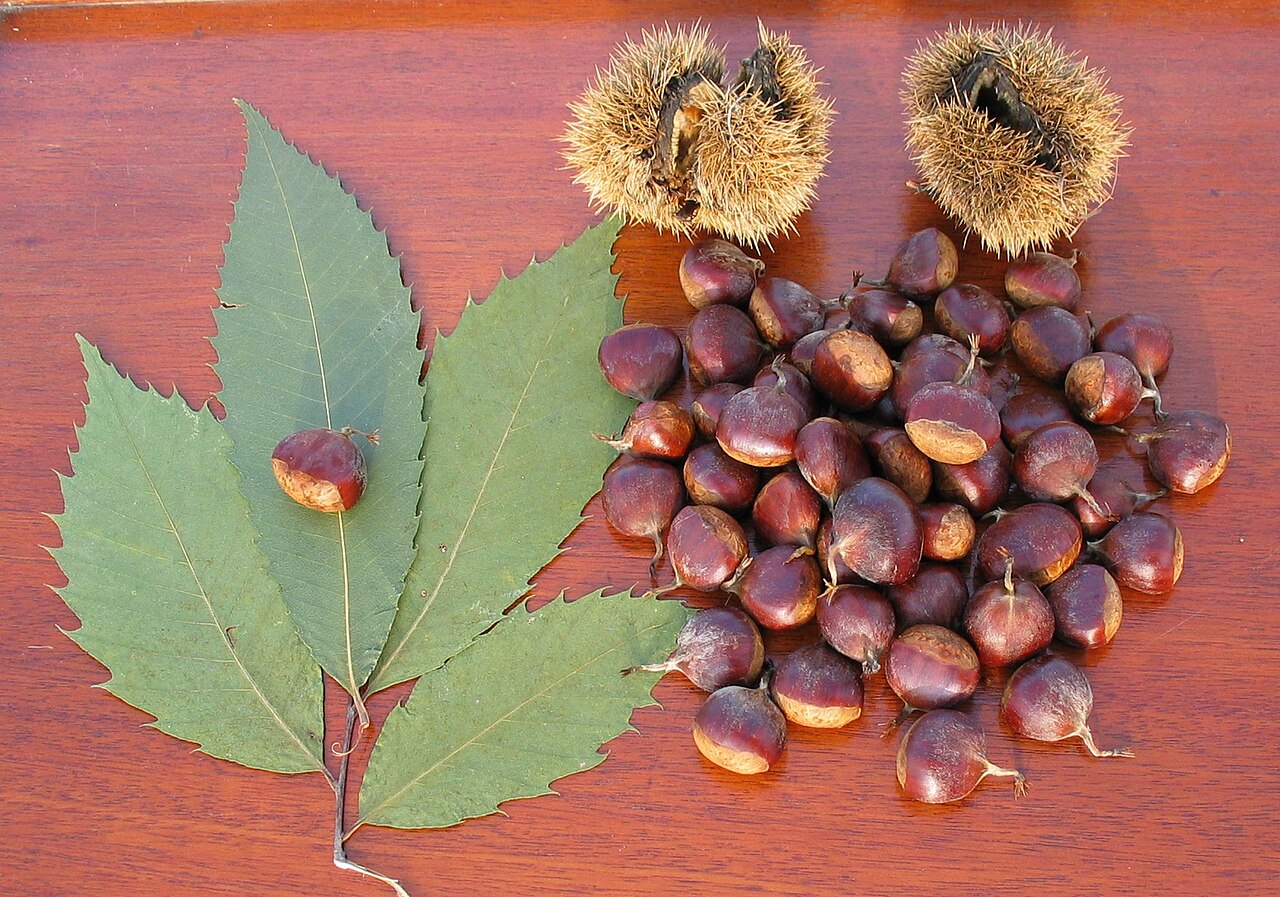
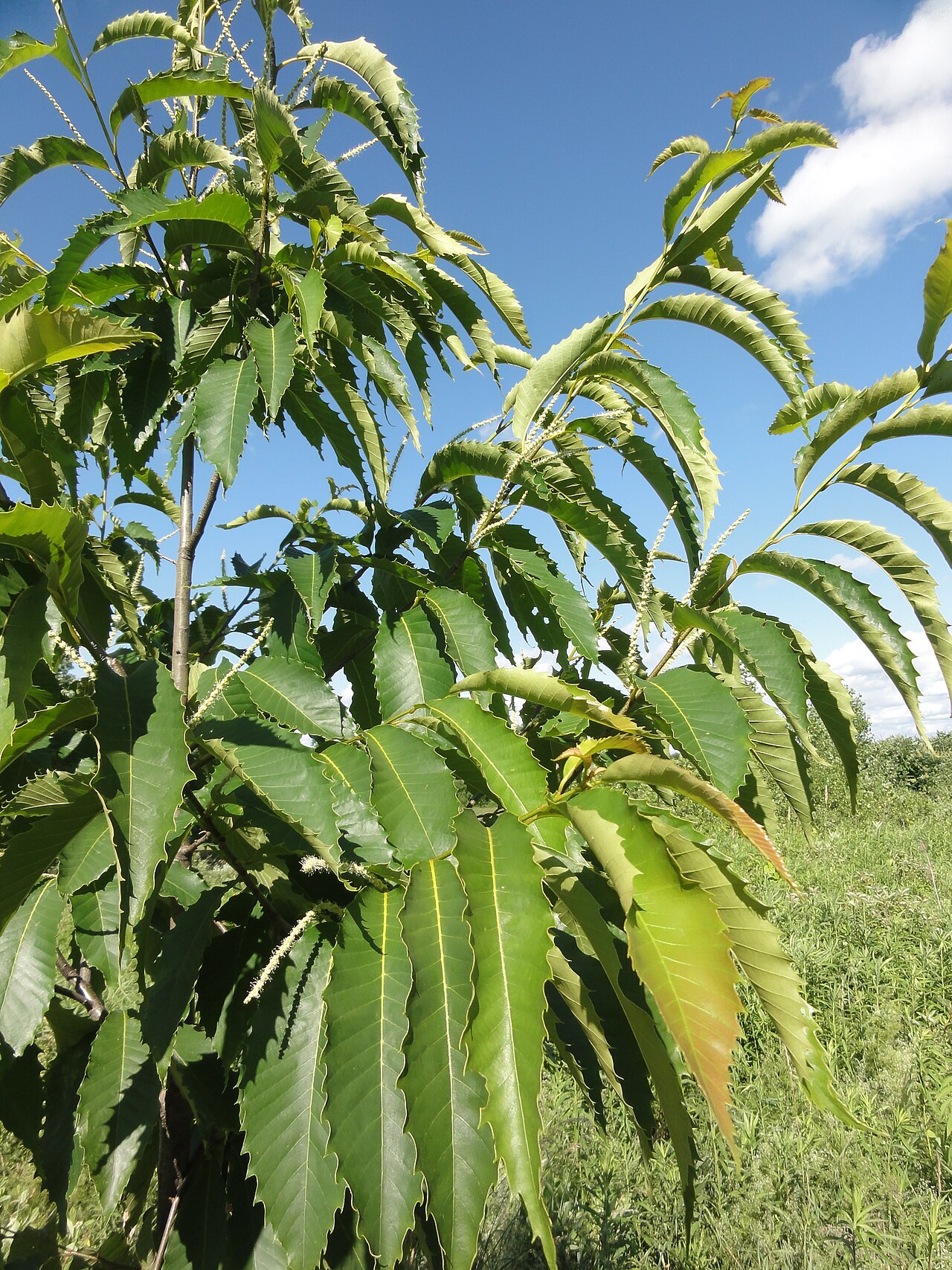
Leaves are simple, alternate, and oblong-lanceolate, 5 to 9 inches long and 2 to 3 inches wide, tapering to a point at the tip. The margins carry large, incurved, saw-like teeth — more prominent and widely spaced than on the related Allegheny chinquapin — which is where the species name dentata (“toothed”) comes from. The upper surface is glossy yellow-green and hairless; the underside is paler and also hairless, unlike the hairy-leaved Chinese and European chestnuts sometimes planted nearby. Fall color is a soft yellow.
Flowers
American chestnut is monoecious, producing both sexes of flower on the same tree in early to mid-summer (June into July), well after most native trees have finished blooming. Male flowers form on long, upright, creamy-white catkins 6 to 8 inches long with a notably strong, sweetish odor that some find pleasant and others find heavy. Small female flowers are borne separately, usually at the base of the uppermost catkins, each surrounded by a spiny involucre that will become the bur.
Fruit & Seeds
The fruit is a round, densely spined bur 2 to 2.5 inches across that splits into four sections at maturity in autumn, each typically containing two or three flattened, dark brown nuts with a pale basal scar. The nuts are sweet and edible raw or roasted, in contrast to the superficially similar but toxic nuts of horsechestnut and buckeye (genus Aesculus), which are not true chestnuts and should never be eaten. Chestnut burs and seed set require that a tree survive long enough — and have a mate nearby — which is now uncommon within the species’ former range.
Quick Facts
| Scientific Name | Castanea dentata |
| Family | Fagaceae (Beech) |
| Plant Type | Deciduous Tree |
| Mature Height | 60–100 ft historically; blight-affected sprouts rarely exceed 20–30 ft before dying back |
| Mature Spread | 40–60 ft (on surviving mature trees) |
| Growth Rate | Fast |
| Sun Exposure | Full Sun to Part Shade |
| Water Needs | Moderate |
| Soil Type | Well-drained, acidic, loamy; avoids heavy clay and limestone soils |
| Soil pH | 4.5–6.5 (acidic) |
| Bloom Time | June – July |
| Flower Color | Creamy white (catkins) |
| Fall Color | Yellow |
| Fruit | Spiny burs with edible sweet nuts |
| Deer Resistant | No |
| USDA Hardiness Zones | 4–8 |
Native Range
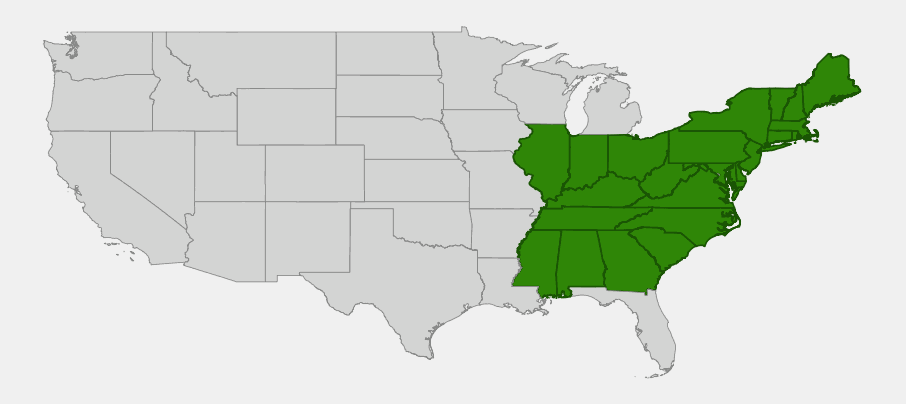
American chestnut’s historic range stretched from southern Maine and extreme southern Ontario south along the Appalachian chain into northern Georgia and Alabama, and west to the Ohio Valley and the edge of Illinois and Indiana. Within that range it was a dominant canopy tree on dry, acidic ridges and well-drained slopes, often making up a third or more of the overstory in Appalachian oak-chestnut forests before the blight.
The species favored well-drained, acidic soils on upper and mid slopes and ridgelines, generally avoiding wet bottomlands and soils derived from limestone. It grew alongside oaks, hickories, and in the north, with sugar maple and yellow birch, forming the once-widespread oak-chestnut forest type. At higher elevations in the southern Appalachians, chestnut gave way to spruce-fir forest dominated by red spruce and Fraser fir.
Chestnut blight has made chestnut functionally absent as a canopy tree across almost its entire historic range, though root systems and sprout clumps persist nearly everywhere the species once grew, and the tree is now considered extirpated as a reproducing population in parts of its former range such as Illinois. Restoration plantings and blight-resistance breeding programs are active across many of these same states today.
📋 Regional plant lists featuring American Chestnut: New Hampshire, Maine & Vermont · Connecticut, Massachusetts & Rhode Island · New York, Pennsylvania & Northern New Jersey · Delaware, Southern New Jersey & Long Island · Maryland, Virginia & West Virginia · North Carolina & South Carolina · Georgia, Alabama & Mississippi · Kentucky & Tennessee · Ohio & Indiana · Illinois, Iowa & Missouri
Growing & Care Guide
Anyone planting American chestnut today should do so with eyes open: outside of blight-resistant breeding lines, most trees eventually succumb to chestnut blight once they reach several inches in trunk diameter. That said, young trees often produce nuts and ornamental value for years before symptoms appear, and growing straight-species or hybrid-resistant stock supports ongoing restoration work.
Light
American chestnut is a fast-growing, light-demanding tree that performs best in full sun to very light shade. It was historically a canopy dominant, and it needs strong light to develop a full crown and set a good nut crop. Seedlings tolerate partial shade but grow noticeably slower and weaker than those in open conditions.
Soil & Water
Give it well-drained, acidic soil — sandy loams and rocky upland soils suit it best, and it struggles on wet, poorly drained ground or on neutral to alkaline, limestone-derived soils. Established trees tolerate average rainfall and short dry spells well, but young plantings benefit from consistent moisture during their first two or three growing seasons. Good air circulation and avoiding soil compaction around the root zone are both considered useful general practices, though neither prevents blight infection.
Planting Tips
Plant bare-root or containerized seedlings in fall or early spring, choosing an open site with full sun and well-drained, acidic soil away from existing chestnut stumps, which may harbor blight spores. Because the species is self-incompatible and needs cross-pollination to set nuts, plant at least two genetically distinct trees if nut production matters to you. Seedlings from chestnut cooperators’ breeding programs, selected for partial blight tolerance, are a better long-term investment than ordinary nursery stock where available.
Pruning & Maintenance
Prune only to remove dead, damaged, or crossing branches, ideally in late winter dormancy. Watch the bark for the sunken or swollen, discolored cankers that signal chestnut blight; cutting out small, early cankers on young stems occasionally buys a tree more time, but established infections on the main trunk are not curable. Keep the base of the trunk free of mulch volcanoes and mechanical damage, since wounds are a common infection entry point.
Propagation
Chestnut is propagated from seed (stratified cold and moist for about 90 days before spring sowing) or, for selected resistant lines, by grafting onto seedling rootstock. Seed must be kept from drying out, since chestnut seed loses viability quickly compared with acorns.
Landscape Uses
- Restoration plantings in former oak-chestnut forest habitat
- Specimen shade tree for large properties willing to accept eventual loss to blight
- Wildlife plantings for mast production while trees remain productive
- Breeding and conservation orchards supporting blight-resistance programs
- Educational and heritage plantings commemorating the historic eastern forest
Wildlife & Ecological Value
Before the blight, American chestnut was one of the most important mast-producing trees in the eastern forest, and even today’s short-lived sprouts occasionally flower and fruit before succumbing, contributing modest amounts of this historically vital food source.
For Pollinators
Chestnut’s long summer bloom period is ecologically significant because it flowers after most spring-blooming trees have finished, offering native bees, beetles, and other insects a nectar and pollen source during a seasonal gap. The strong floral scent is especially attractive to beetles and flies as well as bees.
For Birds
Historically, chestnut mast fed wild turkeys, blue jays, and woodpeckers, among many other species, and supported now-extinct or greatly reduced specialist insects such as the American chestnut moth that depended on the tree. Where surviving trees still nut, jays and turkeys readily take advantage.
For Mammals
Chestnuts were once a keystone food for white-tailed deer, black bears, squirrels, and historically for the now-extinct passenger pigeon population that depended heavily on mast crops. Squirrels and chipmunks cache nuts from any surviving trees, incidentally helping disperse and plant new seedlings.
Ecosystem Role
The functional loss of mature chestnut reshaped the eastern forest canopy, allowing oaks and, in many areas, red maple to take over the niche chestnut once filled. Restoration ecologists view reestablishing blight-resistant chestnut as a way to restore both reliable mast production and a historically important structural component of Appalachian forests.
Cultural & Historical Uses
American chestnut held enormous economic and cultural importance in Appalachian and eastern rural communities for generations. The nuts were a major autumn food and cash crop, roasted and sold in cities, fed to hogs fattened for market, and stored through winter as a reliable protein source for families with little else to rely on in lean years.
The wood was prized for its light weight, strength, and remarkable rot resistance, and it was used extensively for fence posts, railroad ties, telephone poles, furniture, and framing lumber. Because the wood resisted decay so well, “wormy chestnut” salvaged from dead standing trees after the blight remained a sought-after flooring and furniture material for decades afterward, and is still occasionally available from reclaimed lumber dealers today.
The sudden collapse of the species in the early twentieth century devastated both the ecology and the economy of entire mountain communities that depended on chestnut mast and timber, and it remains a touchstone story in American conservation history. Today, organizations such as The American Chestnut Foundation and independent chestnut cooperators continue breeding and biotechnology efforts aimed at restoring a blight-tolerant tree to the eastern forest.
Frequently Asked Questions
Can I still grow American chestnut trees?
Yes, seedlings are available from chestnut cooperators’ groups and some native plant nurseries, but be aware that most unselected trees eventually develop chestnut blight once they reach several inches in diameter. Trees selected for blight tolerance through ongoing breeding programs are a better choice if you want longevity.
Are American chestnuts safe to eat?
Yes. True chestnut nuts (genus Castanea) are sweet and edible raw or roasted. Do not confuse them with horsechestnut or buckeye (genus Aesculus), which have superficially similar spiny fruit but toxic seeds.
Is the American chestnut extinct?
No, but it is functionally extirpated as a mature canopy tree across almost its entire range. Root systems of old trees continue sending up sprouts that usually succumb to blight before maturity, and a small number of resistant or escaped mature trees survive both inside and outside the historic range.
What killed the American chestnut?
Chestnut blight, caused by the fungus Cryphonectria parasitica, arrived on imported Japanese chestnut nursery stock around 1904 and spread rapidly, killing an estimated three to four billion trees within about 40 years.
How can I tell American chestnut from Chinese or European chestnut?
American chestnut leaves and young twigs are hairless, with widely spaced, incurved teeth on the leaf margin, while Chinese chestnut leaves are often slightly hairy underneath with smaller, less hooked teeth. Chinese chestnut is also more blight-tolerant and is commonly planted for nut production.

Looking for a nursery that carries American Chestnut?
Browse our native plant nursery directory: Alabama · Connecticut, Delaware, Georgia · Illinois, Indiana · Kentucky, Maine, Maryland, Massachusetts, Mississippi · New Hampshire, New Jersey, New York, North Carolina, Ohio · Pennsylvania, Rhode Island, South Carolina, Tennessee, Vermont, Virginia · West Virginia