
Sword Fern (Polystichum munitum)
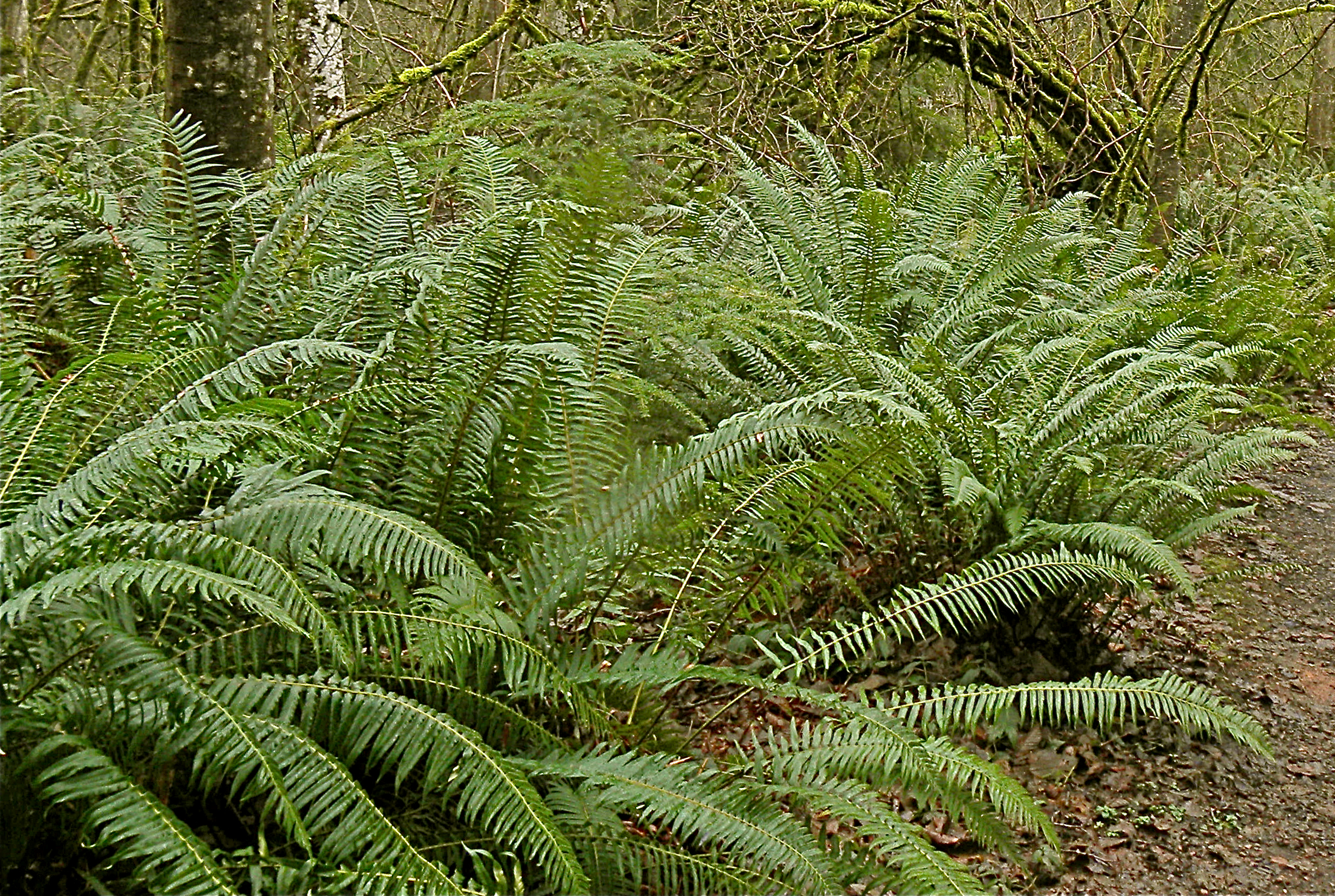
Polystichum munitum, commonly known as Sword Fern or Western Sword Fern, is the signature understory fern of Pacific coast forests, forming dense evergreen clumps beneath Douglas Fir, Western Hemlock, and Sitka Spruce from southeast Alaska to central California. A member of the wood fern family (Dryopteridaceae), it is one of the most abundant ferns in the forests where it grows, and its tough, leathery fronds stay green through the winter rather than dying back like many other ferns. The common name comes directly from the shape of each frond segment — narrow, pointed, and faintly curved like a blade.
Sword Fern grows from a stout, woody rootstock (rhizome) into a dense, fountain-like clump of arching fronds that can reach 2 to 4 feet long, occasionally more in ideal conditions. It is almost entirely a shade plant, thriving in the cool, moist, humus-rich understory beneath conifers such as Douglas Fir and Western Hemlock, where little direct sun reaches the ground. Unlike many woodland ferns, it tolerates summer drought reasonably well once established, since the thick evergreen fronds and deep rhizome let it ride out the dry months that are typical of its Mediterranean-influenced West Coast climate.
For gardeners west of the Cascades and Coast Range, Sword Fern is close to indispensable: it is easy to grow, long-lived, deer-resistant, and provides year-round structure and texture in shaded native plantings. Inland, it persists as scattered populations in the moist forests of northern Idaho, western Montana, and — remarkably — a disjunct outpost in the Black Hills of South Dakota, a reminder of wetter climates long past.
Identification
Sword Fern forms a clump of fronds radiating outward and slightly upward from a central crown, giving the whole plant a vase- or fountain-like shape. Individual plants can slowly widen over many years as the rhizome branches, eventually forming substantial colonies where conditions are favorable.
Fronds
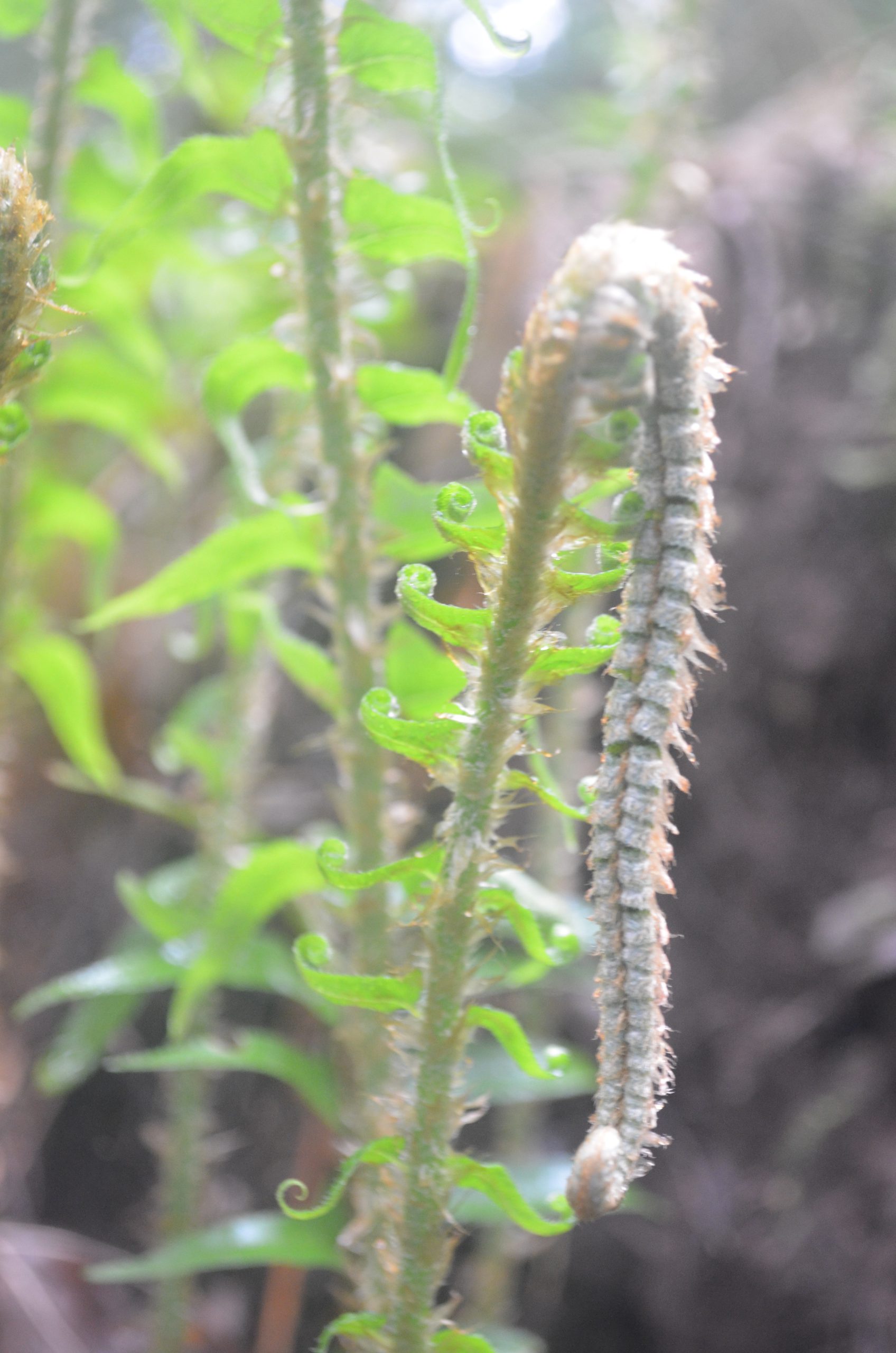
The fronds are once-pinnate (divided into leaflets along a single central stalk, not further subdivided), lance-shaped in outline, and typically 2 to 4 feet long, though exceptional specimens in deep, moist shade can exceed 5 feet. Each frond is leathery, dark glossy green above and paler beneath, and persists through winter, making Sword Fern one of the few truly evergreen ferns in its range. The leaflets (pinnae) are numerous — often 60 or more per frond — narrow, pointed, and finely toothed along the margins, with a small basal lobe at the base of each leaflet that gives it a faintly sword-hilt shape. New fiddleheads emerge in spring covered in light brown, papery scales that persist on the lower stalk (stipe) of the mature frond.
Sori (Spore Cases)
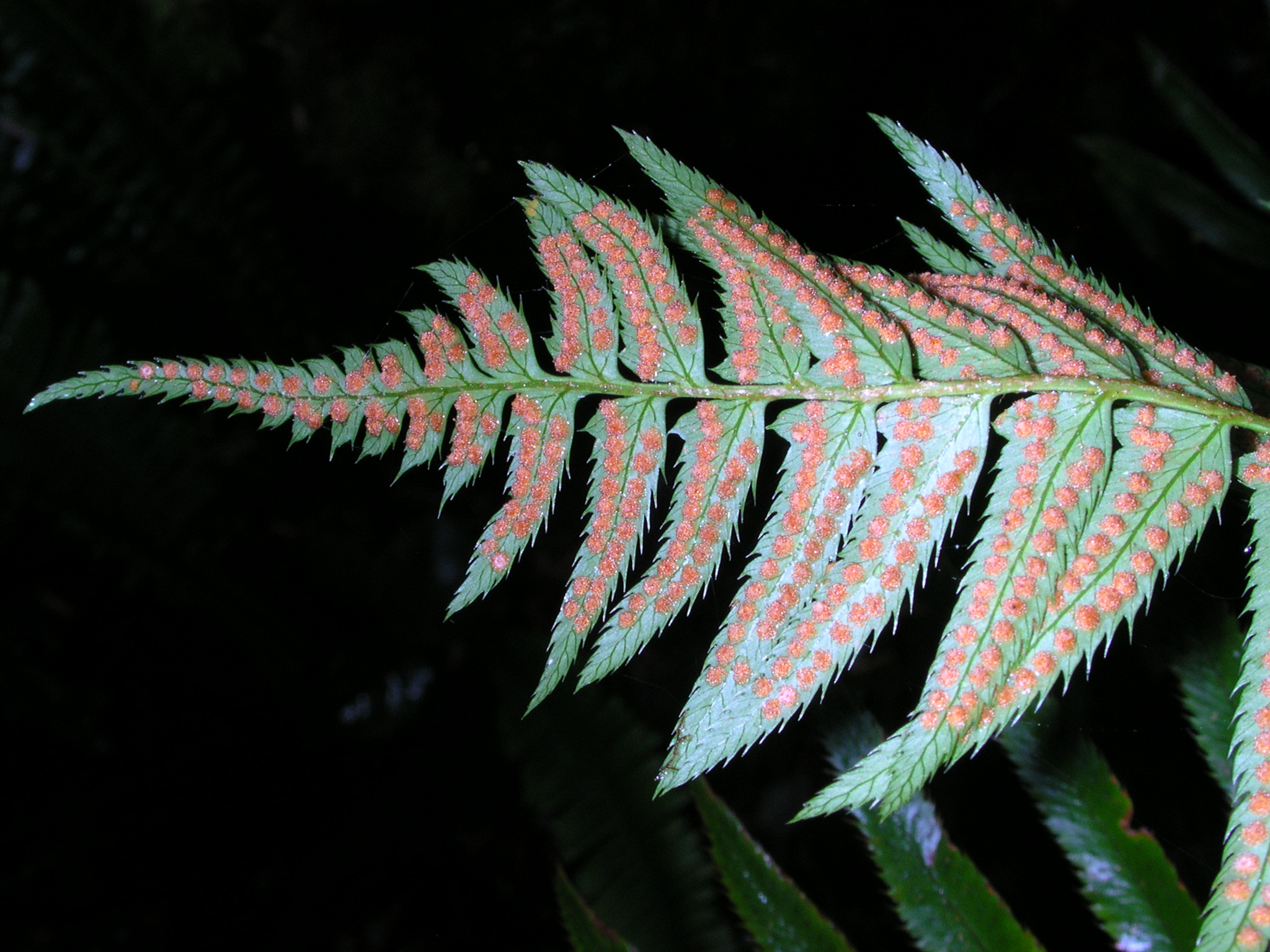
On the underside of fertile fronds, round clusters of spore cases called sori appear in two rows running along each side of the leaflet midrib, one row closer to the margin and one closer to the midrib. The sori start pale and ripen to a rusty orange-brown by late summer, when they release spores. This is one of the most reliable identification features — the round, evenly spaced, double-row sori distinguish Sword Fern from similar woodland ferns.
Rhizome and Growth Habit
The plant grows from a short, thick, upright-to-creeping rhizome densely covered in old frond bases and brown scales. Rather than spreading by long runners, Sword Fern slowly expands the crown outward, so established clumps increase in diameter over time but do not become invasive or weedy. Mature plants can live for decades in undisturbed forest.
Quick Facts
| Scientific Name | Polystichum munitum |
| Family | Dryopteridaceae (Wood Fern) |
| Plant Type | Evergreen Perennial Fern |
| Mature Height | 2–4 ft (fronds) |
| Spread | 2–4 ft, slowly widening clump |
| Growth Rate | Slow to moderate |
| Sun Exposure | Part Shade to Full Shade |
| Water Needs | Moderate; tolerates summer dry once established |
| Soil Type | Humus-rich, well-drained forest soil |
| Soil pH | 5.0–6.5 (acidic to slightly acidic) |
| Foliage | Evergreen, glossy dark green fronds |
| Spore Maturity | Mid to late summer |
| Deer Resistant | Yes |
| USDA Hardiness Zones | 5–9 |
Native Range
Sword Fern is native along the Pacific coast from southeastern Alaska south through British Columbia, Washington, Oregon, and into central California, where it is most abundant on the moist, forested side of the Cascades and Coast Ranges. It also extends inland to the Idaho panhandle and western Montana, a disjunct population tied to the moist, maritime-influenced forests of the northern Rocky Mountains. A separate, far-flung disjunct population grows in the Black Hills of South Dakota, an isolated relict of wetter past climates.
Within this range, Sword Fern is a defining understory species of lowland and montane coniferous forest, growing thickest beneath Douglas Fir, Western Hemlock, Western Redcedar, and Sitka Spruce. It occurs from near sea level up to roughly 5,000 feet in the mountains, generally avoiding sites that are either too wet (standing water) or too exposed and dry.
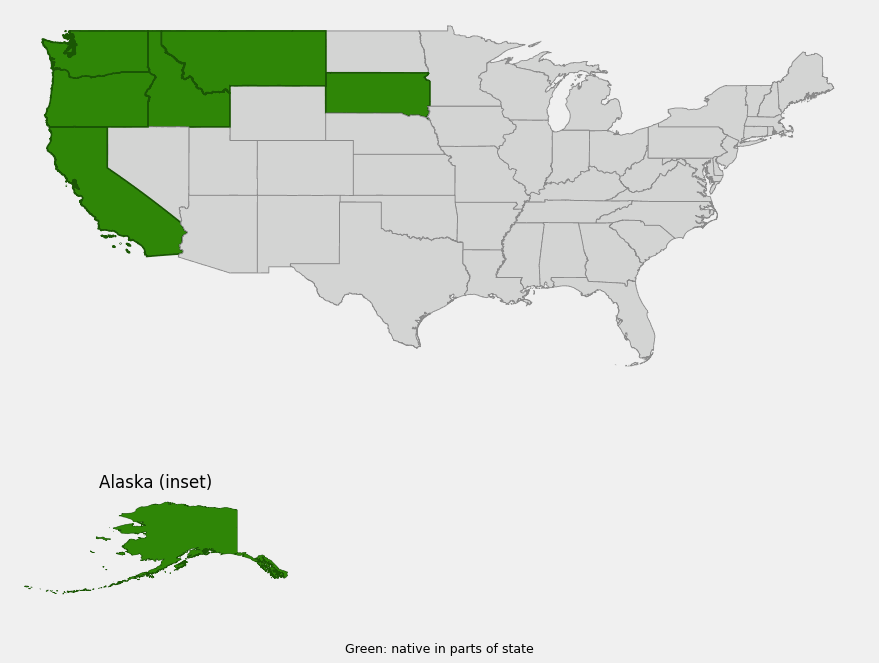
📋 Regional plant lists featuring Sword Fern: Alaska · Western Oregon & Western Washington · Idaho, Eastern Oregon & Eastern Washington · Montana & Wyoming · North Dakota, South Dakota & Western Minnesota
Growing & Care Guide
Sword Fern is about as low-maintenance as native plants come, provided it has the shade and soil moisture it expects from its forest-floor origins. Once established, a clump can be left alone for decades and will simply get larger and more handsome with time.
Light
Sword Fern wants part to full shade. It grows best under an open or closed tree canopy, tolerating deep shade better than almost any other native fern. In coastal fog-belt gardens it can take a bit more sun, but inland or in hot-summer climates, direct afternoon sun will scorch the fronds. If you only have one shady spot in the yard, this is often the right plant for it.
Soil & Water
It prefers humus-rich, well-drained soil with a slightly acidic pH, similar to native forest duff. Regular moisture during the first one to two growing seasons is important for establishment; after that, mature plants handle the dry summers typical of the Pacific Northwest and Northern California surprisingly well, since the thick rhizome and leathery fronds resist moisture loss. A 2 to 3 inch layer of leaf litter or bark mulch keeps roots cool and moist and mimics the natural forest floor.
Planting Tips
Plant in fall or early spring so roots can establish before summer dryness sets in. Space plants about 2 to 3 feet apart to allow for the slow, steady widening of mature clumps; closer spacing gives a fuller look sooner but plants will eventually compete. Container-grown divisions transplant easily; dig in some compost or leaf mold at planting time if the native soil is thin.
Maintenance
Sword Fern needs very little upkeep. In late winter or early spring, before new fiddleheads emerge, you can cut back old, tattered fronds to tidy the clump — though this is purely cosmetic, since the evergreen fronds are otherwise functional through winter. Established plants are drought-tolerant, pest-resistant, and rarely need fertilizer in a forest-soil setting.
Landscape Uses
Sword Fern earns its place in nearly every shaded native garden:
- Woodland understory beneath conifers, maples, and other shade trees
- Shade borders and foundation plantings on the north side of buildings
- Erosion control on shaded slopes, where the dense rhizome mat holds soil
- Naturalized forest-edge gardens paired with Salal, Oregon Grape, and Vine Maple
- Year-round structure in gardens that otherwise go bare in winter
- Low-water shade gardens once the clump is established
Fire Ecology
Sword Fern’s deep, well-protected rhizome lets it survive low- to moderate-intensity fires that top-kill the fronds; new growth typically resprouts from the rhizome the following spring. In the moist, fire-sheltered forests where it grows most abundantly, fire return intervals are often long, and Sword Fern is more often affected by logging, windthrow, and soil disturbance than by fire itself.
Wildlife & Ecological Value
Sword Fern plays a quiet but essential structural role in Pacific Northwest forest ecosystems, even though it isn’t a major food source the way flowering shrubs are.
For Wildlife Cover
The dense, evergreen clumps provide year-round cover and nesting habitat for ground-dwelling birds such as winter wrens and various sparrows, as well as shelter for small mammals like deer mice and shrews. Amphibians, including Pacific tree frogs and salamanders, use the cool, moist microhabitat under the fronds during dry spells.
For Deer and Elk
Deer and elk generally avoid browsing Sword Fern, which is part of why it remains so abundant in forests with heavy deer pressure — it is one of the few understory plants that can be relied on to persist where more palatable species are browsed out. This also makes it a dependable choice in gardens with deer problems.
Ecosystem Role
As the dominant ground cover in many Pacific coastal forests, Sword Fern’s extensive rhizome mat stabilizes soil on slopes and reduces erosion after storms or logging disturbance. Its dense fronds intercept rainfall and slow runoff, and the slowly decomposing old fronds contribute organic matter to the thin, often nutrient-poor forest soils typical of the region. Indigenous land stewardship and the broader forest community both rely on Sword Fern’s stabilizing presence on the forest floor.
Cultural & Historical Uses
Sword Fern held practical importance for Indigenous peoples throughout its range. Coast Salish and other Pacific Northwest nations used the fronds to line pit-cooking ovens and berry-drying racks, laid them over the ground as a clean surface for food and bedding, and used them to pad floors and storage areas. The tough, split petioles and rhizome fibers saw occasional use in basketry and cordage among some groups. The starchy rhizomes were eaten by some coastal peoples in times of scarcity after roasting, though they were a minor food source compared to camas, salmon, and other staples — this is a matter of historical record, not a foraging recommendation, since rhizomes from unidentified ferns can be difficult to prepare safely.
Early settlers and naturalists noted the fern’s striking abundance and year-round green as a defining feature of Pacific Northwest forests, and it remains one of the most widely recognized native plants of the region today, commonly used in floristry for its durable, long-lasting cut fronds.
Frequently Asked Questions
Is Sword Fern evergreen?
Yes. Unlike many ferns that die back to the ground each winter, Sword Fern keeps its tough, leathery fronds green year-round in most of its range, only replacing the oldest fronds gradually as new ones emerge each spring.
Does Sword Fern spread aggressively?
No. It expands slowly by widening its central rhizome rather than sending out runners, so established clumps get larger over the years but stay put and never become weedy or invasive.
Can Sword Fern handle dry shade?
Reasonably well once established. It is far more drought-tolerant than its lush appearance suggests, a trait shaped by the dry summers typical of its Pacific coast range, though regular water during the first year or two helps it establish a deep root system.
Will deer eat Sword Fern?
Rarely. Sword Fern is one of the more reliably deer-resistant native shade plants, which is part of why it dominates the understory in many forests with high deer populations.
How do I tell Sword Fern from other woodland ferns?
Look at the underside of a mature frond in summer: Sword Fern has round, rust-orange sori arranged in two neat rows along each leaflet, plus a small basal lobe at the base of each leaflet that gives it a faint sword-hilt shape. Combined with its evergreen, leathery texture, these features distinguish it from deciduous ferns like lady fern or bracken.

Looking for a nursery that carries Sword Fern?
Browse our native plant nursery directory: Washington · Oregon · California · Idaho · Montana · Alaska · South Dakota